Chills & Thrills at Malibu Lagoon, 22 Dec. 2024
[Text by Chuck Almdale; photos by Femi Faminu & Chris Lord. Trip list at the end.]
The Sea Rocket was in bluish bloom, brightening the beach, and the lagoon was loaded with black American Coots. I counted over 700, but I’m sure that there were several hundred more in the channel, lurking on the other side of the sandy islands.

Because it was a mid-level tide with minimal fluctuation (a low of 2.47 ft. at 9:39am, rising all the way to +3.31 ft. at 2:20pm, or ten whole inches) with only 3-6 mph of breeze, I thought waves suitable for surfing would be nil. But both sides of Pacific Coast Hwy. were filled with parked cars, signifying the opposite. No doubt the surge from some distant storm was responsible. And waves were big and covered with surfers. The offshore rocks were well-exposed between waves, possibly tempting passing shorebirds to land and rest, then pancaked by the next wave. Birds on the water were few, a single Western Grebe the exception, accompanied by crab trap floats.
The waves continued to grow over this week, reaching 14-17 feet locally. In Santa Cruz a bit south of San Francisco the city wharf was ripped apart by surf, leaving pieces to wash up around Monterey Bay, killing at least one man ( video KSBW & WHAS). Waves of up to 40 ft are predicted, although Fox News claimed 60 footers were coming.
Our group today had a higher proportion of newbies than usual, and they kept me busy pointing out birds, explaining things and answering questions, and I neglected the actual counting of birds. Fortunately chapter members Femi Faminu and Chris Lord were there to fill in the numerous gaps, and most of the data in the trip list below came from them.

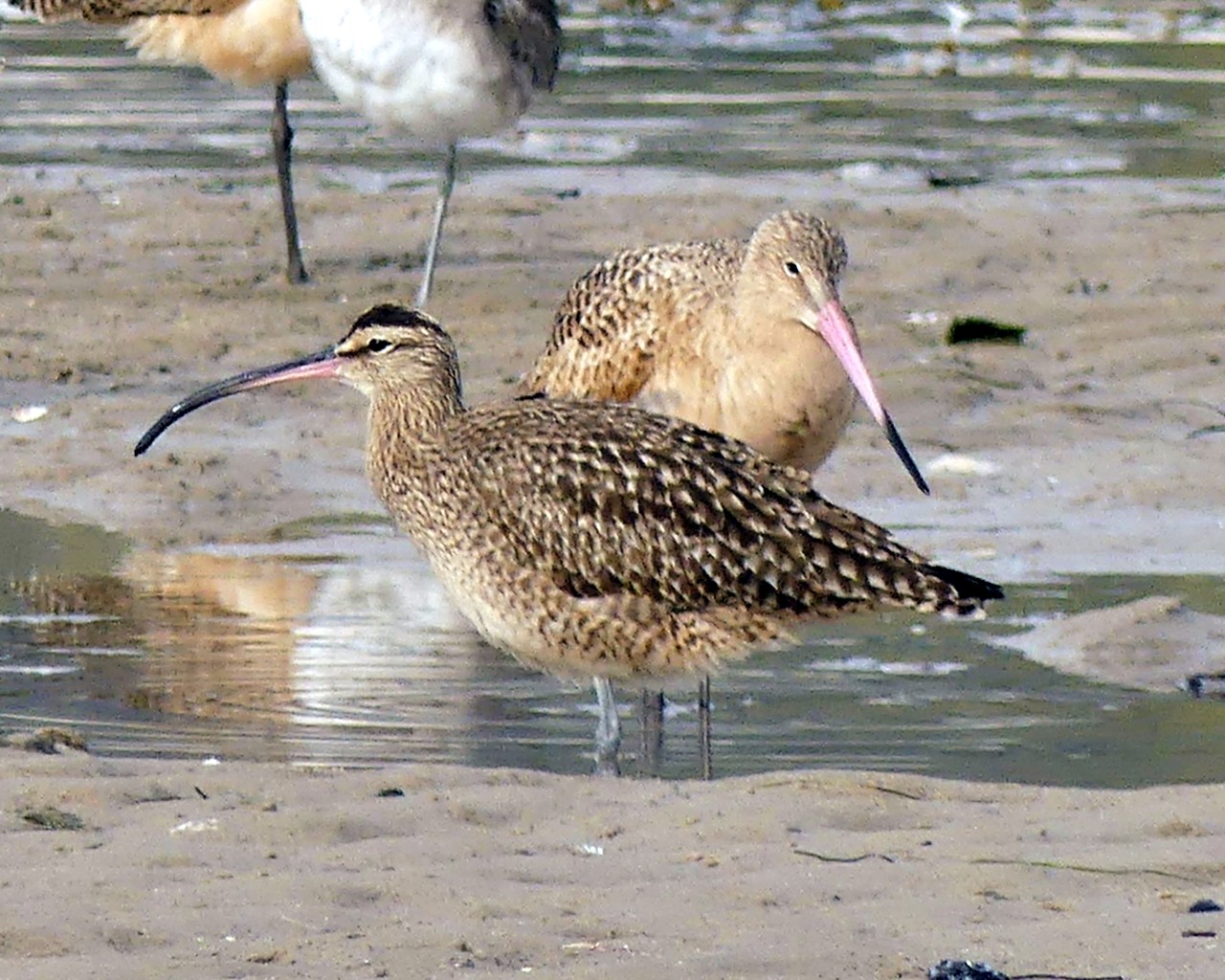
The day started chilly at 56°F and climbed only to 62° by 11am. The Snowy Egret above appears to be keeping warm by being extra fluffy. The Whimbrel and Marbled Godwit below are making their differences in plumage and bill apparent.
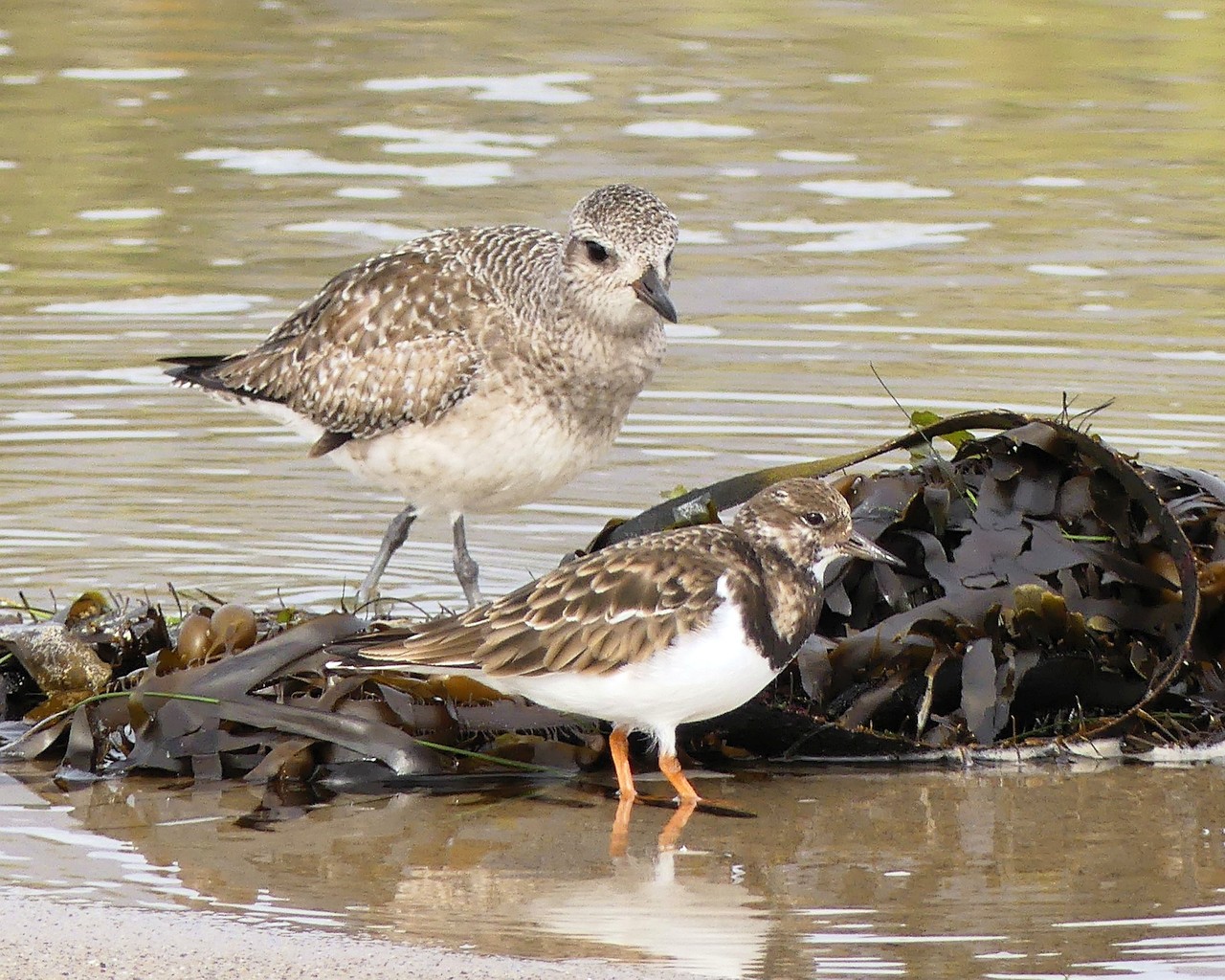
Ruddy Turnstones are extremely bright and beautiful when in breeding plumage but lose most of that for the winter, sometimes so much so that one wonders if they are Ruddy or Black. This confusion several years ago led us to the fact that Ruddy Turnstones breeding on the north slope of Alaska are so dark that they are easily confused with Black Turnstones (see below).

These dark plumages are much darker than those below, and the pale areas within their black “semicircles” on the breast are almost as dark as the semicircles themselves. Turnstones (unlike oystercatchers) actually live up to their names, and the slight beveling of their lower bill lends strength for their stone-flipping behavior (delicious snacks found below).

Spotted Sandpipers appear in low numbers in the lagoon and channels where they poke around along the water’s edge. The breeding plumage breast spots are lost by late summer and we rarely see them. The first one I ever saw was at a lake at 8,700 ft. altitude in the Sierras and had no spots at all. Fortunately it was bobbing its tail and this behavior uncommon among shorebirds gave it away.

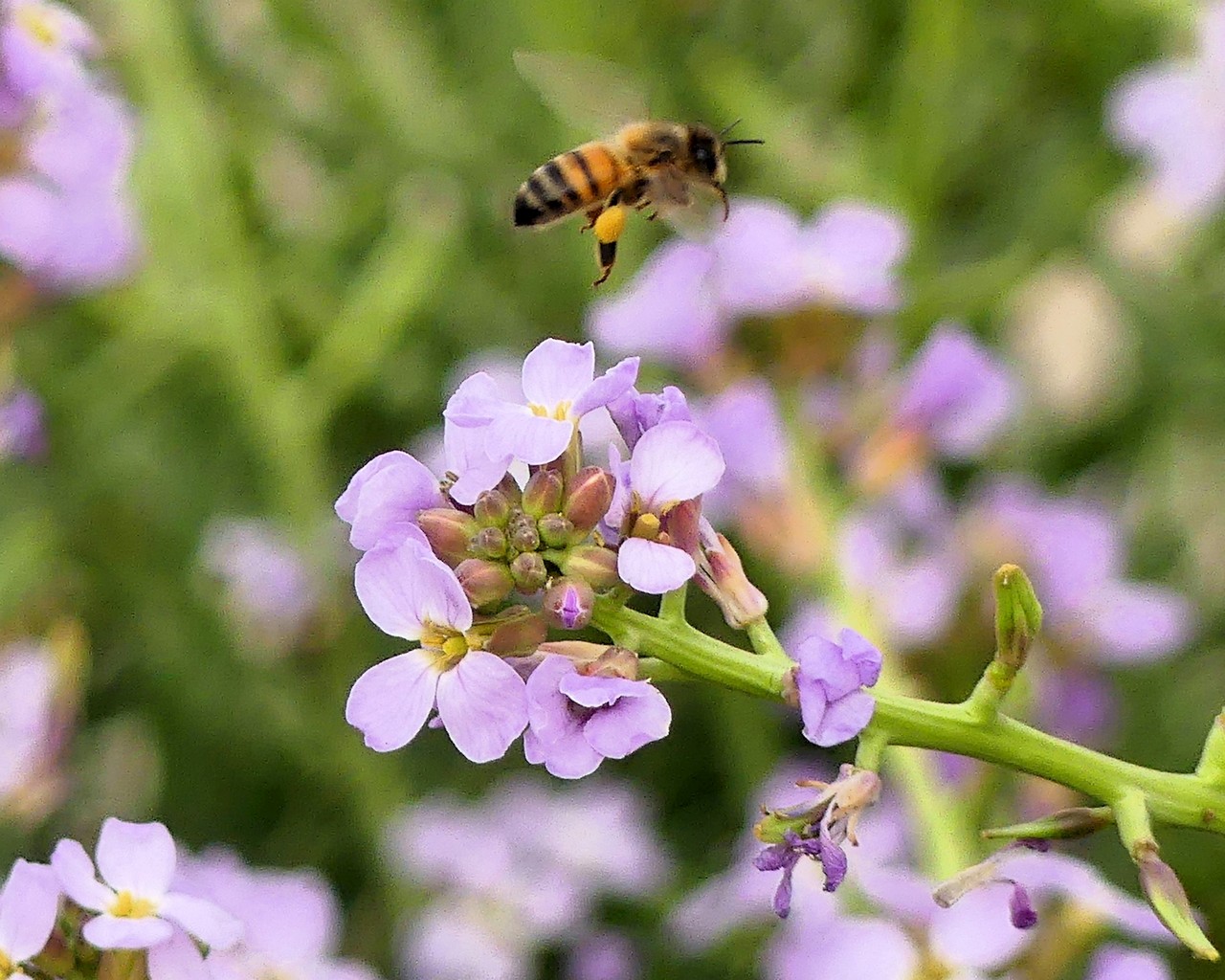
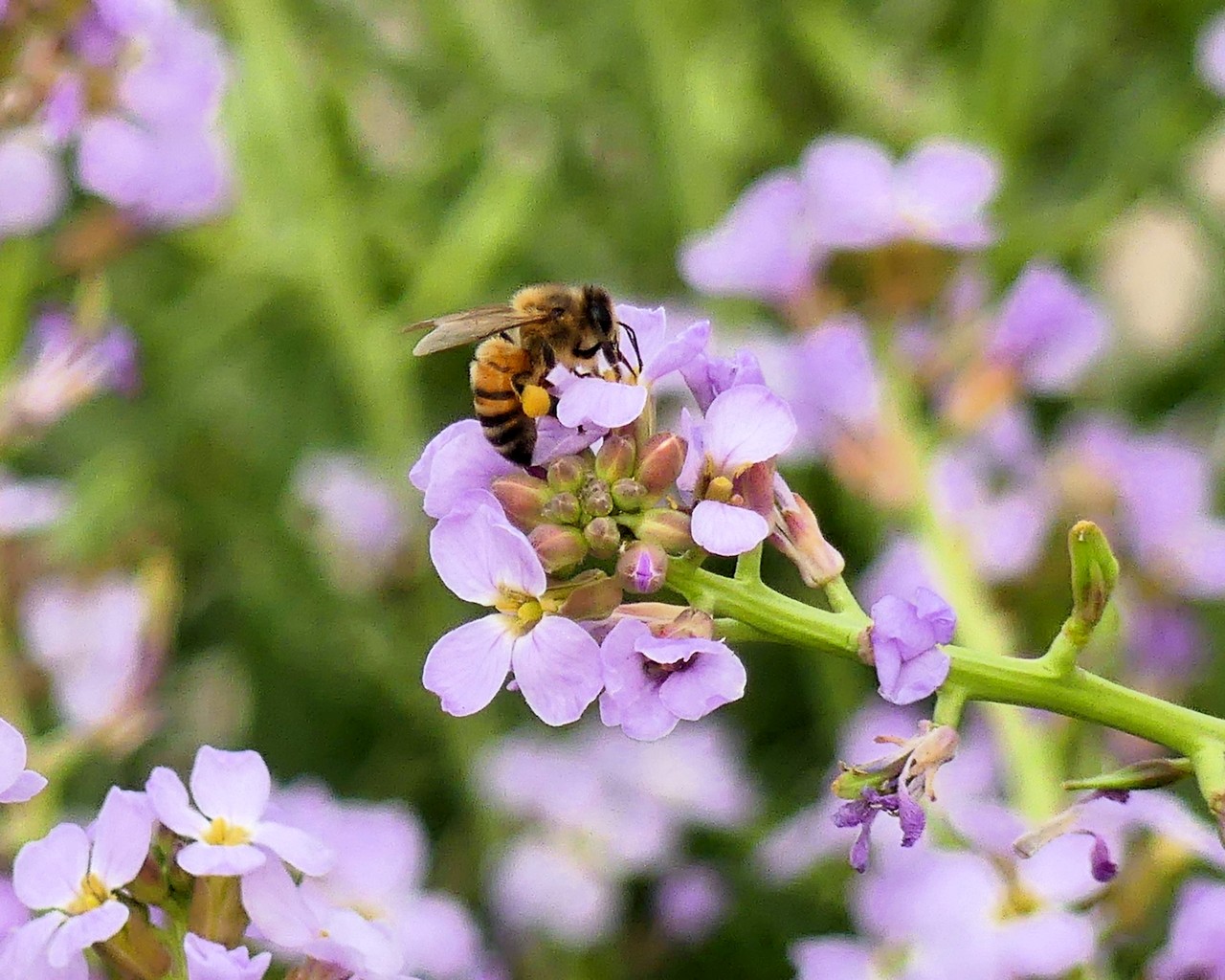
As noted above, the Sea Rocket was blooming all around the lagoon. This bee closely inspected the blossoms and was duly rewarded, as you can tell by the bulging food sacs on its hind legs.
Black Phoebes like flying insects of all sorts, and they also like being near water, but they care little for bees. For that you need Bee-eaters, which actually do eat bees as well as other worthwhile insects, and the closest ones are in Africa.

Is the Black-crowned Night Heron below aware that a Great Egret is trailing him? Thievery is not confined to humans.

A study in Sanderlings
They look like they’re sleeping and some probably are, but others are keeping their eye on you.

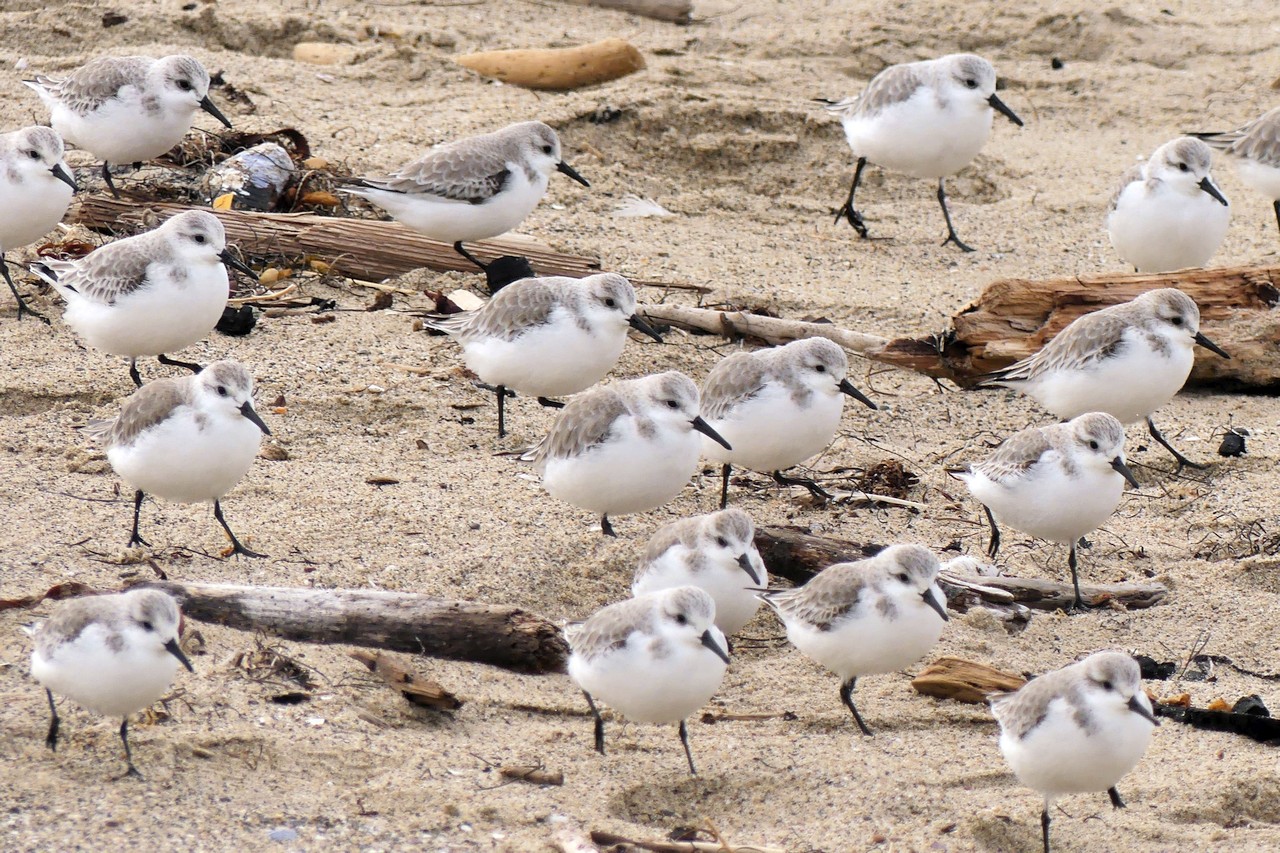
Sanderlings are to many the archetypal sandpiper. They are the ones most often seen running back and forth with the waves, avoiding the foaming water while following it back to the sea as they snag the unwary invertebrate.

Sanderlings and Snowy Plovers often roost together in adjacent sand-dimples but feed differently: Sanderlings most often at the water’s edge, Snowy Plovers most often in the wrack at the high tide line; thus no competition between the two species, except for roosting dimples. While sleeping they can look much the same, confusing the census count for the unwary peep/plover counter.

Members of the Icteridae, a new-world family of passerines (8 genera, 23 species) often have sharp pointy bills and can look fierce. Great-tailed Grackles have been in SoCal for 60 years since moving northward from western Mexico, first sighted along the Colorado River in 1964, with their first nesting record five years later. They spread across the SoCal desert from waterhole to waterhole, then began invading golf-courses and cities, much to the detriment (I believe) of the Yellow-headed Blackbird which nested in the same reedy habitat. My first record of them at Malibu Lagoon was four birds on 26 Aug 2001. Since then they have appeared at the lagoon 194 out of 268 census dates, or 72% of the time. Even when you don’t see them there, they’re nearby at the shopping center snagging crumbs from diners or at Legacy Park nearby. They were almost the first bird we saw today, with 22 occupying a sycamore tree bordering PCH. Their record is 25 birds on 26 Aug 2006.

The last new birds for the day were two Black Oystercatchers flying by over the sea as we left the beach. I thought they might perch upon the exposed offshore rocks but they passed them by and continued west, never veering an inch. I suspect they knew what would happen should they land there.
The Oystercatcher family Haematopodidae (blood-foot) with 12 species in one genus has an interesting distribution:
- Seven Species:
- North America: Black & American
- No. South America: American
- So. South America: Magellanic & Blackish
- Canary Islands: Canary Island (extinct)
- South Africa: African
- Eurasia & North Africa: Eurasian
- Five Species:
- Australia: Pied & Sooty
- New Zealand: South Island, Variable, Chatham Islands
They certainly concentrate in the Australia and New Zealand region.
Malibu Lagoon on eBird as of 12-23-24: 8342 lists, 2661 eBirders, 320 species.
Most recent species added: Nelson’s Sparrow, 11/29/24 by Femi Faminu (SMBAS member).
Birds new for the season: Surf Scoter, Spotted Sandpiper, Nanday Parakeet, Barn Swallow, Western Meadowlark. “New for the season” means it has been three or more months since last recorded on our trips.
Many, many thanks to photographers: Femi Faminu & Chris Lord.
Upcoming SMBAS scheduled field trips; no reservations or Covid card necessary unless specifically mentioned:
- Antelope Valley Raptor Search Sat. Jan 11, 2025 meet at 7:00 am. Reservation necessary. May be canceled.
- Malibu Lagoon, Sun. Jan 26, 8:30 (adults) & 10 am (parents & kids)
- Madrona Marsh Sat Feb 8, 8:30 am.
- Malibu Lagoon, Sun. Feb 23, 8:30 (adults) & 10 am (parents & kids)
- These and any other trips we announce for the foreseeable future will depend upon expected status of the Covid/flu/etc. pandemic at trip time. Any trip announced may be canceled shortly before trip date if it seems necessary. By now any other comments should be superfluous.
- Link to Programs & Field Trip schedule.
The next SMBAS Zoom program: TBA, Evening Meeting, Tuesday, February 4, 2025, 7:30 p.m.
The SMBAS 10 a.m. Parent’s & Kids Birdwalk is again running. Reservations not necessary for families, but for groups (scouts, etc.), call Jean (213-522-0062).
Links: Unusual birds at Malibu Lagoon
9/23/02 Aerial photo of Malibu Lagoon
More recent aerial photo
Prior checklists:
2023: Jan-June, July-Dec 2024: Jan-June
2021: Jan-July, July-Dec 2022: Jan-June, July-Dec
2020: Jan-July, July-Dec 2019: Jan-June, July-Dec
2018: Jan-June, July-Dec 2017: Jan-June, July-Dec
2016: Jan-June, July-Dec 2015: Jan-May, July-Dec
2014: Jan-July, July-Dec 2013: Jan-June, July-Dec
2012: Jan-June, July-Dec 2011: Jan-June, July-Dec
2010: Jan-June, July-Dec 2009: Jan-June, July-Dec
The 10-year comparison summaries created during the Lagoon Reconfiguration Project period, remain available—despite numerous complaints—on our Lagoon Project Bird Census Page. Very briefly summarized, the results unexpectedly indicate that avian species diversification and numbers improved slightly during the restoration period June’12-June’14.
Many thanks to Femi Faminu & Chris Lord who contributed the majority of the counts on this month’s checklist.
The species lists below is intermittently re-sequenced to agree with the California Bird Records Committee Official California Checklist. If part of the right side of the chart below is hidden, there’s a slider button inconveniently located at the bottom end of the list. The numbers 1-9 left of the species names are keyed to the nine categories of birds at the bottom.
[Chuck Almdale]
| Malibu Census 2023-24 | 7/28 | 8/25 | 9/22 | 10/27 | 11/24 | 12/22 | |
| Temperature | 63-72 | 64-78 | 67-75 | 64-68 | 54-59 | 56-62 | |
| Tide Lo/Hi Height | L+1.81 | L+2.00 | L+2.09 | H+4.75 | L+2.06 | L+2.47 | |
| Tide Time | 0916 | 0735 | 0611 | 0742 | 1139 | 0939 | |
| 1 | Canada Goose | 4 | |||||
| 1 | Gadwall | 27 | 12 | 30 | 38 | 26 | 32 |
| 1 | American Wigeon | 1 | 13 | 12 | 35 | ||
| 1 | Mallard | 6 | 2 | 8 | 28 | 10 | 20 |
| 1 | Green-winged Teal | 4 | 1 | 10 | |||
| 1 | Ring-necked Duck | 4 | 3 | ||||
| 1 | Surf Scoter | 2 | |||||
| 1 | Bufflehead | 9 | 10 | ||||
| 1 | Hooded Merganser | 1 | |||||
| 1 | Red-breasted Merganser | 10 | 13 | ||||
| 1 | Ruddy Duck | 28 | 22 | 35 | |||
| 2 | Pied-billed Grebe | 1 | 1 | 5 | 10 | 8 | 5 |
| 2 | Eared Grebe | 4 | 1 | ||||
| 2 | Western Grebe | 28 | 1 | ||||
| 7 | Feral Pigeon | 6 | 9 | 1 | 4 | 4 | |
| 7 | Mourning Dove | 2 | 3 | 1 | 1 | ||
| 8 | Anna’s Hummingbird | 2 | 2 | 1 | |||
| 8 | Allen’s Hummingbird | 2 | 3 | 4 | 2 | 1 | 3 |
| 2 | Sora | 2 | |||||
| 2 | American Coot | 2 | 72 | 340 | 560 | 705 | |
| 5 | Black Oystercatcher | 2 | 2 | ||||
| 5 | Black-bellied Plover | 51 | 70 | 67 | 136 | 75 | 50 |
| 5 | Killdeer | 12 | 4 | 12 | 20 | 1 | 30 |
| 5 | Semipalmated Plover | 13 | 3 | ||||
| 5 | Snowy Plover | 6 | 22 | 42 | 18 | 34 | 27 |
| 5 | Whimbrel | 52 | 2 | 2 | 7 | 15 | 4 |
| 5 | Long-billed Curlew | 1 | 1 | ||||
| 5 | Marbled Godwit | 12 | 25 | ||||
| 5 | Spotted Sandpiper | 2 | 1 | 1 | |||
| 5 | Willet | 9 | 5 | 5 | 3 | 51 | 20 |
| 5 | Greater Yellowlegs | 1 | 1 | ||||
| 5 | Ruddy Turnstone | 1 | 3 | 4 | 6 | 4 | |
| 5 | Sanderling | 2 | 1 | 5 | 200 | 100 | |
| 5 | Least Sandpiper | 23 | 3 | 4 | 8 | 27 | |
| 5 | Western Sandpiper | 6 | 13 | 2 | |||
| 6 | Heermann’s Gull | 42 | 5 | 24 | 79 | 29 | 2 |
| 6 | Ring-billed Gull | 2 | 2 | 12 | 15 | 19 | |
| 6 | Western Gull | 220 | 113 | 55 | 27 | 65 | 35 |
| 6 | Herring Gull | 1 | 1 | ||||
| 6 | California Gull | 10 | 23 | 75 | 440 | 525 | 60 |
| 6 | Glaucous-winged Gull | 1 | 1 | ||||
| 6 | Caspian Tern | 14 | 4 | 1 | |||
| 6 | Forster’s Tern | 2 | |||||
| 6 | Elegant Tern | 240 | 10 | ||||
| 6 | Royal Tern | 5 | 5 | 6 | 2 | ||
| 2 | Common Loon | 2 | |||||
| 2 | Brandt’s Cormorant | 2 | 5 | ||||
| 2 | Pelagic Cormorant | 1 | 2 | 2 | |||
| 2 | Double-crested Cormorant | 28 | 37 | 54 | 51 | 44 | 23 |
| 2 | Brown Pelican | 163 | 27 | 24 | 30 | 260 | 35 |
| 3 | Black-crowned Night-Heron | 1 | 1 | 1 | 1 | 1 | 2 |
| 3 | Snowy Egret | 4 | 3 | 4 | 10 | 5 | 5 |
| 3 | Green Heron | 1 | 1 | 2 | 1 | 1 | |
| 3 | Great Egret | 3 | 3 | 2 | 3 | 3 | 1 |
| 3 | Great Blue Heron | 3 | 4 | 2 | 5 | 4 | 4 |
| 3 | White-faced Ibis | 3 | |||||
| 4 | Turkey Vulture | 4 | 1 | 7 | 1 | ||
| 4 | Osprey | 1 | 1 | 1 | |||
| 4 | Red-shouldered Hawk | 1 | |||||
| 4 | Red-tailed Hawk | 2 | 1 | 1 | |||
| 8 | Belted Kingfisher | 1 | 1 | 1 | 1 | 1 | |
| 8 | Nuttall’s Woodpecker | 1 | |||||
| 8 | Hairy Woodpecker | 1 | |||||
| 4 | American Kestrel | 1 | |||||
| 8 | Nanday Parakeet | 25 | 4 | ||||
| 9 | Black Phoebe | 6 | 3 | 2 | 4 | 6 | 1 |
| 9 | Say’s Phoebe | 1 | 1 | 1 | |||
| 9 | Ash-throated Flycatcher | 1 | |||||
| 9 | Cassin’s Kingbird | 1 | 1 | ||||
| 9 | Western Kingbird | 8 | |||||
| 9 | Loggerhead Shrike | 1 | |||||
| 9 | California Scrub-Jay | 2 | |||||
| 9 | American Crow | 4 | 4 | 8 | 6 | 22 | 8 |
| 9 | Common Raven | 4 | 1 | ||||
| 9 | Oak Titmouse | 1 | |||||
| 9 | Tree Swallow | 1 | 12 | ||||
| 9 | No. Rough-winged Swallow | 2 | |||||
| 9 | Barn Swallow | 20 | 20 | 1 | 1 | ||
| 9 | Cliff Swallow | 4 | |||||
| 9 | Bushtit | 19 | 5 | 20 | 30 | 12 | 50 |
| 9 | Wrentit | 4 | 1 | 2 | |||
| 9 | Ruby-crowned Kinglet | 1 | 1 | 3 | |||
| 9 | Blue-gray Gnatcatcher | 1 | 4 | 1 | |||
| 9 | House Wren | 2 | 3 | 6 | 1 | ||
| 9 | Marsh Wren | 2 | 1 | ||||
| 9 | Bewick’s Wren | 2 | 2 | 2 | 1 | ||
| 9 | European Starling | 1 | 10 | 12 | 7 | ||
| 9 | Northern Mockingbird | 1 | 1 | 1 | 1 | ||
| 9 | Western Bluebird | 5 | |||||
| 9 | Hermit Thrush | 1 | |||||
| 9 | House Finch | 12 | 5 | 4 | 8 | 4 | 6 |
| 9 | Lesser Goldfinch | 3 | 6 | 2 | |||
| 9 | Lark Sparrow | 1 | |||||
| 9 | Dark-eyed Junco | 1 | 2 | 1 | 2 | ||
| 9 | White-crowned Sparrow | 16 | 15 | 20 | |||
| 9 | Savannah Sparrow | 1 | |||||
| 9 | Song Sparrow | 4 | 10 | 10 | 5 | 8 | 6 |
| 9 | California Towhee | 1 | 1 | 3 | 2 | ||
| 9 | Spotted Towhee | 1 | |||||
| 9 | Western Meadowlark | 15 | 1 | ||||
| 9 | Hooded Oriole | 1 | 1 | ||||
| 9 | Red-winged Blackbird | 11 | 1 | 2 | |||
| 9 | Brown-headed Cowbird | 18 | |||||
| 9 | Great-tailed Grackle | 3 | 1 | 4 | 15 | 22 | |
| 9 | Orange-crowned Warbler | 1 | 2 | 1 | 2 | ||
| 9 | Common Yellowthroat | 1 | 5 | 7 | 8 | 6 | |
| 9 | Yellow Warbler | 1 | |||||
| 9 | Yellow-rumped Warbler (Aud) | 15 | 15 | 14 | |||
| 9 | Townsend’s Warbler | 2 | |||||
| Totals by Type | Jul | Aug | Sep | Oct | Nov | Dec | |
| 1 | Waterfowl | 37 | 14 | 43 | 112 | 93 | 157 |
| 2 | Water Birds – Other | 192 | 68 | 155 | 469 | 882 | 769 |
| 3 | Herons, Egrets & Ibis | 12 | 12 | 14 | 20 | 14 | 12 |
| 4 | Quail & Raptors | 4 | 1 | 10 | 3 | 2 | 2 |
| 5 | Shorebirds | 139 | 157 | 142 | 197 | 404 | 290 |
| 6 | Gulls & Terns | 527 | 165 | 162 | 564 | 635 | 119 |
| 7 | Doves | 8 | 12 | 2 | 5 | 4 | 0 |
| 8 | Other Non-Passerines | 2 | 7 | 31 | 5 | 3 | 8 |
| 9 | Passerines | 70 | 92 | 119 | 136 | 142 | 150 |
| Totals Birds | 991 | 528 | 678 | 1511 | 2179 | 1507 | |
| Total Species | Jul | Aug | Sep | Oct | Nov | Dec | |
| 1 | Waterfowl | 3 | 2 | 4 | 6 | 8 | 8 |
| 2 | Water Birds – Other | 3 | 5 | 4 | 9 | 8 | 5 |
| 3 | Herons, Egrets & Ibis | 5 | 5 | 6 | 5 | 5 | 4 |
| 4 | Quail & Raptors | 1 | 1 | 3 | 3 | 2 | 2 |
| 5 | Shorebirds | 8 | 12 | 12 | 8 | 10 | 11 |
| 6 | Gulls & Terns | 6 | 9 | 6 | 5 | 5 | 6 |
| 7 | Doves | 2 | 2 | 2 | 2 | 1 | 0 |
| 8 | Other Non-Passerines | 1 | 4 | 4 | 3 | 3 | 3 |
| 9 | Passerines | 9 | 22 | 27 | 24 | 24 | 17 |
| Totals Species – 109 | 38 | 62 | 68 | 65 | 66 | 56 |
Discover more from SANTA MONICA BAY AUDUBON SOCIETY BLOG
Subscribe to get the latest posts sent to your email.



 SANTA MONICA BAY AUDUBON SOCIETY BLOG