No June Gloom at Malibu Lagoon, 22 June 2025
[By Chuck Almdale; Photos by Ray Juncosa & Chris Tosdevin]
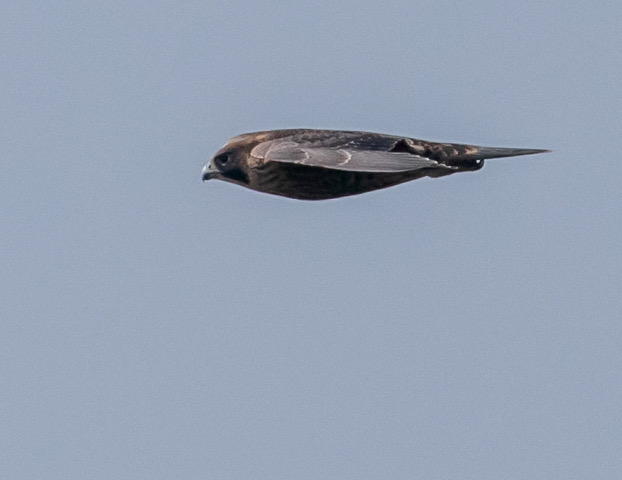
It wasn’t the first bird of the day, but whenever a Peregrine Falcon comes rocketing across the lagoon towards the shorebirds and ducks, it’s an event. There wasn’t a lot of potential prey that looked interesting, I suppose, as after that brief pass, the bird continued past Malibu Pier and on down the coast.
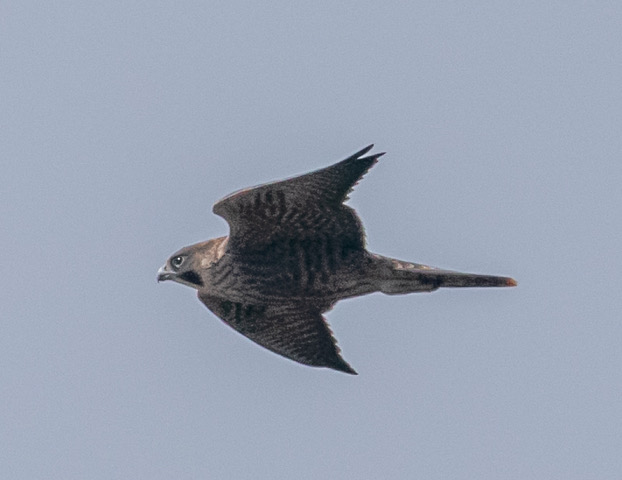
As always when looking sunward, the plumage colors were indistinct and gray, and I could not see the dark hood at all, nevertheless the size and bulk cried Peregrine. After seeing Chris’s photos which show the dark hood far more clearly, I decided that of the three Peregrine subspecies – anatum (Continental), pealei (Peale’s) and tundrius (Tundra), pealei was the most likely, based on the width of the dark moustachial mark, the small pale auricular area behind it and the overall darkness and streaking of the plumage. Pealei breeds from the Olympic Penn. up through the Aleutians.
Since Dec. 24, 2000, we’ve seen 43 Peregrines in 40 sightings at the lagoon (we’ve had a pair of them three times, most recently Apr 28, 2019), and overall they show up on 15% of our visits since the beginning of 2010 (no visits at all for 1979-1999). This is surprisingly frequent it seems to me, but then again, if they’re here they will be seen, as they don’t hide in the bushes like Lincoln’s Sparrows.

The above screen-snip from my lagoon spreadsheet shows the record for visiting falcons: Peregrines have appeared every month except August, only one previously in June. Not a lot of Prairie Falcon visits as you can see.
In terms of species variety and sheer numbers (or lack thereof), “June is the cruelest month” for birders in SoCal. Words to live by. Of our mere 42 species today, many were lagoon locale breeding birds. Others bred nearby, such as Brown Pelicans on the Channel Islands. Killdeer nest on the sandy “dunes,” Hooded Oriole in the trees, especially palms, Bushtits in the trees or brush, Song Sparrows in the brush, Common Yellowthroat in the reeds or brush, Canada Geese on the sandy islands where the Mallard and Gadwall probably nest as well (they’re better at hiding than the long-necked geese).
All grebe species stay near water. As with loons, their legs are located far back on their torsos (their family name Podicipedidae means “rump-foot”) and they really can’t walk on land but only drag their body and lurch, so they build their nests in water on a mound of mud, reeds, and vegetation. At the lagoon we normally can’t see their nests (assuming they’re even there!) as they’re well-hidden in the reeds, but all the reeds have fallen over, possibly due to the very high lagoon water, and this grebe’s nest was revealed to all.

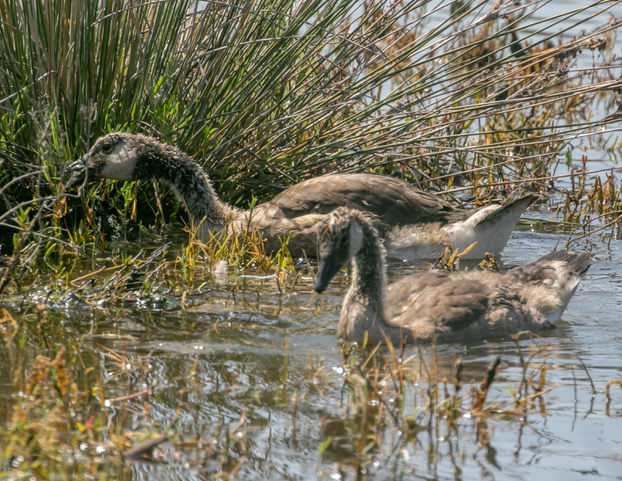
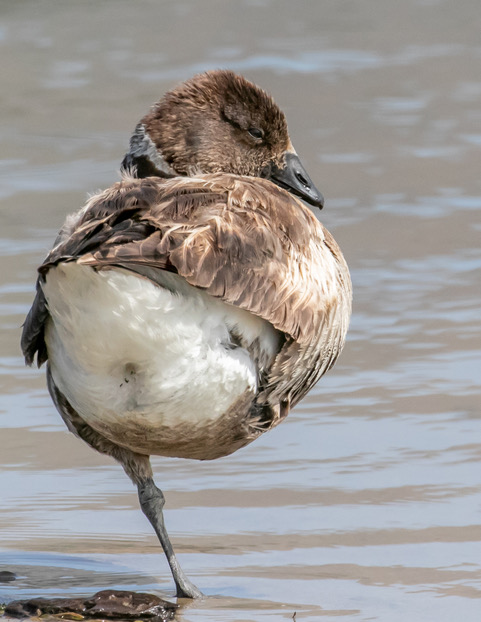
Canada Geese nested again at the lagoon for what looks like the 6th year in a row, always on the sandy brushy islands, one pair with three young (remaining) this year. The young are still slightly smaller than the adults and their plumage is still a bit scraggly.

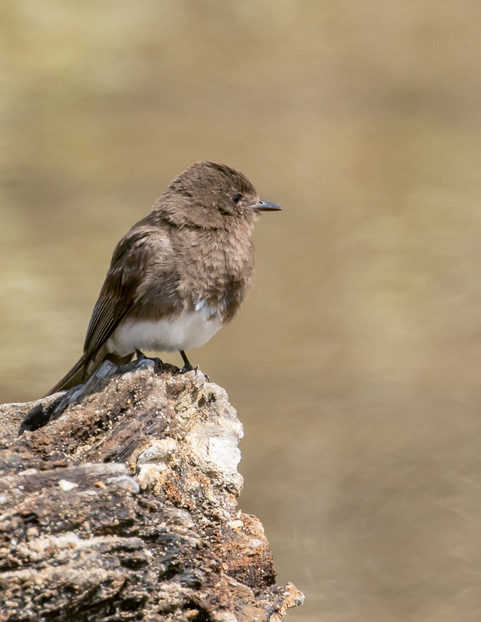
I don’t know where the Black Phoebes nest. In my limited experience, they seem to prefer nesting over front-door porch lights. As they’re here 98% of the time, they’re nesting somewhere nearby.
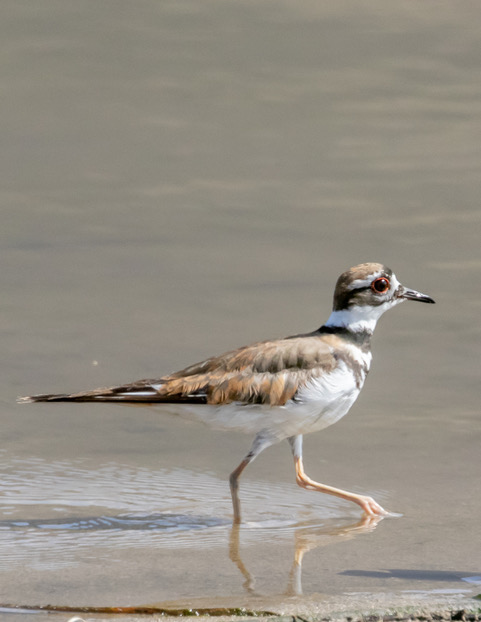
It’s possible this Killdeer was born a few months ago. It looks very slender to me and the lower black breast-band was quite irregular.
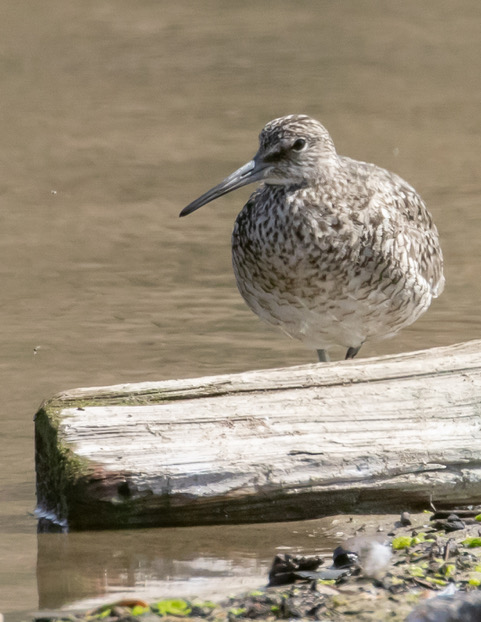
Either this Willet was already finished with nesting (NE Calif. to Minnesota to southern Canadian plains) or didn’t bother to go, as it is quite well-marked on the breast. They’re here year-round , 88% of all visits, but least common May-July.
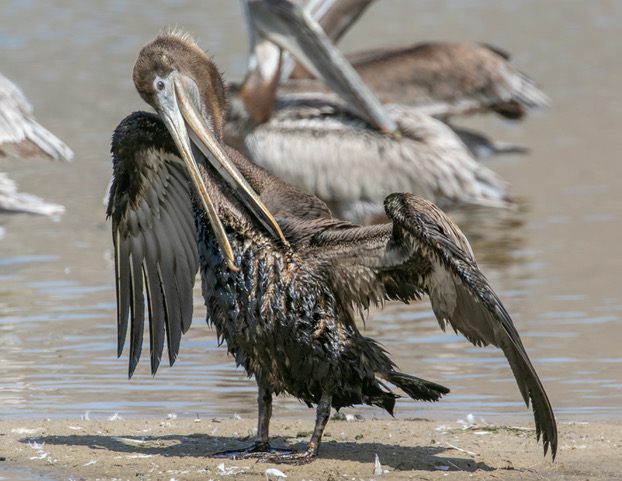
This young Brown Pelican was unfortunately quite well-oiled on the breast. Something, somewhere, is leaking.
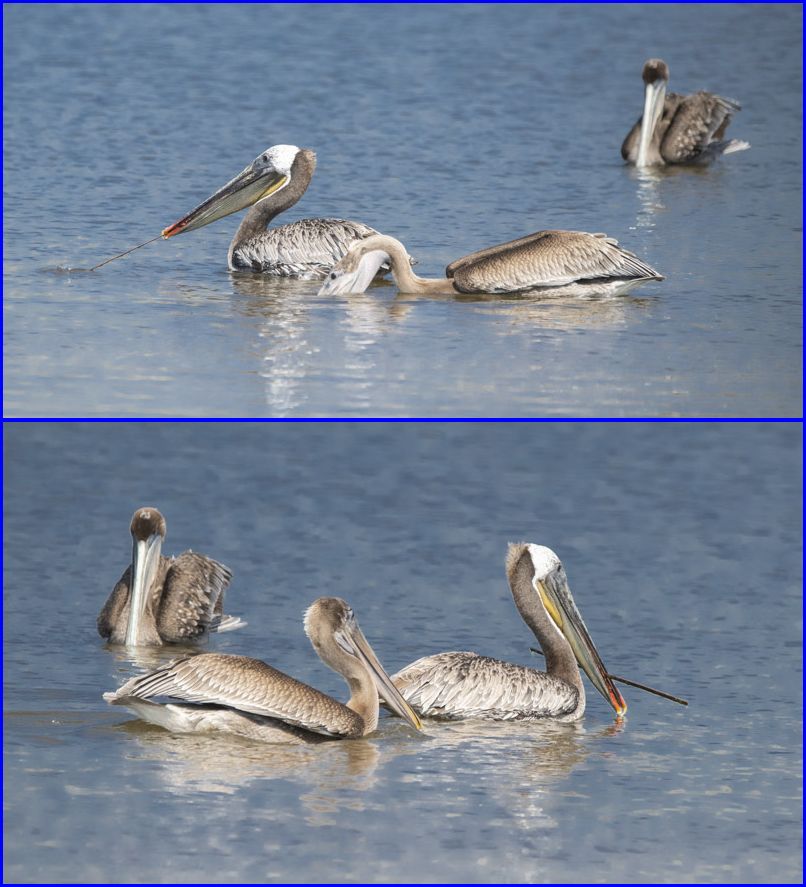
The Pelican Pair’s Odyssey
It began with the pair trailing a Double-Crested Cormorant. Perhaps it’ll find a fish they can steal?
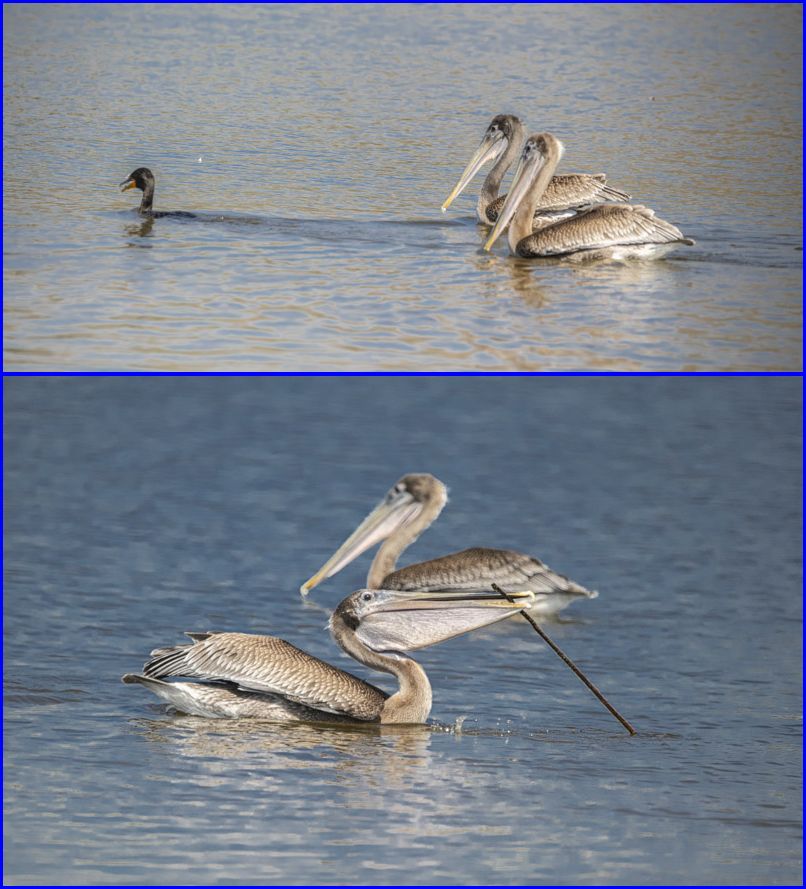
One stick, two young pelicans, a recipe for trouble. It begins to draw attention.
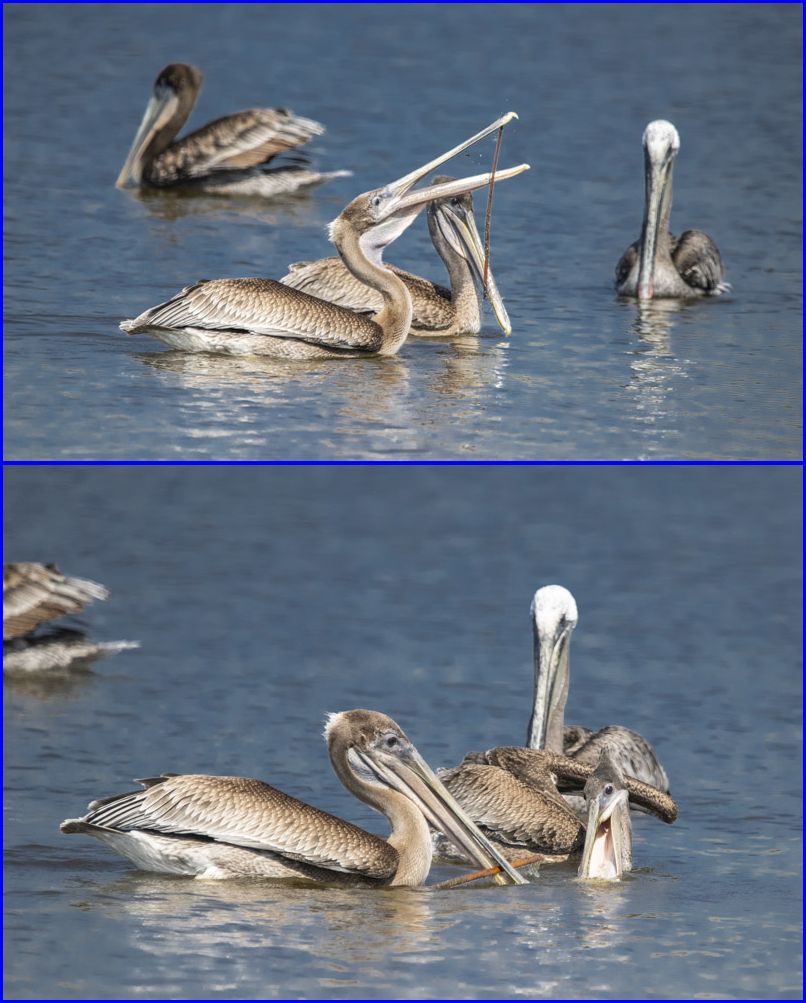
It begins to get a bit boisterous and mom or dad moves in.
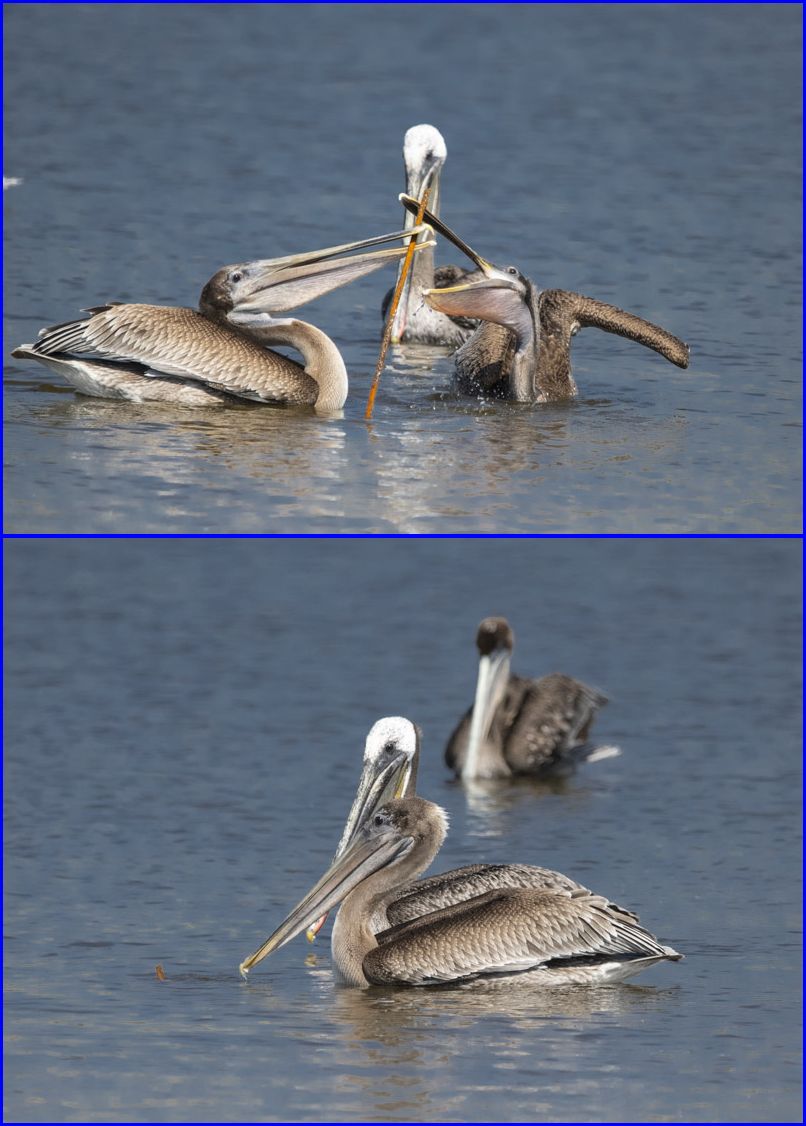
But mom, or dad, snags it…
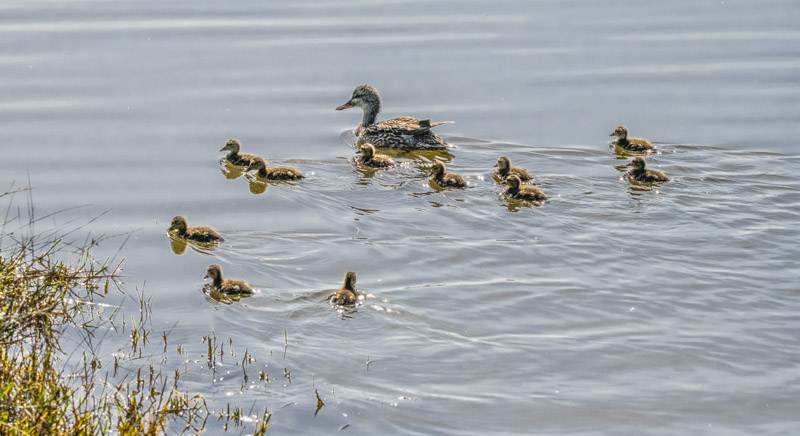
Sometimes mother Gadwall had nine ducklings, sometimes eleven, sometimes twelve.
We don’t have any photos, but we were all surprised to see Ruddy Ducks. Sometimes there were one, sometimes three, one of us thought four. I promised I’d look up June lagoon records for them.
Year-round for 12/1/79 – 6/22/25: 2,967 birds on 164 occasions.
June only: 16 birds total on 3 occasions, July only: 6 birds total on 3 occasions
November: 622 birds total on 26 occasions, December: 583 birds total on 27 occasions.
Present mostly Oct – March. Presence year-round 1/1/10 – present: 56%
So…we were right, Ruddys are rarely here in June. Prior sightings were 7 birds on 6/27/10 and 6 on 6/24/07.
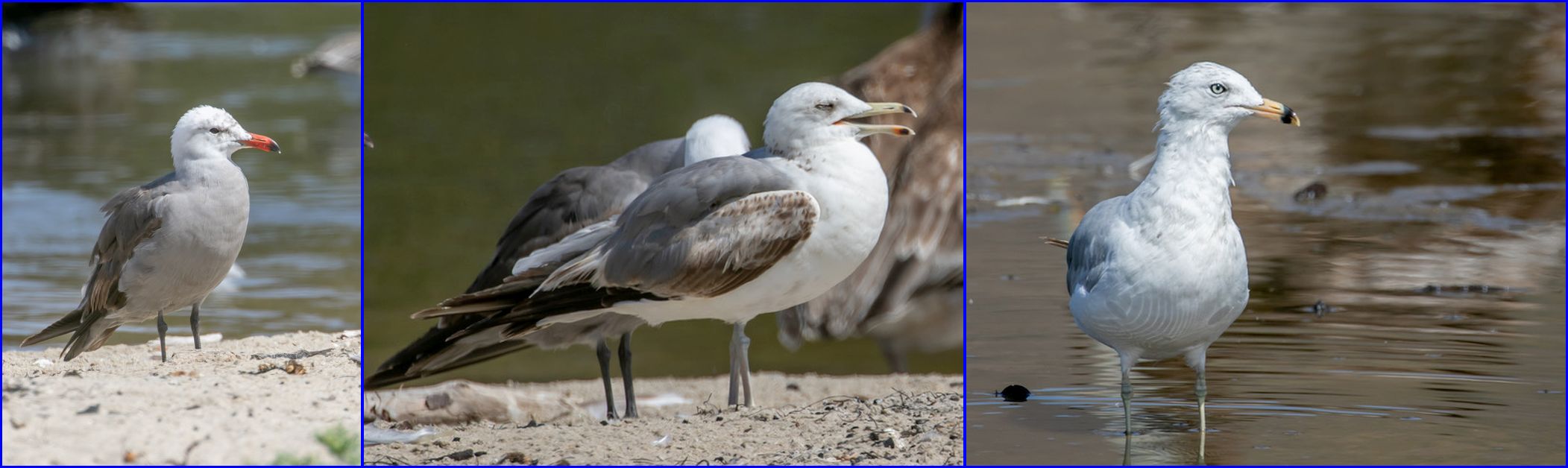
We didn’t have a lot of gulls, only 102. Here’s three of the four species. The Heermann’s Gulls, like the adult below, have returned in small numbers from their nesting grounds on Isla Rasa in the Sea of Cortez.
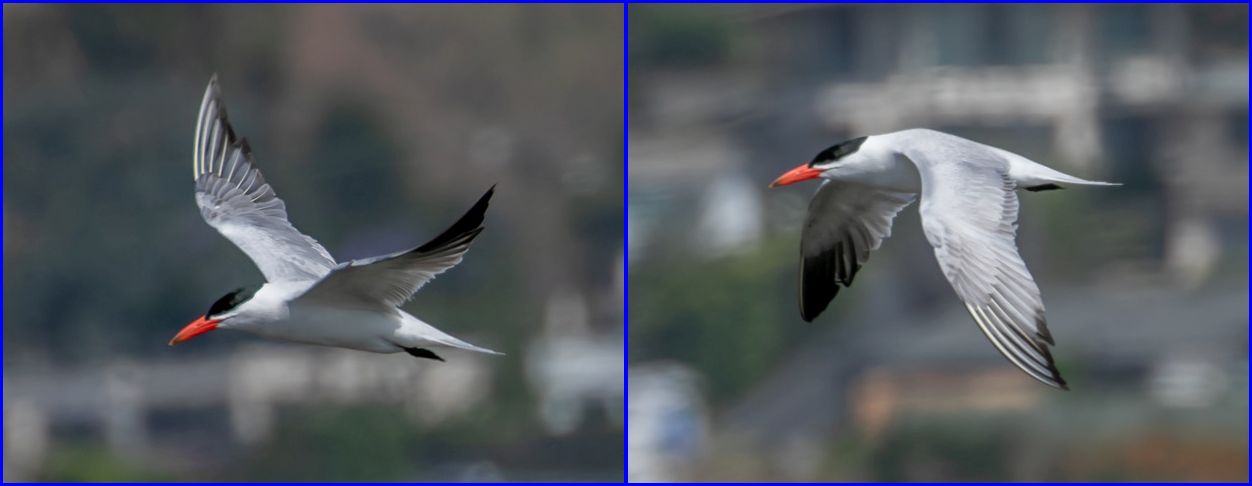
The Caspian Tern Hydroprogne caspia is the largest tern in the world and has a “sub-cosmopolitan” distribution. It was first collected in 1770 near the Caspian Sea, adjacent to its largest breeding area, and described by Peter Simon Pallas. Pallas seems to have specialized in this region as Pallas’ Gull and Pallas’ Sandgrouse, obviously named for him, also nest adjacent to the Caspian Sea. Caspian Terns also nest in several locations in northern California and regularly visit the lagoon in small numbers. To date we’ve seen 1,168 birds on 155 visits, or 47% of visits. Presence is primarily March-August, peaking in April. The blood-red bill, usually with a dark tip, the dark cap and large size give it away.
Caspian Tern range: Orange: breeding; Yellow: migration; Purple: year round; Blue: non-breeding (wintering). Wikipedia

Oh no, we’ve reached the end, in recognition of which is this semi-snoozing waterfowl. What is it and why?
I wanted to mention the water level again. The lagoon outflow channel to the sea has silted in, and the lagoon water was quite high, higher than actual sea level which was at high tide at 8:24 am, and possibly higher than I’ve ever seen it before. The railing around the summer clock sidewalk barely emerged from the water, just like in last month’s photo.
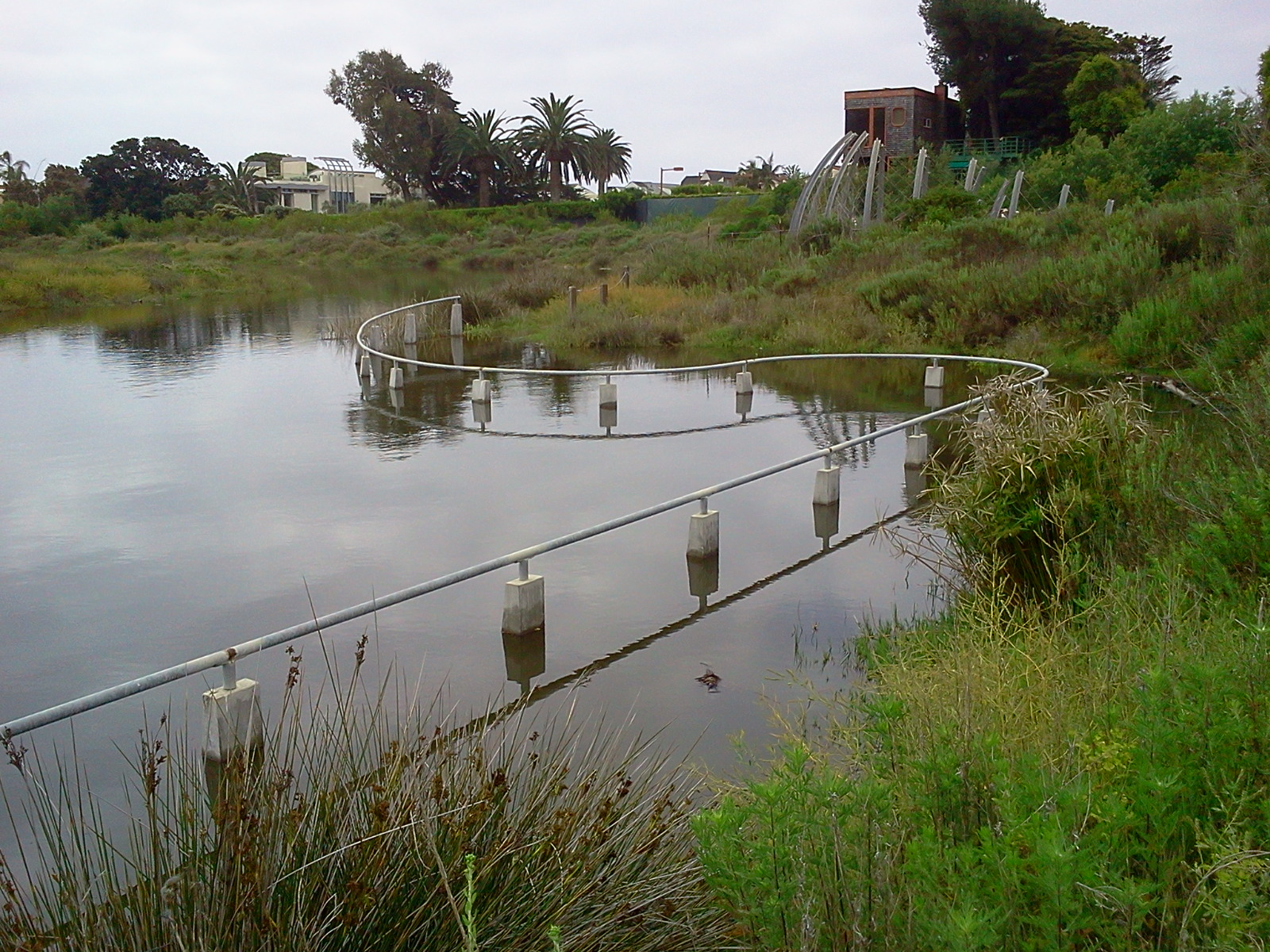
According to the designers, for every inch of water level rise in the lagoon, the water moves four feet up the sidewalk. Tiles (see below) spaced along the sidewalk below the metal railing tell you the water height. Last month the water’s edge was a couple of feet to the right of this marker below. This month the marker was under 2″ of water. As the lagoon is closed to the ocean, this is lagoon water level only, fed solely by water coming down the creek; the level of the sea has almost nothing to do with it.
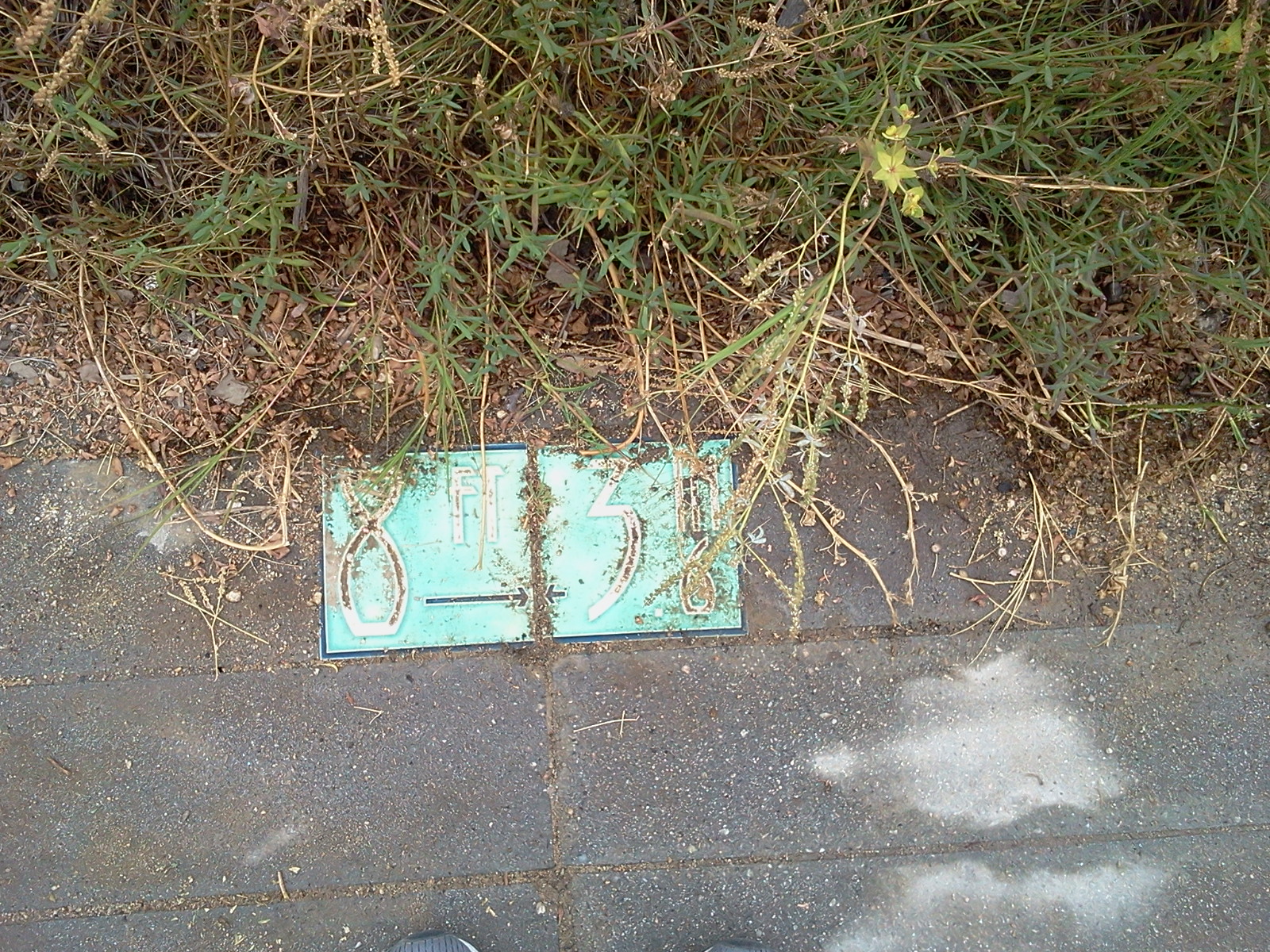
Not every lagoon in the world can claim to have it’s own water level marking system.
Malibu Lagoon on eBird as of 6-23-25: 8632 lists, 2768 eBirders, 321 species
Most recent new species seen: Nelson’s Sparrow, 11/29/24 by Femi Faminu (SMBAS member). When the newest species added to the list was seen on a date prior to the most recently seen new species, there is no way I can find to easily determine what that bird is. Another minor nit to pick about eBird.
Birds new for the season: Brant, Willet, Heermann’s Gull, Black-crowned Night Heron, Peregrine Falcon. “New for the season” means it has been three or more months since last recorded on our trips.
Many, many thanks to photographers Ray Juncosa & Chris Tosdevin.
Upcoming SMBAS scheduled field trips; no reservations or Covid card necessary unless specifically mentioned:
- Malibu Lagoon, Sun. July 27, 8:30 (adults) & 10 am (parents & kids)
- Lower Los Angeles River, Sat. Aug 9, 7am (to beat the heat) reservations
- Malibu Lagoon, Sun. August 24, 8:30 (adults) & 10 am (parents & kids)
- These and any other trips we announce for the foreseeable future will depend upon expected status of the Covid/flu/etc. pandemic, not to mention landslides, at trip time. Any trip announced may be canceled shortly before trip date if it seems necessary. By now any other comments should be superfluous.
- Link to Programs & Field Trip schedule.
The next SMBAS Zoom program: October 7, to be announced.
The SMBAS 10 a.m. Parent’s & Kids Birdwalk has again resumed. Reservations not necessary for families, but for groups (scouts, etc.), call Jean (213-522-0062).
Links: Unusual birds at Malibu Lagoon
9/23/02 Aerial photo of Malibu Lagoon
More recent aerial photo
Prior checklists:
2025: Jan-June
2023: Jan-June, July-Dec 2024: Jan-June, July-Dec
2021: Jan-July, July-Dec 2022: Jan-June, July-Dec
2020: Jan-July, July-Dec 2019: Jan-June, July-Dec
2018: Jan-June, July-Dec 2017: Jan-June, July-Dec
2016: Jan-June, July-Dec 2015: Jan-May, July-Dec
2014: Jan-July, July-Dec 2013: Jan-June, July-Dec
2012: Jan-June, July-Dec 2011: Jan-June, July-Dec
2010: Jan-June, July-Dec 2009: Jan-June, July-Dec
The 10-year comparison summaries created during the Lagoon Reconfiguration Project period, remain available—despite numerous complaints—on our Lagoon Project Bird Census Page. Very briefly summarized, the results unexpectedly indicate that avian species diversification and numbers improved slightly during the restoration period June’12-June’14.
Many thanks to Marie Barnidge-McIntyre & Chris Tosdevin for contributions made to this month’s census counts.
The species list below was re-sequenced as of 12/31/24 to agree with the California Bird Records Committee Official California Checklist. If part of the right side of the chart below is hidden, there’s a slider button inconveniently located at the bottom end of the list. The numbers 1-9 left of the species names are keyed to the nine categories of birds at the bottom. Updated lagoon bird check lists can be downloaded here.
[Chuck Almdale]
| Malibu Census 2025 | 1/30 | 2/23 | 3/23 | 4/27 | 5/25 | 6/22 | |
| Temperature | 57-59 | 57-70 | 54-64 | 56-64 | 63-68 | 66-73 | |
| Tide Lo/Hi Height | H+6.14 | H+4.79 | H+4.15 | H+4.29 | H+3.78 | H+3.31 | |
| Tide Time | 0913 | 0526 | 0433 | 0957 | 0909 | 0824 | |
| 1 | Brant (Black) | 1 | |||||
| 1 | Canada Goose | 2 | 2 | 8 | 1 | 5 | |
| 1 | Cinnamon Teal | 5 | 6 | ||||
| 1 | Northern Shoveler | 6 | |||||
| 1 | Gadwall | 89 | 9 | 35 | 10 | 24 | 25 |
| 1 | Mallard | 22 | 6 | 22 | 21 | 26 | 20 |
| 1 | Green-winged Teal | 5 | 16 | 6 | |||
| 1 | Lesser Scaup | 2 | |||||
| 1 | Surf Scoter | 15 | 6 | ||||
| 1 | Bufflehead | 23 | |||||
| 1 | Red-breasted Merganser | 12 | 8 | 3 | 1 | ||
| 1 | Ruddy Duck | 37 | 17 | 11 | 10 | 4 | 3 |
| 2 | Pied-billed Grebe | 4 | 7 | 8 | 4 | 4 | 4 |
| 2 | Eared Grebe | 1 | |||||
| 2 | Western Grebe | 34 | 30 | 30 | 25 | 4 | 2 |
| 7 | Feral Pigeon | 6 | 5 | 1 | 6 | 5 | |
| 7 | Mourning Dove | 1 | 2 | 2 | 1 | ||
| 8 | Anna’s Hummingbird | 3 | 3 | 3 | 1 | 1 | |
| 8 | Allen’s Hummingbird | 1 | 5 | 6 | 5 | 2 | 2 |
| 2 | American Coot | 797 | 45 | 55 | 11 | 4 | 1 |
| 5 | Black-bellied Plover | 30 | 30 | ||||
| 5 | Killdeer | 2 | 4 | 4 | 3 | 2 | 5 |
| 5 | Semipalmated Plover | 2 | |||||
| 5 | Snowy Plover | 2 | 2 | 3 | |||
| 5 | Whimbrel | 8 | 5 | 8 | 3 | ||
| 5 | Marbled Godwit | 3 | 2 | 8 | |||
| 5 | Ruddy Turnstone | 2 | 4 | ||||
| 5 | Sanderling | 22 | |||||
| 5 | Dunlin | 1 | |||||
| 5 | Least Sandpiper | 7 | 14 | 5 | 1 | ||
| 5 | Western Sandpiper | 16 | 34 | ||||
| 5 | Spotted Sandpiper | 1 | 1 | 1 | |||
| 5 | Willet | 15 | 8 | 10 | 1 | ||
| 5 | Greater Yellowlegs | 2 | |||||
| 6 | Heermann’s Gull | 7 | 1 | 13 | |||
| 6 | Ring-billed Gull | 12 | 12 | 6 | 2 | 3 | 5 |
| 6 | Western Gull | 90 | 55 | 20 | 20 | 70 | 79 |
| 6 | California Gull | 575 | 105 | 1 | 2 | 82 | 5 |
| 6 | American Herring Gull | 1 | 2 | 1 | |||
| 6 | Glaucous-winged Gull | 3 | 1 | ||||
| 6 | Caspian Tern | 11 | 2 | 6 | 4 | ||
| 6 | Royal Tern | 5 | 10 | ||||
| 6 | Elegant Tern | 2 | |||||
| 2 | Red-throated Loon | 1 | |||||
| 2 | Pacific Loon | 1 | 1 | 1 | |||
| 2 | Common Loon | 4 | 10 | ||||
| 2 | Brandt’s Cormorant | 7 | 1 | 5 | 12 | ||
| 2 | Pelagic Cormorant | 2 | 1 | ||||
| 2 | Double-crested Cormorant | 55 | 25 | 25 | 25 | 7 | 18 |
| 2 | American White Pelican | 5 | |||||
| 2 | Brown Pelican | 23 | 29 | 200 | 25 | 157 | 138 |
| 3 | Snowy Egret | 5 | 6 | 5 | 1 | 2 | 1 |
| 3 | Black-crowned Night-Heron | 1 | 4 | ||||
| 3 | Great Egret | 1 | 2 | 2 | 1 | 1 | 3 |
| 3 | Western Cattle-Egret | 1 | |||||
| 3 | Great Blue Heron | 1 | 2 | 1 | 1 | 9 | |
| 4 | Turkey Vulture | 2 | |||||
| 4 | Osprey | 2 | 1 | 1 | 1 | ||
| 4 | Cooper’s Hawk | 1 | 1 | ||||
| 4 | Bald Eagle | 1 | |||||
| 4 | Red-shouldered Hawk | 1 | |||||
| 4 | Red-tailed Hawk | 1 | 1 | 1 | 1 | ||
| 8 | Belted Kingfisher | 1 | 1 | ||||
| 8 | Nuttall’s Woodpecker | 1 | |||||
| 4 | Peregrine Falcon | 1 | |||||
| 8 | Nanday Parakeet | 4 | 2 | 2 | |||
| 9 | Cassin’s Kingbird | 1 | 1 | 1 | |||
| 9 | Black Phoebe | 1 | 3 | 3 | 1 | 2 | 2 |
| 9 | Say’s Phoebe | 1 | |||||
| 9 | California Scrub-Jay | 1 | 1 | 1 | |||
| 9 | American Crow | 9 | 26 | 6 | 5 | 6 | 6 |
| 9 | Common Raven | 2 | 9 | 2 | 1 | ||
| 9 | Oak Titmouse | 1 | |||||
| 9 | Tree Swallow | 5 | 1 | ||||
| 9 | Violet-green Swallow | 5 | |||||
| 9 | No. Rough-winged Swallow | 17 | 20 | 7 | 1 | ||
| 9 | Barn Swallow | 10 | 20 | 18 | 22 | ||
| 9 | Cliff Swallow | 3 | 7 | 24 | 24 | ||
| 9 | Bushtit | 4 | 5 | 25 | 2 | 3 | 12 |
| 9 | Wrentit | 1 | 1 | 4 | 2 | 2 | 2 |
| 9 | Ruby-crowned Kinglet | 1 | 1 | ||||
| 9 | Blue-gray Gnatcatcher | 1 | |||||
| 9 | Bewick’s Wren | 1 | |||||
| 9 | Northern Mockingbird | 1 | 1 | ||||
| 9 | European Starling | 1 | 10 | 10 | 10 | 6 | |
| 9 | Western Bluebird | 1 | |||||
| 9 | House Finch | 8 | 9 | 26 | 15 | 5 | 4 |
| 9 | Lesser Goldfinch | 10 | 4 | 2 | 2 | ||
| 9 | Dark-eyed Junco | 1 | 1 | 1 | 2 | ||
| 9 | White-crowned Sparrow | 8 | 7 | 5 | 1 | ||
| 9 | Song Sparrow | 12 | 8 | 10 | 8 | 6 | 5 |
| 9 | California Towhee | 2 | 3 | 3 | 3 | 2 | 1 |
| 9 | Spotted Towhee | 1 | 1 | 2 | |||
| 9 | Hooded Oriole | 1 | 1 | 1 | |||
| 9 | Brown-headed Cowbird | 2 | |||||
| 9 | Great-tailed Grackle | 2 | 3 | 6 | 8 | ||
| 9 | Orange-crowned Warbler | 1 | 1 | 3 | 1 | 2 | |
| 9 | Common Yellowthroat | 2 | 2 | 6 | 4 | 5 | |
| 9 | Yellow-rumped Warbler | 6 | 8 | 3 | |||
| 9 | Wilson’s Warbler | 1 | |||||
| Totals Birds by Type | Jan | Feb | Mar | Apr | May | Jun | |
| 1 | Waterfowl | 196 | 78 | 91 | 50 | 55 | 54 |
| 2 | Water Birds – Other | 922 | 144 | 339 | 104 | 176 | 163 |
| 3 | Herons, Egrets & Ibis | 7 | 8 | 10 | 4 | 4 | 17 |
| 4 | Quail & Raptors | 0 | 5 | 3 | 4 | 3 | 1 |
| 5 | Shorebirds | 92 | 86 | 76 | 9 | 2 | 6 |
| 6 | Gulls & Terns | 685 | 183 | 52 | 26 | 161 | 106 |
| 7 | Doves | 6 | 5 | 1 | 3 | 8 | 6 |
| 8 | Other Non-Passerines | 1 | 14 | 10 | 10 | 5 | 3 |
| 9 | Passerines | 57 | 92 | 160 | 115 | 103 | 103 |
| Totals Birds | 1966 | 615 | 742 | 325 | 517 | 459 | |
| Total Species by Group | Jan | Feb | Mar | Apr | May | Jun | |
| 1 | Waterfowl | 8 | 8 | 8 | 5 | 4 | 5 |
| 2 | Water Birds – Other | 8 | 9 | 9 | 8 | 5 | 5 |
| 3 | Herons, Egrets & Ibis | 3 | 2 | 4 | 4 | 3 | 4 |
| 4 | Quail & Raptors | 0 | 4 | 3 | 3 | 3 | 1 |
| 5 | Shorebirds | 10 | 10 | 10 | 4 | 1 | 2 |
| 6 | Gulls & Terns | 5 | 7 | 8 | 4 | 4 | 5 |
| 7 | Doves | 1 | 1 | 1 | 2 | 2 | 2 |
| 8 | Other Non-Passerines | 1 | 5 | 3 | 3 | 3 | 2 |
| 9 | Passerines | 14 | 20 | 25 | 22 | 21 | 16 |
| Totals Species – 100 | 50 | 66 | 71 | 55 | 46 | 42 |
Discover more from SANTA MONICA BAY AUDUBON SOCIETY BLOG
Subscribe to get the latest posts sent to your email.



 SANTA MONICA BAY AUDUBON SOCIETY BLOG