A Ruddy Good Day, mate! Malibu Lagoon, 27 July 2025
[By Chuck Almdale; Photos by Lillian Johnson, Ray Juncosa, Armando Martinez & Chris Tosdevin]
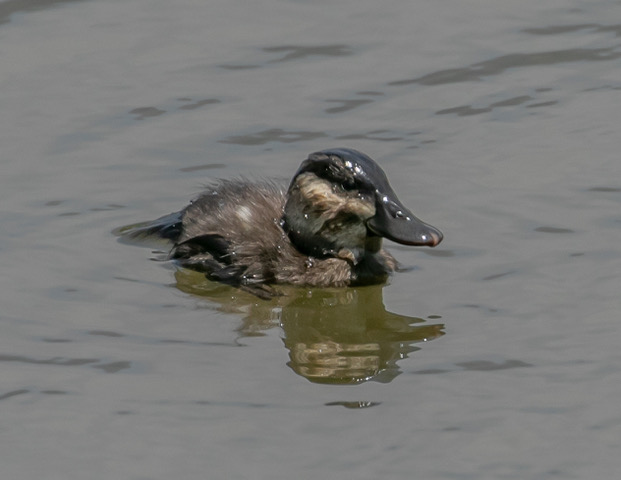
Last month we were surprised to see three Ruddy Ducks in the lagoon, and our lagoon statistics revealed their prior presence in June only two times in 45 years, on 6/24/07 and 6/27/10. This month we had nineteen: two females with families of eight and nine ducklings. No males to be found; probably hiding in waterside brush, busily molting feathers. A few peculiarities of the Ruddy: they cannot walk upright on land, can sink straight down into the water without leaving a ripple; sometimes lay their eggs in the nest of grebes or other ducks; their seventy-one different names* include blatherskite, dumpling duck, little soldier, sprig-tail and water partridge; 75% of their diet are water plants.

The day was cloudy and ever-so-slightly cool, but Malibu Beach in July is surprisingly balmy; our range today was 64-70°F (8-11:30am), but average for the past six years is 66-72° for the same time of day. No broiling in the sun here in July; that’s August and September, when you can fry an egg on the sand.

How many people have never noticed the baby-blue eye-ring on the Mourning Dove? Check it out next time you see one staring at you from your window-ledge flower pot where it just built its nest.

The Pied-billed Grebe was still on its nest in the reeds. I thought it had gotten inundated and left, but I was looking in the wrong spot until Chris Tosdevin pointed my nose at it.

There were a few Caspian’s among the Royal Terns on the beach. Around 9am the Royals were making a terrible racket, then most flew away. It’s tough to tell that this is a Caspian below, but that’s what the extent of the dark undersides of the primaries indicates…and you can just barely make out a dark tip on that red-looking bill.

There are some swallows nesting under the PCH bridge back in the very dark recesses that I think are Barn Swallow, not Cliff, but it’s so dim there I can’t really tell. Nearly all of what flies under the bridge are Barn. But all the swallow species like sitting on this bare tree right next to the bridge’s west end, although there’s just one lonely juvenile (incomplete dark breast-band) Barn Swallow below.

Ruddy Turnstones are back, still in most of their bright breeding colors.

And we had a scattering of Least and Western Sandpipers in the SW corner of the lagoon, along with other sandpipers, plovers, herons and egrets.

We had a good variety of plovers although not in large numbers.


Look closely at the bird’s left foot above and you’ll see a snipped of the “semipalmation.”

Phalaropes are another group of birds we don’t see a lot of, and when we do, 90% of the time they’re Red-necked Phalarope. But this time we got a Wilson’s, the one with the longest, thinnest bill, decked out in what looks like the plainest juvenile plumage available. The three phalarope species are among the few dozen “polyandrous with sexual dimorphism reversal” species on the planet. I wrote a short blog series about them a while back. (Link) They’re an interesting group of birds, and most of the women I know enjoy reading about them (can’t imagine why).

Don’t hold your breath waiting for another Red Phalarope to drop in.


We spotted ten starlings in a palm tree next to the small golf course on the other side of the western wall. First twelve left, leaving seven birds, then five left, leaving five birds, then the remaining eight left.


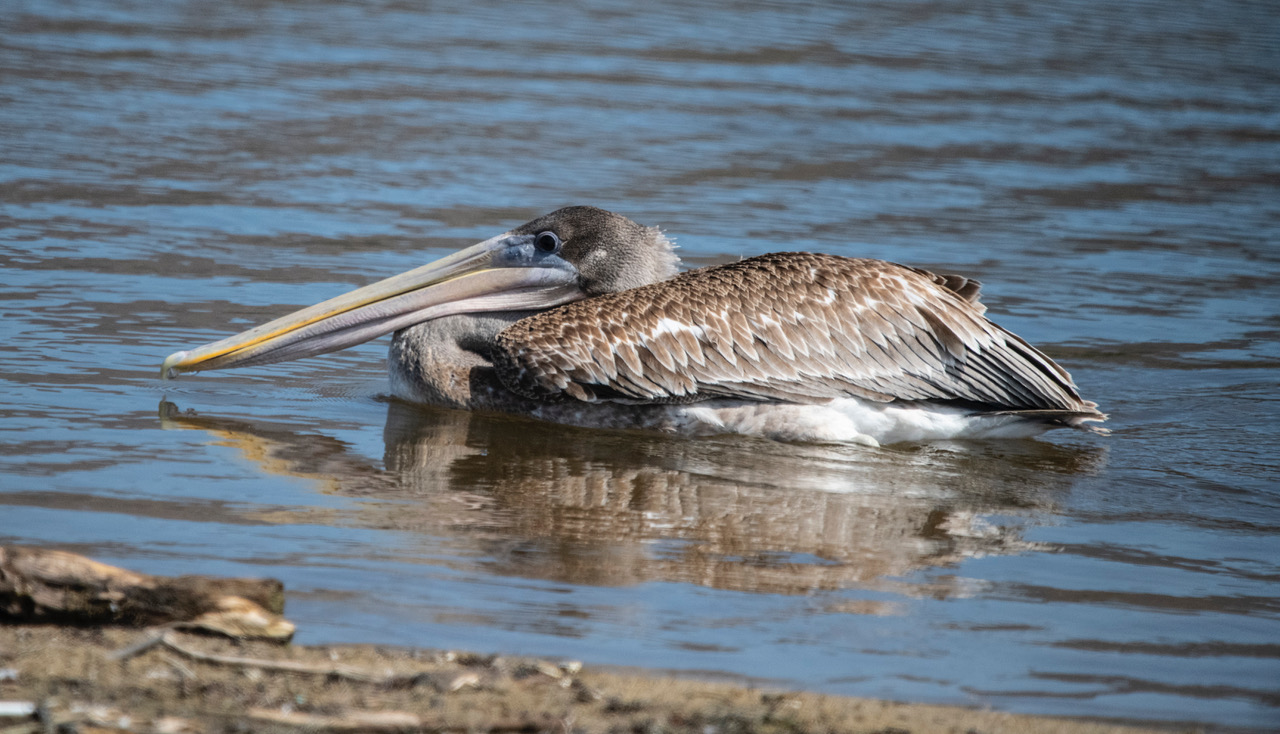
It’s just an optical illusion that this pelican poked its bill clear through its wing.
It’s tough to tell exactly what this male Bushtit is thinking, but it’s definitely pondering something.

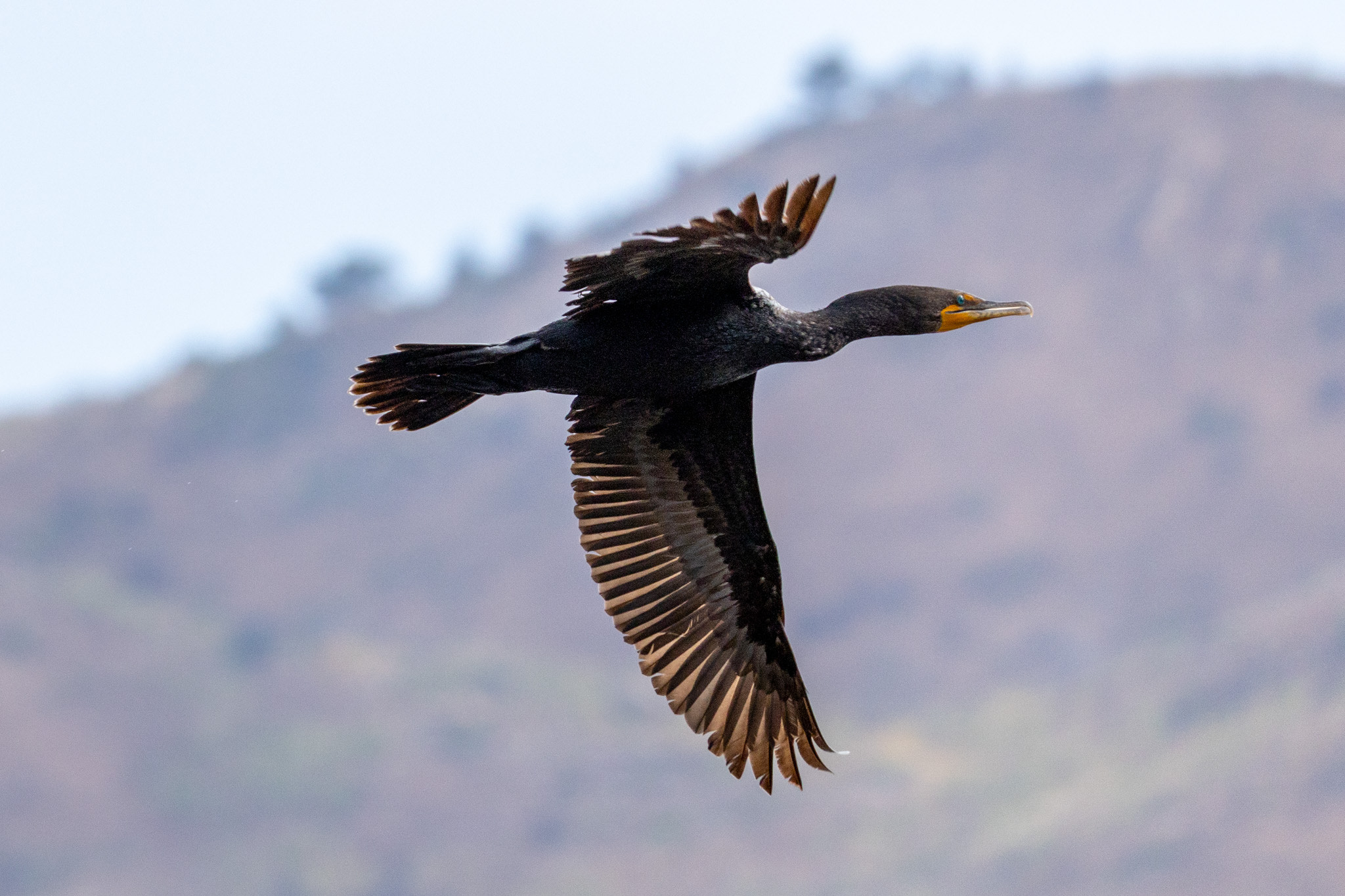
It can be very hard to identify distant flying cormorants, but this crook in the neck ID’s this bird below as Double-crested. As the currently-range-expanding Neotropical Cormorant is very similar, albeit smaller, I like to point out that it does not have that little bit of orange flesh over the eye that you can see on this bird.
Red-breasted Mergansers are back from nesting to the north. This one looks exceptionally flat-headed. Some sort of weird optical illusion?

And Heermann’s Gull numbers continue to grow, from 13 last month to 36. The most we’ve ever had, out of 307 appearances at the lagoon, was 350 birds on 4/26/15. Compare that to California Gulls who out of 282 appearances have topped 1,000 birds 21 times. I don’t know how far south of their nesting site on Isla Rasa they travel in their post-breeding dispersal, but I’ve seen them up near the Olympic Penn. in Washington. I’m fond of them because they’re very easy to identify in all their plumages.

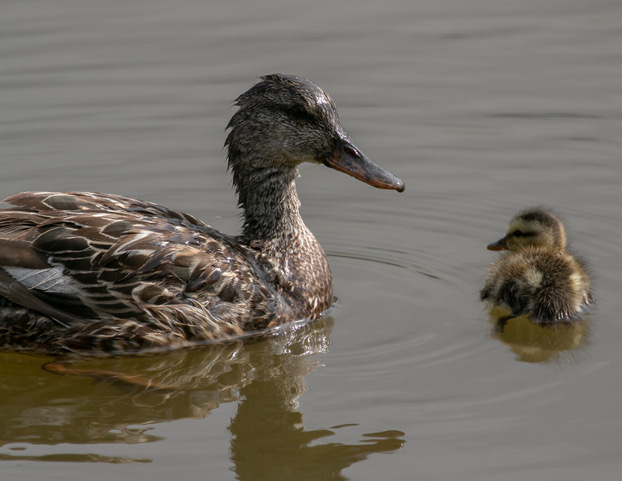
Mother and child: the Gadwall edition.
This thing is so beautiful that it just has to be edible. But how?

As we were leaving we spotted our last species of the day, who had just captured what may be its first meal of the day. Any fish ID-ers out there? Top smelt?

*Ruddy Duck names listed in Audubon Society Enclyclopedia of North American Birds, John K. Terres, editor. 1980
Malibu Lagoon on eBird as of 7-27-25: 8693 lists, 2796 eBirders, 321 species
Most recent new species seen: Nelson’s Sparrow, 11/29/24 by Femi Faminu (SMBAS member). When the newest species added to the list was seen on a date prior to the most recently seen new species, there is no way I can find to easily determine what that bird is. Another minor nit to pick about eBird.
Birds new for the season: Red-breasted Merganser, Black-bellied Plover, Semipalmated Plover, Western Snowy Plover, Whimbrel, Ruddy Turnstone, Least Sandpiper, Western Sandpiper, Wilson’s Phalarope, Royal Tern, Brandt’s Cormorant, Pelagic Cormorant, Green Heron, Belted Kingfisher, Nuttall’s Woodpecker.. “New for the season” means it has been three or more months since last recorded on our trips.
Many, many thanks to photographers Lillian Johnson, Ray Juncosa. Armando Martinez & Chris Tosdevin.
Upcoming SMBAS scheduled field trips; no reservations or Covid card necessary unless specifically mentioned:
- Malibu Lagoon, Sun. August 24, 8:30 (adults) & 10 am (parents & kids)
- We may do something in early Sept. on a Saturday.
- Coastal Cleanup at the Lagoon, Sat. Sept. 20, 9-12
- Malibu Lagoon, Sun. Sept. 28, 8:30 (adults) & 10 am (parents & kids)
- These and any other trips we announce for the foreseeable future will depend upon expected status of the Covid/flu/etc. pandemic, not to mention landslides, at trip time. Any trip announced may be canceled shortly before trip date if it seems necessary. By now any other comments should be superfluous.
- Link to Programs & Field Trip schedule.
The next SMBAS Zoom program: October 7, to be announced.
The SMBAS 10 a.m. Parent’s & Kids Birdwalk has again resumed. Reservations not necessary for families, but for groups (scouts, etc.), call Jean (213-522-0062).
Links: Unusual birds at Malibu Lagoon
9/23/02 Aerial photo of Malibu Lagoon
More recent aerial photo
Prior checklists:
2025: Jan-June
2023: Jan-June, July-Dec 2024: Jan-June, July-Dec
2021: Jan-July, July-Dec 2022: Jan-June, July-Dec
2020: Jan-July, July-Dec 2019: Jan-June, July-Dec
2018: Jan-June, July-Dec 2017: Jan-June, July-Dec
2016: Jan-June, July-Dec 2015: Jan-May, July-Dec
2014: Jan-July, July-Dec 2013: Jan-June, July-Dec
2012: Jan-June, July-Dec 2011: Jan-June, July-Dec
2010: Jan-June, July-Dec 2009: Jan-June, July-Dec
The 10-year comparison summaries created during the Lagoon Reconfiguration Project period, remain available—despite numerous complaints—on our Lagoon Project Bird Census Page. Very briefly summarized, the results unexpectedly indicate that avian species diversification and numbers improved slightly during the restoration period June’12-June’14.
Many thanks to Marie Barnidge-McIntyre, Femi Faminu, Lillian Johnson & Chris Tosdevin for contributions made to this month’s census counts.
The species list below was re-sequenced as of 12/31/24 to agree with the California Bird Records Committee Official California Checklist, mostly. If part of the right side of the chart below is hidden, there’s a slider button inconveniently located at the bottom end of the list. The numbers 1-9 left of the species names are keyed to the nine categories of birds at the bottom. Updated lagoon bird check lists can be downloaded here.
[Chuck Almdale]
| Malibu Census 2025 | 2/23 | 3/23 | 4/27 | 5/25 | 6/22 | 7/27 | |
| Temperature | 57-70 | 54-64 | 56-64 | 63-68 | 66-73 | 64-70 | |
| Tide Lo/Hi Height | H+4.79 | H+4.15 | H+4.29 | H+3.78 | H+3.31 | L-0.46 | |
| Tide Time | 0526 | 0433 | 0957 | 0909 | 0824 | 0605 | |
| 1 | Brant (Black) | 1 | |||||
| 1 | Canada Goose | 2 | 2 | 8 | 1 | 5 | 1 |
| 1 | Cinnamon Teal | 5 | 6 | ||||
| 1 | Gadwall | 9 | 35 | 10 | 24 | 25 | 20 |
| 1 | Mallard | 6 | 22 | 21 | 26 | 20 | 40 |
| 1 | Green-winged Teal | 16 | 6 | ||||
| 1 | Surf Scoter | 15 | 6 | ||||
| 1 | Red-breasted Merganser | 8 | 3 | 1 | 1 | ||
| 1 | Ruddy Duck | 17 | 11 | 10 | 4 | 3 | 19 |
| 2 | Pied-billed Grebe | 7 | 8 | 4 | 4 | 4 | 3 |
| 2 | Western Grebe | 30 | 30 | 25 | 4 | 2 | |
| 7 | Feral Pigeon | 5 | 1 | 6 | 5 | 5 | |
| 7 | Mourning Dove | 1 | 2 | 2 | 1 | 2 | |
| 8 | Anna’s Hummingbird | 3 | 3 | 3 | 1 | 1 | |
| 8 | Allen’s Hummingbird | 5 | 6 | 5 | 2 | 2 | 4 |
| 2 | American Coot | 45 | 55 | 11 | 4 | 1 | 6 |
| 5 | Black-bellied Plover | 30 | 21 | ||||
| 5 | Killdeer | 4 | 4 | 3 | 2 | 5 | 4 |
| 5 | Semipalmated Plover | 2 | 4 | ||||
| 5 | Snowy Plover | 2 | 3 | 13 | |||
| 5 | Whimbrel | 5 | 8 | 3 | 1 | ||
| 5 | Marbled Godwit | 2 | 8 | ||||
| 5 | Ruddy Turnstone | 4 | 3 | ||||
| 5 | Dunlin | 1 | |||||
| 5 | Least Sandpiper | 14 | 5 | 1 | 10 | ||
| 5 | Western Sandpiper | 16 | 34 | 4 | |||
| 5 | Spotted Sandpiper | 1 | 1 | ||||
| 5 | Willet | 8 | 10 | 1 | |||
| 5 | Greater Yellowlegs | 2 | |||||
| 5 | Wilson’s Phalarope | 1 | |||||
| 6 | Heermann’s Gull | 1 | 13 | 36 | |||
| 6 | Ring-billed Gull | 12 | 6 | 2 | 3 | 5 | 2 |
| 6 | Western Gull | 55 | 20 | 20 | 70 | 79 | 52 |
| 6 | California Gull | 105 | 1 | 2 | 82 | 5 | 1 |
| 6 | American Herring Gull | 2 | 1 | ||||
| 6 | Glaucous-winged Gull | 3 | 1 | ||||
| 6 | Caspian Tern | 11 | 2 | 6 | 4 | 4 | |
| 6 | Royal Tern | 5 | 10 | 21 | |||
| 6 | Elegant Tern | 2 | |||||
| 2 | Red-throated Loon | 1 | |||||
| 2 | Pacific Loon | 1 | 1 | ||||
| 2 | Common Loon | 4 | 10 | ||||
| 2 | Brandt’s Cormorant | 1 | 5 | 12 | 1 | ||
| 2 | Pelagic Cormorant | 2 | 1 | 1 | |||
| 2 | Double-crested Cormorant | 25 | 25 | 25 | 7 | 18 | 98 |
| 2 | American White Pelican | 5 | |||||
| 2 | Brown Pelican | 29 | 200 | 25 | 157 | 138 | 118 |
| 3 | Snowy Egret | 6 | 5 | 1 | 2 | 1 | 10 |
| 3 | Black-crowned Night-Heron | 1 | 4 | 1 | |||
| 3 | Green Heron | 1 | |||||
| 3 | Great Egret | 2 | 2 | 1 | 1 | 3 | 4 |
| 3 | Western Cattle-Egret | 1 | |||||
| 3 | Great Blue Heron | 2 | 1 | 1 | 9 | 5 | |
| 4 | Turkey Vulture | 2 | |||||
| 4 | Osprey | 2 | 1 | 1 | 1 | 1 | |
| 4 | Cooper’s Hawk | 1 | 1 | ||||
| 4 | Bald Eagle | 1 | |||||
| 4 | Red-shouldered Hawk | 1 | 1 | ||||
| 4 | Red-tailed Hawk | 1 | 1 | 1 | 1 | ||
| 8 | Belted Kingfisher | 1 | 1 | 1 | |||
| 8 | Nuttall’s Woodpecker | 1 | 1 | ||||
| 4 | Peregrine Falcon | 1 | |||||
| 8 | Nanday Parakeet | 4 | 2 | 2 | |||
| 9 | Cassin’s Kingbird | 1 | 1 | 1 | |||
| 9 | Black Phoebe | 3 | 3 | 1 | 2 | 2 | 2 |
| 9 | Say’s Phoebe | 1 | |||||
| 9 | California Scrub-Jay | 1 | 1 | ||||
| 9 | American Crow | 26 | 6 | 5 | 6 | 6 | 9 |
| 9 | Common Raven | 2 | 9 | 2 | 1 | ||
| 9 | Oak Titmouse | 1 | |||||
| 9 | Tree Swallow | 5 | 1 | ||||
| 9 | Violet-green Swallow | 5 | |||||
| 9 | No. Rough-winged Swallow | 17 | 20 | 7 | 1 | 5 | |
| 9 | Barn Swallow | 10 | 20 | 18 | 22 | 20 | |
| 9 | Cliff Swallow | 3 | 7 | 24 | 24 | 12 | |
| 9 | Bushtit | 5 | 25 | 2 | 3 | 12 | 20 |
| 9 | Wrentit | 1 | 4 | 2 | 2 | 2 | 2 |
| 9 | Ruby-crowned Kinglet | 1 | |||||
| 9 | Blue-gray Gnatcatcher | 1 | |||||
| 9 | Northern Mockingbird | 1 | 1 | ||||
| 9 | European Starling | 1 | 10 | 10 | 10 | 6 | 25 |
| 9 | Western Bluebird | 1 | |||||
| 9 | House Finch | 9 | 26 | 15 | 5 | 4 | 5 |
| 9 | Lesser Goldfinch | 10 | 4 | 2 | 2 | ||
| 9 | Dark-eyed Junco | 1 | 1 | 1 | 2 | 1 | |
| 9 | White-crowned Sparrow | 7 | 5 | 1 | |||
| 9 | Song Sparrow | 8 | 10 | 8 | 6 | 5 | 3 |
| 9 | California Towhee | 3 | 3 | 3 | 2 | 1 | 1 |
| 9 | Spotted Towhee | 1 | 1 | 2 | |||
| 9 | Hooded Oriole | 1 | 1 | 1 | 2 | ||
| 9 | Brown-headed Cowbird | 2 | |||||
| 9 | Great-tailed Grackle | 2 | 3 | 6 | 8 | 1 | |
| 9 | Orange-crowned Warbler | 1 | 3 | 1 | 2 | 1 | |
| 9 | Common Yellowthroat | 2 | 6 | 4 | 5 | 1 | |
| 9 | Yellow-rumped Warbler | 8 | 3 | ||||
| 9 | Wilson’s Warbler | 1 | |||||
| Totals Birds by Type | Feb | Mar | Apr | May | Jun | Jul | |
| 1 | Waterfowl | 78 | 91 | 50 | 55 | 54 | 81 |
| 2 | Water Birds – Other | 144 | 339 | 104 | 176 | 163 | 227 |
| 3 | Herons, Egrets & Ibis | 8 | 10 | 4 | 4 | 17 | 21 |
| 4 | Quail & Raptors | 5 | 3 | 4 | 3 | 1 | 2 |
| 5 | Shorebirds | 86 | 76 | 9 | 2 | 6 | 61 |
| 6 | Gulls & Terns | 183 | 52 | 26 | 161 | 106 | 116 |
| 7 | Doves | 5 | 1 | 3 | 8 | 6 | 7 |
| 8 | Other Non-Passerines | 14 | 10 | 10 | 5 | 3 | 6 |
| 9 | Passerines | 92 | 160 | 115 | 103 | 103 | 110 |
| Totals Birds | 615 | 742 | 325 | 517 | 459 | 631 | |
| Total Species by Group | Feb | Mar | Apr | May | Jun | Jul | |
| 1 | Waterfowl | 8 | 8 | 5 | 4 | 5 | 5 |
| 2 | Water Birds – Other | 9 | 9 | 8 | 5 | 5 | 6 |
| 3 | Herons, Egrets & Ibis | 2 | 4 | 4 | 3 | 4 | 5 |
| 4 | Quail & Raptors | 4 | 3 | 3 | 3 | 1 | 2 |
| 5 | Shorebirds | 10 | 10 | 4 | 1 | 2 | 9 |
| 6 | Gulls & Terns | 7 | 8 | 4 | 4 | 5 | 6 |
| 7 | Doves | 1 | 1 | 2 | 2 | 2 | 2 |
| 8 | Other Non-Passerines | 5 | 3 | 3 | 3 | 2 | 3 |
| 9 | Passerines | 20 | 25 | 22 | 21 | 16 | 16 |
| Totals Species | 66 | 71 | 55 | 46 | 42 | 54 |
Discover more from SANTA MONICA BAY AUDUBON SOCIETY BLOG
Subscribe to get the latest posts sent to your email.



 SANTA MONICA BAY AUDUBON SOCIETY BLOG