Four ‘Good Birds’: Malibu Lagoon, 28 Sep. 2025
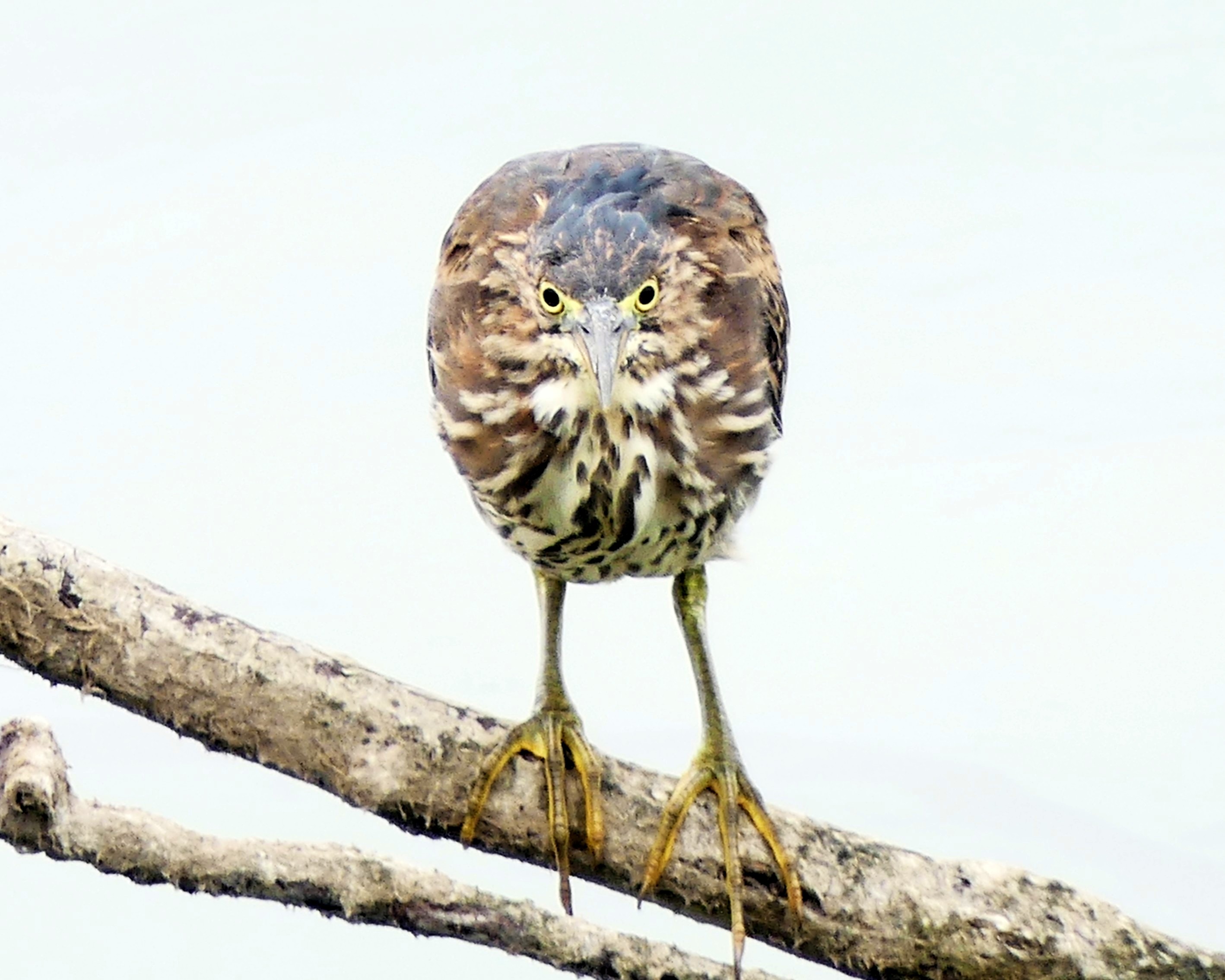
[By Chuck Almdale]
Well, of course all birds are good birds, and any bird is better than no bird, but when two birders meet each other out in the field, that’s been the phrase for decades: “Any good birds around?” Today we had 64 species of birds. which is a pretty good total for September and yes they were all good birds, rest assured of that, and 553 total birds, which is better than June’25 – typically the lowest-of-everything month and which had a total of 459 birds – but not better by much. We’ll start with what was the first good bird spotted by anyone (who just happens to be me, soon joined by Marie and Femi).
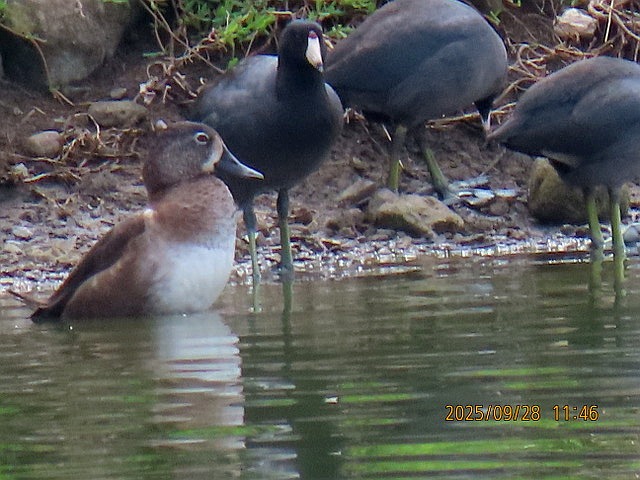
(Emily Roth 9-28-25)
Now for those familiar with Blue-winged Teal, a species common-as-dirt in the east, but uncommon in SoCal, you might say “Wait a minute! What about that big white crescent?” and I’ll admit that’s what I thought it was at first look. But…the head shape didn’t look quite right, or the bill, or the back… The light was not great, the bird was in the shade on the north side of boot-toe island, and the above photograph was the best I received. Two details, difficult to see on the actual bird, barely show in the photo. First is the pale white band on the bill, which is usually so noticeable that many birders call it Ring-billed Duck by mistake (as the neck ring is not even remotely obvious except in a museum holding the skin in your hands). I could not see it on this bird with the first look. On the second look, which was Marie’s and Femi’s first look, the light had brightened a bit, the bird had kindly shifted position a bit, and the band was now visible, barely, much to my surprise.
The second detail is the vertical white breast-to-shoulder mark. Again, in most male Ring-necks we see, this mark is the first thing we notice, but it’s barely visible here. Also visible, barely, was a hint of white line running back from the white eye-ring, just barely noticeable in the photo. I think this is a juvenile male or male in eclipse, but I’m not putting any money on which. This species is rare at the lagoon according to eBird and my numbers below support that [bracketed bird below, other ducks shown for comparison]. We’ve now seen them a whopping nine times, total of 19 birds, since October 1979, a mere 46 years. My experience with them is they prefer fresh water, and the lagoon is probably too brackish or salty for them, so if they drop in, they soon leave and no one sees them.


Our next good bird was seen first by the Palos Verdes Audubon group who were trailing along behind us. This is the best time of year for Sora at the lagoon, as they’re migrating through and where reeds are sufficiently lush and thick, they might stay the winter. I always check all the reed-bed edges for them. There’s one, or more, over at Legacy Park on the other side of PCH, where the reeds are thick and abundant. Soras, and most of the rest of the rails of the world, greatly appreciate good cover, which may have something to do with the relatively high portion of rail species that give up the ability to fly when they don’t need it. In North America, the Sora is the most widespread and the least skulky of the bunch (we’re excluding the even more widespread and abundant and ridiculously obvious American Coot from these statements), but still…it’s a skulky bird. When we passed the reed bed by the topographical water feature, no Sora was visible. Ten minutes later, there was.
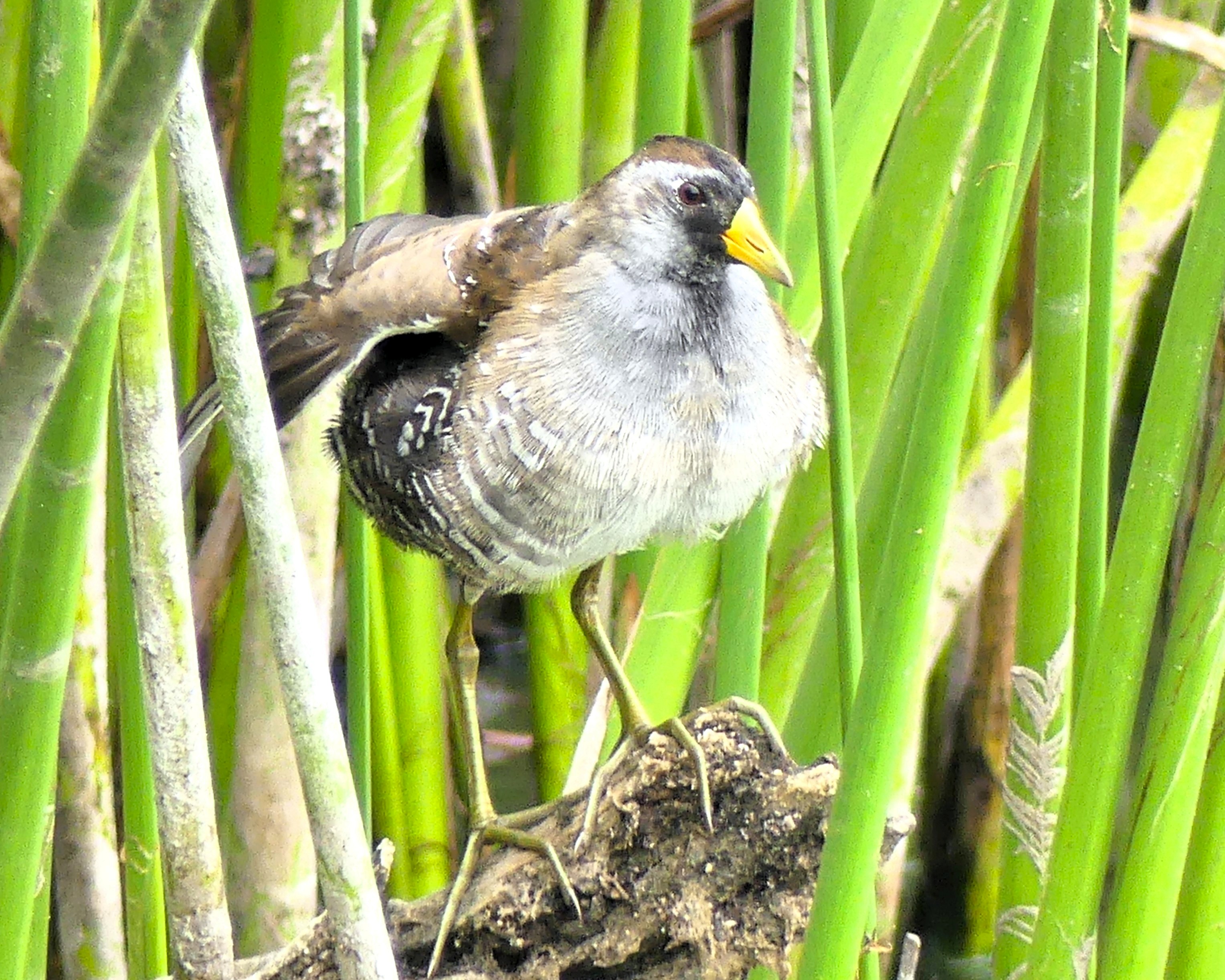
Hours later, when we got back to our starting point from the other side of the lagoon, there were still people staring at the reeds. I asked how it was going, they said the bird had disappeared and they were waiting for it to pop out, so I went and checked the other side of the very small reed bed, where there’s a 20-foot gap of “open water” invisible from where everyone was standing, and…lo and behold…there was the Sora, walking on the mud, right out “in the open” if you stood in the right spot. I alerted the group and a few more people got to see it. When you’ve seen dozens of Soras, you get used to the fact that they frequently and quickly disappear into the reeds only to – voilà, like magic – reappear elsewhere. Here we have two photos of the same bird, same location, same chunk of wood, but different brightness and positions.

When the lagoon was reconfigured in 2012-13, the reed beds disappeared, and they have slowly grown back to their current status, far fewer than before, which is OK by me. Reeds can completely take over a small body of water and then you can’t see anything except reeds, not even the hordes of rails no doubt jam-packed and concealed within them. The Sora, Virginia Rail, Red-winged Blackbird and Marsh Wren didn’t much appreciate the removal of the reeds, but the channels are now open all the time, ducks can swim around, the water can flow in and out, the channels aren’t choked with trash, and (I assume) the oxygen levels in the channels are far better than before. It was a worthwhile trade-off. Of our 90 Sora sightings since 1979, only 11 have been since 2012. Monthly sightings are: Sep – 3, Oct – 2, Nov – 3, Dec – 2, Feb – 1. Virginia Rail sightings dropped even more precipitously: 26 before May 2012, none since. Coots, you’ll be ecstatic to know, are doing just fine, thank you, and are one of our most common and abundant birds at the lagoon. Common Gallinule? – not so common (and yet another misleading name). The numbers below show Sora sightings in all months, which is a bit skewed from their current status. That’s because they had become year-round residents the last few years before 2012 but, as indicated above, rarely show up anymore.

Our third good bird(s) were down on the beach among the 50+ Black-bellied Plovers, tucked in safely behind the Virtual Fence protecting the Snowy Plovers, if only they’d use it. [The fence serves mostly to alert people to the presence of our local population of this endangered species, with some nice warning artwork by local schoolkids.] Their heads were tucked, their bills were hidden, (much like the rear bird below) and all we could see was a plain coal-black back (looking much darker than in the photo below), white bellies and black legs. I’d seen them look like this before down at Back Bay Newport, where (I believe) they’re a bit more common – very plain dark back – so I was pretty sure they were Dunlin, but it wasn’t until one, then both, hauled out those long black droopy pointed bills that we were certain. At 8.5″, they’re a middle-sized Calidris peep, but still significantly shorter than the 11.5″ Black-bellied Plovers they were surrounded with.

I was surprised to learn that they are also considered by eBird to be rare at the lagoon. The bird below isn’t missing a leg, that’s its toes sticking out of its belly feathers.

Another extract from my big spreadsheet, this one displaying data on the Calidris sandpipers, plus their similar-sized cousins, the turnstones. Most Dunlin sightings are of southward-bound migrants, with a bump in April for northward-heading birds.

Speaking of Turnstones, here’s a pair of Ruddy Turnstones, incompletely molted from alternate plumage, resting on the sand. They really do use their slightly-beveled bills to turn stones, looking for invertebrates concealed underneath.

And…the female Belted Kingfisher is back, quite possibly for the winter, or maybe she’s a different one. Who can tell? Even when they’re here we don’t always see them as they often fly upstream or sit obscurely in trees.

These two Western Snowy Plovers almost look like they have the same rings but opposite legs or pulled off a leg swap. Actually left bird is pg:ow (left leg purple over green, right leg orange over white) while the right bird is ga:ow (left leg green over aqua, right leg orange over white). Optical illusions for some.

(Chris Tosdevin 9-28-25)
And now for our fourth good bird, a gull. An all-dark bill, very plain gray back and soft gray colors around its head and neck, giving it a very gentle, innocent look. My original posting (yesterday) erroneously ascribed the sighting and ID to unnamed “people waiting for the Sora to pop back out.” Here’s the correct story on this quite rare (see sighting chart farther below) Malibu Lagoon sighting.

Chris and Ruth Tosdevin were returning early from the beach at 9:37am while the rest of us were looking for further oddities or heading towards Adamson House. They spotted it and ID’d it. They then put any passing birders onto the bird, and waited at our starting point until the rest of us finally got back from the beach or Adamson House (we were somewhat scattered at that point). When we returned, they put us on the bird, now by the edge of one of the sandy brushy islands. It soon flew away (flight photo below). Chris & Ruth then went out to the viewpoint near the PCH bridge and re-located the bird floating on the water among the gulls across the lagoon near Adamson House. Most of the rest of us (sooner or later) soon joined them.
As said, while the bird was being found, [returning to my original narration] most of our group was still out on the beach, either looking at the also-rare Dunlins or trudging across uncooperative sands. I don’t know how long or short it took Ruth & Chris to work out what gull it was, but it was in one of those annoying juvenile and/or intermediate plumages that gulls have so many of as they age their 2-4 years to reach their adult plumage.
It’s also one of the smallest gulls we have, tied with two others for second-smallest gull in North America, behind the smallest gull in the world, the aptly-named Little Gull Hydrocoloeus minutus, which occasionally shows up in the northeast. The other two its size, are Ross’s Gull Rhodostethia rosea and Bonaparte’s Gull Chroicocephalus philadelphia, two English names that will disappear if the naughty people at the AOS have their ill-advised way.
Know what it is yet?

With wings folded, the back looks almost scaly, or barred. But if you haven’t figured it out by now, here (below) it is flying away. This – in my opinion – is the most distinctive flight pattern among the world’s gulls, although I didn’t actually scan through pictures of all 50+ species to support that statement.
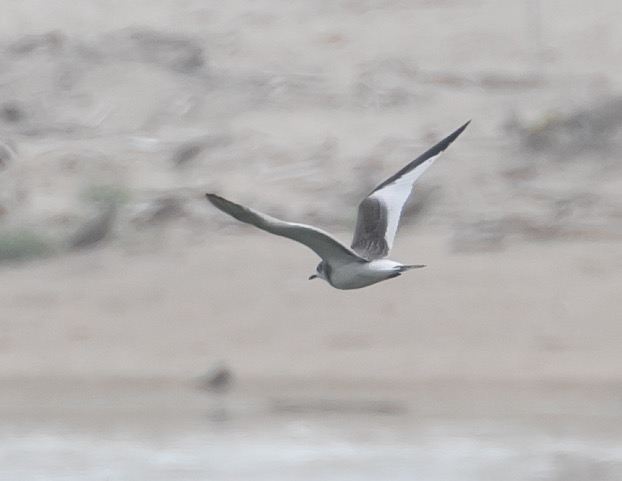
When you see it flying, you really can’t confuse it with anything else.
Sabine’s Gull Xema sabini, is the only gull in its genus, quite unlike the Larus genus which has 25 species and is by far the most common genus of gulls. It is pelagic, breeds in the Arctic and winters on the open tropical seas, and it rarely comes to land except to nest, although some use the central flyway to fly south in the fall. I don’t think I’ve ever before seen one from land, and all my sightings were from pelagic boat trips out past the Channel Islands. Knowing that, I find it very odd that it actually is sighted inland with some regularity, as you can see by the eBird sighting map below. My hypothesis is that it has such a distinctive flight wing-pattern that if a birder can see it, they can ID it, unlike all those Larus genus gulls flying over our houses all day long.
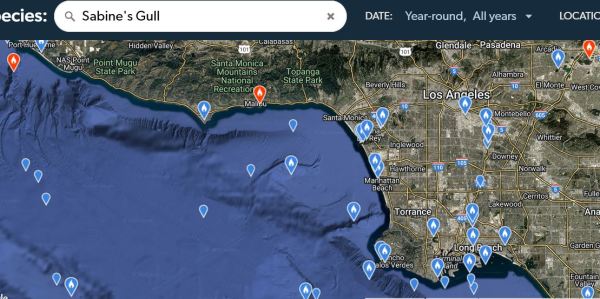
This Sabine’s Gull was our first sighting for our lagoon bird walks, although it has been sighted twice before at the lagoon. Here are the sightings reported to eBird (Link, click on Malibu red marker):
1969 Oct 15, Dennis Heinemann, number not counted
2019 Sep 09, 11 birders, probably all from Southwest Bird Study Club
2025 Sep 28, 5 birders, SMBAS and PVAS
So…a pretty rare bird for the lagoon.
We’ll finish with a nice photo of a bird now common at the lagoon, a male Great-tailed Grackle. We had 23 such grackles today, mostly around Adamson’s house and the bathroom/showers on Surfrider Beach, closer to the Malibu Pier where the surfer’s congregate. I think they’ve grown accustomed to french fries and bits of salad.

Malibu Lagoon on eBird as of 9-29-25: 8842 lists, 2844 eBirders, 321 species
Most recent new species seen: Nelson’s Sparrow, 11/29/24 by Femi Faminu (SMBAS member). When the newest species added to the list was seen on a date prior to the most recently seen new species, there is no way I can find to easily determine what that bird is. Another minor nit to pick about eBird.
Birds new for the season: Ring-necked Duck, Eared Grebe, Sora, Sanderling, Dunlin, Willet, Sabine’s Gull, Cooper’s Hawk, Nanday Parakeet, Oak Titmouse, Bewick’s Wren, Marsh Wren, White-crowned Sparrow, Yellow-rumped Warbler. “New for the season” means it has been three or more months since last recorded on our trips.
Many, many thanks to photographers Femi Faminu, Ray Juncosa, Emily Roth & Chris Tosdevin.
Upcoming SMBAS scheduled field trips; no reservations or Covid card necessary unless specifically mentioned:
- Huntington Beach Central Park Sat, Oct. 11, 8:00 Leader: Liz Galton egalton687[AT]gmail.com Reservation required
- Malibu Lagoon, Sun. Oct. 26, 8:30 (adults) & 10 am (parents & kids)
- Ballona Fresh Water Marsh Sat, Nov. 8, 8:00 Leader: Jean Garrett
- Malibu Lagoon, Sun. Nov. 23, 8:30 (adults) & 10 am (parents & kids)
- These and any other trips we announce for the foreseeable future will depend upon expected status of the Covid/flu/etc. pandemic, not to mention landslides, at trip time. Any trip announced may be canceled shortly before trip date if it seems necessary. By now any other comments should be superfluous.
- Link to Programs & Field Trip schedule.
The next SMBAS Zoom program: October 7, 7:30pm; The trip of a lifetime to Antarctica, South Georgia and the Falklands, with Chuck and Alice Bragg.
The SMBAS 10 a.m. Parent’s & Kids Birdwalk has again resumed. Reservations not necessary for families, but for groups (scouts, etc.), call Jean (213-522-0062).
Links: Unusual birds at Malibu Lagoon
9/23/02 Aerial photo of Malibu Lagoon
More recent aerial photo
Prior checklists:
2025: Jan-June
2023: Jan-June, July-Dec 2024: Jan-June, July-Dec
2021: Jan-July, July-Dec 2022: Jan-June, July-Dec
2020: Jan-July, July-Dec 2019: Jan-June, July-Dec
2018: Jan-June, July-Dec 2017: Jan-June, July-Dec
2016: Jan-June, July-Dec 2015: Jan-May, July-Dec
2014: Jan-July, July-Dec 2013: Jan-June, July-Dec
2012: Jan-June, July-Dec 2011: Jan-June, July-Dec
2010: Jan-June, July-Dec 2009: Jan-June, July-Dec
The 10-year comparison summaries created during the Lagoon Reconfiguration Project period, remain available—despite numerous complaints—on our Lagoon Project Bird Census Page. Very briefly summarized, the results unexpectedly indicate that avian species diversification and numbers improved slightly during the restoration period June’12-June’14.
Many thanks to Marie Barnidge-McIntyre, Femi Faminu, Chris Lord, Lu Plauzoles, Ruth & Chris Tosdevin and others for contributions made to this month’s census counts.
The species list below was re-sequenced as of 12/31/24 to agree with the California Bird Records Committee Official California Checklist, mostly. If part of the right side of the chart below is hidden, there’s a slider button inconveniently located at the bottom end of the list. The numbers 1-9 left of the species names are keyed to the nine categories of birds at the bottom. Updated lagoon bird check lists can be downloaded here.
[Chuck Almdale]
| Malibu Census 2025 | 4/27 | 5/25 | 6/22 | 7/27 | 8/24 | 9/28 | |
| Temperature | 56-64 | 63-68 | 66-73 | 64-70 | 68-75 | 65-69 | |
| Tide Lo/Hi Height | H+4.29 | H+3.78 | H+3.31 | L-0.46 | H+4.74 | H+4.54 | |
| Tide Time | 0957 | 0909 | 0824 | 0605 | 1102 | 1244 | |
| 1 | Brant (Black) | 1 | |||||
| 1 | Canada Goose | 8 | 1 | 5 | 1 | ||
| 1 | Gadwall | 10 | 24 | 25 | 20 | 19 | 6 |
| 1 | Mallard | 21 | 26 | 20 | 40 | 14 | 7 |
| 1 | Ring-necked Duck | 1 | |||||
| 1 | Surf Scoter | 10 | |||||
| 1 | Red-breasted Merganser | 1 | 1 | ||||
| 1 | Ruddy Duck | 10 | 4 | 3 | 19 | 1 | |
| 2 | Pied-billed Grebe | 4 | 4 | 4 | 3 | 4 | 6 |
| 2 | Eared Grebe | 1 | |||||
| 2 | Western Grebe | 25 | 4 | 2 | |||
| 7 | Feral Pigeon | 1 | 6 | 5 | 5 | 4 | 6 |
| 7 | Mourning Dove | 2 | 2 | 1 | 2 | 2 | 3 |
| 8 | Anna’s Hummingbird | 3 | 1 | 1 | 1 | 1 | |
| 8 | Allen’s Hummingbird | 5 | 2 | 2 | 4 | 4 | 4 |
| 2 | Sora | 1 | |||||
| 2 | American Coot | 11 | 4 | 1 | 6 | 4 | 31 |
| 5 | Black-bellied Plover | 21 | 49 | 55 | |||
| 5 | Killdeer | 3 | 2 | 5 | 4 | 9 | 1 |
| 5 | Semipalmated Plover | 2 | 4 | 1 | |||
| 5 | Snowy Plover | 13 | 17 | 35 | |||
| 5 | Whimbrel | 3 | 1 | 12 | 3 | ||
| 5 | Ruddy Turnstone | 3 | 1 | 3 | |||
| 5 | Sanderling | 1 | |||||
| 5 | Dunlin | 2 | |||||
| 5 | Least Sandpiper | 1 | 10 | 4 | 6 | ||
| 5 | Western Sandpiper | 4 | 14 | ||||
| 5 | Willet | 1 | 10 | ||||
| 5 | Wilson’s Phalarope | 1 | |||||
| 6 | Sabine’s Gull | 1 | |||||
| 6 | Heermann’s Gull | 13 | 36 | 10 | 38 | ||
| 6 | Ring-billed Gull | 2 | 3 | 5 | 2 | 4 | 1 |
| 6 | Western Gull | 20 | 70 | 79 | 52 | 115 | 61 |
| 6 | California Gull | 2 | 82 | 5 | 1 | 4 | 10 |
| 6 | Caspian Tern | 2 | 6 | 4 | 4 | 2 | |
| 6 | Forster’s Tern | 1 | |||||
| 6 | Royal Tern | 21 | 135 | 12 | |||
| 6 | Elegant Tern | 70 | 4 | ||||
| 2 | Pacific Loon | 1 | |||||
| 2 | Brandt’s Cormorant | 12 | 1 | 1 | |||
| 2 | Pelagic Cormorant | 1 | 1 | 2 | 1 | ||
| 2 | Dble-crested Cormorant | 25 | 7 | 18 | 98 | 74 | 49 |
| 2 | Brown Pelican | 25 | 157 | 138 | 118 | 32 | 45 |
| 3 | Snowy Egret | 1 | 2 | 1 | 10 | 10 | 5 |
| 4 | Yello-crownd Night-Heron | 1 | |||||
| 3 | Black-crownd Night-Heron | 4 | 1 | 1 | 2 | ||
| 3 | Green Heron | 1 | 2 | 1 | |||
| 3 | Great Egret | 1 | 1 | 3 | 4 | 2 | 3 |
| 3 | Western Cattle-Egret | 1 | |||||
| 3 | Great Blue Heron | 1 | 1 | 9 | 5 | 5 | 4 |
| 3 | White-faced Ibis | 1 | |||||
| 4 | Turkey Vulture | 2 | |||||
| 4 | Osprey | 1 | 1 | 1 | 1 | ||
| 4 | Cooper’s Hawk | 1 | |||||
| 4 | Red-shouldered Hawk | 1 | 1 | 1 | 2 | ||
| 4 | Red-tailed Hawk | 1 | 1 | 1 | 1 | ||
| 8 | Belted Kingfisher | 1 | 1 | ||||
| 8 | Nuttall’s Woodpecker | 1 | 1 | ||||
| 4 | Peregrine Falcon | 1 | |||||
| 8 | Nanday Parakeet | 2 | 2 | 20 | |||
| 9 | Cassin’s Kingbird | 1 | 1 | ||||
| 9 | Black Phoebe | 1 | 2 | 2 | 2 | 2 | 4 |
| 9 | California Scrub-Jay | 1 | 1 | 1 | |||
| 9 | American Crow | 5 | 6 | 6 | 9 | 8 | 6 |
| 9 | Common Raven | 2 | 1 | ||||
| 9 | Oak Titmouse | 2 | |||||
| 9 | Tree Swallow | 1 | |||||
| 9 | Violet-green Swallow | 5 | |||||
| 9 | No. Rough-winged Swallow | 20 | 7 | 1 | 5 | 2 | |
| 9 | Barn Swallow | 20 | 18 | 22 | 20 | 40 | 4 |
| 9 | Cliff Swallow | 7 | 24 | 24 | 12 | ||
| 9 | Bushtit | 2 | 3 | 12 | 20 | 20 | 9 |
| 9 | Wrentit | 2 | 2 | 2 | 2 | 1 | 2 |
| 9 | Swinhoe’s White-eye | 1 | 1 | ||||
| 9 | Bewick’s Wren | 2 | |||||
| 9 | Northern House Wren | 1 | |||||
| 9 | Marsh Wren | 1 | |||||
| 9 | Northern Mockingbird | 1 | |||||
| 9 | European Starling | 10 | 10 | 6 | 25 | 35 | 2 |
| 9 | House Finch | 15 | 5 | 4 | 5 | 12 | 3 |
| 9 | Lesser Goldfinch | 2 | 2 | ||||
| 9 | Dark-eyed Junco | 1 | 2 | 1 | 6 | 2 | |
| 9 | White-crowned Sparrow | 1 | 2 | ||||
| 9 | Savannah Sparrow | 1 | |||||
| 9 | Song Sparrow | 8 | 6 | 5 | 3 | 6 | 5 |
| 9 | California Towhee | 3 | 2 | 1 | 1 | 2 | |
| 9 | Spotted Towhee | 1 | 2 | ||||
| 9 | Hooded Oriole | 1 | 1 | 1 | 2 | ||
| 9 | Brown-headed Cowbird | 2 | |||||
| 9 | Great-tailed Grackle | 3 | 6 | 8 | 1 | 23 | |
| 9 | Orange-crowned Warbler | 1 | 2 | 1 | 1 | 2 | |
| 9 | Common Yellowthroat | 4 | 5 | 1 | 4 | 7 | |
| 9 | Yellow-rumped Warbler | 2 | |||||
| Totals Birds by Type | Apr | May | Jun | Jul | Aug | Sep | |
| 1 | Waterfowl | 50 | 55 | 54 | 81 | 33 | 25 |
| 2 | Water Birds – Other | 104 | 176 | 163 | 227 | 117 | 134 |
| 3 | Herons, Egrets & Ibis | 4 | 4 | 17 | 21 | 22 | 15 |
| 4 | Quail & Raptors | 4 | 3 | 1 | 2 | 2 | 5 |
| 5 | Shorebirds | 9 | 2 | 6 | 61 | 93 | 130 |
| 6 | Gulls & Terns | 26 | 161 | 106 | 116 | 341 | 127 |
| 7 | Doves | 3 | 8 | 6 | 7 | 6 | 9 |
| 8 | Other Non-Passerines | 10 | 5 | 3 | 6 | 6 | 26 |
| 9 | Passerines | 115 | 103 | 103 | 110 | 141 | 82 |
| Totals Birds | 325 | 517 | 459 | 631 | 761 | 553 | |
| Total Species by Group | Apr | May | Jun | Jul | Aug | Sep | |
| 1 | Waterfowl | 5 | 4 | 5 | 5 | 2 | 5 |
| 2 | Water Birds – Other | 8 | 5 | 5 | 6 | 6 | 7 |
| 3 | Herons, Egrets & Ibis | 4 | 3 | 4 | 5 | 7 | 5 |
| 4 | Quail & Raptors | 3 | 3 | 1 | 2 | 2 | 4 |
| 5 | Shorebirds | 4 | 1 | 2 | 9 | 7 | 10 |
| 6 | Gulls & Terns | 4 | 4 | 5 | 6 | 8 | 7 |
| 7 | Doves | 2 | 2 | 2 | 2 | 2 | 2 |
| 8 | Other Non-Passerines | 3 | 3 | 2 | 3 | 3 | 4 |
| 9 | Passerines | 22 | 21 | 16 | 16 | 16 | 20 |
| Totals Species – 93 | 55 | 46 | 42 | 54 | 53 | 64 |
Discover more from SANTA MONICA BAY AUDUBON SOCIETY BLOG
Subscribe to get the latest posts sent to your email.



 SANTA MONICA BAY AUDUBON SOCIETY BLOG
Of course all the cool stuff shows up after I leave LA.
LikeLike
James:
You didn’t submit your request for species to the proper authorities in proper format and in a timely manner.
LikeLike