June is for Jumpers: Malibu Lagoon: 28 June 2026
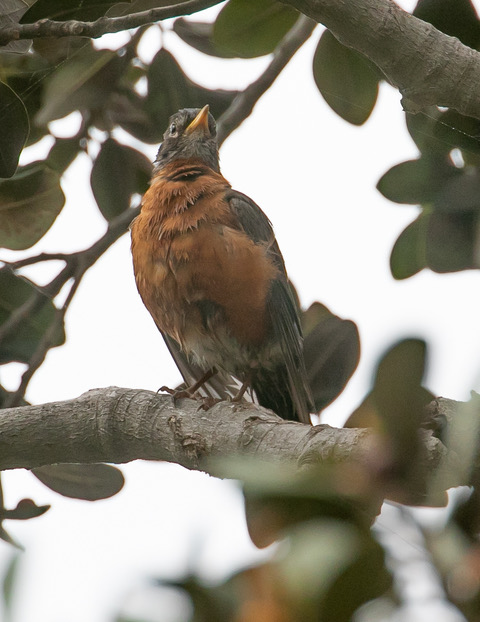
(Chris Tosdevin 6-28-26)
[By Chuck Almdale; photos by Ray Juncosa, Armando Martinez & Chris Tosdevin]
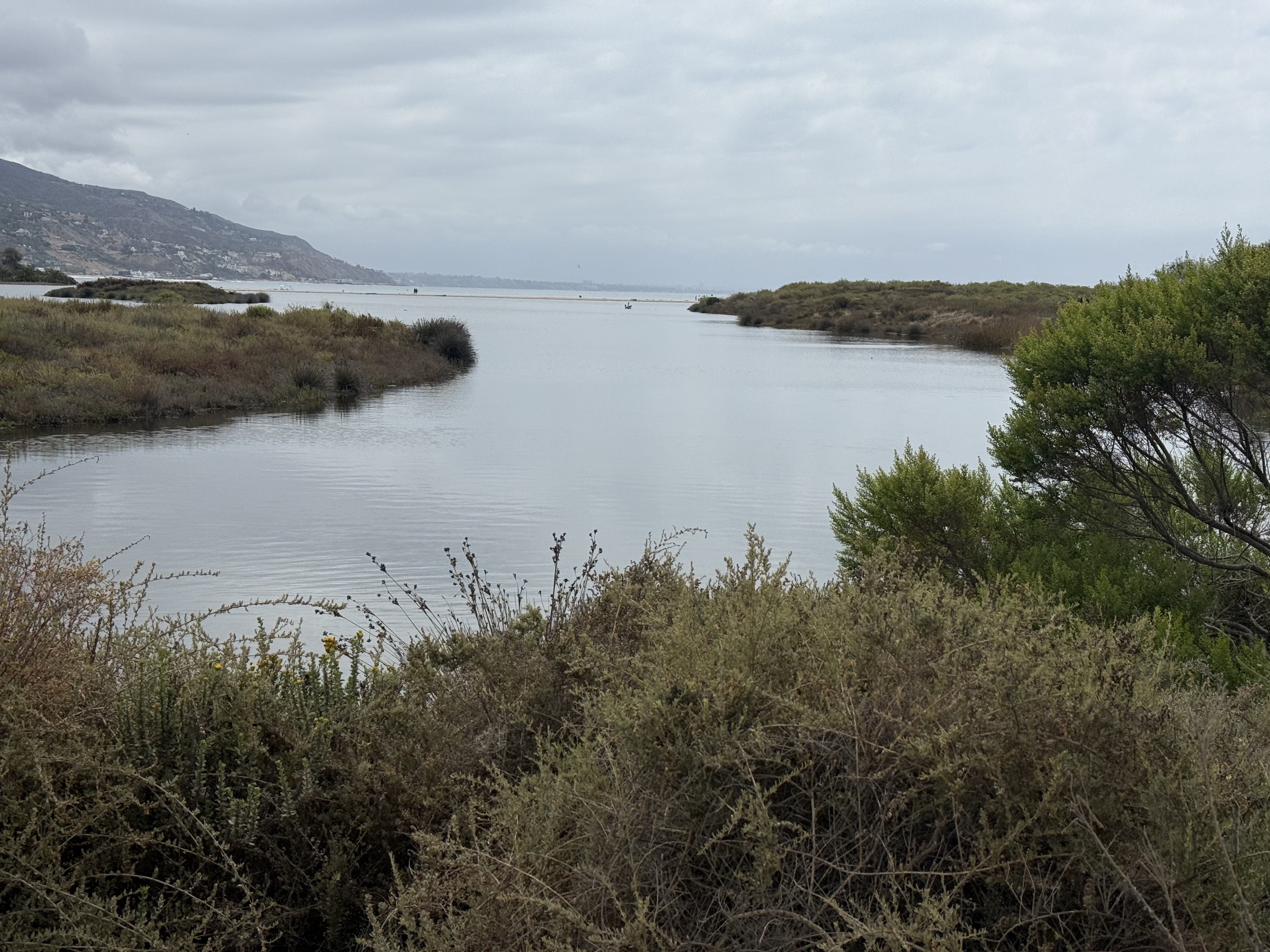
This is what June Gloom looks like. Some people complain about it (“It’s summer! It’s supposed to be sunny here!”) but it keeps the temperatures down, and if any Night Herons are around, you can see them out and about instead of hiding in thick tree foliage to protect their eyesight. Surfrider’s Beach, the southern border of Malibu Lagoon, looks extremely thin in this photo below. In reality it’s several hundred feet from lagoon to ocean.
The world’s ten species of night heron are misleadingly named. They have large eyes (for a heron), but they don’t seek the darkness of night; they like crepuscular light, the twilight of dawn and dusk. A Gloomy June day will also do.
Their eyes evolved to see best in dim light, but a gloomy day also works well for a hungry bird. They do like to hide and hunt for small fish and invertebrates in reed beds, but you can also see them on the shorelines when it’s sufficiently gloomy.

But our featured fauna this month is not a bird, but a fish. It’s a Mullet, Mugil cephalus to be specific. I prefer the name Jumping Mullet because…well look below. But they have many names, as often happens with common fish. In English alone there are at least 28 names for this Mullet: Black, Black True, Bright, Bully, Callifaver, Common Gray, Common, Flat-head Gray, Flathead Gray, Flathead Gray-, Flathead, Gray, Haarder, Hardgut, Hardgut River, Jumping, Longaram, Mangrove, Poddies, Poddy, River, Sand, Sea, Springer, Striped, Stripped, Yellow-tailed, and just plain Mullet. The most widespread and “official” English name is Striped Mullet. In all languages there are over 500 different names. It’s a common, widespread fish along coasts around the world.
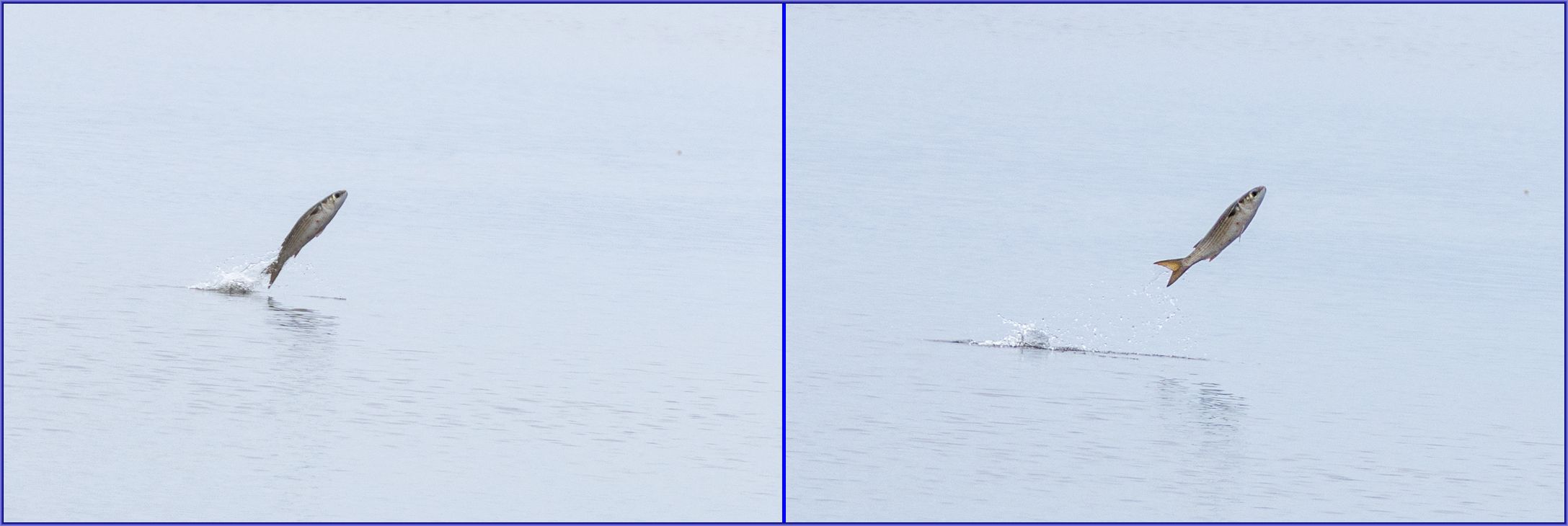
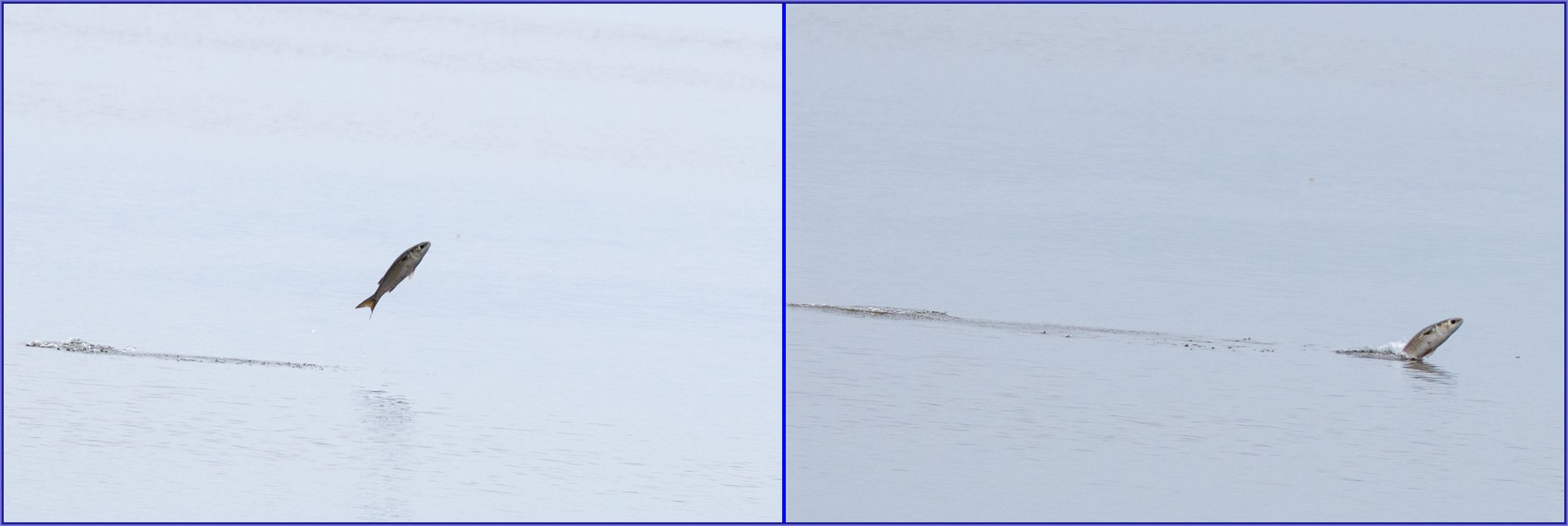
I’ve never seen so many jumping Jumping Mullet in the lagoon. I started counting their jumps and within 45 minutes I’d gone over 100 and decided to quit keeping track, but within a few seconds it was 110. The most simultaneous jumps were three, and the fastest “run” was 7 jumps in 10 seconds.

There was an enormous mullet die-off in Malibu Lagoon back in August 2018. High ocean temperatures, high lagoon water temperatures, and just plain high temperatures lowered the oxygen level in the lagoon to a lethal level, and withing a week perhaps 3000-5000 dead mullet were floating on the surface. No one (to my knowledge) knew that there were that many in the lagoon.
Some interesting Mullet factoids:
- Their common size is 10-20″ and 1-3 lbs., but can grow as large as 47″ and 18 lbs.
- Mugil cephalus translates to “suck head.”
- They have a segments in their stomach that function like a bird’s gizzard. They feed by slurping up sediment, detritus and algae, and the sand and mud help grind up the plant material.
- They are notorious for jumping out of the water; theories abound as to why (see below).
- They are euryhaline, able to easily tolerate very different levels of salinity, from hypersaline coastal lagoons to ordinary sea water to brackish water and to freshwater rivers.
- The adults migrate offshore in late fall and early winter to spawn in massive schools. The hatched juveniles later migrate back to shore and into food-rich, low-salinity estuaries like Malibu Lagoon to grow.
- In the coastal waters of SoCal and Baja California the large schools of mullet can attract large “sportfish” to feed on them, themselves attracting boats filled with sportfishermen.

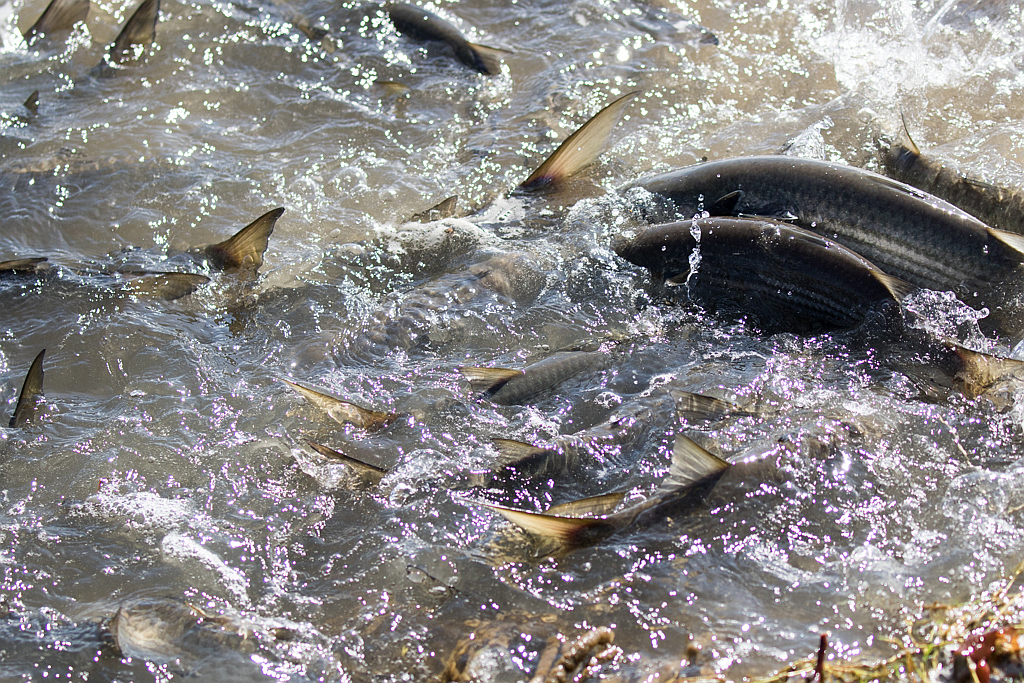
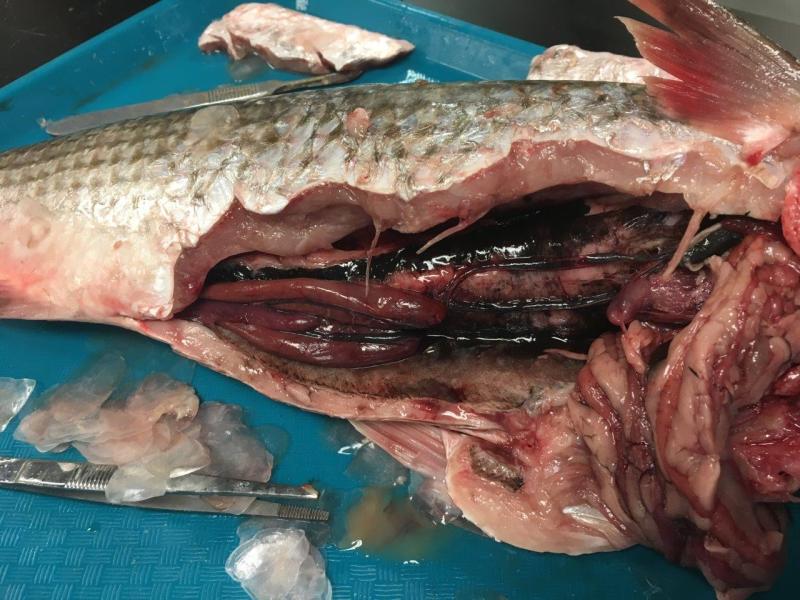
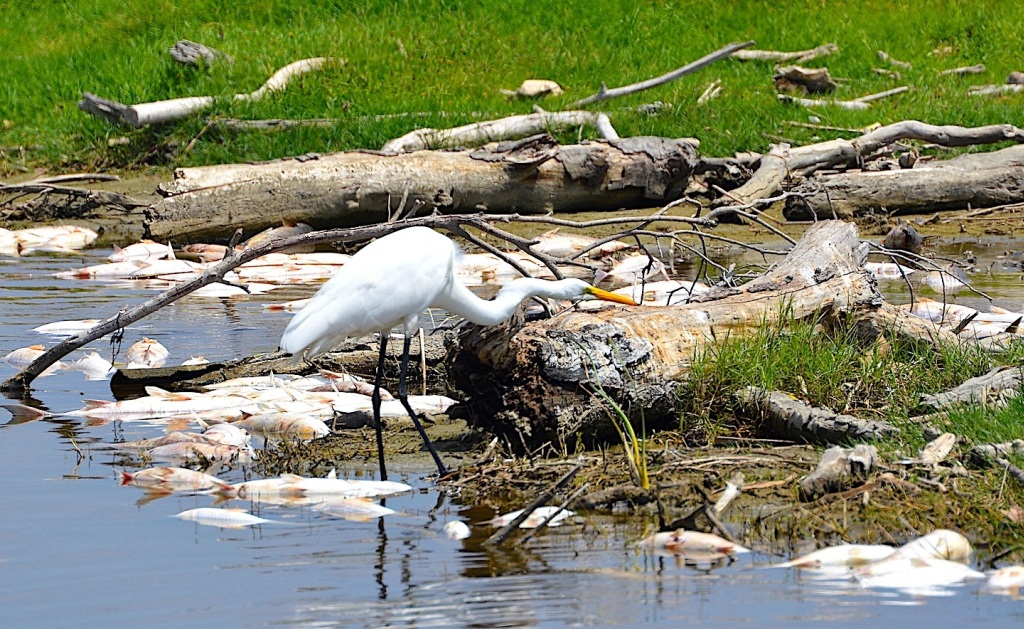
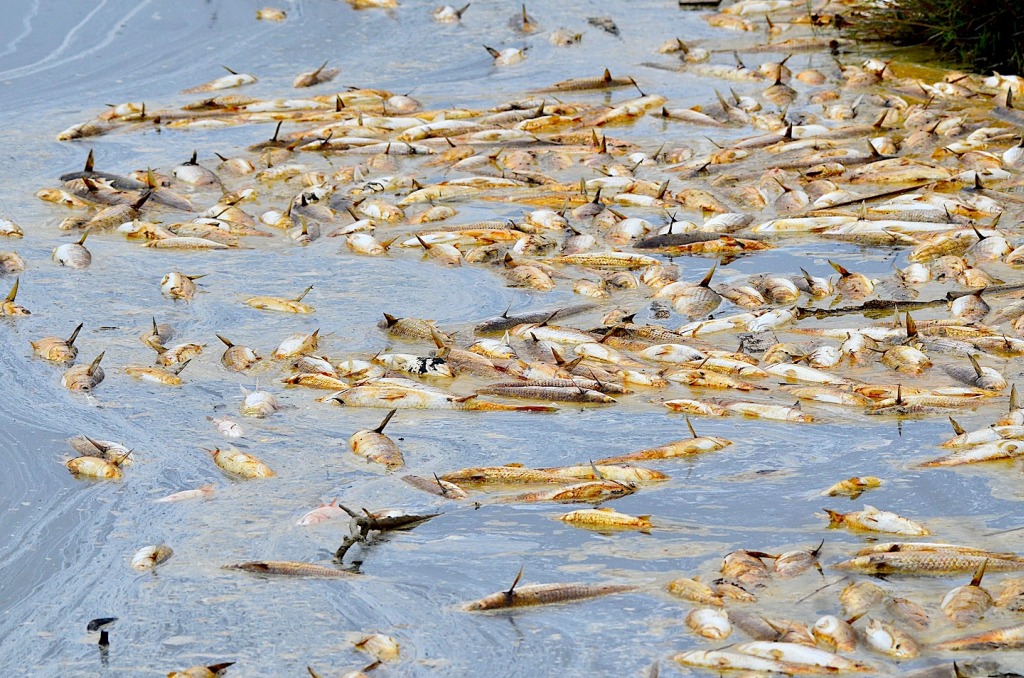
Above, clockwise from upper left: Mullets at lagoon’s edge (Jim Kenney 9/28/15), Jumping Mullet (Randy Ehler 9/27/15), Necropsy of lagoon Mullet, nothing negative discovered (Karina Johnston, Bay Foundation 8/24/18), Over 200 dead Mullet (Larry Loeher 8/26/18, Great Egret & dead mullet (Grace Murayama 8/24/18)
These are some of the theories why they jump. I suspect there’s a Ph.D. waiting for anyone who solves this question.
- Display to attract a mate
- Escape a larger predator
- Gulp some oxygen
- Catch an insect it sees in the air
- Shake off loose parasites or growths on its skin
- Catch an invertebrate it sees at the water’s surface and momentum carries them into the air
- Communicate location to other fish or other schools
- Show off to the other fish what a great jumper they are
- It’s fun and feels great slapping back down (my favorite explanation)
It’s probably all of the above, depending on the situation. Fish can be versatile.
Back to the birds.
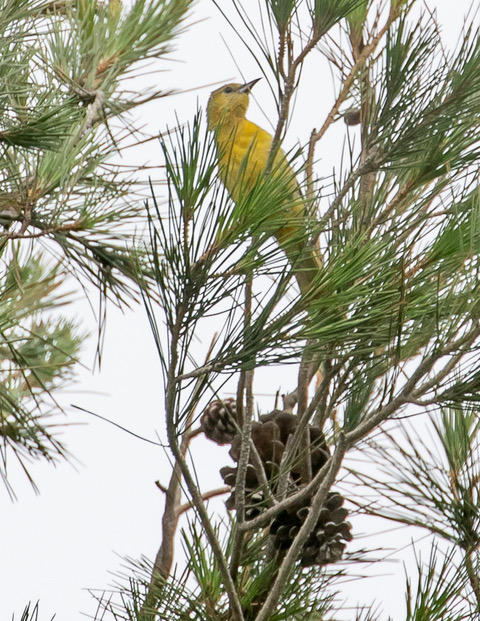
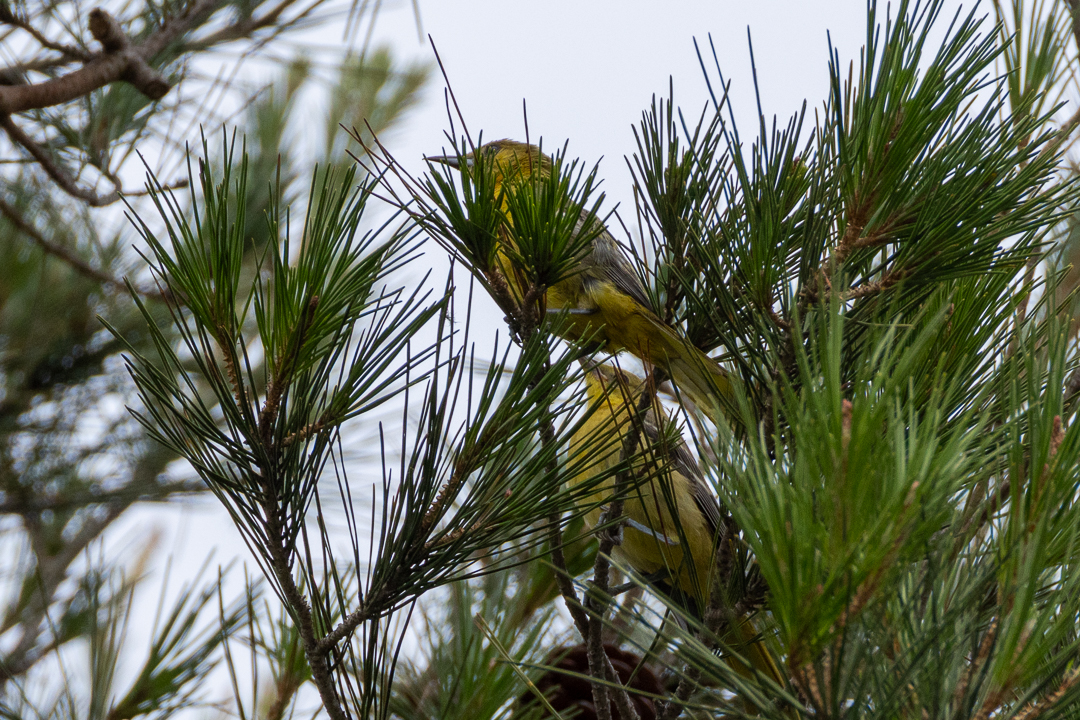
The Hooded Orioles seem to nest at the lagoon every year now, although we often don’t see them and we rarely find their nests. They prefer to suspend their woven nests from the underside of the central shaft of a palm frond. You’d think they’d be easy to find, but they aren’t. I’ve seen only two, maybe three such nests at the lagoon. Today we were lucky and manage to find four orioles, probably the entire family, in the trees at the back of the Malibu Colony. Here, and in the trees around the parking lot, are their usual locations.

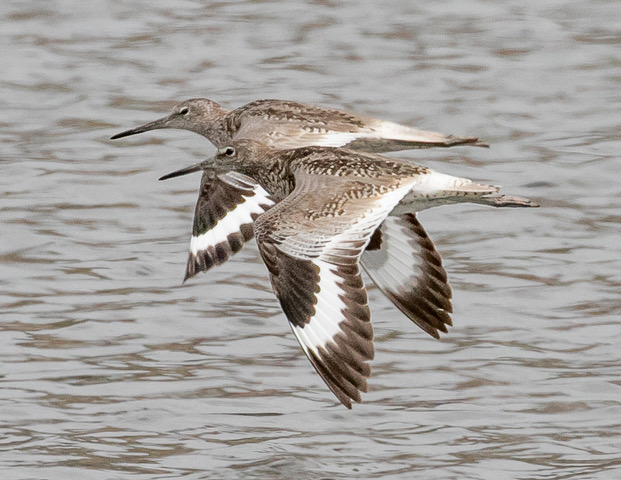
Willets, when they fly, can look quite spectacular.
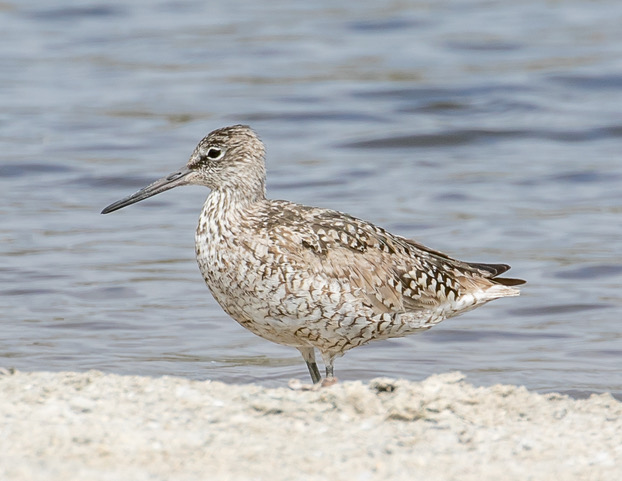
When then settle down, the stripes disappear. But this time of year, still in some of their breeding plumage, they are attractively spotted. In the winter, all that disappears and they are plain, plain gray.
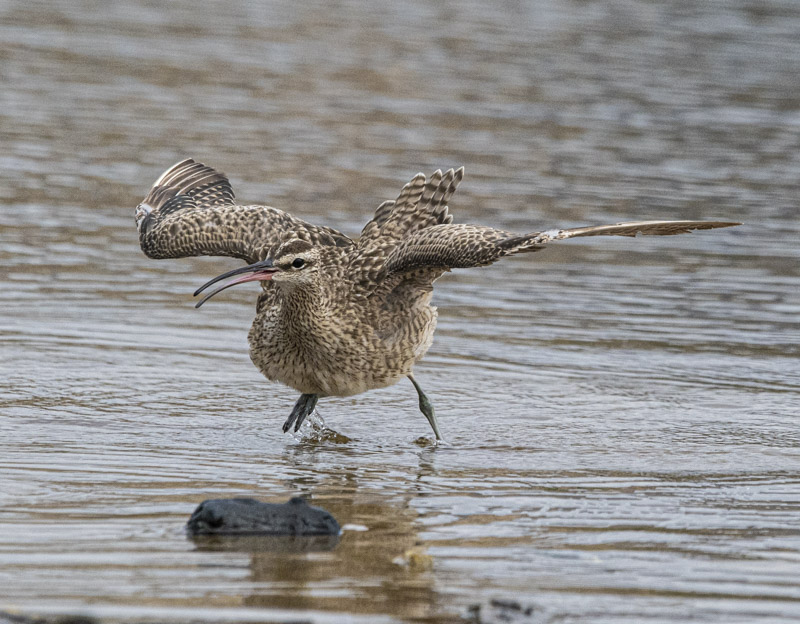
Was this Whimbrel startled? Chasing something? Being chased? We don’t know.
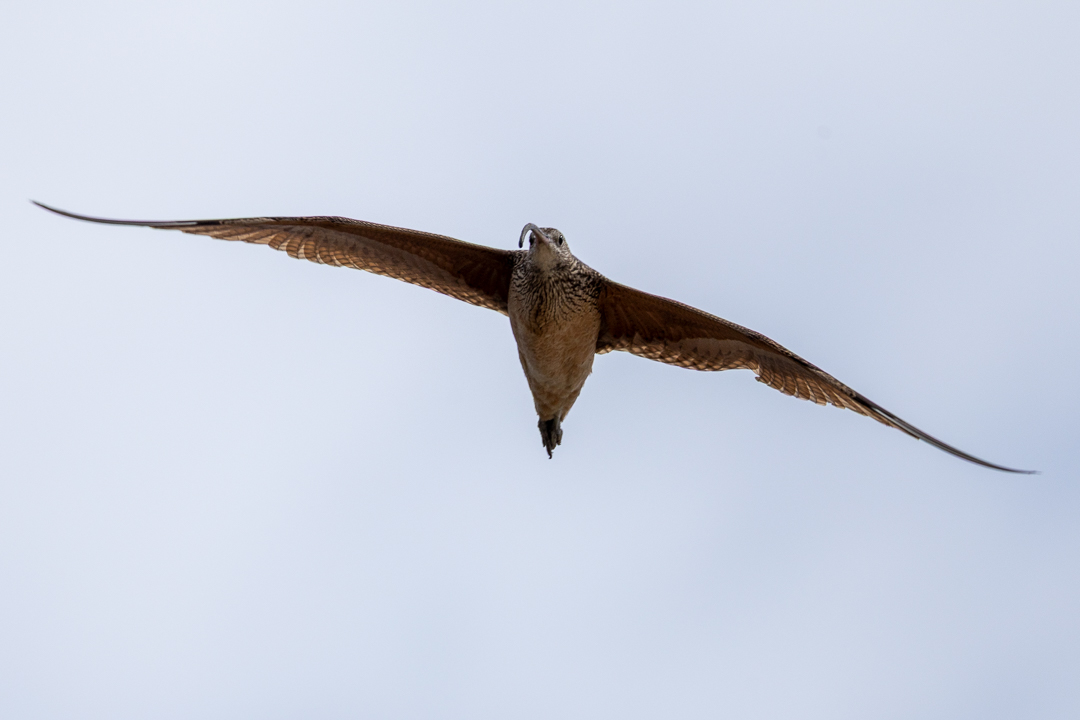
…and study this bird for a while before reading the caption. Do you know what it is?
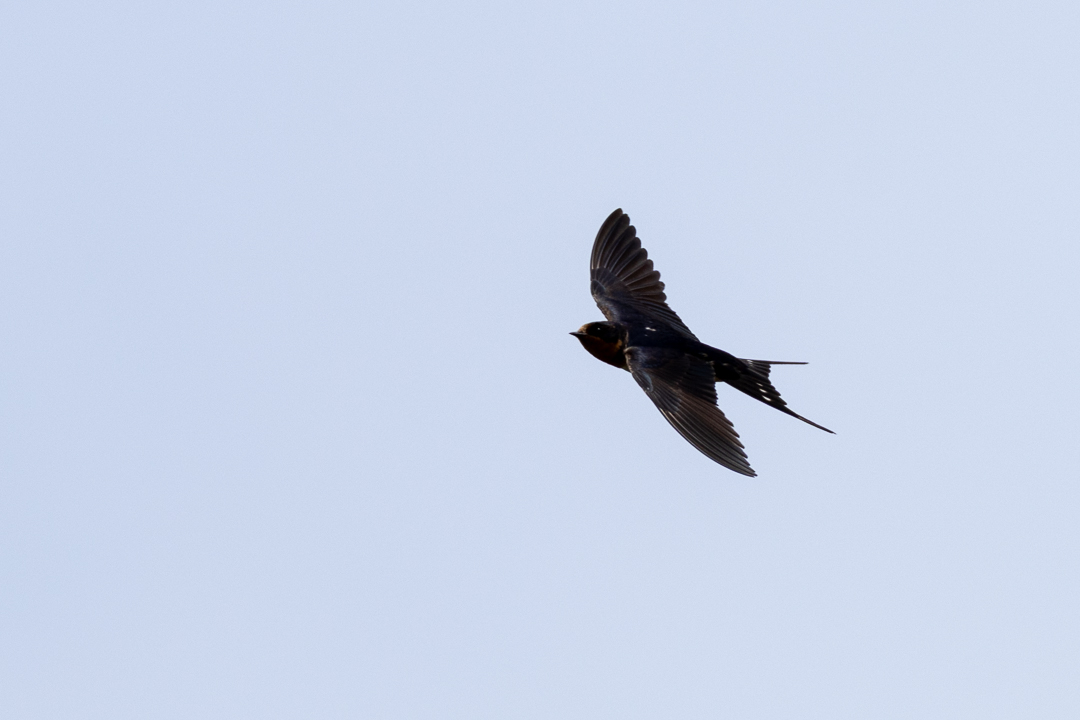
We have more swallow species than just “the Swallow.” This is not the one that mythically returns to San Juan Capistrano on March 19, St. Joseph’s Day. That’s the Cliff Swallow and they frequently begin reappearing in SoCal in February, back from their sojourn in sunny Argentina.
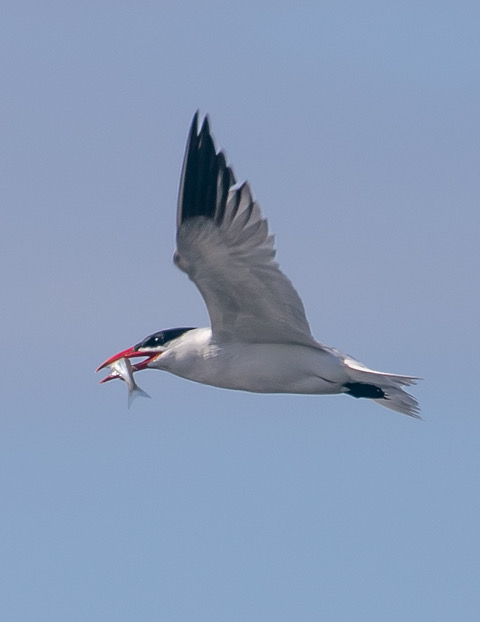
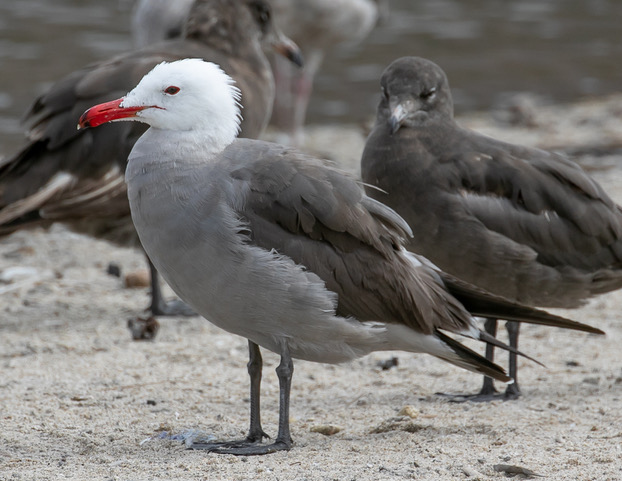
The Heermann’s Gulls are definitely back from breeding on Isla Rasa in the Sea of Cortez.
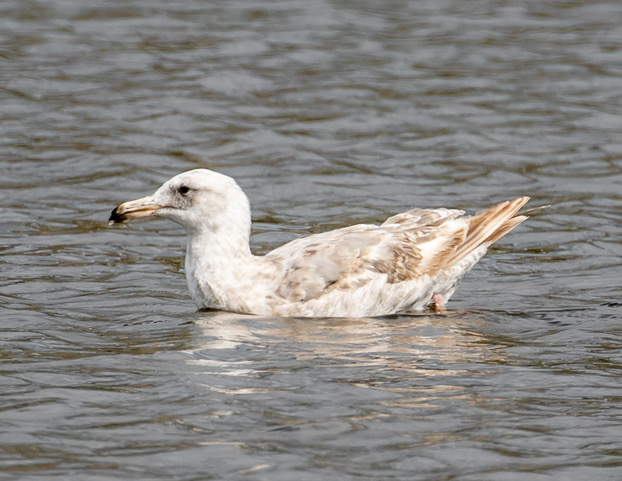
Most of the Glaucous-winged Gulls we get at the lagoon are first-year birds. This one looks like a two-year old, with the two-tone bill and the pale gray back. It’s a bit early for it to be back from the arctic, so it probably never bothered to fly north this year.
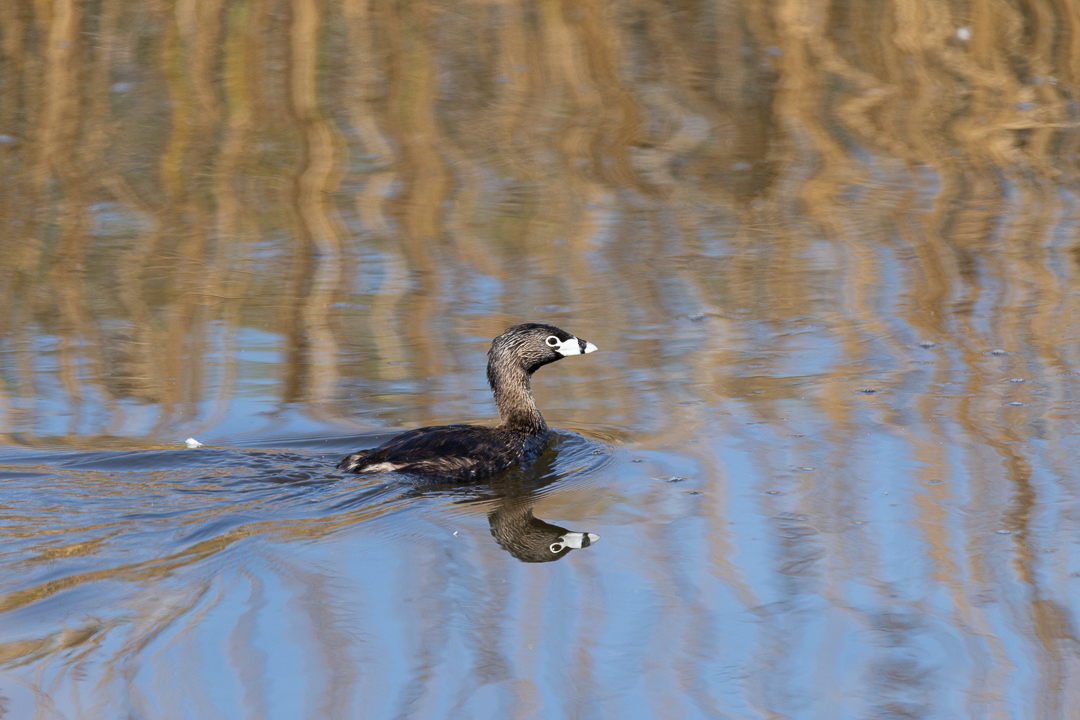
We didn’t get a picture of it, but one of the passerines that rarely show up at the lagoon made an appearance. It likely was a young bird and didn’t know any better. This Black-headed Grosbeak was only the fourth one we’ve seen at the lagoon in 348 visits. They prefer brushy hillsides and leafy trees to sparse brush, thus their relative rarity at the lagoon.
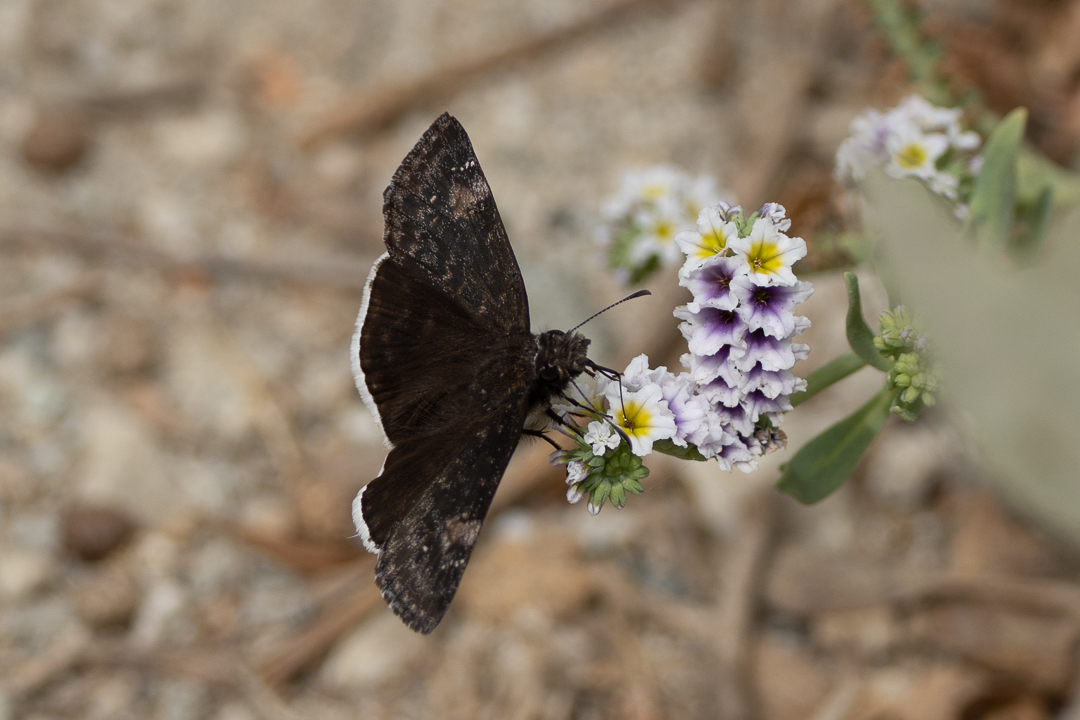
And for you butterfly mavens, what is this? Tell us what and why, and we’ll correct this posting with your name credited. Fame and fortune will no doubt rapidly ensue, and you will be able to retire to a lifetime of butterfly-watching.
Malibu Lagoon on eBird as of 7-01-26: 9494 lists, 3107 eBirders, 323 species
Most recent new species seen: Canyon Wren, 06/11/26 by Judith Olsen (no photo).
Birds new for the season: American Coot, Long-billed Curlew, Willet, Glaucous-winged Gull, Black-crowned Night Heron, Green Heron, Red-tailed Hawk, American Robin, Black-headed Grosbeak. “New for the season” means it has been three or more months since last recorded on our trips.
Many, many thanks to photographers Ray Juncosa, Armando Martinez and Chris Tosdevin.
Upcoming SMBAS scheduled field trips; no reservations or Covid card necessary unless specifically mentioned:
- Malibu Lagoon, Sun. July 26, 8:30 am (adults) & 10 am (parents & kids)
- Malibu Lagoon, Sun. Aug 23, 8:30 am (adults) & 10 am (parents & kids)
- Malibu Lagoon, Sun. Sep 27, 8:30 am (adults) & 10 am (parents & kids)
- These and any other trips we announce for the foreseeable future will depend upon expected status of the Covid/flu/etc. pandemic, not to mention landslides, fires, local flooding and atmospheric rivers at trip time. Any trip announced may be canceled shortly before trip date if it seems necessary. By now any other comments should be superfluous.
- Link to Programs & Field Trip schedule.
The next SMBAS Zoom program: Tuesday, October 6, 7:30pm; TBA
The SMBAS 10 a.m. Parent’s & Kids Birdwalk has again resumed. Reservations not necessary for families, but for groups (scouts, etc.), please call Jean (213-522-0062).
Links: Unusual birds at Malibu Lagoon
9/23/02 Aerial photo of Malibu Lagoon
Aerial ‘film’ flying north over lagoon
More recent aerial photo
Prior checklists:
2025: Jan-June, July-Dec
2023: Jan-June, July-Dec 2024: Jan-June, July-Dec
2021: Jan-July, July-Dec 2022: Jan-June, July-Dec
2020: Jan-July, July-Dec 2019: Jan-June, July-Dec
2018: Jan-June, July-Dec 2017: Jan-June, July-Dec
2016: Jan-June, July-Dec 2015: Jan-May, July-Dec
2014: Jan-July, July-Dec 2013: Jan-June, July-Dec
2012: Jan-June, July-Dec 2011: Jan-June, July-Dec
2010: Jan-June, July-Dec 2009: Jan-June, July-Dec
The 10-year comparison summaries created during the 2012-13 Lagoon Reconfiguration Project period, remain available—despite numerous complaints—on our Lagoon Project Bird Census Page. Very briefly summarized, the results unexpectedly indicate that avian species diversification and numbers improved slightly during the restoration period June’12-June’14. We also have a newly-refurbished slide show of the reconfiguration from just before it started until the recent 13-year celebration.
Many thanks to Marie Barnidge-McIntyre, Armando Martinez (our new chapter president), Chris Tosdevin and others for contributions made to this month’s census counts. June is typically the month with the fewest birds and lowest diversity.
The species list below was re-sequenced as of 12/31/25 to agree with the eBird sequence. If part of the right side of the chart below is hidden, there’s a slider button inconveniently located at the bottom end of the list. The numbers 1-9 left of the species names are keyed to the nine categories of birds at the bottom. Updated lagoon bird check lists can be downloaded here.
[Chuck Almdale]
| Malibu Census 2026 | 1/25 | 2/22 | 3/22 | 4/26 | 5/24 | 6/28 | |
| Temperature | 47-55 | 49-63 | 65-76 | 55-64 | 60-63 | 61-66 | |
| Tide Lo/Hi Height | L+1.31 | L+0.65 | L-0.31 | H+4.32 | L+0.42 | H+3.35 | |
| Tide Time | 0846 | 0655 | 0640 | 0624 | 1126 | 1034 | |
| 1 | Brant (Black) | 1 | 1 | 1 | 1 | 2 | |
| 1 | Cackling Goose | 1 | |||||
| 1 | Canada Goose | 3 | 4 | 5 | 4 | ||
| 1 | Cinnamon Teal | 2 | |||||
| 1 | Northern Shoveler | 2 | |||||
| 1 | Gadwall | 34 | 35 | 15 | 25 | 18 | 10 |
| 1 | American Wigeon | 4 | 4 | 6 | |||
| 1 | Mallard | 5 | 7 | 14 | 8 | 12 | 15 |
| 1 | Northern Pintail | 1 | 1 | ||||
| 1 | Green-winged Teal | 11 | 8 | ||||
| 1 | Surf Scoter | 3 | 6 | 1 | |||
| 1 | Red-breasted Merganser | 6 | 7 | 4 | 3 | 1 | |
| 2 | Feral Pigeon | 4 | 2 | 8 | 10 | ||
| 2 | Mourning Dove | 3 | 1 | 3 | 2 | ||
| 2 | Anna’s Hummingbird | 1 | 1 | 2 | 1 | ||
| 2 | Allen’s Hummingbird | 3 | 3 | 5 | 2 | 6 | 3 |
| 3 | American Coot | 50 | 55 | 4 | 3 | ||
| 4 | Black Oystercatcher | 3 | |||||
| 4 | Black-bellied Plover | 34 | 20 | 6 | 3 | 3 | 2 |
| 4 | Killdeer | 4 | 6 | 5 | 6 | 3 | 3 |
| 4 | Semipalmated Plover | 6 | |||||
| 4 | Snowy Plover | 17 | 4 | 1 | |||
| 4 | Hudsonian Whimbrel | 3 | 4 | 6 | 6 | 7 | |
| 4 | Long-billed Curlew | 1 | |||||
| 4 | Marbled Godwit | 3 | 4 | 1 | |||
| 4 | Long-billed Dowitcher | 1 | |||||
| 4 | Willet | 7 | 3 | 4 | 9 | ||
| 4 | Ruddy Turnstone | 2 | 3 | ||||
| 4 | Sanderling | 35 | 10 | ||||
| 4 | Least Sandpiper | 20 | 20 | 8 | 3 | ||
| 4 | Western Sandpiper | 13 | 29 | ||||
| 5 | Bonaparte’s Gull | 3 | 1 | ||||
| 5 | Heermann’s Gull | 22 | 75 | 2 | 18 | ||
| 5 | Ring-billed Gull | 17 | 4 | 3 | |||
| 5 | Western Gull | 45 | 41 | 61 | 40 | 22 | 29 |
| 5 | American Herring Gull | 1 | 1 | ||||
| 5 | California Gull | 275 | 140 | 95 | 110 | 6 | 1 |
| 5 | Glaucous-winged Gull | 1 | 1 | ||||
| 5 | Caspian Tern | 3 | 11 | 3 | 5 | ||
| 5 | Elegant Tern | 24 | 750 | 185 | 3 | ||
| 5 | Royal Tern | 12 | 28 | 34 | 18 | 3 | 3 |
| 6 | Pied-billed Grebe | 2 | 2 | 3 | 1 | 6 | 3 |
| 6 | Western Grebe | 45 | 4 | 24 | 4 | 35 | 1 |
| 6 | Clark’s Grebe | 2 | |||||
| 6 | Red-throated Loon | 2 | |||||
| 6 | Pacific Loon | 1 | 45 | 1 | |||
| 6 | Brandt’s Cormorant | 35 | 5 | 3 | 4 | 2 | |
| 6 | Pelagic Cormorant | 1 | 3 | 2 | 1 | 2 | |
| 6 | Double-crested Cormorant | 28 | 15 | 18 | 26 | 25 | 10 |
| 6 | Black-crowned Night-Heron | 3 | |||||
| 6 | Snowy Egret | 3 | 3 | 1 | 2 | 3 | 2 |
| 6 | Green Heron | 2 | 1 | ||||
| 6 | Great Egret | 1 | 1 | 2 | 2 | 1 | |
| 6 | Great Blue Heron | 5 | 3 | 3 | 3 | 1 | 3 |
| 6 | Brown Pelican | 13 | 10 | 30 | 395 | 28 | 64 |
| 7 | Turkey Vulture | 2 | 2 | 3 | 4 | 10 | 2 |
| 7 | Osprey | 2 | 1 | ||||
| 7 | Sharp-shinned Hawk | 1 | |||||
| 7 | Red-shouldered Hawk | 2 | |||||
| 7 | Red-tailed Hawk | 1 | 2 | 1 | 1 | ||
| 8 | Belted Kingfisher | 1 | 1 | 1 | |||
| 8 | Downy Woodpecker | 1 | |||||
| 8 | Nuttall’s Woodpecker | 1 | |||||
| 7 | Peregrine Falcon | 1 | 1 | ||||
| 8 | Nanday Parakeet | 2 | |||||
| 9 | Western Flycatcher | 1 | |||||
| 9 | Black Phoebe | 3 | 3 | 2 | 2 | 4 | 2 |
| 9 | Say’s Phoebe | 1 | |||||
| 9 | Cassin’s Kingbird | 1 | 3 | 1 | |||
| 9 | Hutton’s Vireo | 1 | 1 | ||||
| 9 | California Scrub-Jay | 2 | 1 | ||||
| 9 | American Crow | 11 | 10 | 6 | 2 | 8 | 8 |
| 9 | Common Raven | 1 | 2 | 1 | 1 | 1 | |
| 9 | Oak Titmouse | 1 | 1 | 1 | 3 | ||
| 9 | Tree Swallow | 3 | |||||
| 9 | Violet-green Swallow | 2 | |||||
| 9 | No. Rough-winged Swallow | 25 | 5 | 3 | 2 | ||
| 9 | Barn Swallow | 8 | 12 | 15 | |||
| 9 | Cliff Swallow | 25 | 20 | 3 | |||
| 9 | Bushtit | 20 | 5 | 8 | 1 | 10 | 25 |
| 9 | Wrentit | 2 | 2 | 1 | 1 | 2 | 2 |
| 9 | Swinhoe’s White-eye | 2 | 2 | ||||
| 9 | Ruby-crowned Kinglet | 1 | |||||
| 9 | Blue-gray Gnatcatcher | 1 | |||||
| 9 | Northern House Wren | 1 | 1 | 1 | |||
| 9 | Bewick’s Wren | 1 | |||||
| 9 | European Starling | 1 | 10 | 13 | 2 | 6 | |
| 9 | Northern Mockingbird | 1 | |||||
| 9 | American Robin | 1 | 1 | ||||
| 9 | House Finch | 7 | 10 | 12 | 10 | 9 | 7 |
| 9 | Lesser Goldfinch | 7 | 2 | 6 | |||
| 9 | Dark-eyed Junco | 1 | 2 | 1 | |||
| 9 | White-crowned Sparrow | 6 | 5 | 10 | |||
| 9 | Song Sparrow | 5 | 7 | 6 | 6 | 4 | 4 |
| 9 | California Towhee | 3 | 2 | 3 | 1 | 2 | 2 |
| 9 | Hooded Oriole | 2 | 4 | ||||
| 9 | Red-winged Blackbird | 2 | |||||
| 9 | Great-tailed Grackle | 10 | 3 | 5 | 4 | 8 | |
| 9 | Orange-crowned Warbler | 1 | 1 | 1 | 1 | 1 | |
| 9 | Common Yellowthroat | 1 | 2 | 1 | |||
| 9 | Yellow-rumped Warbler | 6 | 6 | 4 | |||
| 9 | Black-throated Gray Warbler | 1 | |||||
| 9 | Black-headed Grosbeak | 1 | |||||
| Totals Birds by Type | Jan | Feb | Mar | Apr | May | Jun | |
| 1 | Waterfowl & Quail | 67 | 74 | 48 | 42 | 35 | 25 |
| 2 | Doves, Swifts & Hummers | 3 | 8 | 11 | 11 | 21 | 6 |
| 3 | Rails & Coots | 50 | 55 | 4 | 0 | 0 | 3 |
| 4 | Shorebirds | 128 | 74 | 44 | 54 | 6 | 22 |
| 5 | Gulls & Terns | 349 | 214 | 247 | 1005 | 221 | 60 |
| 6 | Grebe, Loon, Heron, Pelican | 134 | 47 | 134 | 435 | 105 | 91 |
| 7 | Hawks & Falcons | 5 | 7 | 4 | 6 | 11 | 3 |
| 8 | Kingfish, Peckers & Parrots | 3 | 2 | 0 | 2 | 0 | 0 |
| 9 | Passerines | 86 | 77 | 116 | 70 | 92 | 96 |
| Totals Birds | 825 | 558 | 608 | 1625 | 491 | 306 | |
| Total Species by Group | Jan | Feb | Mar | Apr | May | Jun | |
| 1 | Waterfowl & Quail | 8 | 9 | 8 | 6 | 6 | 2 |
| 2 | Doves, Swifts & Hummers | 1 | 3 | 4 | 3 | 4 | 3 |
| 3 | Rails & Coots | 1 | 1 | 1 | 0 | 0 | 1 |
| 4 | Shorebirds | 10 | 9 | 8 | 7 | 2 | 5 |
| 5 | Gulls & Terns | 4 | 5 | 10 | 7 | 6 | 7 |
| 6 | Grebe, Loon, Heron, Pelican | 9 | 11 | 11 | 8 | 10 | 10 |
| 7 | Hawks & Falcons | 3 | 4 | 2 | 3 | 2 | 2 |
| 8 | Kingfish, Peckers & Parrots | 2 | 2 | 0 | 2 | 0 | 0 |
| 9 | Passerines | 17 | 22 | 23 | 16 | 21 | 19 |
| Totals Species | 55 | 66 | 67 | 52 | 51 | 49 |
Discover more from SANTA MONICA BAY AUDUBON SOCIETY BLOG
Subscribe to get the latest posts sent to your email.



