Free email delivery
Please sign up for email delivery in the subscription area to the right.
No salesman will call, at least not from us. Maybe from someone else.
Early fall at Malibu Lagoon: 24 September, 2020
Small, controlled field trips in open spaces seem feasible.

Social distanced birding seems to work in small groups – ours have been seven – the area is open and the paths are wide enough to pass. The main path around the lagoon and down to the beach is about 12 feet wide, wide enough for the beachworker vans to pass and wide enough for the unmasked to get by. No scope sharing, no group lunch afterwards.

The diversity bumped up a bit from August’s 48 to 51 species, but the numbers dropped from 790 to 619. As the Elegant Terns had dropped from the crowd of 221 in August to 1 lonely bird among the dozen Royal Terns, the other species were better represented this month.

The two most interesting (to me) species were the first and last seen. First was a small flock of 15 Lawrence’s Finches, containing adults and young birds in all stages of plumage. They are quite beautiful with that lovely chartreuse in their wings and a purer yellow on the adult’s breast. They landed in a large bush and twittered for a few minutes.

The last bird was a Loggerhead Shrike, sitting on a bare branch on the easternmost sand & brush island. It spotted something on the ground and disappeared for a while into the brush, then returned to his or her branch. This increasingly uncommon bird is known as the “butcherbird” for its habit of impaling small birds and lizards and large insects on thorns and barbed wire, creating a “meat larder.” Their numbers have dropped by about 85% in the past few decades. We’ve recorded only 20 birds in 17 visits at the lagoon. The most recent visits were 16 years ago, Sep. 26 and Oct. 24, 2004. Like I said, increasingly uncommon.

We had eight Semipalmated Plovers. If you’ve been birding for a while, you’ve noticed that some birds are named for obscure, difficult-to-see characteristics. The Ring-necked Duck is very commonly miscalled the Ring-billed Duck, as that ring is easily seen and is one of the most used field I.D. characteristics, whereas the iridescent violet neck ring is rarely seen, unless you’re in a museum staring down at a skin. Then it’s quite easy. The recently-renamed Thick-billed Longspur (formerly McCown’s Longspur) is another such bird, and one British wit suggested the name was chosen for it’s high point value on the “obscure characteristic scale.” The incomplete webbing on toes of the Semipalmated Plover (and also on Semipalmated Sandpiper and Western Sandpiper) is another such characteristic. But you can sometimes see that webbing, perhaps most easily in a good photograph (or on a dead museum bird).

Check the semipalms on this Semipalmated Plover (Ray Juncosa 9/24/20) 
And on this Semipalmated Plover
(Chris Tosdevin 9/15/20)
Other notable sightings was a pair (male & female) of Belted Kingfishers who rattled away at each other as they chased back and forth across the lagoon and channel. I didn’t see either of them dive on any fish – they seemed far more interested in each other.

There was also a small overflight of Vaux’s Swifts high over the cypress trees in the Malibu Colony. I spotted them only because I was checking the treetops from across the lagoon, looking for resting raptors, and one swift flew by beyond the trees. To the naked eye they were invisible. These small, dingy light & dark brown flying cigars are only 4 ¾ inches long. Birders have gone back and forth on the name pronunciation – either rhyming with “toes” as the French might have it, or with hawks. Google – which I just now googled (can you google Google?) – said “he pronounced his name like ‘Fox,’” so the bird’s name should be said like “foxes.” There you have it.

As with last month, when we got to “Crocford Creek” – the lagoon outlet stream – I waded across alone to hunt the wily Western Snowy Plovers. I found them – 27 strong – resting in their little beachsand-dimples adjacent to the SE corner of the lagoon. Among them was g:y/g, the only banded bird.

I went on to the Adamson House to search for more passerines. There was a handy low gate near a homeless person’s shelter, begging to be stepped over, so I accommodated it, as it was a much shorter distance than going around to the front gate on PCH. However, once on the property, I found out it was closed for the day when three park rangers spotted me skulking about, staring at the trees, and yelled, “Hey you, what are you doing here!”
“Looking for birds, like I’ve been doing here for the past 40 years,” I replied, telescope on my shoulder, binos hanging from my neck, bird book in pouch suspended from my other shoulder. After grilling me about some sightings they’d recently had – mostly raptors – they relieved me of some of my tiny lagoon bird checklists and suggested I leave the premises, which I did through a handy hole in the fence.

Birds new for the season: Northern Pintail, Vaux’s Swift, Marbled Godwit, Sanderling, Spotted Sandpiper, Say’s Phoebe, Loggerhead Shrike, Marsh Wren, Blue-gray Gnatcatcher, Lesser Goldfinch, Lawrence’s Goldfinch, California Towhee, Orange-crowned Warbler, Yellow Warbler.
Many thanks to photographers: Lillian Johnson, Ray Juncosa, Grace Murayama and Chris Tosdevin.
The next three SMBAS scheduled field trips: Who knows? Not I.
The next SMBAS program: TONIGHT!, October 6, Tropical Birds with Benny Jacob-Schwartz, on ZOOM, 7PM.
The SMBAS 10 a.m. Parent’s & Kids Birdwalk is canceled until further notice due to the near-impossibility of maintained proper masked social distancing with parents and small children.

Links: Unusual birds at Malibu Lagoon
9/23/02 Aerial photo of Malibu Lagoon
Prior checklists:
2019: Jan-June, July-Dec 2020: Jan-July,
2018: Jan-June, July-Dec 2017: Jan-June, July-Dec
2016: Jan-June, July-Dec 2015: Jan-May, July-Dec
2014: Jan-July, July-Dec 2013: Jan-June, July-Dec
2012: Jan-June, July -Dec 2011: Jan-June, July-Dec
2010: Jan-June, July-Dec 2009: Jan-June, July-Dec.
The 10-year comparison summaries created during the Lagoon Reconfiguration Project period, despite numerous complaints, remain available on our Lagoon Project Bird Census Page. Very briefly summarized, the results unexpectedly indicate that avian species diversification and numbers improved slightly during the restoration period June’12-June’14.
[Chuck Almdale]
| Malibu Census 2020 | 2/23 | 5/22 | 6/25 | 7/22 | 8/26 | 9/24 |
| Temperature | 56-62 | 68-73 | 64-70 | 60-66 | 70-77 | 66-77 |
| Tide Lo/Hi Height | H+5.70 | H+3.53 | L-0.52 | L+0.71 | L+2.52 | L+3.05 |
| Tide Time | 0934 | 1031 | 0733 | 0819 | 0958 | 1004 |
| Canada Goose | 14 | 8 | 8 | |||
| Cinnamon Teal | 19 | |||||
| Northern Shoveler | 12 | |||||
| Gadwall | 39 | 34 | 31 | 40 | 5 | 2 |
| American Wigeon | 7 | |||||
| Mallard | 10 | 12 | 23 | 27 | 16 | 14 |
| Northern Pintail | 1 | 2 | ||||
| Green-winged Teal | 35 | 1 | ||||
| Surf Scoter | 5 | |||||
| White-winged Scoter | 1 | |||||
| Bufflehead | 4 | |||||
| Red-breasted Merganser | 6 | |||||
| Ruddy Duck | 35 | |||||
| Pied-billed Grebe | 1 | 3 | 3 | 2 | ||
| Western Grebe | 6 | 1 | ||||
| Rock Pigeon | 15 | 7 | 10 | 4 | 6 | |
| Mourning Dove | 4 | 4 | 3 | 5 | 4 | |
| Vaux’s Swift | 8 | |||||
| Anna’s Hummingbird | 1 | 1 | ||||
| Allen’s Hummingbird | 3 | 4 | 3 | 3 | 1 | |
| American Coot | 40 | 4 | 2 | 48 | ||
| Black-bellied Plover | 57 | 14 | 10 | 15 | 66 | 102 |
| Snowy Plover | 4 | 8 | 26 | 27 | ||
| Semipalmated Plover | 4 | 8 | ||||
| Killdeer | 12 | 2 | 6 | 2 | 7 | 12 |
| Whimbrel | 3 | 18 | 5 | 15 | 14 | 1 |
| Marbled Godwit | 52 | 4 | 1 | 3 | ||
| Ruddy Turnstone | 8 | 2 | 2 | 1 | ||
| Sanderling | 14 | 39 | ||||
| Least Sandpiper | 2 | 21 | 12 | |||
| Western Sandpiper | 5 | 2 | 1 | 8 | 1 | |
| Short-billed Dowitcher | 2 | |||||
| Long-billed Dowitcher | 4 | |||||
| Spotted Sandpiper | 2 | |||||
| Wandering Tattler | 1 | |||||
| Willet | 6 | 1 | 6 | 8 | 47 | 40 |
| Heermann’s Gull | 3 | 4 | 9 | 65 | 10 | 14 |
| Ring-billed Gull | 44 | |||||
| Western Gull | 82 | 210 | 120 | 90 | 98 | 90 |
| California Gull | 215 | 4 | 17 | 12 | ||
| Glaucous-winged Gull | 3 | 3 | ||||
| Least Tern | 2 | 2 | ||||
| Caspian Tern | 60 | 15 | 4 | 1 | ||
| Forster’s Tern | 4 | |||||
| Royal Tern | 6 | 55 | 11 | 12 | ||
| Elegant Tern | 195 | 221 | 1 | |||
| Brandt’s Cormorant | 1 | |||||
| Double-crested Cormorant | 35 | 14 | 15 | 16 | 18 | 43 |
| Pelagic Cormorant | 1 | 1 | 1 | |||
| Brown Pelican | 38 | 94 | 30 | 19 | 8 | 5 |
| Great Blue Heron | 2 | 3 | 2 | 4 | 3 | |
| Great Egret | 1 | 3 | 4 | 20 | ||
| Snowy Egret | 6 | 3 | 2 | 8 | 4 | 2 |
| Black-crowned Night-Heron | 1 | 2 | ||||
| Turkey Vulture | 5 | |||||
| Osprey | 1 | 1 | ||||
| Cooper’s Hawk | 1 | |||||
| Red-tailed Hawk | 3 | |||||
| Belted Kingfisher | 1 | 1 | 2 | |||
| Nuttall’s Woodpecker | 1 | |||||
| Nanday Parakeet | 7 | |||||
| Black Phoebe | 4 | 1 | 5 | 5 | 4 | |
| Say’s Phoebe | 2 | 1 | ||||
| Loggerhead Shrike | 1 | |||||
| California Scrub-Jay | 1 | 1 | 1 | 2 | ||
| American Crow | 6 | 2 | 2 | 4 | 3 | 3 |
| Tree Swallow | 2 | |||||
| Rough-winged Swallow | 1 | |||||
| Cliff Swallow | 1 | |||||
| Barn Swallow | 10 | 18 | 22 | 20 | ||
| Oak Titmouse | 1 | |||||
| Bushtit | 20 | 6 | 22 | 16 | 50 | 16 |
| House Wren | 2 | 1 | ||||
| Marsh Wren | 2 | 5 | ||||
| Bewick’s Wren | 2 | |||||
| Blue-gray Gnatcatcher | 2 | 5 | ||||
| Ruby-crowned Kinglet | 1 | |||||
| Wrentit | 1 | 1 | 1 | |||
| Western Bluebird | 4 | |||||
| Hermit Thrush | 1 | |||||
| Northern Mockingbird | 2 | 2 | 2 | 2 | 1 | |
| European Starling | 3 | 9 | 60 | 12 | 27 | 2 |
| House Finch | 8 | 16 | 24 | 5 | 4 | 8 |
| Lesser Goldfinch | 3 | 2 | ||||
| Lawrence’s Goldfinch | 15 | |||||
| California Towhee | 1 | 1 | 1 | |||
| Song Sparrow | 16 | 12 | 3 | 3 | 4 | 3 |
| White-crowned Sparrow | 6 | |||||
| Western Meadowlark | 1 | 25 | ||||
| Hooded Oriole | 7 | |||||
| Red-winged Blackbird | 6 | 1 | ||||
| Great-tailed Grackle | 4 | 3 | 20 | 2 | ||
| Orange-crowned Warbler | 4 | |||||
| Common Yellowthroat | 3 | 1 | 4 | 4 | ||
| Yellow Warbler | 2 | |||||
| Yellow-rumped(Aud) Warbler | 6 | |||||
| Totals by Type | Feb | May | Jun | Jul | Aug | Sep |
| Waterfowl | 174 | 60 | 62 | 75 | 22 | 18 |
| Water Birds – Other | 120 | 113 | 47 | 40 | 30 | 99 |
| Herons, Egrets & Ibis | 8 | 4 | 6 | 13 | 14 | 25 |
| Quail & Raptors | 8 | 2 | 0 | 0 | 1 | 0 |
| Shorebirds | 161 | 39 | 30 | 58 | 197 | 248 |
| Gulls & Terns | 353 | 334 | 144 | 358 | 364 | 129 |
| Doves | 19 | 0 | 11 | 13 | 9 | 10 |
| Other Non-Passerines | 13 | 4 | 3 | 4 | 1 | 11 |
| Passerines | 102 | 62 | 137 | 99 | 152 | 79 |
| Totals Birds | 958 | 618 | 440 | 660 | 790 | 619 |
| Total Species | Feb | May | Jun | Jul | Aug | Sep |
| Waterfowl | 12 | 3 | 3 | 3 | 3 | 3 |
| Water Birds – Other | 5 | 4 | 4 | 4 | 4 | 5 |
| Herons, Egrets & Ibis | 2 | 2 | 3 | 3 | 4 | 3 |
| Quail & Raptors | 2 | 2 | 0 | 0 | 1 | 0 |
| Shorebirds | 9 | 5 | 6 | 10 | 10 | 12 |
| Gulls & Terns | 6 | 6 | 3 | 5 | 8 | 5 |
| Doves | 2 | 0 | 2 | 2 | 2 | 2 |
| Other Non-Passerines | 5 | 1 | 1 | 2 | 1 | 3 |
| Passerines | 25 | 9 | 11 | 13 | 15 | 18 |
| Totals Species – 96 | 68 | 32 | 33 | 42 | 48 | 51 |
Kangaroo Rats Are Furry, Spring-Loaded Ninjas | Deep Look Video
Kangaroo rats use their exceptional hearing and powerful hind legs to jump clear of rattlesnakes — or even deliver a stunning kick in the face.
As they forage, kangaroo rats need to continually scan the surrounding sandy environment for any predators – foxes, owls, and snakes – that could be anywhere. Once a well-camouflaged sidewinder rattlesnake strikes, aiming its venomous fangs at the furry seed-harvester, the kangaroo rat springs up, and away from the snake’s deadly bite, kicking its powerful hind legs at the snake’s face, and using its long tail to twist itself in mid-air away from the snake to safety.
Kangaroo have the uncanny ability to jump high at just the right moment. Biologists believe that this most likely comes from its keen hearing, which is 90 times more sensitive than human ears, allowing the rats to react in as little as 50 milliseconds.
In addition to their finely-tuned ears, the desert kangaroo rats’ highly-evolved musculature generates lots of force very quickly, resulting in jumps almost ten times their body height.
Muscles in kangaroo rats have a thick tendon, surrounded by large muscles, which translates directly to more power and a faster reaction time. With its powerful hind limbs, the kangaroo rat is also able to deliver a “black belt” kick to the jaw of the rattlesnake, sending the rattlesnake soaring to the ground, before landing away from the snake.
This is another installment of the PBS Deep Look series. If no film or link appears in this email, go to the blog to view it by clicking on the blog title above. If the film stops & starts in an annoying manner, press pause (lower left double bars ||) to let it buffer and get ahead of you. [Chuck Almdale]
Program and Cancellation Announcements
This posting is intentionally STUCK at the top
Scroll down for all later and earlier postings
Next ZOOM meeting is Nov. 10, 7:30 PM: Seaweed Faceoff! Devil Weed Vs Giant Kelp, with Lauren Smith. Please sign up when you get the announcement.
|
UPDATE: September 19, 2020
We have a Zoom program for November 10 (second Tuesday!) and plan to fill out the program calendar through May 2021. Except for Nov. 10, all meetings are planned for the first Tuesday of these months: October, December, February – May. We have not yet planned any public field trips.
In order to help keep people safer longer from Corona virus COVID-19 (also known as SARS-CoV-2 or novel coronavirus), SMBAS has officially canceled all field trips and in-person programs. We will continue to re-evaluate the situation. When there is no longer a risk for people gathering together, we will resume our field trips and meetings.
[Chuck Almdale]
Voices: Magnificent Frigatebird | Cornell Lab of Ornithology
Macaulay Library archivist Martha Fischer takes us to Florida’s Dry Tortugas National Park where she experienced the bizarre mating displays of Magnificent Frigatebirds.
Learn more about the Magnificent Frigatebird on All About Birds: https://www.allaboutbirds.org/guide/magnificent_frigatebird/id
Audio recordings and photographs by Gerrit Vyn. To explore more audio recordings visit the Macaulay Library: http://macaulaylibrary.org/index.do
A film from the Cornell Lab of Ornithology. If no film or link appears in this email, go to the blog to view it by clicking on the blog title above. If the film stops & starts in an annoying manner, press pause (lower left double bars ||) to let it buffer and get ahead of you. The Lab is a member-supported organization; they welcome your membership and support. [Chuck Almdale]
Black-throated Sparrow juvenile at Malibu Lagoon
Black-throated Sparrows almost never appear at Malibu Lagoon.
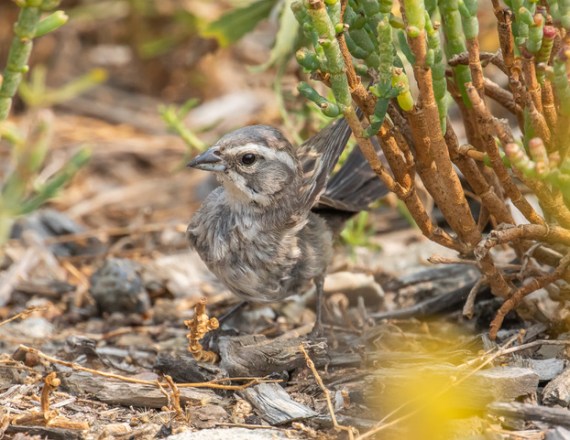
Black-throated Sparrow, juvenile (Chris Tosdevin 9-13-20)
They’re a desert, chaparral, or rocky slopes bird. Malibu Lagoon may often be deserted, but it’s not a desert.
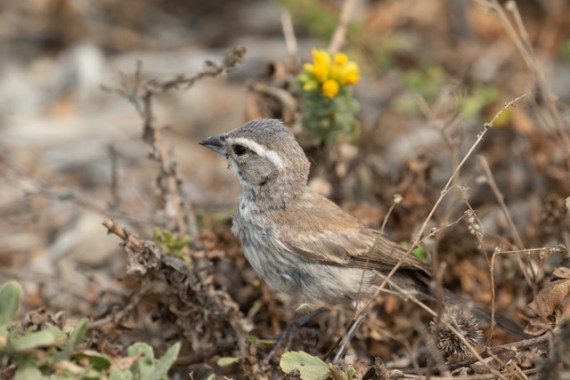
Black-throated Sparrow, juvenile (Chris Tosdevin 9-13-20)
In their adult plumage, they look elegant with a large black bib extending half-way down the breast, black cheeks and even bolder white supercilium and submoustachial stripes. This young bird looks a bit disheveled. We’ve seen them in many places: Antelope Valley, Carrizo Plains, Joshua Tree upper desert area and other dry locals.
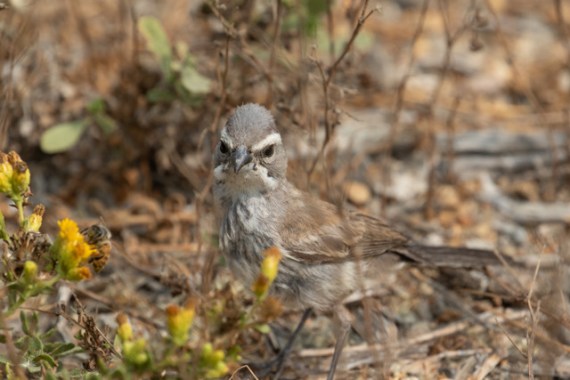
Black-throated Sparrow, juvenile (Chris Tosdevin 9-13-20)
They are extremely well-adapted to dry deserts as they are one of the few birds that don’t have to drink water. They get all they need from their diet of seeds, flowers, and invertebrates, as well as from what is called “water of metabolism” (formed in the body from the oxidation of the hydrogen in foods, especially fats). They can live in dry areas far from water, an ecological niche too difficult for most other birds and mammals except the Kangaroo Rat.
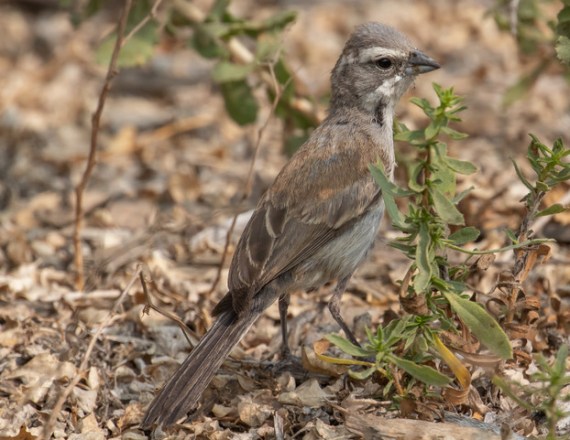
Black-throated Sparrow, juvenile (Chris Tosdevin 9-13-20)
Their breeding range includes east central Washington, Oregon east of the Cascades, all of Nevada, most of Utah, the northern half of Arizona, a thin strip in northern Utah, and southeastern California east of the Sierra, plus a tiny isolated area which is probably the Carrizo Plains. They spend the winter in southeastern California, across southern Arizona and New Mexico, southwestern Texas, and most of Baja California and mainland Mexico.
Chris and Ruth’s bird was undoubtedly on his or her way south. SMBAS’ only other recorded Lagoon sighting was on July 19, 1987, probably a single bird (presence recorded but number not counted).
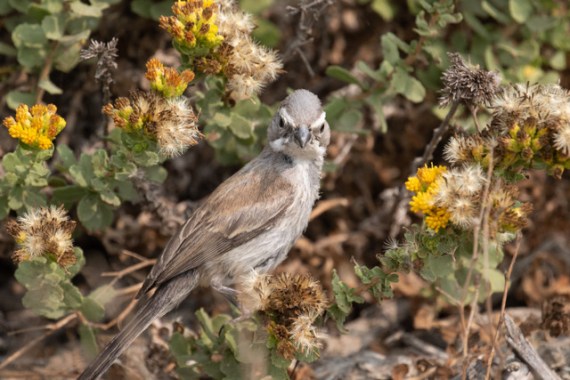
Black-throated Sparrow, juvenile (Chris Tosdevin 9-13-20)
Amphispiza bilineata (Greek amphi “on both sides” + spiza “finch”, Latin bilineata “two-striped”) is a small sparrow, 5 1/2″ long, same as the Chipping Sparrow. They’re not particularly skulky or secretive in their usual habitat, but I think you have to be both skilled and lucky to spot one in the brush around the lagoon where it’s almost totally unexpected.
Just as I was writing this, a report (from Joseph Brooks) came in that two other Black-throated Sparrows were spotted at Solstice Canyon yesterday (9-13-20), a few miles west of the lagoon. For those familiar with Solstice, they were in the vegetated creek bed near the parking lot. Can three birds constitute a fall-out?
Many thanks to Chris Tosdevin for the photos.
[Chuck Almdale]
joseph brooks
sunday 2 solstice creek parking ara



 SANTA MONICA BAY AUDUBON SOCIETY BLOG