Free email delivery
Please sign up for email delivery in the subscription area to the right.
No salesman will call, at least not from us. Maybe from someone else.
Ballona Fresh Water Marsh Reminder: 9 November, 2019, 8 AM

Great Blue Heron (R.Ehler 2/22/15)
Although it’s now been over 15 years since the Ballona Fresh Water Marsh was created, it’s still one of the newest and birdiest spots around. Last year’s trip found 48 species. We’ll look for whatever is around, of course, but we have good chances for wintering birds like Hermit Thrush, Blue-gray Gnatcatcher, Say’s Phoebe, Orange-crowned Warbler, and Fox, Lincoln’s and Savannah Sparrows. Least Bittern is less likely but possible; they are far more often heard than seen, so if you can, familiarize yourself with their calls before the walk. Wintering ducks, including Green- winged and Cinnamon Teals, should be back in their basic (winter) plumage. Year-around residents include our area’s five most common herons and egrets. Yellow-crowned Herons, both adult and immature, seem to be expanding their range from Baja into Alta California (that’s us) and show up irregularly at this marsh, Raptors are likely but unpredictable there.
Distance: It is about a 1.75 to 2-mile walk on mostly flat ground with a sometimes uneven dirt path.

Bufflehead male (Joyce Waterman 12-9-17)
Leader: Ellen Vahan (310-476-3359) ertvahan [AT] aol [DOT] com
Field Trip Chair: Jean Garrett 310-472-7209
Link to Google Map
You’re heading for the inland red dot for the freshwater marsh, NOT the westernmost dots near the beach.
Via Freeway: SAN DIEGO FWY (I-405) south to MARINA FWY (CA-90) west to CULVER BLVD. off-ramp and turn left under freeway and west towards Playa del Rey. Cross the Lincoln Blvd. overpass, then turn left at the first traffic light onto W. JEFFERSON BLVD. Park on the right at the Wetlands entrance, the last few hundred yards before you get back to Lincoln Blvd. Free street parking only.
Via Lincoln Blvd: Lincoln Blvd. south through Marina del Rey to West Jefferson Blvd. Right on Jefferson. Parking is on the south side of Jefferson only, so you’ll have to figure out where to turn around to get back close to Lincoln Blvd. [Chuck Almdale]

Green Heron. Ballona Wetlands 2016 Randy Ehler
How Computers Work: Cybersecurity & Crime | Video
Google Security Princess Parisa Tabriz and Jenny Martin from Symantec introduce the most common types of cybercrime including viruses, malware, DDOS attacks and phishing scams. Watch at 4:40 to see the top four tips to avoid getting hacked,
Part IX (5 minutes) of the series produced by Code.com explaining computers in terms most of us can understand. We’re getting past the ins & outs of downloads and uploads and into the guts. We’ll post a new installment approximately every ten days until we run out.
If you like this series and want to go through it at your own rate, the 17 videos listed HERE include the 12 which I have scheduled so far. Having some familiarity with the topics, I watched the first 12 in about an hour. It’s time well spent.
[Chuck Almdale]
https://youtu.be/AuYNXgO_f3Y
Have native plants in your yard? Sign up for this study.
If you have native California plants in your yard, these study people want to hear from you. No fee, no home invasions, no lengthy quizzes and probably front yard only. But contact them. Eric Wood, the study supervisor, told me the study idea was sparked last spring when people saw the Painted Lady butterflies flocking to yards with native plants while avoiding the yards without native plants. We’ve already signed up for the study!
You can check out Dr. Wood’s interesting website. However, I couldn’t find any references on it to this particular study, probably because the idea is brand new and the study has not started.
If you’re interested, just send an email to the contact in the blurb, Noriko Smallwood, who is the person actually doing the study. [Chuck Almdale]

This millipede uses deadly cyanide gas to keep predators at bay. But one beetle can tolerate the toxic defense and rides the millipede like a bucking bronco. Who will win this showdown in the forest?
This is another installment of the PBS Deep Look series; this installment is adapted from the “It’s OK to be Smart” series. If no film or link appears in this email, go to the blog to view it by clicking on the blog title above. If the film stops & starts in an annoying manner, press pause (lower left double bars ||) to let it buffer and get ahead of you. [Chuck Almdale]
Geese, Ducks and Coots, Oh My! Malibu Lagoon, 27 October, 2019
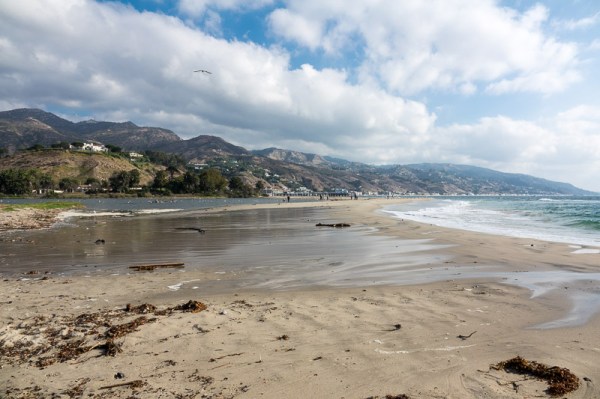
Overwashed beach (C. Bragg 10-27-19)
And we walked ‘till we came to a great big pond,
With the geese and ducks and coots thereon,
‘Twas merry a sight to gaze upon,
And we all had a very fine day-o, day-o, day-o.
It seems that the foxes have given up coop-raiding, become vegetarians and taken up birding.

Greater White-fronted Geese (G. Murayama 10-25-19)
Canada Geese and Brant are by far the most common geese at the lagoon, with 54 and 51 appearances respectively (out of 358 visits). Snow Goose is a distant third with 22 visits, then Ross’s with 14. White-fronted Goose had appeared a mere 6 times and five of those visits (Oct’99 – Feb’00) were likely the same individual spending the winter.
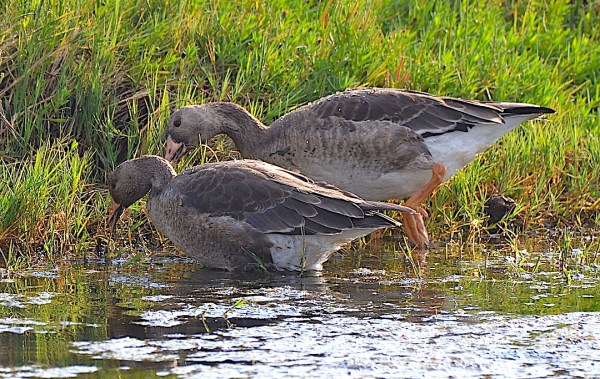
Greater White-fronted Geese (L. Loeher 10-27-19)
So we were surprised and pleased to see these two young birds drifting around the lagoon and channel and resting on the shoreline. The “white front” refers to the forehead. You can see it on the right bird in the first picture, but not on either bird in the second photo, taken two days later. I have no explanation for this peculiarity beyond the usual tricks of light and angle, mussed feathers or the possibility that these birds are not exactly the same individuals.

Check this Great Egret closely (G. Murayama 11-1-19)
A Snow Goose was there as well, although he/she (you can’t tell the sexes apart without a very personal examination) didn’t seem to be interested in the other geese. A few days later there were two Snow Geese, plus a Brant. This young bird’s white plumage is still a bit smudgy, but it has the diagnostic goth-style “black lips.”

Coot and Snow Goose interaction; mutual suspicion? (C. Bragg 10-27-19)
Four Ring-necked Ducks were also present, either females or young males. (Young males look like females for at least several months.) This species much prefers fresh water to brackish or salt water. They can be completely absent from the lagoon all winter, yet be happily paddling around on the two small Pepperdine fresh water ponds less than a mile away. They often winter in small numbers on SoCal inland ponds and reservoirs. We’ve seen them at the lagoon only nine times, and today’s four birds is the record high count. You never see the narrow cinnamon ring around their neck unless they stretch their neck out in good light. Birders tend to call them “ring-billed” because of the easily seen white ring near the tip of the bill. The eyering with a “tear streak” behind is a good field mark for this plumage (i.e. not a male in bright colorful plumage). You can see the white bill-ring beginning to appear near the tip.

Ring-necked Duck, probably a young male (C. Tosdevin 10-27-19)
The last notable water bird was the American Coot. They’re common at the lagoon (325 out of 358 visits or 91% of the time) and they average 89 birds per visit, but the previous record coot count was 410 birds on 9-25-11. Today we had 870. It was hard to locate any of the ducks and geese among all the coots.

Birders at south viewpoint “sorting out” the coots (C. Bragg 10-27-19)
We often have Belted Kingfisher wintering at the lagoon, but today we had two, both males. A female with a deformed bill had been spotted earlier in the week. We didn’t see it but Chris Tosdevin got a photo.

Belted Kingfisher with a deformed bill (C. Tosdevin 10-22-19)
Black Turnstones at the lagoon are outnumbered more than 4-to-1 by Ruddy Turnstones (AKA The Turnstone in England), partly because the Blacks vastly prefer rocky shorelines. They always winter on the Ballona jetties. So it’s a minor surprise to see them poking around the sandy and vegetated edges of the lagoon as we did, often accompanied by Ruddys.

Black Turnstone at lagoon’s edge (L. Loeher 10/25/19)
Snowy Plovers were in abundance. We counted forty, mostly resting in dents in the sand. We didn’t see any bands, but then we didn’t make them all stand up so we could see their legs.

Gadwall in the distance are a boring gray. The fine vermiculations are visible only when close (L. Loeher 10/27/19)
Here’s a quiz, submitted by Grace Murayama.

It’s about the size of a Corona bottle. What is it? (answer** at bottom)
(G. Murayama 10-25-19)
Birds new for the season: Snow Goose, Greater White-fronted Goose, Gadwall, American Wigeon, Green-winged Teal, Ring-necked Duck, Ruddy Duck, Horned Grebe, Eared Grebe, Black Turnstone, Ring-billed Gull, Herring Gull, Turkey Vulture, Common Raven, Rough-winged Swallow, Cedar Waxwing, Yellow-rumped Warbler.
Many thanks to our photographers: Chuck Bragg, Larry Loeher, Grace Murayama & Chris Tosdevin.

Adult White-crowned Sparrow (L. Loeher 10/27/19)
Our next three scheduled field trips: Ballona Fresh Water Marsh 8am, Sat 9 November; Malibu Lagoon 8:30 & 10am, Sun 24 November; Back Bay Newport 8am, Sat 14 December.

Allen’s Hummingbird
(C. Tosdevin 10-27-19)
Our next program: Birding Great Britain, presented by Chrystal Klabunde. Tuesday, 3 December, 7:30 p.m., Chris Reed Park, 1133 7th St., NE corner of 7th and Wilshire Blvd. in Santa Monica.
NOTE: Our 10 a.m. Parent’s & Kids Birdwalk meets at the shaded viewpoint just south (towards the water) of the parking area. Watch for Willie the Weasel. He’ll be watching for you and your big floppy feet.
Links: Unusual birds at Malibu Lagoon recently updated with new photos
9/23/02 Aerial photo of Malibu Lagoon
Prior checklists:
2019: Jan-June
2017: Jan-June, July-Dec 2018: Jan-June, July-Dec
2016:Jan-June,July-Dec2015:Jan-May, July-Dec
2014:Jan-July,July-Dec2013:Jan-June, July-Dec
2012:Jan-June, July -Dec2011:Jan-June, July-Dec
2010:Jan-June, July-Dec2009:Jan-June, July-Dec.
The 10-year comparison summaries created during the Lagoon Reconfiguration Project period, despite numerous complaints, remain available on our Lagoon Project Bird Census Page. Very briefly summarized, the results unexpectedly indicate that avian species diversification and numbers improved slightly during the restoration period June’12-June’14.
Many thanks to Chuck Bragg, Femi Faminu, Larry Loeher, Grace Murayama & Chris Tosdevin for their contributions to this month’s checklist. [Chuck Almdale]
**Wilson’s Snipe. Yes, non-birders, there really is an animal called a snipe. They’re very cryptically plumaged and hard to see when they don’t move.
| Malibu Census 2019 | 5/26 | 6/23 | 7/28 | 8/28 | 9/22 | 10/27 |
| Temperature | 57-59 | 63-68 | 62-66 | 72-78 | 70-77 | 61-71 |
| Tide Lo/Hi Height | L+0.66 | L+0.55 | H+3.46 | H+3.39 | L+3.21 | H+6.41 |
| Tide Time | 1040 | 0835 | 0817 | 0725 | 0930 | 0907 |
| Snow Goose | 1 | |||||
| Gr. White-fronted Goose | 2 | |||||
| Canada Goose | 6 | 6 | 6 | |||
| Gadwall | 13 | 20 | 18 | 20 | ||
| American Wigeon | 6 | |||||
| Mallard | 22 | 18 | 18 | 18 | 40 | 35 |
| Green-winged Teal | 2 | |||||
| Ring-necked Duck | 4 | |||||
| Ruddy Duck | 3 | |||||
| Pied-billed Grebe | 1 | 2 | 8 | 6 | ||
| Horned Grebe | 1 | |||||
| Eared Grebe | 4 | |||||
| Rock Pigeon | 18 | 15 | 18 | 5 | 6 | 8 |
| Eurasian Collared-Dove | 4 | 2 | ||||
| Mourning Dove | 2 | 4 | 8 | 2 | 1 | 2 |
| Anna’s Hummingbird | 1 | 1 | 2 | |||
| Allen’s Hummingbird | 3 | 6 | 9 | 1 | 5 | 4 |
| American Coot | 5 | 4 | 4 | 84 | 870 | |
| Black-bellied Plover | 36 | 72 | 78 | 74 | ||
| Snowy Plover | 11 | 14 | 42 | 40 | ||
| Semipalmated Plover | 2 | 2 | 3 | |||
| Killdeer | 4 | 5 | 8 | 4 | 5 | 10 |
| Whimbrel | 85 | 15 | 20 | 3 | ||
| Long-billed Curlew | 1 | 2 | 1 | 1 | ||
| Marbled Godwit | 1 | 17 | 24 | 24 | ||
| Ruddy Turnstone | 2 | 4 | 8 | |||
| Black Turnstone | 2 | |||||
| Sanderling | 57 | 35 | ||||
| Least Sandpiper | 3 | 5 | 3 | |||
| Pectoral Sandpiper | 1 | |||||
| Western Sandpiper | 1 | 17 | 1 | |||
| Short-billed Dowitcher | 3 | 1 | ||||
| Spotted Sandpiper | 1 | 1 | 3 | 1 | ||
| Willet | 15 | 16 | 52 | 13 | ||
| Red-necked Phalarope | 5 | 8 | ||||
| Common Murre | 2 | |||||
| Heermann’s Gull | 2 | 2 | 15 | 2 | 14 | 16 |
| Ring-billed Gull | 15 | 8 | 45 | |||
| Western Gull | 125 | 70 | 80 | 18 | 29 | 85 |
| California Gull | 7 | 2 | 93 | 115 | ||
| Herring Gull | 2 | |||||
| Glaucous-winged Gull | 1 | |||||
| Least Tern | 12 | 2 | 5 | |||
| Caspian Tern | 13 | 5 | 3 | 12 | ||
| Royal Tern | 2 | 1 | 2 | 4 | 1 | 5 |
| Elegant Tern | 165 | 64 | ||||
| Brandt’s Cormorant | 1 | 1 | 1 | |||
| Double-crested Cormorant | 27 | 24 | 22 | 20 | 39 | 35 |
| Pelagic Cormorant | 2 | |||||
| Brown Pelican | 108 | 74 | 34 | 6 | 30 | 52 |
| Great Blue Heron | 1 | 4 | 3 | 3 | 7 | |
| Great Egret | 2 | 6 | 2 | 4 | 4 | |
| Snowy Egret | 8 | 6 | 19 | 11 | 18 | 8 |
| Green Heron | 1 | 1 | ||||
| Black-crowned Night-Heron | 1 | 1 | 2 | 3 | 3 | |
| Turkey Vulture | 2 | 2 | ||||
| Osprey | 1 | |||||
| Cooper’s Hawk | 1 | |||||
| Red-tailed Hawk | 1 | 1 | ||||
| Belted Kingfisher | 1 | 2 | ||||
| Nuttall’s Woodpecker | 1 | 1 | ||||
| Nanday Parakeet | 3 | 4 | ||||
| Black Phoebe | 5 | 3 | 3 | 2 | 8 | 5 |
| Say’s Phoebe | 1 | 2 | ||||
| Cassin’s Kingbird | 1 | |||||
| Western Kingbird | 3 | |||||
| California Scrub-Jay | 1 | |||||
| American Crow | 6 | 5 | 5 | 4 | 6 | 8 |
| Common Raven | 1 | |||||
| Violet-green Swallow | 1 | |||||
| Rough-winged Swallow | 4 | 1 | ||||
| Cliff Swallow | 6 | 8 | 11 | |||
| Barn Swallow | 14 | 30 | 21 | 7 | 2 | |
| Bushtit | 1 | 5 | 30 | 20 | 5 | 8 |
| House Wren | 4 | 1 | ||||
| Marsh Wren | 1 | 5 | ||||
| Bewick’s Wren | 1 | 2 | ||||
| Blue-gray Gnatcatcher | 4 | 3 | ||||
| Wrentit | 1 | 1 | 1 | 3 | ||
| Western Bluebird | 7 | |||||
| Northern Mockingbird | 3 | 6 | 4 | 2 | 2 | 2 |
| European Starling | 12 | 8 | 25 | 8 | 23 | 50 |
| Cedar Waxwing | 18 | |||||
| House Finch | 8 | 22 | 25 | 3 | 5 | 5 |
| California Towhee | 3 | 2 | 1 | 3 | ||
| Song Sparrow | 5 | 5 | 4 | 3 | 8 | 8 |
| White-crowned Sparrow | 2 | 10 | ||||
| Western Meadowlark | 1 | |||||
| Hooded Oriole | 2 | 2 | 4 | 2 | ||
| Brown-headed Cowbird | 2 | 15 | 1 | |||
| Brewer’s Blackbird | 34 | |||||
| Great-tailed Grackle | 3 | 4 | 2 | 1 | 7 | |
| Orange-crowned Warbler | 1 | 3 | ||||
| Common Yellowthroat | 2 | 1 | 7 | 3 | ||
| Yellow Warbler | 5 | |||||
| Yellow-rumped (Aud) Warbler | 15 | |||||
| Totals by Type | May | Jun | Jul | Aug | Sep | Oct |
| Waterfowl | 41 | 44 | 42 | 18 | 40 | 73 |
| Water Birds – Other | 138 | 103 | 61 | 32 | 162 | 969 |
| Herons, Egrets & Ibis | 11 | 14 | 27 | 21 | 29 | 16 |
| Quail & Raptors | 0 | 3 | 0 | 1 | 2 | 2 |
| Shorebirds | 4 | 6 | 162 | 172 | 305 | 213 |
| Gulls & Terns | 334 | 87 | 111 | 107 | 137 | 268 |
| Doves | 20 | 23 | 26 | 7 | 9 | 10 |
| Other Non-Passerines | 6 | 11 | 11 | 2 | 6 | 8 |
| Passerines | 63 | 107 | 130 | 84 | 143 | 152 |
| Totals Birds | 617 | 398 | 570 | 444 | 833 | 1711 |
| Total Species | May | Jun | Jul | Aug | Sep | Oct |
| Waterfowl | 3 | 3 | 3 | 1 | 1 | 8 |
| Water Birds – Other | 4 | 3 | 4 | 4 | 5 | 7 |
| Herons, Egrets & Ibis | 3 | 4 | 4 | 4 | 5 | 3 |
| Quail & Raptors | 0 | 2 | 0 | 1 | 2 | 1 |
| Shorebirds | 1 | 2 | 10 | 14 | 16 | 11 |
| Gulls & Terns | 7 | 6 | 7 | 7 | 4 | 6 |
| Doves | 2 | 3 | 2 | 2 | 3 | 2 |
| Other Non-Passerines | 2 | 3 | 3 | 2 | 2 | 3 |
| Passerines | 11 | 15 | 13 | 17 | 27 | 18 |
| Totals Species – 96 | 33 | 41 | 46 | 52 | 65 | 59 |



 SANTA MONICA BAY AUDUBON SOCIETY BLOG