Free email delivery
Please sign up for email delivery in the subscription area to the right.
No salesman will call, at least not from us. Maybe from someone else.
Carola’s Parotia: King of the Dance | Cornell / National Geographic
The dance of the Carola’s Parotia is the most complex of all birds-of-paradise. The male has to go through five introductory dance moves before starting the main event, called the “ballerina dance.” All the while, four or five females may be perched above him, examining every detail of his performance before deciding whether to mate. Filmed and photographed by Tim Laman and Ed Scholes.
There are currently seventy-two short films in the entire Birds-of-Paradise Project playlist, ranging from 26 seconds to 8:29. In the upcoming weeks, we will present some of our favorites.
A film from the Cornell Lab of Ornithology. If no film or link appears in this email, go to the blog to view it by clicking on the blog title above. If the film stops & starts in an annoying manner, press pause (lower left double bars ||) to let it buffer and get ahead of you. The lab is a member-supported organization and they welcome your membership and support. [Chuck Almdale]
Watch This Bee Build Her Bee-jeweled Nest | Deep Look Video
Pollinator. Mason. Jeweler. A female blue orchard bee is a multitasking master. She fashions exquisite nests out of mud and pollen that resemble pieces of jewelry. And in the process, she helps us grow nuts and fruits.
This is another installment of the PBS Deep Look series; this installment is adapted from the “It’s OK to be Smart” series. If no film or link appears in this email, go to the blog to view it by clicking on the blog title above. If the film stops & starts in an annoying manner, press pause (lower left double bars ||) to let it buffer and get ahead of you. [Chuck Almdale]
A Wide Sandy Beach: Malibu Lagoon, 27 January, 2019

The wide sandy beach at low tide, Malibu Pier in distance, lone birder on the sand.
(L. Johnson 1-27-19)
Finally! A lagoon walk that didn’t coincide with the high tide of the month. In fact the low tide of +1.36 ft. was at 9:13 am, exposing a wide expanse of beach. What last month was reduced to a pitifully short and narrow peninsula of sand was now at least a football field in width.
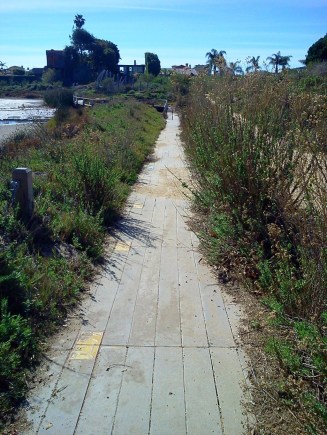
Tidal clock, high & dry compared to last month.
(L. Johnson 1-27-19)
Water was very low in the lagoon; the tidal clock was completely exposed and bone-dry. Surf was low as well. It’s easy to tell when the surf is bad without even seeing the ocean – no parked surfer cars on Pacific Coast Highway.
Other than Mallards, ducks were scarce, probably due to the low water. Even Ruddy Ducks who usually hang out in the deepest park of Malibu Creek just inland of the PCH bridge had left. The Red-breasted Mergansers were out on the ocean. There’s little for a diving duck to do when the water is only 2 feet deep.
Some people wondered what happens to the fish when the water is so low. The Tidewater Gobies are OK. They’re small and can hide in brackish nooks and crannies of the lagoon and channel. The same goes for the small shrimp, crabs, minnows and God-Only-Knows what else is paddling around in there. The Mullet likely went to sea (without a pea-green boat). I didn’t see any jumping; they might be there but unable to get up to speed in shallow water.
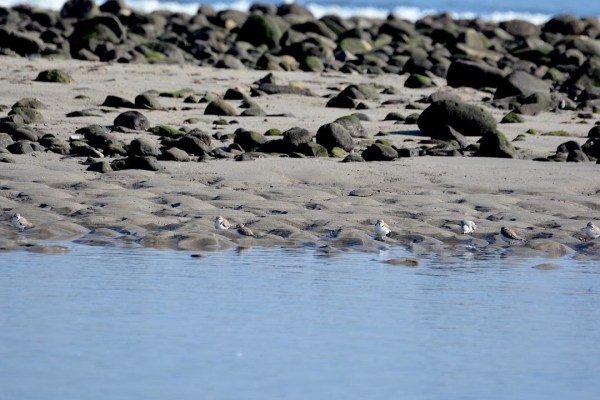
Snowy Plovers by the exposed rocks (G. Murayama 1-30-19)
Snowy Plovers were relatively plentiful, with 32 on the beach. No banded birds were seen. Most were resting in their little hollows, as they prefer feeding just after high tide, when they can search through the high-tide beach wrack for invertebrates of a miscellaneous nature.

Snowy Plover in his water-filled hollow (G. Murayama 1-30-19)
Most gulls were California, followed by Western, as is typical for our winters. Two Herring Gulls (known as Dump Gulls on the east coast where they frequent the abundant “dispose-all” municipal trash heaps) showed up as well as a singleton Glaucous-winged. There was one first-year Heermann’s Gull among twelve wintering adults. Terns were absent at first, but in late morning four flew in from the sea to rest on exposed offshore rocks.

South end of lagoon. Did you notice the Black Phoebe? (L. Johnson 1-27-19)
Among birds reliably at the lagoon, the Black Phoebe rates very high. Over the past eleven years Mallard has been present 100% of the time as has Double-crested Cormorant and Brown Pelican; Western Gull, Snowy Egret and American Crow at 99%; Black Phoebe and Song Sparrow 98%; Feral Pigeon, American Coot, Killdeer and Great Blue Heron 95%; Allen’s Hummingbird and House Finch 94%, and Northern Mockingbird 92%.
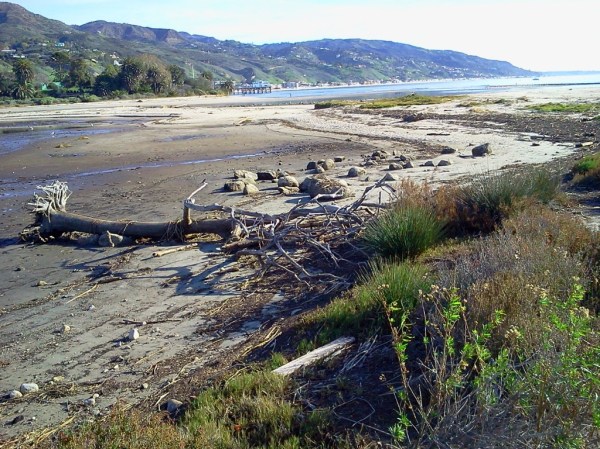
Black Phoebe again, plus the rest of the snag and the south side of the lagoon. (L. Johnson 1-27-19)
Mallard, Black Phoebe, Song Sparrow, Killdeer, Mockingbird and almost certainly Allen’s Hummingbird and House Finch breed at the lagoon. Herons and Egrets breed nearby in the shopping center (unless the managers cut down their nesting tree), Feral Pigeons breed all over the place, and Western Gull, Cormorant and Brown Pelican breed on the Channel Islands. There are other, more skulky species like Common Yellowthroat which are almost certainly always present, but we don’t always hear or see them.
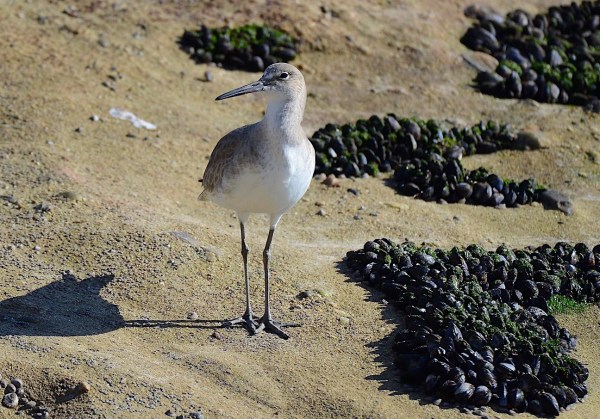
Willet watches, making sure no mussel escapes. (L. Loeher 1-30-19)
Our birds visiting from the nearby – burnt – chaparral have dwindled. Perhaps they return to their hillsides to see what was left of their former homes. I’m referring to birds like Bewick’s Wren, Blue-gray Gnatcatcher, Ruby-crowned Kinglet and Wrentit.
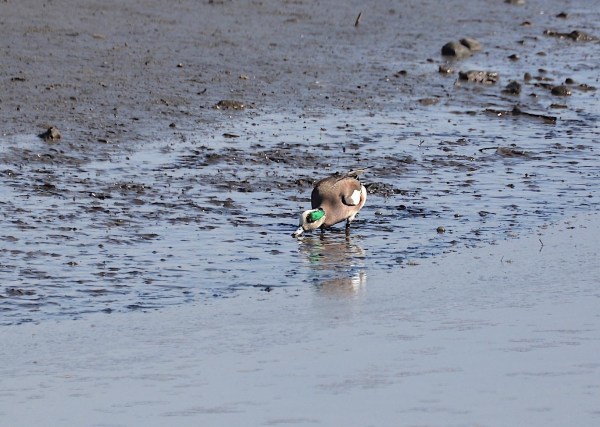
American Wigeon male, muckin’ about (G. Murayama 1-30-19)
On the other hand, the Golden-crowned Sparrow was still present. I say “still” because it was in exactly the same spot as in December – next to the back fence at the east end of the colony, hanging out with a small flock of White-crowned Sparrows. Prior to last month, we had only five records of this species on our monthly walks since 1979. We usually find them back in the canyons in riparian areas.
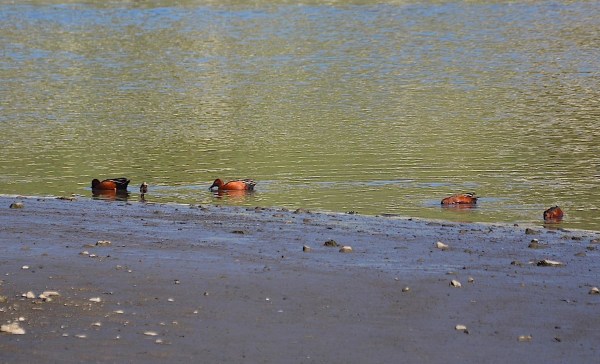
The increasingly uncommon Cinnamon Teal. Last seen on a field trip Jan. 2018; only 13 visits in the last 18 years. (G. Murayama 1-30-19)
Sea mammals are common just outside the lagoon. Pinnipeds swim by, catch fish and when the large offshore rocks are exposed will lie on them. Dolphins (or porpoises) show up on about half of our monthly walks, swimming by in small pods of 3-8 individuals. I don’t know if they’re residents or if we just get that many swimming by on their way to somewhere else. We don’t get a lot of whales, but one did show up today, spouting and sinking. I couldn’t call it “diving” as it was out about twice as far as the wave-break zone, and the water is shallow, perhaps 20-40 ft. deep. I think it was a California Gray.
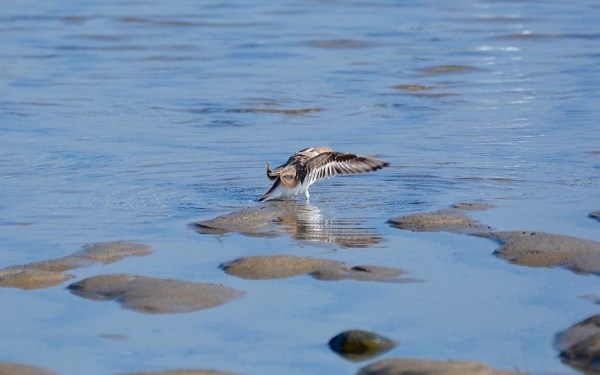
Snowy Plover bathing; head is facing right, between the wings. (G. Murayama 1-30-19)
Birds can come and go quickly at the lagoon. Black Oystercatchers may show up when the tide is quite low and mussel-encrusted rocks exposed. When those rocks are submerged, the birds fly off to more reliable mussel reefs. We didn’t see an Oystercatcher on Jan. 27, but Grace Murayama & Larry Loeher saw one three days later while working on the Countywide Snowy Plover survey.

Black Oystercatcher standing on his lunch (L. Loeher 1-30-19)
Birds new for the season were: Western Sandpiper, Glaucous-winged Gull, Oak Titmouse, Spotted Towhee.
Many thanks to our photographers: Lillian Johnson, Ray Juncosa, Larry Loeher & Grace Murayama.

House Finches are always around.
(R. Juncosa 12-23-18)
Our next three scheduled field trips: Sepulveda Basin Wildlife Area 8am 9 February; Malibu Lagoon 8:30 & 10am, 24 February; Sycamore Canyon 8am, 9 March.
Our next program: “International Bird Rescue,” presented by Julie Skogland of IBR. Tuesday, 5 February, 7:30 p.m., Chris Reed Park, 1133 7th St., NE corner of 7th and Wilshire Blvd. in Santa Monica.
NOTE: Our 10 a.m. Parent’s & Kids Birdwalk meets at the shaded viewpoint just south of the parking area. Watch for Willie the Weasel. He’ll be watching for you and your big floppy feet.
Links: Unusual birds at Malibu Lagoon recently updated with new photos
9/23/02 Aerial photo of Malibu Lagoon
Prior checklists:
2017: Jan-June, July-Dec 2018: Jan-June, July-Dec
2016: Jan-June, July-Dec 2015: Jan-May, July-Dec
2014: Jan-July, July-Dec 2013: Jan-June, July-Dec
2012: Jan-June, July -Dec 2011: Jan-June, July-Dec
2010: Jan-June, July-Dec 2009: Jan-June, July-Dec.
The 10-year comparison summaries created during the Lagoon Reconfiguration Project period, despite numerous complaints, remain available on our Lagoon Project Bird Census Page. Very briefly summarized, the results unexpectedly indicate that avian species diversification and numbers improved slightly during the period Jun’12-June’14.
Many thanks to Lillian Johnson & Chris Lord for their contributions to the checklist below. [Chuck Almdale]
| Malibu Census 2018-19 | 8/26 | 9/23 | 10/28 | 11/25 | 12/23 | 1/27 |
| Temperature | 72-76 | 63-70 | 61-67 | 64-75 | 55-62 | 65-75 |
| Tide Lo/Hi Height | H+4.50 | L+4.88 | H+5.83 | H+6.46 | H+6.87 | L+1.36 |
| Tide Time | 1030 | 0923 | 1143 | 0944 | 0850 | 0913 |
| Cackling Goose | 1 | |||||
| Canada Goose | 1 | |||||
| Blue-winged Teal | 2 | |||||
| Northern Shoveler | 2 | |||||
| Gadwall | 4 | 8 | 6 | |||
| American Wigeon | 12 | 5 | 4 | |||
| Mallard | 6 | 2 | 17 | 14 | 12 | 27 |
| Northern Pintail | 2 | |||||
| Green-winged Teal | 2 | 4 | 2 | |||
| Ring-necked Duck | 2 | |||||
| Greater Scaup | 2 | |||||
| Lesser Scaup | 2 | |||||
| Surf Scoter | 14 | |||||
| Bufflehead | 6 | |||||
| Red-breasted Merganser | 4 | 2 | 3 | |||
| Ruddy Duck | 61 | 95 | 2 | 3 | ||
| Pied-billed Grebe | 1 | 2 | ||||
| Horned Grebe | 1 | 1 | ||||
| Eared Grebe | 4 | 4 | 4 | |||
| Western Grebe | 4 | 2 | 2 | |||
| Clark’s Grebe | 1 | |||||
| Rock Pigeon | 30 | 47 | 23 | 12 | 22 | 13 |
| Mourning Dove | 4 | 2 | 2 | |||
| Anna’s Hummingbird | 2 | 1 | ||||
| Allen’s Hummingbird | 2 | 4 | 4 | 2 | 2 | 4 |
| American Coot | 1 | 27 | 17 | 85 | 58 | 38 |
| Black-necked Stilt | 1 | 2 | ||||
| Black-bellied Plover | 125 | 95 | 82 | 79 | 70 | 99 |
| Snowy Plover | 33 | 41 | 5 | 7 | 32 | |
| Killdeer | 4 | 8 | 2 | 7 | 14 | 17 |
| Whimbrel | 39 | 15 | 7 | 9 | 2 | 7 |
| Marbled Godwit | 3 | 14 | 13 | 15 | 14 | 17 |
| Ruddy Turnstone | 6 | 4 | 5 | 2 | 3 | 4 |
| Sanderling | 3 | 15 | 110 | 60 | 72 | |
| Least Sandpiper | 15 | 17 | 23 | |||
| Western Sandpiper | 9 | 2 | ||||
| Short-billed Dowitcher | 1 | |||||
| Spotted Sandpiper | 2 | 1 | 1 | |||
| Willet | 23 | 11 | 13 | 12 | 20 | |
| Red-necked Phalarope | 1 | 9 | ||||
| Heermann’s Gull | 8 | 11 | 25 | 14 | 14 | 13 |
| Ring-billed Gull | 13 | 30 | 95 | 50 | ||
| Western Gull | 85 | 81 | 20 | 45 | 75 | 127 |
| California Gull | 4 | 43 | 90 | 700 | 460 | |
| Herring Gull | 1 | 2 | ||||
| Glaucous-winged Gull | 1 | |||||
| Caspian Tern | 15 | 1 | ||||
| Forster’s Tern | 3 | |||||
| Royal Tern | 6 | 7 | 1 | 4 | ||
| Elegant Tern | 48 | 1 | ||||
| Red-throated Loon | 1 | |||||
| Pacific Loon | 2 | 1 | ||||
| Common Loon | 2 | |||||
| Brandt’s Cormorant | 1 | 1 | ||||
| Double-crested Cormorant | 15 | 22 | 23 | 34 | 42 | 31 |
| Pelagic Cormorant | 1 | 1 | 1 | 2 | ||
| Brown Pelican | 7 | 35 | 11 | 8 | 29 | 15 |
| Great Blue Heron | 3 | 3 | 2 | 2 | 2 | 2 |
| Great Egret | 4 | 3 | 2 | 2 | 1 | |
| Snowy Egret | 25 | 9 | 12 | 11 | 7 | |
| Green Heron | 1 | |||||
| Black-crowned Night-Heron | 1 | 2 | ||||
| Turkey Vulture | 5 | 9 | ||||
| Osprey | 1 | |||||
| Cooper’s Hawk | 1 | 1 | ||||
| Red-shouldered Hawk | 1 | |||||
| Red-tailed Hawk | 1 | 1 | 1 | 1 | ||
| Belted Kingfisher | 1 | |||||
| Peregrine Falcon | 1 | |||||
| Black Phoebe | 3 | 2 | 4 | 3 | 6 | 4 |
| Say’s Phoebe | 2 | 5 | 2 | 1 | 1 | |
| Cassin’s Kingbird | 1 | |||||
| Warbling Vireo | 1 | |||||
| California Scrub-Jay | 1 | 1 | ||||
| American Crow | 2 | 8 | 13 | 2 | 6 | 9 |
| Rough-winged Swallow | 4 | |||||
| Barn Swallow | 16 | 1 | ||||
| Oak Titmouse | 1 | |||||
| Bushtit | 30 | 75 | 60 | 6 | 8 | |
| Rock Wren | 1 | |||||
| House Wren | 1 | 2 | 1 | 1 | ||
| Marsh Wren | 2 | 1 | 3 | |||
| Bewick’s Wren | 1 | 4 | 1 | 3 | 3 | 1 |
| Blue-gray Gnatcatcher | 3 | 3 | 12 | 10 | 1 | |
| Ruby-crowned Kinglet | 5 | 3 | ||||
| Wrentit | 4 | 3 | ||||
| Hermit Thrush | 1 | 1 | 3 | 2 | ||
| Northern Mockingbird | 2 | 2 | 1 | 1 | ||
| European Starling | 35 | 24 | 8 | 35 | ||
| American Pipit | 1 | 1 | 1 | |||
| House Finch | 6 | 11 | 2 | 10 | 30 | 28 |
| Lesser Goldfinch | 1 | 5 | ||||
| Spotted Towhee | 1 | |||||
| California Towhee | 6 | 1 | ||||
| Savannah Sparrow | 2 | 1 | ||||
| Song Sparrow | 6 | 9 | 6 | 3 | 4 | 5 |
| White-crowned Sparrow | 4 | 4 | 27 | 15 | ||
| Golden-crowned Sparrow | 1 | 1 | ||||
| Dark-eyed Junco | 2 | |||||
| Western Meadowlark | 2 | 2 | 3 | 2 | ||
| Red-winged Blackbird | 25 | 1 | 3 | |||
| Great-tailed Grackle | 7 | 6 | 7 | 3 | 2 | 6 |
| Orange-crowned Warbler | 3 | 1 | ||||
| MacGillivray’s Warbler | 1 | |||||
| Common Yellowthroat | 6 | 4 | 3 | 10 | 5 | |
| Yellow Warbler | 2 | |||||
| Yellow-rumped(Aud) Warbler | 38 | 18 | 27 | 20 | ||
| Black-throated Gray Warbler | 2 | |||||
| Townsend’s Warbler | 1 | |||||
| Wilson’s Warbler | 1 | |||||
| Totals by Type | Aug | Sep | Oct | Nov | Dec | Jan |
| Waterfowl | 6 | 2 | 83 | 146 | 47 | 45 |
| Water Birds – Other | 24 | 89 | 56 | 139 | 139 | 90 |
| Herons, Egrets & Ibis | 32 | 17 | 2 | 18 | 15 | 10 |
| Quail & Raptors | 5 | 11 | 1 | 2 | 3 | 1 |
| Shorebirds | 215 | 234 | 125 | 261 | 193 | 294 |
| Gulls & Terns | 169 | 136 | 59 | 186 | 886 | 657 |
| Doves | 30 | 51 | 23 | 12 | 24 | 15 |
| Other Non-Passerines | 2 | 6 | 5 | 2 | 3 | 4 |
| Passerines | 75 | 210 | 187 | 96 | 149 | 150 |
| Totals Birds | 558 | 756 | 541 | 862 | 1459 | 1266 |
| Total Species | Aug | Sep | Oct | Nov | Dec | Jan |
| Waterfowl | 1 | 1 | 5 | 12 | 7 | 6 |
| Water Birds – Other | 4 | 5 | 5 | 9 | 9 | 7 |
| Herons, Egrets & Ibis | 3 | 5 | 1 | 4 | 3 | 3 |
| Quail & Raptors | 1 | 3 | 1 | 2 | 3 | 1 |
| Shorebirds | 9 | 11 | 7 | 11 | 9 | 11 |
| Gulls & Terns | 7 | 4 | 4 | 5 | 6 | 7 |
| Doves | 1 | 2 | 1 | 1 | 2 | 2 |
| Other Non-Passerines | 1 | 2 | 2 | 1 | 2 | 1 |
| Passerines | 9 | 24 | 25 | 25 | 20 | 20 |
| Totals Species – 110 | 36 | 57 | 51 | 70 | 61 | 58 |
Do You Have an Inner Voice? | PBS BrainCraft Video
How do you hear your inner voice? You know, that little person in your head… wait, is there a voice in YOUR head? Do YOU have an inner voice at all?
This is an installment of the PBS – BrainCraft series created by Vanessa Hill. If no film or link appears in this email, go to the blog to view it by clicking on the blog title above. If the film stops & starts in an annoying manner, press pause (lower left double bars ||) to let it buffer and get ahead of you. [Chuck Almdale]
SM Mountains BirdFest Announcement
As we all know, the Santa Monica Mountains BirdFest 2018 was cancelled because of the Woolsey fire. The heart of King Gillette Ranch, site of our BirdFest activities, was unscathed although the area around it was devastated. That sadly includes both Paramount Ranch and Peter Strauss Ranch where many public events and concerts take place.
The BirdFest committee met to discuss planning for the next festival. We decided to plan for the 5th Festival to take place in November 2020 rather than in 2019. This will allow more time for the area and habitat to recover from the ravages of the fire.
We also took other factors into consideration, notably the pressure on National Park and other agency staff to rebuild, the backlog of work on NPS lands after the shutdown, and the demand on the reduced number of facilities in the Mountains during rebuilding. Planning for events must start months ahead of time and we are at this time unable to speak to National Park personnel.
We are sorry to miss two years, but we hope to welcome you to a stronger and better BirdFest 2020!
The BirdFest of the Santa Monica Mountains is a free cooperative event sponsored by San Fernando Valley Audubon Society, Western National Parks Association, the National Park Service, Conejo Valley Audubon Society and Santa Monica Bay Audubon Society.



 SANTA MONICA BAY AUDUBON SOCIETY BLOG