Free email delivery
Please sign up for email delivery in the subscription area to the right.
No salesman will call, at least not from us. Maybe from someone else.
Correction to last night’s talk, RE: Snowy Plovers
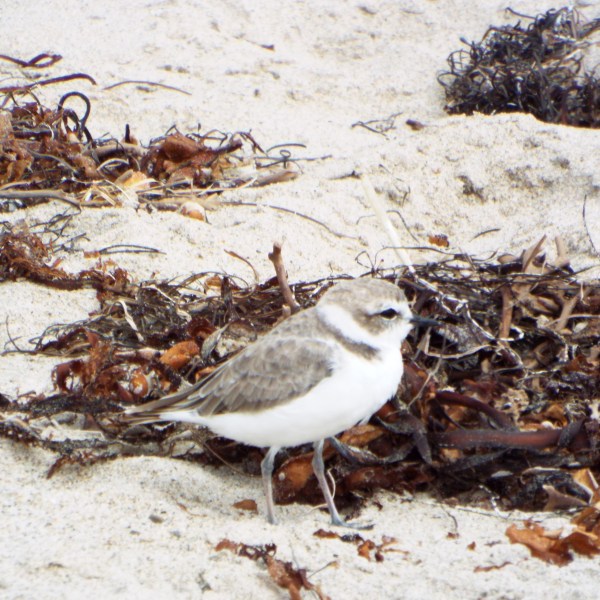 Apologies to the audience. I mis-spoke in saying Snowy Plover chicks were “altricial”. In fact, they are “precocial” in the terminology of most biologists. For details, see https://web.stanford.edu/group/stanfordbirds/text/essays/Precocial_and_Altricial.html
This is to say that Snowy Plover chicks are born required to, and able, to find food on their own, and not dependent on feeding by their parent.
Even though I said chicks were required to find their own food, I quoted the opposite term. I apologize for the confusion.
LucienP
The Birds-of-Paradise Project | Cornell / National Geographic
An overview of the Birds-of-Paradise Project, gratis of the Cornell Lab of Ornithology and National Geographic. Witness diverse strategies of evolution at work and experience one of nature’s extraordinary wonders – up close.
There are currently seventy-two short films in the entire Birds-of-Paradise Project playlist, ranging from 26 seconds to 8:29. In the upcoming weeks, we will present some of our favorites.
A film from the Cornell Lab of Ornithology. If no film or link appears in this email, go to the blog to view it by clicking on the blog title above. If the film stops & starts in an annoying manner, press pause (lower left double bars ||) to let it buffer and get ahead of you. [Chuck Almdale]
When predators attack, daddy longlegs deliberately release their limbs to escape. They can drop up to three and still get by just fine.
This is another installment of the PBS Deep Look series. If no film or link appears in this email, go to the blog to view it by clicking on the blog title above. If the film stops & starts in an annoying manner, press pause (lower left double bars ||) to let it buffer and get ahead of you. [Chuck Almdale]
Migrants still arriving – Malibu Lagoon, 26 November, 2017
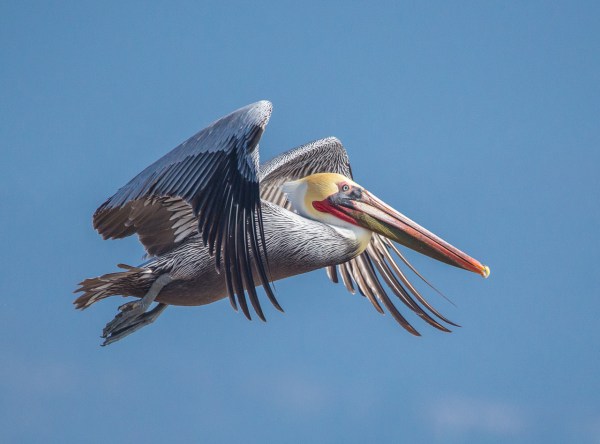
Brown Pelican adult (R. Juncosa 11-26-17)
Approximately thirty-five birders showed up, maybe a few more. I’ve never gotten in the habit of counting birders, just the birds, but while at the lookout point near the PCH bridge I suddenly noticed there seemed to be an unusually large of people. Too bad more birds weren’t present. Ducks seemed unusually under-represented. We had Gadwall, Mallard, American Wigeon, Red-breasted Merganser and Ruddy Duck with a grand total of fourteen ducks. A typical November would also include: Shoveler, Green-winged Teal, Surf Scoter and Bufflehead, with another 3-5 species possible, and about eighty total ducks. One hopes they’re still somewhere up north, enjoying a warm fall.
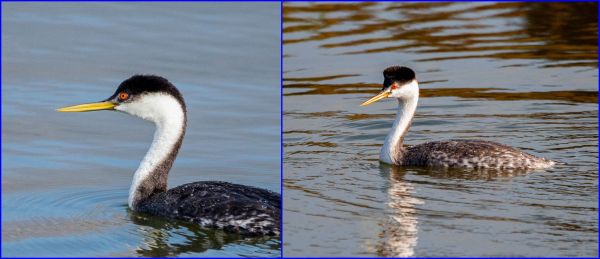
Grebes_ Western and Clark’s (R. Juncosa 11-26-17)
The above grebes are typical for this time of year. The Western on left will probably look like this until next spring, with dark plumage surrounding it’s red eye. The area around the eye may become a lighter gray as a few more feathers fall out, but it never becomes white. The Clark’s on right shows no black below the eye except for a thin line leading from eye to bill, with white above and below it. It may (or may not) lose some more black feathers around the eye, making the eye stand out even more.
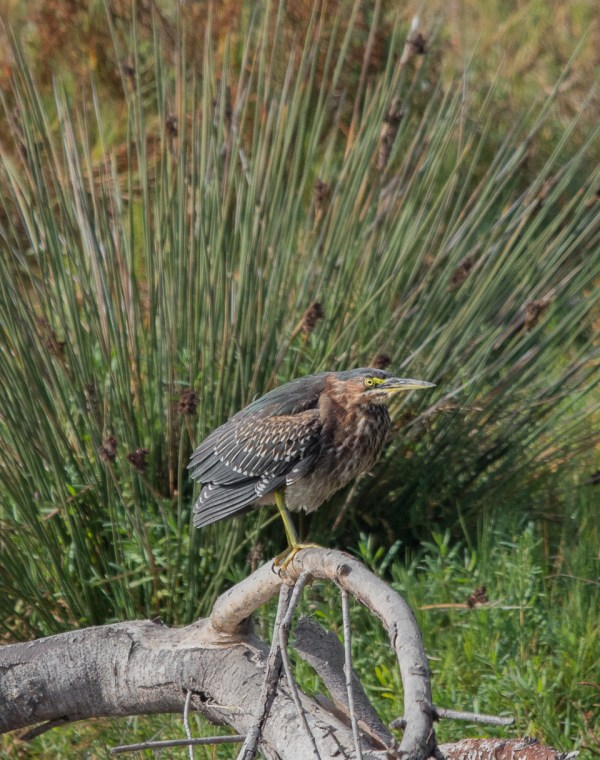
Green Heron takes a break (R. Juncosa 11-26-17)
We debated a bit about two cormorants standing on the offshore rocks. Both were wet, which can obscure plumage colors. They weren’t Double-crested Cormorants who are happy in the lagoon. Lighting was difficult on this gray and foggy morning, and we strained to see if either bird had the beige chin of a Brandt’s Cormorant. One seemed smaller or slimmer than the other, then again, as it shifted position, it seemed exactly the same. The other seemed to have a tiny patch of beige on the chin, then again, with a minor shift in position. this would vanish. Ray Juncosa snapped a fuzzy photo of the seemingly smaller one as it flew towards the rock. I finally concluded both were Brandt’s with optical illusions obfuscating observation. This species and the Pelagic Cormorant are fairly common on these rocks and swimming nearshore, but they rarely rest within the lagoon.
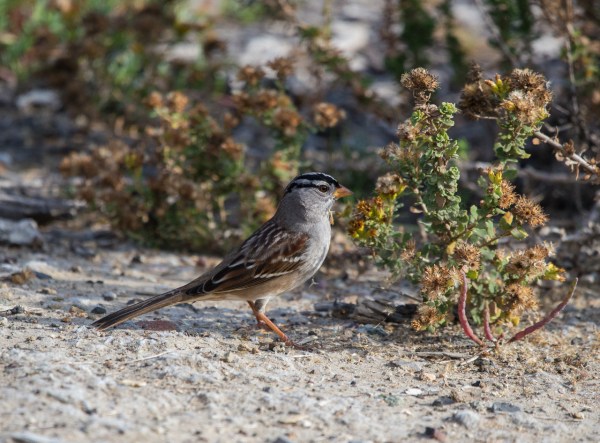
Adult White-crowned Sparrow, common SoCal wintering bird (R. Juncosa 11-26-17)
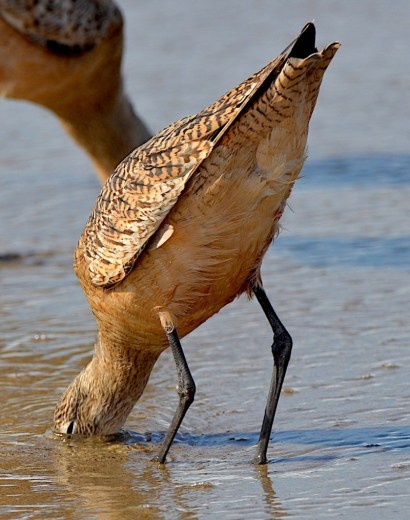
Marbled Godwit, head immersed
(L. Loeher, Zuma Beach 11-24-17)
The larger sandpipers – Whimbrel, Willet and Marbled Godwit were as numerous as last month. Most were resting but some were busy foraging. Larry Loeher’s photo from Zuma shows just how involved this can be.
Five Cattle Egrets showed up, resting on the lagoon-edge sand near the cormorants and Brown Pelicans. Unlike other egrets and herons, this species favors open fields over marshes, lagoons and ponds. According to Cornell Lab of Ornithology, this African species first appeared in 1870 in Suriname on the north coast of South America, then spread throughout the Caribbean, Central and South America, and finally into North America. They evolved in Africa, making a living by following the herds of antelope and other grazers, eating insects kicked up by their hooves. In the New World, cattle served the same purpose as far as the egrets were concerned. To a Cattle Egret, lots of cattle equals lots of food. You can see them by the tens of thousands in the Imperial Valley, poking around in the grassy fields, but as Los Angeles County has few cattle munching away, Cattle Egrets can be hard to find. Horses may substitute at times as insect-rousers, but aren’t as reliable. Out of 252 lagoon trips, we’ve seen them 26 times (10%), with a total of 64 birds. As one might expect, when they finished resting and began foraging for food, they headed for the brushy-grassy area, not the mud flats.
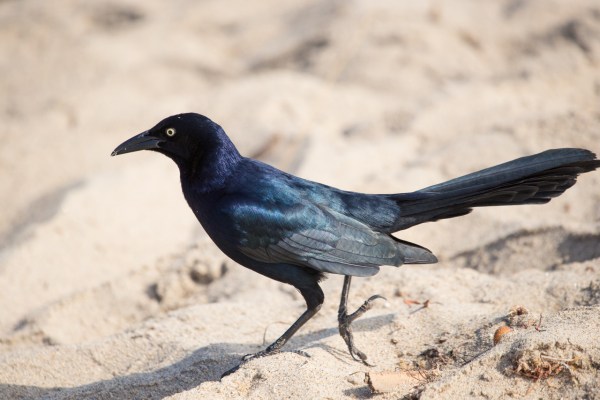
Male Great-tailed Grackle (R. Juncosa 11-26-17)
The local Great-tailed Grackles was evident – twelve birds in all. Most likely they breed over in Legacy Park near the shopping center, where (when it’s wet) there are lots of reeds. Several people wondered what the brown birds were. These brown females are 3″ smaller than the 18″ glossy black males, and they can fool you into thinking they’re a different species. Some birders are surprised to see these grackles wandering around on the beach, but they forage on the sand and lagoon-edge quite often, or at least they are much easier to see when they’re on the barren sand than when buried in the brushes or singing in the trees. In case you’re wondering, all grackles are in the Family Icteriidae, better known for its jet-black blackbirds, yellow meadowlarks and orange-and-black orioles.
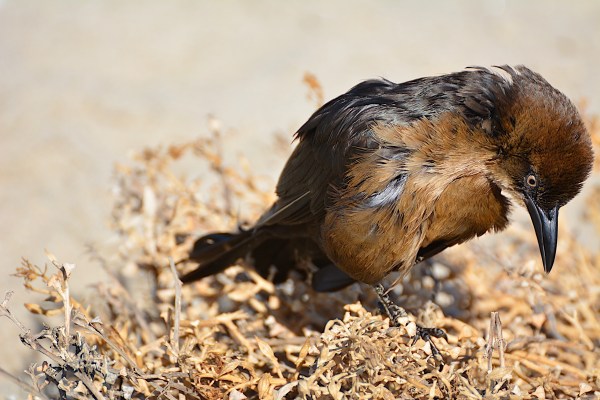
Great-tailed Grackle female with a rusty breast (G. Murayama 11-24-17)
Thirty-one Snowy Plovers were moderately busy. No banded birds were seen. High tide, their favorite time to forage for invertebrates in the wrack, had been at 9:46 am. A few were active. Most were resting in their tiny dimples in the sand, but every now and then they’d get up and run off to another dimple, for reasons known only to themselves.
Speaking of Royals (British) here’s a nice photo from Grace Murayama of a very royal-looking Royal (Tern), royally robed for winter.
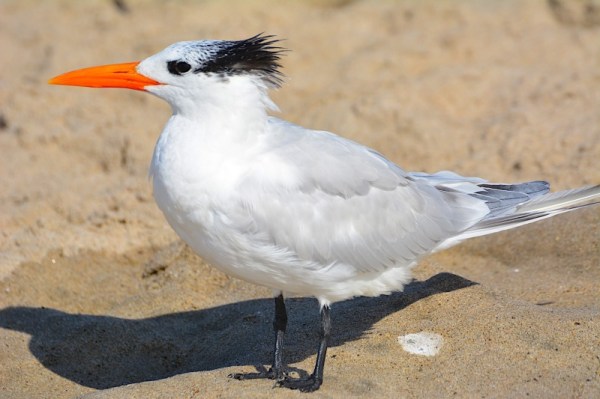
Royal Tern, royally aloof (G. Murayama, Zuma Beach 11-24-17)
Birds new for the season were: Red-breasted Merganser, Ruddy Duck, Cattle Egret, House Wren, Blue-Gray Gnatcatcher, Ruby-crowned Kinglet.
Many thanks to our photographers: Ray Juncosa, Larry Loeher, and Grace Murayama.
Our next four scheduled field trips: Ballona Creek & Freshwater Marsh, 8 am, 9 December; Butterbredt Christmas Count, 8:30 am, 16 December; Malibu Lagoon 8:30 & 10 am, 24 December; Santa Monica portion of Los Angeles Christmas Count, 6:45 am, 2 January.
Our next program: The Western Snowy Plover: Natural History and Recovery, with Lu Plauzoles – Evening Meeting: Tuesday, Dec. 5, 7:30 p.m., Joslyn Park, 633 Kensington Road – Five blocks south of Pico Blvd., two blocks west of Lincoln Blvd. – in Santa Monica. This location is for December only.
NOTE: Our 10 a.m. Parent’s & Kids Birdwalk meets at the shaded viewpoint just south of the parking area. Watch for Willie the Weasel. He’ll be watching for you and your big floppy feet.
Links: Unusual birds at Malibu Lagoon
9/23/02 Aerial photo of Malibu Lagoon
Prior checklists:
2017: Jan-June
2016: Jan-June, July-Dec 2015: Jan-May, July-Dec
2014: Jan-July, July-Dec 2013: Jan-June, July-Dec
2012: Jan-June, July -Dec 2011: Jan-June, July-Dec
2010: Jan-June, July-Dec 2009: Jan-June, July-Dec.
The 10-year comparison summaries created during the project period, despite numerous complaints, remain available on our Lagoon Project Bird Census Page. Very briefly summarized, the results unexpectedly indicate that avian species diversification and numbers improved slightly during the period Jun’12-June’14.
Many thanks to Lillian Johnson, Chris Lord and others for their contributions to the checklist below. [Chuck Almdale]
| Malibu Census 2017 | 6/25 | 7/23 | 8/27 | 9/24 | 10/22 | 11/26 |
| Temperature | 68-81 | 70-75 | 63-68 | 68-75 | 72-82 | 56-63 |
| Tide Lo/Hi Height | H+4.18 | H+4.39 | L+1.83 | L+1.86 | H+5.38 | L+2.94 |
| Tide Time | 1147 | 1039 | 0730 | 0559 | 1050 | 0946 |
| Canada Goose | 1 | |||||
| Gadwall | 18 | 15 | 1 | 1 | ||
| American Wigeon | 1 | 3 | ||||
| Mallard | 35 | 30 | 7 | 27 | 15 | 2 |
| Northern Pintail | 1 | |||||
| Red-breasted Merganser | 4 | |||||
| Ruddy Duck | 4 | |||||
| Pied-billed Grebe | 2 | 1 | 3 | 5 | 8 | |
| Eared Grebe | 1 | |||||
| Western Grebe | 2 | 9 | 15 | |||
| Clark’s Grebe | 2 | 2 | ||||
| Rock Pigeon | 15 | 17 | 3 | 5 | 6 | 10 |
| Mourning Dove | 2 | 4 | 1 | 2 | 2 | 2 |
| Vaux’s Swift | 40 | |||||
| Anna’s Hummingbird | 1 | |||||
| Allen’s Hummingbird | 4 | 6 | 1 | 6 | 2 | 1 |
| American Coot | 4 | 6 | 20 | 62 | 140 | 60 |
| American Avocet | 1 | |||||
| Black-bellied Plover | 5 | 27 | 39 | 89 | 135 | 115 |
| Snowy Plover | 5 | 9 | 16 | 34 | 25 | 31 |
| Semipalmated Plover | 2 | 1 | ||||
| Killdeer | 8 | 4 | 2 | 8 | 10 | 4 |
| Whimbrel | 27 | 2 | 54 | 45 | 36 | |
| Long-billed Curlew | 1 | |||||
| Marbled Godwit | 8 | 8 | 45 | 80 | 135 | |
| Ruddy Turnstone | 2 | 4 | 7 | 6 | 11 | |
| Black Turnstone | 1 | |||||
| Sanderling | 7 | 10 | 13 | |||
| Baird’s Sandpiper | 3 | |||||
| Least Sandpiper | 4 | 3 | 10 | |||
| Western Sandpiper | 1 | 2 | 1 | |||
| Long-billed Dowitcher | 1 | |||||
| Spotted Sandpiper | 4 | |||||
| Willet | 2 | 3 | 6 | 55 | 120 | 85 |
| Greater Yellowlegs | 1 | |||||
| Heermann’s Gull | 24 | 19 | 7 | 11 | 64 | 5 |
| Mew Gull | 1 | |||||
| Ring-billed Gull | 1 | 4 | 25 | |||
| Western Gull | 103 | 52 | 52 | 96 | 145 | 105 |
| California Gull | 3 | 2 | 1 | 98 | 385 | |
| Least Tern | 20 | 30 | 23 | |||
| Caspian Tern | 12 | 12 | 7 | 1 | ||
| Royal Tern | 2 | 2 | 6 | 52 | 47 | 4 |
| Elegant Tern | 3 | 90 | 32 | 4 | ||
| Brandt’s Cormorant | 1 | 2 | ||||
| Double-crested Cormorant | 11 | 22 | 18 | 36 | 45 | 32 |
| Pelagic Cormorant | 1 | 1 | ||||
| American White Pelican | 2 | |||||
| Brown Pelican | 68 | 35 | 14 | 17 | 17 | 45 |
| Great Blue Heron | 5 | 6 | 3 | 5 | 4 | 8 |
| Great Egret | 3 | 5 | 5 | 3 | 8 | 1 |
| Snowy Egret | 9 | 12 | 11 | 10 | 4 | 8 |
| Cattle Egret | 5 | |||||
| Green Heron | 3 | 2 | 2 | |||
| Black-crowned Night-Heron | 1 | 1 | 2 | 1 | 1 | |
| Osprey | 1 | 1 | 1 | |||
| Belted Kingfisher | 1 | |||||
| Peregrine Falcon | 1 | |||||
| Black Phoebe | 5 | 5 | 3 | 5 | 6 | 3 |
| Say’s Phoebe | 1 | 2 | 2 | 4 | ||
| Cassin’s Kingbird | 1 | 1 | ||||
| Western Kingbird | 1 | 1 | ||||
| American Crow | 7 | 2 | 6 | 6 | 5 | 5 |
| Rough-winged Swallow | 2 | |||||
| Cliff Swallow | 15 | |||||
| Barn Swallow | 9 | 12 | 6 | |||
| Oak Titmouse | 1 | 1 | ||||
| Bushtit | 1 | 15 | 48 | |||
| House Wren | 1 | 1 | ||||
| Marsh Wren | 2 | 3 | ||||
| Bewick’s Wren | 3 | 2 | 4 | |||
| Blue-gray Gnatcatcher | 15 | |||||
| Ruby-crowned Kinglet | 4 | |||||
| Northern Mockingbird | 4 | 2 | 2 | 2 | 1 | |
| European Starling | 7 | 6 | 25 | 8 | ||
| American Pipit | 4 | |||||
| House Finch | 10 | 10 | 2 | 8 | 16 | 40 |
| Lesser Goldfinch | 2 | 1 | ||||
| California Towhee | 3 | 1 | ||||
| Brewer’s Sparrow | 1 | |||||
| Savannah Sparrow | 8 | |||||
| Song Sparrow | 6 | 6 | 2 | 3 | 4 | 2 |
| White-crowned Sparrow | 20 | 45 | ||||
| Golden-crowned Sparrow | 1 | |||||
| Dark-eyed Junco | 1 | |||||
| Western Meadowlark | 1 | 1 | 3 | 3 | ||
| Hooded Oriole | 1 | 1 | ||||
| Bullock’s Oriole | 2 | |||||
| Red-winged Blackbird | 30 | |||||
| Brewer’s Blackbird | 12 | 1 | ||||
| Great-tailed Grackle | 4 | 15 | 2 | 3 | 6 | 12 |
| Orange-crowned Warbler | 1 | 5 | 2 | 1 | ||
| Nashville Warbler | 1 | |||||
| Common Yellowthroat | 1 | 2 | 2 | 8 | 5 | 9 |
| Yellow Warbler | 2 | |||||
| Yellow-rumped(Aud) Warbler | 12 | 3 | ||||
| Wilson’s Warbler | 1 | |||||
| Totals by Type | Jun | Jul | Aug | Sep | Oct | Nov |
| Waterfowl | 53 | 45 | 7 | 27 | 19 | 14 |
| Water Birds – Other | 83 | 65 | 56 | 118 | 223 | 164 |
| Herons, Egrets & Ibis | 18 | 24 | 19 | 23 | 19 | 25 |
| Quail & Raptors | 0 | 2 | 1 | 1 | 0 | 0 |
| Shorebirds | 22 | 82 | 80 | 314 | 434 | 441 |
| Gulls & Terns | 167 | 207 | 128 | 161 | 363 | 524 |
| Doves | 17 | 21 | 4 | 7 | 8 | 12 |
| Other Non-Passerines | 4 | 6 | 1 | 47 | 3 | 1 |
| Passerines | 104 | 57 | 48 | 86 | 115 | 211 |
| Totals Birds | 468 | 509 | 344 | 784 | 1184 | 1392 |
| Total Species | Jun | Jul | Aug | Sep | Oct | Nov |
| Waterfowl | 2 | 2 | 1 | 1 | 5 | 5 |
| Water Birds – Other | 3 | 4 | 6 | 4 | 10 | 7 |
| Herons, Egrets & Ibis | 4 | 4 | 3 | 5 | 5 | 6 |
| Quail & Raptors | 0 | 2 | 1 | 1 | 0 | 0 |
| Shorebirds | 6 | 9 | 9 | 14 | 9 | 10 |
| Gulls & Terns | 7 | 7 | 7 | 5 | 7 | 5 |
| Doves | 2 | 2 | 2 | 2 | 2 | 2 |
| Other Non-Passerines | 1 | 1 | 1 | 3 | 2 | 1 |
| Passerines | 14 | 11 | 15 | 24 | 19 | 19 |
| Totals Species – 97 | 39 | 42 | 45 | 59 | 59 | 55 |
z
Lessons learned from the oldest Snowy Plover
Lessons learned from the oldest Snowy Plover
From: Wader Study 124(2): 00–00. doi:10.18194/ws.00071 – Short Communication
Mark A. Colwell1*, Elizabeth J. Feucht1, Sean E. McAllister2 & Amber N. Transou3
1Wildlife Department, Humboldt State University, Arcata, CA 95521, USA
2Sean E. McAllister & Associates, Eureka, CA 95503, USA
3California State Parks, North Coast Redwoods District, Eureka, CA 95503, USA
*Corresponding author: mac3@humboldt.edu
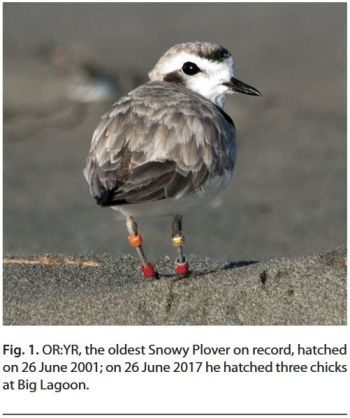
Ornithologists and conservationists are well aware of the valuable insights provided by long-term studies of populations of individually marked animals (Clutton-Brock 1988, Newton 1998). In particular, estimates of survivorship and reproductive success derived from annual records of uniquely marked birds inform management practices that attempt to increase population size, which is especially important for threatened and endangered taxa (e.g., Pakanen 2016). Recently, we summarized population growth (Colwell et al. 2017), lifetime reproductive success (Herman & Colwell 2015), and annual variation in survivorship (Mullin et al. 2010, Colwell et al. 2013) for the Snowy Plover Charadrius nivosus. Here, we submit observations of a male Snowy Plover (Fig. 1) who, at 16 years of age, continues to offer insight into the conservation challenges faced by the species.
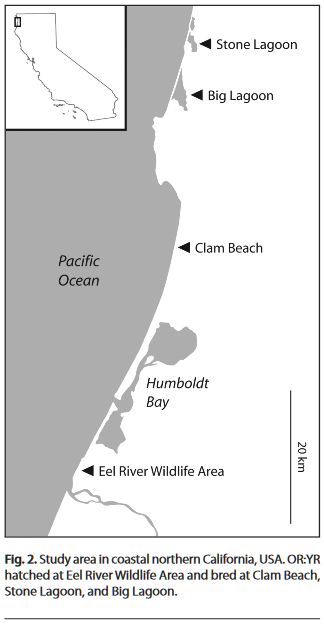
Longevity – On 26 June 2001, we banded a newly hatched Snowy Plover at Eel River Wildlife Area in Humboldt County, California, USA (Fig. 2). One year later (3 August 2002), we recaptured him as a breeding adult at Clam Beach and uniquely marked him OR:YR. In 2017, this 16-year-old male continued to breed and winter locally; observers detected him most recently in July 2017. His age represents a longevity record for the species (L.E. Stenzel & D.J. Lauten pers. comm.) and, quite possibly, for >the 34 species of Charadrius worldwide (Dinsmore in press). For the clade, however, multiple Wrybills Anarhynchus frontalis far surpass this longevity record, with two birds reaching 22 years (A.C. Riegen pers. comm.).
Dispersal – The distance (~38 km) between OR:YR’s natal nest and his first breeding attempt was comparable to other philopatric plovers in our population (Colwell et al. 2007, Pearson & Colwell 2013), with the largest percentage of males (38%) and females (54%) first breeding 10–100 km from their natal site. In his first seven years (2002–2008), OR:YR bred and wintered exclusively on Clam Beach, a site characterized by high activity of Common Ravens Corvus corax, an important egg predator in our study area (Burrell & Colwell 2012). To increase nest survival, we routinely protected clutches with predator exclosures erected around nests (i.e., 122 nests over 2002–2006; Hardy & Colwell 2008). In 2009, OR:YR first bred on Clam Beach before he and his mate disappeared; observers later found him ~45 km north at Stone Lagoon, tending 10-day-old chicks. In the subsequent years (2010–2016) he increasingly bred at Stone Lagoon. In winter, we regularly observed OR:YR on Clam Beach, although he occasionally occupied other sites (Big Lagoon; Nov 2016–Jul 2017). In our study population, males typically disperse shorter distances than females. Furthermore, males tend to be more site-faithful after successfully hatching chicks (median: 0.7 km; range: 0.2–1.4) compared with failed nests (median: 1.3 km; range: 0.4–3.0); similar patterns obtain in comparisons of movements between years (Pearson & Colwell 2013).
Reproductive success – Dispersal is often associated with reproductive success (Oring & Lank 1984). Along the Pacific coast, Snowy Plovers initiate nests from early March until late July, with multiple opportunities to replace failed clutches (Warriner et al. 1986). During his first five years, we protected 11 of OR:YR’s 17 nests using exclosures. As a 2-year-old, he successfully hatched four chicks from his first two exclosed nests; none of these chicks fledged. Additionally, seven (64%) of his exclosed nests failed to hatch eggs and only one produced fledglings. In 2006, we stopped using exclosures because six to eight incubating adults (~20% of breeding adults at the site) disappeared. We presumed that an unknown vertebrate predator had consumed these individuals as evidenced by at least one deceased adult and the absence of others when they should have been incubating (Hardy & Colwell 2008, Mullin et al. 2010). We did not protect his subsequent nests on Clam Beach. In 2007, OR:YR initiated 10 nests with a female (WW:YG) who laid 22 eggs over the breeding season; they did not hatch offspring that year. OR:YR’s attachment to Clam Beach may have stemmed from his early success at hatching eggs in nests that we protected with exclosures; however, mate fidelity also may have played a role (Pearson & Colwell 2013). Over his 15-yr breeding history, OR:YR averaged 1.7 (range: 1–4) mates annually; in 47% of years, he bred with a single female for the entire breeding season.
Lifetime reproductive success of plovers has a strong pattern of unequal progeny production (Koenig 1988). In a sample of 195 Snowy Plovers, 13% of individuals (12 males; 14 females) produced 50% of fledged young (Herman & Colwell 2015). Over his lifetime, OR:YR tended 148 eggs in 58 nests, and hatched 31 chicks, of which 13 fledged (i.e., reached 28 days of age). His fledging success makes him the second most prolific breeder in our population, in which males averaged 2.2 ± 3.0 fledged young over their lifetimes (Herman & Colwell 2015). However, given his age, OR:YR was well below the reproductive output expected for an individual who has bred for 16 years. Most (9 of 13) of his fledglings originated from Stone Lagoon in the second half of his life. We estimated breeding efficiency as the ratio of chicks fledged to eggs tended; briefly, a perfectly efficient breeder produces a fledged chick for every egg tended (1.0) compared with one that never produces offspring (0.0). At Clam Beach, OR:YR produced 0.03 fledglings per egg, whereas at Stone Lagoon he was ten times more efficient (0.30 fledglings per egg).
Conservation implications – The longevity, dispersal and reproductive success exhibited by OR:YR highlight the impacts of commonly used management practices aimed at recovering the population size of this threatened taxon (USFWS 2007). For example, we used non-lethal predator management (i.e., nest exclosures) to increase reproductive success at the site where OR:YR bred early in his life. We suspect that his success as a young breeder affected his decision to be site-faithful to Clam Beach (Oring & Lank 1984). Furthermore, differences in reproductive success between sites correlate with activity of predators. For example, nest predation rate correlates positively with Common Raven presence and abundance across our study area (Burrell & Colwell 2012). Clam Beach ranks among sites with highest raven activity (1.43 ± 0.51 ravens detected on 40% of point counts averaged across 10 years) compared with Stone Lagoon (0.56 ± 1.54 ravens detected on 17% of point counts). Increased management to reduce the negative impacts of predators on plover reproductive success is warranted. Finally, the population of Snowy Plovers in coastal northern California is small (19–74 breeding adults annually; Colwell et al. 2017), though connected by dispersal to populations elsewhere along the Pacific coast (Stenzel et al. 1994, Colwell et al. 2007, 2017, Pearson & Colwell 2013). Consequently, the effective population size is likely equivalent to the entire listed population segment (i.e., ~2200 adults in 2016; https://www.fws.gov/Arcata/es/birds/WSP/plover.html). We occasionally observe instances of inbreeding locally (Colwell & Pearson 2011), and the genes of individuals that live as long as OR:YR may be disproportionately represented in the population. If so, this may require additional study regarding the role of inbreeding in isolated populations of the Snowy Plover.
We thank the many field assistants who have worked on this project over the past 17 years. Support for our research came from the California Department of Fish and Wildlife, California Department of Parks and Recreation, U.S. Bureau of Land Management, U.S. Fish and Wildlife Service, and California Department of Fish and Game’s Oil Spill Response Trust Fund through the Oiled Wildlife Care Network at the Wildlife Health Center, School of Veterinary Medicine, University of California, Davis.
Link to original FWS.gov article.
[Suggested by Larry Loeher; Posted by Chuck Almdale]



 SANTA MONICA BAY AUDUBON SOCIETY BLOG