Free email delivery
Please sign up for email delivery in the subscription area to the right.
No salesman will call, at least not from us. Maybe from someone else.
Pelicans and Pipits – Malibu Lagoon, 22 October, 2017
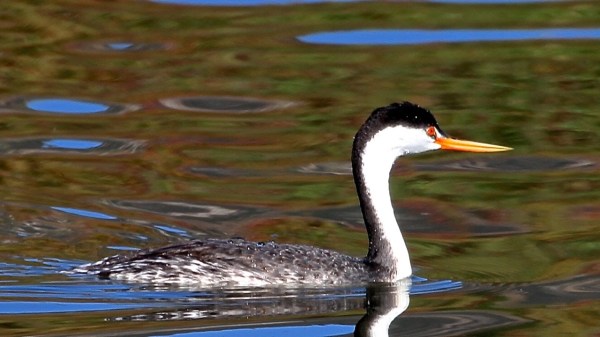
Clark’s Grebe with his bright orange bill & stand-out eye (J. Waterman 10-22-17)
A group of Pepperdine University students trudged down the hill to the lagoon to join us today, fulfilling some sort of Biology class field trip requirement. Lucky them – it was probably the hottest field trip day of the year, as all of SoCal was being throttled by a record heat wave. I’m usually so busy talking and answering questions that I don’t bother to drink water. Today I knocked off a whole bottle.
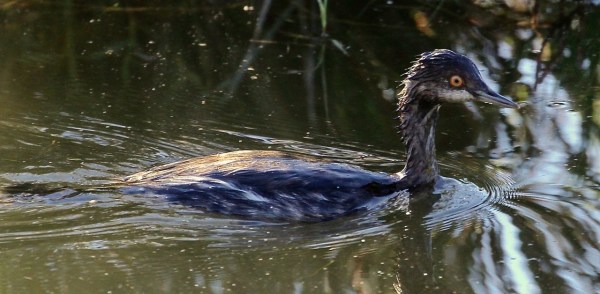
Eared Grebe, wet (J. Waterman 10-22-17)
A few ducks have arrived, almost too few to count: Gadwall, American Wigeon, Northern Pintail – one each. More exciting were the Aechmophorus grebes: nine Western and two Clark’s, although most of use saw five of the former and one of the latter. We had them at close range and everyone got to see how they differ in face, bill and flank patterns (see photo above).

Pied-billed Grebe, also wet (J. Waterman 10-22-17)
Brandt’s and Pelagic Cormorants – again, one of each – were swimming offshore in the surf zone. It’s tough to see them well when they’re diving for fish, as they spend only a second or two on the surface before again disappearing.
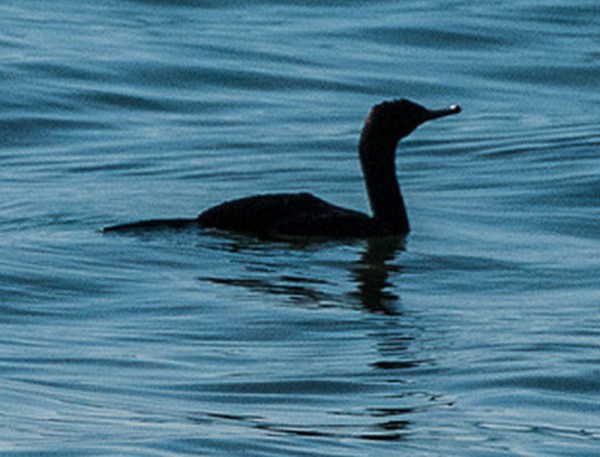
Pelatic Cormorant has a long tail (R. Juncosa 10-22-17)
These birds were busily bouncing around as the eminently surfable waves kept rolling in, and the sun was inconveniently located to maximize viewing difficulty. However, Pelagic Cormorants have a long tail – when compared to other cormorants – and Ray Juncosa’s photo captures this characteristic. The tail is so long, it looks like a sodden squirrel tail.
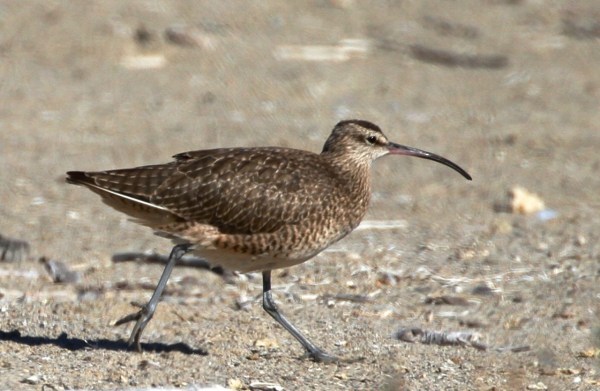
Whimbrel briskly walking (J. Waterman 10-22-17)
The larger sandpipers – Whimbrel, Marbled Godwit, Willet – put in quite an appearance along the lagoon edge. A few were foraging for food, but most were resting, probably from a long flight from the north.
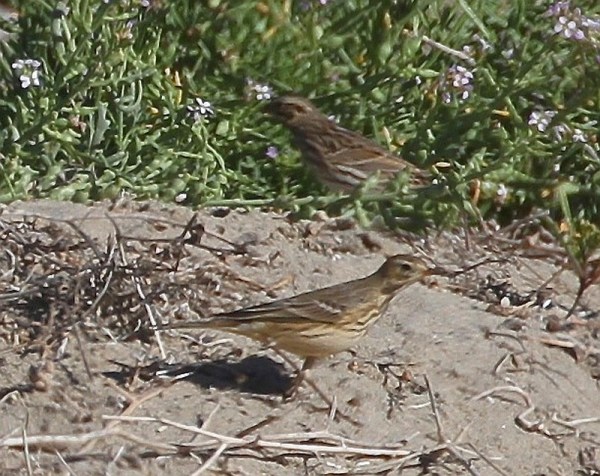
American Pipit in foreground, Song Sparrow behind (J. Waterman 10-22-17)
Although not commonly seen in Malibu, American Pipit has visited the lagoon and beach for decades; we’ve sighted it 21 times on our monthly walks, with a total of 51+ birds. We used to call them Water Pipit, as when we first recorded it on 9/24/89, the very same year it was officially split into Water Pipit Anthus spinoletta (Old World) and American Pipit Anthus rubescens (New World). It took a while for the news of splits to get out back then – widespread dissemination of such information via email and the web was yet to come. Pipits are in the family Motacillidae (Latin: wag+tail). Of the family’s 66 species, only three breed in North America, and an additional five species, such as White Wagtail, occasionally visit. The rest are spread across the Old World throughout Africa, Europe and Asia.

Brown & American White Pelicans with assorted companions (R. Juncosa 10-22-17)
On the other hand, American White Pelicans have never been previously recorded on our monthly walks. They are not plunge divers, as are Brown Pelicans. They prefer fresh water, or very calm and shallow coastal waters. They generally feed in groups, “herding” a school of fish into a tight group, then scooping them up in their bills. They cannot do this in choppy or deep near-shore waters. They are regularly seen elsewhere in the Malibu Creek watershed, such as Lake Sherwood and Westlake. This pair had probably flown downstream from one of those lakes and had been present for much of the previous week.
High tide today was +5.38 ft. at 10:50 am. We watched waves washing across the beach and into the lagoon. Significant portions of the beach were washed away, and the virtual fence – many yards from the surf zone when erected last spring – is close to being washed away. Plans are afoot to remove it before winter storms do it for us.

High tides nearly took away the virtual fence (G. Murayama 10-23-17)
Heermann’s Gull were also present in good (for them) numbers: sixty adults in basic (non-breeding, winter) plumage and four first-year birds, dark chocolate brown. Over the prior ten years, the highest October count was 45 birds. Our highest count ever was 350 on 4/26/15.
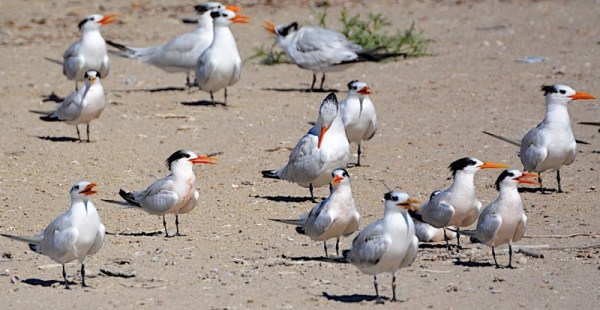
Assorted Royal & Elegant Terns (G. Murayama 10-22-17)
Check the terns pictured above. Elegant Terns are smaller than Royals by 3″, have slimmer, relatively longer, more decurved bills, longer black crests, and their dark crests surround – or at least abut – their dark eye. The eye of the Royal is often separated – and is more distinct – from the dark crest. In this photo, the Elegant ventral feathers (breast, belly, wing underside) are off-white compared to the Royals, perhaps with a rosy or pinkish cast. One Elegant has a jagged red streak which Kimball Garrett of the L.A. Natural History Museum agreed looked like blood or oil staining, possibly from a fish or crustacean source. Over the decades, the cause of the pink flush on the breasts of many gulls and terns has been debated. Colin Selway (12/23/13) posted what may be the most recent and best explanation, from which I quote below. I recommend reading his entire posting. 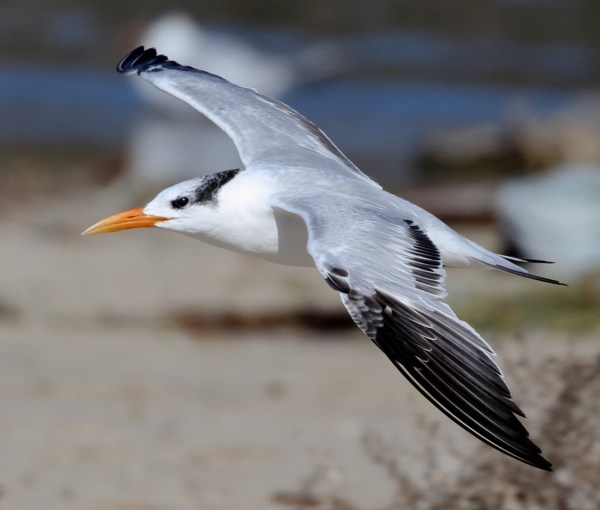
Royal Tern in basic plumage (J. Waterman 10-22-17)
“Due to the temporary nature of the colour; usually fading within one month of arrival at the breeding grounds; the main theory used to be that a pink oil was applied to the surface of feathers, secreted by the birds uropygial gland at the base of the tail. It was also reported that there was seasonal variation in the red colour of the gland secretions; this cosmetic theory I suspect has at least a slight effect on some individuals or species but cannot be responsible for the intensity of the pink suffusion in the plumage of the majority. I remember many years ago preparing a study skin of a Roseate Tern (Sterna dougallii) in spring and finding while degreasing the skin in solvent it did not immediately remove the pink flush; the pigment appeared to be inside the feathers.
In fact, two recent studies have shown that at least in some species the pigments responsible for the pink coloration were oxy-carotenoids, mainly astaxanthin, deposited inside the feathers of Ring-billed Gulls (Larus delawarensis), Franklin’s Gull (L. pipixcan; McGraw and Hardy, 2005) and Elegant Terns (Sterna elegans) (Hudon and Brush, 1990). Astaxanthin was first named and characterized in 1938, extracted from the lobster (Homarus astacus) and called “haematochrom” until 1944 when Tisher identified the main carotenoid as astaxanthin.
Birds are unable to manufacture carotenoids endogenously, and in these cases the pink colour probably comes from the carotenoid astaxanthin, primarily biosynthesized within algae, phytoplankton and plants, ingested and incorporated into the tissues of the crustaceans, then fish, that both can form part of the bird’s diet, and are then metabolically processed by the birds. Some individuals or species may have evolved enzymatic mechanisms to convert various carotenoids into forms of astaxanthin or to deposit the pigment directly into the feathers. The colour could be further enhanced by wax secretions from the uropygial gland, the composition of these secretions is thought to change providing differing functions at different times of the year, and may well contain the carotenoid astaxanthin in one form or another. It appears highly likely that the pink coloration is dependent on the dietary availability of such carotenoids, this could be seasonal or abundant at all times in the food chain. One other source of caroteniods could be from the continued growth of commercial fish farming (marine and fresh water) this worldwide industry has created an enormous demand for pigments, as a vitamin source and to colour the flesh of Rainbow Trout, Atlantic Salmon, shrimp, Koi, Sea Bream, Yellow Tail and ornamental fish. On poultry farms it is also used to improve the colour of eggs.” Link to posting.
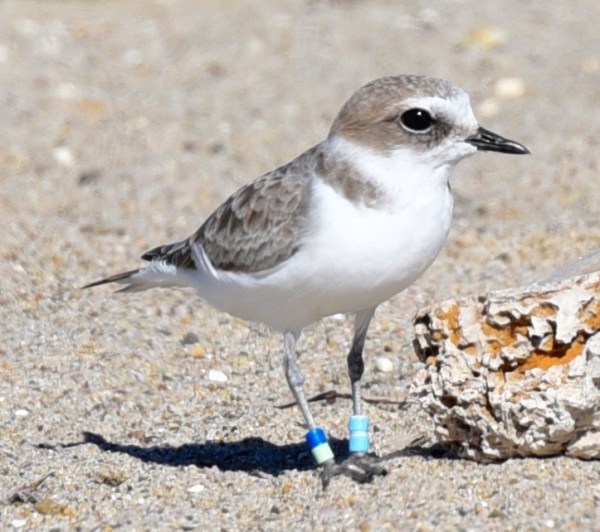
Snowy Plover AA:BL (lower left band looks white but was Lime) (Jane Hines 10-22-17)
Snowy Plovers were running all over the place making an accurate count difficult. This may have been because the high tide – their favorite time to begin feeding – was coming and going all the while. Of at least twenty counts by at least four people, the high count was 25 birds. We’re going with that, although there could have been another ten birds afoot. Our Malibu mother RR:BB was there, as was AA:BL (left leg aqua over aqua, right leg blue over lime). This latter bird was banded as a chick at Ft. Ord during the 2016 spring-summer breeding season, and first showed up at Malibu on August 28, 2016.
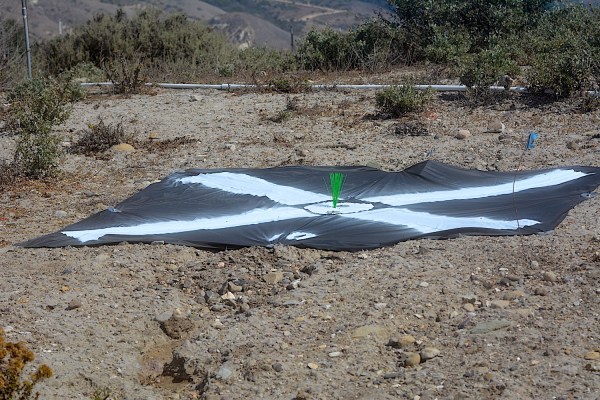
Landing pad for unauthorized alien aircraft (G. Murayama 10-20-17)
We decided the object above was a target landing site for a drone helicopter. Larry Loeher thought there might be at least nine more of them somewhere around, as this one was “#10.” We contacted California State Parks, who told us that no such drones or targets are currently permitted to operate within any parks in the area. I wonder if we are witnessing the beginnings of “drone golf.”
Birds new for the season were: Canada Goose, Gadwall, American Wigeon, Northern Pintail, Eared Grebe, Clark’s Grebe, Anna’s Hummingbird, Mew Gull, Brandt’s Cormorant, American White Pelican, American Pipit, Savannah Sparrow, White-crowned Sparrow, Golden-crowned Sparrow, Yellow-rumped Warbler.
Many thanks to our photographers: Jane Hines, Ray Juncosa, Grace Murayama and Joyce Waterman.
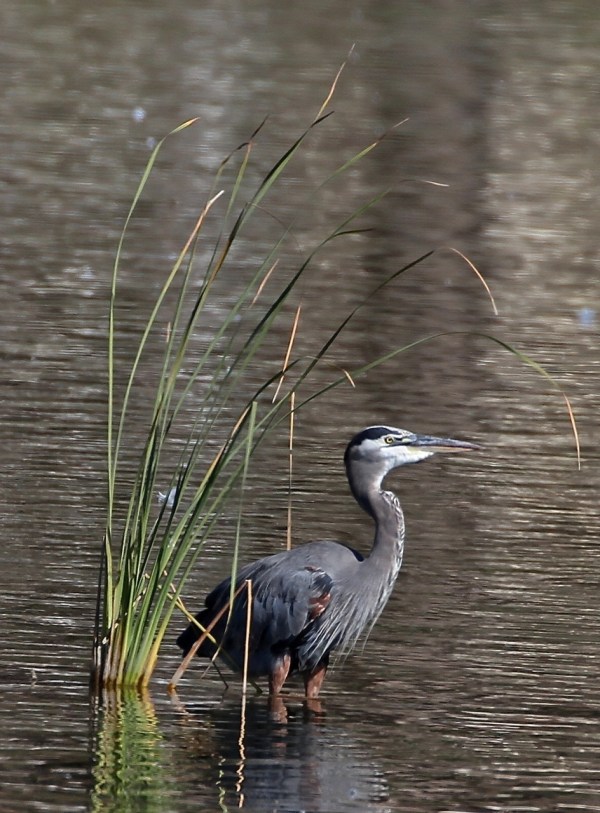
Great Blue Heron and his rufous thighs (J. Waterman 10-22-17)
Our next four scheduled field trips: Butterbredt Spring Halloween, 8:30am, 28-29 October; Newport Back Bay 8:30am, 4 November; Seal Beach NWR 8am, 18 November; Malibu Lagoon 8:30 & 10am, 26 November.
Our next program: To be announced, 7 November, 7:30 pm; Chris Reed Park, 1133 7th St., NE corner of 7th and Wilshire Blvd. in Santa Monica.
NOTE: Our 10 a.m. Parent’s & Kids Birdwalk meets at the shaded viewpoint just south of the parking area. Watch for Willie the Weasel. He’ll be watching for you and your big floppy feet.
Links: Unusual birds at Malibu Lagoon
9/23/02 Aerial photo of Malibu Lagoon
Prior checklists:
2017: Jan-June
2016: Jan-June, July-Dec 2015: Jan-May, July-Dec
2014: Jan-July, July-Dec 2013: Jan-June, July-Dec
2012: Jan-June, July -Dec 2011: Jan-June, July-Dec
2010: Jan-June, July-Dec 2009: Jan-June, July-Dec.
The 10-year comparison summaries created during the project period, despite numerous complaints, remain available on our Lagoon Project Bird Census Page. Very briefly summarized, the results unexpectedly indicate that avian species diversification and numbers improved slightly during the period Jun’12-June’14.
Many thanks to Lillian Johnson, Chris Lord and others for their contributions to the checklist below. [Chuck Almdale]
| Malibu Census 2016-17 | 5/28 | 6/25 | 7/23 | 8/27 | 9/24 | 10/22 |
| Temperature | 63-68 | 68-81 | 70-75 | 63-68 | 68-75 | 72-82 |
| Tide Lo/Hi Height | L+1.32 | H+4.18 | H+4.39 | L+1.83 | L+1.86 | H+5.38 |
| Tide Time | 0627 | 1147 | 1039 | 0730 | 0559 | 1050 |
| Canada Goose | 1 | |||||
| Gadwall | 15 | 18 | 15 | 1 | ||
| American Wigeon | 1 | |||||
| Mallard | 25 | 35 | 30 | 7 | 27 | 15 |
| Northern Pintail | 1 | |||||
| Red-breasted Merganser | 4 | |||||
| Pied-billed Grebe | 2 | 1 | 3 | 5 | ||
| Eared Grebe | 1 | |||||
| Western Grebe | 2 | 9 | ||||
| Clark’s Grebe | 2 | |||||
| Rock Pigeon | 13 | 15 | 17 | 3 | 5 | 6 |
| Mourning Dove | 4 | 2 | 4 | 1 | 2 | 2 |
| Vaux’s Swift | 40 | |||||
| Anna’s Hummingbird | 1 | |||||
| Allen’s Hummingbird | 3 | 4 | 6 | 1 | 6 | 2 |
| American Coot | 1 | 4 | 6 | 20 | 62 | 140 |
| American Avocet | 1 | |||||
| Black-bellied Plover | 5 | 5 | 27 | 39 | 89 | 135 |
| Snowy Plover | 2 | 5 | 9 | 16 | 34 | 25 |
| Semipalmated Plover | 2 | 1 | ||||
| Killdeer | 14 | 8 | 4 | 2 | 8 | 10 |
| Whimbrel | 27 | 2 | 54 | 45 | ||
| Long-billed Curlew | 1 | |||||
| Marbled Godwit | 8 | 8 | 45 | 80 | ||
| Ruddy Turnstone | 2 | 4 | 7 | 6 | ||
| Black Turnstone | 1 | |||||
| Sanderling | 7 | 10 | ||||
| Baird’s Sandpiper | 3 | |||||
| Least Sandpiper | 4 | 3 | ||||
| Western Sandpiper | 1 | 2 | ||||
| Long-billed Dowitcher | 1 | |||||
| Spotted Sandpiper | 4 | |||||
| Willet | 2 | 3 | 6 | 55 | 120 | |
| Greater Yellowlegs | 1 | |||||
| Heermann’s Gull | 24 | 19 | 7 | 11 | 64 | |
| Mew Gull | 1 | |||||
| Ring-billed Gull | 1 | 4 | ||||
| Western Gull | 45 | 103 | 52 | 52 | 96 | 145 |
| California Gull | 3 | 2 | 1 | 98 | ||
| Least Tern | 3 | 20 | 30 | 23 | ||
| Caspian Tern | 4 | 12 | 12 | 7 | 1 | |
| Royal Tern | 2 | 2 | 6 | 52 | 47 | |
| Elegant Tern | 45 | 3 | 90 | 32 | 4 | |
| Brandt’s Cormorant | 1 | |||||
| Double-crested Cormorant | 12 | 11 | 22 | 18 | 36 | 45 |
| Pelagic Cormorant | 1 | 1 | ||||
| American White Pelican | 2 | |||||
| Brown Pelican | 18 | 68 | 35 | 14 | 17 | 17 |
| Great Blue Heron | 3 | 5 | 6 | 3 | 5 | 4 |
| Great Egret | 3 | 5 | 5 | 3 | 8 | |
| Snowy Egret | 2 | 9 | 12 | 11 | 10 | 4 |
| Green Heron | 3 | 2 | ||||
| Black-crowned Night-Heron | 1 | 1 | 1 | 2 | 1 | |
| Osprey | 1 | 1 | 1 | |||
| Belted Kingfisher | 1 | |||||
| Peregrine Falcon | 1 | |||||
| Black Phoebe | 5 | 5 | 5 | 3 | 5 | 6 |
| Say’s Phoebe | 1 | 2 | 2 | |||
| Cassin’s Kingbird | 1 | 1 | ||||
| Western Kingbird | 1 | 1 | ||||
| American Crow | 5 | 7 | 2 | 6 | 6 | 5 |
| Rough-winged Swallow | 3 | 2 | ||||
| Cliff Swallow | 3 | 15 | ||||
| Barn Swallow | 10 | 9 | 12 | 6 | ||
| Oak Titmouse | 1 | 1 | ||||
| Bushtit | 1 | 15 | ||||
| House Wren | 1 | |||||
| Marsh Wren | 2 | |||||
| Bewick’s Wren | 3 | 2 | ||||
| Northern Mockingbird | 8 | 4 | 2 | 2 | 2 | |
| European Starling | 12 | 7 | 6 | 25 | ||
| American Pipit | 4 | |||||
| House Finch | 30 | 10 | 10 | 2 | 8 | 16 |
| Lesser Goldfinch | 2 | 1 | ||||
| California Towhee | 3 | 1 | ||||
| Brewer’s Sparrow | 1 | |||||
| Savannah Sparrow | 8 | |||||
| Song Sparrow | 12 | 6 | 6 | 2 | 3 | 4 |
| White-crowned Sparrow | 20 | |||||
| Golden-crowned Sparrow | 1 | |||||
| Dark-eyed Junco | 1 | |||||
| Western Meadowlark | 1 | 1 | 3 | |||
| Hooded Oriole | 1 | 1 | ||||
| Bullock’s Oriole | 2 | |||||
| Red-winged Blackbird | 30 | |||||
| Brewer’s Blackbird | 12 | 1 | ||||
| Great-tailed Grackle | 4 | 15 | 2 | 3 | 6 | |
| Orange-crowned Warbler | 1 | 5 | 2 | |||
| Nashville Warbler | 1 | |||||
| Common Yellowthroat | 4 | 1 | 2 | 2 | 8 | 5 |
| Yellow Warbler | 2 | |||||
| Yellow-rumped Warbler | 12 | |||||
| Wilson’s Warbler | 1 | |||||
| Totals by Type | May | Jun | Jul | Aug | Sep | Oct |
| Waterfowl | 44 | 53 | 45 | 7 | 27 | 19 |
| Water Birds – Other | 31 | 83 | 65 | 56 | 118 | 223 |
| Herons, Egrets & Ibis | 6 | 18 | 24 | 19 | 23 | 19 |
| Quail & Raptors | 0 | 0 | 2 | 1 | 1 | 0 |
| Shorebirds | 21 | 22 | 82 | 80 | 314 | 434 |
| Gulls & Terns | 97 | 167 | 207 | 128 | 161 | 363 |
| Doves | 17 | 17 | 21 | 4 | 7 | 8 |
| Other Non-Passerines | 3 | 4 | 6 | 1 | 47 | 3 |
| Passerines | 92 | 104 | 57 | 48 | 86 | 115 |
| Totals Birds | 311 | 468 | 509 | 344 | 784 | 1184 |
| Total Species | May | Jun | Jul | Aug | Sep | Oct |
| Waterfowl | 3 | 2 | 2 | 1 | 1 | 5 |
| Water Birds – Other | 3 | 3 | 4 | 6 | 4 | 10 |
| Herons, Egrets & Ibis | 3 | 4 | 4 | 3 | 5 | 5 |
| Quail & Raptors | 0 | 0 | 2 | 1 | 1 | 0 |
| Shorebirds | 3 | 6 | 9 | 9 | 14 | 9 |
| Gulls & Terns | 4 | 7 | 7 | 7 | 5 | 7 |
| Doves | 2 | 2 | 2 | 2 | 2 | 2 |
| Other Non-Passerines | 1 | 1 | 1 | 1 | 3 | 2 |
| Passerines | 10 | 14 | 11 | 15 | 24 | 19 |
| Totals Species – 93 | 29 | 39 | 42 | 45 | 59 | 59 |
California Gems and Gold | Natural History Museum’s Curiosity Show
California isn’t just the golden state, we’re also a great place to find gemstones. NHM’s curator of mineralogy Dr. Aaron Celestian shows us around the gem vault and behind the scenes of our mineral exhibits to learn about California’s gems and reveal how gold nuggets are formed. He also reveals some tips about where to find gold nuggets, so take note! NHM has one of the world’s best gem and mineral halls, with lots of California gems and gold on exhibit.
This comes from the Natural History Museum of Los Angeles County. If no film or link appears in this email, go to the blog to view it by clicking on the blog title above. If the film stops & starts in an annoying manner, press pause (lower left double bars ||) to let it buffer and get ahead of you. [Chuck Almdale]
Huntington Central Park: Exotics Rule! – Oct. 14, 2017 Field Trip
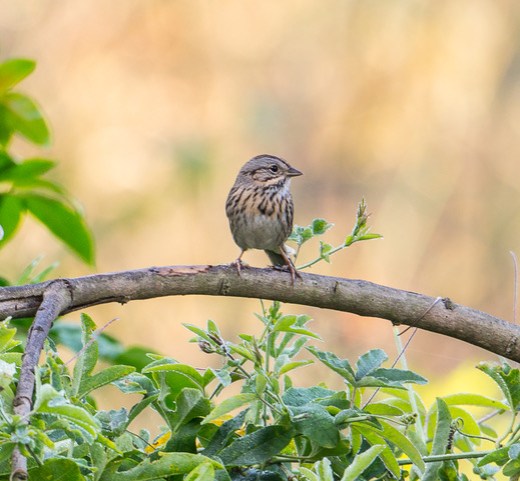
Lincoln’s Sparrow (Ray Juncosa 10-14-17)
Huntington Central Park turned out to be a wonderful place for birding this year. Within a few minutes we saw a Lincoln’s Sparrow perched on a limb and posed nicely for the cameras. It was the best view some people have ever had of that bird.

Hermit Thrust (R. Juncosa 10-14-17)
As we were admiring it, a Hermit Thrush walked by, giving us a great beginning for the trip. We were fortunate the birds in this park are used to people. To our surprise, there was a huge boy-scout campout that day and their shouting and singing created a wave of noise.
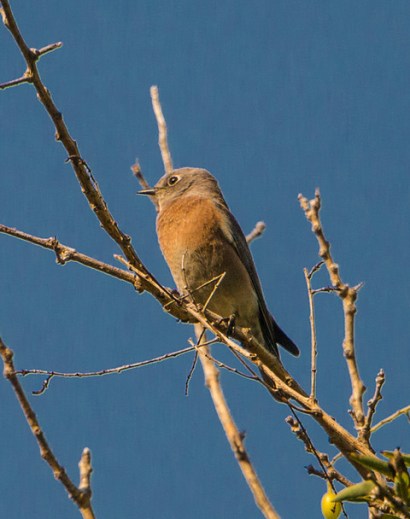
Western Bluebird (R. Juncosa 10-14-17)
The only flighty birds were the flocks of Nutmeg Mannikins (aka Scaly-breasted Munia), Japanese White Eyes, Orange-cheeked Waxbills, and Bronze Mannikins. Although Huntington Central Park has had these flocks of exotics for many years, they seem to be flourishing in spite of all the people.
The Nutmeg Mannikins are so well established here that they have been added to the California bird records list, although the name was (yet again!) changed to Scaly-breasted Munia. First recorded in Florida in 1964, all U.S. wild-living Nutmeg Mannikins are descendants of escaped cage birds. They are a very popular pet species, and the descendants of escapees can be found nearly worldwide, living in fields and parks and busily gobbling up seeds, especially grass seeds.
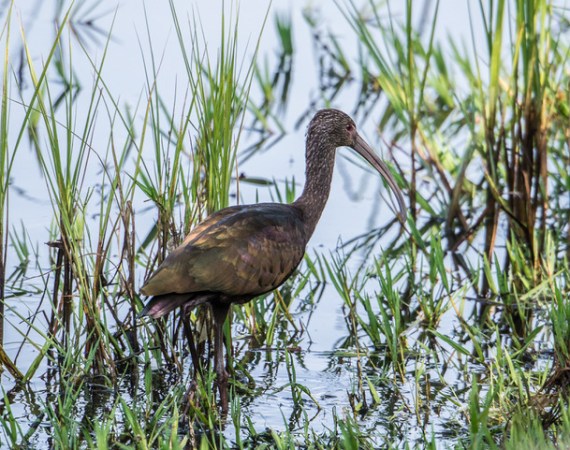
White-faced Ibis in the pond (R. Juncosa 10-14-17)
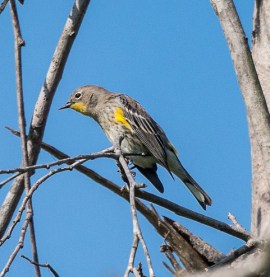
Yellow-rumped Warbler (R. Juncosa 10-14-17)
As we wandered through the park, we found the following warblers: Wilson’s, Townsend’s, Orange-crowned, Common Yellowthroat, Audubon’s, and Black-throated Grey. The trees in the park gave us lots of shade so we had a nice leisurely walk and found a Hutton’s Vireo and several Ruby-crowned Kinglets.
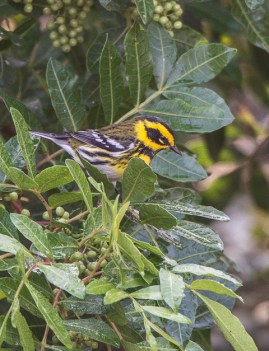
Townsend’s Warbler (R. Juncosa 10-14-17)
The parks perennial Red-shouldered Hawk called frequently, but only once did he alight on a branch close to the trail, giving Ray a great chance to photograph him.

Red-shouldered Hawk (R. Juncosa 10-14-17)
Then we started looking for the Cooper’s Hawk and of course we heard him for quite awhile before he made an appearance. What we didn’t see was a Red-tailed Hawk or any House Finches, but we did find an American Kestrel. It was a little early in the season for ducks but we did see American Wigeons and Mallards. It seems that you can’t leave that park without seeing the Downy Woodpecker but we found the bird only at the end of the walk. One of our newcomers found the Great Horned Owl. [Jean Garrett]
| Huntington Central Park | Bird List – Oct. 14, 2017 |
| American Wigeon | Bushtit |
| Mallard | House Wren |
| Pied-billed Grebe | Blue-gray Gnatcatcher |
| Great Egret | Ruby-crowned Kinglet |
| Snowy Egret | Western Bluebird |
| Black-crowned Night-Heron | Hermit Thrush |
| White-faced Ibis | Orange-crowned Warbler |
| Cooper’s Hawk | Common Yellowthroat |
| Red-shouldered Hawk | Yellow-rumped Warbler |
| American Coot | Black-throated Gray Warbler |
| Great Horned Owl | Townsend’s Warbler |
| Anna’s Hummingbird | California Towhee |
| Allen’s Hummingbird | Chipping Sparrow |
| Belted Kingfisher | Song Sparrow |
| Nuttall’s Woodpecker | Lincoln’s Sparrow |
| Downy Woodpecker | Red-winged Blackbird |
| American Kestrel | Lesser Goldfinch |
| Western Wood-Pewee | Scaly-breasted Munia |
| Black Phoebe | Orange-cheeked Waxbill |
| Say’s Phoebe | Bronze Mannikin |
| Hutton’s Vireo | Japanese White-eye |
| American Crow | Total Species – 43 |
They may look serene as they glide across the surface of a stream, but don’t be fooled by water striders. They’re actually searching for prey for whom a babbling brook quickly becomes an inescapable death trap.
This is another installment of the PBS Deep Look series. If no film or link appears in this email, go to the blog to view it by clicking on the blog title above. If the film stops & starts in an annoying manner, press pause (lower left double bars ||) to let it buffer and get ahead of you. [Chuck Almdale]
You Are Mainly Microbe… Meet Your Microbiome! | PBS Science Video
Ever not felt completely like yourself? There’s a good reason for that. Because a large part of you . . . isn’t you. Our bodies are home to ten times as many microbes as human cells. We are walking ecosystems, each of us home to thousands of different species on and inside of us. Meet your microbiome!
Sure, some bacteria are dangerous, but without our tiny friends we wouldn’t be here (literally). Enjoy this introduction to your microbiome, and let me know in the comments if you’d like to know more about any part of your personal ecosystem!
This is an installment of the PBS – It’s OK to be Smart series. If no film or link appears in this email, go to the blog to view it by clicking on the blog title above. If the film stops & starts in an annoying manner, press pause (lower left double bars ||) to let it buffer and get ahead of you. [Chuck Almdale]



 SANTA MONICA BAY AUDUBON SOCIETY BLOG