Free email delivery
Please sign up for email delivery in the subscription area to the right.
No salesman will call, at least not from us. Maybe from someone else.
[By Chuck Almdale; Photos by Marsha Collins, Femi Faminu, Lillian Johnson, Armando Martinez & Chris Tosdevin]

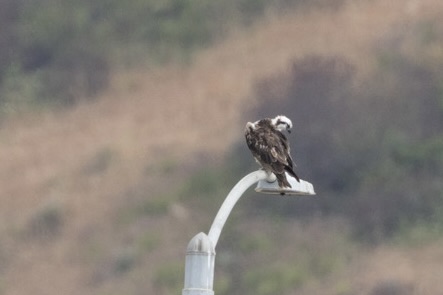
As you’ll see by the photographs, the day was gray, sometimes, depending on which way you looked. To the north, bluish sky, to the south, gray-grim. We were quite surprised to see the Osprey on a light pole over Pacific Coast Hwy., as he or she normally prefers the wooden telephone pole at the back of the colony. We then realized that the wooden pole was completely gone. They’re putting in a new house at the back corner of the colony, and the pole was in the way. I suppose. Too bad – that pole was a favorite perch for birds. The Northern Mockingbird stood there for years, tootling away. More recently the Osprey commandeered it and ate many a fish on the top. Occasionally a Red-tailed Hawk would rest there, but the last time one did a group of Ravens drove it off.
Twenty-four birders showed up, eager to see lagoon birds. It had been difficult for the past four months to get to Malibu as Pacific Coast Highway, the main route for most people, was closed to all non-resident traffic. Cleanup crews were all over the place, trucks everywhere, trying to clean up the enormous mess left by the fires. One SMBAS member, living in one of the devastated neighborhoods of Pacific Palisades and whose house was near-miraculously unfazed by fire, found the interior filled with toxic dust from the fire, rendering it uninhabitable. They’re still living with family, waiting for cleanup specialists, name of Godot Speedy Service, to arrive.
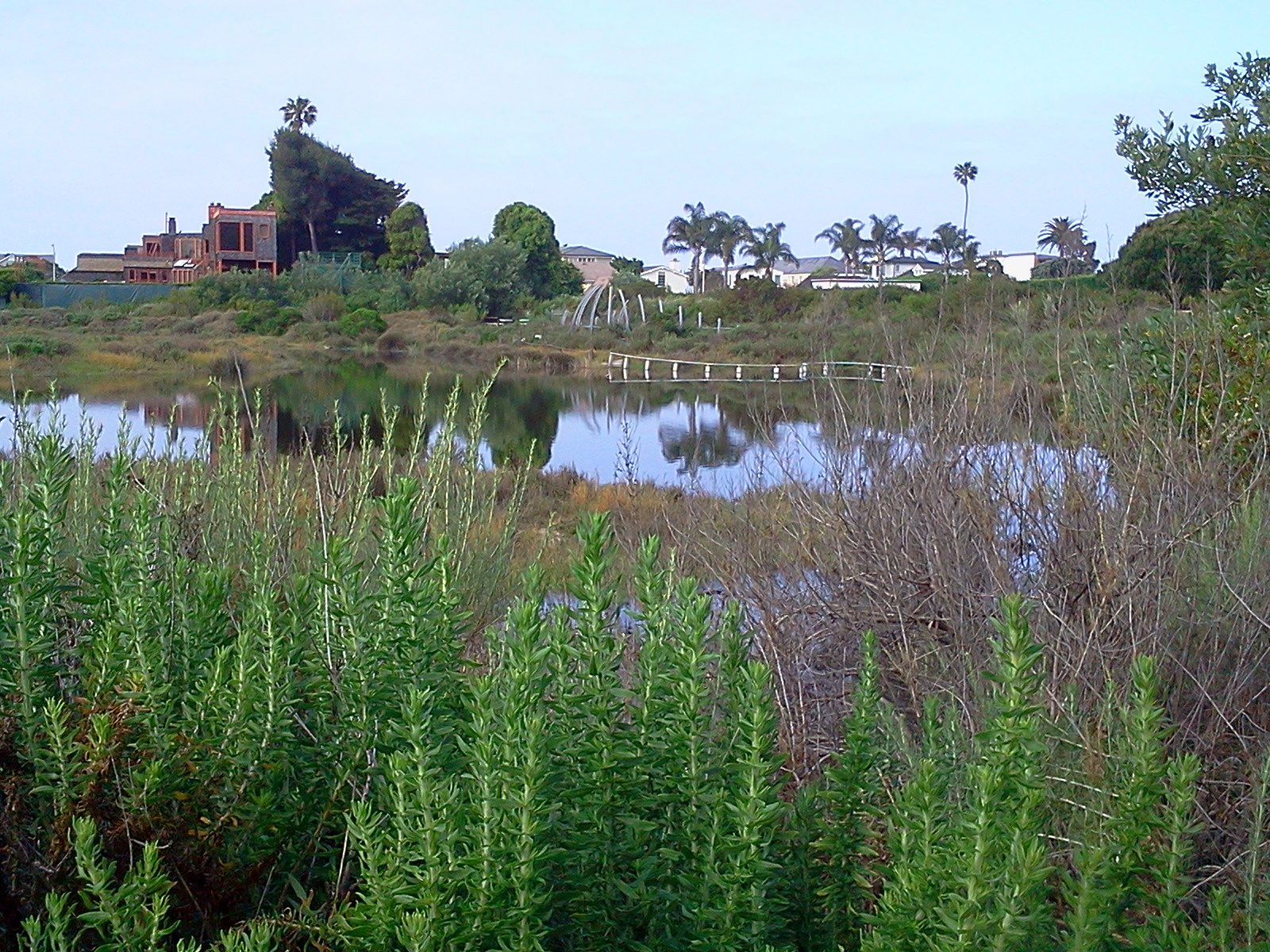
The birds were relatively normal, although for the second month in a row there were virtually zero shorebirds, by which I mean sandpipers and plovers. Two Killdeer, that was it. And they’re nesting, as a gangly chick was recently seen, so I supposed that should be three Killdeer, except we didn’t see it.

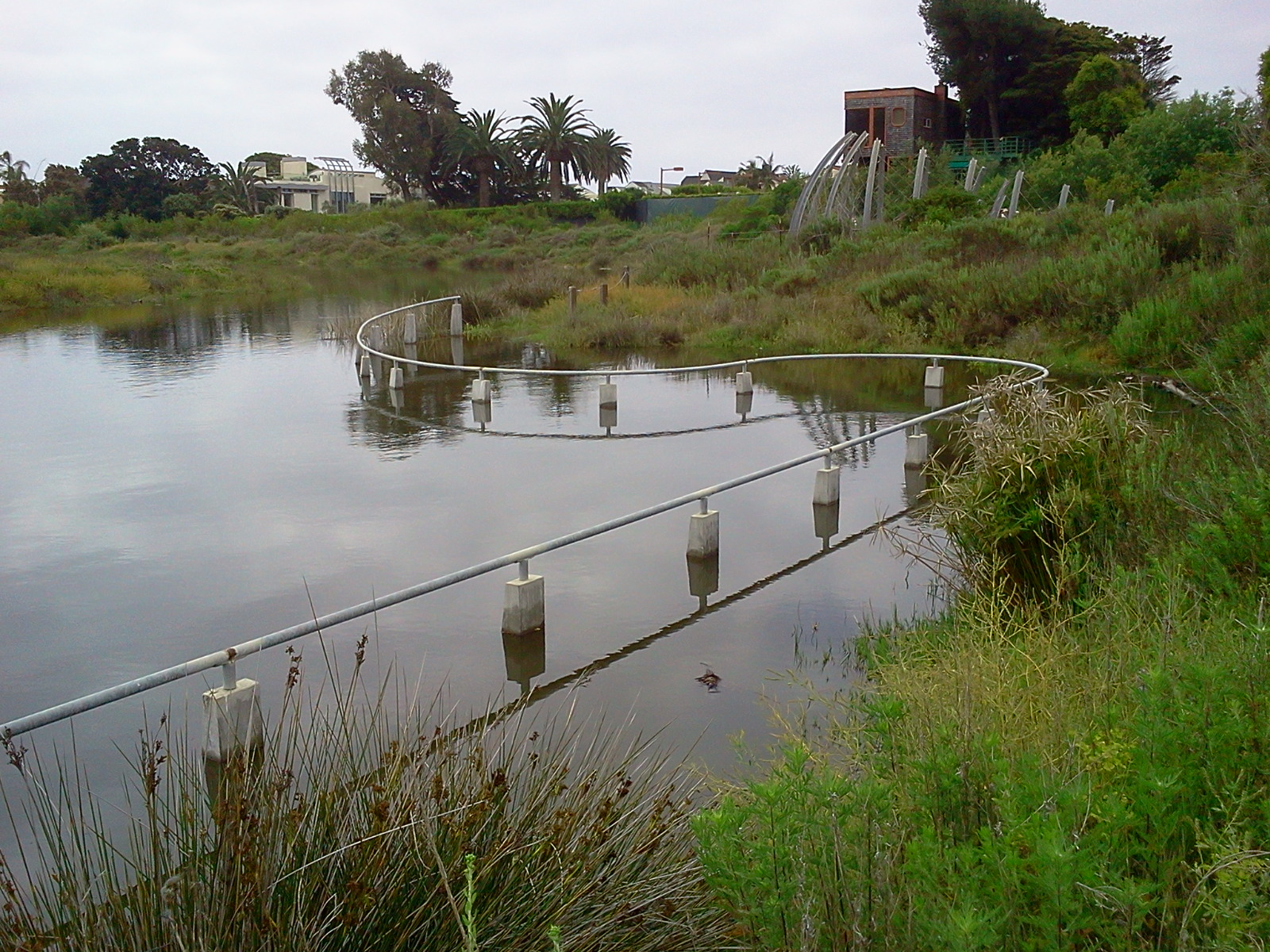
The lagoon outflow channel to the sea has silted in, and the lagoon water was quite high, higher than actual sea level which was at high tide. The railing around the summer clock sidewalk barely emerged from the water. According to the designers, for every inch of water level rise in the lagoon, the water moves four feet up the sidewalk.
Tiles spaced along the sidewalk tell you the water height. The out-of-picture water’s edge was just below this marker.
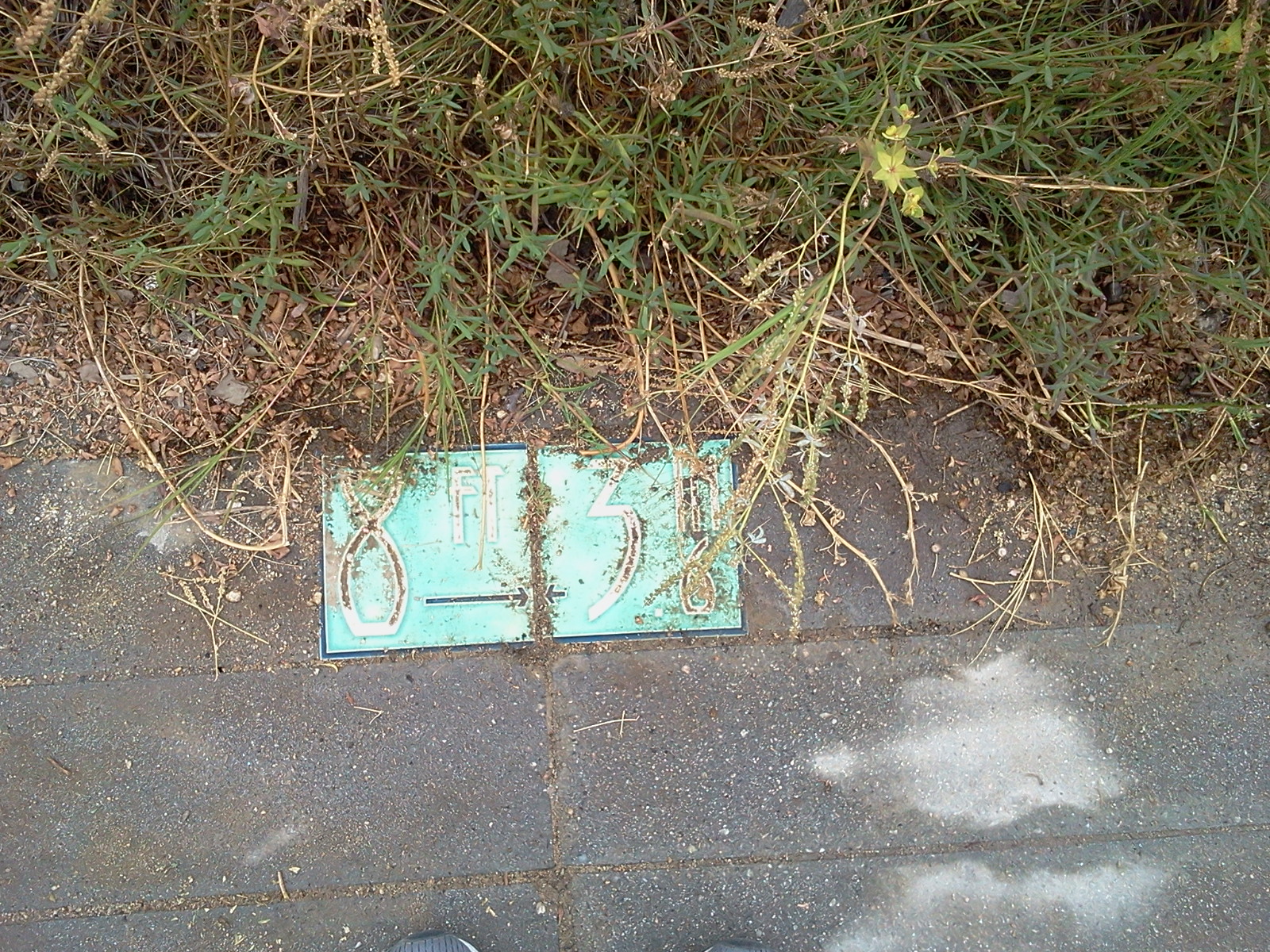
Not every lagoon in the world is lucky enough to have it’s own water level marking system.
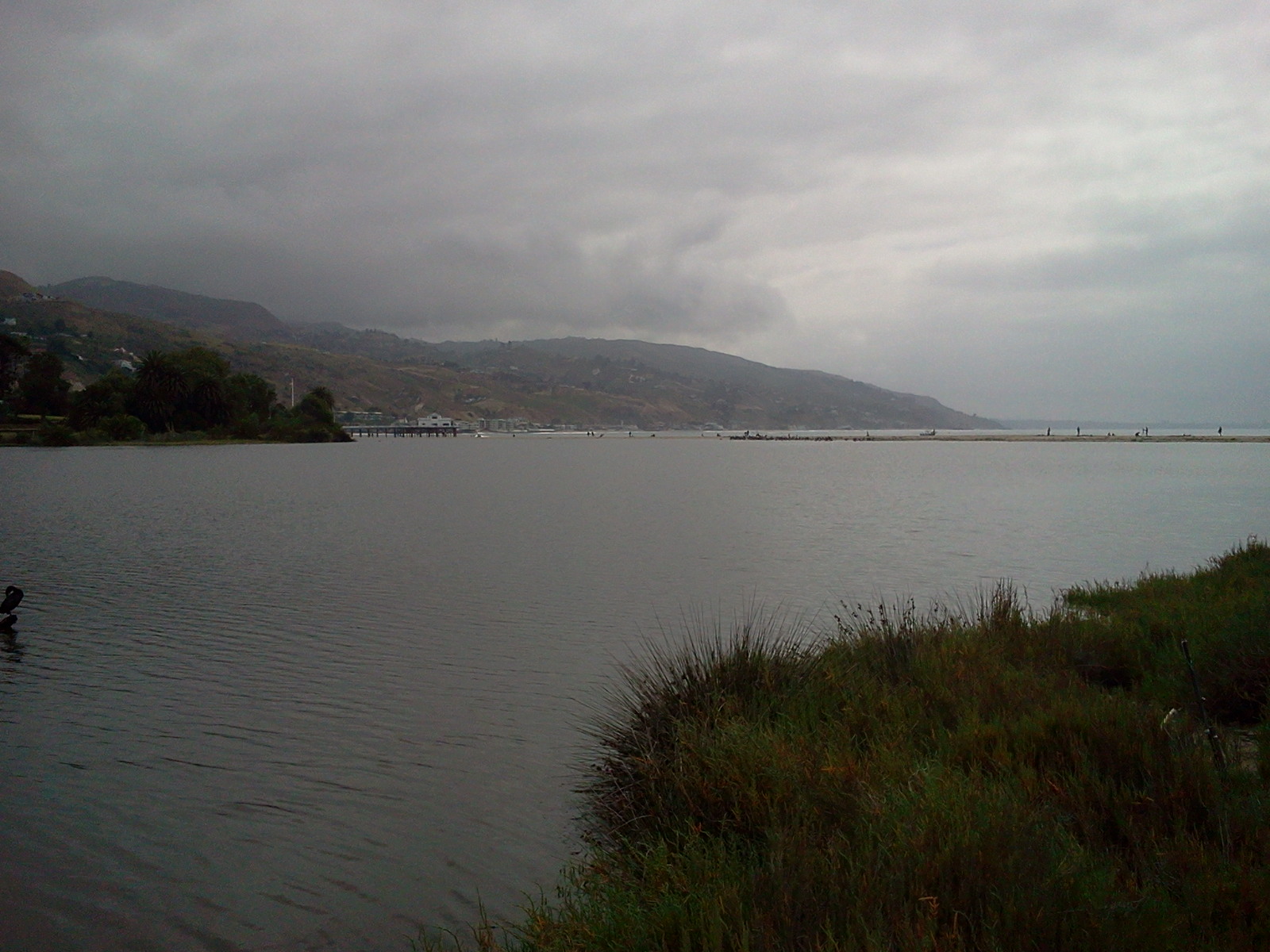
I really don’t remember the sky being this gray (see below). Surfrider Beach appears to have a large gap, but that’s an optical illusion due to the sand being only a couple of inches higher than the lagoon level. The curvature of the earth may be involved as well.
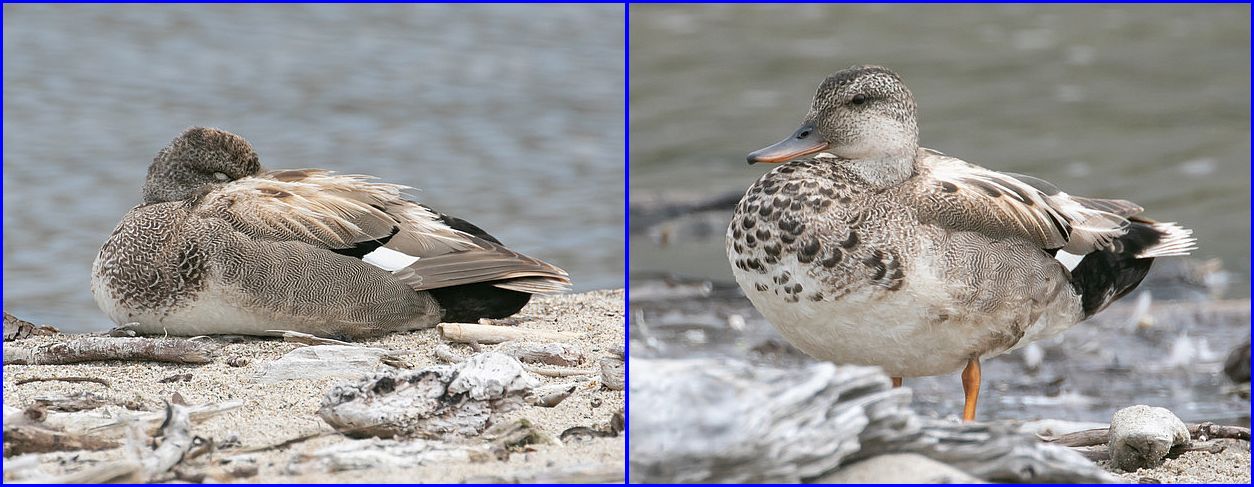
Marsha captured a resting pair of Gadwall. With her camera. Sometimes the orange on the female’s bill is just a thin strip along the bill’s edge – orange lips, so to speak. This one has a bit more than that.

There were lots of other Gadwall around. Mallards too. The bird below on the right looked to be a young male molting into his first adult plumage, due to all the “scales” on his breast.
We had some excitement along the beach path as someone spotted a hummingbird sitting on a nest. It was very obscured and difficult to see, but we managed to get two telescopes and a half-dozen cameras onto it. But from no angle could you actually see much of the bird. The spots on the throat didn’t really look as reddish as they ought(?) to be for Allen’s, but they certainly weren’t iridescent as would be the flecking on the female Anna’s, and the underlying throat feathers were quite pale, not dingy gray. Bill length and curvature is getting quite variable these days, and you’ll find out more about that if you follow these links to NPR and Smithsonian.

The chin seems to have a slight tinge of rufous, befitting an Allen’s but not Anna’s.

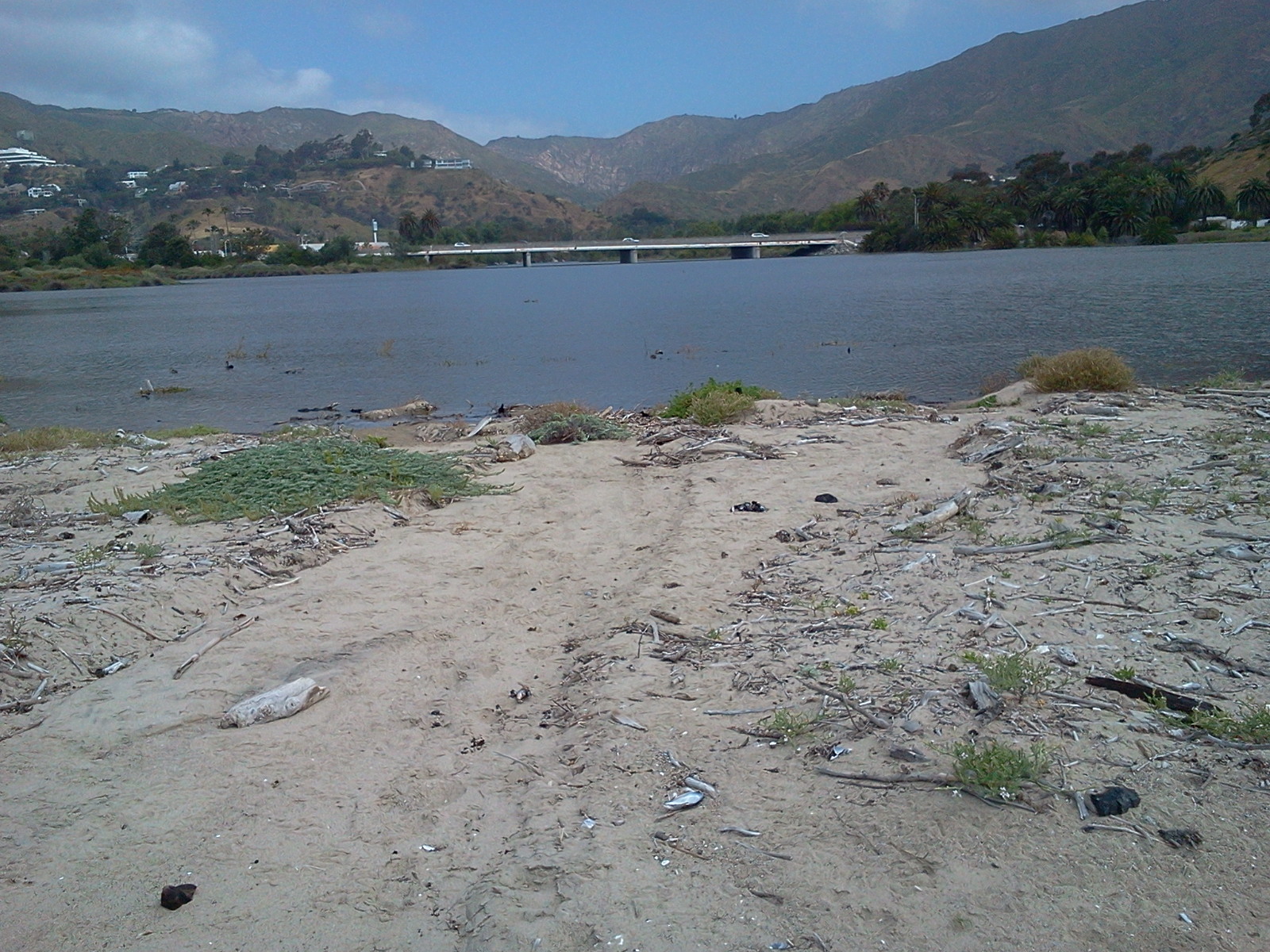
The beach between the sea and lagoon is still well-distributed with driftwood from the winter storms.
Western Gulls of all ages are reliable at the lagoon. They nest on the nearby Channel Islands where there are few predators to gobble up their eggs.

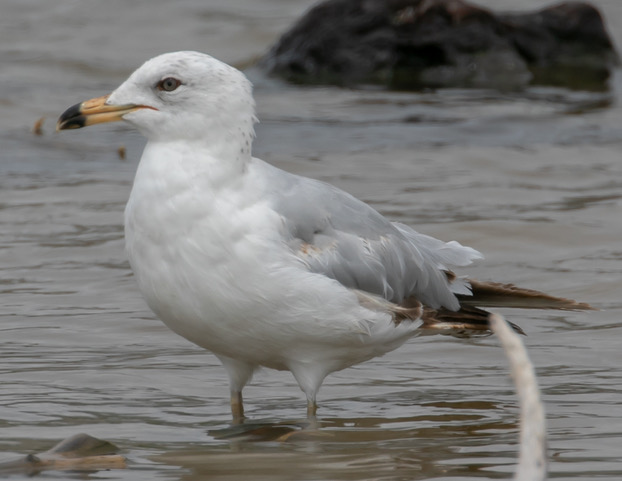
Ring-billed Gulls can be tricky. Young birds can have an all-black, or partially-black bill. As they age the black area turn yellow-pink-orange at different rates and in different patterns. The base of the bill generally changes color earlier than the tip. In the bird below, the tips is minutely pale at the very tip. They eyes also begin as dark, then turn very pale by the time they’re adult at the ripe old age of three.
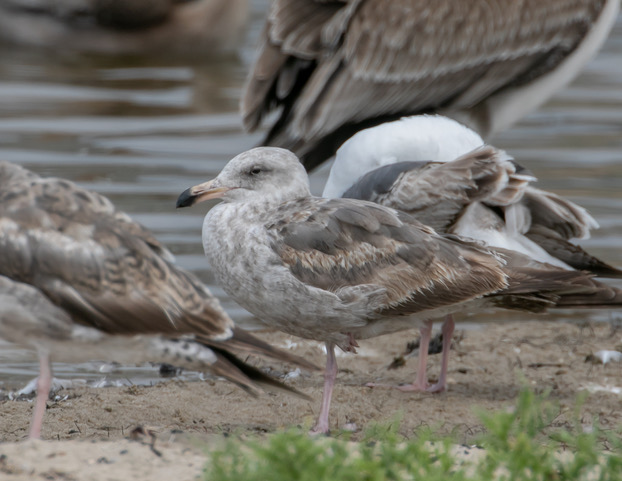
We debated about this bird (below, in the middle) on the beach, deciding it likely was a Herring Gull. Chris thought two-years old. After looking at the picture, I think it’s molting into 3rd year plumage. The wing-coverts are quite worn, giving it that “shredded” look. The bill is less chunky than the Western’s (two pictures up), the head looks a bit flat and no white mirrors in the primaries. Pink legs of course.
That’s a Brown Pelican behind them, the most common species of the day..

The Great-tailed Grackles definitely enjoy poking around through the driftwood.

The fact that the two grebes below are in the same avian family, although different genera, sometimes mystifies people. If you ever saw either of them try to walk on land the family relationship would become more clear.

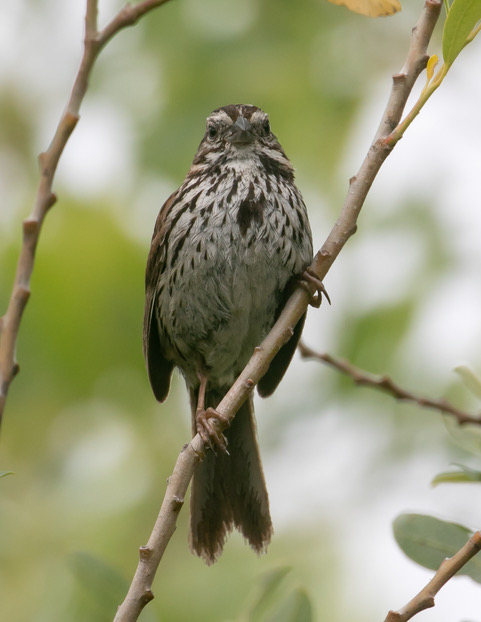
Song Sparrows are one of the reliable breeders at the lagoon. They’re always there and they’re always singing.
Malibu Lagoon on eBird as of 5-26-25: 8583 lists, 2754 eBirders, 321 species
Most recent new species seen: Nelson’s Sparrow, 11/29/24 by Femi Faminu (SMBAS member). When the newest species added to the list was seen on a date prior to the most recently seen new species, there is no way I can find to easily determine what that bird is. Another minor nit to pick about eBird.
Birds new for the season: Red-shouldered Hawk, Northern Mockingbird .. “New for the season” means it has been three or more months since last recorded on our trips.
Many, many thanks to photographers Marsha Collins, Femi Faminu, Lillian Johnson, Armando Martinez & Chris Tosdevin.
Upcoming SMBAS scheduled field trips; no reservations or Covid card necessary unless specifically mentioned:
- Malibu Creek State Park, Sat, June 14, 8 am
- Malibu Lagoon, Sun. June 22, 8:30 (adults) & 10 am (parents & kids)
- Malibu Lagoon, Sun. July 27, 8:30 (adults) & 10 am (parents & kids)
- These and any other trips we announce for the foreseeable future will depend upon expected status of the Covid/flu/etc. pandemic, not to mention landslides, at trip time. Any trip announced may be canceled shortly before trip date if it seems necessary. By now any other comments should be superfluous.
- Link to Programs & Field Trip schedule.
The next SMBAS Zoom program: October 7, to be announced.
The SMBAS 10 a.m. Parent’s & Kids Birdwalk will resume when we can again schedule official monthly walks, probably in June. Reservations not necessary for families, but for groups (scouts, etc.), call Jean (213-522-0062).
Links: Unusual birds at Malibu Lagoon
9/23/02 Aerial photo of Malibu Lagoon
More recent aerial photo
Prior checklists:
2023: Jan-June, July-Dec 2024: Jan-June, July-Dec
2021: Jan-July, July-Dec 2022: Jan-June, July-Dec
2020: Jan-July, July-Dec 2019: Jan-June, July-Dec
2018: Jan-June, July-Dec 2017: Jan-June, July-Dec
2016: Jan-June, July-Dec 2015: Jan-May, July-Dec
2014: Jan-July, July-Dec 2013: Jan-June, July-Dec
2012: Jan-June, July-Dec 2011: Jan-June, July-Dec
2010: Jan-June, July-Dec 2009: Jan-June, July-Dec
The 10-year comparison summaries created during the Lagoon Reconfiguration Project period, remain available—despite numerous complaints—on our Lagoon Project Bird Census Page. Very briefly summarized, the results unexpectedly indicate that avian species diversification and numbers improved slightly during the restoration period June’12-June’14.
Many thanks to Marie Barnidge-McIntyre, Femi Faminu, Lillian Johnson & Chris Tosdevin for contributions made to this month’s census counts.
The species list below was re-sequenced as of 12/31/24 to agree with the California Bird Records Committee Official California Checklist. If part of the right side of the chart below is hidden, there’s a slider button inconveniently located at the bottom end of the list. The numbers 1-9 left of the species names are keyed to the nine categories of birds at the bottom. Updated lagoon bird check lists can be downloaded here.
[Chuck Almdale]
| Malibu Census 2024-25 | 12/22 | 1/30 | 2/23 | 3/23 | 4/27 | 5/25 | |
| Temperature | 56-62 | 57-59 | 57-70 | 54-64 | 56-64 | 63-68 | |
| Tide Lo/Hi Height | L+2.47 | H+6.14 | H+4.79 | H+4.15 | H+4.29 | H+3.78 | |
| Tide Time | 0939 | 0913 | 0526 | 0433 | 0957 | 0909 | |
| 1 | Canada Goose | 2 | 2 | 8 | 1 | ||
| 1 | Cinnamon Teal | 5 | 6 | ||||
| 1 | Northern Shoveler | 6 | |||||
| 1 | Gadwall | 32 | 89 | 9 | 35 | 10 | 24 |
| 1 | American Wigeon | 35 | |||||
| 1 | Mallard | 20 | 22 | 6 | 22 | 21 | 26 |
| 1 | Green-winged Teal | 10 | 5 | 16 | 6 | ||
| 1 | Lesser Scaup | 2 | |||||
| 1 | Surf Scoter | 2 | 15 | 6 | |||
| 1 | Bufflehead | 10 | 23 | ||||
| 1 | Red-breasted Merganser | 13 | 12 | 8 | 3 | 1 | |
| 1 | Ruddy Duck | 35 | 37 | 17 | 11 | 10 | 4 |
| 2 | Pied-billed Grebe | 5 | 4 | 7 | 8 | 4 | 4 |
| 2 | Eared Grebe | 1 | |||||
| 2 | Western Grebe | 1 | 34 | 30 | 30 | 25 | 4 |
| 7 | Feral Pigeon | 6 | 5 | 1 | 6 | ||
| 7 | Mourning Dove | 1 | 2 | 2 | |||
| 8 | Anna’s Hummingbird | 3 | 3 | 3 | 1 | ||
| 8 | Allen’s Hummingbird | 3 | 1 | 5 | 6 | 5 | 2 |
| 2 | American Coot | 705 | 797 | 45 | 55 | 11 | 4 |
| 5 | Black Oystercatcher | 2 | |||||
| 5 | Black-bellied Plover | 50 | 30 | 30 | |||
| 5 | Killdeer | 30 | 2 | 4 | 4 | 3 | 2 |
| 5 | Semipalmated Plover | 2 | |||||
| 5 | Snowy Plover | 27 | 2 | 2 | 3 | ||
| 5 | Whimbrel | 4 | 8 | 5 | 8 | 3 | |
| 5 | Marbled Godwit | 25 | 3 | 2 | 8 | ||
| 5 | Ruddy Turnstone | 4 | 2 | 4 | |||
| 5 | Sanderling | 100 | 22 | ||||
| 5 | Dunlin | 1 | |||||
| 5 | Least Sandpiper | 27 | 7 | 14 | 5 | 1 | |
| 5 | Western Sandpiper | 16 | 34 | ||||
| 5 | Spotted Sandpiper | 1 | 1 | 1 | 1 | ||
| 5 | Willet | 20 | 15 | 8 | 10 | ||
| 5 | Greater Yellowlegs | 2 | |||||
| 6 | Heermann’s Gull | 2 | 7 | 1 | |||
| 6 | Ring-billed Gull | 19 | 12 | 12 | 6 | 2 | 3 |
| 6 | Western Gull | 35 | 90 | 55 | 20 | 20 | 70 |
| 6 | California Gull | 60 | 575 | 105 | 1 | 2 | 82 |
| 6 | American Herring Gull | 1 | 1 | 2 | 1 | ||
| 6 | Glaucous-winged Gull | 3 | 1 | ||||
| 6 | Caspian Tern | 11 | 2 | 6 | |||
| 6 | Royal Tern | 2 | 5 | 10 | |||
| 6 | Elegant Tern | 2 | |||||
| 2 | Red-throated Loon | 1 | |||||
| 2 | Pacific Loon | 1 | 1 | 1 | |||
| 2 | Common Loon | 4 | 10 | ||||
| 2 | Brandt’s Cormorant | 7 | 1 | 5 | 12 | ||
| 2 | Pelagic Cormorant | 2 | 1 | ||||
| 2 | Double-crested Cormorant | 23 | 55 | 25 | 25 | 25 | 7 |
| 2 | American White Pelican | 5 | |||||
| 2 | Brown Pelican | 35 | 23 | 29 | 200 | 25 | 157 |
| 3 | Snowy Egret | 5 | 5 | 6 | 5 | 1 | 2 |
| 3 | Black-crowned Night-Heron | 2 | 1 | ||||
| 3 | Great Egret | 1 | 1 | 2 | 2 | 1 | 1 |
| 3 | Western Cattle-Egret | 1 | |||||
| 3 | Great Blue Heron | 4 | 1 | 2 | 1 | 1 | |
| 4 | Turkey Vulture | 2 | |||||
| 4 | Osprey | 1 | 2 | 1 | 1 | 1 | |
| 4 | Cooper’s Hawk | 1 | 1 | ||||
| 4 | Bald Eagle | 1 | |||||
| 4 | Red-shouldered Hawk | 1 | |||||
| 4 | Red-tailed Hawk | 1 | 1 | 1 | 1 | 1 | |
| 8 | Belted Kingfisher | 1 | 1 | 1 | |||
| 8 | Nuttall’s Woodpecker | 1 | |||||
| 8 | Nanday Parakeet | 4 | 4 | 2 | 2 | ||
| 9 | Cassin’s Kingbird | 1 | 1 | 1 | |||
| 9 | Black Phoebe | 1 | 1 | 3 | 3 | 1 | 2 |
| 9 | Say’s Phoebe | 1 | |||||
| 9 | California Scrub-Jay | 1 | 1 | 1 | |||
| 9 | American Crow | 8 | 9 | 26 | 6 | 5 | 6 |
| 9 | Common Raven | 2 | 9 | 2 | 1 | ||
| 9 | Oak Titmouse | 1 | |||||
| 9 | Tree Swallow | 5 | 1 | ||||
| 9 | Violet-green Swallow | 5 | |||||
| 9 | No. Rough-winged Swallow | 17 | 20 | 7 | |||
| 9 | Barn Swallow | 1 | 10 | 20 | 18 | ||
| 9 | Cliff Swallow | 3 | 7 | 24 | |||
| 9 | Bushtit | 50 | 4 | 5 | 25 | 2 | 3 |
| 9 | Wrentit | 2 | 1 | 1 | 4 | 2 | 2 |
| 9 | Ruby-crowned Kinglet | 1 | 1 | ||||
| 9 | Blue-gray Gnatcatcher | 1 | |||||
| 9 | Bewick’s Wren | 1 | 1 | ||||
| 9 | Northern Mockingbird | 1 | 1 | 1 | |||
| 9 | European Starling | 7 | 1 | 10 | 10 | 10 | |
| 9 | Western Bluebird | 1 | |||||
| 9 | House Finch | 6 | 8 | 9 | 26 | 15 | 5 |
| 9 | Lesser Goldfinch | 2 | 10 | 4 | 2 | ||
| 9 | Dark-eyed Junco | 1 | 1 | 1 | |||
| 9 | White-crowned Sparrow | 20 | 8 | 7 | 5 | 1 | |
| 9 | Song Sparrow | 6 | 12 | 8 | 10 | 8 | 6 |
| 9 | California Towhee | 2 | 3 | 3 | 3 | 2 | |
| 9 | Spotted Towhee | 1 | 1 | 2 | |||
| 9 | Western Meadowlark | 1 | |||||
| 9 | Hooded Oriole | 1 | 1 | ||||
| 9 | Red-winged Blackbird | 2 | |||||
| 9 | Brown-headed Cowbird | 2 | |||||
| 9 | Great-tailed Grackle | 22 | 2 | 3 | 6 | ||
| 9 | Orange-crowned Warbler | 1 | 1 | 3 | 1 | 2 | |
| 9 | Common Yellowthroat | 6 | 2 | 2 | 6 | 4 | |
| 9 | Yellow-rumped Warbler | 14 | 6 | 8 | 3 | ||
| 9 | Wilson’s Warbler | 1 | |||||
| Totals Birds by Type | Dec | Jan | Feb | Mar | Apr | May | |
| 1 | Waterfowl | 157 | 196 | 78 | 91 | 50 | 55 |
| 2 | Water Birds – Other | 769 | 922 | 144 | 339 | 104 | 176 |
| 3 | Herons, Egrets & Ibis | 12 | 7 | 8 | 10 | 4 | 4 |
| 4 | Quail & Raptors | 2 | 0 | 5 | 3 | 4 | 3 |
| 5 | Shorebirds | 290 | 92 | 86 | 76 | 9 | 2 |
| 6 | Gulls & Terns | 119 | 685 | 183 | 52 | 26 | 161 |
| 7 | Doves | 0 | 6 | 5 | 1 | 3 | 8 |
| 8 | Other Non-Passerines | 8 | 1 | 14 | 10 | 10 | 5 |
| 9 | Passerines | 150 | 57 | 92 | 160 | 115 | 103 |
| Totals Birds | 1507 | 1966 | 615 | 742 | 325 | 517 | |
| Total Species by Group | Dec | Jan | Feb | Mar | Apr | May | |
| 1 | Waterfowl | 8 | 8 | 8 | 8 | 5 | 4 |
| 2 | Water Birds – Other | 5 | 8 | 9 | 9 | 8 | 5 |
| 3 | Herons, Egrets & Ibis | 4 | 3 | 2 | 4 | 4 | 3 |
| 4 | Quail & Raptors | 2 | 0 | 4 | 3 | 3 | 3 |
| 5 | Shorebirds | 11 | 10 | 10 | 10 | 4 | 1 |
| 6 | Gulls & Terns | 6 | 5 | 7 | 8 | 4 | 4 |
| 7 | Doves | 0 | 1 | 1 | 1 | 2 | 2 |
| 8 | Other Non-Passerines | 3 | 1 | 5 | 3 | 3 | 3 |
| 9 | Passerines | 17 | 14 | 20 | 25 | 22 | 21 |
| Totals Species – 102 | 56 | 50 | 66 | 71 | 55 | 46 |
[Posted by Chuck Almdale]
Bolsa Chica Ecological Reserve in Orange County, a bit north of Newport Beach, has been a great birding spot for more decades than I’ve been a birder. Unfortunately, local thieves, perhaps working in bands, have heard about it as well, but for them it’s as a good spot to loot unattended cars and (apparently) sometimes follow you as you leave and rob you somewhere along the way or even at your home. This has been a problem for at least five years. A recent post on the OC bird chat line alerted local birders, yet again, to the continuing problem. There is a second message farther down.
Sad to say, but probably good advice anywhere, these days: If anyone inquires about your gear, even in the context of “Hi! See anything good?” and they don’t look like a birder, assume they’re more interested in your gear than you, your hobby or the birds and act accordingly.
SUBJECT: BOLSA CHICA ECOLOGICAL RESERVE CAR BREAK IN RESPONSE
To Whom it May Concern:
The California Department of Fish and Wildlife (CDFW) is aware of several recent car break-ins at the Bolsa Chica Ecological Reserve (BCER) public parking lots. It appears that these break-ins have been targeted, with the criminals watching where some visitors are hiding belongings in their cars. It is also believed that the criminals are blending in with everyday visitors, hiding in plain sight.
We know BCER is important to so many of you, and we are deeply sorry that it has not been a safe place for everyone. CDFW’s Bolsa Chica Ecological Reserve Manager is constantly working to find ways to stop and prevent these crimes. CDFW is collaborating with the City of Huntington Beach Police Department to increase patrols in the area. The Bolsa Chica Reserve Watch volunteers have been informed of the increase in illegal activities and reminded to report all suspicious activity. CDFW also continues to improve signage and is working with the City of Huntington Beach and the BCER non-profit groups (Amigos de Bolsa Chica, Bolsa Chica Land Trust, and Bolsa Chica Conservancy, along with Sea and Sage Audubon Society) to finalize the installation of surveillance cameras. Additionally, we strongly rely on your assistance in preventing criminal activity at BCER. It will take the combined efforts of all groups and individuals to prevent car break-ins and to catch the criminals involved.
HOW TO PREVENT AND REPORT CRIME:
- Be alert and aware of your surroundings at all times.
- Always lock your vehicle.
- Do not leave belongings (purse/wallet, computer, books, equipment, etc.) unattended, and if possible, leave them at home.
- If you need to hide any belongings, do so before you arrive at the parking lot.
- If you have a state beach pass, do not leave it in plain sight (such as hanging on your rearview mirror).
- Call 911 if you witness an active break-in.
- Contact HBPD at 714-960-8811 if you are a victim of a car break-in at BCER. If possible, remain on-site so the police department can collect any evidence.
- It is incredibly important to report all car break-ins to the police! When incidents go unreported, it is much harder for us to understand the extent of the issue and find appropriate solutions.
- If you have previously been the victim of a car break-in and have not reported it, you can still do so.
Thank you for your support!
Melissa Borde
Reserve Manager-Bolsa Chica Ecological Reserve
California Department of Fish and Wildlife
The following message was posted later on the OC bird chat line by a well-known Orange Co. birder. I edited it slightly.
Good advice for a sad situation. I would add one more warning for wildlife photographers: be aware of cars following you as you leave as you may be followed. We made a stop in Huntington Beach after leaving Bolsa Chica, and our car trunk was broken into and we lost over $12K in camera gear. We were targeted and followed, but glad it did not turn into a home invasion. We’re now alert especially to single men talking on their cell phone on the footbridge and anyone asking us about our crappy camera gear.
[Posted by Chuck Almdale]
BBC Wildlife magazine has an interesting article about Lesser Goldfinches migrating into places in the Pacific Northwest – Oregon, Washington & Idaho – previously out of their breeding range, apparently by following rivers upstream.
The original study is in the journal Ornithology.
[Posted by Chuck Almdale]
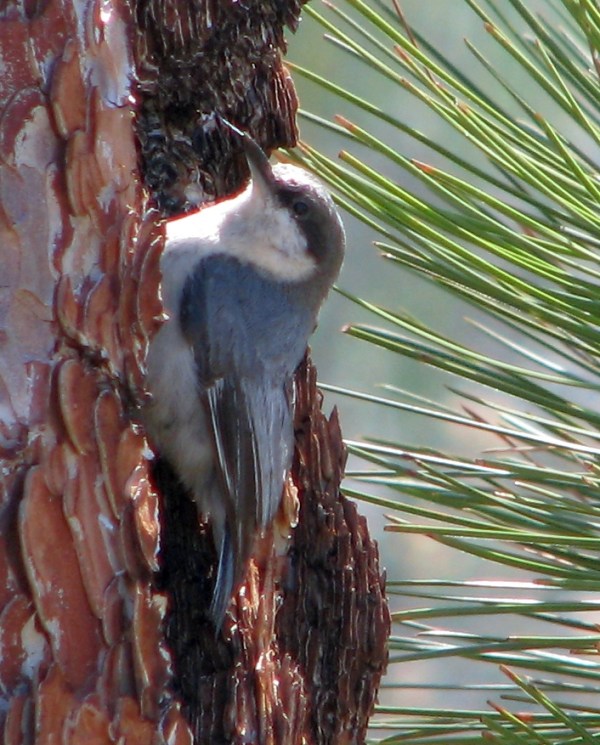
This is an amusing and interesting tale of a who-done (or didn’t)-it, and why. It addresses one example of that pair of difficult and gutwrenching problems which all birders share when it comes to TV and movies: What bird is that? and What is that bird doing there? Let me know if you can’t link to it.
https://slate.com/culture/2025/05/birds-movies-charlies-angels-2000-pygmy-nuthatch.html
[Posted by Chuck Almdale]
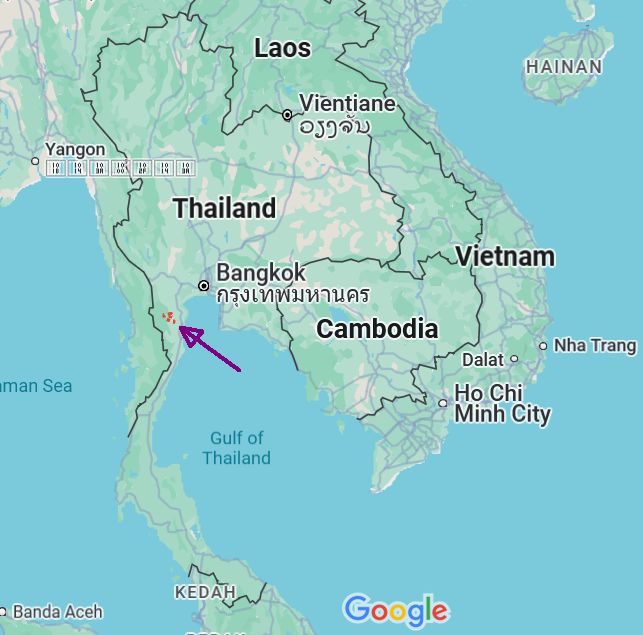
Femi Faminu, who frequently birds with (and without) us at Malibu Lagoon and elsewhere, recently returned from Thailand, where the birdlife is significantly different from South America, Africa, and even Southern California. Among the birdlife in her film I counted six bird families you’ll never see in SoCal, plus several primate species also absent here. Lunch will be supplied on the clifftop.
Enjoyable and colorful as always.
If you go here https://www.youtube.com/@femif9792 you can see her many other films.



 SANTA MONICA BAY AUDUBON SOCIETY BLOG