Free email delivery
Please sign up for email delivery in the subscription area to the right.
No salesman will call, at least not from us. Maybe from someone else.
Malibu Lagoon Trip Report: 24 October, 2010
It’s only late October, but you know winter is definitely on its way when the temperatures plunge way, way down into the low to mid 60’s. And they say California is always sunny and warm. Who’re they kidding? Who are they, anyway?
Yours truly was out-of-town, so I, personally, haven’t much to report. Fortunately, our trusty Conservation Chairman and renowned Snowy Plover enthusiast, Lu Plauzoles, did the monthly census. He reports that bird numbers were reduced, probably due to the full moon high tide. Sand had closed the lagoon outlet, so the group was able to continue down the beach to Adamson House, where workers scurried about prepping for yet another installment in the endless sequence of weddings which occur there.
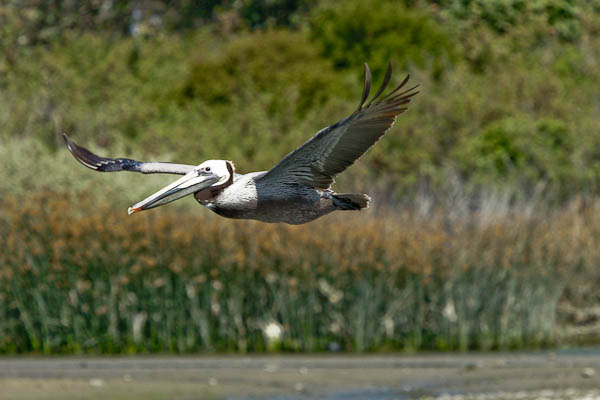
Brown Pelican flying low (C.Bragg 5/10)
The most uncommon bird was the single Herring Gull. We regularly see this species, which is abundant on the Atlantic Coast, during the winter, but usually in one’s and two’s. Occasionally their numbers spike: we recorded 35 of them on 4/25/81 and 3/27/94. The 30 Long-billed Dowitchers was also unusual; this species doesn’t spend much time at the lagoon, probably because the often-anaerobic conditions in the lagoon bottom makes foraging for invertebrates unrewarding for them, and so they go elsewhere. [See article on Lagoon restoration which addresses this problem, among other problems.]
The Brant which had spent six months at the lagoon finally disappeared. Also absent was the roosting colony of Snowy Plovers, most likely due to the high tide which had just washed completely over the beach where they normally roost and into the lagoon. Lu later discovered that the Snowy Plover colony on north Santa Monica beach was significantly larger than usual, so we think that some of the Malibu birds had (probably temporarily) relocated to that much wider beach, safely above the surf. Our records of banded birds has proved in previous years that there is movement between these two colonies and the colony at Zuma Beach. [A news update on the Snowies is here.]
The July-Oct chart below will grow monthly through December, but six months of data is all I can squeeze into this blog format. For prior periods, follow these links to Jan-Jun‘10, Jul-Dec‘09, and Jan-June‘09. [Chuck Almdale]
| 2010 Malibu Census | 25-Jul | 22-Aug | 26-Sep | 24-Oct |
| Temperature | 60-67 | 68-75 | 70-79 | 60-65 |
| Tide Height | +4.05 | +4.32 | +5.54 | +6.02 |
| Low/High & Time | H:1036 | H:0933 | H:1055 | H:0952 |
| (Black) Brant | 6 | 5 | 5 | |
| Gadwall | 20 | 2 | ||
| American Wigeon | 1 | 1 | ||
| Mallard | 49 | 55 | 48 | 10 |
| Northern Shoveler | 4 | 8 | ||
| Northern Pintail | 6 | |||
| Ruddy Duck | 3 | 5 | 15 | 7 |
| Pied-billed Grebe | 5 | 9 | 18 | 3 |
| Eared Grebe | 2 | 5 | ||
| Western Grebe | 4 | 6 | ||
| Brown Pelican | 187 | 163 | 46 | 40 |
| Dble-crstd Cormorant | 20 | 30 | 38 | 15 |
| Great Blue Heron | 6 | 6 | 5 | 3 |
| Great Egret | 4 | 4 | 6 | 2 |
| Snowy Egret | 14 | 19 | 14 | 2 |
| Green Heron | 1 | 1 | ||
| Blk-crwnd N-Heron | 4 | 7 | 10 | 6 |
| Osprey | 1 | |||
| Cooper’s Hawk | 1 | |||
| Red-tailed Hawk | 1 | |||
| American Kestrel | 1 | |||
| Merlin | 1 | |||
| Sora | 1 | 1 | 1 | |
| American Coot | 15 | 28 | 230 | 100 |
| Blk-bellied Plover | 55 | 78 | 100 | |
| Snowy Plover | 26 | 44 | 62 | |
| Semipalmated Plover | 6 | 11 | ||
| Killdeer | 3 | 3 | 1 | |
| Willet | 7 | 10 | 56 | 26 |
| Spotted Sandpiper | 1 | 2 | 3 | |
| Whimbrel | 48 | 8 | 17 | |
| Long-billed Curlew | 1 | |||
| Marbled Godwit | 22 | |||
| Ruddy Turnstone | 3 | 3 | 10 | 5 |
| Black Turnstone | 8 | |||
| Sanderling | 4 | 30 | 20 | |
| Western Sandpiper | 20 | 4 | 28 | |
| Least Sandpiper | 2 | 4 | 14 | |
| Pectoral Sandpiper | 1 | |||
| Short-billd Dowitcher | 1 | |||
| Long-billed Dowitcher | 30 | |||
| Wilson’s Phalarope | 1 | |||
| Heermann’s Gull | 125 | 62 | 68 | 41 |
| Ring-billed Gull | 4 | 30 | 97 | |
| California Gull | 1 | 3 | 22 | 8 |
| Western Gull | 80 | 66 | 73 | 52 |
| Herring Gull | 1 | |||
| Caspian Tern | 13 | 13 | ||
| Royal Tern | 2 | 2 | 1 | |
| Elegant Tern | 10 | 45 | 40 | 4 |
| Common Tern | 8 | |||
| Forster’s Tern | 5 | 6 | ||
| Least Tern | 36 | |||
| Black Tern | 1 | |||
| Black Skimmer | 35 | 103 | ||
| Rock Pigeon | 6 | 4 | 12 | 45 |
| Mourning Dove | 4 | 3 | 2 | 1 |
| Anna’s Hummingbird | 1 | 2 | 2 | 10 |
| Allen’s Hummingbird | 6 | 4 | 1 | 6 |
| Belted Kingfisher | 1 | 1 | 1 | |
| Downy Woodpecker | 1 | |||
| Gray Flycatcher | 1 | |||
| Black Phoebe | 2 | 5 | 5 | 8 |
| Cassin’s Kingbird | 1 | 2 | ||
| Western Kingbird | 4 | 4 | ||
| Western Scrub-Jay | 1 | |||
| American Crow | 6 | 4 | 3 | 18 |
| Tree Swallow | 1 | |||
| Rough-wingd Swallow | 5 | 3 | 4 | |
| Cliff Swallow | 10 | |||
| Barn Swallow | 20 | 8 | 1 | |
| Bushtit | 6 | 17 | 11 | |
| Bewick’s Wren | 1 | 2 | ||
| House Wren | 2 | 2 | ||
| Marsh Wren | 4 | |||
| Northern Mockingbird | 2 | 5 | 3 | |
| European Starling | 80 | 7 | 62 | |
| Yellow Warbler | 2 | |||
| Yellow-rumpd Warbler | 15 | |||
| Blk-thrtd Gray Warbler | 1 | |||
| Townsend’s Warbler | 1 | |||
| Common Yellowthroat | 4 | 5 | 4 | 10 |
| Wilson’s Warbler | 1 | |||
| Western Tanager | 1 | |||
| Spotted Towhee | 1 | |||
| California Towhee | 2 | 1 | ||
| Savannah Sparrow | 1 | |||
| Song Sparrow | 3 | 3 | 4 | 1 |
| White-crwnd Sparrow | 4 | 10 | ||
| Lazuli Bunting | 6 | |||
| Red-winged Blackbird | 1 | 2 | 14 | |
| Western Meadowlark | 3 | 1 | ||
| Brewer’s Blackbird | 15 | 1 | ||
| Brwn-headed Cowbird | 3 | 1 | 3 | |
| Hooded Oriole | 4 | 1 | ||
| House Finch | 2 | 4 | 10 | |
| Lesser Goldfinch | 2 | 3 | 2 | 5 |
| Lawrence’s Goldfinch | 2 | |||
| Totals by Type | Jul | Aug | Sep | Oct |
| Waterfowl | 58 | 71 | 93 | 28 |
| Water Birds-Other | 227 | 231 | 339 | 170 |
| Herons, Egrets | 28 | 37 | 36 | 13 |
| Quail & Raptors | 1 | 0 | 1 | 3 |
| Shorebirds | 127 | 162 | 325 | 164 |
| Gulls & Terns | 306 | 299 | 249 | 203 |
| Doves | 10 | 7 | 14 | 46 |
| Other Non-Pass. | 7 | 8 | 4 | 17 |
| Passerines | 152 | 76 | 176 | 76 |
| Totals Birds | 916 | 891 | 1237 | 720 |
| Total Species | Jul | Aug | Sep | Oct |
| Waterfowl | 3 | 4 | 6 | 5 |
| Water Birds-Other | 4 | 5 | 7 | 7 |
| Herons, Egrets | 4 | 5 | 5 | 4 |
| Quail & Raptors | 1 | 0 | 1 | 3 |
| Shorebirds | 10 | 10 | 16 | 5 |
| Gulls & Terns | 9 | 8 | 9 | 6 |
| Doves | 2 | 2 | 2 | 2 |
| Other Non-Pass. | 2 | 4 | 3 | 3 |
| Passerines | 16 | 19 | 29 | 14 |
| Totals Species – 98 | 51 | 57 | 78 | 49 |
Unusual Birds at Malibu Lagoon
Occasionally Malibu Lagoon gets an uncommon avian visitor. When we receive photos of these birds, we try to get them into an appropriate and upcoming blog/email, such as an announcement of an upcoming field trip. To reduce blogsite clutter, these announcements are deleted after the trip has run, but we hate to lose any interesting photos they may have contained. So we’re creating this blog as a permanent record of these photos. It will change when we add photos, but you won’t receive an email notification of such changes. You’ll just have to check back! New submissions always welcome. [Chuck Almdale]
***************
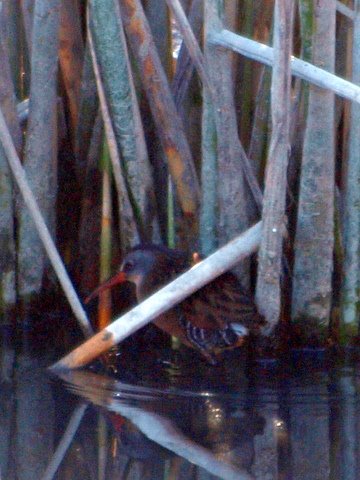
Virginia Rail (J. Waterman 11/28/10)
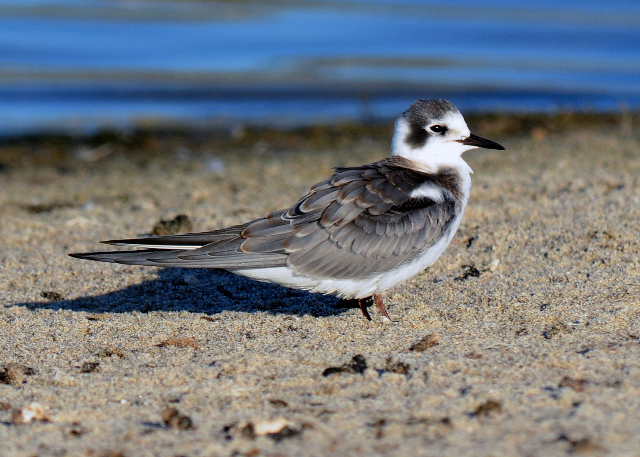
Black Tern juvenile (J.Kenney 9/26/10)
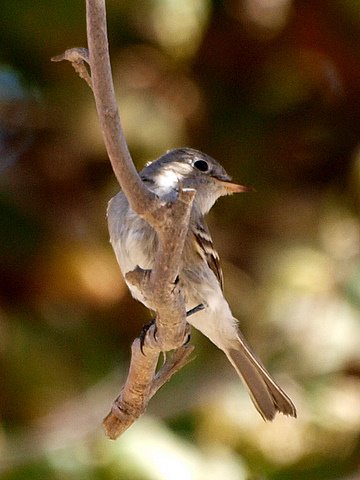
Gray Flycatcher - note dark tip of lower mandible (Joyce Waterman 9/26/10)
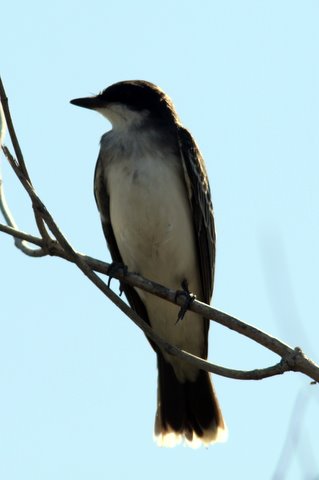
- Eastern Kingbird (Frank/Susan Gilliland 9/25/10)
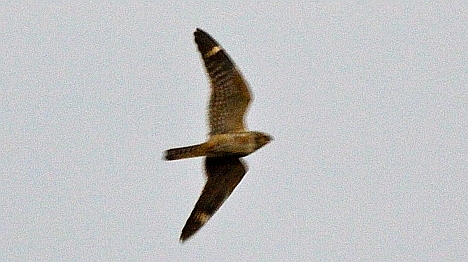
Lesser Nighthawk in the evening - not all birds at the lagoon are there in the morning (Daniel Tinoco 9/7/10)
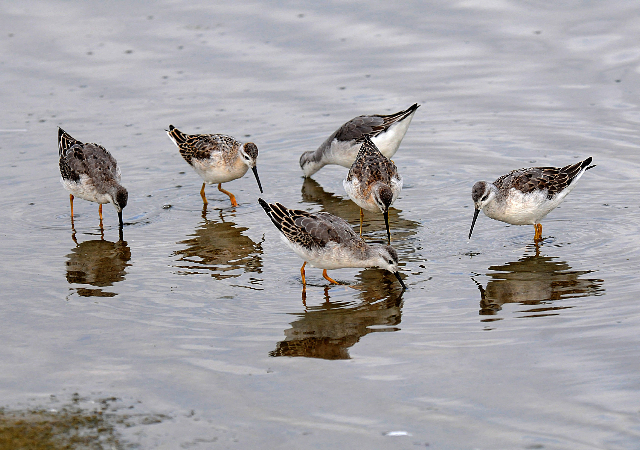
"Hey! Look! You can see the bottom!" (Wilson's Phalaropes by J.Kenney 9/10)
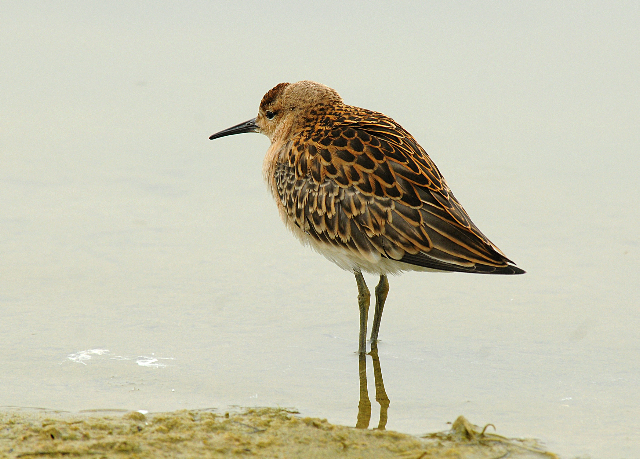
Even a juvenile Ruff appears! (J.Kenney 9/5/10)
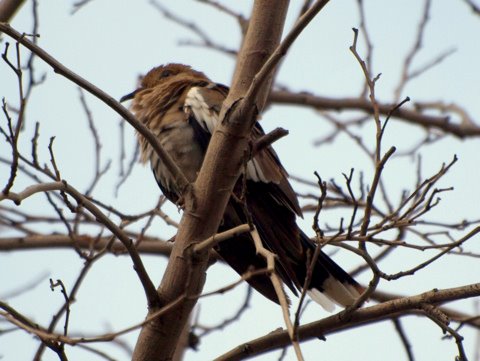
White-winged Dove (Joyce Waterman 8/29/10)
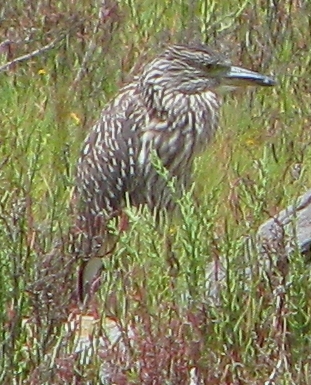
Yellow-crowned x Black-crowned Night-Heron Hybrid (L.Johnson 8/6/10
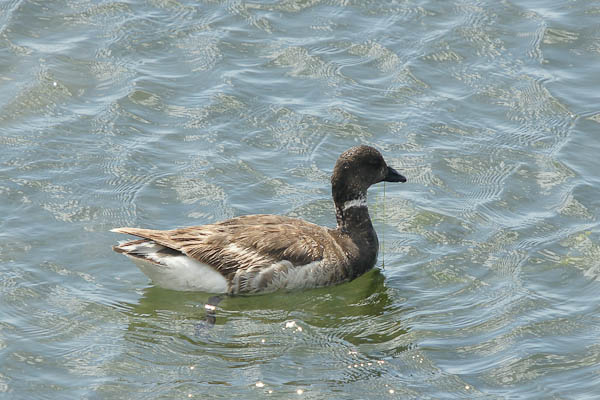
Brant (C.Bragg 5/10)
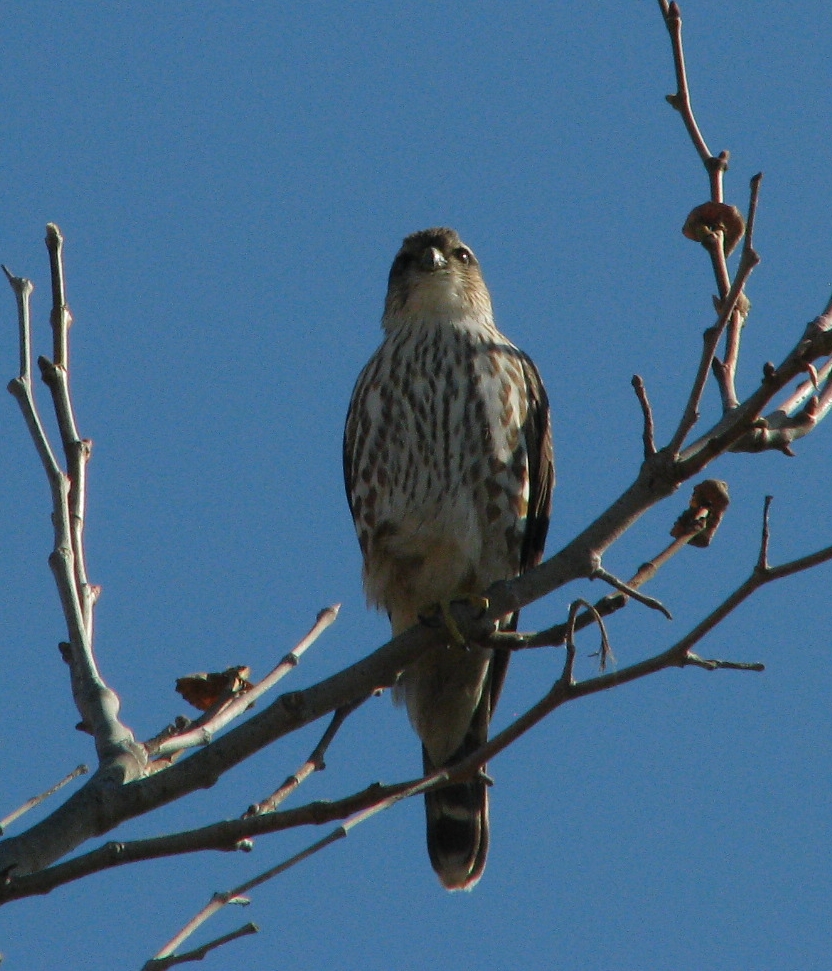
Merlin momentarily resting (L.Johnson 11/09)
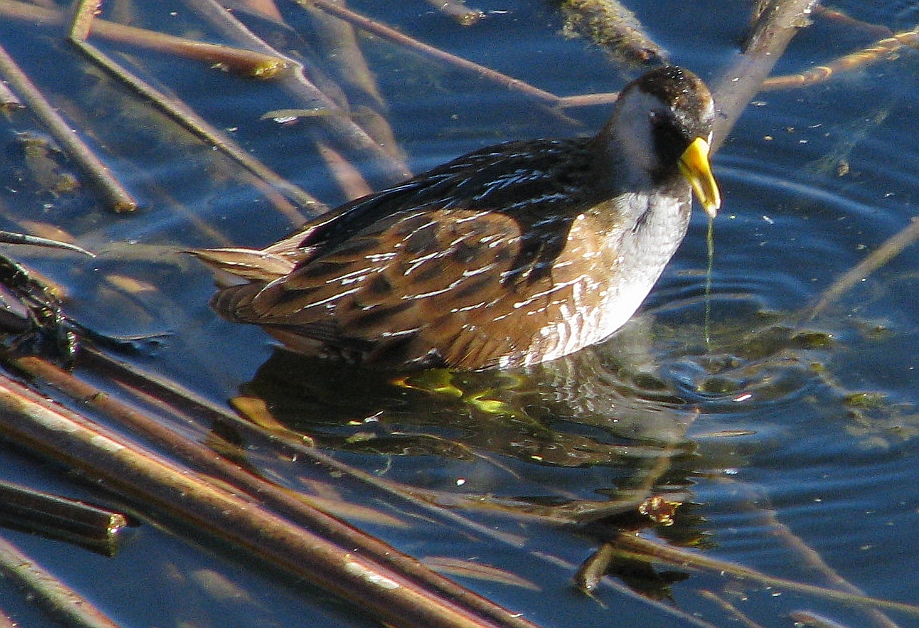
Sora seen from 1st footbridge (C.Almdale 11/09)
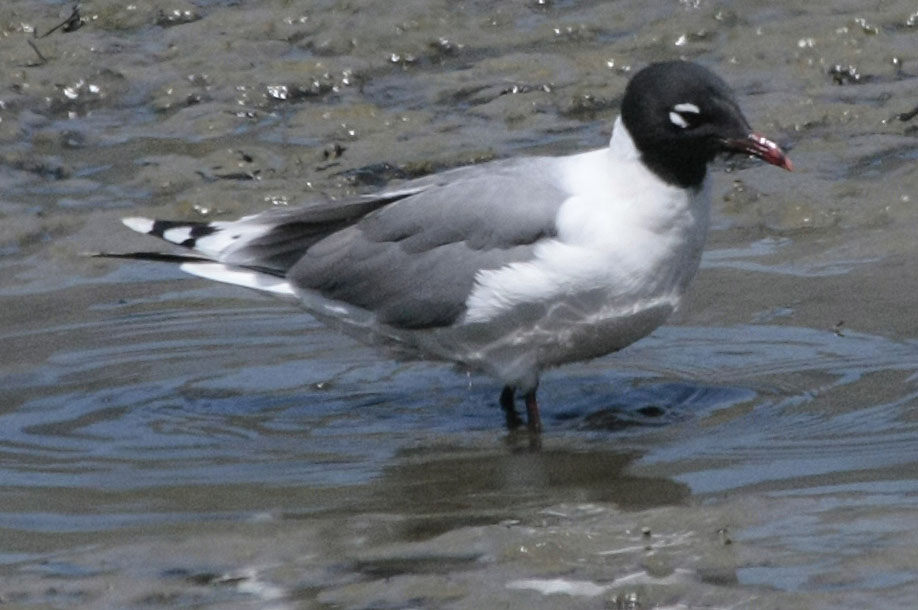
Franklin's Gull (Monica Minden (4/10/08)
October Thoughts
Did you know that the California Condor population in the California wild hit 100 ? A milestone ! In 1982, there were 22 wild condors in the state. The populations of Arizona, Utah, Baja Mexico and California now total near 400 and we hope the number is growing.
Did you know that the top waddle speed of the Antarctic Emperor Penguin is 1.7 miles per hour ?
(Source – Stanford Dept. Of Geologic and Environmental Science)
Did you know where the Zenaida Dove got its name ? It was named in honor of Zenaida Laetitia Julie Bonaparte. She was the daughter of Joseph Bonaparte (Napoleon’s brother) and she married Charles Lucien Bonaparte – her cousin- which made her Princess Zenaida Bonaparte Bonaparte. Her husband was an ornithologist (he had a gull named for him)and he named the doves for his wife. If you want to see her, there is a beautiful portrait of Zenaida and her sister Charlotte by Jacques -Louis David at the Getty Museum ( West Pavilion – second floor – European paintings)
This October is having unusual weather – stick native plants in the ground and take advantage of the rain.
See you soon and stay dry, Ellen
Prop 21: A Legacy For California State Parks
Did you know that 52 Audubon California Important Bird Areas are at least partially owned by California State Parks, totaling 156,000 acres?

Audubon California, The Nature Conservancy, Save the Redwood League and California State Parks Foundation are sponsors of The State Parks & Wildlife Conservation Trust Fund Act (“State Parks Initiative”) appearing on the November 2, 2010 statewide ballot as Proposition 21.


Prop 21 works like this-
Vehicles registered in California will get a free, year round day use admission to all California state parks in exchange for a new annual $18 vehicle license fee, a considerable savings if you go to more than two State parks in a year.
The funding will provide a stable, reliable and adequate source of funding for the state park system, for wildlife conservation and for increased and equitable access to those resources for all Californians.
The parks budget will no longer be subject to cuts by the legislature or the Governor, the Trust Fund cannot be borrowed from or raided, and our state Parks can begin work on acquisitions and deferred maintenance once the funds become available.
The passage of this proposition is a conservation legacy that all of us Audubon members in California can leave to future generations!
But the proposition faces opposition. YES ON 21 needs volunteers to organize campaigns in cities, towns, neighborhoods and communities.
If you can give any volunteer time to the campaign please go to http://yesforstateparks.com/ and GET INVOLVED.
Save our State Parks and help pass Proposition 21 in November!
[Chuck Almdale – for Audubon California]
Although stormy weather was predicted for the coastal area on Saturday, we were able to avoid rain except for a 20-minute shower. Clouds kept things comfortable until about 1pm when the sun appeared and turned on the heat. We met Richard Barth of the Los Angeles Audubon chapter, just north of Willow St. where the Los Angeles River runs almost parallel to the 710 freeway. From the very start Richard was eager to share his knowledge of birds and the area’s natural resources. He believes this seven-mile stretch of the LA River deserves far more attention from birders’, especially during the fall shorebird migration season late July through early October. Even though we were past the peak shorebird migration season, all participants were well satisfied with great looks at some infrequently-seen birds and substantial numbers of waders. We made six car-hopping stops along the river from Willow St. in Long Beach to Rosecrans Blvd. in Paramount. The highlight which many participants wanted to revisit was De Forest Park in Long Beach, a half-mile riverside strip with mature trees and river views. Many thanks from all to Richard Barth, one of the most experienced birders in LA County! Next year, we plan to visit the river during peak season in August or September. Lucien Plauzoles
| LOS ANGELES RIVER BIRD LIST |
| Gadwall |
| American Wigeon |
| Mallard |
| Blue-winged Teal |
| Cinnamon Teal |
| Northern Shoveler |
| Northern Pintail |
| Green-winged Teal |
| Double-crested Cormorant |
| Great Blue Heron |
| Great Egret |
| Snowy Egret |
| Green Heron |
| Black-crowned Night Heron |
| Turkey Vulture |
| Osprey |
| American Kestrel |
| Peregrine Falcon |
| American Coot |
| Black-bellied Plover |
| Killdeer |
| Black-necked Stilt |
| American Avocet |
| Spotted Sandpiper |
| Greater Yellowlegs |
| Lesser Yellowlegs |
| Western Sandpiper |
| Least Sandpiper |
| Dunlin |
| Long-billed Dowitcher |
| Ring-billed Gull |
| Western Gull |
| California Gull |
| Rock Pigeon |
| Eurasian Collared Dove |
| Mourning Dove |
| Anna’s Hummingbird |
| Allen’s Hummingbird |
| Black Phoebe |
| Say’s Phoebe |
| Western Kingbird |
| Warbling Vireo |
| Western Scrub-Jay |
| American Crow |
| Bushtit |
| House Wren |
| Blue-gray Gnatcatcher |
| Northern Mockingbird |
| European Starling |
| Orange-crowned Warbler |
| Yellow Warbler |
| Yellow-rumped Warbler |
| Townsend’s Warbler |
| Common Yellowthroat |
| California Towhee |
| Red-winged Blackbird |
| Yellow-headed Blackbird |
| Brown-headed Cowbird |
| House Finch |
| Lesser Goldfinch |
| American Goldfinch |
| Nutmeg Mannikin |
| 62 Species |



 SANTA MONICA BAY AUDUBON SOCIETY BLOG