Free email delivery
Please sign up for email delivery in the subscription area to the right.
No salesman will call, at least not from us. Maybe from someone else.
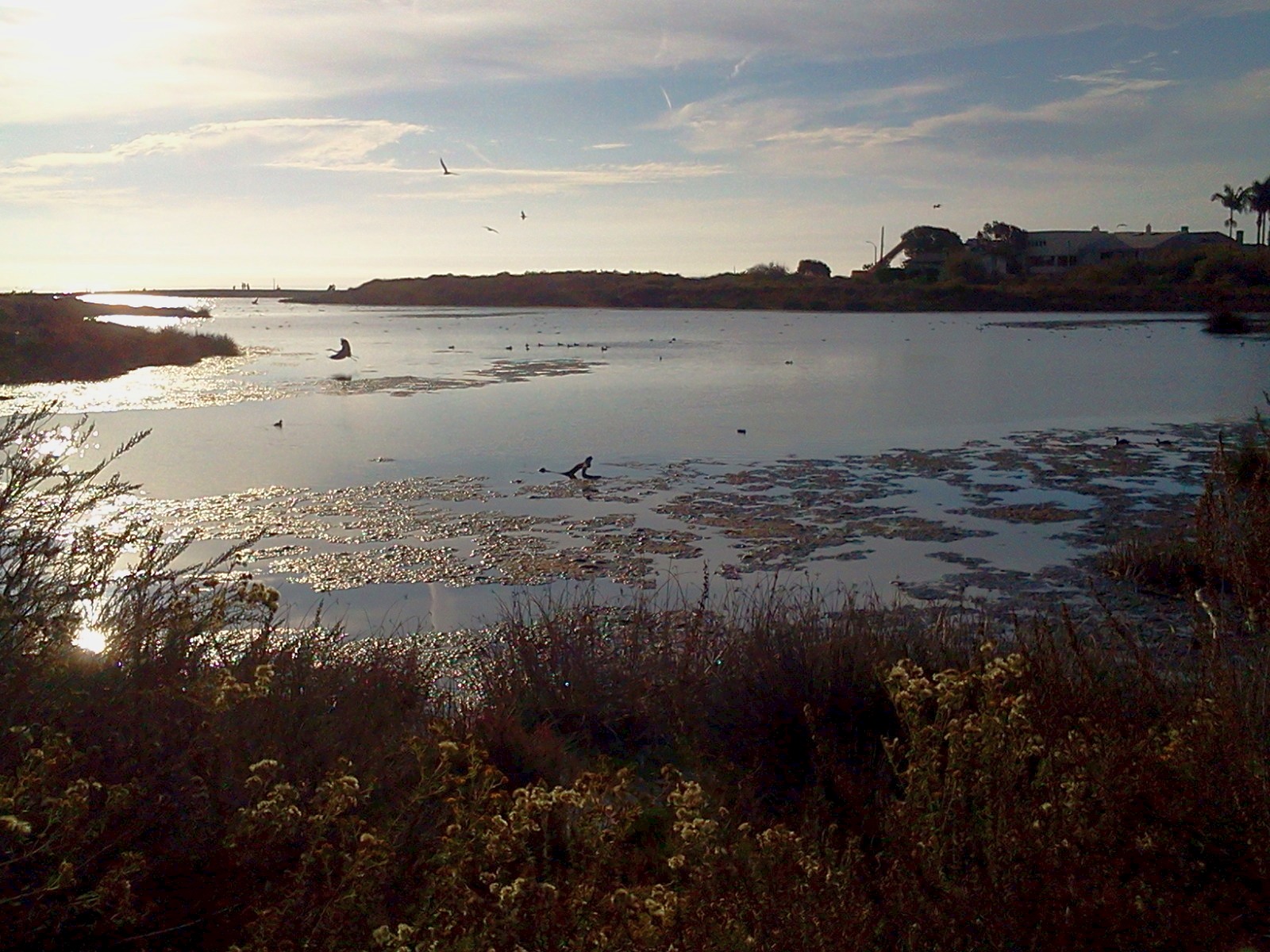
Intermittent visitors at Malibu Lagoon, 27 Oct. 2024
[Text by Chuck Almdale; photos by Lillian Johnson, Ray Juncosa & Chris Tosdevin]
Some of the best photos are in the quiz at the end.
The clouds remained most of the morning, keeping it cool. While the inland valleys were in the high 90’s°F, Malibu Lagoon ranged from 61° to 68°. Pacific Coast Hwy. was jammed with parked cars, a sure sign that surf was up.
Immediately in front of our meeting place – the “pavilion” for lack of a better term – is a persistent snag. The cormorants like to perch on it and frequently battle for space, although this pair look quite happy. It gives us something to look at as we gather.

Great Blue Herons are easily seen, very photogenic and frequently immobile.

One American Wigeon last month, thirteen this month; from September to April there are usually a few every month. The most we ever had were 54 birds in December 1979. This male seems to be engrossed in eating green goo, unless that’s some sort of eel he’s reeling in.

Red-breasted Merganser, seen 163 times at the lagoon since 1979 and quite reliable November to March is the merganser most commonly seen at the lagoon, while the so-called Common Merganser is by far the least common, sighted only six times over the same period. Go figure. The beautiful Hooded Merganser falls in-between, with twenty total sightings. Even when they are present they can be easily overlooked as they prefer the deeper pool of water just inland of the PCH bridge and we don’t always check that area. The Common and Hooded Mergansers also prefer fresh water (at least in SoCal) over brackish or salt, whereas the Red-breasted Mergansers frequently fish the surf zone and dive under the oncoming waves, just as surfers do.


The birding excitement of the day was provided by a Loggerhead Shrike. Only a month ago Armando Martinez gave me a Loggerhead Shrike photo he’d recently taken at the lagoon [he never did give me the date!] and I was quite excited to see it as this species has become so uncommon everywhere. Their decline in California, estimated at 72% since 1967, is due to several factors: habitat loss, pesticides, larger predators and climate change. SMBAS used to see upwards of a dozen on our winter trips to the Carrizo Plain.

Their presence has always been skimpy at the lagoon. Since 1979 we’ve had fifteen individual birds in twelve sightings: a singleton in June and the rest spread over August through December. We had two birds on three days: 28 November 1993, 26 December 1993 and 28 August 1994. I would not be shocked to learn that the two birds in Nov’93 & Dec’93 were the same individuals, but of course we’ll never know. They look similar to the far-more-common Northern Mockingbird, but I suspect that only a complete newbie to birding would confuse the two, as I did when I was a newbie. The most recent prior sighting was 9 September 2020. It was very nice to see today’s bird; it stayed a long time perched in the bush tops on one of the sand islands, and everyone got all the views they wanted, including telescope views.

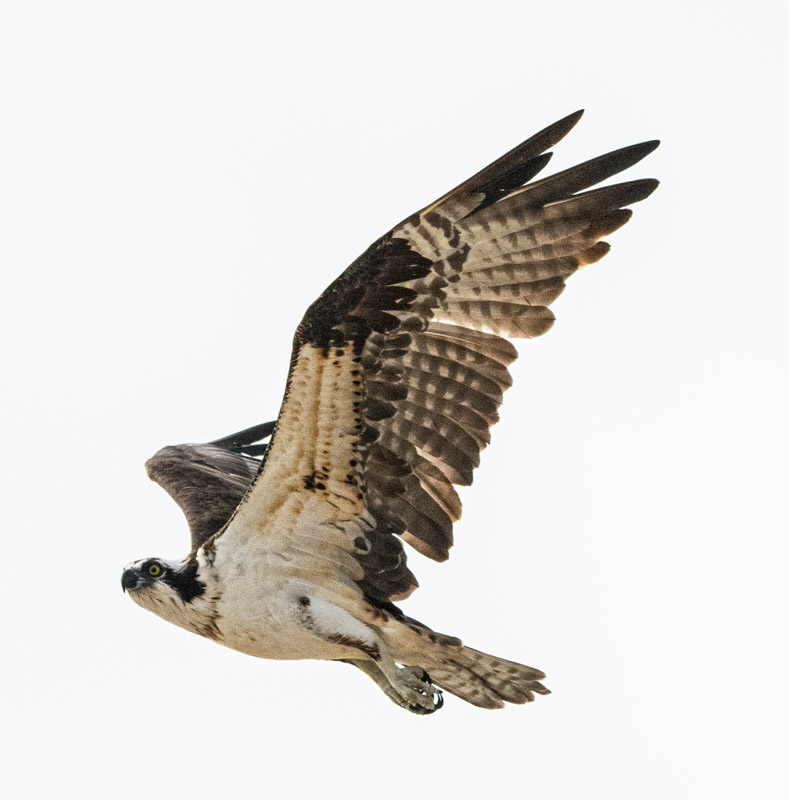
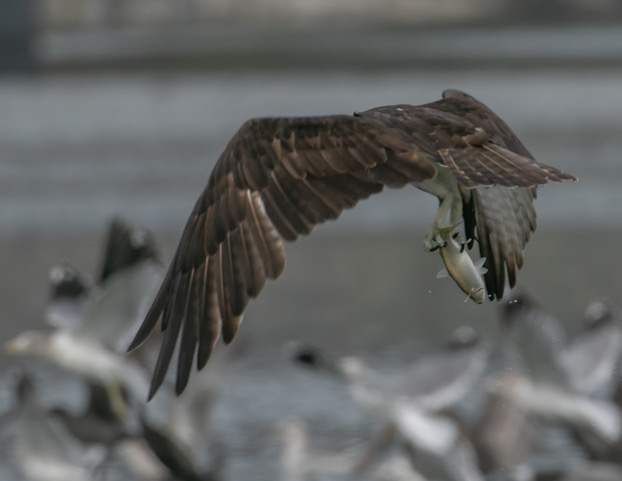
Our other notable returnee was the Osprey, possibly back for the winter, as they have wintered here for eight out of the past ten winters. Another newbie mistake is taking this fisherbird extraordinaire for a Bald Eagle. Well…they both have white heads and catch fish, but there the resemblance ends. The one below is growing a primary feather.

Total count for the day was 1,511 birds in 65 species. For comparison, the average for 28 October trips is 934 birds in 57 species. So if anyone wonders if birds are declining over the decades at the lagoon, based (invalidly, by the way, but people do this all the time) on this single day in October data point, we’d have to say no.

Quiz Time!
These photos are all taken this October at the lagoon and many of the birds are in plumage transition.






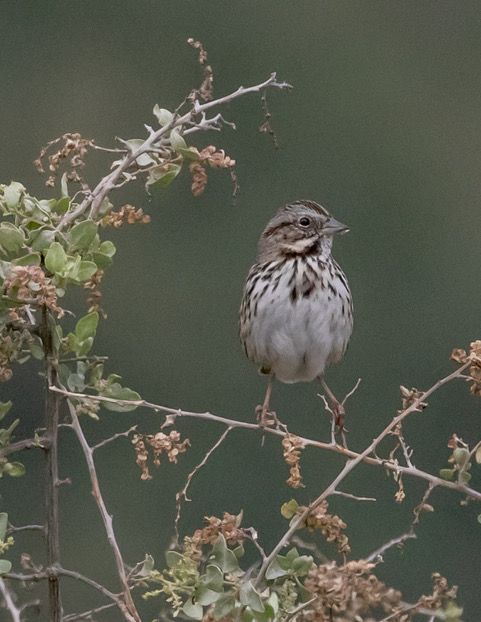
Quiz Answers & credits
#1. Pied-billed Grebe in winter, no pied ring on bill. (Chris Tosdevin 10-27-24)
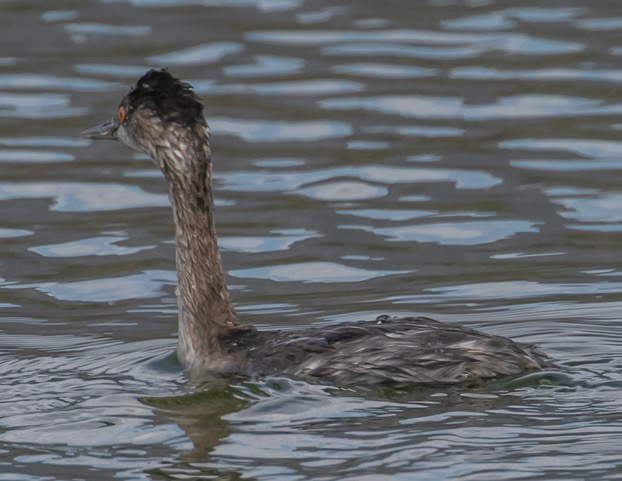
#2. Eared Grebe, barely visible white chin & orange eye, probably 1st fall plumage; easy to confuse with Horned Grebe. (Chris Tosdevin 10-27-24)
#3. Black-bellied Plover in basic (non-breeding) plumage, black bellies appear in spring. (Ray Juncosa 10-27-24)
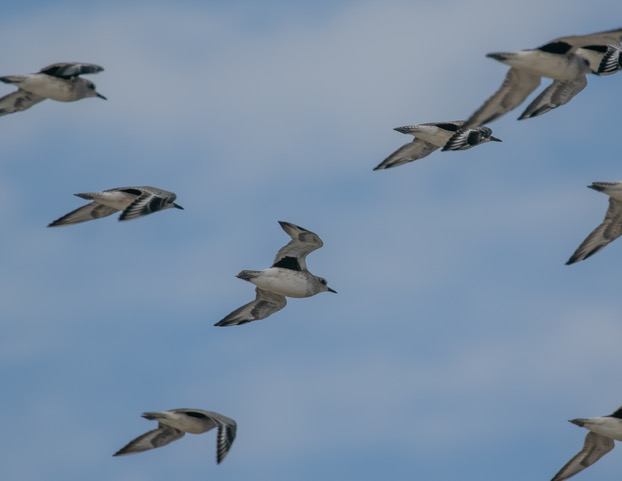
#4. Black-bellied Plovers show black axillaries (wing-pit feathers) in flight; golden plovers do not. (Chris Tosdevin 10-27-24)
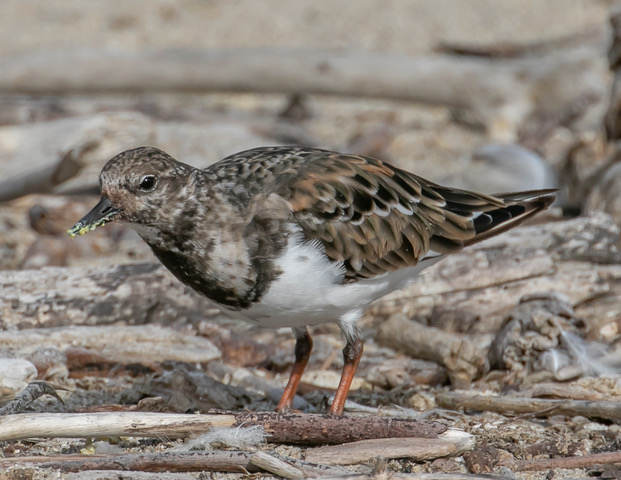
#5. Ruddy Turnstone, the only turnstone species in Europe, usually called The Turnstone. (Chris Tosdevin 10-27-24)
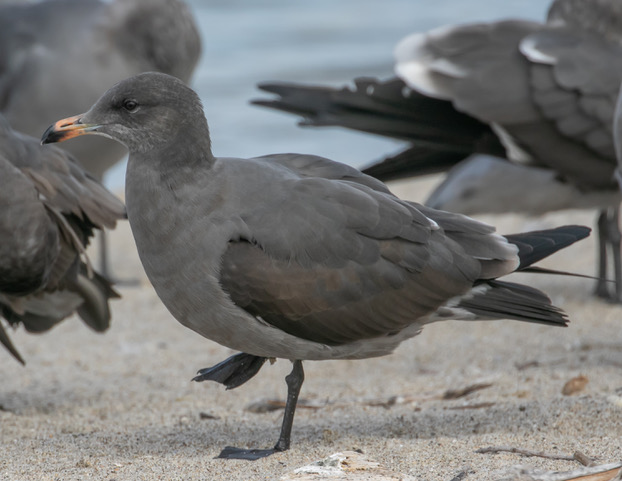
#6. Nearly all Heermann’s Gulls nest on 150-acre Isla Rasa in the Sea of Cortez, many travel north after breeding, some as far as Seattle. (Chris Tosdevin 10-27-24)
#7. Royal Tern, frequently confused with Elegant Tern. (Chris Tosdevin 10-27-24)
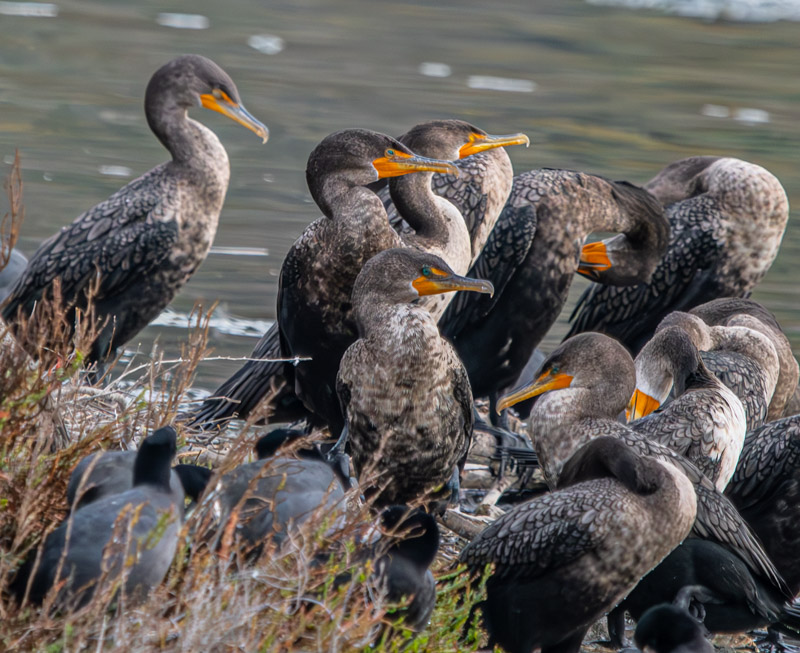
#8. All are Double-crested Cormorants. The smaller but similar Neotropic Cormorant has a bolder white edge, permanent in adults, but doesn’t have yellow-orange flesh above the dark lores. (Ray Juncosa 10-27-24)
#9. Snowy Egrets have dark legs with yellow feet and 8 toes although juveniles can have a yellow or greenish-yellow stripe up the back of the legs. Great Egret has black legs and feet plus a big yellow bill. (Chris Tosdevin 10-27-24)
#10. Green Heron is olive-green only on the back and/or crown, visible only in good light. (Ray Juncosa 10-27-24)
#11. Osprey can carry up to 90% of its own weight; this fish looks much smaller than that. (Chris Tosdevin 10-27-24)
#12. American Kestrel male has a blue-gray and brown back, female is all brown. (Chris Tosdevin 10-27-24)
#13. Song Sparrow has thick dark breast streaks that usually form a central “spot,” have rounded tail tips, like to live near water and both sexes frequently sing. (Chris Tosdevin 10-27-24)
Malibu Lagoon on eBird as of 10-31-24: 8108 lists, 2610 eBirders, 319 species.
Most recent species added: Cassin’s Vireo, 9/23/24 by Colin Drummond.
I checked the eBird “total Malibu Lagoon birds” for the past year as it mysteriously hops around, even while the “most recent new species” rarely changes: Oct’23 – 319 species, Dec’23-320, Jan-May’24-319, May-Aug’24-320, Sep’24-318, Oct’24-319; bird counts from bizarroland.
Birds new for the season: Green-winged Teal, Hooded Merganser, Ruddy Duck, Eared Grebe, Western Grebe, Common Loon, Brandt’s Cormorant, Osprey, American Kestrel, Loggerhead Shrike, Common Raven, Western Bluebird, White-crowned Sparrow, Yellow-rumped Warbler. “New for the season” means it has been three or more months since last recorded on our trips.
Many, many thanks to photographers: Ray Juncosa, Lillian Johnson, Chris Tosdevin.
Upcoming SMBAS scheduled field trips; no reservations or Covid card necessary unless specifically mentioned:
- Franklin Canyon, Weds. Nov 13, 8:30 am. Our first mid-week walk, enter at park’s south end.
- Malibu Lagoon, Sun. Nov 24, 8:30 (adults) & 10 am (parents & kids)
- Newport Back Bay Sun. Dec 15, 8:00 am Chuck Almdale Reservation
- Butterbredt Christmas Count 8:30 am Chuck Bragg Reservation
- Malibu Lagoon, Sun. Dec 22, 8:30 (adults) & 10 am (parents & kids)
- These and any other trips we announce for the foreseeable future will depend upon expected status of the Covid/flu/etc. pandemic at trip time. Any trip announced may be canceled shortly before trip date if it seems necessary. By now any other comments should be superfluous.
- Link to Programs & Field Trip schedule.
The next SMBAS Zoom program: UCLA Professor Myra Finkelstein, Exposure and effects of plastic pollution in avian species, Evening Meeting, Tuesday, November 12, 2024, 7:30 p.m.
The SMBAS 10 a.m. Parent’s & Kids Birdwalk is again running. Reservations not necessary for families, but for groups (scouts, etc.), call Jean (213-522-0062).
Links: Unusual birds at Malibu Lagoon
9/23/02 Aerial photo of Malibu Lagoon
More recent aerial photo
Prior checklists:
2023: Jan-June, July-Dec 2024: Jan-June
2021: Jan-July, July-Dec 2022: Jan-June, July-Dec
2020: Jan-July, July-Dec 2019: Jan-June, July-Dec
2018: Jan-June, July-Dec 2017: Jan-June, July-Dec
2016: Jan-June, July-Dec 2015: Jan-May, July-Dec
2014: Jan-July, July-Dec 2013: Jan-June, July-Dec
2012: Jan-June, July-Dec 2011: Jan-June, July-Dec
2010: Jan-June, July-Dec 2009: Jan-June, July-Dec
The 10-year comparison summaries created during the Lagoon Reconfiguration Project period, remain available—despite numerous complaints—on our Lagoon Project Bird Census Page. Very briefly summarized, the results unexpectedly indicate that avian species diversification and numbers improved slightly during the restoration period June’12-June’14.
Many thanks to Femi Faminu, Lillian Johnson, Ruth & Chris Tosdevin & others for their contributions to this month’s checklist.
The species lists below is intermittently re-sequenced to agree with the California Bird Records Committee Official California Checklist. If part of the right side of the chart below is hidden, there’s a slider button inconveniently located at the bottom end of the list. The numbers 1-9 left of the species names are keyed to the nine categories of birds at the bottom.
[Chuck Almdale]
| Malibu Census 2024 | 5/26 | 6/23 | 7/28 | 8/25 | 9/22 | 10/27 | |
| Temperature | 57-64 | 62-72 | 63-72 | 64-78 | 67-75 | 61-68 | |
| Tide Lo/Hi Height | L-0.77 | L-1.17 | L+1.81 | L+2.00 | L+2.09 | H+4.75 | |
| Tide Time | 0635 | 0537 | 0916 | 0735 | 0611 | 0742 | |
| 1 | Brant (Black) | 2 | |||||
| 1 | Canada Goose | 8 | 9 | 4 | |||
| 1 | Northern Shoveler | 2 | |||||
| 1 | Gadwall | 22 | 35 | 27 | 12 | 30 | 38 |
| 1 | American Wigeon | 1 | 13 | ||||
| 1 | Mallard | 14 | 15 | 6 | 2 | 8 | 28 |
| 1 | Green-winged Teal | 4 | |||||
| 1 | Ring-necked Duck | 4 | |||||
| 1 | Hooded Merganser | 1 | |||||
| 1 | Red-breasted Merganser | 2 | |||||
| 1 | Ruddy Duck | 28 | |||||
| 2 | Pied-billed Grebe | 1 | 1 | 1 | 1 | 5 | 10 |
| 2 | Eared Grebe | 4 | |||||
| 2 | Western Grebe | 9 | 1 | 28 | |||
| 7 | Feral Pigeon | 5 | 3 | 6 | 9 | 1 | 4 |
| 7 | Mourning Dove | 2 | 5 | 2 | 3 | 1 | 1 |
| 8 | Anna’s Hummingbird | 2 | 1 | 2 | 2 | ||
| 8 | Allen’s Hummingbird | 5 | 1 | 2 | 3 | 4 | 2 |
| 2 | American Coot | 1 | 2 | 72 | 340 | ||
| 5 | Black-necked Stilt | 2 | |||||
| 5 | Black-bellied Plover | 1 | 51 | 70 | 67 | 136 | |
| 5 | Killdeer | 4 | 3 | 12 | 4 | 12 | 20 |
| 5 | Semipalmated Plover | 13 | 3 | ||||
| 5 | Snowy Plover | 6 | 22 | 42 | 18 | ||
| 5 | Whimbrel | 2 | 52 | 2 | 2 | 7 | |
| 5 | Long-billed Curlew | 1 | 1 | ||||
| 5 | Wilson’s Phalarope | 1 | |||||
| 5 | Spotted Sandpiper | 2 | 1 | ||||
| 5 | Willet | 2 | 9 | 5 | 5 | 3 | |
| 5 | Greater Yellowlegs | 1 | 1 | ||||
| 5 | Ruddy Turnstone | 1 | 3 | 4 | |||
| 5 | Sanderling | 2 | 1 | 5 | |||
| 5 | Least Sandpiper | 23 | 3 | 4 | |||
| 5 | Western Sandpiper | 6 | 13 | 2 | |||
| 6 | Bonaparte’s Gull | 10 | |||||
| 6 | Heermann’s Gull | 6 | 65 | 42 | 5 | 24 | 79 |
| 6 | Ring-billed Gull | 3 | 2 | 2 | 12 | ||
| 6 | Western Gull | 45 | 160 | 220 | 113 | 55 | 27 |
| 6 | California Gull | 38 | 3 | 10 | 23 | 75 | 440 |
| 6 | Glaucous-winged Gull | 1 | 1 | ||||
| 6 | Caspian Tern | 8 | 14 | 4 | 1 | ||
| 6 | Forster’s Tern | 1 | 2 | ||||
| 6 | Elegant Tern | 190 | 25 | 240 | 10 | ||
| 6 | Royal Tern | 2 | 5 | 5 | 6 | ||
| 2 | Common Loon | 1 | 2 | ||||
| 2 | Brandt’s Cormorant | 35 | 2 | ||||
| 2 | Pelagic Cormorant | 1 | 4 | 1 | 2 | ||
| 2 | Double-crested Cormorant | 120 | 24 | 28 | 37 | 54 | 51 |
| 2 | Brown Pelican | 348 | 125 | 163 | 27 | 24 | 30 |
| 3 | Black-crowned Night-Heron | 1 | 2 | 1 | 1 | 1 | 1 |
| 3 | Snowy Egret | 2 | 7 | 4 | 3 | 4 | 10 |
| 3 | Green Heron | 1 | 1 | 1 | 2 | 1 | |
| 3 | Great Egret | 4 | 9 | 3 | 3 | 2 | 3 |
| 3 | Great Blue Heron | 3 | 3 | 4 | 2 | 5 | |
| 3 | White-faced Ibis | 3 | |||||
| 4 | Turkey Vulture | 1 | 4 | 1 | 7 | ||
| 4 | Osprey | 1 | |||||
| 4 | Red-shouldered Hawk | 1 | |||||
| 4 | Red-tailed Hawk | 2 | 1 | ||||
| 8 | Belted Kingfisher | 1 | 1 | 1 | |||
| 8 | Nuttall’s Woodpecker | 1 | 1 | ||||
| 8 | Hairy Woodpecker | 1 | |||||
| 4 | American Kestrel | 1 | |||||
| 8 | Nanday Parakeet | 25 | |||||
| 9 | Black Phoebe | 7 | 3 | 6 | 3 | 2 | 4 |
| 9 | Say’s Phoebe | 1 | 1 | ||||
| 9 | Ash-throated Flycatcher | 1 | |||||
| 9 | Cassin’s Kingbird | 1 | 1 | ||||
| 9 | Western Kingbird | 8 | |||||
| 9 | Warbling Vireo | 1 | |||||
| 9 | Loggerhead Shrike | 1 | |||||
| 9 | California Scrub-Jay | 2 | |||||
| 9 | American Crow | 4 | 6 | 4 | 4 | 8 | 6 |
| 9 | Common Raven | 3 | 4 | ||||
| 9 | Oak Titmouse | 1 | |||||
| 9 | Tree Swallow | 3 | 1 | ||||
| 9 | Violet-green Swallow | 8 | |||||
| 9 | No. Rough-winged Swallow | 2 | 5 | 2 | |||
| 9 | Barn Swallow | 20 | 20 | 20 | 20 | 1 | |
| 9 | Cliff Swallow | 30 | 6 | 4 | |||
| 9 | Bushtit | 5 | 9 | 19 | 5 | 20 | 30 |
| 9 | Wrentit | 2 | 1 | 4 | 1 | ||
| 9 | Ruby-crowned Kinglet | 1 | 1 | ||||
| 9 | Blue-gray Gnatcatcher | 1 | 4 | ||||
| 9 | House Wren | 1 | 2 | 3 | 6 | ||
| 9 | Marsh Wren | 2 | 1 | ||||
| 9 | Bewick’s Wren | 2 | 2 | ||||
| 9 | European Starling | 1 | 10 | 12 | |||
| 9 | Northern Mockingbird | 1 | 1 | ||||
| 9 | Western Bluebird | 5 | |||||
| 9 | Scaly-breasted Munia | 1 | |||||
| 9 | House Finch | 15 | 11 | 12 | 5 | 4 | 8 |
| 9 | Lesser Goldfinch | 5 | 2 | 3 | |||
| 9 | Lark Sparrow | 1 | |||||
| 9 | Dark-eyed Junco | 2 | 1 | 2 | 1 | ||
| 9 | White-crowned Sparrow | 16 | |||||
| 9 | Savannah Sparrow | 1 | |||||
| 9 | Song Sparrow | 5 | 5 | 4 | 10 | 10 | 5 |
| 9 | California Towhee | 4 | 4 | 1 | 1 | 3 | |
| 9 | Spotted Towhee | 1 | |||||
| 9 | Western Meadowlark | 15 | |||||
| 9 | Hooded Oriole | 1 | 1 | 1 | |||
| 9 | Red-winged Blackbird | 11 | 11 | ||||
| 9 | Brown-headed Cowbird | 18 | |||||
| 9 | Great-tailed Grackle | 2 | 3 | 3 | 1 | 4 | |
| 9 | Orange-crowned Warbler | 1 | 1 | 2 | 1 | ||
| 9 | Common Yellowthroat | 1 | 1 | 5 | 7 | ||
| 9 | Yellow Warbler | 1 | |||||
| 9 | Yellow-rumped Warbler (Audubon’s) | 15 | |||||
| 9 | Townsend’s Warbler | 2 | |||||
| Totals by Type | May | Jun | Jul | Aug | Sep | Oct | |
| 1 | Waterfowl | 50 | 59 | 37 | 14 | 43 | 112 |
| 2 | Water Birds – Other | 516 | 155 | 192 | 68 | 155 | 469 |
| 3 | Herons, Egrets & Ibis | 7 | 22 | 12 | 12 | 14 | 20 |
| 4 | Quail & Raptors | 1 | 0 | 4 | 1 | 10 | 3 |
| 5 | Shorebirds | 6 | 9 | 139 | 157 | 142 | 197 |
| 6 | Gulls & Terns | 302 | 254 | 527 | 165 | 162 | 564 |
| 7 | Doves | 7 | 8 | 8 | 12 | 2 | 5 |
| 8 | Other Non-Passerines | 8 | 2 | 2 | 7 | 31 | 5 |
| 9 | Passerines | 118 | 92 | 70 | 92 | 119 | 136 |
| Totals Birds | 1015 | 601 | 991 | 528 | 678 | 1511 | |
| Total Species | May | Jun | Jul | Aug | Sep | Oct | |
| 1 | Waterfowl | 6 | 3 | 3 | 2 | 4 | 6 |
| 2 | Water Birds – Other | 8 | 5 | 3 | 5 | 4 | 9 |
| 3 | Herons, Egrets & Ibis | 3 | 5 | 5 | 5 | 6 | 5 |
| 4 | Quail & Raptors | 1 | 0 | 1 | 1 | 3 | 3 |
| 5 | Shorebirds | 2 | 5 | 8 | 12 | 12 | 8 |
| 6 | Gulls & Terns | 8 | 5 | 6 | 9 | 6 | 5 |
| 7 | Doves | 2 | 2 | 2 | 2 | 2 | 2 |
| 8 | Other Non-Passerines | 3 | 2 | 1 | 4 | 4 | 3 |
| 9 | Passerines | 19 | 17 | 9 | 22 | 27 | 24 |
| Totals Species – 110 | 52 | 44 | 38 | 62 | 68 | 65 |
Theodore Payne Upcoming Classes & Plant Sales Reminder
[Posted by Chuck Almdale]

It’s that time of year again, when people again say “It’s that time of year again.”
It’s also the time for fall planting of drought-tolerant (not necessarily drought-loving) California native plants. Theodore Payne has a boodle of them, in pots, ready to go. Plus seed packets seeds, books, T-shirts, and the all-important howto and whatnot.
Theodore Payne Foundation for Wild Flowers and Native Plants has a fall sale coming up on October 29 – November 9.
They also have a host of classes and walks coming up in November.
Locals who already have native plants in their yards know that TP is the place to go. But if you’re new to the L.A. area, this is your heads-up. They’ve got it all at excellent prices.
Find it all HERE on their website.
Short but true story: When we took out our front lawn in 2009 and put in California native plants, changing nothing else, our water usage immediately dropped 75%.
Gardening for Birds and Bugs | SM College & SFV Audubon
[Posted by Chuck Almdale, suggested by Ted Winterer]
Time is running out.
Class Details: 1 Session(s) Weekly – Fri
Location: 23555 Civic Center Way, Malibu, CA 90265
Instructor: **Dr. Patricia Bates, Staff, San Fernando Valley Audubon Society
Tuition: $0.00
Registration Closes: Friday, October 25, 2024 @ 9:00 AM
Link to Announcement: https://commed.smc.edu/index.cfm?method=ClassInfo.ClassInformation&int_class_id=59720&int_category_id=0&int_sub_category_id=0&int_catalog_id=0
Loss of habitat and food sources are a major driver in the declining of bird and beneficial insect populations. Even in today’s densely populated urban environment we can still make a difference by restoring and creating habitat in both public and private spaces. This seminar will emphasize how this restoration can be achieved, whether on one’s own property or in public spaces. Additionally, it will cover how this can be accomplished by using native plants suitable to each particular area as well as practices that enhance the habitat value of the area. Resources will be provided for researching plants and the fauna they support, planting tips, maintenance tips, and next steps. This will include local retailers of native plants, contractors, and even how to advocate for habitat-sustaining landscape in public projects. The seminar will conclude with a brief field trip to the adjoining Legacy Park restoration area for examples of restoration practices.
**Dr. Patricia Bates is first and foremost a lover of birds, bees, butterflies and all living creatures. She holds a Ph.D from the University of Arizona in Experimental Psych/Biology and sits on the Boards of Directors serving as treasurer of the San Fernando Valley Arts & Cultural Center (SFVACC) and the Encino Neighborhood Council. Her commitment is to preserve and protect wonderful creatures and the environment through restoring and expanding native habitat in every place and by every means possible.
Iquitos Amazon basin birding | Femi Faminu video
[Posted by Chuck Almdale]
Femi Faminu, who frequently birds with (and without) us at Malibu Lagoon, recently returned from Peru and some more northwest Amazonian Basin birding. Guitar music featured.
If you enjoyed our chapter’s recent Zoomized discussion of the Golden-collared Manakin, Femi’s trip list of 249 species includes 9 manakin species, along with 19 species of what one prominent SMBAS member always refers to as “ant-thingies.” You won’t see any of these in SoCal. Enough said. Femi’s all-too-brief YouTube photo & video film is as enjoyable as always.
If you go here https://www.youtube.com/@femif9792 you can see her other films.
Lakeside birding at Huntington Beach Central Park, 12 Oct. 2024
[Written by Liz Galton; Photos by Elyse Jankowski, Ray Juncosa & Chris Tosdevin; comments & editing by Chuck Almdale]
The quiz at the end has many of the best photos. Don’t miss it.
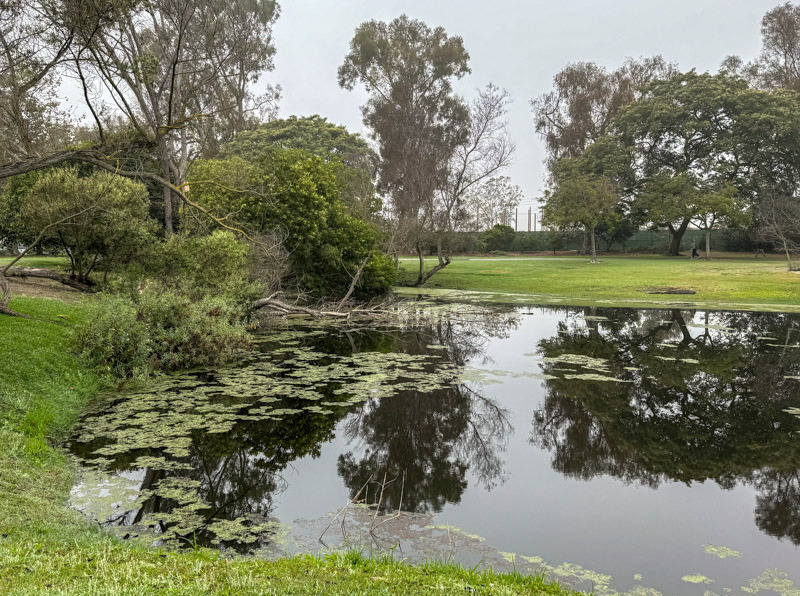
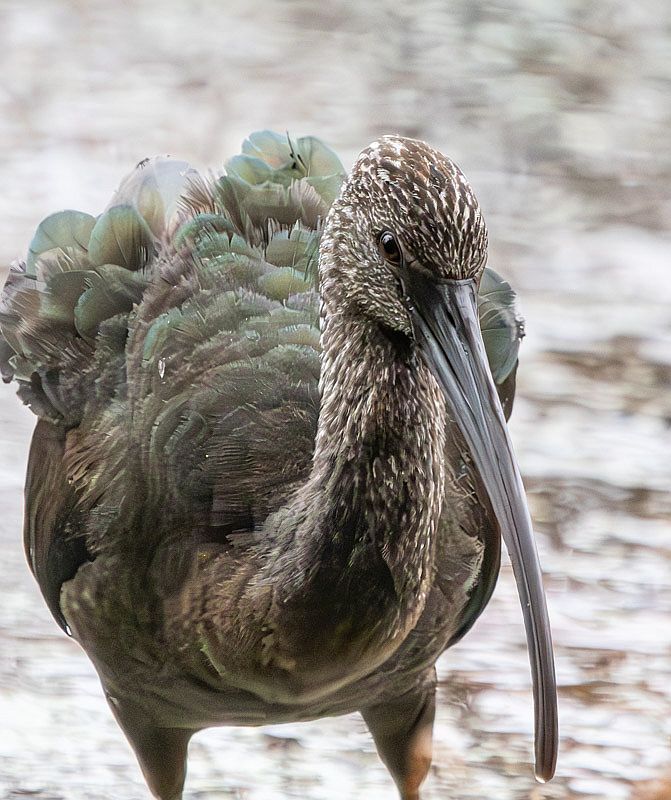
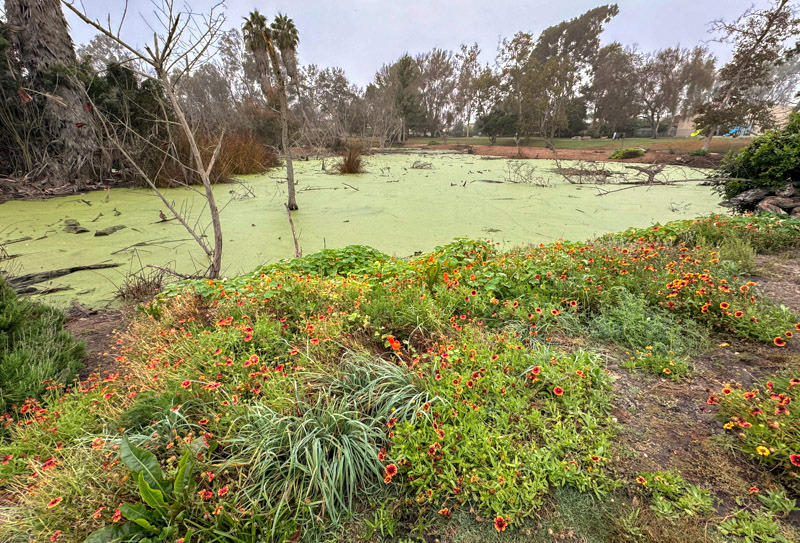
A total of 15 birders came to the Huntington Central Park birding trip, in very cool misty weather. We had to identify birds by outline, because color was hard to tell. Things were gray, black or white only. The lake was surrounded by far fewer trees, which made the lake easier to see, but there were fewer trees for birds to perch on. New trees are being planted, but unfortunately not native ones. The lake was mostly covered by the usual duckweed, but now there were more clear places than I’ve seen before. The edges of the lake boasted more Coots, Mallards, and yes, White-faced Ibises than usual, poking around in the mud at the edge. The usual Green Heron was present to greet us.

As we walked around the lake, we were pleased to see our usual migrants: brilliant Townsend’s Warblers, and a Black-and-White Warbler flitting high in the trees.

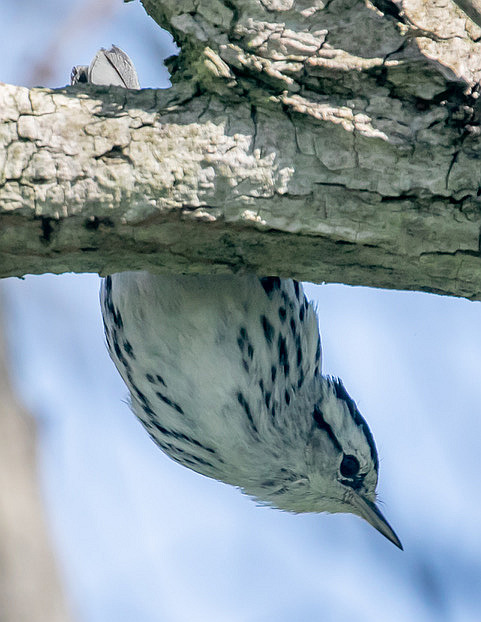
The Black-and-white Warbler is an eastern U.S. warbler with a range extending westward to the Rocky Mountains. Although they don’t nest west of the mountains they regularly appear in small numbers in the fall. These strays are quite likely the northwesternmost breeders from the Alberta-British Columbian border, occasionally straying westward across the mountains during their southern migration.
Townsend’s Warbler on the other hand, has a western range and barely crosses the southern Rockies eastward. They nest in the northern mixed coniferous forests and are common – but not abundant – spring and fall migrants in SoCal. It’s always a treat to see them in their bright yellow and black plumage.
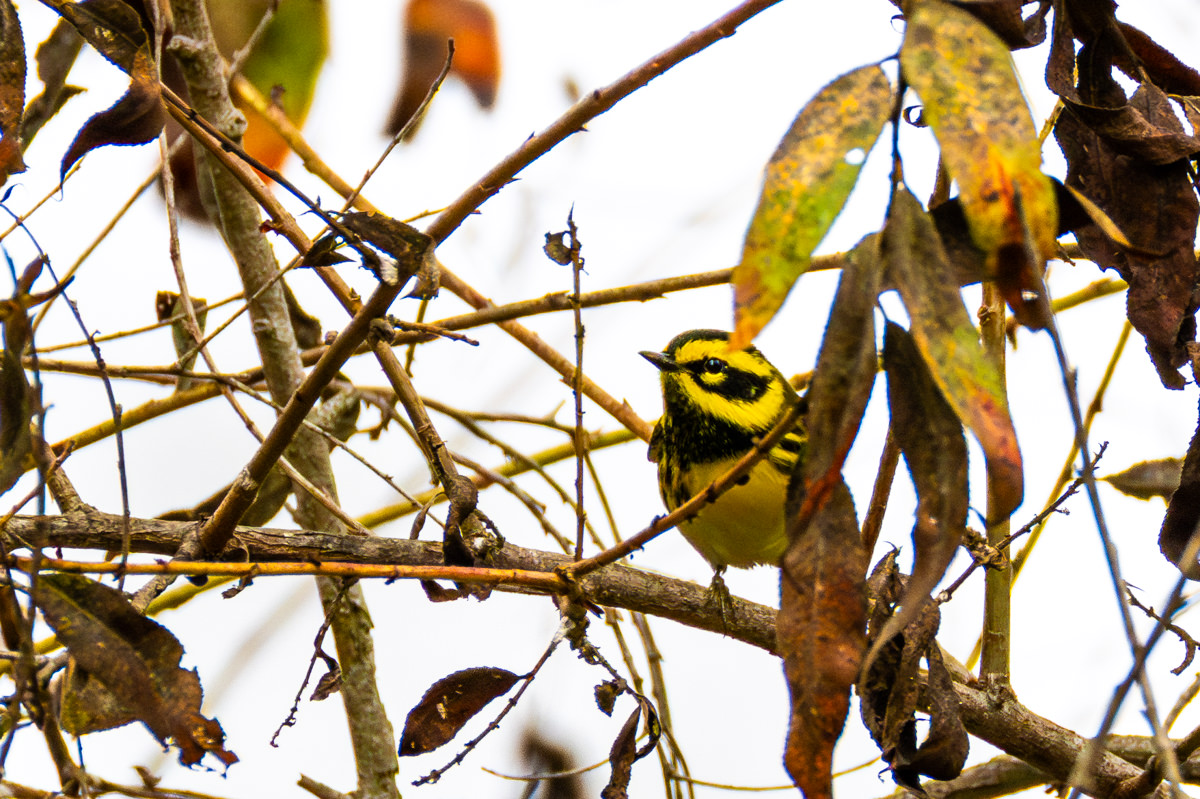
By then the fog was lifting, fortunately, and we could see their colors. A mysterious mammal slept in a tree, variously described as a gray raccoon or a long-haired opossum. The head was hidden, but we could see five toes jutting upward. Unfortunately for identification purposes, both raccoons and opossums have five toes per foot. Other cute bushy-tailed mammals checked us out for hand-outs.
The Great Horned Owl, although reportedly in his station at his nest, could not be found, although earnestly searched for. Chuck later grew suspicious of the passerby’s report of “one over by the library poking his head over the edge of the nest,” when he recalled that these owls generally don’t start nesting until February, so the likelihood of one in a nest in October was quite slim. More likely the informant saw an owl-head-shaped bunch of dead leaves caught on a limb.

After checking the UofC-Irvine web page on Spiders of Orange County, we submitted Elyse’s spider photo below to iNaturalist. Chuck decided it was likely a Spotted Orbweaver, probably Neoscona crucifera, based both upon the above web page and a few iNat photos. One commentator agreed on Neoscona sp. but not N. crucifera, unhelpfully without explaining why. Whatever it was, it was apparently in the midst of enjoying its meal.

Some birders spotted a Hutton’s Vireo. The two photos below, possibly of the same individual bird, demonstrate how varied a bird can be depending on light or distance, and how photographs can vary when displaying them. The white broken eyering and bill shape/color are good marks for Hutton’s, and especially so is the darkish “bar” between the two white wing-bars. The very similar Ruby-crowned Kinglet (also seen today) has a similar dark “bar” but it is below the lower wing-bar. But Hutton’s is typically a grayish-olive bird, not bright yellow below.

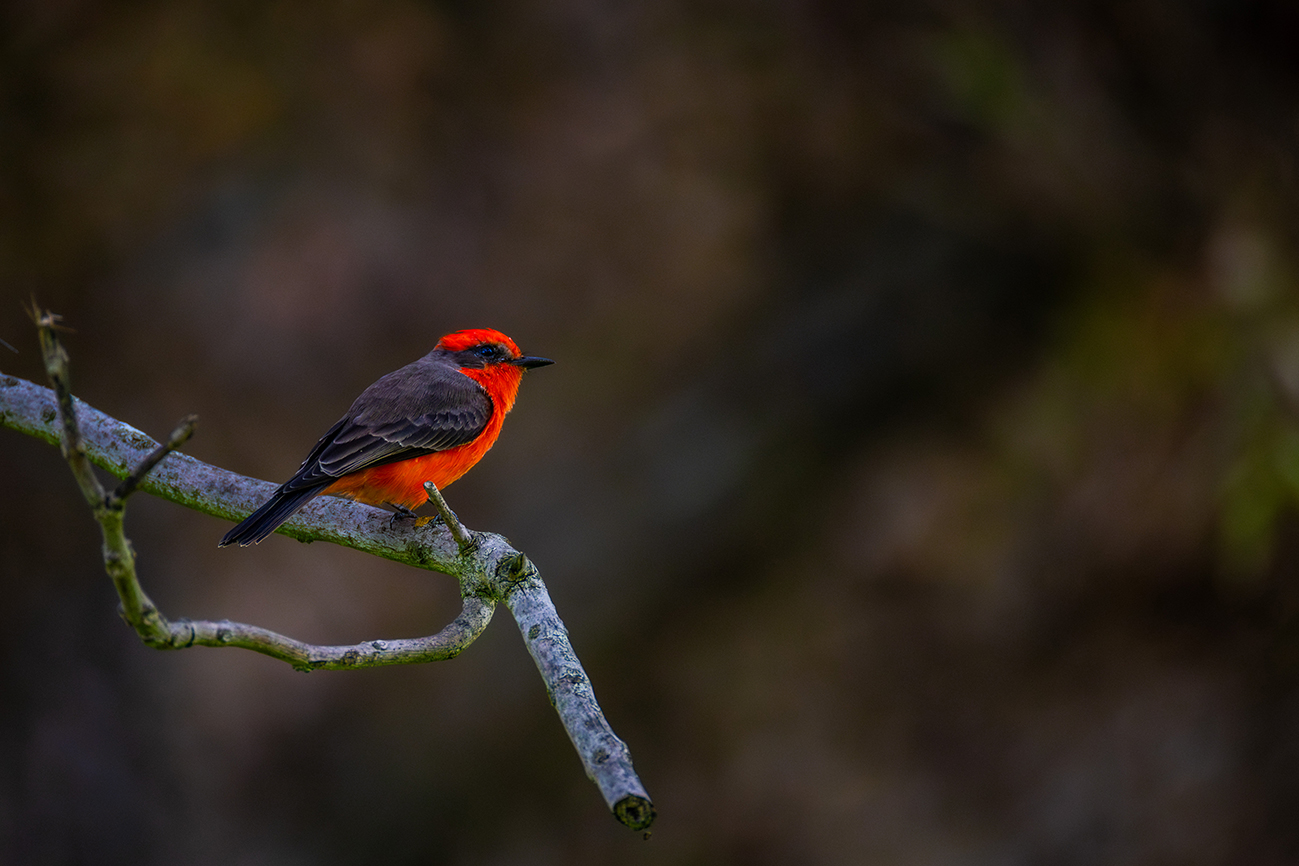

We delighted in seeing both Mr. and Mrs. Vermilion Flycatcher, as well as male and female Pin-tailed Whydah, the male spectacular with his long tail.

The female of this sub-Saharan species is small, only 4.75″ and has a bright red bill. The male at 12.5″ is almost three times as long, all of it in the tail. The male was perched in a tree adjacent to the lake near the Secret Garden a bit north of the library.
This area also hosted most of the turtles we saw. By this time the clouds had cleared and the sun was out, and it was sun-basking time for turtles. They all seemed to be Red-eared Sliders, native to eastern U.S. People buy them as pets at the store when they’re small, cute and cuddly, then unload them at the nearest pond when they get old, grumpy and picky about what they’re willing to eat.

Raptors flew overhead: both Red-tailed and Red-shouldered Hawks, Turkey Vultures and an Osprey, parked over the water. A Belted Kingfisher darted across the lake.
After several hours of birding, there was the welcome sight of a restaurant, right there in the park, where we gratefully partook of the offerings.
When a large bird flew in to land in the lakeside trees next to our lunch table, we immediately recognized it as a flicker, but not just any flicker. Judging by the head markings it was an intergrade. The western Red-shafted Flicker has a red “whisker” while the eastern Yellow-shafted has a black whisker and a red nape. This bird has both whisker and nape of red, not something you see every day. Judging by the very slim streak of lightness along the end of the lower edge of the wing, visible in the photo below, it may have had yellow feather shafts.
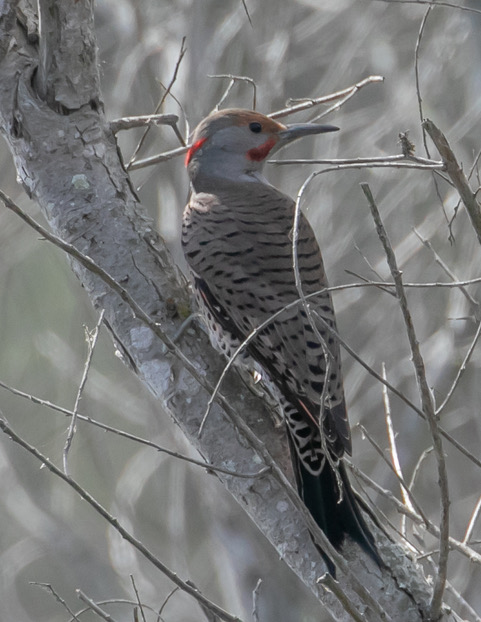
A few more birds were added to the list and off we drove, after a lovely birding day.
Quiz Time!
Identify all species. Some photos have additional questions.
All photos taken Huntington Beach Central Park East, 12 October 2024.








Quiz answers, credits & comments
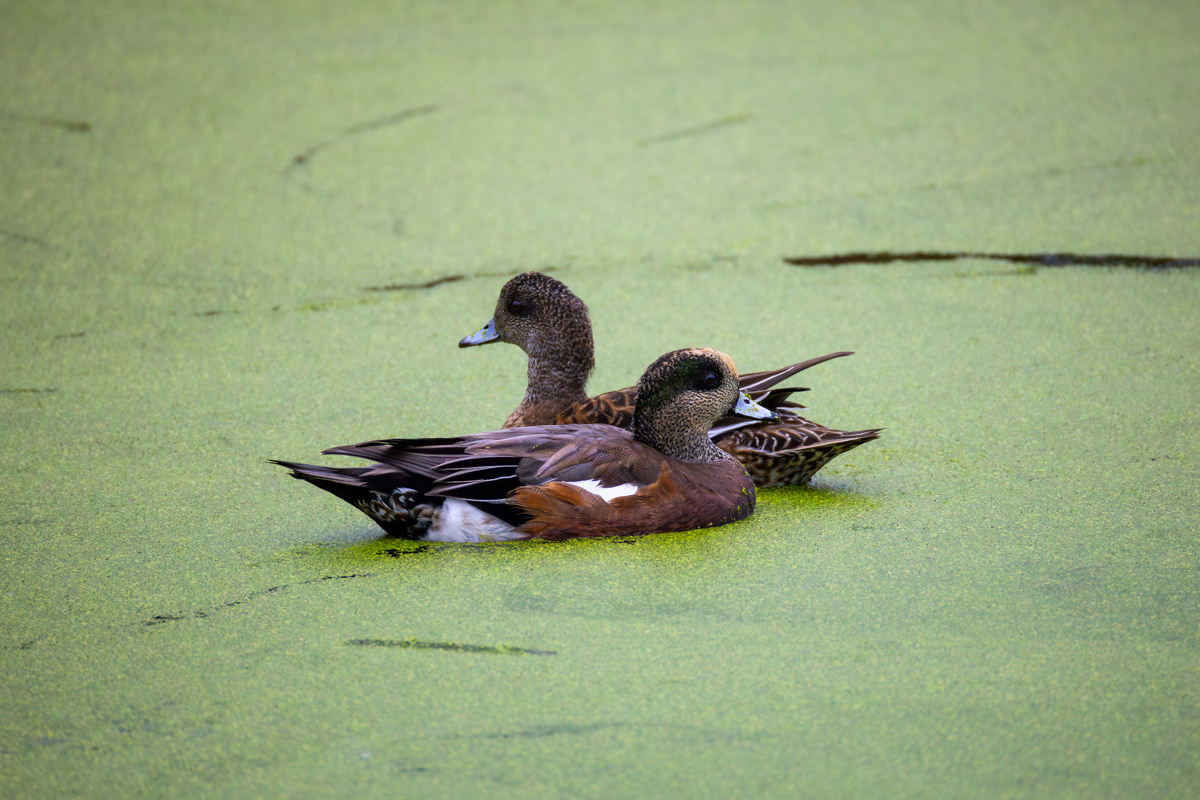
#1. American Wigeon female, stretching her wings. (Elyse Jankowski 10-12-24)
#2. Female Mallard has a blue speculum and a saddle of black on the orange bill. (Elyse Jankowski 10-12-24)
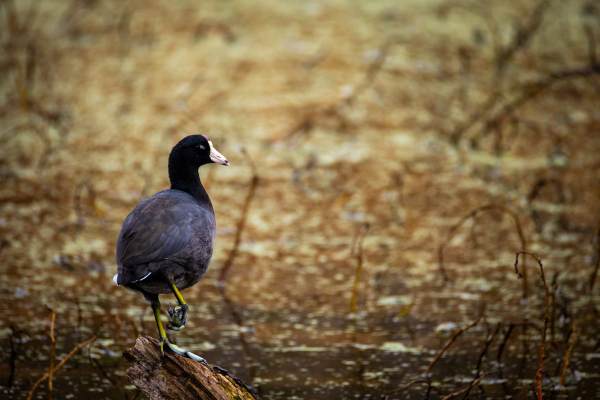
#3. American Coots are closely related to cranes, not ducks. Flexible lobes on their toes enable them to both swim and walk well, unlike birds with webbed feet. (Elyse Jankowski 10-12-24)
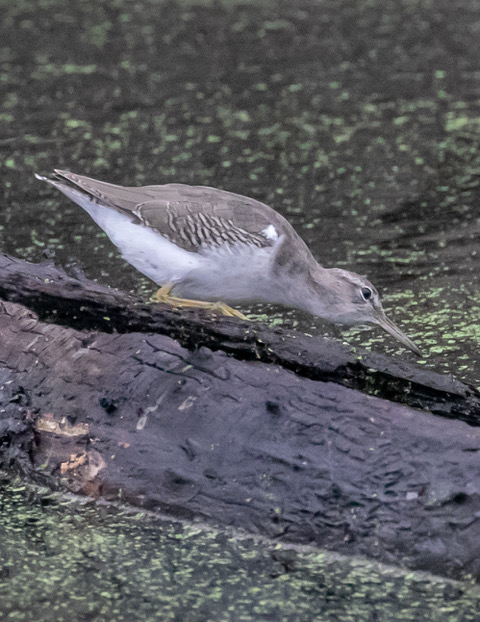
#4. Spotted Sandpiper has no spots. (Chris Tosdevin 10-12-24)
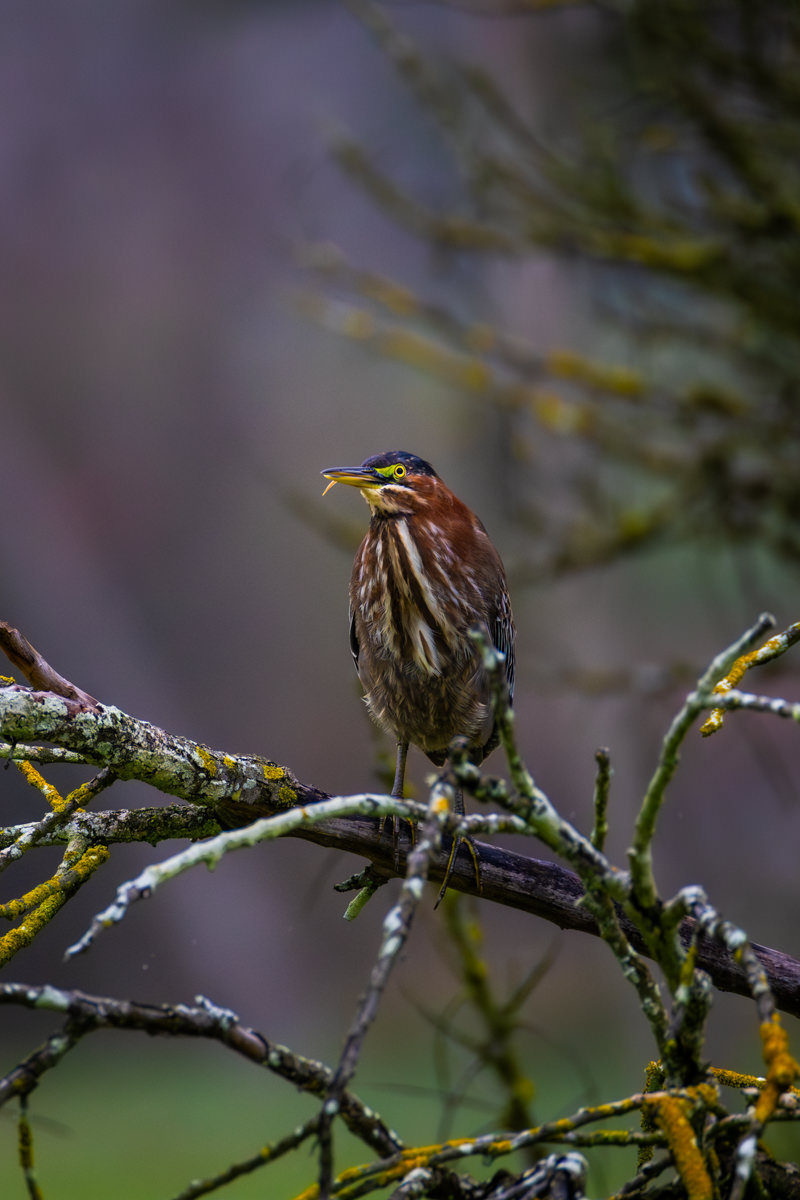
#5. Green Heron juvenile, sticking out its tongue. (Elyse Jankowski 10-12-24)
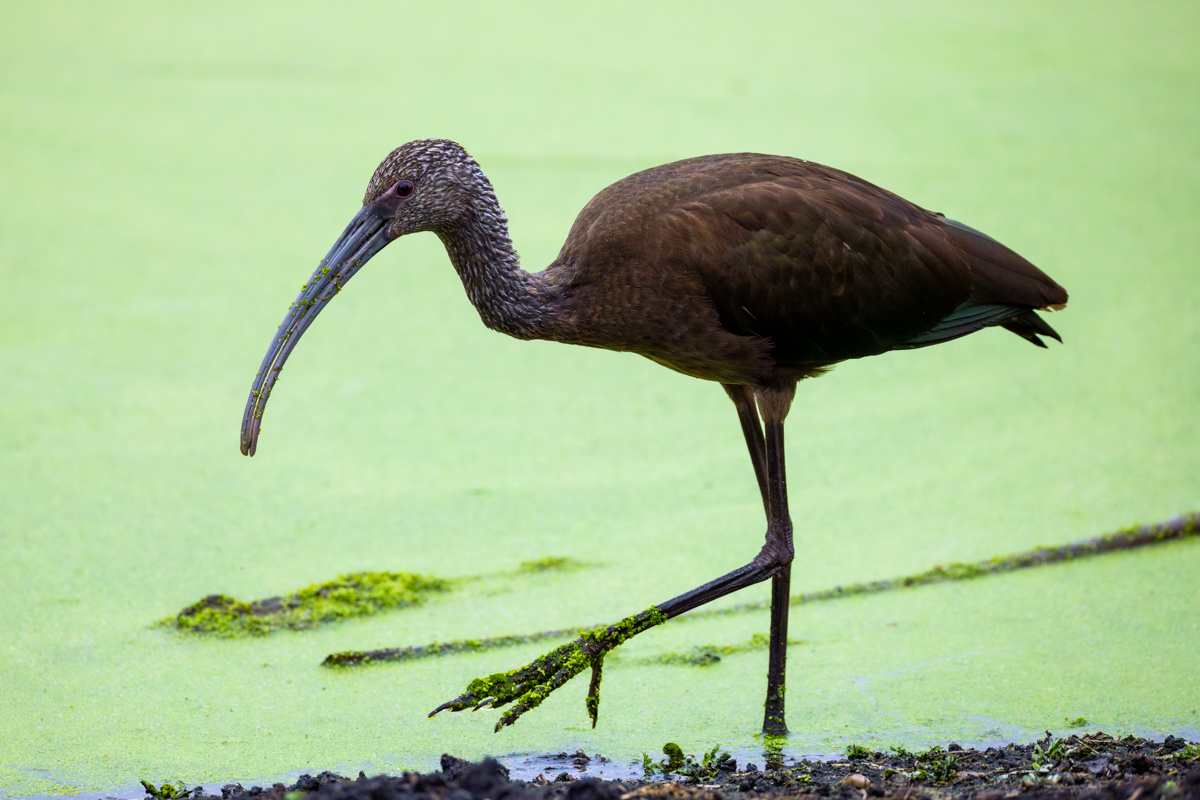
#6. White-faced Ibis has algae or duckweed on its foot and no white on the face. (Elyse Jankowski 10-12-24)
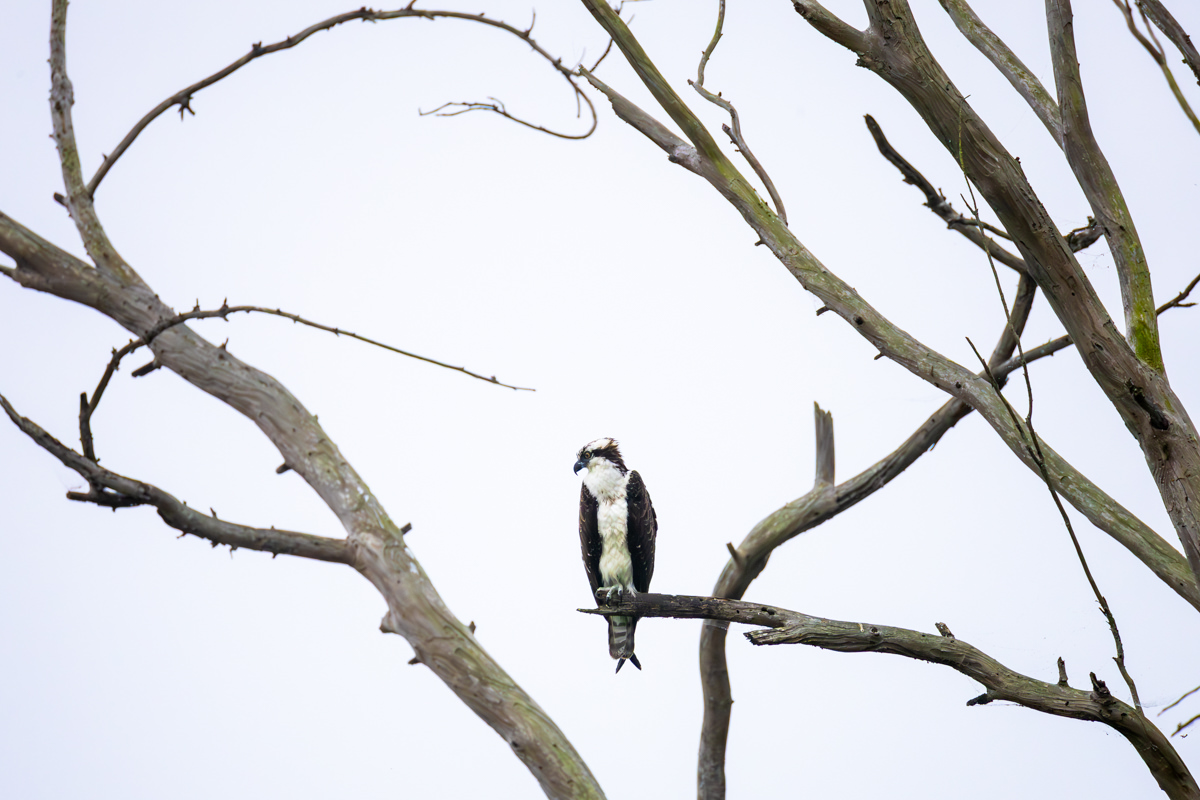
#7. Osprey preys on fish, not bones. (Elyse Jankowski 10-12-24)
#8. Belted Kingfisher female has cinnamon flanks and is scratching her head with her foot. (Chris Tosdevin 10-12-24)
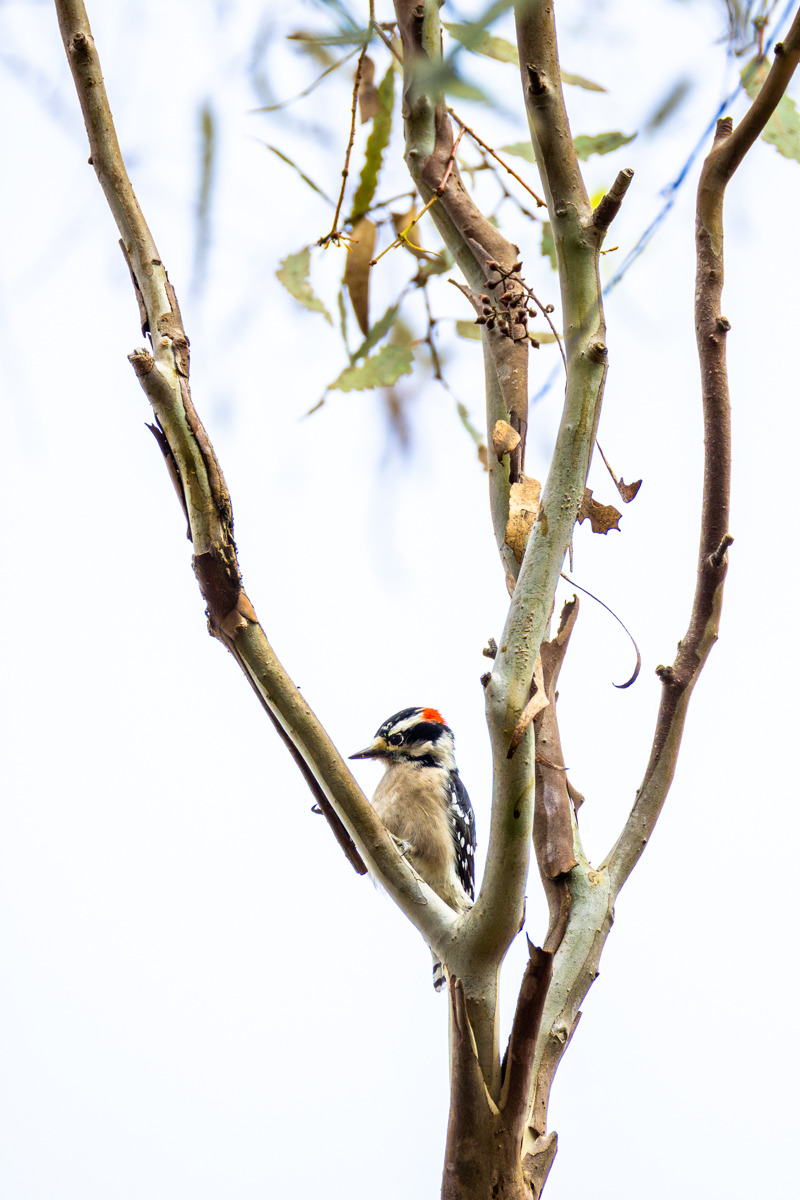
#9. Downy Woodpecker’s bill is much shorter than the similar Hairy Woodpecker. (Elyse Jankowski 10-12-24)
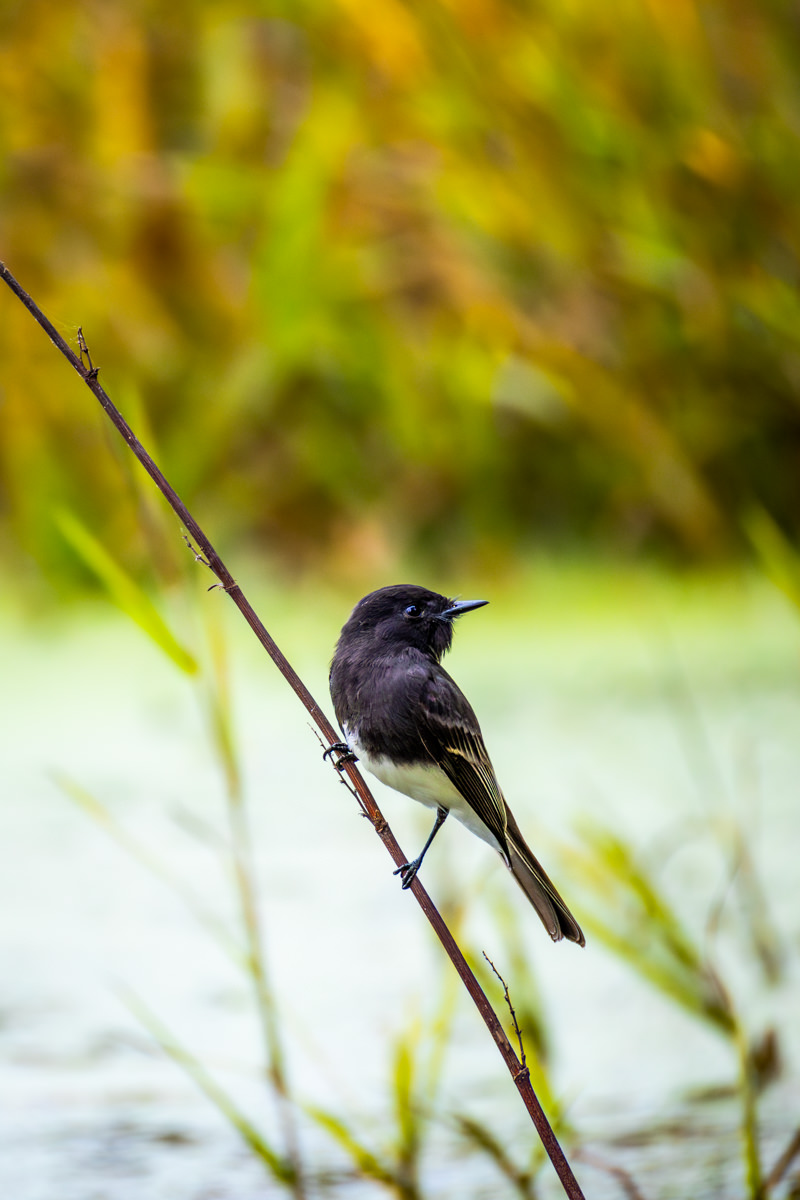
#10. Black Phoebe (Elyse Jankowski 10-12-24) Order Passeriformes/passerines, Family Tyrannidae/tyrant flycatchers.
#11. Cassin’s Kingbird white chin contrast with dark gray breast. (Elyse Jankowski 10-12-24)
#12. Vermilion Flycatcher female. (Chris Tosdevin 10-12-24)
#13. House Wren is a New World species, but Eurasian Wren occurs from Iceland to Siberia. (Chris Tosdevin 10-12-24)
#14. Western Bluebird. (Elyse Jankowski 10-12-24) Many bird species can see into infra-red or ultra-violet, plus have four-color retinas able to detect ripening fruit color changes invisible to human eyes.
#15. Male Scaly-breasted Munia Lonchura punctulata. (Elyse Jankowski 10-12-24) This common cage-bird’s native range is Pakistan to east China and Indonesia. Family Estrildidae Waxbills & allies. They have many, many common names (written about previously here).
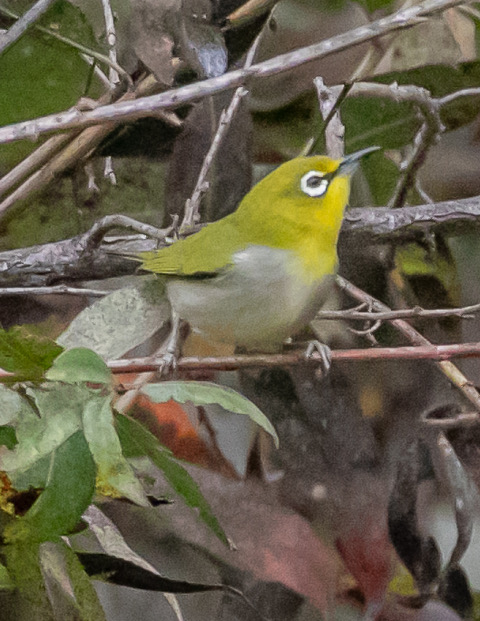
#16. Swinhoe’s White-eye Zosterops simplex (Chris Tosdevin 10-12-24), was formerly considered a subspecies of Japanese White-eye Zosterops japonicus, widespread across east Asia and Indonesia. Elevated to full species status in 2018, and “Japanese White-eye” was changed to Warbling White-eye. Thelatter bird is widely pictured in Japanese art. As a whole, the white-eye family is naturally widespread, ranging from southern Africa to east Asia. As cage birds, they are found world wide, sometimes escaping and becoming locally established as in this park.
#17. Song Sparrow (Ray Juncosa 10-12-24) likes to be near water.
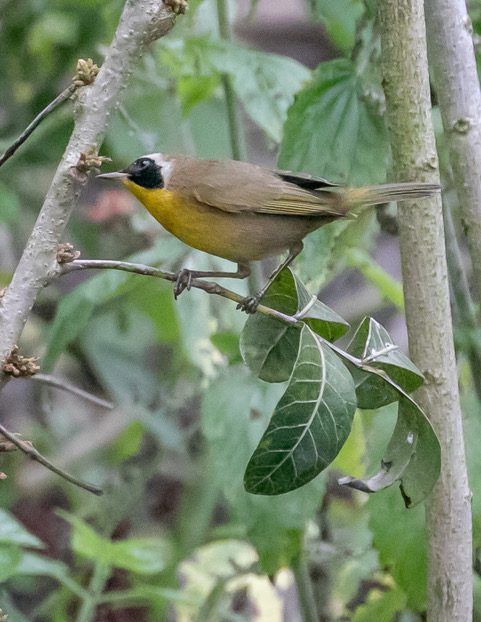
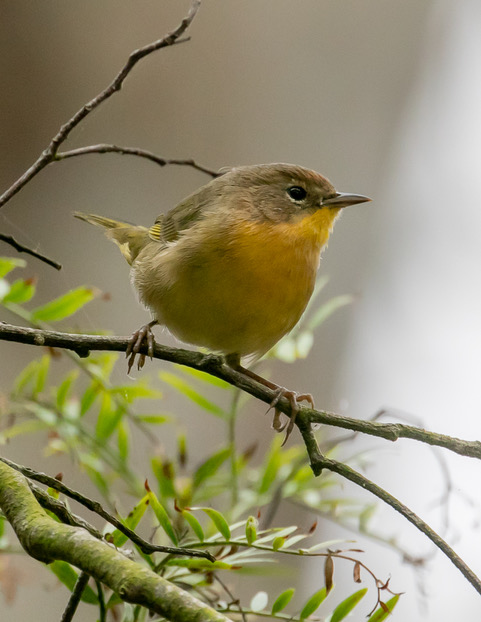
#18. Common Yellowthroat female (Chris Tosdevin 10-12-24). The pattern of yellow throat bordered by brown replicates the male pattern where the black mask replaces the brown. See the male above, not in the quiz but in the 7th picture from the top.
#19. Orange-crowned Warbler (Chris Tosdevin 10-12-24) rarely displays it’s erectable orange crown.
#20. Yellow Warbler (Elyse Jankowski 10-12-24) male has bold red streaks when breeding.
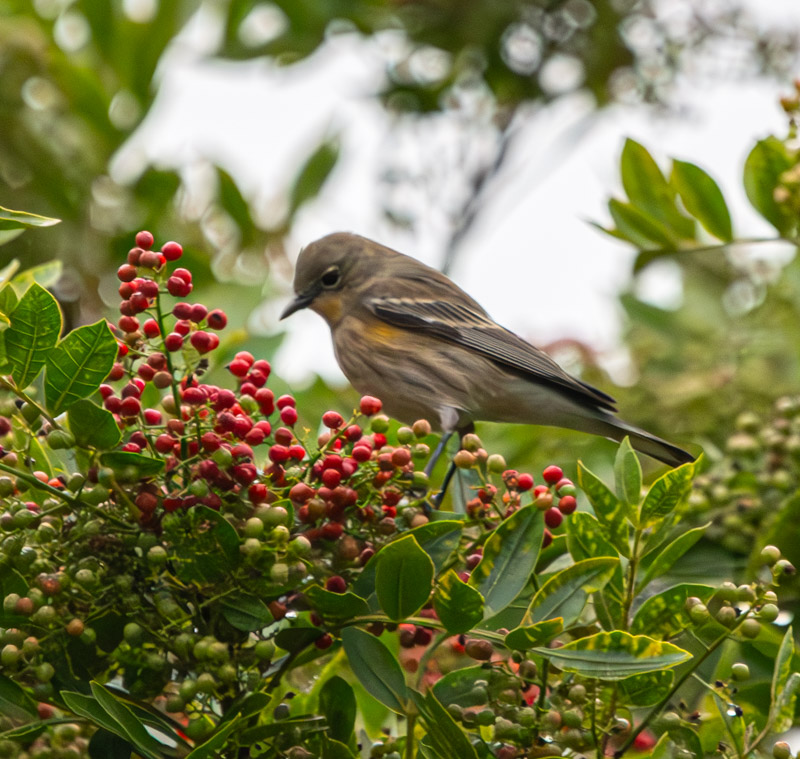
#21. Yellow-rumped Warbler (Ray Juncosa 10-12-24) western auduboni form has broken eye-ring, eastern coronata has white line (supercilium) above eye.
#22. Black-and-White Warbler female lacks black throat & cheek. (Chris Tosdevin 10-12-24)
There! Wasn’t that fun? It’s (almost) just like you were there!
Huntington Beach Central Park on eBird as of 10-19-24: 8607 lists, 1670 eBirders, 305 species.
Most recent species added: Wrentit, 11 Aug 2024 by James Davison.
Key: X – present; Bold – recent exotics; sub 1– heard; sub 2 – species intergrade; sub 3 – Eastern U.S. species.
| Huntington Beach Central Park | |||||||
| Year | 2024 | 2023 | 2022 | 2019 | 2018 | ||
| Date | 10/12 | 10/14 | 10/15 | 10/12 | 10/13 | ||
| 1 | Canada Goose | 40 | |||||
| 1 | Egyptian Goose | 2 | 4 | X | X | ||
| 1 | Cinnamon Teal | 1 | 1 | ||||
| 1 | Gadwall | X | |||||
| 1 | Eurasian Wigeon | X | |||||
| 1 | American Wigeon | 16 | 1 | 5 | X | ||
| 1 | Mallard | 40 | 16 | 37 | X | ||
| 1 | Green-winged Teal | 2 | |||||
| 2 | Pied-billed Grebe | 4 | |||||
| 7 | Feral Pigeon | 1 | |||||
| 7 | Mourning Dove | 2 | 5 | X | |||
| 8 | Anna’s Hummingbird | 1 | 2 | X | X | ||
| 8 | Allen’s Hummingbird | 3 | 2 | 7 | X | X | |
| 2 | Virginia Rail1 | 1 | |||||
| 2 | American Coot | 50 | 11 | 30 | X | X | |
| 5 | Long-billed Dowitcher | 18 | |||||
| 5 | Spotted Sandpiper | 2 | 2 | ||||
| 5 | Greater Yellowlegs | 1 | |||||
| 6 | Western Gull | 1 | |||||
| 6 | Gull (species) | 1 | |||||
| 2 | Double-crested Cormorant | 1 | 1 | X | |||
| 3 | Great Blue Heron | 4 | 2 | 1 | X | ||
| 3 | Great Egret | 2 | 1 | 2 | X | X | |
| 3 | Snowy Egret | 12 | 1 | 3 | X | X | |
| 3 | Green Heron | 4 | 1 | 1 | X | ||
| 3 | Black-crowned Night-Heron | 3 | 1 | 3 | X | X | |
| 3 | White-faced Ibis | 30 | 4 | 1 | X | X | |
| 4 | Turkey Vulture | 1 | 1 | ||||
| 4 | Osprey | 1 | 2 | 1 | |||
| 4 | Cooper’s Hawk | 1 | 2 | X | |||
| 4 | Red-shouldered Hawk | 1 | 1 | 3 | X | X | |
| 4 | Red-tailed Hawk | 1 | 1 | ||||
| 8 | Belted Kingfisher | 1 | 1 | 1 | X | ||
| 8 | Downy Woodpecker | 2 | 1 | 2 | X | X | |
| 8 | Nuttall’s Woodpecker | 3 | 2 | X | |||
| 8 | Northern Flicker 2 | 1 | 1 | 2 | X | X | |
| 4 | American Kestrel | 1 | 1 | X | X | ||
| 4 | Peregrine Falcon | 1 | |||||
| 9 | Cassin’s Kingbird | 4 | 1 | ||||
| 9 | Western Wood-Pewee | X | |||||
| 9 | Pacific-slope Flycatcher | X | |||||
| 9 | Black Phoebe | 15 | 5 | 8 | X | X | |
| 9 | Say’s Phoebe | 1 | 2 | ||||
| 9 | Vermilion Flycatcher | 3 | |||||
| 9 | Hutton’s Vireo | 1 | |||||
| 9 | Warbling Vireo | 1 | |||||
| 9 | California Scrub-Jay | 1 | |||||
| 9 | American Crow | 6 | 1 | 10 | X | X | |
| 9 | Common Raven | X | |||||
| 9 | Bushtit | 12 | 30 | X | X | ||
| 9 | Swinhoe’s White-eye | 7 | 4 | 10 | X | ||
| 9 | Ruby-crowned Kinglet | 2 | 1 | ||||
| 9 | Blue-gray Gnatcatcher | 2 | 1 | 1 | X | X | |
| 9 | House Wren | 4 | 2 | 2 | X | X | |
| 9 | Western Bluebird | 4 | 10 | 25 | |||
| 9 | Hermit Thrush | 2 | X | ||||
| 9 | American Robin | 2 | X | ||||
| 9 | Bronze Mannikin | X | |||||
| 9 | Scaly-breasted Munia | 5 | X | X | |||
| 9 | Pin-tailed Whydah | 5 | X | ||||
| 9 | House Finch | 10 | 6 | 12 | X | X | |
| 9 | Lesser Goldfinch | 4 | 2 | 4 | X | X | |
| 9 | American Goldfinch | 2 | X | ||||
| 9 | Dark-eyed Junco | 1 | |||||
| 9 | White-crowned Sparrow | 3 | X | X | |||
| 9 | Song Sparrow | 8 | 2 | 1 | X | X | |
| 9 | California Towhee | X | X | ||||
| 9 | Hooded Oriole | X | |||||
| 9 | Red-winged Blackbird | 2 | |||||
| 9 | Brewer’s Blackbird | X | |||||
| 9 | Black-and-white Warbler3 | 1 | 1 | ||||
| 9 | Orange-crowned Warbler | 4 | 1 | 4 | X | X | |
| 9 | Nashville Warbler | X | |||||
| 9 | MacGillivray’s Warbler | 1 | |||||
| 9 | Common Yellowthroat | 12 | 1 | 7 | X | X | |
| 9 | Yellow Warbler | 1 | X | ||||
| 9 | Yellow-rumped Warbler | 14 | 16 | 14 | X | X | |
| 9 | Black-throated Gray Warbler | X | |||||
| 9 | Townsend’s Warbler | 4 | 4 | 1 | X | X | |
| 9 | Wilson’s Warbler | X | |||||
| 9 | Western Tanager | X | |||||
| Totals by Type | 2024 | 2023 | 2022 | 2019 | 2018 | ||
| 1 | Waterfowl | 101 | 21 | 43 | |||
| 2 | Water Birds – Other | 55 | 12 | 31 | |||
| 3 | Herons, Egrets & Ibis | 55 | 10 | 11 | |||
| 4 | Quail & Raptors | 7 | 5 | 7 | |||
| 5 | Shorebirds | 2 | 3 | 18 | |||
| 6 | Gulls & Terns | 1 | 0 | 0 | |||
| 7 | Doves | 2 | 5 | 1 | |||
| 8 | Other Non-Passerines | 11 | 9 | 12 | |||
| 9 | Passerines | 130 | 98 | 77 | |||
| Totals Birds | 364 | 163 | 200 | 42 | 41 | ||
| Total Species | 2024 | 2023 | 2022 | 2019 | 2018 | ||
| 1 | Waterfowl | 6 | 3 | 3 | 3 | 3 | |
| 2 | Water Birds – Other | 3 | 2 | 2 | 1 | 2 | |
| 3 | Herons, Egrets & Ibis | 6 | 6 | 6 | 4 | 6 | |
| 4 | Quail & Raptors | 7 | 4 | 4 | 2 | 3 | |
| 5 | Shorebirds | 1 | 2 | 1 | 0 | 0 | |
| 6 | Gulls & Terns | 1 | 0 | 1 | 0 | 0 | |
| 7 | Doves | 1 | 1 | 1 | 1 | 0 | |
| 8 | Other Non-Passerines | 6 | 6 | 4 | 5 | 5 | |
| 9 | Passerines | 24 | 24 | 13 | 26 | 22 | |
| Totals Species – 71 | 55 | 48 | 35 | 42 | 41 | ||



 SANTA MONICA BAY AUDUBON SOCIETY BLOG