Free email delivery
Please sign up for email delivery in the subscription area to the right.
No salesman will call, at least not from us. Maybe from someone else.
Tricolored Heron at Malibu Lagoon
[Posted by Chuck Almdale, Photos by Femi Faminu & Chris Tosdevin]
You don’t see these very often in SoCal. I’ve never had one at the Lagoon. This Tricolored Heron (Egretta tricolor) has been at the lagoon July 11-12. So far. It used to be called the Louisiana Heron. I’ve read that the name was changed for being misleading: as the bird’s range along coastal marshes goes well down into northern South America, north to New Jersey and west to Baja California. Guess where this one probably came from.
As you look at these photos, see if you can develop a feeling for what this bird’s size is: small, medium, large, 46″, 39″, 30″, 26″, 24″, 20″ (heron/egret sizes from National Geographic Field Guide to Birds of North America.)
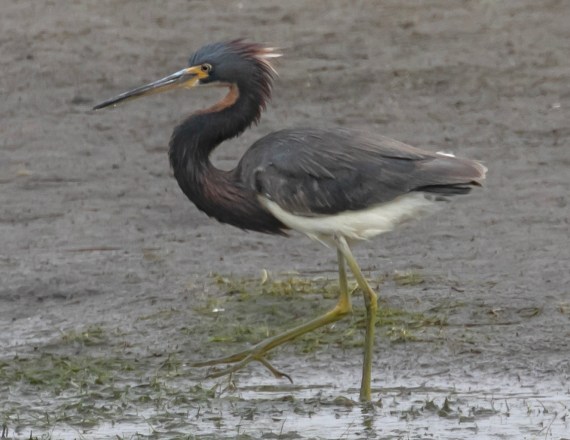
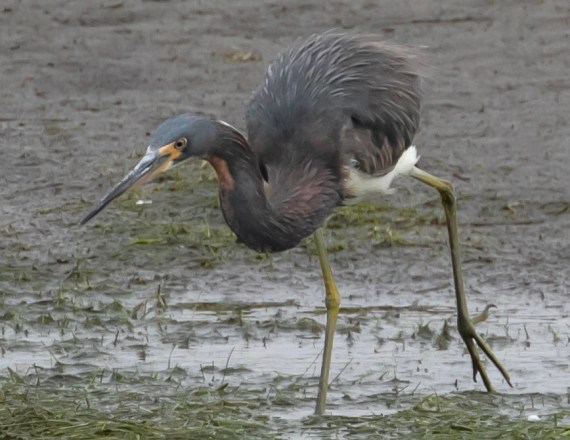
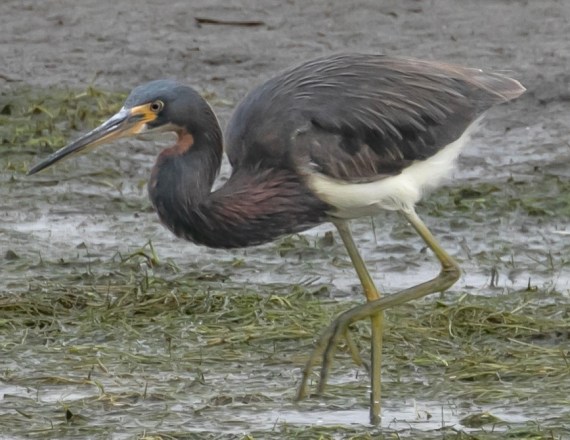


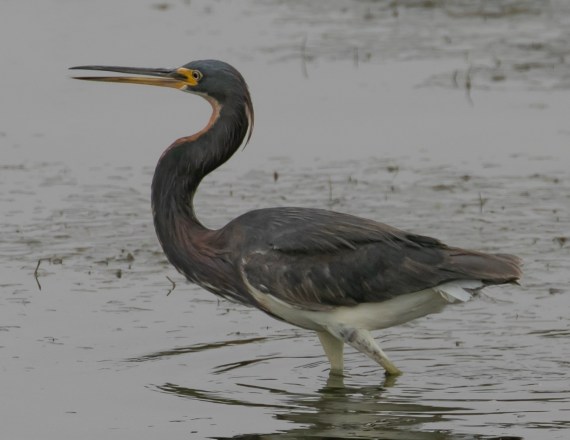
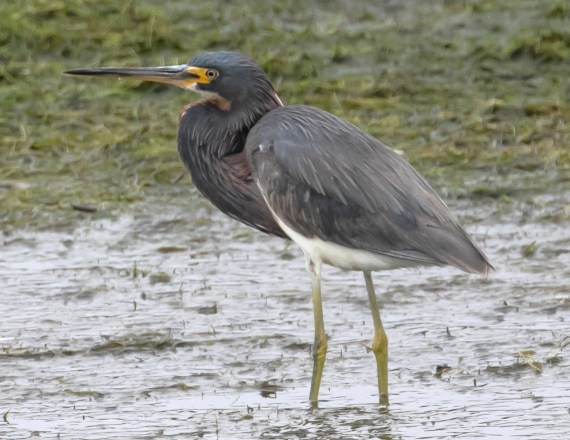


OK, before you continue downward, what size, if any, did you decide?
Below you’ll see a comparison to Great Egret.
X
X
X
X
X
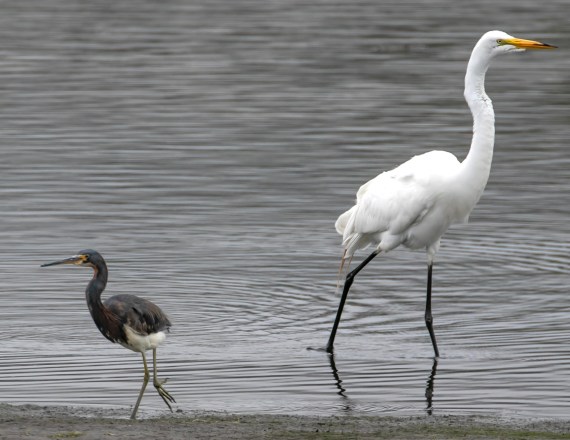
If you were far wrong on your guess, congratulations!
You’ve just experienced first-hand how easy it is to misjudge the size of a solitary bird.
Never forget that.
June Loses Gloom: Malibu Lagoon, 23 June 2024
[Text by Chuck Almdale; photos by Ray Juncosa & Chris Tosdevin]
Don’t miss the quiz at the bottom.
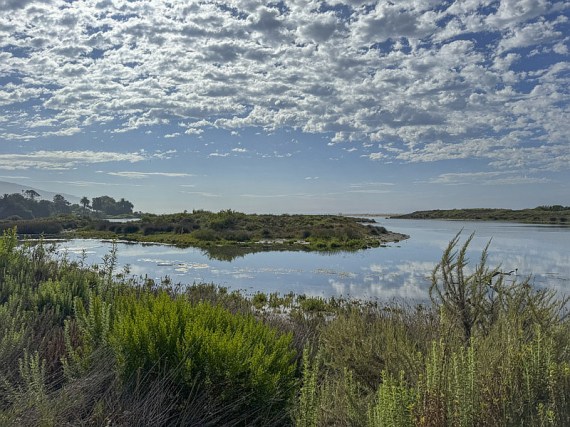
Ho hum, another beautiful day in paradise, fighting vaguely the old ennui. I can’t complain, but sometimes I still do, as someone once wrote. We were forewarned the temperature would go over 80°F, but it started at 62° and was only 70° by 11am. I arrived early and counted a mere 125 Brown Pelicans, which appeared to have at least quadrupled before I left but after the time I could tolerate counting them all again. Marie was already there and alerted me to the presence of a Black-necked Stilt and one of the phalaropes, somewhere around, perhaps on the other side of one of the islands. There eventually proved to be two stilts, rarely together, except for the photo below. Many of the birders asked about them: “Have they ever been here before? I don’t recall ever seeing them here.”

My records show for Black-necked Stilts on 319 monthly walks during period 10/21/79 – 6/23/24 (45 1/2 years): 11 appearances and 36 birds total, or 3.4% of the time; 26 birds and 4 of the visits were in April, the remaining 7 visits and 11 birds were scattered over 6 months; they’ve been entirely absent January – March.
So…yeah…not too common at the lagoon. Chances are better for them south at Back Bay Newport, or north at Pt. Mugu NAS where the marshes and tidal flats are more extensive.

As typical for this time of year, the swallows – Barn, Cliff, Rough-winged and Tree, in that order of abundance – were busily catching bugs and feeding their young. Perched in the island grass just past the north channel (see above) was a small family of Barn Swallows, plus an adult and juvenile Tree Swallow on an adjacent stem of grass. Most people got a decent telescope view, but getting a group photo proved difficult.

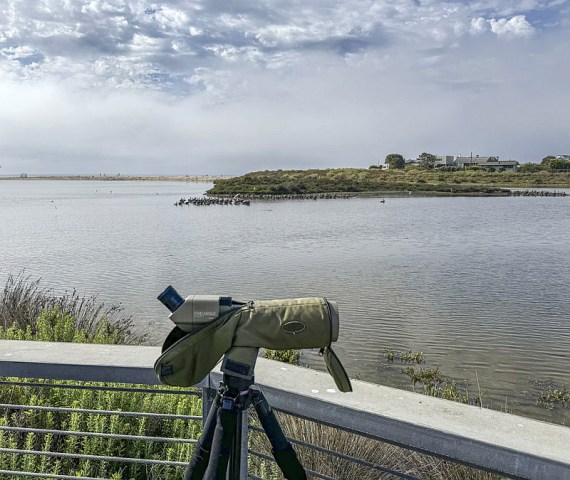
We don’t get a lot of phalaropes at the lagoon. Over the years – and the same 319 visits – we have amassed the following:
Wilson’s Phalarope: 4 visits, 4 birds, June-Sept, most recently 7/23/23.
Red Phalarope: 2 visits, 2 birds, Sept & Nov, most recently 11/6/82!!
Red-necked Phalarope: 22 visits, 75 birds, Apr – Nov, except June & Oct., most recently 8/27/23.
Obviously the Red-necked is the most frequent of the three to visit, showing up a whopping 6.9% of the time. I don’t keep these numbers in my head, but I’m well aware that of the three the Red-necked is by far the most common (or least uncommon).
So when we finally located the bird, out poking over the sand and gravel on one of the islands rather than spinning in the water, creating a whirlpool vortex to suck up tiny invertebrates from the depths, I was quite surprised – thrilled, really – to discover that it was not just a Wilson’s Phalarope, but a female in bright alternate plumage. It hung around for most of the morning, moving around a lot. I hope everyone got a good look because it might be a long time before you see this bird in this plumage again.

All three phalarope species fall into that very small group of species that are polyandrous and exhibit reversed sexual dimorphism. This means that the female mates with several males; the males then handle all the nesting and chick-rearing duties while she “moves on,” so to speak. [Women are always elated to hear about this although I can’t imagine why.] She’s more brightly colored than the male, whose drabness helps to camouflage him and his eggy nest. I wrote a three-part blog series a few years back on the close relationship between polyandry and reverse sexual dimorphism, which you can find beginning here. Oddly enough, it leads off with a photo of a female Wilson’s Phalarope in breeding plumage, taken at the lagoon by chapter member and Snowy Plover maven Grace Murayama.
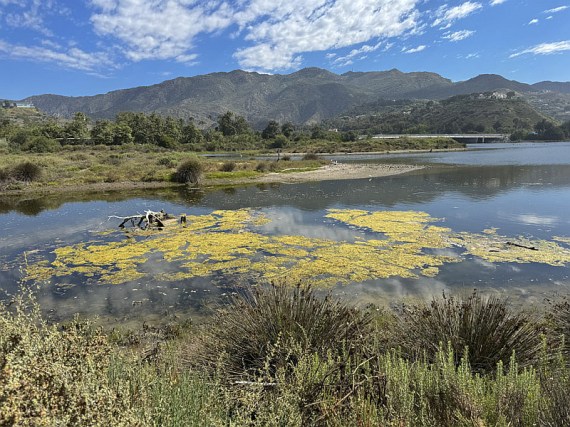
The breeding birds were busy. Here’s an adult male House Finch apparently stuffing some food down a young one’s gullet while another protests.

I hand out little lagoon bird checklists to any birder who wants one. I suspect that most birders find them too challenging to read – they double quite nicely as a test for presbyopia – or if they bother to record birds they do it onto eBird over their smartphones. My 2-sided 1/4-page list has 140 birds on it and includes everything that has shown up at least 3.1% of the time. People ask if we ever have to write things in. Last year I wrote in 26 birds. So we regularly find irregular birds.
While on the beach path at the north end of the channels I saw Ruth waving frantically at me while Chris was pointing ahead. “Must be a good bird,” says I to myself. When I got there and figured out which bush it was on, I was pleased to see a male Scaly-breasted Munia (Lonchura punctulata) in breeding plumage. Well, of course it’s an introduced bird, but it’s quite attractive and I couldn’t recall seeing one at the lagoon before. They’ve been in SoCal for decades, expanding their range very slowly. It must be thirty years since I first saw them at Huntington Beach Central Park, only 50 miles to the south. Someone was recently on the LACoBirds chatline looking for sightings of these munias being nest-parasitized by Pin-tailed Whydahs. No whydahs at the lagoon, yet, although they’re not far away at Madrona Marsh. Scaly-breasted Munias are native to SE Asia, from India to China and through Indonesia to the Wallace Line. They’re very attractive and have been popular cage birds for centuries. They must be pretty good at escaping their cages as you can find them all around the world, living in people’s parks and gardens. This species was a new bird to our SMBAS monthly lagoon trip list. Dan Cooper recorded the first one at the lagoon way back on 26 Sep 2016.

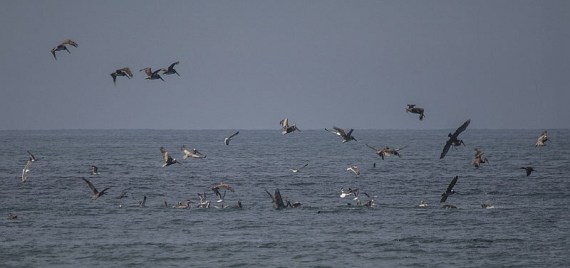
The birds were flocking out to sea, and every now and then we’d spot a dolphin’s dorsal fin briefly breaking the surface. More and more birds showed up – pelicans and gulls – so we knew that they’d found a school of fish. In reply to a question concerning what they were eating I replied that Top Smelt comes first to mind but that I really don’t know. Anyone care to opine?
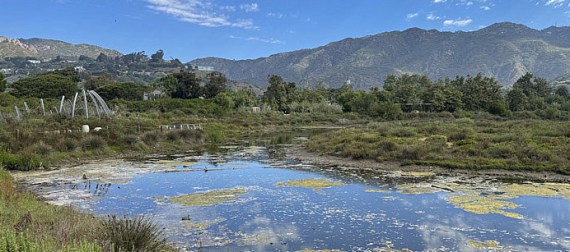
On our way back to our cars we stopped by the metal “bird hide” to watch a Green Heron on the sand at the west end of the nearby island (see photo below), stalking the water’s edge.
The light was bright, the sun well positioned and we could actually see olive-green on the bird’s back. Suddenly, from the brush behind it, this small rodent-looking animal scuttled across the sand towards the water, and after a few seconds, ran into a small patch of foliage at water’s edge. We watched for a few minutes but it never reemerged. It looked like a well-inflated 10″ sausage with a short naked tail, very small ears and very short legs. We didn’t get a photo. When I got home I googled photos, texts and maps and came up with Botta’s Pocket Gopher Thomomys bottae. It’s the only one of five possible pocket gophers in California that’s in Los Angeles County. Lillian recalled seeing pocket gophers at the lagoon prior to the 2012 lagoon reconfiguration. We have them in our back yard, gnawing on the roots of our bushes, and I’m familiar with their noses, which is all you normally see of them. Nearly all photos of pocket gopher on the web show only the head sticking up out of a hole, but this one has most of the animal.

The photo below shows a Botta’s in almost the same habitat as the lagoon, sans vegetation. This is exactly what the one at the lagoon looked like, scuttling across the sand: a fat furry sausage with a short naked tail.

In the process of figuring out what this was, I contacted Karen Martin, Pepperdine University professor and beach lover. She passed my query on to coworker Rodney Honeycutt, who informed me that – among other things – pocket gophers like sandy soil and can swim. He sent me a link to a PDF of a study with the intriguing title of “Swimming Ability of Pocket Gophers (Geomyidae)” by Troy L. Best (Univ. of Oklahoma) and E. Blake Hart (Univ. of Kansas. LINK. Among their conclusions they write: “If an “average” Geomys (in water shallow enough for it to occasionally touch the bottom) swam for 362 seconds at an average speed of 17 cm/sec, it could cross a placid body of water more than 50 m across.” The portion of the channel that the gopher headed for was about as shallow and narrow as it is anywhere in the lagoon area, perhaps as narrow as 10 ft, not more than 30 ft. So it could swim across that in 18-54 seconds. I hope the distance was closer to 10 that 30 feet because (see below) this is the sort of thing that can happen to a pocket gopher when out in the open.

Balboa Park, San Diego, 3/14/21 (iNaturalist: Andrew Newmark)

After reading this blog, Grace sent in the above photo from Malibu Lagoon, taken very close to where I saw my Botta’s Pocket Gopher.
Quiz Time!
All photos are from Malibu Lagoon 6-23-24). No fantasy photos or remote locales.



Quiz Answers & credits
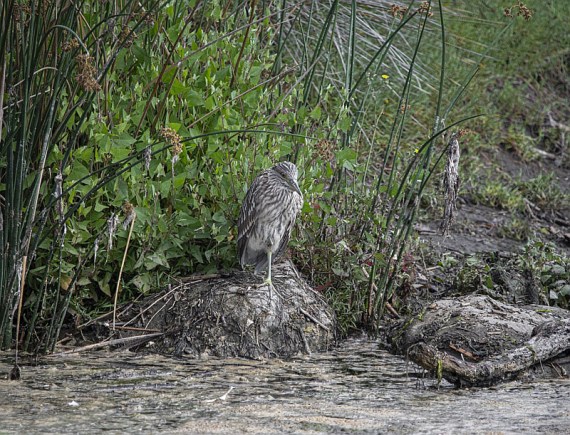
#1. Pied-billed Grebe (Chris Tosdevin 6-23-24)
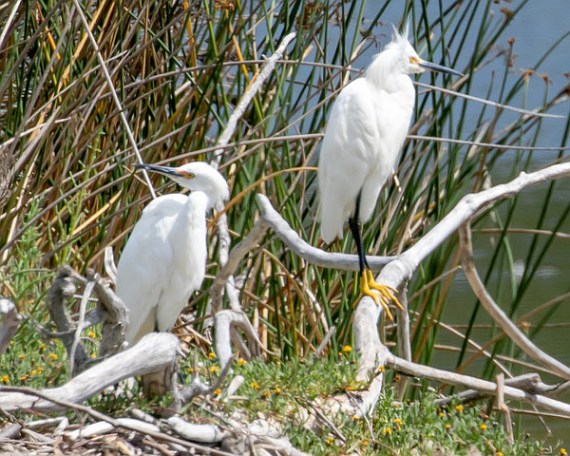
#2. Both are Snowy Egrets (Chris Tosdevin 6-23-24)
#3. Willet, still in breeding (alternate) plumage, which they quickly lose (Chris Tosdevin 6-23-24)
#4. Black Phoebe, commonly near water (Chris Tosdevin 6-23-24)
#5. Black-crowned Night Heron, juvenile, probably same one we had last month (Ray Juncosa 6-23-24)
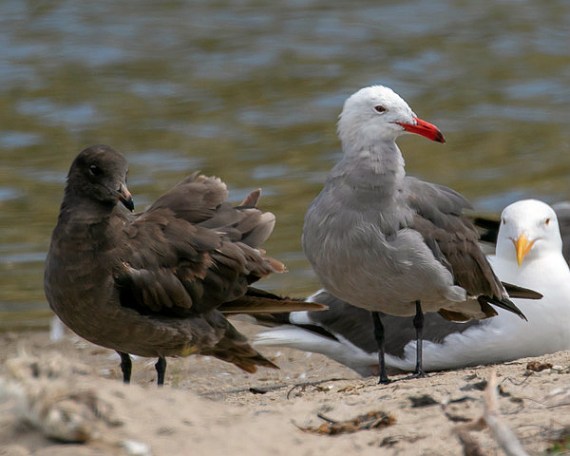
#6. Two Heermann’s Gulls, left – 1 year old (2nd summer) , right – adult, back from breeding; adult Western Gull behind. Heermann’s come north for the winter. (Chris Tosdevin 6-23-24)
Malibu Lagoon on eBird as of 6-28-24: 7827 lists, 320 species
Most recent species added: Red-breasted Nuthatch (31 October 2023, Kyle Te Poel).
Birds new for the season: Black-necked Stilt, Black-bellied Plover, Wilson’s Phalarope, Forster’s Tern, Green Heron, Tree Swallow, Scaly-breasted Bishop, Spotted Towhee, Hooded Oriole, Red-winged Blackbird. “New for the season” means it has been three or more months since last recorded on our trips.
Many, many thanks to photographers: Ray Juncosa & Chris Tosdevin
Upcoming SMBAS scheduled field trips; no reservations or Covid card necessary unless specifically mentioned:
- Mt. Pinos Birds & Butterflies Sat 20 July 8am
- Malibu Lagoon, Sun. July 28, 8:30 (adults) & 10 am (parents & kids)
- Malibu Lagoon, Sun. Aug 25, 8:30 (adults) & 10 am (parents & kids)
- These and any other trips we announce for the foreseeable future will depend upon expected status of the Covid/flu/etc. pandemic at trip time. Any trip announced may be canceled shortly before trip date if it seems necessary. By now any other comments should be superfluous.
- Link to Programs & Field Trip schedule.
The next SMBAS Zoom program: To be announced, Evening Meeting, Tuesday, October 1, 2024, 7:30 p.m.
The SMBAS 10 a.m. Parent’s & Kids Birdwalk is again running. Reservations not necessary for families, but for groups (scouts, etc.), call Jean (213-522-0062).
Links: Unusual birds at Malibu Lagoon
9/23/02 Aerial photo of Malibu Lagoon
More recent aerial photo
Prior checklists:
2023: Jan-June, July-Dec 2024:
2021: Jan-July, July-Dec 2022: Jan-June, July-Dec
2020: Jan-July, July-Dec 2019: Jan-June, July-Dec
2018: Jan-June, July-Dec 2017: Jan-June, July-Dec
2016: Jan-June, July-Dec 2015: Jan-May, July-Dec
2014: Jan-July, July-Dec 2013: Jan-June, July-Dec
2012: Jan-June, July-Dec 2011: Jan-June, July-Dec
2010: Jan-June, July-Dec 2009: Jan-June, July-Dec
The 10-year comparison summaries created during the Lagoon Reconfiguration Project period, remain available—despite numerous complaints—on our Lagoon Project Bird Census Page. Very briefly summarized, the results unexpectedly indicate that avian species diversification and numbers improved slightly during the restoration period June’12-June’14.
Many thanks to Marie Barnidge-McIntyre, Lillian Johnson, Chris Lord, Chris Tosdevin, Ruth Tosdevin & others for their contributions to this month’s checklist.
The species lists below is irregularly re-sequenced to agree with the California Bird Records Committee Official California Checklist. If part of the right side of the chart below is hidden, there’s a slider button inconveniently located at the bottom end of the list. The numbers 1-9 left of the species names are keyed to the nine categories of birds at the bottom.
[Chuck Almdale]
| Malibu Census 2023-24 | 1/28 | 2/25 | 3/24 | 4/28 | 5/26 | 6/23 | |
| Temperature | 53-64 | 51-62 | 46-54 | 62-72 | 57-64 | 62-72 | |
| Tide Lo/Hi Height | H+5.06 | H+5.06 | H+4.71 | L-0.14 | L-0.77 | L-1.17 | |
| Tide Time | 1008 | 0921 | 0936 | 0738 | 0635 | 0537 | |
| 1 | Brant (Black) | 2 | |||||
| 1 | Canada Goose | 8 | 9 | 7 | 6 | 8 | 9 |
| 1 | Cinnamon Teal | 3 | 2 | ||||
| 1 | Northern Shoveler | 10 | 4 | 2 | |||
| 1 | Gadwall | 54 | 40 | 24 | 20 | 22 | 35 |
| 1 | American Wigeon | 4 | |||||
| 1 | Mallard | 7 | 35 | 12 | 10 | 14 | 15 |
| 1 | Green-winged Teal | 17 | 25 | 4 | |||
| 1 | Surf Scoter | 4 | 32 | 6 | 4 | ||
| 1 | Long-tailed Duck | 1 | |||||
| 1 | Bufflehead | 12 | |||||
| 1 | Red-breasted Merganser | 4 | 2 | 9 | 4 | 2 | |
| 1 | Ruddy Duck | 30 | 1 | ||||
| 2 | Pied-billed Grebe | 2 | 1 | 1 | |||
| 2 | Eared Grebe | 1 | |||||
| 2 | Western Grebe | 14 | 240 | 9 | 1 | ||
| 7 | Feral Pigeon | 4 | 4 | 2 | 5 | 3 | |
| 7 | Eurasian Collared-Dove | 1 | |||||
| 7 | Mourning Dove | 4 | 2 | 5 | |||
| 8 | Anna’s Hummingbird | 1 | 2 | 2 | 2 | 1 | |
| 8 | Allen’s Hummingbird | 5 | 5 | 5 | 1 | 5 | 1 |
| 2 | American Coot | 148 | 46 | 63 | 1 | ||
| 5 | Black-necked Stilt | 2 | |||||
| 5 | Black Oystercatcher | 4 | |||||
| 5 | Black-bellied Plover | 45 | 42 | 3 | 1 | ||
| 5 | Killdeer | 18 | 12 | 3 | 6 | 4 | 3 |
| 5 | Semipalmated Plover | 9 | |||||
| 5 | Snowy Plover | 21 | 20 | ||||
| 5 | Whimbrel | 4 | 6 | 39 | 4 | 2 | |
| 5 | Marbled Godwit | 5 | 20 | 20 | |||
| 5 | Wilson’s Phalarope | 1 | |||||
| 5 | Spotted Sandpiper | 1 | |||||
| 5 | Willet | 3 | 15 | 4 | 2 | 2 | |
| 5 | Greater Yellowlegs | 1 | |||||
| 5 | Ruddy Turnstone | 5 | 2 | ||||
| 5 | Sanderling | 7 | 10 | ||||
| 5 | Least Sandpiper | 16 | 20 | 12 | 2 | ||
| 5 | Western Sandpiper | 8 | 20 | ||||
| 6 | Bonaparte’s Gull | 2 | 10 | ||||
| 6 | Heermann’s Gull | 12 | 60 | 16 | 6 | 65 | |
| 6 | Ring-billed Gull | 25 | 200 | 18 | 4 | 3 | |
| 6 | Western Gull | 30 | 85 | 58 | 16 | 45 | 160 |
| 6 | Herring Gull | 2 | 3 | ||||
| 6 | California Gull | 270 | 400 | 170 | 60 | 38 | 3 |
| 6 | Glaucous-winged Gull | 3 | 3 | 1 | |||
| 6 | Caspian Tern | 2 | 20 | 8 | |||
| 6 | Forster’s Tern | 1 | |||||
| 6 | Elegant Tern | 200 | 190 | 25 | |||
| 6 | Royal Tern | 3 | 4 | 60 | 2 | ||
| 2 | Red-throated Loon | 1 | 2 | ||||
| 2 | Pacific Loon | 1 | 1 | ||||
| 2 | Common Loon | 1 | |||||
| 2 | Brandt’s Cormorant | 1 | 1 | 35 | |||
| 2 | Pelagic Cormorant | 1 | 4 | 1 | 1 | 4 | |
| 2 | Double-crested Cormorant | 18 | 28 | 32 | 26 | 120 | 24 |
| 2 | Brown Pelican | 26 | 300 | 171 | 235 | 348 | 125 |
| 3 | Black-crowned Night-Heron | 1 | 1 | 1 | 2 | ||
| 3 | Snowy Egret | 7 | 6 | 3 | 3 | 2 | 7 |
| 3 | Green Heron | 1 | |||||
| 3 | Great Egret | 5 | 4 | 9 | |||
| 3 | Great Blue Heron | 1 | 3 | 1 | 4 | 3 | |
| 4 | Turkey Vulture | 1 | |||||
| 4 | Osprey | 1 | 1 | ||||
| 4 | Red-shouldered Hawk | 1 | |||||
| 4 | Red-tailed Hawk | 1 | |||||
| 8 | Belted Kingfisher | 1 | 2 | ||||
| 8 | Nuttall’s Woodpecker | 1 | |||||
| 9 | Black Phoebe | 1 | 4 | 2 | 4 | 7 | 3 |
| 9 | Cassin’s Kingbird | 1 | 4 | ||||
| 9 | Warbling Vireo | 1 | |||||
| 9 | California Scrub-Jay | 2 | 2 | 2 | 1 | ||
| 9 | American Crow | 10 | 10 | 4 | 3 | 4 | 6 |
| 9 | Common Raven | 1 | 2 | 3 | |||
| 9 | Tree Swallow | 1 | 3 | ||||
| 9 | Violet-green Swallow | 2 | 8 | ||||
| 9 | No. Rough-winged Swallow | 5 | 5 | 2 | 5 | ||
| 9 | Barn Swallow | 10 | 10 | 20 | 20 | ||
| 9 | Cliff Swallow | 30 | 6 | ||||
| 9 | Bushtit | 12 | 12 | 2 | 2 | 5 | 9 |
| 9 | Wrentit | 1 | 2 | 2 | 1 | ||
| 9 | Blue-gray Gnatcatcher | 1 | 1 | ||||
| 9 | House Wren | 1 | 1 | ||||
| 9 | European Starling | 2 | 19 | 5 | |||
| 9 | Hermit Thrush | 1 | |||||
| 9 | Scaly-breasted Munia | 1 | |||||
| 9 | House Finch | 12 | 12 | 15 | 10 | 15 | 11 |
| 9 | Lesser Goldfinch | 6 | 20 | 20 | 2 | 5 | 2 |
| 9 | Dark-eyed Junco | 2 | |||||
| 9 | White-crowned Sparrow | 15 | 12 | 15 | |||
| 9 | Song Sparrow | 10 | 10 | 14 | 10 | 5 | 5 |
| 9 | California Towhee | 1 | 2 | 1 | 1 | 4 | 4 |
| 9 | Spotted Towhee | 1 | 1 | ||||
| 9 | Hooded Oriole | 1 | |||||
| 9 | Red-winged Blackbird | 2 | 35 | 4 | 11 | ||
| 9 | Brown-headed Cowbird | 2 | |||||
| 9 | Great-tailed Grackle | 1 | 3 | 2 | 3 | ||
| 9 | Orange-crowned Warbler | 2 | 2 | 1 | 1 | 1 | |
| 9 | Common Yellowthroat | 5 | 2 | 2 | 1 | ||
| 9 | Yellow-rumped Warbler (Aud) | 6 | 10 | 4 | |||
| Totals by Type | Jan | Feb | Mar | Apr | May | Jun | |
| 1 | Waterfowl | 149 | 144 | 72 | 45 | 50 | 59 |
| 2 | Water Birds – Other | 211 | 621 | 268 | 263 | 516 | 155 |
| 3 | Herons, Egrets & Ibis | 9 | 9 | 4 | 13 | 7 | 22 |
| 4 | Quail & Raptors | 2 | 0 | 1 | 1 | 1 | 0 |
| 5 | Shorebirds | 103 | 156 | 123 | 29 | 6 | 9 |
| 6 | Gulls & Terns | 345 | 748 | 272 | 362 | 302 | 254 |
| 7 | Doves | 4 | 9 | 2 | 0 | 7 | 8 |
| 8 | Other Non-Passerines | 6 | 8 | 7 | 3 | 8 | 2 |
| 9 | Passerines | 88 | 158 | 115 | 57 | 118 | 92 |
| Totals Birds | 917 | 1853 | 864 | 773 | 1015 | 601 | |
| Total Species | Jan | Feb | Mar | Apr | May | Jun | |
| 1 | Waterfowl | 10 | 7 | 9 | 6 | 6 | 3 |
| 2 | Water Birds – Other | 8 | 8 | 5 | 3 | 8 | 5 |
| 3 | Herons, Egrets & Ibis | 3 | 2 | 2 | 4 | 3 | 5 |
| 4 | Quail & Raptors | 2 | 0 | 1 | 1 | 1 | 0 |
| 5 | Shorebirds | 8 | 10 | 8 | 8 | 2 | 5 |
| 6 | Gulls & Terns | 7 | 5 | 8 | 7 | 8 | 5 |
| 7 | Doves | 1 | 3 | 1 | 0 | 2 | 2 |
| 8 | Other Non-Passerines | 2 | 3 | 2 | 2 | 3 | 2 |
| 9 | Passerines | 16 | 19 | 22 | 14 | 19 | 17 |
| Totals Species – 99 | 57 | 57 | 58 | 45 | 52 | 44 |
[Posted by Chuck Almdale, submitted by Lucien Plauzoles]
‘It can feel like a detective story’: birders asked to help find 126 ‘lost’ bird species
The birds have not been seen for at least a decade – some for more than 100 years – but the authors of a new list of missing species have not given up hope
The Guardian | Phoebe Weston | 17 Jun 2024

The list of lost birds: Link
Length of time since last seen range from White-tailed Tityra of Western Brazil 1829 to Papuan Whipbird of Eastern Indonesia 2011.
Paper 2021: “Global gaps in citizen-science data reveal the world’s “lost” birds” Link
Large Fuzzy Orange back in the news
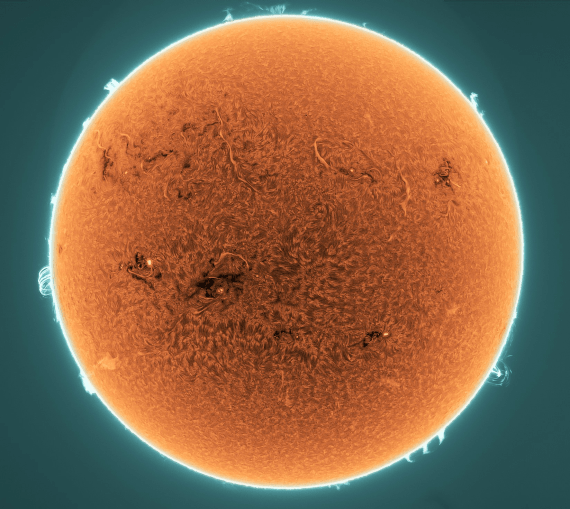
May May Be Gray: Malibu Lagoon, 26 May 2024
[Text by Chuck Almdale; photos by Ray Juncosa & Grace Murayama]
Don’t miss the quiz at the bottom with some of the best photos.
It was very pleasant for late May which – when skies are clear – can be quite hot. But a nice “May Gray” day kept it cool, ranging from 57° – 64°F. Not so great for the photographers, as this kept colors subdued (critically important for the gulls and terns – not) but still the birds were active. So were the birders; now that we’re past the icy blasts of winter weather, warmer weather usually brings them out in droves; we had thirty-eight people today, which could be a record for all I know. I’m not too diligent at censusing people. I hope everyone had a good time. When the line stretches back down a trail it’s tough for all to know what (if anything) is going on.
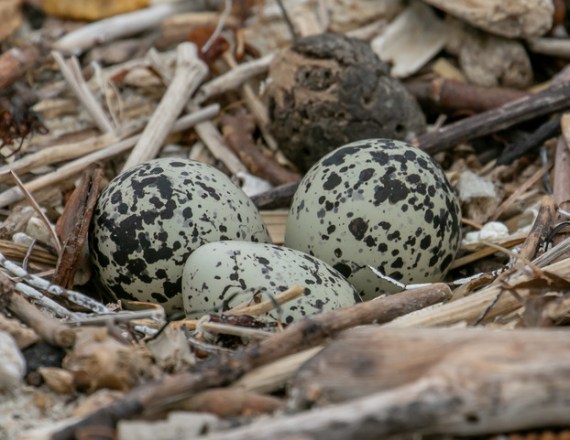
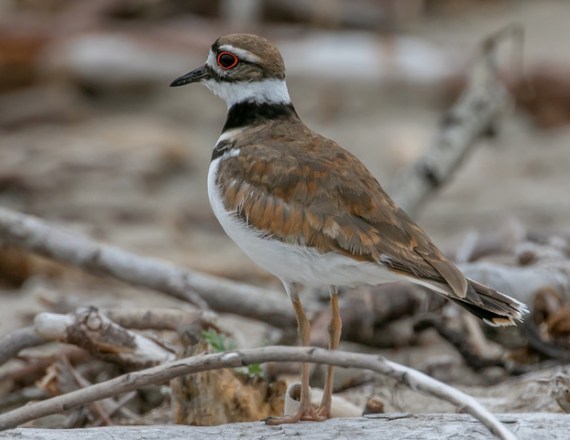
Killdeer have nested on the sand around Malibu Lagoon for more decades than anyone knows; probably for thousands of years. I think they were the first nesting bird I recorded back in 1995 when the five-year Los Angeles County Breeding Bird Census began. At that time the nest was a small pebbly scrape in the sand near where the viewpoint near Pacific Coast Hwy bridge is now located. When the nesting bird present began doing a frantic “broken wing” distraction display, I stopped moving, looked down and found I was about five feet from its very cryptic nest and cryptic spotted eggs. I backed off far enough for the bird to calm down.
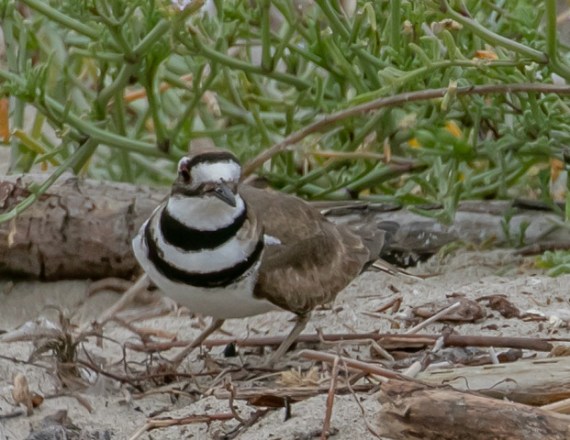
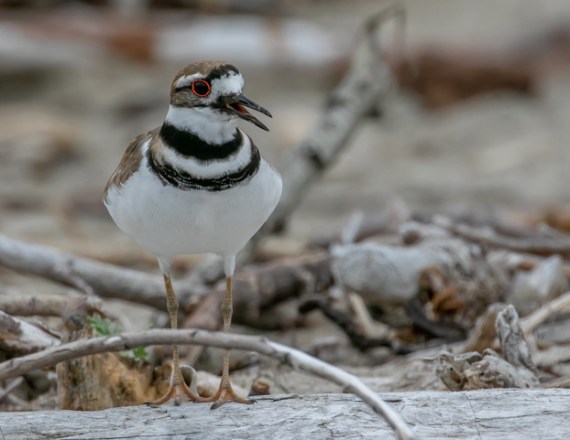
The Killdeer today were quite obvious as they walked and ran and faked a broken wing through the wrack on the beach. I thought they might have hatched young out staggering around through the sticks and logs — they look like fluffy ping pong balls on stilts when very young — but couldn’t find any. Chris Tosdevin watched longer and discovered their nest.
The weather service predicted this sky to be 90% cloud cover. I thought 100% was more like it.
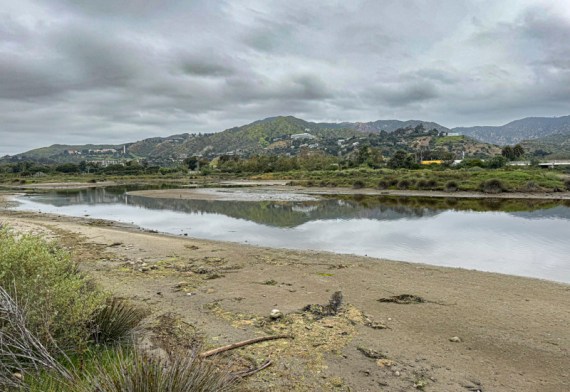
Pepperdine University is in the photo above in the far left distance with a tall white bell tower. Lower Malibu Canyon is at the far right. Between the two the sports car fans are by the shopping center across the street revving their engines and the cormorants are painting their nesting tree white.
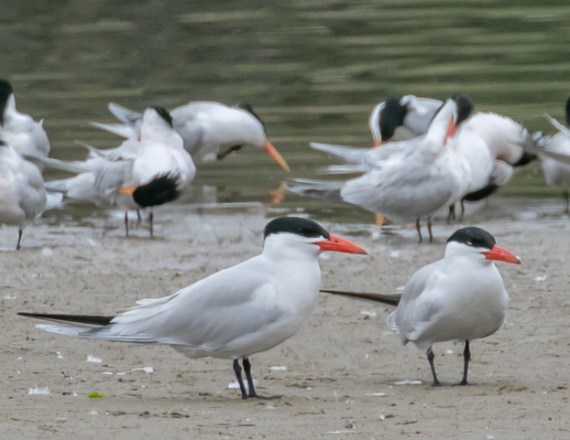
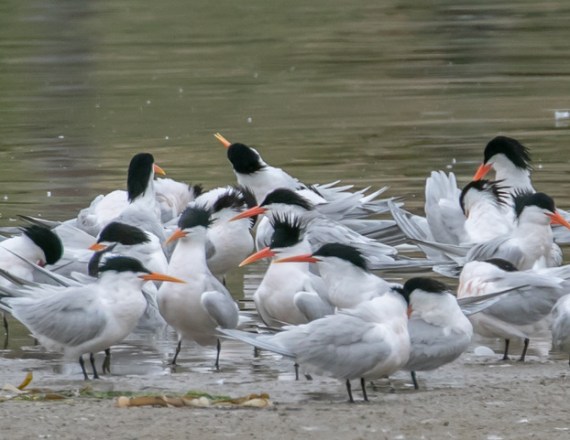
When I first got arrived there were about 15 Elegant Terns, and Marie advised me that there’d been four Caspian Terns but they’d left. Terns came and went throughout the morning, and at my last count there were 190 Elegant Terns, but they kept coming so there were probably more.
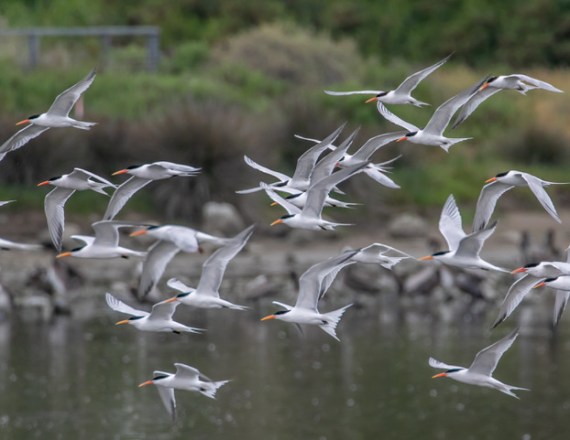
My quasi-official count of 348 Brown Pelicans was made about 8:30 am. Like the terns, they just kept coming and filling in the empty spaces in their flock and by 11 am there could have been double that number, as it was just about solid pelicans west to east across the lagoon.
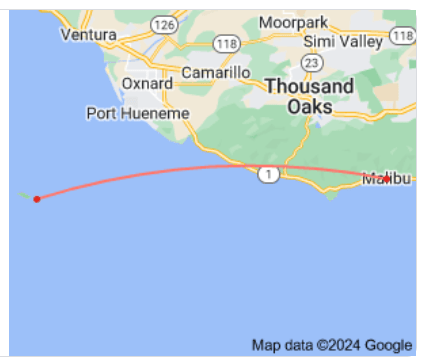
According to the National Park Service, “The only breeding colonies of California brown pelicans in the western United States are within Channel Islands National Park on West Anacapa and Santa Barbara islands.” Anacapa Is. is 40.5 miles due west of Malibu Beach; Santa Barbara Is. is 43.6 miles SSW of Malibu. According to Audubon Society Encyclopedia of North American Birds they’ve been recorded at flying at 14-22 mph in California, 26 in Florida, and 35 somewhere else. They typically fly very low over the water, often in the troughs between the waves, in single file, gaining gliding distance from the bird in front and “ground effect” uplift from the water just below their wings. It would take them 75-130 minutes to fly from either island to reach Malibu Lagoon, which has now been revealed as a conveniently located rest stop for all nesting west coast Brown Pelicans.
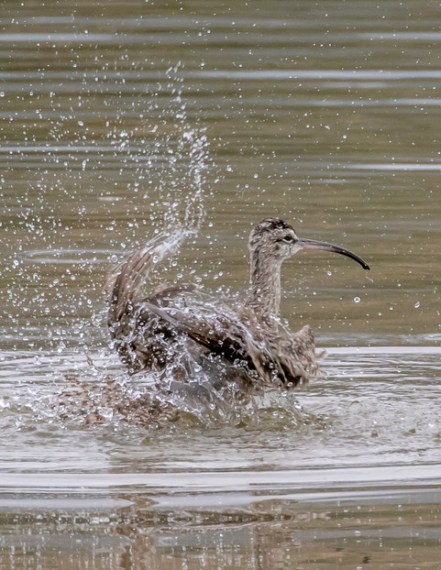
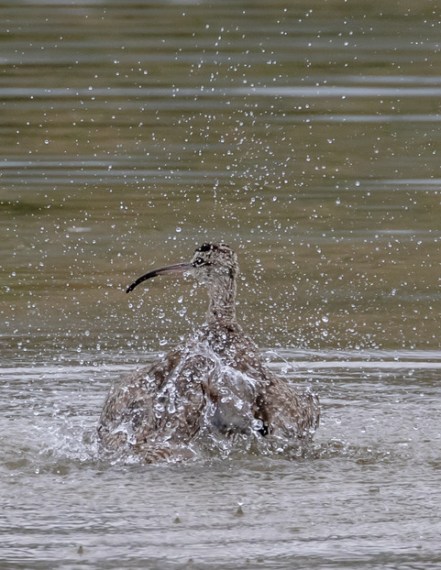
Sandpipers were conspicuous by their absence: the only species was Whimbrel with two representatives. One of them apparently needed serious plumage cleaning, and splashed up a storm near the lagoon edge.
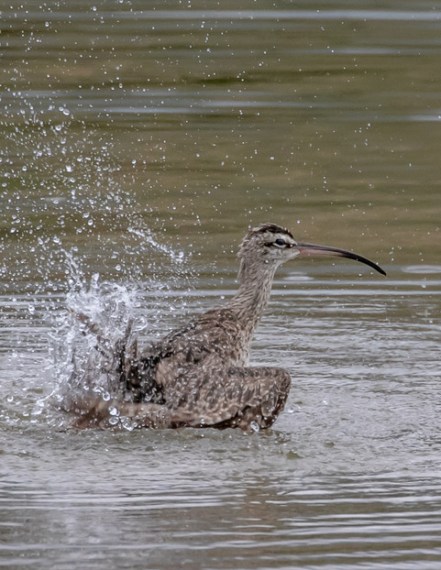
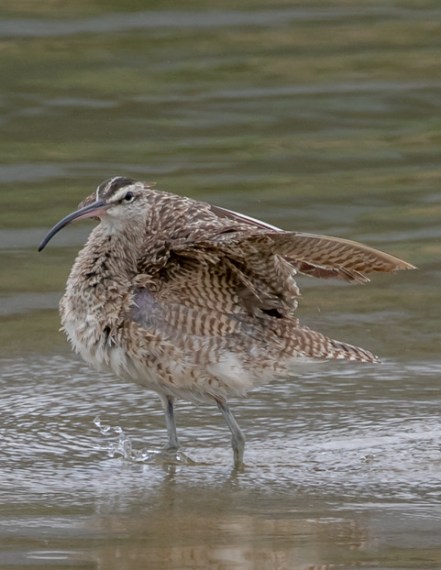
Not a lot of wind. Look closely and you’ll see birds across the lagoon.
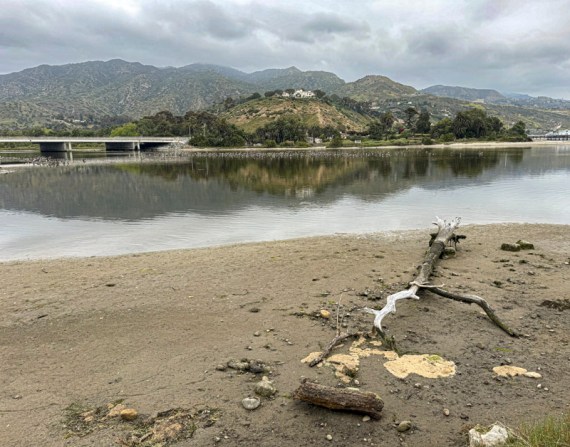
Quiz Time!
All photos are from Malibu Lagoon 5-26-24). No fantasy photos or remote locales.
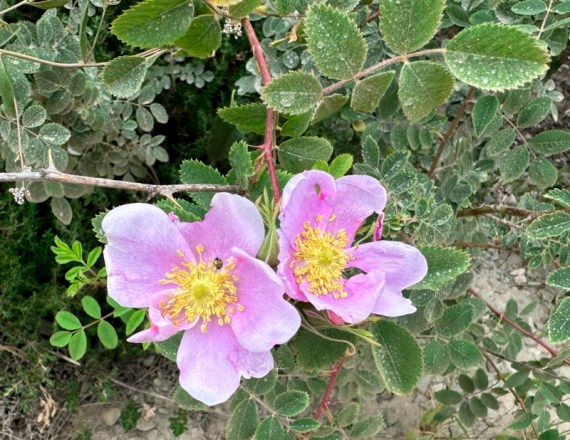
Quiz Answers & credits
#1. Wild Rose, pathside behind Malibu colony (Ray Juncosa 5-26-24)
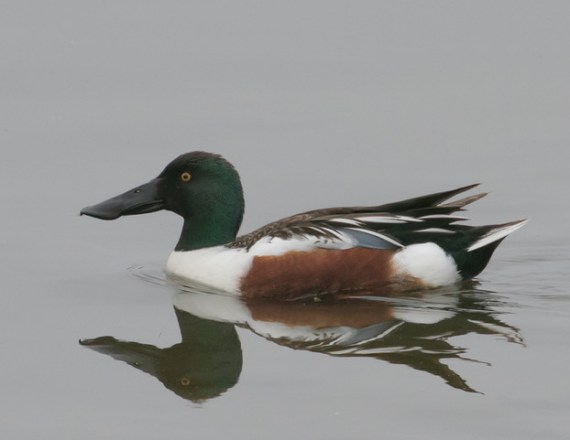
#2. Northern Shoveler (Chris Tosdevin 5-26-24)
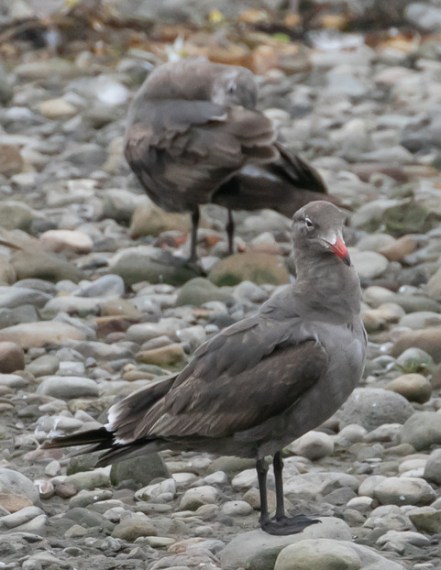
#3. Heermann’s Gulls, 2nd spring (Chris Tosdevin 5-26-24)
#4. Killdeer, adult (Chris Tosdevin 5-26-24)
#5. Elegant Terns, all of them, bills variable from yellowish to near-red (Chris Tosdevin 5-26-24)
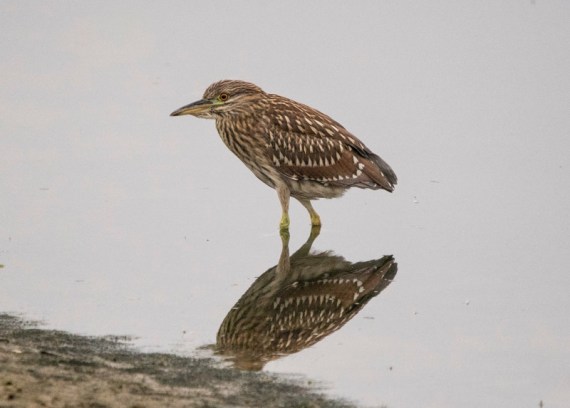
#6. Black-crowned Night-Heron, immature, large spots on brown back. If the sun was bright, this bird would be hiding in the bushes or trees. (Chris Tosdevin 5-26-24)
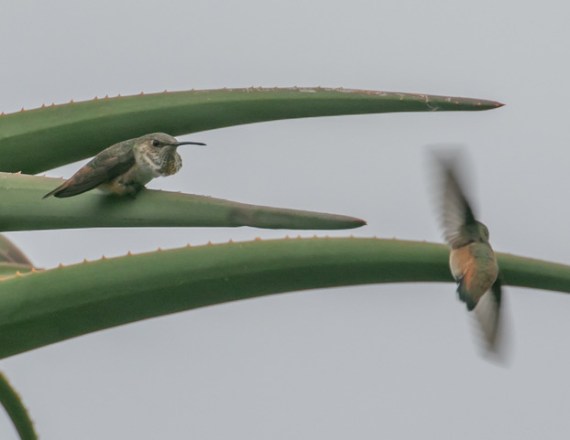
#7. Allen’s Hummingbirds, both are rusty on flanks and/or tail (Chris Tosdevin 5-26-24)
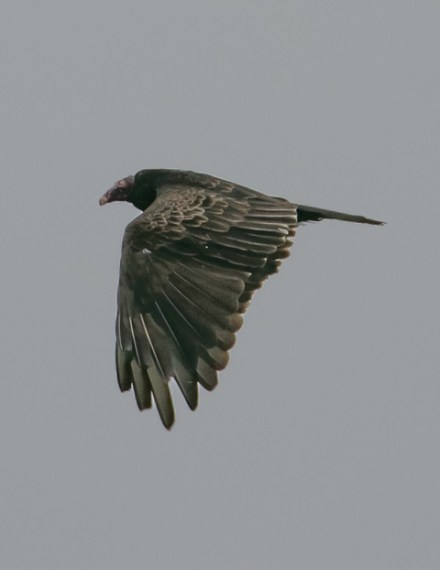
#8. Turkey Vulture, juveniles have grayish heads (Chris Tosdevin 5-26-24)
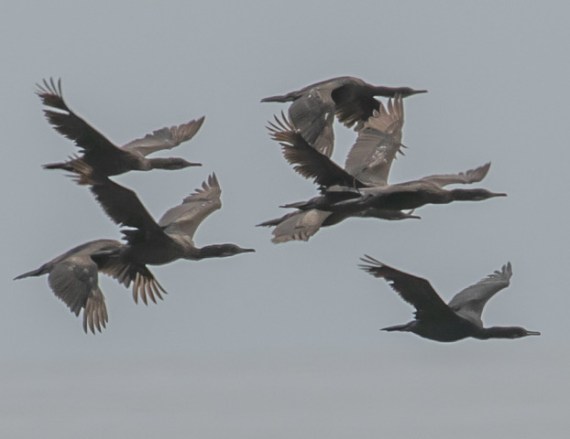
#9. Brandt’s Cormorants, blue on beige throat pouches (Chris Tosdevin 5-26-24)
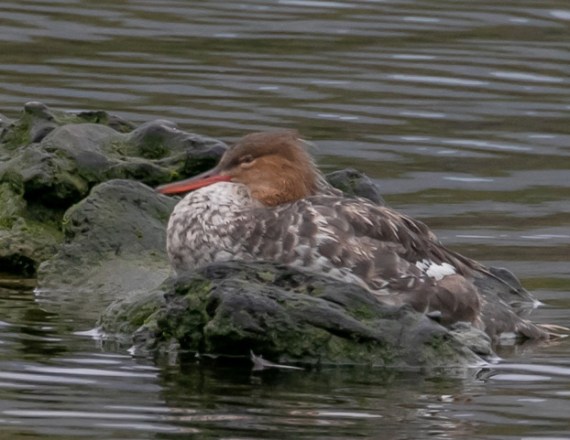
#10. Red-breasted Merganser, rock-sitting (Chris Tosdevin 5-26-24)
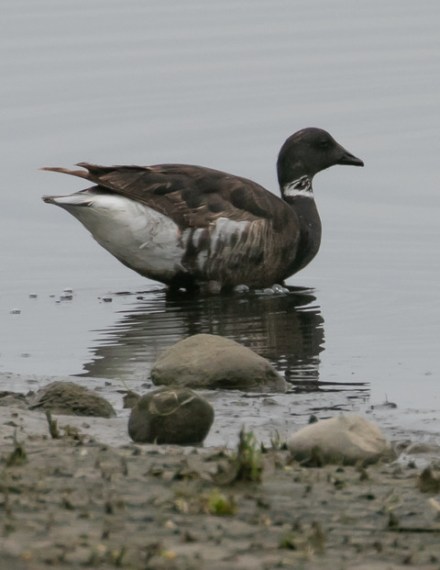
#11. Brant, not oiled, formerly Black Brant (Chris Tosdevin 5-26-24)
Malibu Lagoon on eBird as of 5-31-24: 7772 lists, 320 species
Most recent species added: Red-breasted Nuthatch (31 October 2023, Kyle Te Poel).
Birds new for the season: Brant, Pied-billed Grebe, Western Grebe, Mourning Dove, Common Loon, Turkey Vulture, Nuttall’s Woodpecker, Warbling Vireo, Cliff Swallow, Wrentit, House Wren, Dark-eyed Junco. . “New for the season” means it has been three or more months since last recorded on our trips.
Many, many thanks to photographers: Ray Juncosa & Chris Tosdevin
Upcoming SMBAS scheduled field trips; no reservations or Covid card necessary unless specifically mentioned:
- Malibu Lagoon, Sun. June 23, 8:30 (adults) & 10 am (parents & kids)
- Mt. Pinos Birds & Butterflies Sat 20 July 8am
- Malibu Lagoon, Sun. July 28, 8:30 (adults) & 10 am (parents & kids)
- These and any other trips we announce for the foreseeable future will depend upon expected status of the Covid/flu/etc. pandemic at trip time. Any trip announced may be canceled shortly before trip date if it seems necessary. By now any other comments should be superfluous.
- Link to Programs & Field Trip schedule.
The next SMBAS Zoom program: To be announced, Evening Meeting, Tuesday, October 1, 2024, 7:30 p.m.
The SMBAS 10 a.m. Parent’s & Kids Birdwalk is again running. Reservations not necessary for families, but for groups (scouts, etc.), call Jean (213-522-0062).
Links: Unusual birds at Malibu Lagoon
9/23/02 Aerial photo of Malibu Lagoon
More recent aerial photo
Prior checklists:
2023: Jan-June, July-Dec
2021: Jan-July, July-Dec 2022: Jan-June, July-Dec
2020: Jan-July, July-Dec 2019: Jan-June, July-Dec
2018: Jan-June, July-Dec 2017: Jan-June, July-Dec
2016: Jan-June, July-Dec 2015: Jan-May, July-Dec
2014: Jan-July, July-Dec 2013: Jan-June, July-Dec
2012: Jan-June, July-Dec 2011: Jan-June, July-Dec
2010: Jan-June, July-Dec 2009: Jan-June, July-Dec
The 10-year comparison summaries created during the Lagoon Reconfiguration Project period, remain available—despite numerous complaints—on our Lagoon Project Bird Census Page. Very briefly summarized, the results unexpectedly indicate that avian species diversification and numbers improved slightly during the restoration period June’12-June’14.
Many thanks to Marie Barnidge-McIntyre, Femi Faminu, Lillian Johnson, Chris Lord, Chris Tosdevin, Ruth Tosdevin & others for their contributions to this month’s checklist.
The species lists below is irregularly re-sequenced to agree with the California Bird Records Committee Official California Checklist. If part of the right side of the chart below is hidden, there’s a slider button inconveniently located at the bottom end of the list. The numbers 1-9 left of the species names are keyed to the nine categories of birds at the bottom.
[Chuck Almdale]
| Malibu Census 2023-24 | 12/24 | 1/28 | 2/25 | 3/24 | 4/28 | 5/26 | |
| Temperature | 53-64 | 53-64 | 51-62 | 46-54 | 62-72 | 57-64 | |
| Tide Lo/Hi Height | H+6.20 | H+5.06 | H+5.06 | H+4.71 | L-0.14 | L-0.77 | |
| Tide Time | 0644 | 1008 | 0921 | 0936 | 0738 | 0635 | |
| 1 | Brant (Black) | 2 | |||||
| 1 | Canada Goose | 21 | 8 | 9 | 7 | 6 | 8 |
| 1 | Cinnamon Teal | 1 | 3 | 2 | |||
| 1 | Northern Shoveler | 13 | 10 | 4 | 2 | ||
| 1 | Gadwall | 27 | 54 | 40 | 24 | 20 | 22 |
| 1 | American Wigeon | 14 | 4 | ||||
| 1 | Mallard | 8 | 7 | 35 | 12 | 10 | 14 |
| 1 | Green-winged Teal | 8 | 17 | 25 | 4 | ||
| 1 | Surf Scoter | 3 | 4 | 32 | 6 | 4 | |
| 1 | Long-tailed Duck | 1 | |||||
| 1 | Bufflehead | 18 | 12 | ||||
| 1 | Red-breasted Merganser | 5 | 4 | 2 | 9 | 4 | 2 |
| 1 | Ruddy Duck | 37 | 30 | 1 | |||
| 2 | Pied-billed Grebe | 2 | 2 | 1 | |||
| 2 | Horned Grebe | 1 | |||||
| 2 | Eared Grebe | 1 | 1 | ||||
| 2 | Western Grebe | 18 | 14 | 240 | 9 | ||
| 7 | Feral Pigeon | 4 | 4 | 4 | 2 | 5 | |
| 7 | Eurasian Collared-Dove | 1 | |||||
| 7 | Mourning Dove | 4 | 2 | ||||
| 8 | Anna’s Hummingbird | 2 | 1 | 2 | 2 | 2 | |
| 8 | Allen’s Hummingbird | 3 | 5 | 5 | 5 | 1 | 5 |
| 2 | American Coot | 280 | 148 | 46 | 63 | 1 | |
| 5 | Black Oystercatcher | 1 | 4 | ||||
| 5 | Black-bellied Plover | 52 | 45 | 42 | 3 | ||
| 5 | Killdeer | 20 | 18 | 12 | 3 | 6 | 4 |
| 5 | Semipalmated Plover | 9 | |||||
| 5 | Snowy Plover | 21 | 20 | ||||
| 5 | Whimbrel | 8 | 4 | 6 | 39 | 4 | 2 |
| 5 | Marbled Godwit | 11 | 5 | 20 | 20 | ||
| 5 | Spotted Sandpiper | 1 | |||||
| 5 | Willet | 22 | 3 | 15 | 4 | 2 | |
| 5 | Greater Yellowlegs | 1 | |||||
| 5 | Ruddy Turnstone | 10 | 5 | 2 | |||
| 5 | Sanderling | 10 | 7 | 10 | |||
| 5 | Least Sandpiper | 28 | 16 | 20 | 12 | 2 | |
| 5 | Western Sandpiper | 8 | 20 | ||||
| 6 | Bonaparte’s Gull | 3 | 2 | 10 | |||
| 6 | Heermann’s Gull | 22 | 12 | 60 | 16 | 6 | |
| 6 | Ring-billed Gull | 34 | 25 | 200 | 18 | 4 | 3 |
| 6 | Western Gull | 64 | 30 | 85 | 58 | 16 | 45 |
| 6 | Herring Gull | 1 | 2 | 3 | |||
| 7 | Lesser Black-backed Gull | 1 | |||||
| 6 | California Gull | 425 | 270 | 400 | 170 | 60 | 38 |
| 6 | Glaucous-winged Gull | 5 | 3 | 3 | 1 | ||
| 6 | Caspian Tern | 2 | 20 | 8 | |||
| 6 | Elegant Tern | 200 | 190 | ||||
| 6 | Royal Tern | 7 | 3 | 4 | 60 | 2 | |
| 2 | Red-throated Loon | 1 | 2 | ||||
| 2 | Pacific Loon | 1 | 1 | ||||
| 2 | Common Loon | 1 | |||||
| 2 | Brandt’s Cormorant | 1 | 1 | 35 | |||
| 2 | Pelagic Cormorant | 5 | 1 | 4 | 1 | 1 | |
| 2 | Double-crested Cormorant | 47 | 18 | 28 | 32 | 26 | 120 |
| 2 | Brown Pelican | 72 | 26 | 300 | 171 | 235 | 348 |
| 3 | Black-crowned Night-Heron | 1 | 1 | 1 | 1 | ||
| 3 | Snowy Egret | 18 | 7 | 6 | 3 | 3 | 2 |
| 3 | Great Egret | 2 | 5 | 4 | |||
| 3 | Great Blue Heron | 2 | 1 | 3 | 1 | 4 | |
| 4 | Turkey Vulture | 2 | 1 | ||||
| 4 | Osprey | 1 | 1 | 1 | |||
| 4 | Red-shouldered Hawk | 1 | 1 | ||||
| 4 | Red-tailed Hawk | 1 | |||||
| 8 | Belted Kingfisher | 1 | 1 | 2 | |||
| 8 | Downy Woodpecker | 1 | |||||
| 8 | Nuttall’s Woodpecker | 1 | 1 | ||||
| 8 | Hairy Woodpecker | 1 | |||||
| 9 | Black Phoebe | 4 | 1 | 4 | 2 | 4 | 7 |
| 9 | Cassin’s Kingbird | 1 | 4 | ||||
| 9 | Warbling Vireo | 1 | |||||
| 9 | California Scrub-Jay | 1 | 2 | 2 | 2 | 1 | |
| 9 | American Crow | 5 | 10 | 10 | 4 | 3 | 4 |
| 9 | Common Raven | 1 | 1 | 2 | 3 | ||
| 9 | Oak Titmouse | 1 | |||||
| 9 | Tree Swallow | 1 | |||||
| 9 | Violet-green Swallow | 2 | 8 | ||||
| 9 | Northern Rough-winged Swallow | 5 | 5 | 2 | |||
| 9 | Barn Swallow | 10 | 10 | 20 | |||
| 9 | Cliff Swallow | 30 | |||||
| 9 | Bushtit | 12 | 12 | 2 | 2 | 5 | |
| 9 | Wrentit | 3 | 1 | 2 | 2 | ||
| 9 | Blue-gray Gnatcatcher | 1 | 1 | ||||
| 9 | House Wren | 2 | 1 | 1 | |||
| 9 | European Starling | 28 | 2 | 19 | 5 | ||
| 9 | Hermit Thrush | 1 | |||||
| 9 | House Finch | 9 | 12 | 12 | 15 | 10 | 15 |
| 9 | Lesser Goldfinch | 6 | 20 | 20 | 2 | 5 | |
| 9 | Dark-eyed Junco | 2 | 2 | ||||
| 9 | White-crowned Sparrow | 27 | 15 | 12 | 15 | ||
| 9 | Song Sparrow | 7 | 10 | 10 | 14 | 10 | 5 |
| 9 | California Towhee | 1 | 1 | 2 | 1 | 1 | 4 |
| 9 | Spotted Towhee | 1 | |||||
| 9 | Red-winged Blackbird | 16 | 2 | 35 | 4 | ||
| 9 | Brown-headed Cowbird | 2 | |||||
| 9 | Great-tailed Grackle | 1 | 1 | 3 | 2 | ||
| 9 | Orange-crowned Warbler | 2 | 2 | 1 | 1 | 1 | |
| 9 | Common Yellowthroat | 5 | 5 | 2 | 2 | 1 | |
| 9 | Yellow-rumped Warbler (Audubon’s) | 6 | 6 | 10 | 4 | ||
| Totals by Type | Dec | Jan | Feb | Mar | Apr | May | |
| 1 | Waterfowl | 155 | 149 | 144 | 72 | 45 | 50 |
| 2 | Water Birds – Other | 426 | 211 | 621 | 268 | 263 | 516 |
| 3 | Herons, Egrets & Ibis | 23 | 9 | 9 | 4 | 13 | 7 |
| 4 | Quail & Raptors | 4 | 2 | 0 | 1 | 1 | 1 |
| 5 | Shorebirds | 162 | 103 | 156 | 123 | 29 | 6 |
| 6 | Gulls & Terns | 562 | 345 | 748 | 272 | 362 | 302 |
| 7 | Doves | 4 | 4 | 9 | 2 | 0 | 7 |
| 8 | Other Non-Passerines | 9 | 6 | 8 | 7 | 3 | 8 |
| 9 | Passerines | 119 | 88 | 158 | 115 | 57 | 118 |
| Totals Birds | 1464 | 917 | 1853 | 864 | 773 | 1015 | |
| Total Species | Dec | Jan | Feb | Mar | Apr | May | |
| 1 | Waterfowl | 11 | 10 | 7 | 9 | 6 | 6 |
| 2 | Water Birds – Other | 8 | 8 | 8 | 5 | 3 | 8 |
| 3 | Herons, Egrets & Ibis | 4 | 3 | 2 | 2 | 4 | 3 |
| 4 | Quail & Raptors | 3 | 2 | 0 | 1 | 1 | 1 |
| 5 | Shorebirds | 9 | 8 | 10 | 8 | 8 | 2 |
| 6 | Gulls & Terns | 9 | 7 | 5 | 8 | 7 | 8 |
| 7 | Doves | 1 | 1 | 3 | 1 | 0 | 2 |
| 8 | Other Non-Passerines | 6 | 2 | 3 | 2 | 2 | 3 |
| 9 | Passerines | 17 | 16 | 19 | 22 | 14 | 19 |
| Totals Species – 98 | 68 | 57 | 57 | 58 | 45 | 52 |



 SANTA MONICA BAY AUDUBON SOCIETY BLOG