Free email delivery
Please sign up for email delivery in the subscription area to the right.
No salesman will call, at least not from us. Maybe from someone else.
[Posted by Chuck Almdale, submitted by Jess Morton]
This is a message from Jess Morton, longtime member in numerous capacities of Palos Verdes Audubon Society.
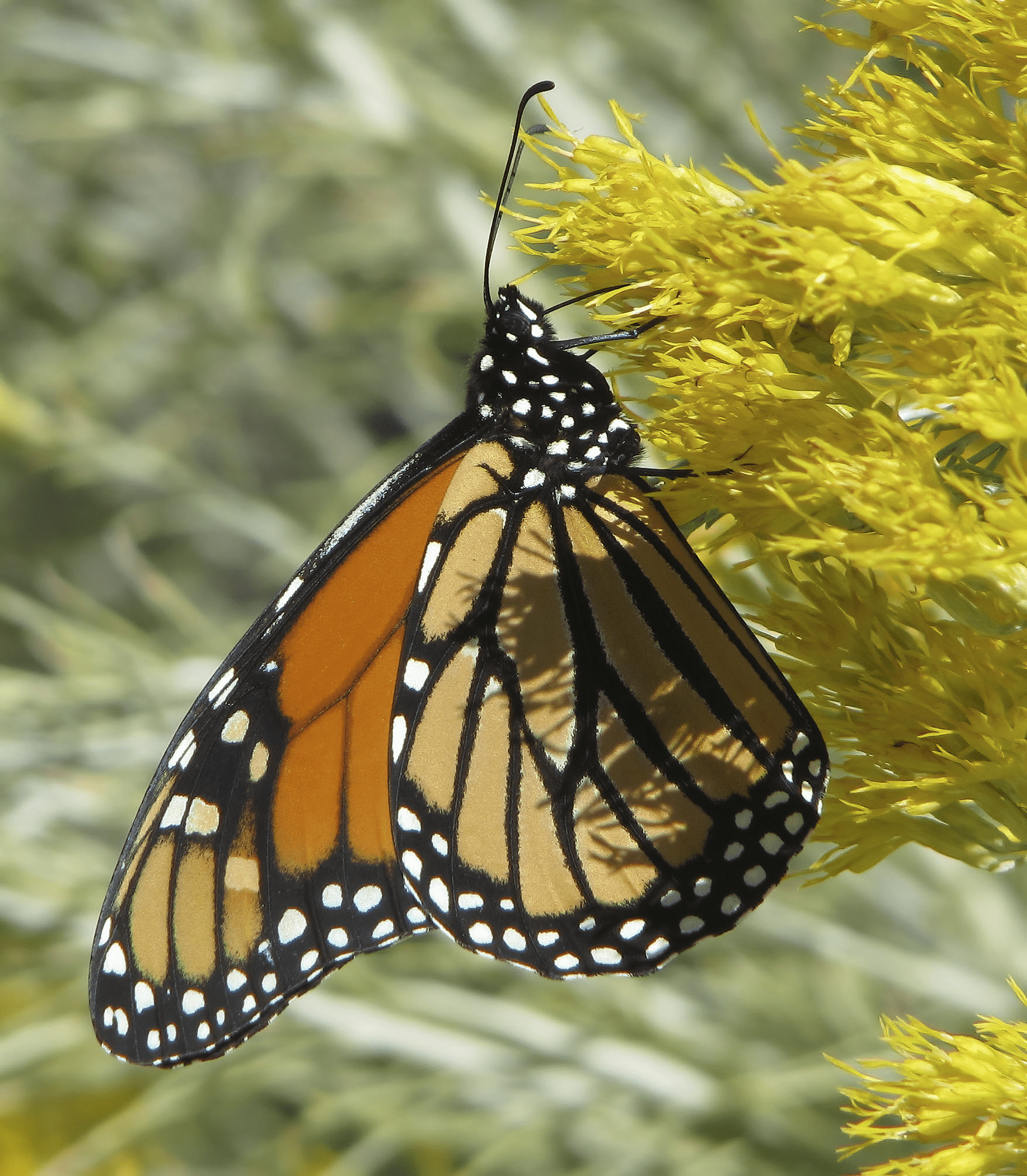
Perhaps you have heard me lament the decline of insect populations during the last few years. It is something I have sensed more than had hard data to support. Our 40 years of Audubon butterfly counts have hinted at this in the last few years, but such an uncontrolled approach cannot be generalized. Well, the data does exist, and I urge you to watch this presentation made by Matt Forister, an expert in the field, who lays out the case in terms that make it likely that even my apprehensions are too rosy. This recording was made of his presentation at a Lorquin Entomological Society meeting a couple of years ago. It’s a doozy!
In the talk, you will become acquainted with Professor Art Shapiro’s ongoing fifty-plus year transect of California from the Bay Area through the Central Valley, over the Sierra and into the Great Basin, and come to appreciate what an unremitting dedication to a scientific project can achieve. He is our Humboldt of the Butterflies.
—— Jess
The Bedside Book of Birds| Book Review
[By Chuck Almdale, suggested by Emily Roth]
The Bedside Book of Birds: An Avian Miscellany
Graeme Gibson, 2005. Nan A. Talese, Doubleday, Random House. Hardbound, 345 pages plus bibliography and image acknowledgements. $10-$40.
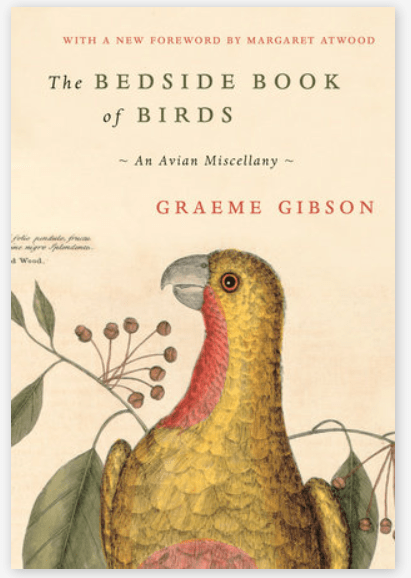
The title is absolutely accurate; this book has many dozens of very short ‘chapters,’ all of them about birds, written by a wide range of people from many different centuries and countries, each comes with an appropriate illustration, sometimes by well-known naturalist-artists, sometimes by unknown artisans. It is designed to be read while lying in bed; this is where I do all my reading, so this was just perfect for me.
If you like birds, if you like reading, if you like reading about birds and looking at a wide variety of illustrations of birds, this book is perfect for you. The Los Angeles Public Library has two copies but there was no waiting list as the book is over 20 years old. Put it on hold and you’ll have it within a few days. If you need more information than that, read on.
The book has nine themes, each of which may have several dozen entries, each entry 1-7 pages long: Birds observed and recorded; How long have we been enchanted by birds?; Folk tales and parables; Bird companions; Sinister auspices; Correspondences and transformations; Bird we use, eat, wear and sell; Avian defense and flying nightmares; Birds and the nostalgic human soul. The author introduces each theme with a 1-4 page comment.
Here’s the blurb from Thriftbooks, which has copies for $9.39.
In this stunning assemblage of words and images, novelist and avid birdwatcher Graeme Gibson offers an extraordinary tribute to the venerable relationship between humans and
birds.
From the Aztec plumed serpent to the Christian dove to Plato’s vision of the human soul growing wings, religion and philosophy use birds to represent our aspirational selves. Winged creatures appear in mythology and folk tales, and in literature by writers as diverse as Ovid, Thoreau, and T. S. Eliot. They’ve been omens, allegories, and guides; they’ve been worshiped, eaten, and feared. Birds figure tellingly in the work of such nature writers as Gilbert White and Peter Matthiessen, and are synonymous with the science of Darwin. Gibson spent years collecting this gorgeously illustrated celebration of centuries of human response to the delights of the feathered tribes. The Bedside Book of Birds is for everyone who is intrigued by the artistic forms that humanity creates to represent its soul.
I’m enclosing selections from three entries that caught my eye; the first is the complete entry, the next two are excerpts.
Floki Released A Raven
Armed with standard sailing directions, and with a comprehensive knowledge of navigational methods, supplemented by a well-developed instinctive skill, Norse navigators stood every chance of making successful passages even over the dark waters of the Western Ocean. These men were not casual venturers upon the sea; they were highly professional and very competent seamen of a kind whose like has now all but vanished from the earth, under the influence of mechanical propulsion and the electronic navigator.
They were also brilliant improvisors. In the Islendingabok we read of the exploit of one Raven-Floki who wished to make a voyage to Iceland but who did not have sailing directions for the voyage. Floki set out to go there anyway, and as navigation aids he carried a number of ravens. Ravens, as Floki evidently knew, are land birds—and nonmigratory. They do not have to make passages across large expanses of open water, and seldom do so voluntarily. When a raven is freed from a ship it will promptly make for the nearest land it can see. From a height of 5000 feet—at which altitude the big black bird is still easily visible from sea level—a raven can probably see land ninety miles away, and high land a great deal farther off.
It is recorded that on the first day out of sight of the Faeroes, Floki released a raven, which circled a few times and then struck off on the vessel’s back track, towards the Faeroes. On the second day another raven circled for a long time high in the pale sky, and finally returned to perch upon the vessel’s mast. But on the next day, the raven climbed to a great height and then flew purposefully off towards the west. Following it with their eyes until it vanished, the Norsemen set their course by that of the bird and in due time raised the coast of Iceland.
Some people deride this account as being apocryphal. There is no reason to think that it is anything of the sort. On the contrary, the use of ravens by the sailor who later came to be called Raven-Floki was no more than what one might have expected from a seafaring people who were very closely attuned to the world in which they lived.
—— From Westviking: The Ancient Norse in Greenland and North America, 1965. Farley Mowat (1921- ), Canada.
Farley Mowat is the author of many books including Never Cry Wolf, later made into a movie.
Using goose grease for the sort of thing described below was before my time, and I never heard of anyone keeping it in the medicine chest. But in the days before antibiotics and vaccines, it would have sounded wonderful. My mother would rub some concoction of petroleum jelly and eucalyptus on my chest. It did help one breathe more easily, but it stuck to anything nearby.
Goose Grease
In most farmhouses some goose grease is kept in the medicine chest and used in many ways. The old-fashioned hot poultice, so useful in relieving an old person’s bronchitis, or easing the “tight chest” of a child, is temporarily out of hospital fashion. Poultices do entail trouble and care, both in application and in easing them away, and substituting warm flannel to guard against chill—but they serve a useful purpose, especially in the country, and many a doctor, long delayed by snow or distance, has arrived to find pneumonia averted, a warmed and soothed child placidly asleep. For any fomentation, goose grease, being water-proof, is rubbed on to the skin beforehand, to prevent the moist heat unduly soaking the skin, and a little is often added to the linseed for the same reason.
Goose grease and fine lard are the only creams permitted in the dairy, both for the dairymaids’ hands and the churn fitments. It is also used, in east winds or snow, to anoint the udders of cows to prevent chapping. It was used by mothers with babies for the same reason, and later when children had colds in the head, noses and lips were rubbed with goose grease, before going out in the cold.
—— From Food in England, 1954; Dorothy Hartley (1892-1985), England
From the author’s introduction to this section.
Some Blessed Hope: Birds and the nostalgic human soul
A great many birdwatchers—from those who simply maintain feeders in their gardens to those, more obsessed, who wander the world in search of new and better birds—have stumbled onto a seductive truth: paying attention to birds, being mindful of them, is being mindful of Life itself. We seldom think of it this clearly, but sometimes, unexpectedly, we are overtaken by a sense of wonder and gratitude. Sure it is the encounter with a force much larger than ourselves that moves us.
Recently I was in the Canadian Arctic. We’d put ashore on the south coast of Hudson Strait and were walking in an expansively beautiful river valley when one of our party spotted a white phase gyrfalcon perched on a boulder high on the opposite hill. These are wonderful birds, fiercely majestic and much coveted by wealthy falconers. As we watched, it launched itself, dashing low over the ancient rocks in pursuit of a passing raven—whereupon the chase was on. Desperately twisting and turning, the raven seemed at each instant about to be caught. Then another raven appeared. This second one was clearly striving to position itself so it could help its companion should the gyrfalcon manage to seize it. As the pursuit went on, with the white bird hard on the black bird’s tail, I sensed something akin to the notion of fateful inevitability that drives classical tragedy. Raven, the Trickster and wolf-bird, is one of my favourite birds and yet the gyrfalcon is equally wondrous; furthermore, it needed to eat the Raven in order to survive. That’s the way things often are. But not this time.
—— Graeme Gibson
Read the book to find out what happens to Raven(s) and Gyrfalcon. I guarantee you cannot correctly guess.
You are all invited to the next ZOOM meeting
of Santa Monica Bay Audubon Society
Evolutionary History and Biogeography of Passerines, with Diego Blanco.
Zoom Evening Meeting, Tuesday, 3 March, 7:30 p.m.
Zoom waiting room opens 7:15 p.m.
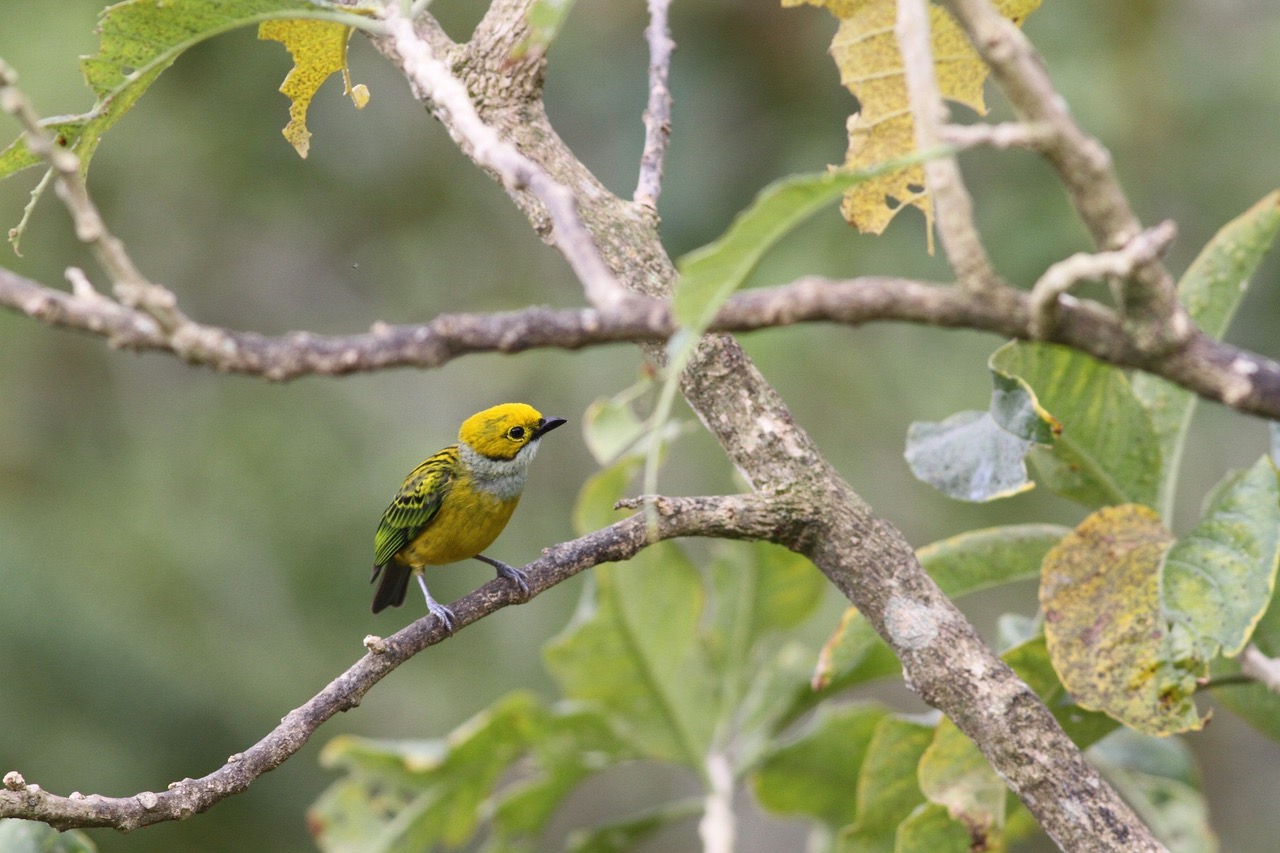
Diego Blanco of the Moore Laboratory of Ornithology will present an Evolutionary History and Biogeography of Passerines. Topics will include song bird behavior, evolution, and conservation. Diego will describe the avian family tree and explain how songbirds have spread across the globe and how they’ve changed over time.
|
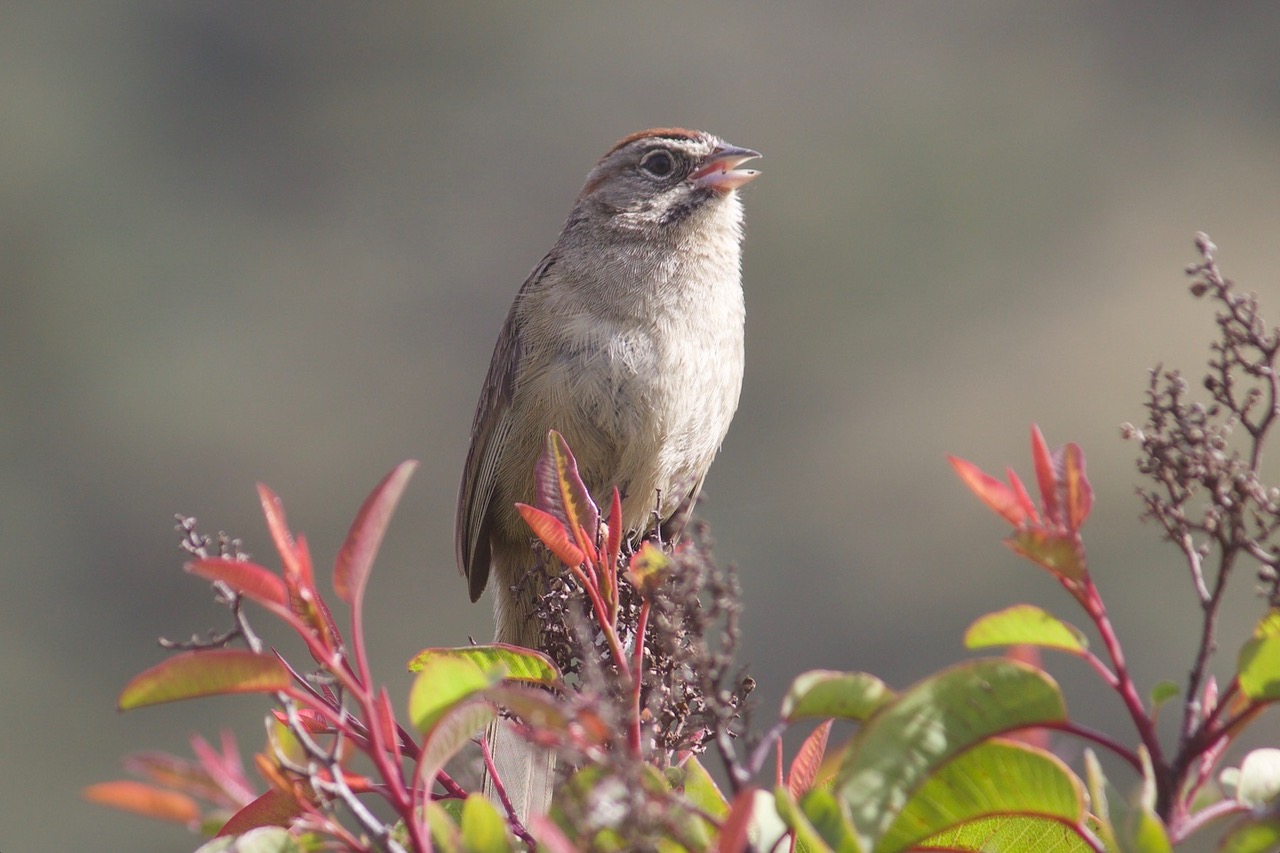
Before Diego Blanco became an Outreach and Research Assistant at the Moore Lab of Zoology at Occidental College, he was a Los Angeles area birder and naturalist. He enjoys hiking, camping, and documenting biodiversity through photography and illustration. Diego graduated from Cornell University in 2022 and has worked as an administrative assistant at the Theodore Payne Foundation for Wild Flowers and Native Plants where he taught field sketching and bird identification classes. He spent the summer 2024 season as a point count technician with the Klamath Bird Observatory conducting surveys on bird populations and plant communities in Whiskeytown National Recreation Area and Lassen Volcanic National Park in Northern California.
(If the button above doesn’t work for you, see detailed zoom invitation below.)
Meeting ID: 825 7750 0786
Passcode: 993523
One tap mobile
+16694449171,,82577500786#,,,,*993523# US
+16699009128,,82577500786#,,,,*993523# US (San Jose)
Joining Instructions
https://us02web.zoom.us/meetings/82577500786/invitations?signature=g0Cp2iapmwGEhBXYp3jcmkGKZN5-7oZ5-7D2N4WEoAU
You are all invited to the next ZOOM meeting
of Santa Monica Bay Audubon Society
Evolutionary History and Biogeography of Passerines, with Diego Blanco.
Zoom Evening Meeting, Tuesday, 3 March, 7:30 p.m.
Zoom waiting room opens 7:15 p.m.
Diego Blanco of the Moore Laboratory of Ornithology will present an Evolutionary History and Biogeography of Passerines. Topics will include song bird behavior, evolution, and conservation. Diego will describe the avian family tree and explain how songbirds have spread across the globe and how they’ve changed over time.
|
Before Diego Blanco became an Outreach and Research Assistant at the Moore Lab of Zoology at Occidental College, he was a Los Angeles area birder and naturalist. He enjoys hiking, camping, and documenting biodiversity through photography and illustration. Diego graduated from Cornell University in 2022 and has worked as an administrative assistant at the Theodore Payne Foundation for Wild Flowers and Native Plants where he taught field sketching and bird identification classes. He spent the summer 2024 season as a point count technician with the Klamath Bird Observatory conducting surveys on bird populations and plant communities in Whiskeytown National Recreation Area and Lassen Volcanic National Park in Northern California.
(If the button above doesn’t work for you, see detailed zoom invitation below.)
Meeting ID: 825 7750 0786
Passcode: 993523
One tap mobile
+16694449171,,82577500786#,,,,*993523# US
+16699009128,,82577500786#,,,,*993523# US (San Jose)
Joining Instructions
https://us02web.zoom.us/meetings/82577500786/invitations?signature=g0Cp2iapmwGEhBXYp3jcmkGKZN5-7oZ5-7D2N4WEoAU
Muddy, muddy Malibu Lagoon, 22 Feb. 2026
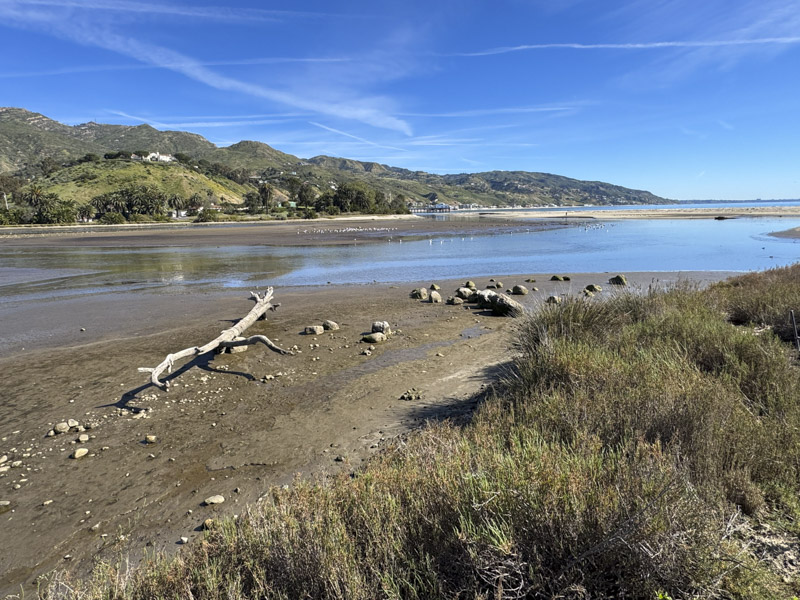
Yes, there’s an large airport about 15 miles away. (Ray Juncosa 2-22-26)
[By Chuck Almdale; photos by Femi Faminu, Ray Juncosa, Emily Roth]
It started off quite chilly – for SoCal – at 49°F with a little breeze, so of course we were all vastly overlayered and roasting by 11:30 when it was 65°, sun high in a clear blue sky. Heat prostration nearly set in for some of us. My apologies to anyone reading this while up to their earlobes in snow.
Beginning birders always wonder what’s that black duck with the white bill that’s all over the lagoon but no one ever mentions. This time I began with some nonsense about how “that’s a not-a-duck, one member of a very large family of birds, all of whom are not ducks.” Then the truth; it’s the American Coot. They look a lot like ducks, but their bill is compressed laterally, not wide like a duck bill. They’re actually more closely related to Cranes. They don’t have webbed feet either, but lobed toes (see photo below).
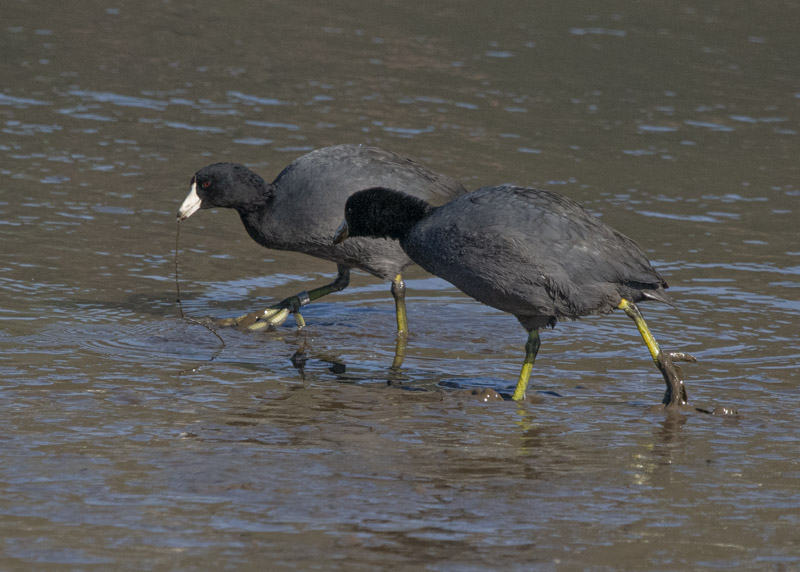
When the swimming coot brings their foot forward the lobes close, reducing water resistance. But on the backward power stroke, the lobes spread apart, greatly increasing surface area, power and speed. On land, they can walk, not waddle like a duck, so they’re a lot more comfortable grazing on a park lawn for insects than a duck will ever be. It’s a great foot design, and a wonderful example of convergent evolution in action. I usually end with the question, “Ever hear the phrase ‘you old coot’?” No one under the age of fifty knows that phrase. All the old colorful phrases are dying out, being replaced by acronyms and emojis. And…finally…no one ever mentions the coots because they are really common. But they make funny – seemingly rude – sounds, so they’re worth listening to. Much like any ‘old coot’ in your own family.
The low tide today was not particularly low – +0.65 ft. at 06:55; it does go negative, more often than one might think – but it gave the lagoon water the opportunity to run out to sea, and it’s always someone’s lowest lagoon level ever.
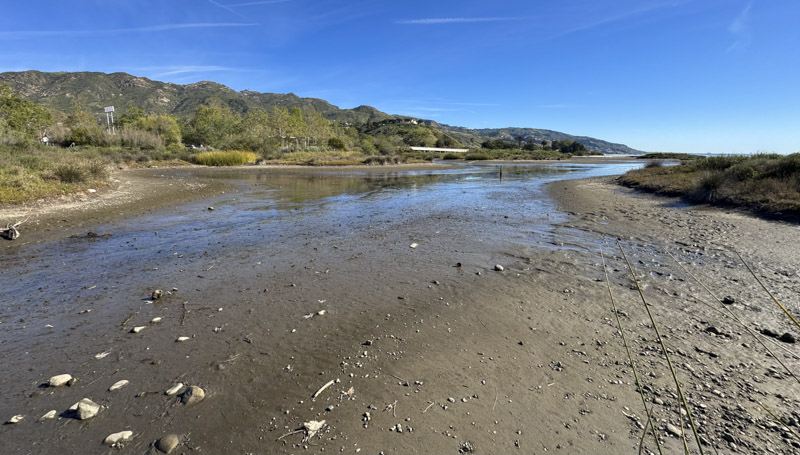
Sometimes you have to look really closely to see something a little different, perhaps ordinary, but quite beautiful.
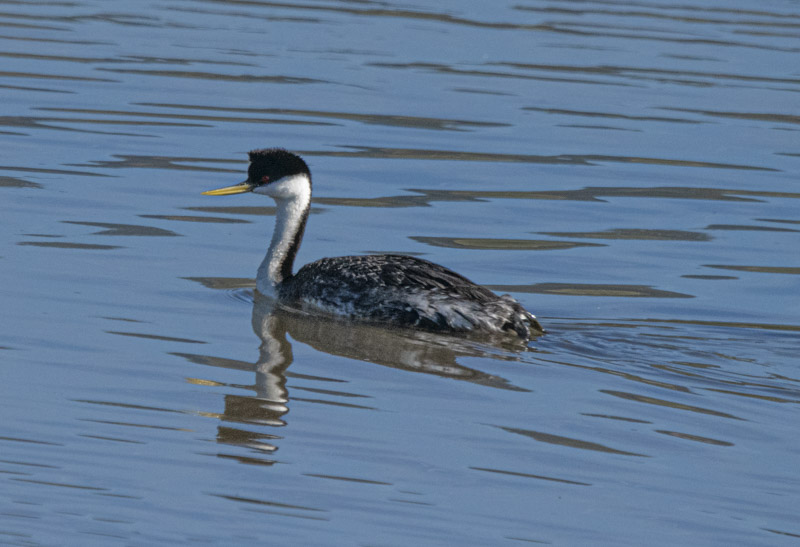
Western Grebes are supposed to look like this in the winter: yellow-green bill, red eye surrounded by dark feathers, mostly-dark flanks down to the waterline.
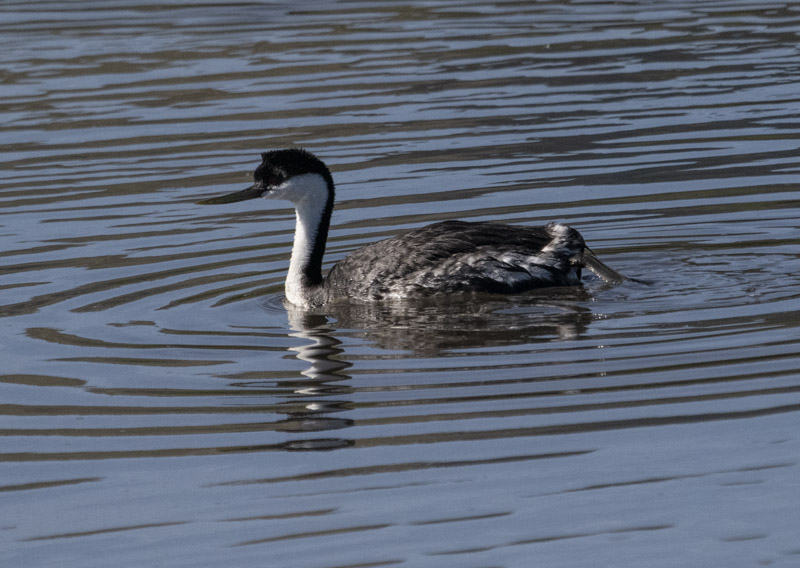
This one below looks like a ‘proper’ Western Grebe except for that black bill that seems to have an upward curve. If anyone knows what that’s about, let me know. Grebes are semi-famous for their inability to walk on land. With that leg sticking out of the back end of the bird rather than tucked away neatly under its abdomen, you can see why that’s true. Their genus name Podiceps means “rump-foot.”
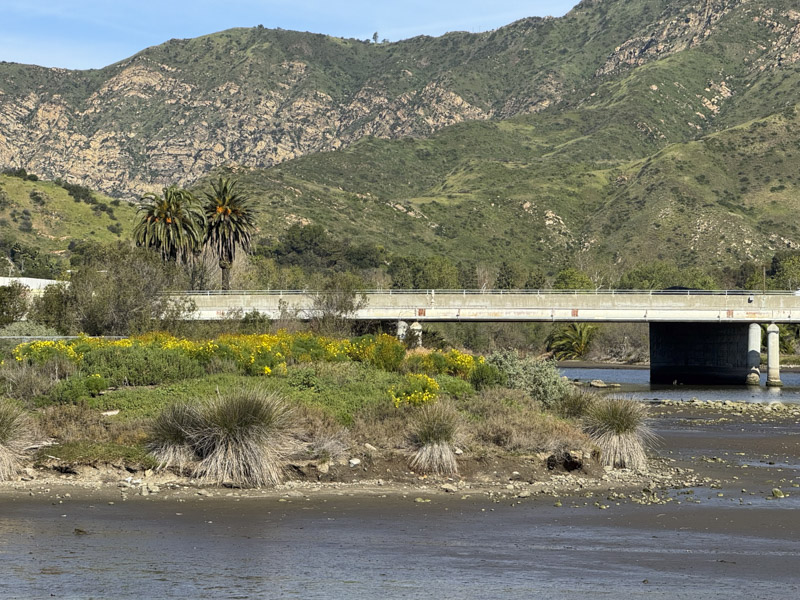
Lots of yellow Giant Coreopsis in bloom. The palm trees to the rear are in fruit.
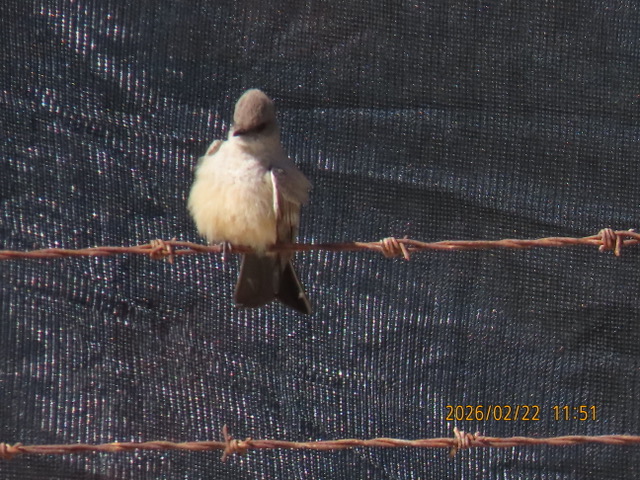
Say’s Phoebe are close relatives of our widespread Black Phoebe, but are here primarily in the winter. This one resting on the fence next to a Malibu Colony house under repair is probably the last one we’ll see until next September. The color on its breast and belly is usually described as orangish or ochraceous or ochraceus, the latter referring to that funny brownish-orange color ocher or ochre. As with all flycatchers, they spend a lot of time sitting on a perch, trying to be unnoticeable, waiting for a flying insect to pass by.
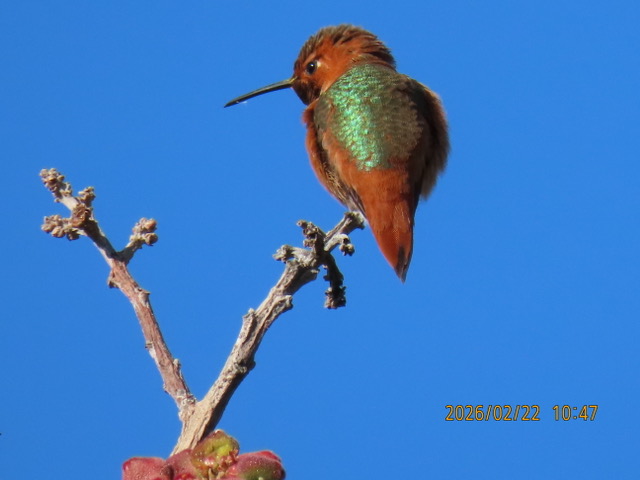
Speaking of brownish-reddish-orangish-whatever colors, this reddish color on the Allen’s Hummingbird is usually described as “rufous.” The word “rufous” come from the Latin word rufus, which translates to “red” “red-haired” or “tawny”. It entered English usage around the late 18th-century (circa 1775–1785) as a descriptor for colors in nature, particularly for bird plumage and animal fur. [I cut-and-pasted this etymological tidbit from Google AI, which definitely has its uses.]
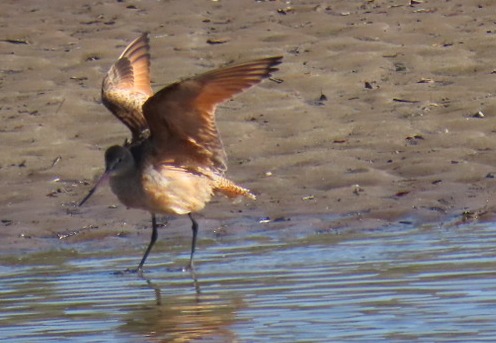
And speaking of yet one more reddish bird, this Marbled Godwit looks especially reddish. Perhaps it’s just the sunlight giving it this glow.
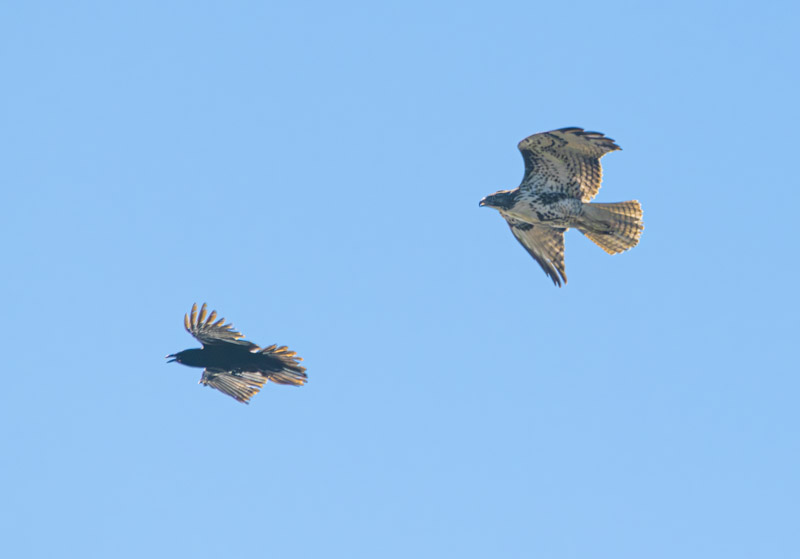
Overhead, some crows were busily mobbing whatever hawks happened to be passing by, including this Red-tailed Hawk. It takes 18 to 24 months for the initially brown-banded tail to turn red.
Mud flats, low water, Boot-heel Island, a corner of the lagoon, the lagoon south shore and the west end of Malibu Colony in the distance. In the very far distance is the NW end of Santa Catalina Island.

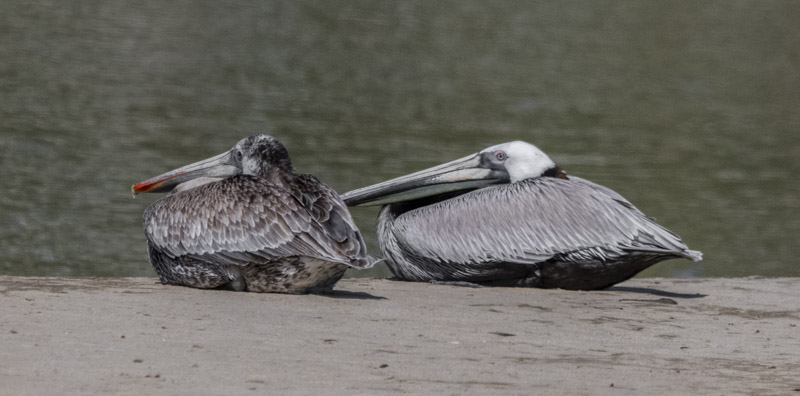
Breeding Brown Pelicans often have some red at the tip of their bill, but this bird below looks like a sub-adult and that amount of red seems unusual. Their breeding season “starts” in March, but they’re asynchronous breeders, and some may not start until late summer.
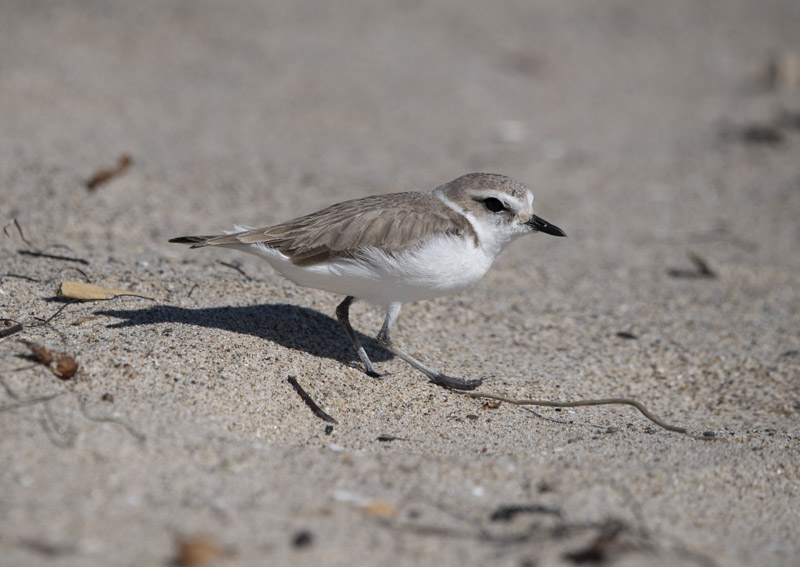
Our Western Snowy Plovers are still with us. Among them was the bird banded vg:ow (not the bird pictured below) who has been with us since at least last November, if not all the way back to last July.
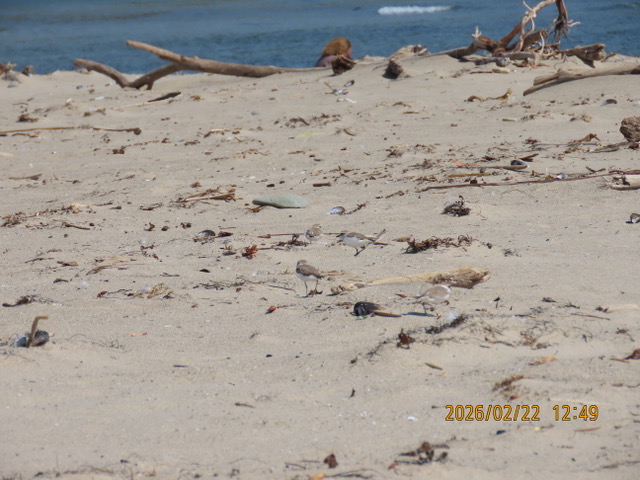
There’s plenty of small debris on the beach for the plovers to hide among. How many plovers can you find below? Answer* at the very bottom of the blog.

Malibu Lagoon on eBird as of 2-27-26: 9238 lists, 3006 eBirders, 322 species
Most recent new species seen: Nelson’s Sparrow, 11/29/24 by Femi Faminu (SMBAS member). When the newest species added to the list was seen on a date prior to the most recently seen new species, there is no way I can find to easily determine what that bird is. Another minor nit to pick about eBird.
Birds new for the season: Cinnamon Teal, Anna’s Hummingbird, Clark’s Grebe, Pacific Loon, Sharp-shinned Hawk, Red-shouldered Hawk, Downy Woodpecker, Say’s Phoebe, Cassin’s Kingbird, Common Raven, Swinhoe’s White-eye, Ruby-crowned Kinglet. “New for the season” means it has been three or more months since last recorded on our trips.
Many, many thanks to photographer Femi Faminu, Ray Juncosa, Emily Roth.
Upcoming SMBAS scheduled field trips; no reservations or Covid card necessary unless specifically mentioned:
- Sepulveda Basin, Sat. Mar. 14, 8:00
- Malibu Lagoon, Sun. Mar. 22, 8:30 (adults) & 10 am (parents & kids)
- Bear Divide/Walker Ranch Sat. Apr. 18, 7:30 am, leader Armando Martinez, Reservation
- These and any other trips we announce for the foreseeable future will depend upon expected status of the Covid/flu/etc. pandemic, not to mention landslides, fires, local flooding and atmospheric rivers at trip time. Any trip announced may be canceled shortly before trip date if it seems necessary. By now any other comments should be superfluous.
- Link to Programs & Field Trip schedule.
The next SMBAS Zoom program: Tuesday, March 3, 7:30pm; Evolutionary History and Biogeography of Passerines, with Diego Blanco.
The SMBAS 10 a.m. Parent’s & Kids Birdwalk has again resumed, with ten guests on 25 Jan 2026. Reservations not necessary for families, but for groups (scouts, etc.), please call Jean (213-522-0062).
Links: Unusual birds at Malibu Lagoon
9/23/02 Aerial photo of Malibu Lagoon
Aerial ‘film’ flying north over lagoon
More recent aerial photo
Prior checklists:
2025: Jan-June, July-Dec
2023: Jan-June, July-Dec 2024: Jan-June, July-Dec
2021: Jan-July, July-Dec 2022: Jan-June, July-Dec
2020: Jan-July, July-Dec 2019: Jan-June, July-Dec
2018: Jan-June, July-Dec 2017: Jan-June, July-Dec
2016: Jan-June, July-Dec 2015: Jan-May, July-Dec
2014: Jan-July, July-Dec 2013: Jan-June, July-Dec
2012: Jan-June, July-Dec 2011: Jan-June, July-Dec
2010: Jan-June, July-Dec 2009: Jan-June, July-Dec
The 10-year comparison summaries created during the Lagoon Reconfiguration Project period, remain available—despite numerous complaints—on our Lagoon Project Bird Census Page. Very briefly summarized, the results unexpectedly indicate that avian species diversification and numbers improved slightly during the restoration period June’12-June’14.
Many thanks to Marie Barnidge-McIntyre, Femi Faminu, Lu Plauzoles, Emily Roth and others for contributions made to this month’s census counts.
The species list below was re-sequenced as of 12/31/25 to agree with the eBird sequence. If part of the right side of the chart below is hidden, there’s a slider button inconveniently located at the bottom end of the list. The numbers 1-9 left of the species names are keyed to the nine categories of birds at the bottom. Updated lagoon bird check lists can be downloaded here.
[Chuck Almdale]
| Malibu Census 2025-26 | 9/28 | 10/26 | 11/23 | 12/28 | 1/25 | 2/22 | |
| Temperature | 65-69 | 58-65 | 59-65 | 60-69 | 47-55 | 49-63 | |
| Tide Lo/Hi Height | H+4.54 | H+5.02 | H+5.46 | L+1.35 | L+1.31 | L+0.65 | |
| Tide Time | 1244 | 1125 | 0939 | 1047 | 0846 | 0655 | |
| 1 | Brant (Black) | 1 | 1 | 1 | 1 | ||
| 1 | Canada Goose | 12 | 14 | 3 | 4 | ||
| 1 | Cinnamon Teal | 2 | |||||
| 1 | Northern Shoveler | 4 | |||||
| 1 | Gadwall | 6 | 14 | 20 | 34 | 35 | |
| 1 | American Wigeon | 15 | 4 | 4 | |||
| 1 | Mallard | 7 | 26 | 1 | 12 | 5 | 7 |
| 1 | Green-winged Teal | 5 | 11 | 8 | |||
| 1 | Ring-necked Duck | 1 | |||||
| 1 | Surf Scoter | 10 | 2 | 22 | 4 | 3 | 6 |
| 1 | Bufflehead | 4 | 4 | ||||
| 1 | Red-breasted Merganser | 2 | 5 | 6 | 7 | ||
| 1 | Ruddy Duck | 1 | 5 | 11 | |||
| 2 | Feral Pigeon | 6 | 5 | 4 | |||
| 2 | Mourning Dove | 3 | 1 | 1 | |||
| 2 | Anna’s Hummingbird | 1 | 2 | 3 | 1 | ||
| 2 | Allen’s Hummingbird | 4 | 5 | 4 | 3 | 3 | 3 |
| 3 | Sora | 1 | 1 | ||||
| 3 | American Coot | 31 | 4 | 25 | 25 | 50 | 55 |
| 4 | Black Oystercatcher | 1 | 1 | 3 | |||
| 4 | Black-bellied Plover | 55 | 88 | 64 | 62 | 34 | 20 |
| 4 | Killdeer | 1 | 8 | 10 | 4 | 4 | 6 |
| 4 | Snowy Plover | 35 | 40 | 40 | 7 | 17 | 4 |
| 4 | Hudsonian Whimbrel | 3 | 14 | 8 | 4 | 3 | 4 |
| 4 | Marbled Godwit | 21 | 8 | 10 | 3 | 4 | |
| 4 | Spotted Sandpiper | 1 | |||||
| 4 | Willet | 10 | 14 | 20 | 7 | 7 | 3 |
| 4 | Ruddy Turnstone | 3 | 6 | 4 | 3 | 2 | 3 |
| 4 | Sanderling | 1 | 13 | 23 | 14 | 35 | 10 |
| 4 | Dunlin | 2 | 1 | ||||
| 4 | Least Sandpiper | 6 | 12 | 6 | 10 | 20 | 20 |
| 4 | Western Sandpiper | 14 | 1 | 2 | |||
| 5 | Sabine’s Gull | 1 | |||||
| 5 | Bonaparte’s Gull | 1 | |||||
| 5 | Heermann’s Gull | 38 | 2 | 49 | 10 | ||
| 5 | Short-billed Gull | 1 | |||||
| 5 | Ring-billed Gull | 1 | 7 | 6 | 5 | 17 | 4 |
| 5 | Western Gull | 61 | 35 | 55 | 85 | 45 | 41 |
| 5 | American Herring Gull | 1 | 1 | 1 | |||
| 5 | California Gull | 10 | 116 | 410 | 650 | 275 | 140 |
| 5 | Elegant Tern | 4 | 2 | 3 | |||
| 5 | Royal Tern | 12 | 2 | 22 | 25 | 12 | 28 |
| 6 | Pied-billed Grebe | 6 | 2 | 3 | 6 | 2 | 2 |
| 6 | Horned Grebe | 1 | |||||
| 6 | Eared Grebe | 1 | 6 | 3 | 1 | ||
| 6 | Western Grebe | 30 | 8 | 10 | 45 | 4 | |
| 6 | Clark’s Grebe | 2 | 2 | ||||
| 6 | Red-throated Loon | 2 | 2 | ||||
| 6 | Pacific Loon | 1 | 1 | ||||
| 6 | Brandt’s Cormorant | 5 | 2 | 1 | 35 | 5 | |
| 6 | Pelagic Cormorant | 1 | 3 | 2 | 3 | 1 | |
| 6 | Double-crested Cormorant | 49 | 28 | 38 | 17 | 28 | 15 |
| 6 | Black-crowned Night-Heron | 2 | 1 | ||||
| 6 | Snowy Egret | 5 | 34 | 30 | 11 | 3 | 3 |
| 6 | Green Heron | 1 | 2 | 1 | |||
| 6 | Great Egret | 3 | 4 | 2 | 1 | 1 | 1 |
| 6 | Great Blue Heron | 4 | 6 | 4 | 5 | 5 | 3 |
| 6 | Brown Pelican | 45 | 138 | 13 | 3 | 13 | 10 |
| 7 | Turkey Vulture | 1 | 2 | 2 | 2 | ||
| 7 | Osprey | 1 | 1 | 1 | 1 | 2 | |
| 7 | Sharp-shinned Hawk | 1 | |||||
| 7 | Cooper’s Hawk | 1 | |||||
| 7 | Red-shouldered Hawk | 2 | 1 | 2 | |||
| 7 | Red-tailed Hawk | 1 | 1 | 2 | 1 | 2 | |
| 8 | Belted Kingfisher | 1 | 1 | 2 | 1 | 1 | 1 |
| 8 | Downy Woodpecker | 1 | |||||
| 8 | Nuttall’s Woodpecker | 1 | |||||
| 8 | Nanday Parakeet | 20 | 9 | 2 | |||
| 9 | Black Phoebe | 4 | 2 | 3 | 1 | 3 | 3 |
| 9 | Say’s Phoebe | 1 | 1 | ||||
| 9 | Cassin’s Kingbird | 1 | |||||
| 9 | Hutton’s Vireo | 1 | |||||
| 9 | California Scrub-Jay | 1 | 2 | 1 | |||
| 9 | American Crow | 6 | 10 | 7 | 6 | 11 | 10 |
| 9 | Common Raven | 1 | 1 | ||||
| 9 | Oak Titmouse | 2 | 2 | 1 | 1 | ||
| 9 | Barn Swallow | 4 | |||||
| 9 | Bushtit | 9 | 35 | 4 | 19 | 20 | 5 |
| 9 | Wrentit | 2 | 2 | 4 | 1 | 2 | 2 |
| 9 | Swinhoe’s White-eye | 1 | 2 | ||||
| 9 | Ruby-crowned Kinglet | 1 | |||||
| 9 | Blue-gray Gnatcatcher | 2 | |||||
| 9 | Northern House Wren | 2 | 1 | 1 | 1 | 1 | |
| 9 | Marsh Wren | 1 | 1 | ||||
| 9 | Bewick’s Wren | 2 | |||||
| 9 | European Starling | 2 | 6 | 30 | 1 | 10 | |
| 9 | Northern Mockingbird | 1 | 1 | 1 | |||
| 9 | Western Bluebird | 2 | 1 | ||||
| 9 | Hermit Thrush | 2 | |||||
| 9 | Scaly-breasted Munia | 7 | |||||
| 9 | House Finch | 3 | 2 | 5 | 15 | 7 | 10 |
| 9 | Lesser Goldfinch | 2 | 2 | 7 | 2 | ||
| 9 | American Goldfinch | 4 | |||||
| 9 | Dark-eyed Junco | 2 | 3 | 1 | 1 | ||
| 9 | White-crowned Sparrow | 2 | 10 | 12 | 18 | 6 | 5 |
| 9 | Savannah Sparrow | 1 | |||||
| 9 | Song Sparrow | 5 | 4 | 4 | 3 | 5 | 7 |
| 9 | California Towhee | 2 | 1 | 2 | 2 | 3 | 2 |
| 9 | Western Meadowlark | 2 | |||||
| 9 | Great-tailed Grackle | 23 | 6 | 16 | 3 | 10 | 3 |
| 9 | Orange-crowned Warbler | 2 | 1 | 2 | 1 | 1 | 1 |
| 9 | Common Yellowthroat | 7 | 6 | 2 | 1 | 1 | 2 |
| 9 | Yellow-rumped Warbler | 2 | 25 | 10 | 8 | 6 | 6 |
| 9 | Black-throated Gray Warbler | 1 | 1 | ||||
| Totals Birds by Type | Sep | Oct | Nov | Dec | Jan | Feb | |
| 1 | Waterfowl & Quail | 25 | 28 | 61 | 95 | 67 | 74 |
| 2 | Doves, Swifts & Hummers | 14 | 8 | 7 | 9 | 3 | 8 |
| 3 | Rails & Coots | 32 | 4 | 26 | 25 | 50 | 55 |
| 4 | Shorebirds | 130 | 219 | 185 | 123 | 128 | 74 |
| 5 | Gulls & Terns | 127 | 164 | 547 | 777 | 349 | 214 |
| 6 | Grebe, Loon, Heron, Pelican | 117 | 259 | 111 | 59 | 134 | 47 |
| 7 | Hawks & Falcons | 5 | 2 | 3 | 5 | 5 | 7 |
| 8 | Kingfish, Peckers & Parrots | 21 | 10 | 3 | 1 | 3 | 2 |
| 9 | Passerines | 82 | 122 | 122 | 91 | 86 | 77 |
| Totals Birds | 553 | 816 | 1065 | 1185 | 825 | 558 | |
| Total Species by Group | Sep | Oct | Nov | Dec | Jan | Feb | |
| 1 | Waterfowl & Quail | 5 | 2 | 8 | 11 | 8 | 9 |
| 2 | Doves, Swifts & Hummers | 4 | 3 | 2 | 3 | 1 | 3 |
| 3 | Rails & Coots | 2 | 1 | 2 | 1 | 1 | 1 |
| 4 | Shorebirds | 10 | 12 | 10 | 11 | 10 | 9 |
| 5 | Gulls & Terns | 7 | 6 | 8 | 7 | 4 | 5 |
| 6 | Grebe, Loon, Heron, Pelican | 10 | 12 | 14 | 11 | 9 | 11 |
| 7 | Hawks & Falcons | 4 | 2 | 3 | 3 | 3 | 4 |
| 8 | Kingfish, Peckers & Parrots | 2 | 2 | 2 | 1 | 2 | 2 |
| 9 | Passerines | 20 | 21 | 22 | 21 | 17 | 22 |
| Totals Species – 104 | 64 | 61 | 71 | 69 | 55 | 66 |
*We found four Western Snowy Plovers.



 SANTA MONICA BAY AUDUBON SOCIETY BLOG