Free email delivery
Please sign up for email delivery in the subscription area to the right.
No salesman will call, at least not from us. Maybe from someone else.
Ankasa National Reserve in Western Ghana | Femi Faminu video
[Posted by Chuck Almdale]
Femi Faminu, who frequently birds with (and without) us at Malibu Lagoon, is back in the West following barely a week of birds and food, plus food and birds, in western Ghana. The African rain forests are so jam-packed with species, genera and entire families of birds utterly foreign to American birders [imagine that, foreign birds in Ghana] that making several trips is a reasonable approach.
Ghana is about the size of Oregon but with eight times the human population. It is well known among birders as a great place to bird, with Atlantic seashore, the southern edge of the Sahara and forest reserves in between, and it is perhaps the best place in the world to find one of the two Picathartidae species, the White-necked Rockfowl. [Spoiler alert: It is neither rock nor fowl.] But it also hosts three other very small and limited-range bird families. Femi managed to see both species [aka all the species] in one of these families on this trip, and I have never (and probably will never) see either. [I’ll let her guess which family.] Ghana has over 770 species of birds; for comparison, California has 685 including birds than blew in once, decades ago, never to be seen again.
So…birding is good in Ghana. Good place to eat, too, by the looks of it. And lots of interesting insects.
Femi’s film also features a potto, an arborial primate in the Lorisidae family, and a kusimanse, related to the mongoose.
At the end of the video is her phylogenetically-sequenced trip lists which includes 246 species, 138 non-passerines and 106 passerines. Ten cuckoos, seven hornbills, eleven kingfishers anyone? Fourteen greenbuls? The mind boggles. Her all-too-brief YouTube photo & video film is as enjoyable as always.
If you go here https://www.youtube.com/@femif9792 you can see her other films.
Yellow-billed Loon in San Pedro IBR Rehab
[Posted by Chuck Almdale]
Kimball Garrett posted this link on LACoBirds@groups.io, our county bird chat-line. A Yellow-billed Loon – rare in SoCal waters – got tangled in fishing line down near Los Angeles Harbor, and the fine folk at International Bird Rescue in San Pedro came to the rescue. Most people reading this have never seen this species, I’ll bet, which doesn’t much care for waters south of Seattle. At 34″ long it’s a bloody big loon.
Link to IBR blog on the incident.

[Text by Chuck Almdale, photos by Chris Tosdevin]
“Fasten your seatbelts; it’s going to be a bumpy night.”
Bette Davis in All About Eve

Nestled between the low mountains of Griffith Park, the eastern San Fernando Valley city-suburbs of Grandview and Glendale, the Los Angeles River, Riverside Drive, Victory Blvd, and – last but not least – the #134 and I-5 freeways, what could be a more quintessentially Los Angeles birding spot than Bette Davis Picnic Area, named for the major film star of not so long ago. The park was a gift to the public, carved out of her property of roughly one square mile. Jutting eastward from the southeast corner of the park is the Glendale Narrows Riverwalk. The narrows refers to the purportedly narrowish bend in the Los Angeles River where the bottom is unpaved, making it popular with diving ducks and wading birds, especially Black-necked Stilts. You can vaguely see it in the Google satellite view above. The paved sidewalk runs alongside the river for about 1.5 miles before the path turns east alongside the Verdugo Wash. [All following quotes are BrainyQuote]
Old age is no place for sissies. — Bette Davis
A small group of intrepid birders – some of us old enough to know full well the truth of the above statement – gathered at the crack-of-dawn 8am starting time. We were almost immediately knocked out of our socks by really loud squawks. We quickly determined that it was a pair of parrots – Lilac-crowned Parrots Amazona finschi – investigating a potential next hole, located at the end of a snaggy trunk in a large sycamore tree. It featured two entrances, one below and to the side of the other. The parrots might have thought this a defect, as eggs have a way of rolling. We noted the way that all Amazona parrots fly – fast wingbeats in a narrow vertical range of motion – and that (generally speaking) parakeets have long pointed tails, parrots have flat blunt tails. This species turned out to be a life bird (countable by rule-conscious listers) for some of us. Awk! Beautiful plumage, eh, eh?

If you’ve never been hated by your child, you’ve never been a parent. — Bette Davis
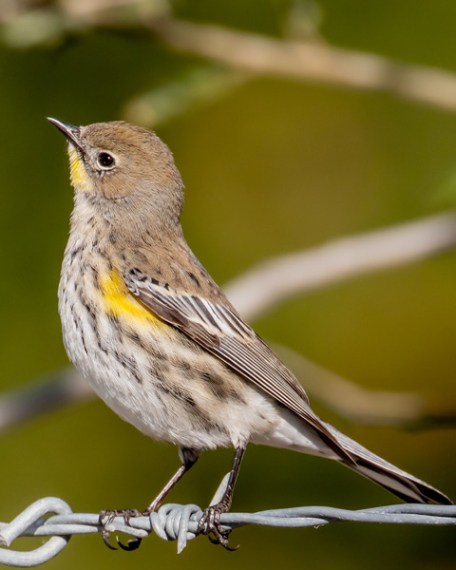
We birded our way through the trees, finding a lot of Yellow-rumped Warblers, then went to the river through one of the many gaps in the fence. Here we found a nice assortment of ducks and two geese, along with a lot of Black-necked Stilts, herons and egrets and a few passerines in the trash-laden river islets.


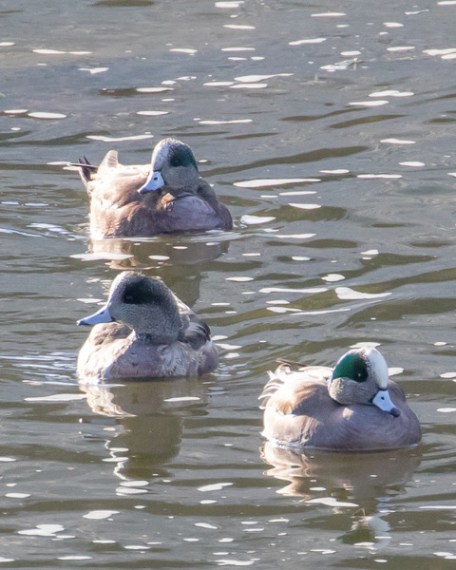
Sex is God’s joke on human beings. — Bette Davis


We passed a lot of Black-necked Stilts. The list below records only 100, but off in the distance at both ends of the walk we could see many, many more.
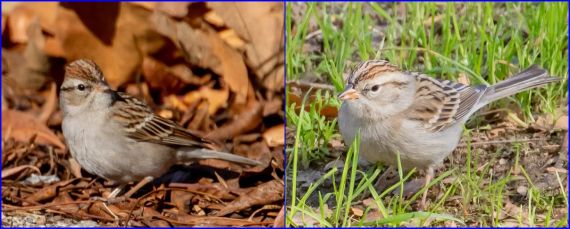
Along the chain-link fence line, we ran across several of a lesser-seen sparrow species, feeding on grass seeds. In alternate plumage their caps are rustier and their supercilium whiter.
On our way back to the cars, we spotted this raptor, well hidden in a tree in a home’s front yard across the street. Chris snapped this photo while it was in the process of dropping onto a hapless mammal on the lawn.

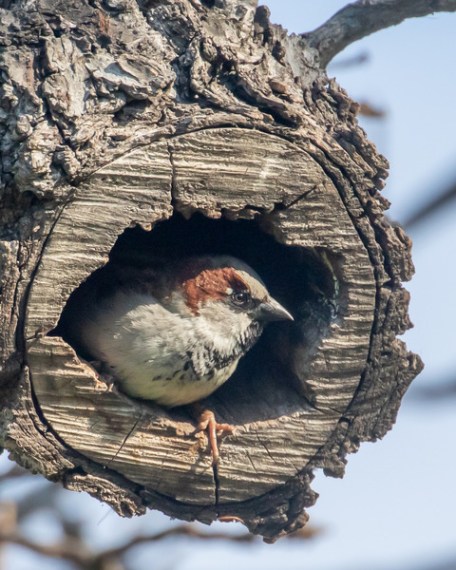
We hopped in our cars and drove the immense distance of nearly 1/4 mile over to the southeast corner of the park, across Victory and to the south end of Garden St. This is the major access point to the Riverwalk. As small as the portion of the picnic park located here is, it had even more birds than the larger section we’d just left. House Sparrows are typically the opposite of a big deal to birders, and I doubt that 1% of field trips reports anywhere, ever, bother including a photo of one, but this bird was doing something interesting.
We had four species of woodpecker in this section: Acorn, Nuttall’s, Northern Flicker and Downy, the smallest of our American woodpeckers. At 6 1/2″, it’s not much larger than the diminutive Chipping Sparrow we’d just seen.
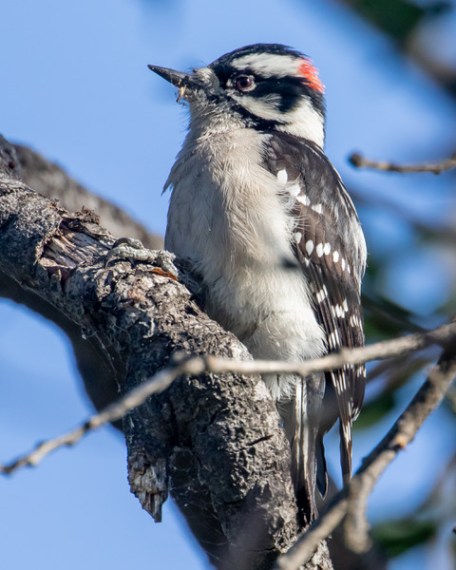
The best way to separate them from the very similar Hairy Woodpecker is the tiny bill, noticeably shorter than the front-to-back width of the head. The Hairy’s bill is about the same length as its head, front-to-back.
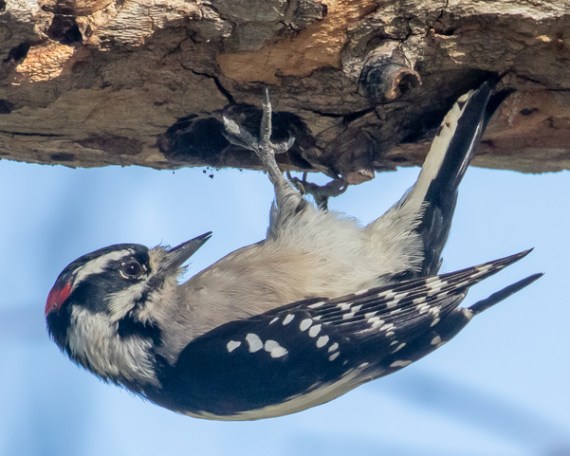
As you can see from the photo above, Downy Woodpeckers are lighter-than-air, like tiny feathered dirigibles, and could walk upside down on your ceiling if they had a mind to. Well…maybe not. Maybe it’s those clawed toes.
This has always been a motto of mine: Attempt the impossible in order to improve your work. — Bette Davis
Just before we got onto the Riverwalk proper, we found some sparrows on the shady ground, pecking away. Among them were several Lark Sparrows, one of our fancier LBJ’s (Little Brown Jobs).

In response to a query – “Is it a lark or a sparrow?” – we briefly discussed the presence of the word “lark” in a bird’s name. It means it has white outer tail feathers, as do the mostly Old World family of Larks (Alaudidae). Hence Lark Sparrows, Lark Buntings and Meadowlarks are not Larks, but are respectively members of families Passerellidae, Passerellidae (New World Sparrows) and Icteridae (Blackbirds).
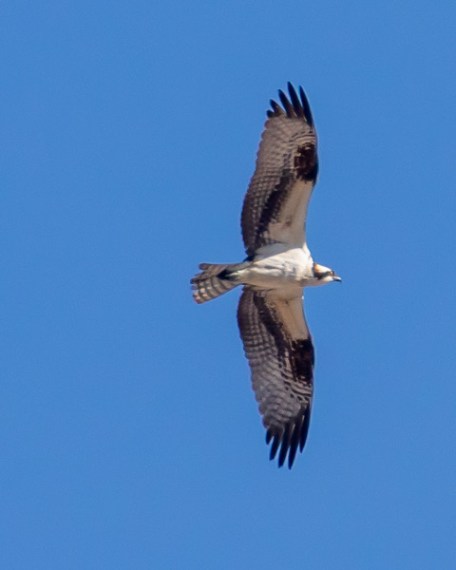
We had the occasional raptor overhead and sitting on the very high electric wire pylons, usually at enormous distance from us. I’d hate to see this Osprey take a dive at a fish in this part of the river. It’s pretty shallow.
We crossed underneath the I-5 or Golden State Freeway. The sound of the cars overhead – and I have omitted until now the fact that it’s actually quite noisy throughout the park due to the adjacent freeways – was like walking through the now-closed tunnels under Niagara Falls (really loud and echoing). In both directions we spotted another Cooper’s Hawk, the first time on one of the overpasses’ supporting cables.

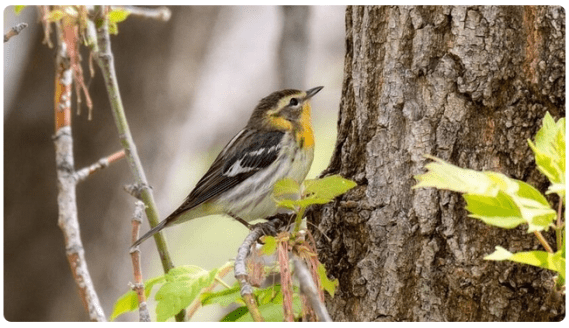
For a special and final treat we hopped into our cars and drove several miles uphill into Griffith Park to where several rare birds had been spending the winter. Off of Griffith Park Drive, near the golf courses, we parked and walked all of 100 yds. up a curvy dirt trail and spotted the bird below, in a bare tree, catching passing flies in an interesting circular manner.

The only place in the U.S. where one might expect to find this species is in southeast Arizona, so it’s well out of its usual range.
We also looked for the Hepatic Tanager which was frequently seen in the same area, but it was elsewhere.
As you’ll see from the list below, we saw 58 species at the picnic park and Riverwalk, a quite respectable number for a small area surrounded by city and road.
Bette Davis Picnic Area, Los Angeles, California, US
Jan 13, 2024 8:00 AM – 10:30 AM
Protocol: Traveling
1.5 mile(s)
Checklist Comments: Some birds also (but not only) seen at Glendale Narrows Riverwalk.
58 species
Canada Goose 3
Egyptian Goose 1
Gadwall 2 Seen by Chris Tosdevin
American Wigeon 20
Mallard 25
Ring-necked Duck 12
Bufflehead 5
Rock Pigeon (Feral Pigeon) 18
Eurasian Collared-Dove 4
Mourning Dove 6
White-throated Swift 15
Anna’s Hummingbird 3
Allen’s Hummingbird 1
American Coot 25
Black-necked Stilt 100 Many more seen upstream & downstream but not counted.
Killdeer 6
Spotted Sandpiper 2
Greater Yellowlegs 1 With the BN Stilts
Ring-billed Gull 1
Western Gull 5
Double-crested Cormorant 3
Great Egret 2
Great Blue Heron 1
Turkey Vulture 2
Osprey 1
Cooper’s Hawk 2
Red-tailed Hawk 2
Acorn Woodpecker 8
Downy Woodpecker 1
Nuttall’s Woodpecker 1
Northern Flicker 1
Lilac-crowned Parrot 2
Black Phoebe 6
Hutton’s Vireo 1 Seen by Chris Tosdevin
California Scrub-Jay 2
American Crow 6
Common Raven 5
Oak Titmouse 3
Bushtit 6
Wrentit 1 Seen by Chris Tosdevin
Ruby-crowned Kinglet 4
White-breasted Nuthatch 1
European Starling 20
Western Bluebird 4
House Sparrow 5
American Pipit 1
House Finch 8
Lesser Goldfinch 4 Seen by Chris Tosdevin
Chipping Sparrow 6
Lark Sparrow 3
Dark-eyed Junco 6
White-crowned Sparrow 4
California Towhee 1
Brewer’s Blackbird 8
Orange-crowned Warbler 1 Seen by Chris Tosdevin
Common Yellowthroat 3
Yellow-rumped Warbler 20
View this checklist online at https://ebird.org/checklist/S158925929
[Posted by Chuck Almdale]
Here’s another petition concerning name-changing in reference to birds. The last one we mentioned was in October 2022 about the National Audubon Society dropping “Audubon” from their name. They decided against it.
This one is about the American Ornithological Society (AOS) wanting to axe all the eponymous names (names of human beings) from the English names (not the Scientific names) of all birds in the Western Hemisphere, totaling about 240 species. Among the first to go will be Clark’s Nutcracker and Lewis’ Woodpecker (of Lewis & Clark Expedition fame). Lucy’s Warbler, Anna’s Hummingbird, Townsend’s Warbler…all of that, gone, gone, gone. I don’t know about Baltimore Oriole (the city was named for Lord Baltimore). I’ll leave it at that for now, but if you’re interested I wrote a little bit about it in a blog about Malibu Lagoon in November 2023 (go here and scroll down to “A brief aside on bird names“).
The petition text is below, it’s self-explanatory, a bit over 3900 people have signed it so far, and if you feel like signing it, go to:
Petition to AOS Leadership on the Recent Decision to Change all Eponymous Bird Names || Change.org
There are links to comments from a dozen prominent petition signers. All are well worth reading.
To: Colleen Handel and AOS Leadership:
In response to a petition from Bird Names for Birds (BN4B) signed by approximately 2,500 people, AOS leadership announced the major decision to change all eponymous names in “an effort to address past wrongs and engage far more people in the enjoyment, protection, and study of birds.”
We the undersigned strongly support diversity and inclusion in the birding community but disagree with this decision for the following reasons:
The destabilization of 150 English bird names is unprecedented. We believe that such a momentous decision that affects the English names used by many thousands of people requires listening to a diversity of voices rather than a few. One of the guiding principles of the AOS is to maintain a list that “fosters stability for the sake of effective communication,” yet it has never polled membership or the public regarding a decision that will impact the entire world-wide birding community. This one-sided decision is discriminatory against those that would rather see no change or are willing to compromise. Furthermore, no other ornithological or birding organizations were consulted. The International Ornithological Union, which monitors taxonomic changes and maintains a global list of standard bird names, have already indicated they will not follow suit and remove all eponyms.
The attempt by AOS leadership to appear more diverse and inclusive has created an unprecedented and unnecessary division within the birding community unseen in our lifetimes. This decree has brought culture wars to ornithology and birding.
We challenge the AOS to produce evidence that bird names are having a negative impact on the stated goals of the organization or birding in general. There is much to remedy in a science that has historically been dominated by white males, but changing bird names, many of which were described and named in a different era, and trying to hide ornithological history will not remedy this history. In all reality this decision will have little to no impact in removing obstacles to minorities in ornithology and birding.
Rather than a total purge of eponyms, we suggest that the previous case-by-case method be resumed to remove offensive names rather than dishonoring the many people who founded ornithology in the Americas, many of whom are inadvertently disgraced by guilt by association.
This methodology was also endorsed by the entire North American Checklist Committee (NACC) and all but one member of the South American Checklist Committee (SACC) although the committees recommendations were ignored by the AOS.
We predict that assessing reaction from a broader portion of the user base will favor this approach.
Differing opinions on this matter deserve to have a voice.
Gulled* again at Malibu Lagoon, 24 Dec. 2023
[Chuck Almdale]
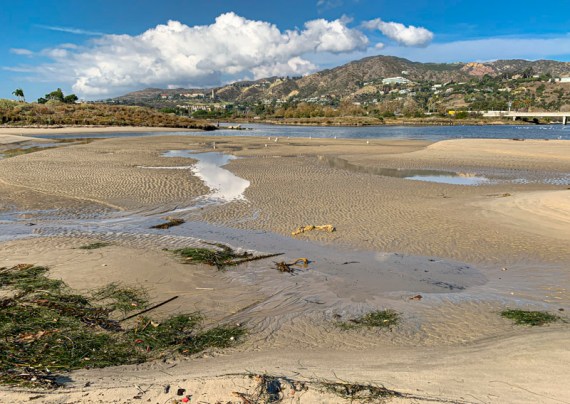
As we noted a few days earlier, there was a Lesser Black-backed Gull (a European-West Asian species) reported from Malibu Lagoon on Dec. 17 & 20, and of course we hoped it will still be there. I arrived about quarter-to-eight planning to do a preliminary search, but the lagoon was incredibly full of water from the +6.53 ft. high tide about six minutes earlier, so of course all the birds except for ducks and coots were gathered on what little beach remained, all the way across the lagoon and directly towards the sun. We’d have to wait until we got to the beach to search for it, but with such a high tide it would be several hours before there was a beach. Meanwhile the lagoon past the PCH bridge had a passel of Bufflehead and Ruddy Ducks and the lagoon was full (well…not really full) of coots and various ducks, including Northern Shovelers. Back at the gathering place, I briefed the birders on the LBB Gull, showed them the picture in the NGS field guide and put them on alert. As the tide dropped we slowly made our way to the beach.
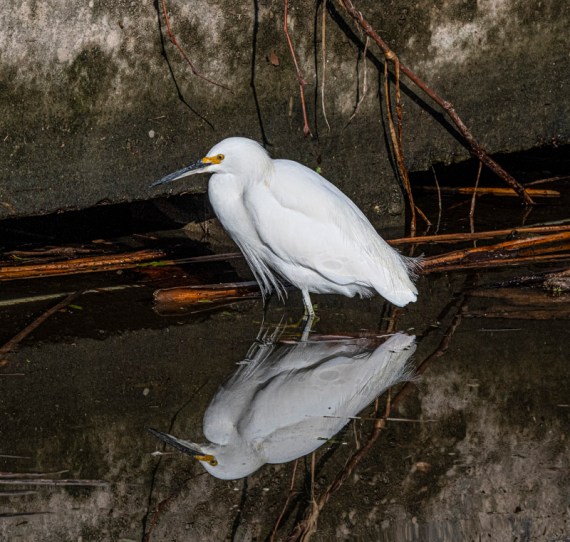
The egrets were forced to stay in what shallows there were. Some were near the winter tidal clock sidewalk.

One Snowy Egret on his way to the water…

Stepping over that stick…

A little lift from his right hind toe on the stick…

Finally in the water. Bring on the fish.
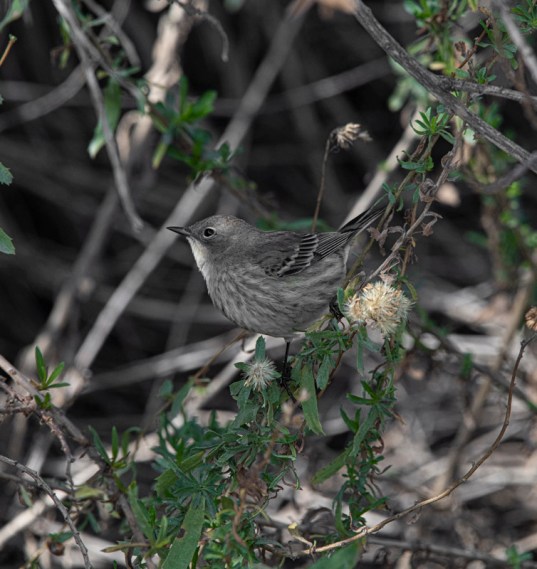
Of all the birds in the trees and brush – 3 woodpeckers (3 species) and 119 passerines (17 species) – the only one photographed was probably the plainest Yellow-rumped Warbler in existence. The two Wrentits posing on a chainlink fence got away before the cameras arrived.
By the time we reached the lagoon entrance, the water level had dropped considerably.

We began searching through the gulls. As usual this time of year most of them were California Gull, but there were typical numbers of Western, Ring-billed and Heermann’s. Sometimes it’s hard to tell these birds apart even though they differ significantly in size. Ring-billed (17 ½”) often look the same size as California (21″), which in turn often looks the same size as Western (25″), but Ring-billed always look smaller than Western. Go Figure. in the photo below, a Ring-billed is between a couple of California and a Western.

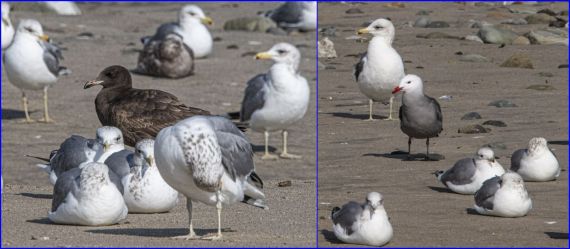
After a couple of false alerts, after which we decided we were doing something wrong, three birders – Chris, Femi and Marie – independently spotted the bird about the same time, among the other species at the other side of one of the lagoon’s sand islands revealed by the dropping tide.

It then wandered off into the water, farther away.

The slenderness of the bill shows up well in the photo below.
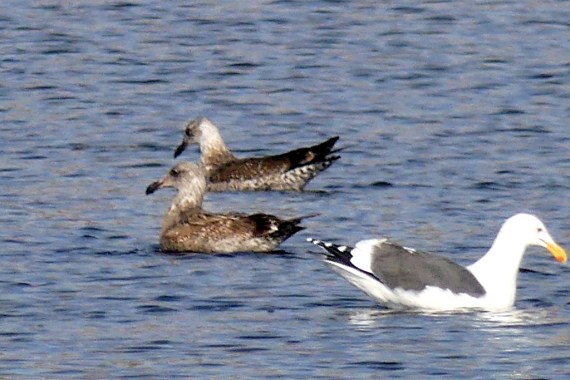
I found it a difficult bird – first to locate, then to differentiate. A number of other 1st-winter gulls also had “smudginess” around the eye. The bill was all black and more slender with less of a gonydeal bump on the lower mandible. The upper neck and nape were a bit brighter. The wing primaries were all black. It also seemed to have a bolder black-&-white pattern on the undertail coverts, almost a herringbone. The black bills of all the other 1st-winter birds were thicker with a more pronounced gonydeal bump and varying amounts of pinkishness around the base of the bill.
Heermann’s Gulls were present as well.
We even had three Bonaparte’s Gulls (yes, named after a naturalist nephew of that Bonaparte who had moved to Philadelphia after his uncle’s disastrous defeat at Waterloo). It’s hard to believe but this gull used to appear in the hundreds at the lagoon. My record high was over 40 years ago, about 1600 birds on 3 Mar. 1980. Next highest was 1095 on 12 Dec. 1982. Between 1 Dec. 1979 and 8 Jan. 1983 I had 12 counts in the hundreds. But since 27 Aug. 2000, out of 265 census visits, they have been present only 68 times, totaling a mere 198 birds, averaging 3 birds per appearance. In only four of those 68 appearances did they number into double digits; The highest count was 26 birds on 27 May 2007.

According to Birds of the World the world population of Bonaparte’s Gull is not globally threatened. Estimated world population 85,000–175,000 pairs, but that may be conservative. No declines noticed in Florida, New Jersey, Niagara (winter), northern California, Alaska, Quebec or Ontario. So the drop in the wintering and migrant population at Malibu Lagoon may not be representative of anywhere else, not even SoCal. Maybe it’s the smell of sun tan lotion in the water and air that drove them away.
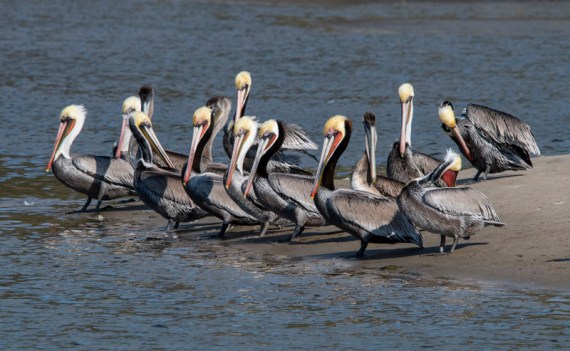
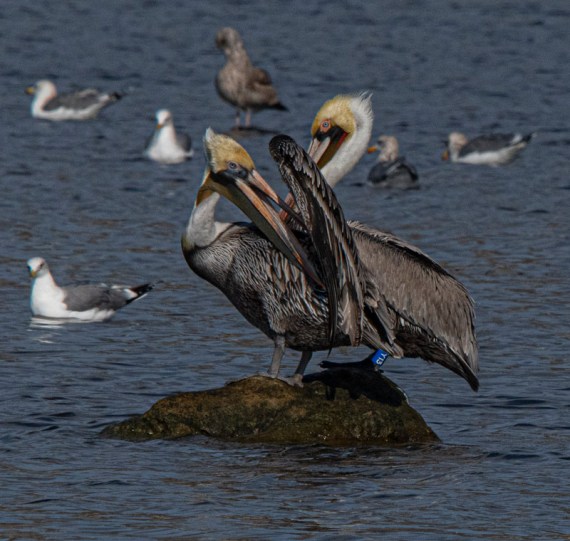
Brown Pelicans, some of whom nest on Anacapa Island not far away, have made a marvelous recovery since DDT was banned. They are at the lagoon 100% of the time.
By now the egrets had moved all around the lagoon.

We hadn’t seen the Osprey all morning, but on the way back found him on his phone pole at the corner of Malibu Colony, looking very quizzical. But if you’re not a fish, a crow or another Osprey, he’s really not all that interested in you.

Malibu Lagoon on eBird as of 12-29-23: 7333 lists, 320 species
Most recent species added: Red-breasted Nuthatch (31 October 2023, Kyle Te Poel).
Birds new for the season: Canada Goose, Horned Grebe, Eared Grebe, Black Oystercatcher, Bonaparte’s Gull, Lesser Black-backed Gull, Black-crowned Night-Heron, Red-shouldered Hawk, Downy Woodpecker, Nuttall’s Woodpecker, Hairy Woodpecker, California Scrub-Jay, Common Raven, Dark-eyed Junco.
Many, many thanks to photographers Femi Faminu, Ray Juncosa
Upcoming SMBAS scheduled field trips; no reservations or covid card necessary unless specifically mentioned:
- Antelope Valley Raptor Search, Sat. Jan 13, meet at 7:00 am. Reservations. May be canceled.
- Malibu Lagoon, Sun. Jan 28, 8:30 (adults) & 10 am (parents & kids)
- Madrona Marsh Sat Feb 10, 8 am.
- These and any other trips we announce for the foreseeable future will depend upon expected status of the Covid/flu/etc. pandemic at trip time. Any trip announced may be canceled shortly before trip date if it seems necessary. By now any other comments should be superfluous.
- Link to Programs & Field Trip schedule.
The next SMBAS Zoom program: “Aeroacoustics Lab at UCR” with Dr. Chris J. Clark, Evening Meeting, Tuesday, Feb 6, 2023, 7:30 p.m.
The SMBAS 10 a.m. Parent’s & Kids Birdwalk restarted April 23. Reservations for groups (scouts, etc.) necessary; not necessary for families.
Links: Unusual birds at Malibu Lagoon
9/23/02 Aerial photo of Malibu Lagoon
More recent aerial photo
Prior checklists:
2023: Jan-June
2021: Jan-July, July-Dec 2022: Jan-June, July-Dec
2020: Jan-July, July-Dec 2019: Jan-June, July-Dec
2018: Jan-June, July-Dec 2017: Jan-June, July-Dec
2016: Jan-June, July-Dec 2015: Jan-May, July-Dec
2014: Jan-July, July-Dec 2013: Jan-June, July-Dec
2012: Jan-June, July-Dec 2011: Jan-June, July-Dec
2010: Jan-June, July-Dec 2009: Jan-June, July-Dec
The 10-year comparison summaries created during the Lagoon Reconfiguration Project period, remain available—despite numerous complaints—on our Lagoon Project Bird Census Page. Very briefly summarized, the results unexpectedly indicate that avian species diversification and numbers improved slightly during the restoration period June’12-June’14.
Many thanks to Femi Faminu, Ray Juncosa, Chris Lord, Marie Nosurname and others for their contributions to this month’s checklist.
The species lists below is irregularly re-sequenced to agree with the California Bird Records Committee Official California Checklist. If part of the chart’s right side is hidden, there’s a slider button inconveniently located at the bottom of the list.
The numbers 1-9 left of the species names are keyed to the nine categories of birds at the bottom.
[Chuck Almdale]
| Malibu Census 2023 | 7/23 | 8/27 | 9/24 | 10/22 | 11/26 | 12/24 | |
| Temperature | 66-70 | 69-73 | 56-74 | 62-70 | 62-68 | 53-64 | |
| Tide Lo/Hi Height | L+0.81 | H+3.68 | H+3.77 | L+3.34 | H+6.53 | H+6.20 | |
| Tide Time | 0730 | 0832 | 0739 | 1029 | 0740 | 0644 | |
| 1 | Canada Goose | 4 | 21 | ||||
| 1 | Cinnamon Teal | 3 | 1 | ||||
| 1 | Northern Shoveler | 1 | 13 | ||||
| 1 | Gadwall | 90 | 45 | 40 | 23 | 30 | 27 |
| 1 | American Wigeon | 5 | 14 | ||||
| 1 | Mallard | 77 | 20 | 12 | 9 | 8 | |
| 1 | Green-winged Teal | 1 | 31 | 8 | |||
| 1 | Lesser Scaup | 1 | |||||
| 1 | Surf Scoter | 15 | 8 | 3 | |||
| 1 | Bufflehead | 5 | 18 | ||||
| 1 | Red-breasted Merganser | 20 | 5 | ||||
| 1 | Ruddy Duck | 12 | 22 | 37 | |||
| 2 | Pied-billed Grebe | 2 | 1 | 4 | 6 | 2 | |
| 2 | Horned Grebe | 1 | |||||
| 2 | Eared Grebe | 1 | |||||
| 2 | Western Grebe | 28 | 13 | 18 | |||
| 7 | Feral Pigeon | 3 | 4 | 3 | 4 | 4 | |
| 7 | Mourning Dove | 2 | 2 | 5 | 1 | ||
| 8 | Anna’s Hummingbird | 1 | 2 | 2 | 2 | ||
| 8 | Allen’s Hummingbird | 4 | 1 | 4 | 1 | 3 | |
| 2 | Sora | 1 | |||||
| 2 | American Coot | 6 | 49 | 157 | 230 | 280 | |
| 5 | Black Oystercatcher | 1 | |||||
| 5 | Black-bellied Plover | 6 | 39 | 82 | 79 | 7 | 52 |
| 5 | Killdeer | 8 | 13 | 6 | 1 | 5 | 20 |
| 5 | Semipalmated Plover | 1 | 7 | 3 | |||
| 5 | Snowy Plover | 7 | 13 | 22 | 18 | 1 | |
| 5 | Whimbrel | 32 | 38 | 32 | 23 | 4 | 8 |
| 5 | Long-billed Curlew | 4 | 3 | ||||
| 5 | Marbled Godwit | 1 | 48 | 45 | 5 | 11 | |
| 5 | Short-billed Dowitcher | 1 | 2 | ||||
| 5 | Wilson’s Phalarope | 1 | |||||
| 5 | Red-necked Phalarope | 2 | |||||
| 5 | Spotted Sandpiper | 3 | 3 | ||||
| 5 | Willet | 5 | 9 | 29 | 56 | 12 | 22 |
| 5 | Ruddy Turnstone | 2 | 4 | 10 | 1 | 10 | |
| 5 | Sanderling | 2 | 32 | 27 | 69 | 10 | |
| 5 | Least Sandpiper | 4 | 8 | 18 | 6 | 35 | 28 |
| 5 | Western Sandpiper | 6 | 3 | 15 | |||
| 6 | Bonaparte’s Gull | 3 | |||||
| 6 | Heermann’s Gull | 89 | 90 | 51 | 55 | 71 | 22 |
| 6 | Ring-billed Gull | 1 | 4 | 42 | 34 | ||
| 6 | Western Gull | 150 | 85 | 65 | 45 | 68 | 64 |
| 6 | Herring Gull | 1 | 1 | 1 | |||
| 7 | Lesser Black-backed Gull | 1 | |||||
| 6 | California Gull | 2 | 3 | 7 | 7 | 220 | 425 |
| 6 | Glaucous-winged Gull | 1 | 5 | ||||
| 6 | Caspian Tern | 1 | |||||
| 6 | Forster’s Tern | 1 | |||||
| 6 | Elegant Tern | 2 | 40 | 24 | 2 | 1 | |
| 6 | Royal Tern | 10 | 4 | 5 | 12 | 7 | |
| 2 | Pacific Loon | 1 | |||||
| 2 | Common Loon | 1 | |||||
| 2 | Black-vented Shearwater | 20 | 28 | ||||
| 2 | Brandt’s Cormorant | 1 | |||||
| 2 | Pelagic Cormorant | 1 | 2 | 5 | |||
| 2 | Double-crested Cormorant | 42 | 23 | 30 | 48 | 37 | 47 |
| 2 | Brown Pelican | 174 | 56 | 27 | 12 | 26 | 72 |
| 3 | Black-crowned Night-Heron | 2 | 5 | 2 | 1 | ||
| 3 | Snowy Egret | 4 | 8 | 5 | 2 | 20 | 18 |
| 3 | Green Heron | 1 | 3 | 1 | |||
| 3 | Great Egret | 3 | 5 | 6 | 4 | 2 | |
| 3 | Great Blue Heron | 4 | 5 | 3 | 2 | 4 | 2 |
| 4 | Turkey Vulture | 1 | 2 | 2 | |||
| 4 | Osprey | 1 | 1 | 1 | 2 | 1 | |
| 4 | Cooper’s Hawk | 1 | |||||
| 4 | Red-shouldered Hawk | 1 | 1 | ||||
| 4 | Red-tailed Hawk | 1 | 1 | 2 | |||
| 8 | Belted Kingfisher | 2 | 1 | 1 | |||
| 8 | Downy Woodpecker | 1 | |||||
| 8 | Nuttall’s Woodpecker | 1 | 1 | ||||
| 8 | Hairy Woodpecker | 1 | |||||
| 8 | Northern Flicker | 1 | |||||
| 4 | American Kestrel | 1 | |||||
| 4 | Peregrine Falcon | 1 | |||||
| 8 | Nanday Parakeet | 2 | |||||
| 9 | Black Phoebe | 6 | 2 | 4 | 4 | 2 | 4 |
| 9 | Say’s Phoebe | 1 | |||||
| 9 | California Scrub-Jay | 1 | 2 | 1 | |||
| 9 | American Crow | 20 | 9 | 6 | 44 | 3 | 5 |
| 9 | Common Raven | 2 | 1 | 2 | 1 | ||
| 9 | Oak Titmouse | 3 | 1 | 1 | |||
| 9 | No. Rough-winged Swallow | 2 | |||||
| 9 | Barn Swallow | 12 | 35 | 4 | |||
| 9 | Bushtit | 22 | 8 | 22 | 50 | ||
| 9 | Wrentit | 1 | 4 | 1 | 4 | 3 | |
| 9 | Ruby-crowned Kinglet | 1 | |||||
| 9 | Blue-gray Gnatcatcher | 2 | |||||
| 9 | House Wren | 2 | 2 | 3 | 2 | ||
| 9 | Marsh Wren | 1 | |||||
| 9 | Bewick’s Wren | 1 | 1 | ||||
| 9 | European Starling | 15 | 12 | 22 | 28 | ||
| 9 | Northern Mockingbird | 1 | |||||
| 9 | House Finch | 15 | 5 | 6 | 5 | 6 | 9 |
| 9 | Lesser Goldfinch | 2 | |||||
| 9 | Dark-eyed Junco | 1 | 2 | ||||
| 9 | White-crowned Sparrow | 10 | 20 | 27 | |||
| 9 | Savannah Sparrow | 1 | |||||
| 9 | Song Sparrow | 5 | 4 | 5 | 5 | 6 | 7 |
| 9 | California Towhee | 3 | 3 | 1 | 2 | 1 | |
| 9 | Hooded Oriole | 1 | |||||
| 9 | Red-winged Blackbird | 6 | 7 | 15 | 16 | ||
| 9 | Brown-headed Cowbird | 1 | |||||
| 9 | Great-tailed Grackle | 1 | 1 | 20 | 1 | ||
| 9 | Orange-crowned Warbler | 1 | 2 | ||||
| 9 | Common Yellowthroat | 2 | 4 | 8 | 5 | ||
| 9 | Yellow Warbler | 1 | |||||
| 9 | Yellow-rumped Warbler (Aud) | 5 | 12 | 6 | |||
| 9 | Townsend’s Warbler | 1 | |||||
| 9 | Wilson’s Warbler | 1 | |||||
| 9 | Western Tanager | 1 | |||||
| 9 | Black-headed Grosbeak | 1 | |||||
| 0 | Totals by Type | Jul | Aug | Sep | Oct | Nov | Dec |
| 1 | Waterfowl | 171 | 65 | 53 | 51 | 134 | 155 |
| 2 | Water Birds – Other | 216 | 87 | 129 | 280 | 314 | 426 |
| 3 | Herons, Egrets & Ibis | 13 | 24 | 13 | 11 | 28 | 23 |
| 4 | Quail & Raptors | 1 | 2 | 4 | 4 | 5 | 4 |
| 5 | Shorebirds | 70 | 145 | 299 | 265 | 139 | 162 |
| 6 | Gulls & Terns | 244 | 230 | 152 | 118 | 416 | 562 |
| 7 | Doves | 2 | 5 | 9 | 4 | 4 | 4 |
| 8 | Other Non-Passerines | 5 | 0 | 6 | 10 | 1 | 9 |
| 9 | Passerines | 96 | 59 | 82 | 154 | 146 | 119 |
| Totals Birds | 818 | 617 | 747 | 897 | 1187 | 1464 | |
| Total Species | Jul | Aug | Sep | Oct | Nov | Dec | |
| 1 | Waterfowl | 3 | 2 | 3 | 4 | 10 | 11 |
| 2 | Water Birds – Other | 2 | 4 | 7 | 8 | 7 | 8 |
| 3 | Herons, Egrets & Ibis | 4 | 5 | 4 | 4 | 3 | 4 |
| 4 | Quail & Raptors | 1 | 2 | 4 | 3 | 3 | 3 |
| 5 | Shorebirds | 9 | 15 | 14 | 9 | 9 | 9 |
| 6 | Gulls & Terns | 5 | 7 | 6 | 6 | 8 | 9 |
| 7 | Doves | 1 | 2 | 2 | 2 | 1 | 1 |
| 8 | Other Non-Passerines | 2 | 0 | 4 | 5 | 1 | 6 |
| 9 | Passerines | 14 | 9 | 23 | 17 | 18 | 17 |
| Totals Species – 112 | 41 | 46 | 67 | 58 | 60 | 68 |
*Gulled pun intended



 SANTA MONICA BAY AUDUBON SOCIETY BLOG