Free email delivery
Please sign up for email delivery in the subscription area to the right.
No salesman will call, at least not from us. Maybe from someone else.
Sepulveda Basin Field Trip, 9 Mar 2024
[By Chuck Almdale, photos by Ray Juncosa & Chris Tosdevin]
Make sure you get to the quiz at the end. We’re testing a new format.
One could say the weather was better than last year – no hints of rain – but there were fewer birds. The trails were clear of all the fallen trees, but it seemed that a bunch of trees had disappeared from the center of the island in the pond, making it appear bare and giving fewer nesting spots for the Double-crested Cormorant flock and the various herons and egrets.
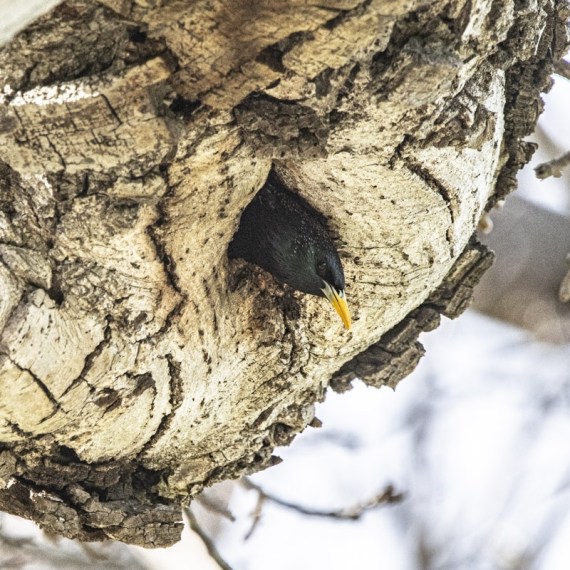
Our lead bird is every American birder’s bird-to-hate, the European Starling. This is one of those species that some guy in the late 19th century decided simply must grace America’s fertile lands because it is mentioned somewhere in the works of Shakespeare. So he dumped off dozens of species in the wilds of New York City’s Central Park. The only ones that prospered were this starling and the House Sparrow, and there are probably billions of them across America today. The other dumpees rapidly disappeared, except for the Eurasian Tree Sparrow which hangs on along the central Mississippi River. (Co-incidentally this sparrow is apparently vanishing from England.) This starling is our sole representative of the Sturnidae family, widespread in the Old World with almost 120 species, many of them stunningly beautiful, especially those in Africa.
Why don’t birders like it? They’re highly social, quite aggressive and use their sharp pointed bills and shear numbers and persistence to drive native birds from nesting cavities. Combine that with deforestation and our tendency to cut down dead limbs and trees lest they fall down and crush our cars, thereby removing many potential nest holes, and it’s part of the reason many of our native species have declined up to 95%. But…when these starlings are covered with fresh fall stars they are – as the Aussies say – quite a “specky bird.”
Probably the bird of the day (Ta-Dah!) was the Neotropic Cormorant which – after several years of just missing it or having poor and uncertain looks – we finally got a good, unmistakable look. It’s the smaller, leftmost cormorant below; the others are all Double-crested (save for the geese, of course). It was probably a life bird for some and certainly a County Bird for others.
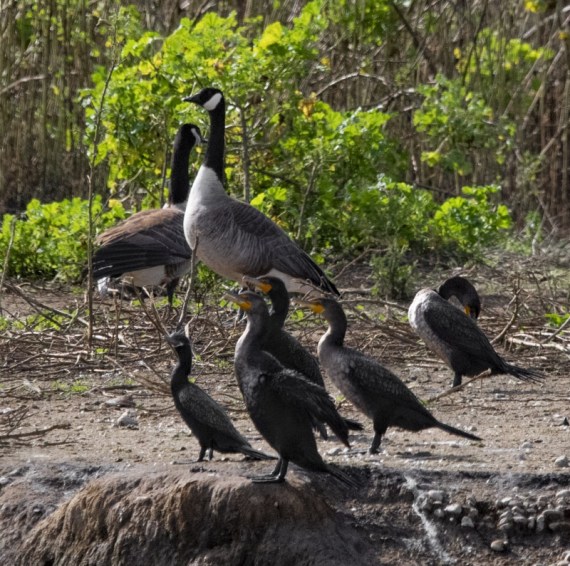
Although the Neotropic is significantly smaller than the Double-crested – length 26″ wingspan 40″ versus length 36″ wingspan 63″, it’s surprisingly difficult to see this difference in the field. It helps a great deal when they’re standing erect right next to each other and all facing sideways in the same direction as pictured above. Put them up in a tree on different branches, crouching or snoozing, or lounging on a log in a lake and you might not find it quite so easy.
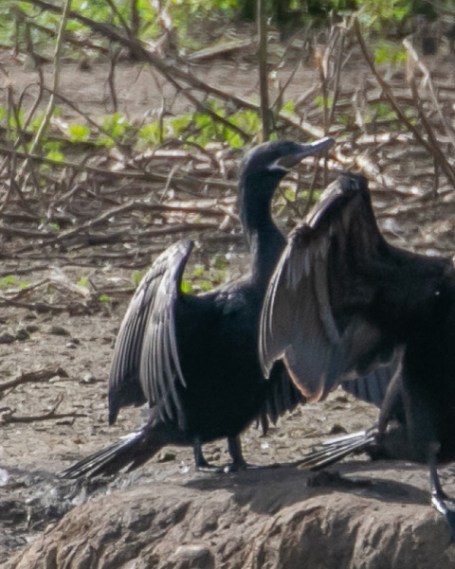
There are five other good field marks to look for, usually visible if not too far away. The Neotropic’s bill is smaller and the likewise-smaller gular pouch is a slightly darker orange. The angle of orangish flesh at the corner of the mouth gape is more acute. The white line edging the gape is (barely) present in juveniles and quite bold in adults in breeding, more extensive and brighter than in the Double-crested, which often doesn’t show any white at all. Lastly, the Double-crested always has yellow flesh above the dark loral stripe, brightest and largest in the adult. The Neotropic never has yellow in this location. Look closely at these three photos and you can see all these field marks. All this valuable information is in your handy paperbound field guide, of course, which you always carry into the field, of course, so it’s always close at hand. Of course.
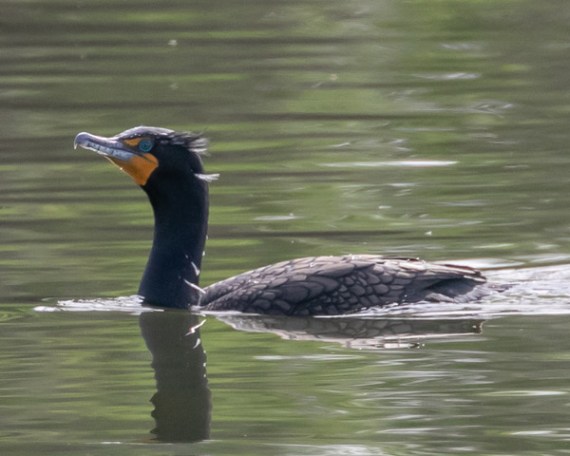
Neotropic Cormorants have been veeeerrrry slowly invading California for well over 30 years. I saw my first one August 31 1986 in the Imperial Valley, probably on one of the small lakes southeast of the Salton Sea, on one of those scorching summer days when boobies and Wood Storks – possibly driven mad by the heat, upwards of 110°F – fly north into the U.S. Thirty-two years later we saw it on a San Gabriel valley reservoir and now, six years after that, they’re well on their way to becoming resident on many of our ponds and reservoirs and along our several rivers. They seem to much prefer fresh water over brackish or salt water, although I’m not sure that’s true in Central and South America.
At the end of the walk, we climbed into our cars and drove to a different location in the Sepulveda Basin. Here we followed Ruth and Chris Tosdevin to where they had somehow found a large Great Horned Owl and nest. The nest was near the top of a conifer, and was so cleverly located (those wily Owls!) that when I walked off more than 10 ft in any direction I could no longer see the nest, even if I went several hundred feet away, looking back to see if I could find birds in the nest. View of the nest was blocked off in all directions, save directly underneath! I don’t know how they ever found it. To top that, Ruth then located one of the owls in a nearby tree, high in a crotch and deep in the shade. This is not the first time I’ve seen Ruth do this with owls, and it verges on the miraculous.

Quiz time! Answers are buried in useful locations.
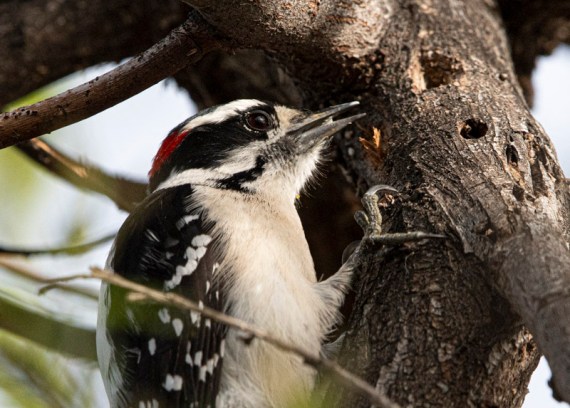

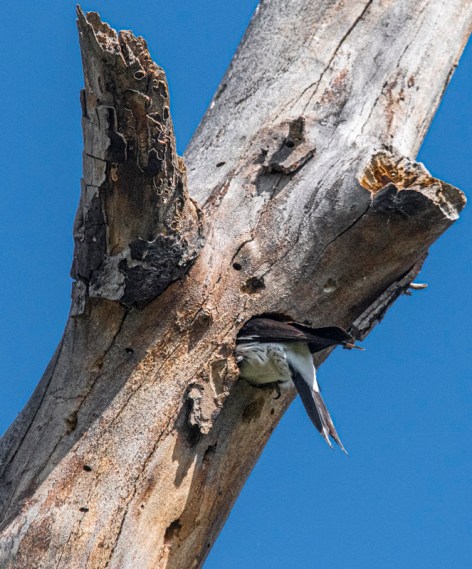
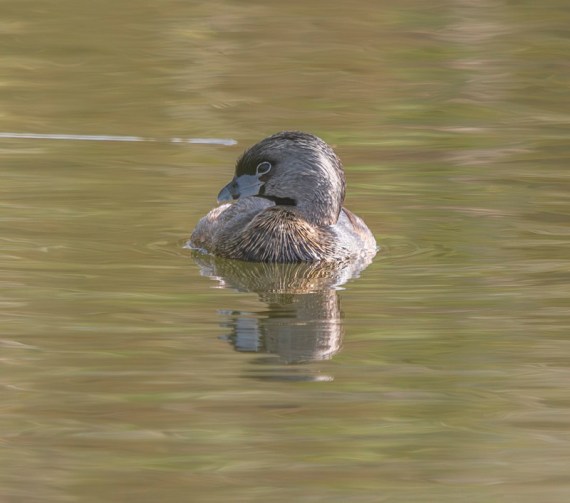
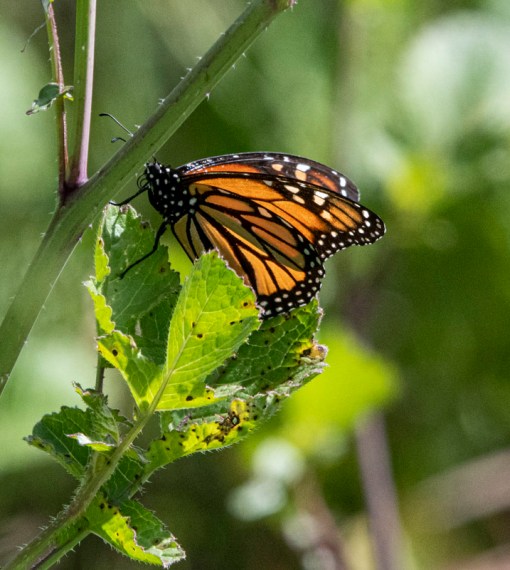

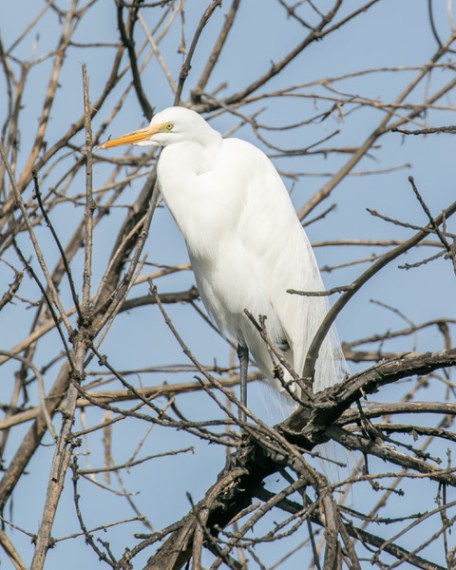
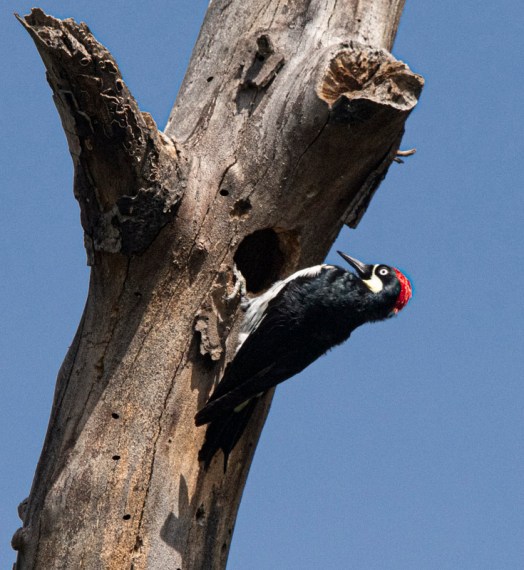
Answers to the top twelve:
1. Downy Woodpecker (Ray Juncosa 3-9-24)
2. Brown Headed Cowbirds (Chris Tosdevin 3-9-24) Link to our zoom program
3. Acorn Woodpecker (Ray Juncosa 3-9-24)
4. Pied-billed Grebe (Ray Juncosa 3-9-24)
5. Monarch Butterfly (Ray Juncosa 3-9-24)
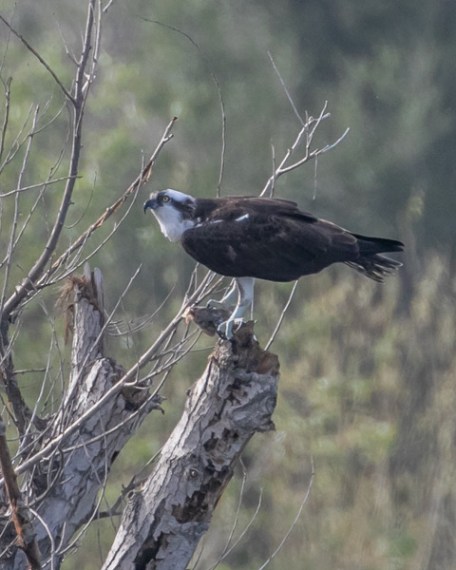
6. Osprey (Chris Tosdevin 3-9-24)
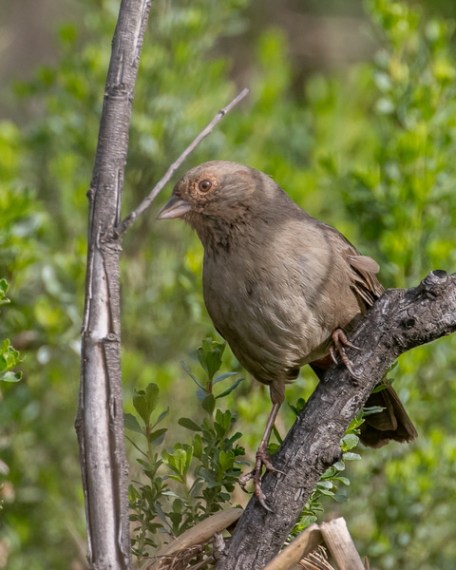
7. California Towhee (Chris Tosdevin 3-9-24)
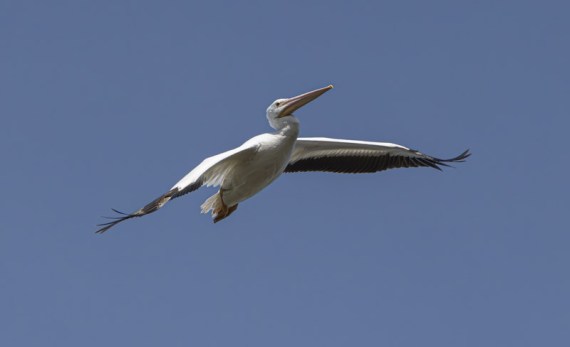
8. White Pelicans (Ray Juncosa 3-9-24)
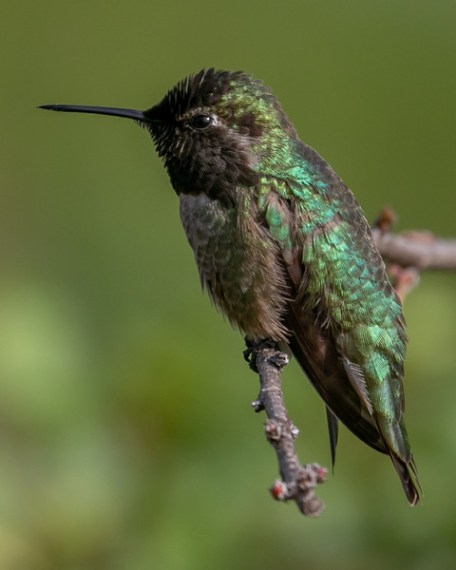
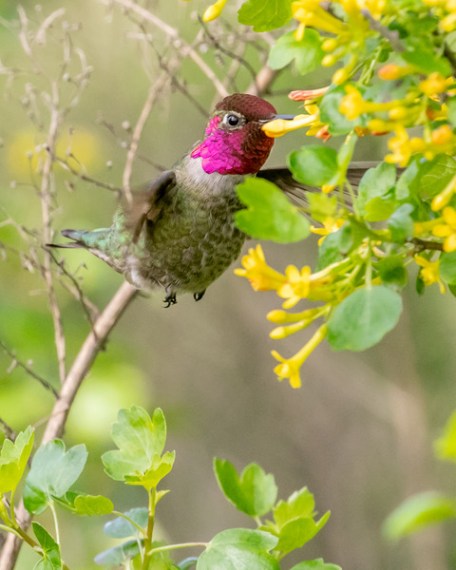
9. Anna’s Hummingbird, male (Chris Tosdevin 3-9-24)
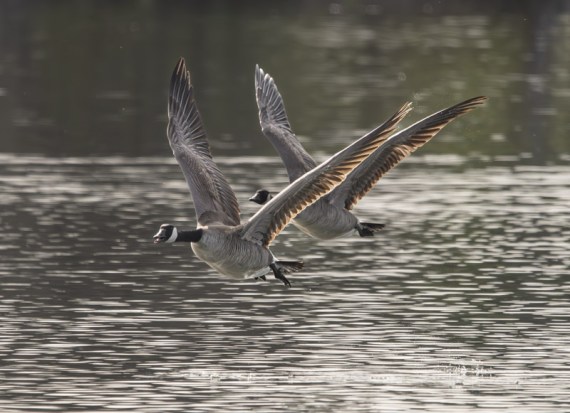
10. Canada Geese (Ray Juncosa 3-9-24)
11. Great Egret (Chris Tosdevin 3-9-24)
12. Acorn Woodpecker (Ray Juncosa 3-9-24)
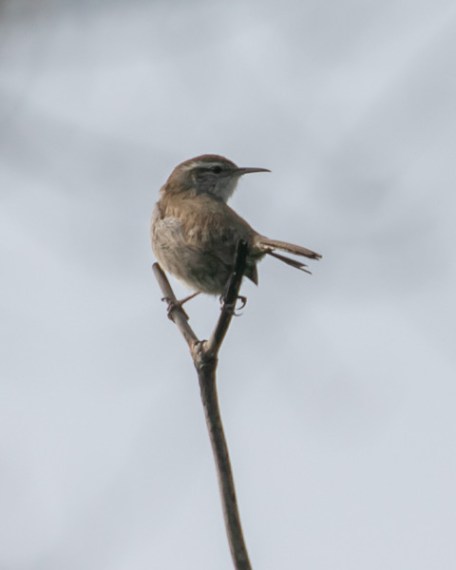
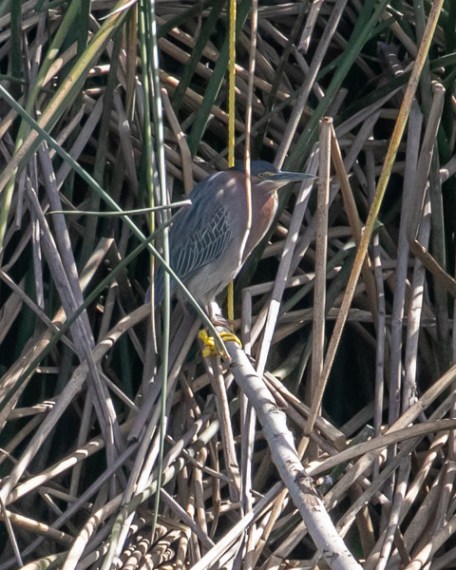


Answers to the bottom twelve:
13. Bewick’s Wren (Chris Tosdevin 3-9-24)
14. Green Heron (Chris Tosdevin 3-9-24)
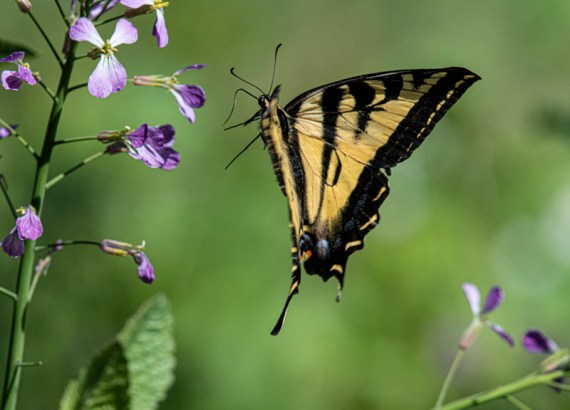
15. Western Tiger Swallowtail Butterfly (Ray Juncosa 3-9-24)
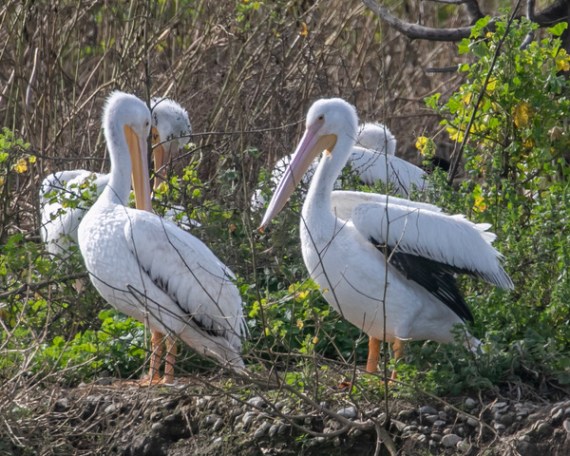
16. White Pelicans (Chris Tosdevin 3-9-24)
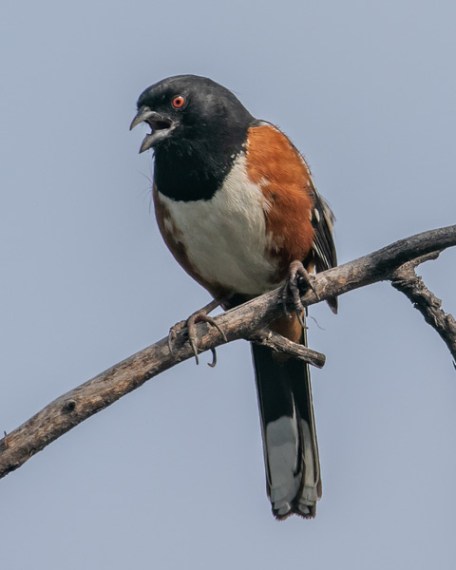
17. Spotted Towhee (Chris Tosdevin 3-9-24)
18. Cundinamarca Antpitta (Photographer & date unknown, link ) not actually seen in Sepulveda
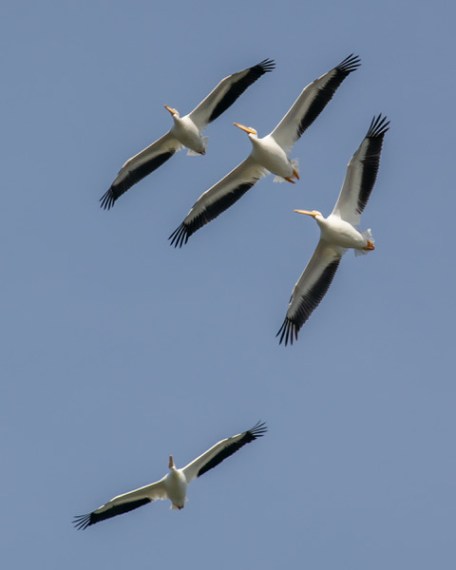
19. White Pelicans (Chris Tosdevin 3-9-24)
20. Osprey (Chris Tosdevin 3-9-24) The other side of the bird
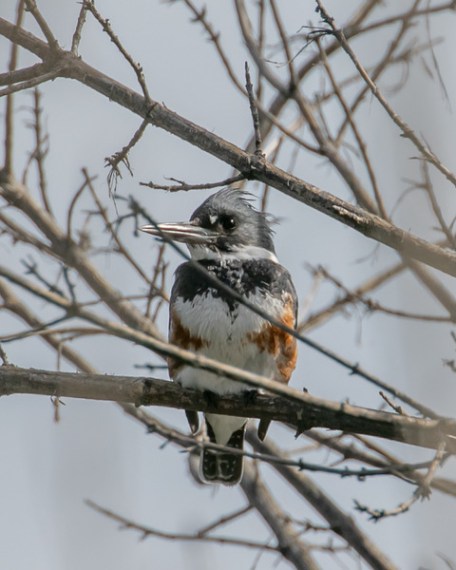
21. Belted Kingfisher, female (Chris Tosdevin 3-9-24)
22. Anna’s Hummingbird, male (Chris Tosdevin 3-9-24)
23. Great Blue Heron (Chris Tosdevin 3-9-24)
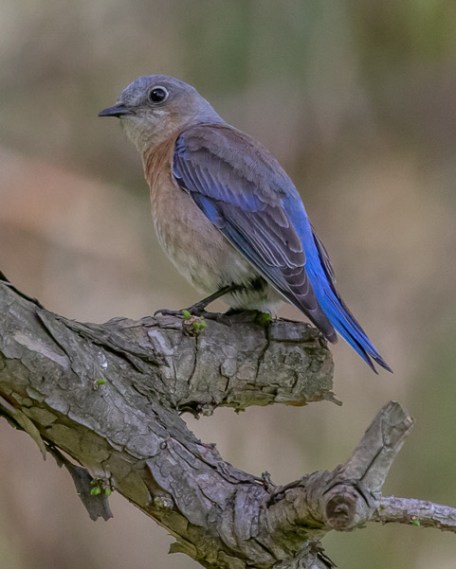
24. Western Bluebird, male (Chris Tosdevin 3-9-24)
Link to eBird report of this trip: https://ebird.org/checklist/S165077313
| Sepulveda Basin Field Trips | |||||
| English Name | 3/9/24 | 3/11/23 | 3/10/18 | 2/11/17 | 2/13/16 |
| Canada Goose | 30 | E | X | X | X |
| Egyptian Goose | 2 | A | X | X | X |
| Muscovy Duck | X | ||||
| Mallard | 25 | B | X | X | X |
| Hooded Merganser | A | X | X | ||
| Pied-billed Grebe | 4 | B | X | X | X |
| Neotropic Cormorant | 2 | 1 | |||
| Double-crested Cormorant | 15 | D | X | X | X |
| American White Pelican | 20 | C | X | X | |
| Great Blue Heron | 1 | A | X | X | X |
| Great Egret | 5 | B | X | X | X |
| Snowy Egret | 1 | A | X | X | |
| Green Heron | 3 | A | X | X | X |
| Black-crowned Night-Heron | 6 | B | X | X | X |
| Turkey Vulture | 4 | C | X | X | X |
| Osprey | 2 | A | X | X | X |
| Cooper’s Hawk | A | X | X | ||
| Red-shouldered Hawk | A | ||||
| Red-tailed Hawk | 2 | A | X | X | |
| American Coot | 10 | D | X | X | X |
| Killdeer | X | ||||
| Gull sp. | 10 | ||||
| Western Gull | X | ||||
| Rock Pigeon | D | X | |||
| Eurasian Collared-Dove | 1 | ||||
| Mourning Dove | 25 | C | X | X | X |
| Great Horned Owl | 1 | X | |||
| White-throated Swift | X | ||||
| Anna’s Hummingbird | 8 | A | X | X | X |
| Rufous Hummingbird | 12 | X | |||
| Allen’s Hummingbird | B | X | X | X | |
| Belted Kingfisher | 1 | 1 | X | X | X |
| Acorn Woodpecker | 3 | A | |||
| Red-breasted Sapsucker | X | ||||
| Nuttall’s Woodpecker | A | X | X | X | |
| Downy Woodpecker | 2 | X | X | ||
| Northern Flicker | A | X | X | ||
| American Kestrel | 2 | ||||
| Merlin | 1 | ||||
| Yellow-chevroned Parakeet | X | X | |||
| Black Phoebe | 8 | A | X | X | X |
| Ash-throated Flycatcher | X | ||||
| Cassin’s Kingbird | A | X | X | ||
| Western Scrub-Jay | 2 | X | X | ||
| American Crow | 4 | X | X | ||
| Common Raven | B | ||||
| Tree Swallow | 15 | D | X | ||
| Violet-green Swallow | A | X | |||
| N. Rough-winged Swallow | C | X | X | ||
| Barn Swallow | 3 | ||||
| Cliff Swallow | B | ||||
| Bushtit | 8 | C | X | X | |
| White-breasted Nuthatch | 1 | A | |||
| House Wren | X | ||||
| Bewick’s Wren | 2 | X | X | ||
| Blue-gray Gnatcatcher | X | X | |||
| Ruby-crowned Kinglet | A | X | X | ||
| Western Bluebird | 9 | B | X | X | X |
| Mountain Bluebird | D | ||||
| Hermit Thrush | X | ||||
| American Robin | A | ||||
| California Thrasher | X | ||||
| Northern Mockingbird | 1 | A | X | X | |
| European Starling | 8 | C | X | X | |
| Orange-crowned Warbler | X | X | |||
| Common Yellowthroat | 8 | B | X | X | X |
| Yellow-rumped Warbler | 80 | D | X | X | X |
| Spotted Towhee | 3 | X | X | X | |
| California Towhee | 3 | B | X | X | X |
| Chipping Sparrow | 4 | B | X | X | |
| Lark Sparrow | X | X | |||
| Savannah Sparrow | X | X | |||
| Song Sparrow | 16 | C | X | X | X |
| White-crowned Sparrow | 10 | D | X | X | X |
| Dark-eyed Junco | X | ||||
| Red-winged Blackbird | 3 | D | X | X | X |
| Western Meadowlark | A | ||||
| Brown-headed Cowbird | 10 | ||||
| Great-tailed Grackle | 2 | C | X | X | |
| House Finch | 20 | D | X | X | X |
| Lesser Goldfinch | 3 | D | X | X | X |
| Lawrence’s Goldfinch | D | ||||
| American Goldfinch | X | ||||
| Total Species – 82 + 1 taxa | 48 | 56 | 44 | 51 | 51 |
Cundinamarca Antpitta, Peter Kaestner & the ABC
[Posted by Chuck Almdale]
They’re still finding new species of birds in the least-explored hinterlands of the world. Many of them are splits – former subspecies raised to full species status on the basis of someone’s research – but some are just plain new to science. The Cundinamarca Antpitta for example, known to the scientific world as Grallaria kaestneri. The species name kaestneri is for Peter Kaestner, the discoverer. On 16 October 1989 Kaestner was poking about in the highland cloud forest of Colombia (doesn’t everyone?) when he heard the bird sing, recognized that he did not recognize the song (yes, he’s that experienced), taped it, played it back, the bird came in to confront the [apparent] bird invading his territory, and Peter saw that it was not a bird known to science (yes, he’s that good).
On 25 May 2023, 33 years after his discovery, Peter – now retired from the diplomatic service – took time off from his avocation of seeing more species of birds in the world than anyone and returned for another look at Grallaria kaestneri, his namesake. The short film below documents that meeting.
He soon returned to his avocation. Nine months later, in February 2024, he spotted an Orange-tufted Spiderhunter, a species in the Sunbird family Nectariniidae, on the southern Philippines island of Mindanao and thereby became the first person in the world to see 10,000 different species of birds. (Yes, he’s that good.)
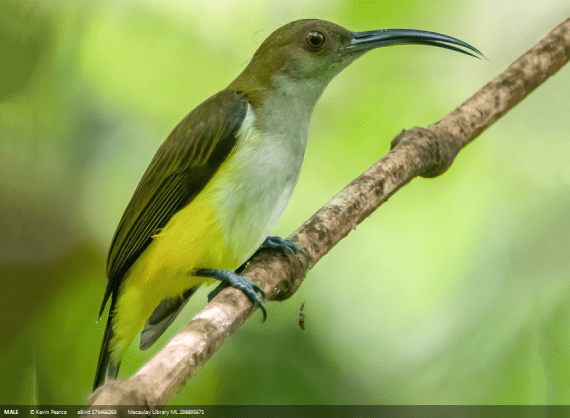
Peter has recently taken on the role of fund-raising for the American Bird Conservancy, whose mission is to protect bird life throughout the New World, and he, his Grallaria kaestneri and the ABC want to send everyone a book in return (of course) for a donation.
If you’re interested in learning what they have to say, go here. It’s a good organization.
The recording of this program from 5 Mar 2024 is now available online

Could that be a Wooden Cowbird pestering the bluebird?
(photo courtesy of Pablo Weaver)
|
Recording Glitch: There are two programs recorded here. The first (18 seconds long) is useless; click the forward button >| at lower left of screen to go past it. When the second recording appear, click the usual run button at lower left.
Co-evolving Cowbirds and their Hosts, with Dr. Pablo Weaver
Brood parasites, often vilified as “cheats” have fascinated naturalists since ancient times and inspired the likes of Darwin and Shakespeare with their unique reproductive strategy. In the case of obligate brood parasitism, a species’ entire survival relies on the parental care of another, unsuspecting host species. Brood parasitic relationships have evolved in several animal groups exhibiting parental care, including insects, fish, and birds, with the latter providing fascinating case studies of the complex evolutionary arms race occurring between parasites and their hosts. As parasites adapt to camouflage their eggs and young within host nests, the hosts exhibit remarkable counter adaptations, including egg recognition and counting, that protect their own reproductive efforts from the nest invaders. Dr. Weaver will discuss this fascinating system and present case studies from his own research involving the coevolution of cowbirds and their hosts in the Dominican Republic and Montana.
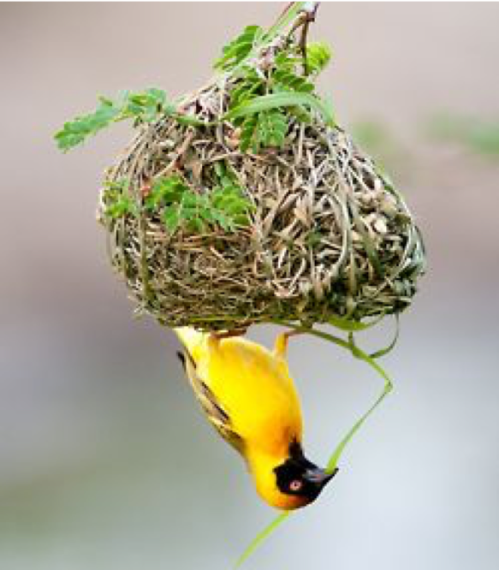
A pendulating Village Weaver at his nest. (photo courtesy of Pablo Weaver)
Dr. Pablo Weaver is an Associate Professor of Biology at the University of La Verne & the Director of the Neher Montana Research Station. His broad interests include biogeography, ecology, and evolutionary biology. He has several active areas of research, including work with birds and freshwater fishes in both the West Indies and in Montana. His research in the West Indies deals with fundamental questions of biogeography and evolution on islands and how the processes of natural and sexual selection shape diversity. In Montana, he studies the effects of mining and heavy metal contamination on aquatic communities, as well as interactions between parasitic cowbirds and Mountain Bluebirds.

Dr. Pablo Weaver
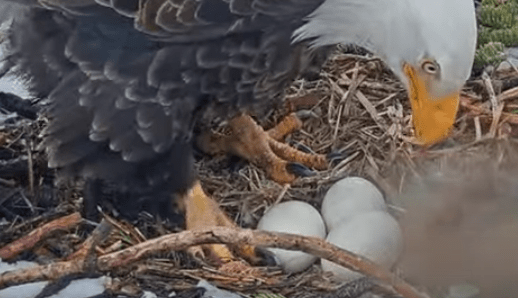
Bald Eagles at Big Bear Lake | WebCam
[Posted by Chuck Almdale]
Jackie & Shadow are back. Or, more accurately, still there.
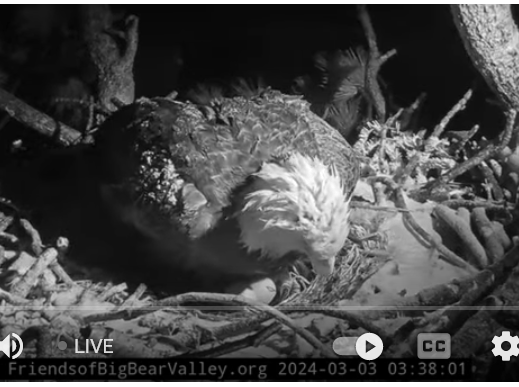
Link to the web-cam: https://www.youtube.com/watch?v=B4-L2nfGcuE
There’s a lot of interesting information on the website, supplied by the Friends of Big Bear Valley who operate the web cam site.
It looks cold and sounds windy. Brrrrrrrrrr.
Here’s another snip.
Driftwooded beach at Malibu Lagoon, 25 Feb. 2024
[Text by Chuck Almdale; photos by Ray Juncosa, Larry Loeher & Grace Murayama]

Partly cloudy, as you can see, temperatures mostly in the high 50s with a slight breeze. The sea was about as flat as it can get; only four people in the water, vainly waiting for a wave. Waveless winter days means a depopulated beach. The lagoon channel to the sea had moved well to the east, next to Adamson House; the wide rushing icy cold stream kept beachwalkers from wandering westward from the pier.
Near our meeting spot under the metal pavilion – I can’t come up with a better name – a few ducks and coots paddled around the channels and a miscellany of sandpipers were on the sand. Several Killdeer were screaming bloody murder for reasons known only to themselves. The cormorant-of-the-day, pictured below, assigned snag duty, looked quite frosted, from what I don’t know. Perhaps the cold lagoon water.

Some of the cormorants have developed their bushy white eyebrow-crests of breeding, but not the one above. If you look closely at the Great Blue Heron below, you can see his (or her) chestnut shoulder-patch and chestnut legs.

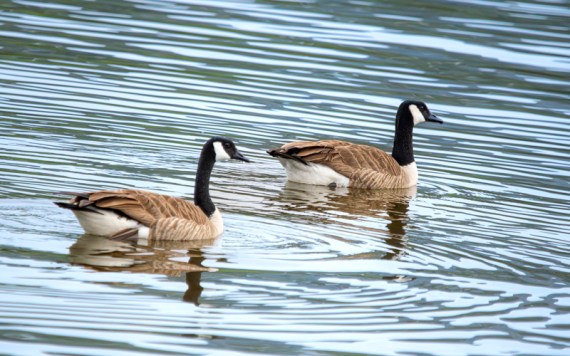
Canada Geese have nested at the lagoon for at least the past three years. They appreciate the brushy sand islands, as people never wade out to them. There were nine in the lagoon and channels, checking everything out.
The Lesser Goldfinches were numerous and noisy, feeding on seed heads. This male has developed his black cap.

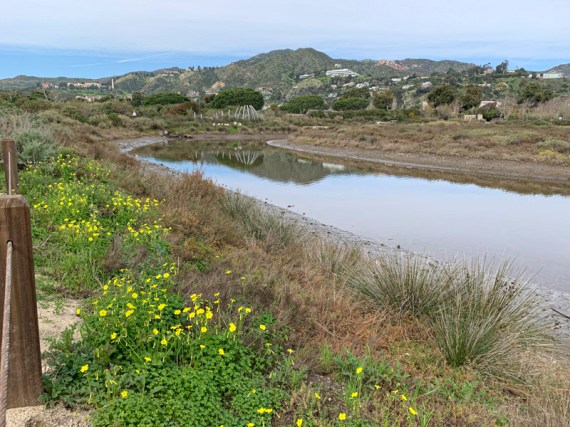
Looking west from the path to the beach, just north of Malibu Colony, as in the photo below, you can see the red roofs and white stone bell tower of Pepperdine University at the far left.
We had a lot of Brown Pelicans in all stages of plumage. Photographer Ray Juncosa became fascinated by their landing, flapping and bill-poking. Most of them were offshore just past the surf-(less) zone, but about 60 were in the lagoon, the channels, and on the low rocks after the water level dropped towards the 4pm low tide.


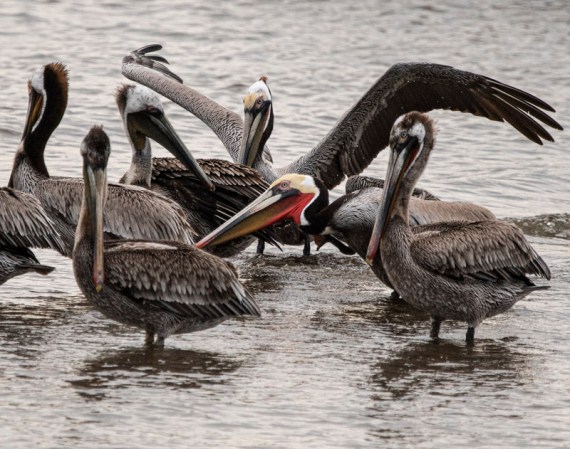

The brown ones are the immatures. The adults get colorful creamy-yellow and brown heads and necks, red gular pouches and silvery backs.
When waves aren’t crashing over them, the outer rocks often have cormorants, a seal and the occasional Black Oystercatcher. This is the best place to find either Brandt’s or Pelagic Cormorants. These two species hate to venture inland, and crossing the beach all the way to the lagoon is simply too far for them to chance the journey. If you don’t see them on the rocks, they may be in the water somewhere in the vicinity of the surf zone, paddling around, diving for fish.


The beach from lagoon-edge to shore, from the colony to lagoon outlet, was covered with driftwood, shells – mostly mussel – and seaweed. I can’t recall ever seeing so much flotsam and jetsam on this portion of the beach.

Towards the lagoon edge and among the chunks of wood were 21 roosting Snowy Plovers, out of the breeze and nearly out of sight. Among them were scattered a few Sanderlings, a common roost-mate of Snowy Plovers.

We’d seen 18 Snowies in October, only one in November, and none at all in December and January. They’d probably been on the east shore, hiding within the driftwood piled up on the east side until the recent storm shifted everything around.

Malibu Lagoon on eBird as of 3-01-24: 7530 lists, 319 species
Most recent species added: Red-breasted Nuthatch (31 October 2023, Kyle Te Poel).
Birds new for the season: Eurasian Collared-Dove, Mourning Dove, Snowy Plover, Western Sandpiper, Red-throated Loon, Brandt’s Cormorant, Cassin’s Kingbird, Blue-gray Gnatcatcher. “New for the season” means it has been three or more months since last recorded on our trips.
Many, many thanks to photographers: Ray Juncosa, Larry Loeher & Grace Murayama
Upcoming SMBAS scheduled field trips; no reservations or covid card necessary unless specifically mentioned:
- Sepulveda Basin Sat Mar 9, 8:00 am.
- Malibu Lagoon, Sun. Mar 24, 8:30 (adults) & 10 am (parents & kids)
- Sycamore Canyon Sat. Apr 6, 8:00 am
- These and any other trips we announce for the foreseeable future will depend upon expected status of the Covid/flu/etc. pandemic at trip time. Any trip announced may be canceled shortly before trip date if it seems necessary. By now any other comments should be superfluous.
- Link to Programs & Field Trip schedule.
The next SMBAS Zoom program: “Coevolving Cowbirds and Their Hosts” with Dr. Pablo Weaver, Evening Meeting, Tuesday, Mar 5, 2023, 7:30 p.m.
The SMBAS 10 a.m. Parent’s & Kids Birdwalk is again running. Reservations not necessary for families, but for groups (scouts, etc.), call Jean (213-522-0062).
Links: Unusual birds at Malibu Lagoon
9/23/02 Aerial photo of Malibu Lagoon
More recent aerial photo
Prior checklists:
2023: Jan-June, July-Dec
2021: Jan-July, July-Dec 2022: Jan-June, July-Dec
2020: Jan-July, July-Dec 2019: Jan-June, July-Dec
2018: Jan-June, July-Dec 2017: Jan-June, July-Dec
2016: Jan-June, July-Dec 2015: Jan-May, July-Dec
2014: Jan-July, July-Dec 2013: Jan-June, July-Dec
2012: Jan-June, July-Dec 2011: Jan-June, July-Dec
2010: Jan-June, July-Dec 2009: Jan-June, July-Dec
The 10-year comparison summaries created during the Lagoon Reconfiguration Project period, remain available—despite numerous complaints—on our Lagoon Project Bird Census Page. Very briefly summarized, the results unexpectedly indicate that avian species diversification and numbers improved slightly during the restoration period June’12-June’14.
Many thanks to Marie Barnidge-McIntyre, Femi Faminu, Lillian Johnson and others for their contributions to this month’s checklist.
The species lists below is irregularly re-sequenced to agree with the California Bird Records Committee Official California Checklist. If part of the right side of the chart below is hidden, there’s a slider button inconveniently located at the bottom of the list. The numbers 1-9 left of the species names are keyed to the nine categories of birds at the bottom.
[Chuck Almdale]
| Malibu Census 2023-24 | 9/24 | 10/22 | 11/26 | 12/24 | 1/28 | 2/25 | |
| Temperature | 56-74 | 62-70 | 62-68 | 53-64 | 53-64 | 51-62 | |
| Tide Lo/Hi Height | H+3.77 | L+3.34 | H+6.53 | H+6.20 | H+5.06 | H+5.06 | |
| Tide Time | 0739 | 1029 | 0740 | 0644 | 1008 | 0921 | |
| 1 | Canada Goose | 21 | 8 | 9 | |||
| 1 | Cinnamon Teal | 3 | 1 | 3 | |||
| 1 | Northern Shoveler | 1 | 13 | 10 | |||
| 1 | Gadwall | 40 | 23 | 30 | 27 | 54 | 40 |
| 1 | American Wigeon | 5 | 14 | ||||
| 1 | Mallard | 12 | 9 | 8 | 7 | 35 | |
| 1 | Green-winged Teal | 1 | 31 | 8 | 17 | 25 | |
| 1 | Lesser Scaup | 1 | |||||
| 1 | Surf Scoter | 15 | 8 | 3 | 4 | 32 | |
| 1 | Bufflehead | 5 | 18 | 12 | |||
| 1 | Red-breasted Merganser | 20 | 5 | 4 | 2 | ||
| 1 | Ruddy Duck | 12 | 22 | 37 | 30 | 1 | |
| 2 | Pied-billed Grebe | 1 | 4 | 6 | 2 | 2 | |
| 2 | Horned Grebe | 1 | |||||
| 2 | Eared Grebe | 1 | 1 | ||||
| 2 | Western Grebe | 28 | 13 | 18 | 14 | 240 | |
| 7 | Feral Pigeon | 4 | 3 | 4 | 4 | 4 | 4 |
| 7 | Eurasian Collared-Dove | 1 | |||||
| 7 | Mourning Dove | 5 | 1 | 4 | |||
| 8 | Anna’s Hummingbird | 2 | 2 | 2 | 1 | ||
| 8 | Allen’s Hummingbird | 1 | 4 | 1 | 3 | 5 | 5 |
| 2 | Sora | 1 | |||||
| 2 | American Coot | 49 | 157 | 230 | 280 | 148 | 46 |
| 5 | Black Oystercatcher | 1 | |||||
| 5 | Black-bellied Plover | 82 | 79 | 7 | 52 | 45 | 42 |
| 5 | Killdeer | 6 | 1 | 5 | 20 | 18 | 12 |
| 5 | Semipalmated Plover | 3 | |||||
| 5 | Snowy Plover | 22 | 18 | 1 | 21 | ||
| 5 | Whimbrel | 32 | 23 | 4 | 8 | 4 | 6 |
| 5 | Long-billed Curlew | 3 | |||||
| 5 | Marbled Godwit | 48 | 45 | 5 | 11 | 5 | 20 |
| 5 | Short-billed Dowitcher | 2 | |||||
| 5 | Spotted Sandpiper | 3 | |||||
| 5 | Willet | 29 | 56 | 12 | 22 | 3 | 15 |
| 5 | Ruddy Turnstone | 4 | 10 | 1 | 10 | 5 | 2 |
| 5 | Sanderling | 32 | 27 | 69 | 10 | 7 | 10 |
| 5 | Least Sandpiper | 18 | 6 | 35 | 28 | 16 | 20 |
| 5 | Western Sandpiper | 15 | 8 | ||||
| 6 | Bonaparte’s Gull | 3 | |||||
| 6 | Heermann’s Gull | 51 | 55 | 71 | 22 | 12 | 60 |
| 6 | Ring-billed Gull | 4 | 42 | 34 | 25 | 200 | |
| 6 | Western Gull | 65 | 45 | 68 | 64 | 30 | 85 |
| 6 | Herring Gull | 1 | 1 | 2 | |||
| 7 | Lesser Black-backed Gull | 1 | |||||
| 6 | California Gull | 7 | 7 | 220 | 425 | 270 | 400 |
| 6 | Glaucous-winged Gull | 1 | 5 | 3 | 3 | ||
| 6 | Forster’s Tern | 1 | |||||
| 6 | Elegant Tern | 24 | 2 | 1 | |||
| 6 | Royal Tern | 4 | 5 | 12 | 7 | 3 | |
| 2 | Red-throated Loon | 1 | |||||
| 2 | Pacific Loon | 1 | 1 | 1 | |||
| 2 | Common Loon | 1 | |||||
| 2 | Black-vented Shearwater | 20 | 28 | ||||
| 2 | Brandt’s Cormorant | 1 | 1 | ||||
| 2 | Pelagic Cormorant | 1 | 2 | 5 | 1 | 4 | |
| 2 | Double-crested Cormorant | 30 | 48 | 37 | 47 | 18 | 28 |
| 2 | Brown Pelican | 27 | 12 | 26 | 72 | 26 | 300 |
| 3 | Black-crowned Night-Heron | 2 | 1 | 1 | |||
| 3 | Snowy Egret | 5 | 2 | 20 | 18 | 7 | 6 |
| 3 | Green Heron | 3 | 1 | ||||
| 3 | Great Egret | 6 | 4 | 2 | |||
| 3 | Great Blue Heron | 3 | 2 | 4 | 2 | 1 | 3 |
| 4 | Turkey Vulture | 1 | 2 | 2 | |||
| 4 | Osprey | 1 | 1 | 2 | 1 | 1 | |
| 4 | Red-shouldered Hawk | 1 | 1 | ||||
| 4 | Red-tailed Hawk | 1 | 2 | 1 | |||
| 8 | Belted Kingfisher | 2 | 1 | 1 | 1 | 2 | |
| 8 | Downy Woodpecker | 1 | |||||
| 8 | Nuttall’s Woodpecker | 1 | 1 | ||||
| 8 | Hairy Woodpecker | 1 | |||||
| 8 | Northern Flicker (Red-shafted) | 1 | |||||
| 4 | American Kestrel | 1 | |||||
| 4 | Peregrine Falcon | 1 | |||||
| 8 | Nanday Parakeet | 2 | |||||
| 9 | Black Phoebe | 4 | 4 | 2 | 4 | 1 | 4 |
| 9 | Say’s Phoebe | 1 | |||||
| 9 | Cassin’s Kingbird | 1 | |||||
| 9 | California Scrub-Jay | 2 | 1 | 2 | 2 | ||
| 9 | American Crow | 6 | 44 | 3 | 5 | 10 | 10 |
| 9 | Common Raven | 2 | 1 | ||||
| 9 | Oak Titmouse | 3 | 1 | 1 | |||
| 9 | Northern Rough-winged Swallow | 2 | |||||
| 9 | Barn Swallow | 4 | |||||
| 9 | Bushtit | 8 | 22 | 50 | 12 | 12 | |
| 9 | Wrentit | 4 | 1 | 4 | 3 | 1 | 2 |
| 9 | Ruby-crowned Kinglet | 1 | |||||
| 9 | Blue-gray Gnatcatcher | 2 | 1 | ||||
| 9 | House Wren | 2 | 2 | 3 | 2 | 1 | |
| 9 | Marsh Wren | 1 | |||||
| 9 | Bewick’s Wren | 1 | 1 | ||||
| 9 | European Starling | 15 | 12 | 22 | 28 | 2 | 19 |
| 9 | Hermit Thrush | 1 | |||||
| 9 | House Finch | 6 | 5 | 6 | 9 | 12 | 12 |
| 9 | Lesser Goldfinch | 2 | 6 | 20 | |||
| 9 | Dark-eyed Junco | 2 | |||||
| 9 | White-crowned Sparrow | 10 | 20 | 27 | 15 | 12 | |
| 9 | Savannah Sparrow | 1 | |||||
| 9 | Song Sparrow | 5 | 5 | 6 | 7 | 10 | 10 |
| 9 | California Towhee | 3 | 1 | 2 | 1 | 1 | 2 |
| 9 | Red-winged Blackbird | 7 | 15 | 16 | 2 | 35 | |
| 9 | Great-tailed Grackle | 1 | 20 | 1 | 1 | ||
| 9 | Orange-crowned Warbler | 1 | 2 | 2 | 2 | ||
| 9 | Common Yellowthroat | 2 | 4 | 8 | 5 | 5 | 2 |
| 9 | Yellow-rumped Warbler (Audubon’s) | 5 | 12 | 6 | 6 | 10 | |
| 9 | Townsend’s Warbler | 1 | |||||
| 9 | Wilson’s Warbler | 1 | |||||
| 9 | Western Tanager | 1 | |||||
| 9 | Black-headed Grosbeak | 1 | |||||
| Totals by Type | Sep | Oct | Nov | Dec | Jan | Feb | |
| 1 | Waterfowl | 53 | 51 | 134 | 155 | 149 | 144 |
| 2 | Water Birds – Other | 129 | 280 | 314 | 426 | 211 | 621 |
| 3 | Herons, Egrets & Ibis | 13 | 11 | 28 | 23 | 9 | 9 |
| 4 | Quail & Raptors | 4 | 4 | 5 | 4 | 2 | 0 |
| 5 | Shorebirds | 299 | 265 | 139 | 162 | 103 | 156 |
| 6 | Gulls & Terns | 152 | 118 | 416 | 562 | 345 | 748 |
| 7 | Doves | 9 | 4 | 4 | 4 | 4 | 9 |
| 8 | Other Non-Passerines | 6 | 10 | 1 | 9 | 6 | 8 |
| 9 | Passerines | 82 | 154 | 146 | 119 | 88 | 158 |
| Totals Birds | 747 | 897 | 1187 | 1464 | 917 | 1853 | |
| Total Species | Sep | Oct | Nov | Dec | Jan | Feb | |
| 1 | Waterfowl | 3 | 4 | 10 | 11 | 10 | 7 |
| 2 | Water Birds – Other | 7 | 8 | 7 | 8 | 8 | 8 |
| 3 | Herons, Egrets & Ibis | 4 | 4 | 3 | 4 | 3 | 2 |
| 4 | Quail & Raptors | 4 | 3 | 3 | 3 | 2 | 0 |
| 5 | Shorebirds | 14 | 9 | 9 | 9 | 8 | 10 |
| 6 | Gulls & Terns | 6 | 6 | 8 | 9 | 7 | 5 |
| 7 | Doves | 2 | 2 | 1 | 1 | 1 | 3 |
| 8 | Other Non-Passerines | 4 | 5 | 1 | 6 | 2 | 3 |
| 9 | Passerines | 23 | 17 | 18 | 17 | 16 | 19 |
| Totals Species – 108 | 67 | 58 | 60 | 68 | 57 | 57 |



 SANTA MONICA BAY AUDUBON SOCIETY BLOG