Free email delivery
Please sign up for email delivery in the subscription area to the right.
No salesman will call, at least not from us. Maybe from someone else.
The Heindels of Inyo | Los Angeles Times
[Posted by Chuck Almdale]
The Heindel name has frequently appeared on Los Angeles and Californian birding chat lines and local publications with sightings reports, comments, and tips on finding birds, especially in Inyo County. Sons Matt and Mitch were frequent commenters about SoCal birds, while parents Tom and Joanne, would post about birds of Inyo County, especially around Bishop, Big Pine and Lone Pine. I believe Matt and Mitch moved away (correct me if I’m wrong) some years back, but Tom and Joanne still study the birds of Inyo County and collect every bit of information they can. They are about to put out a book, gathering their decades of research, 500,000 data entries and 150 years of sightings and research into 500 pages, titled The Birds of Inyo County, California, Including Death Valley National Park. Their daughter Kelli helped with the production and artwork, and an old friend of theirs, Jon Dunn, native of Los Angeles, professional international bird tour guide and co-author of National Geographic’s Field Guide to the Birds of North America shared his field notes with the authors.
Added 11 Jul 2023: The book may be out by the end of summer 2023.
If there’s anything ever recorded about the 441 species of Inyo County birds, it will be in this book. Today’s Los Angeles Times (Saturday, 8 July 2023) has a very nice article about the Heindels.
These retired teachers started with a little bird guide, and ended with a magnum opus
Los Angeles Times | Louis Sahagún | 8 July 2023
There is also an older article in the L.A. Times about them, but it was hiding behind a paywall.
Really, truly for the birds
Los Angeles Times | Louis Sahagún | 3 Nov 2009
[The initial date of 8 July 2023 was a typo.]
Here are some articles they’ve written for Eastern Sierra Audubon Society.
2010 Birding Articles by Tom and Jo Heindel
Magnificent Frigatebird in the area
[Posted by Chuck Almdale]
When the hot weather of summer arrives in SoCal, we often find sub-tropical seabirds coming north from Mexico: various boobies and frigatebirds seem to be showing up every year. We don’t think much anymore about Heermann’s Gull, Elegant Tern, Neotropic Cormorant, Yellow-crowned Night Heron, Little Blue Heron and (not a seabird) Great-tailed Grackle. They’ve become or are becoming regular visitors or breeders.
But when an infrequent Magnificent Frigatebird does show up, it’s worth knowing it’s around and if you live coast-close, maybe wandering down to the shore to take a peek. The latest one (or two) reported:
San Diego: Sat 7/1/23 Noon Mariner’s Point in southwest Mission Bay; Immature MAFR harassed by gulls. Bird circled around for several minutes doing lazy evasive maneuvers and eventually drifted W/NW out over the ocean.
Link to ebird report & photos by Matt Sadowski

That’s a Western Gull, 58″ wingspan for comparison.
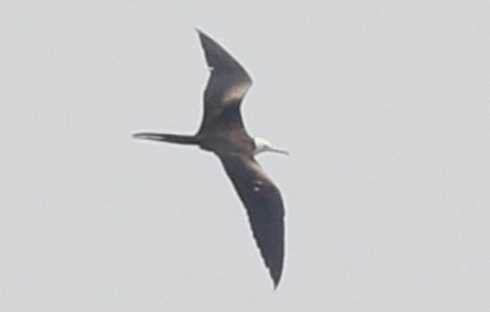
Long Beach: Sun 7/2/23 10:30-11:30 am Circling for an hour between Belmont Pier and Alamitos Bay jetty.
The Long Beach sighting didn’t comment on plumage/age, so it might be the same bird slowly cruising up the coast.
Attention Santa Monica & Malibu — Coming your way!
San Fernando Valley — not so likely.
[Posted by Chuck Almdale]
Our neighbor chapter, Pasadena Audubon Society, is circulating a petition.
Please follow this link and sign on if you think it a worthy cause.
From their email:
Sign the petition to expand the San Gabriel Mountains National Monument.
Dear Pasadena Audubon members and friends,
This week, elected officials, community leaders, and local residents in the Los Angeles region joined Senator Alex Padilla and Representative Judy Chu in calling on President Biden to add 109,000 acres of public lands to the San Gabriel Mountains National Monument.
The extension includes many areas beloved by local birders, such as Millard Canyon. By protecting the lands and rivers of the San Gabriel Mountains, we’ll be increasing access to the outdoors for all our region’s residents. See the LA Times article for details.
Nesting season: Malibu Lagoon, 25 June 2023
[By Chuck Almdale]

Channel view with algae, under a startlingly clear blue sky, looking southeast from the pavilion (Grace Murayama 6/27/23)
Although it wasn’t quite the first day of summer, and the day length is now officially shrinking drastically — 14.25.07 on June 25 long versus 14.25.32 on June 21, or 25 whole seconds shorter — it was still definitely summer. Bright sunny day, bunches of people on the beach, surfers in the water, no more June Gloom, barely 40 species of birds — yup, that’s June all right.
As with May 28th, our most common species were terns. Test time! What are these two species? Answer at bottom.
(Hint: That one is flying and the other is not is of no help whatsoever.)

Flying Tern (Chris Tosdevin 6/25/23)

Non-flying Tern (Chris Tosdevin 6/25/23)

The Black Skimmers were back for a visit. Quiz!
Which is larger, male or female? Answer at end.
(Chris Tosdevin 6/25/23)
There are a few nesting species at the lagoon.
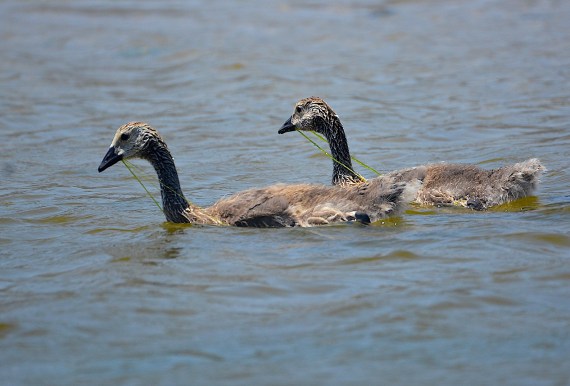
Canada Goose goslings. Not quite sure why each has one strand of algae hanging from their bill. (Grace Murayama 6/27/23)

Gadwall mom with six ducklets. (Grace Murayama 6/27/23)
Grace took the above photo of Gadwall ducklings two days later, but on birdwalk Sunday we saw twenty-five ducklings trailing behind one female Gadwall, which must be some sort of record. That must have been a crèche of 4-7 families. The other moms were probably taking a much-needed snooze somewhere. Most of the ducklings on the lagoon and channels appear to be Gadwall (judging by the females they’re following.)
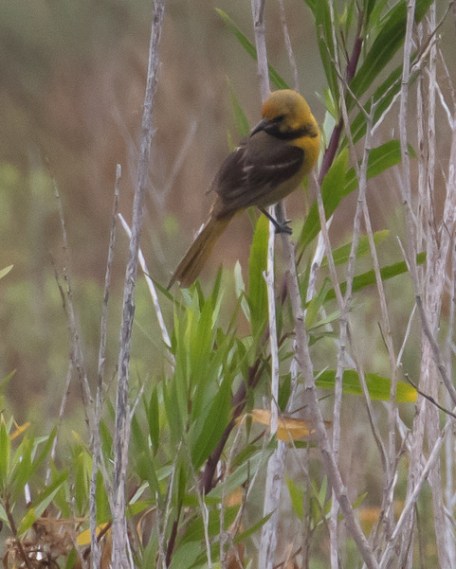
Hooded Oriole (Chris Tosdevin (6/25/23)
The Hooded Oriole family fledged. Two young males, with a little bit of black on their throats like the one above, and a female were seen gleaning through the tree foliage, rattling away at one another with Icterid-sounding calls. They probably nested near Malibu Colony in one of the palms, their preferred nesting tree, where they suspend their woven hanging nest from the middle of the underside of a palm frond. The large nests are surprisingly easy to overlook.
The Killdeer young are already old enough to be confused with adults, and all the passerine nesters are too adept at skulking and nest-hiding to be found.
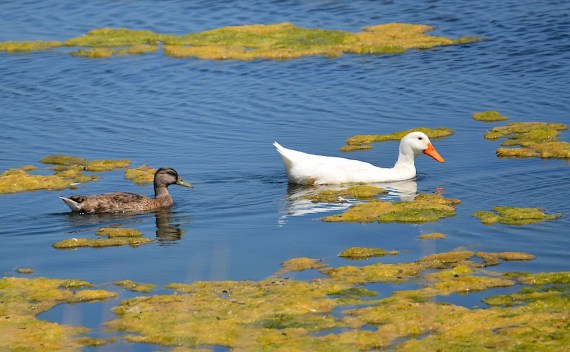
Mallard male and much larger domestic duck (Grace Murayama 6/27/23)
This is at least the third month, if not the fourth or fifth, that we’ve seen the above pair of ducks at the lagoon. They’re often resting together on any of the sand islands. The Mallard appears to be in eclipse plumage now, and the domestic duck (which is also a Mallard although bred to be white and plump) is likely a female, as male Mallards have a curly feather in their tails (except in eclipse). They look quite different to us, but they don’t care and will mate if and when they feel like it.
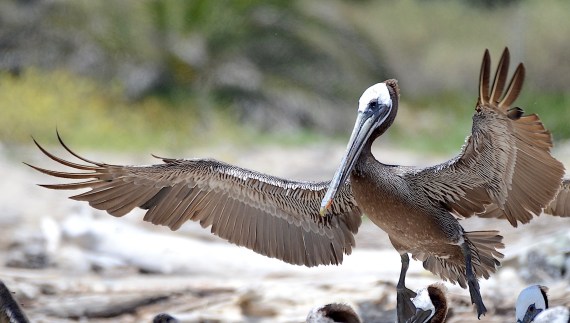
Brown Pelicans, with a 7-ft wingspan, need a lot of room to land. (Larry Loeher 6/27/23)

Shhh. Sleeping blue-eyelidded Great Blue Heron. (Larry Loeher 6/27/23)
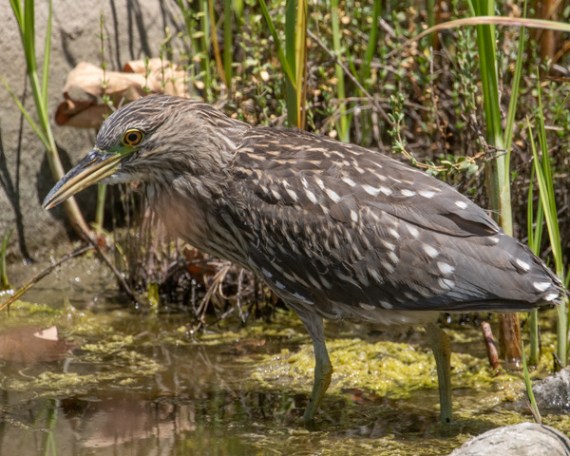
Hungry juvenile Black-crowned Night-Heron out and about despite the sunlight. They prefer twilight and usually hide in the foliage during the bright light of day. Chris Tosdevin 6/25/23

Our third heron/egret species for the day, a plump Snowy Egret, with it’s neck retracted for a change, giving it that football-with-a-bill shape. (Chris Tosdevin 6/25/23)

Brandt’s Cormorants are about the same size/shape/proportions/color as the far more common (at the lagoon) Double-crested, but instead of that big yellow-orange throat pouch they have a small beige throat-patch which is partly blue during breeding. (Chris Tosdevin 6/25/23)

Male Allen’s Hummingbird on his special twig (Chris Tosdevin 6/25/23)

Smaller relatives of the famous Komodo Dragon lurk in our brush, aka Western Fence Lizard (Grace Murayama 6/27/23)
Birds new for the Season: Black Skimmer, Black-crowned Night-Heron, Cooper’s Hawk, California Scrub-Jay, Oak Titmouse, Bewick’s Wren.
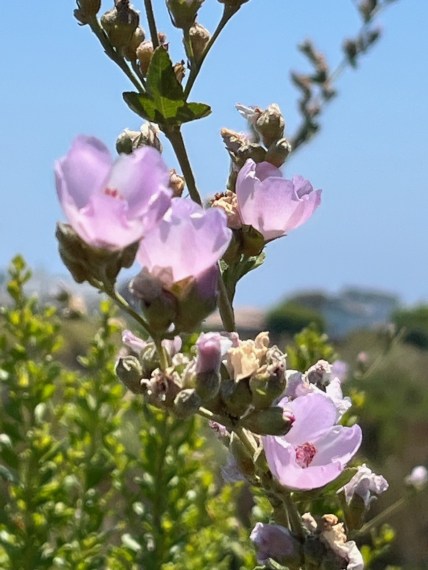
Malacothamnus flowering in the breeze (Grace Murayama 6/27/23)
Malibu Lagoon on eBird as of 6-27-23: 6932 lists, 319 species
Many thanks to photographers: Grace Murayama & Chris Tosdevin
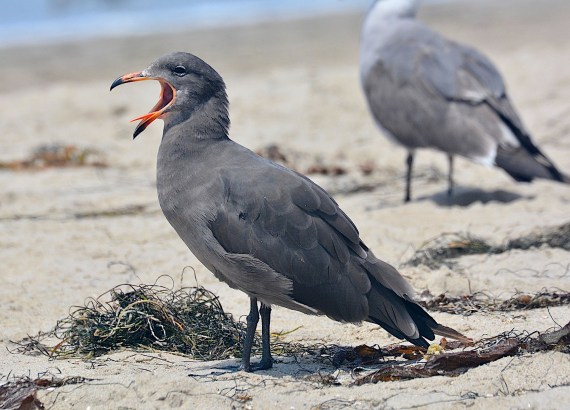
It’s all too much, isn’t it? Sub-adult Heermann’s Gull, up from Baja for the winter.
(Grace Murayama 6/25/23)
Upcoming SMBAS scheduled field trips:
- Malibu Lagoon, Sun Jul 23, 8:30 am. No reservations or Covid card required.
- Malibu Lagoon, Sun Aug 27, 8:30 am. No reservations or Covid card required.
- Coastal Cleanup Day, Malibu Lagoon, Sat. Sep 16, 9 am–Noon
- Malibu Lagoon, Sun Sep 24, 8:30 am. No reservations or Covid card required.
- These and any other trips we announce for the foreseeable future will depend upon expected status of the Covid/flu/etc. pandemic at trip time. Any trip announced may be canceled shortly before trip date if it seems necessary. By now any other comments should be superfluous.
- Link to Programs & Field Trip schedule.
The next SMBAS Zoom program: TBA. Tuesday, 3 Oct. 2023, 7:30 p.m.
The SMBAS 10 a.m. Parent’s & Kids Birdwalk restarted April 23. Reservations for groups (scouts, etc.) necessary, but not for families.
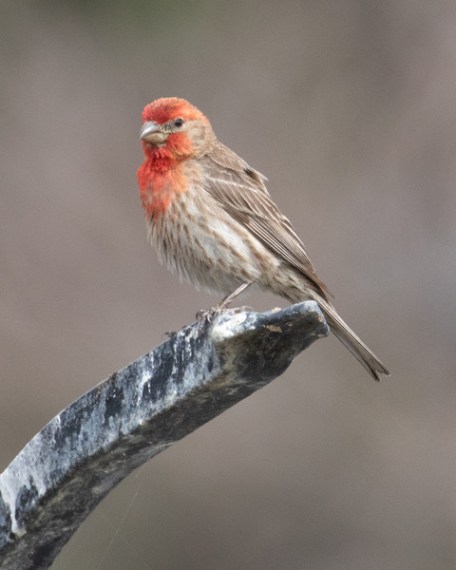
(Chris Tosdevin 6/25/23)
Links: Unusual birds at Malibu Lagoon
9/23/02 Aerial photo of Malibu Lagoon
More recent aerial photo
Prior checklists:
2021: Jan-July, July-Dec 2022: Jan-June, July-Dec
2020: Jan-July, July-Dec 2019: Jan-June, July-Dec
2018: Jan-June, July-Dec 2017: Jan-June, July-Dec
2016: Jan-June, July-Dec 2015: Jan-May, July-Dec
2014: Jan-July, July-Dec 2013: Jan-June, July-Dec
2012: Jan-June, July-Dec 2011: Jan-June, July-Dec
2010: Jan-June, July-Dec 2009: Jan-June, July-Dec
The 10-year comparison summaries created during the Lagoon Reconfiguration Project period, remain available—despite numerous complaints—on our Lagoon Project Bird Census Page. Very briefly summarized, the results unexpectedly indicate that avian species diversification and numbers improved slightly during the restoration period June’12-June’14.
Many thanks to Lucien Plauzoles, Ruth & Chris Tosdevin and others for their contributions to this month’s checklist.
The species lists below is irregularly re-sequenced to agree with the California Bird Records Committee Official California Checklist as updated 4 Feb 2023. If part of the chart’s right side is hidden, there’s a slider button at the bottom of the list.
[Chuck Almdale]
| Malibu Census 2023 | 1/22 | 2/26 | 3/26 | 4/23 | 5/28 | 6/25 | |
| Temperature | 49-57 | 53-55 | 57-60 | 57-66 | 61-62 | 59-71 | |
| Tide Lo/Hi Height | H+6.81 | L+0.81 | L+0.28 | L-.041 | L+0.81 | L+0.89 | |
| Tide Time | 0858 | 0911 | 0800 | 0637 | 1131 | 0919 | |
| 1 | Canada Goose | 4 | 2 | 6 | 4 | 5 | 4 |
| 1 | Cinnamon Teal | 1 | |||||
| 1 | Northern Shoveler | 7 | |||||
| 1 | Gadwall | 26 | 58 | 42 | 24 | 17 | 45 |
| 1 | American Wigeon | 4 | |||||
| 1 | Mallard | 20 | 32 | 12 | 15 | 12 | 33 |
| 1 | Green-winged Teal | 15 | 26 | 5 | |||
| 1 | Redhead | 3 | |||||
| 1 | Surf Scoter | 1 | 6 | 22 | 3 | 2 | |
| 1 | Bufflehead | 10 | 5 | ||||
| 1 | Common Goldeneye | 2 | |||||
| 1 | Hooded Merganser | 1 | |||||
| 1 | Red-breasted Merganser | 6 | 3 | 2 | |||
| 1 | Ruddy Duck | 8 | |||||
| 2 | Pied-billed Grebe | 2 | 1 | 1 | 2 | ||
| 2 | Western Grebe | 8 | 40 | 80 | 6 | ||
| 7 | Feral Pigeon | 16 | 5 | 6 | 1 | 8 | |
| 7 | Eurasian Collared-Dove | 2 | |||||
| 7 | Mourning Dove | 2 | 1 | 2 | 2 | 2 | |
| 8 | White-throated Swift | 5 | |||||
| 8 | Anna’s Hummingbird | 1 | 1 | 1 | |||
| 8 | Allen’s Hummingbird | 2 | 3 | 3 | 2 | 1 | 2 |
| 2 | American Coot | 38 | 73 | 37 | 6 | 5 | |
| 5 | Black-bellied Plover | 43 | 62 | 3 | |||
| 5 | Killdeer | 4 | 12 | 5 | 4 | 4 | 8 |
| 5 | Semipalmated Plover | 14 | |||||
| 5 | Snowy Plover | 16 | 16 | 1 | |||
| 5 | Whimbrel | 7 | 2 | 25 | 16 | 11 | |
| 5 | Marbled Godwit | 18 | 17 | 2 | |||
| 5 | Ruddy Turnstone | 6 | 3 | ||||
| 5 | Sanderling | 35 | 32 | 2 | |||
| 5 | Dunlin | 2 | |||||
| 5 | Least Sandpiper | 22 | 27 | 19 | |||
| 5 | Western Sandpiper | 30 | |||||
| 5 | Willet | 15 | 9 | 7 | 2 | 7 | |
| 6 | Bonaparte’s Gull | 3 | |||||
| 6 | Heermann’s Gull | 27 | 3 | 3 | 80 | 152 | 94 |
| 6 | Short-billed Gull | 1 | |||||
| 6 | Ring-billed Gull | 36 | 40 | 46 | 120 | 12 | 5 |
| 6 | Western Gull | 49 | 38 | 26 | 50 | 72 | 105 |
| 6 | California Gull | 1330 | 237 | 95 | 60 | ||
| 6 | Herring Gull | 2 | 1 | 2 | |||
| 6 | Glaucous-winged Gull | 7 | 4 | ||||
| 6 | Caspian Tern | 2 | 2 | ||||
| 6 | Royal Tern | 2 | 14 | 13 | 3 | 20 | |
| 6 | Elegant Tern | 90 | 630 | 305 | 150 | ||
| 6 | Black Skimmer | 3 | 2 | ||||
| 2 | Red-throated Loon | 1 | 1 | ||||
| 2 | Pacific Loon | 1 | 1 | ||||
| 2 | Common Loon | 2 | 1 | ||||
| 2 | Brandt’s Cormorant | 1 | 12 | 8 | 2 | ||
| 2 | Pelagic Cormorant | 6 | 1 | 2 | 3 | 3 | 1 |
| 2 | Double-crested Cormorant | 36 | 67 | 26 | 53 | 74 | 75 |
| 2 | American White Pelican | 1 | |||||
| 2 | Brown Pelican | 343 | 159 | 62 | 655 | 168 | 162 |
| 3 | Great Blue Heron | 2 | 2 | 1 | 4 | ||
| 3 | Great Egret | 2 | 2 | 2 | 1 | 2 | 2 |
| 3 | Snowy Egret | 16 | 6 | 2 | 1 | 3 | 4 |
| 3 | Black-crowned Night-Heron | 2 | |||||
| 3 | White-faced Ibis | 1 | |||||
| 4 | Turkey Vulture | 1 | 5 | 5 | 1 | 2 | |
| 4 | Osprey | 1 | 1 | 1 | |||
| 4 | Cooper’s Hawk | 1 | 1 | ||||
| 4 | Red-tailed Hawk | 1 | 2 | 2 | |||
| 8 | Belted Kingfisher | 1 | |||||
| 8 | Nuttall’s Woodpecker | 1 | |||||
| 4 | Peregrine Falcon | 1 | |||||
| 9 | Cassin’s Kingbird | 1 | 1 | ||||
| 9 | Pacific-slope Flycatcher | 1 | |||||
| 9 | Black Phoebe | 3 | 3 | 2 | 1 | 6 | 4 |
| 9 | Say’s Phoebe | 1 | |||||
| 9 | California Scrub-Jay | 1 | 2 | ||||
| 9 | American Crow | 11 | 27 | 6 | 4 | 3 | 9 |
| 9 | Common Raven | 2 | 1 | 2 | 2 | ||
| 9 | Oak Titmouse | 1 | |||||
| 9 | Northern Rough-winged Swallow | 2 | 6 | 6 | 5 | 15 | |
| 9 | Barn Swallow | 14 | 15 | 30 | 35 | ||
| 9 | Cliff Swallow | 24 | 3 | 25 | 4 | 30 | |
| 9 | Bushtit | 14 | 3 | 3 | 2 | 8 | 4 |
| 9 | Wrentit | 1 | 1 | 1 | |||
| 9 | Ruby-crowned Kinglet | 2 | 1 | ||||
| 9 | Cedar Waxwing | 12 | |||||
| 9 | Blue-gray Gnatcatcher | 1 | |||||
| 9 | House Wren | 1 | 2 | ||||
| 9 | Marsh Wren | 1 | |||||
| 9 | Bewick’s Wren | 1 | 1 | ||||
| 9 | Northern Mockingbird | 1 | |||||
| 9 | European Starling | 6 | 9 | 2 | 3 | 6 | |
| 9 | Hermit Thrush | 1 | |||||
| 9 | House Finch | 9 | 6 | 5 | 7 | 13 | 8 |
| 9 | Lesser Goldfinch | 4 | 10 | 5 | 2 | 5 | 1 |
| 9 | Dark-eyed Junco | 1 | |||||
| 9 | White-crowned Sparrow | 12 | 25 | 12 | |||
| 9 | Song Sparrow | 4 | 5 | 5 | 7 | 10 | 5 |
| 9 | California Towhee | 3 | 3 | 1 | 5 | 3 | 1 |
| 9 | Hooded Oriole | 1 | 1 | 3 | |||
| 9 | Red-winged Blackbird | 12 | 2 | 4 | 3 | ||
| 9 | Brown-headed Cowbird | 1 | 3 | ||||
| 9 | Great-tailed Grackle | 6 | 4 | 2 | 1 | ||
| 9 | Orange-crowned Warbler | 1 | 3 | 1 | 1 | ||
| 9 | Common Yellowthroat | 2 | 4 | 3 | 1 | ||
| 9 | Yellow-rumped Warbler (Audubon’s) | 6 | 2 | 7 | |||
| 9 | Wilson’s Warbler | 1 | |||||
| Totals by Type | Jan | Feb | Mar | Apr | May | Jun | |
| 1 | Waterfowl | 85 | 152 | 92 | 46 | 36 | 82 |
| 2 | Water Birds – Other | 434 | 343 | 212 | 739 | 253 | 245 |
| 3 | Herons, Egrets & Ibis | 20 | 9 | 6 | 2 | 6 | 12 |
| 4 | Quail & Raptors | 1 | 7 | 8 | 5 | 1 | 3 |
| 5 | Shorebirds | 166 | 180 | 44 | 88 | 4 | 26 |
| 6 | Gulls & Terns | 1453 | 341 | 277 | 940 | 549 | 376 |
| 7 | Doves | 16 | 7 | 7 | 3 | 12 | 2 |
| 8 | Other Non-Passerines | 5 | 3 | 8 | 3 | 1 | 3 |
| 9 | Passerines | 96 | 128 | 99 | 89 | 106 | 129 |
| Totals Birds | 2276 | 1170 | 753 | 1915 | 968 | 878 | |
| Total Species | Jan | Feb | Mar | Apr | May | Jun | |
| 1 | Waterfowl | 9 | 11 | 7 | 4 | 4 | 3 |
| 2 | Water Birds – Other | 7 | 8 | 9 | 9 | 4 | 5 |
| 3 | Herons, Egrets & Ibis | 3 | 3 | 3 | 2 | 3 | 4 |
| 4 | Quail & Raptors | 1 | 3 | 3 | 4 | 1 | 2 |
| 5 | Shorebirds | 9 | 9 | 6 | 8 | 1 | 3 |
| 6 | Gulls & Terns | 7 | 9 | 8 | 5 | 7 | 6 |
| 7 | Doves | 1 | 2 | 2 | 2 | 3 | 1 |
| 8 | Other Non-Passerines | 4 | 1 | 2 | 2 | 1 | 2 |
| 9 | Passerines | 20 | 18 | 20 | 20 | 20 | 17 |
| Totals Species – 103 | 61 | 64 | 60 | 56 | 44 | 43 |
Quiz Answers
The flying tern is a Royal; non-flyer is an Elegant.
Male Black Skimmers are larger, especially the bill.
2023 Astronomy Photographer of the year shortlist | NAS
[Posted by Chuck Almdale]
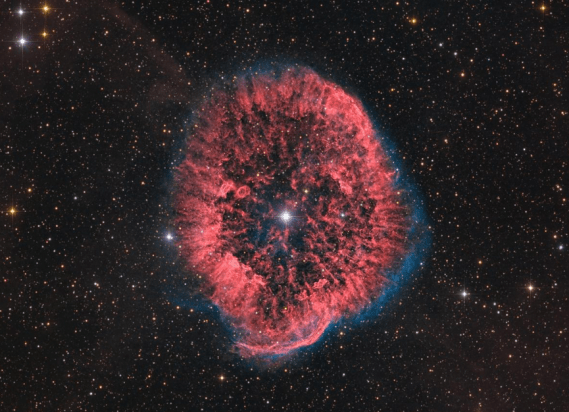
Link to 2023 Astronomy photography shortlist. Stunning!
Below: RCW58: Wolf Rayet Bubble by Mark Hanson and Mike Selby; El Sauce Observatory, Río Hurtado, Chile



 SANTA MONICA BAY AUDUBON SOCIETY BLOG