Free email delivery
Please sign up for email delivery in the subscription area to the right.
No salesman will call, at least not from us. Maybe from someone else.
BirdCast: Migration Data & Forecasting
[written by Marsha Collins, posted by Chuck Almdale]

Screensnip from Birdcast introductory page.
Living along the Pacific Flyway, migratory birds are a seasonal delight. For those who seek additional information about birds on the move to their seasonal grounds, Cornell University’s Birdcast is an important resource. In partnership with Colorado State University and UMass Amherst, among others, Cornell’s team has created an intuitive interface. Two types of information are available: historic (two years) and current.
“Migration forecasts come from models trained on the last 23 years of bird movements in the atmosphere as detected by the US NEXRAD weather surveillance radar network. In these models we use the North American Mesoscale Forecast System (NAM) to predict suitable conditions for migration occurring three hours after local sunset.” A primer on the science of using weather radar to detect bird migrations is available here.
This data-rich site supports customization by region and date. Data covers 2021 and 2022.
Location search is currently limited to the contiguous United States; some parts of the Rocky Mountains are not well covered due to radar interference from the mountains.
On the Migration Dashboard, select either a state or county. Click the Search icon.
In this example, California was selected.

Current display defaults to the night before the date of your search.
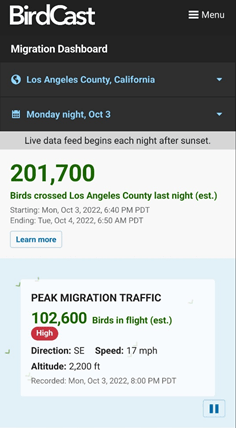
For county-specific locations, enter county name. Here’s Los Angeles County from October 3, 2022.
BirdCast can issue migration alerts. Here are two cities for Weds. Oct 6, 2022.
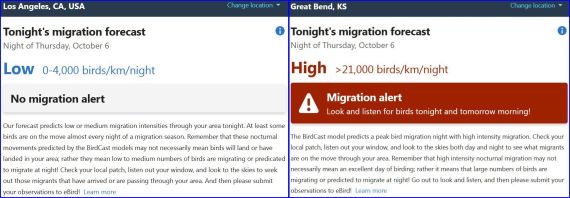
Angelinos can sleep in; Great Benders might want to get up and look around.
Archived Data
Selecting St. Louis County, in Minnesota (home to Hawk Ridge on Lake Superior, a major flyway for raptors), and September 1, 2022.
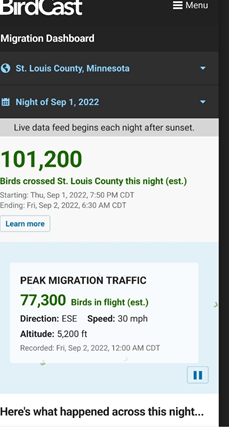
Real-time data is available nightly, providing a glimpse into particular regions of activity.
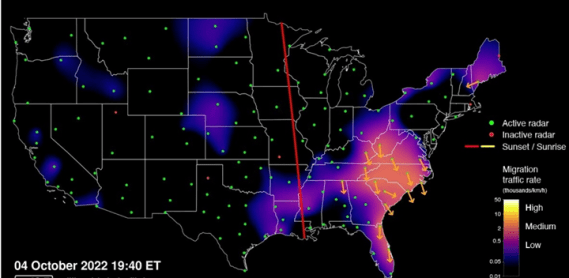
Available details include:
- Total birds in flight
- Flight direction and speed
- Altitude
- Expected nocturnal migrants
Consider adding this resource to enhance your birding knowledge.
Written by Marsha Collins
The recording of this program is now available.
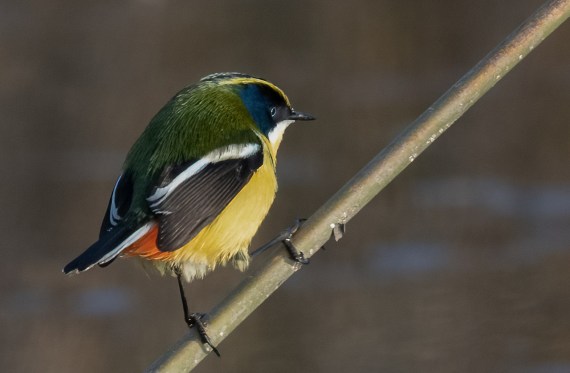
If you email John, he will add you to his mailing list which advertises his upcoming trips
Sterling’s Photo Galleries: 1000’s of photos: www.SterlingBirds.smugmug.com
Email: jsterling[AT]wavecable.com
Here’s the passcode if you need it: !R%13g=3
The first 42 seconds of the recording are dead air.
|
Bolivia and Argentina: Diversity and Rare Birds, with John Sterling.
Original Zoom presentation: 4 October, 7:30 p.m.
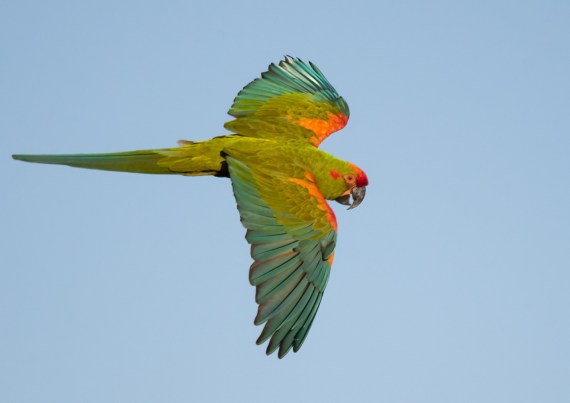
John will take you on a virtual tour of the diverse landscapes, habitats and birds (and mammals) of these two amazing countries. Bolivia has the highest species list for a landlocked country. Argentina is huge and stretches from sub-Antarctica to tropical rainforests to high elevation Andes. John lead tours to both countries this summer and photographed many rare and endangered birds along with endemic birds to the countries and regions.

John Sterling has been a hard core birder in California since he was shown a Pileated Woodpecker in 5th grade camp in 1971. He is a professional ornithologist and has worked for the Smithsonian Institution, US Forest Service research stations, HT Harvey & Associates, Arizona and Oregon state universities among other organizations since 1981. John has traveled extensively throughout California learning about local bird distribution and is an authority on that state’s avifauna. In 2015 he set the California’s new big year record with 501 species and has many big day records as well. He has traveled internationally as a guide and ornithologist for many institutions including projects as a Smithsonian ornithologist to Mexico, Ecuador, Peru, The Philippines, Sumatra, Canada and Russia. John currently has his own company, Sterling Wildlife Biology (www.sterlingbirds.com), specializing in tours, birding classes, research and environmental consulting for The Nature Conservancy, the Kern Water Bank, the California Rice Commission, the Smithsonian Migratory Bird Center, National Audubon’s International Alliance Program, CA Dept. of Water Resources among other organizations.
Shorebirds and Checklists: Malibu Lagoon, 25 September 2022
[Chuck Almdale]
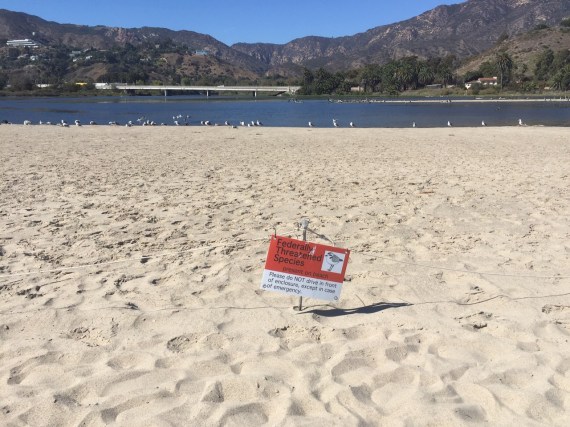
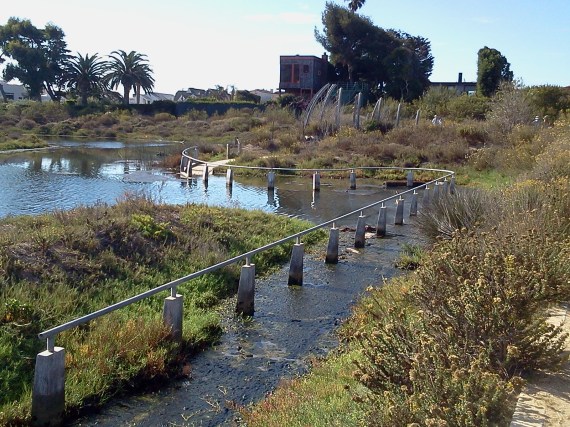
Today was hot—for the beach—surf was high and surfers aplenty. Between the virtual Snowy Plover enclosure fence and the water the beach was narrow and a bit crowded. (Not crowded like Coney Island in August, to be sure.)
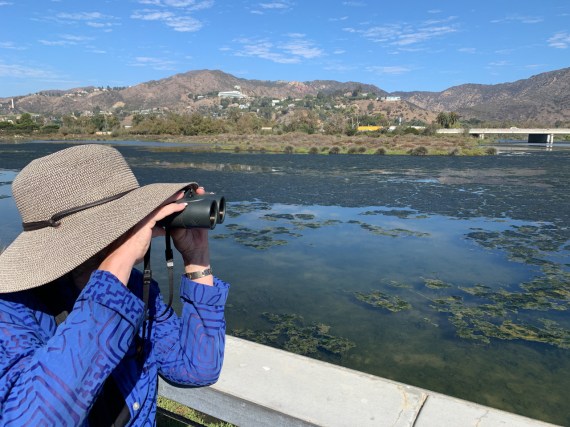
We still have many of our Mallards and Gadwalls who nested here this year, and the northern-nesting ducks are just beginning to return, as demonstrated by three whole Ruddy Ducks, paddling and diving far across the lagoon. Thus no photo. There were six Pied-billed Grebes, two or three of which were young birds, still downy with bright red, white and black heads. It’s odd for young birds to be more brightly colored than the adults, but that’s PBG’s for you.

(C. Tosdevin 9/19-24/22)
Speaking of ducks, I just saw an article in the Los Angeles Times about HPAI, a bird flu virus repeatedly sweeping across the world, hitting primarily birds that live in (sometimes enforced) colonies: in 2014-15 it caused 40 million dead birds in North America; 2021 brought many thousands of dead wild & domestic birds including gannets & puffins; in August 2022 a Fresno poultry farm was hit and all birds had to be euthanized; since then Sacramento and Tuolumne counties have been hit. Right now in California it’s in domestic bird populations in 7 counties and in wild birds, 19 counties. It’s likely to get much worse.

(L. Loeher 9-23-22)
The California Dept. of Food and Agriculture’s Sick Bird Hotline is 866-922-2473. They’re mostly interested in poultry flocks, but they’d probably ought to learn about sick wild birds as well. If there are significantly lower numbers of colonial birds (pelicans, gulls, terns, cormorants, etc.) or wildfowl flocks this winter, you’ll know why. And the price of chicken will rise.

The Night-Herons were gone or, just as likely, hiding deep in the bushes and trees. They’re crepuscular, which means they much prefer twilight (dawn & dusk) rather than full-on night, despite their name, but they will often stay out on cloudy days, and today was a very bright sunny day indeed, not even remotely foggy and gloomy as had been June, July and August. This of course means that we did not see the juvenile Yellow-crowned Night-Heron.
Jim, a regular birder on our lagoon walks since we restarted them last spring, recently cornered me in the parking lot and asked me why the lagoon checklist I hand out to willing takers has far fewer birds listed on it than have been reported to eBird for the lagoon. A reasonable question and I explained as follows.
eBird has reports from hundreds, perhaps thousands of birders over many decades, visiting at all times of the year, on any day of the week and any time of day; these are birders particularly likely to appear when something rare has been found and follow their visit with a report to eBird. As of 9/27/22 eBird has 6,276 lagoon trip reports and 315 species.
I, on the other hand, have been keeping records for my lagoon trips since 21 Oct 1979. I have 303 trips where I censused all the birds and another 88 trips where I only recorded if the species was presence (out of sheer laziness). My total list for these trips is 244 species, including one species for whom we recorded only its presence. Totaled up, I’ve recorded 77% of the eBird species in 6.2% as many trips. I could claim that this proves I’m superbly efficient, but it’s not that, unfortunately. The 71 species I’ve missed on the monthly trips are mostly, if not all, the rare ones that show up for a day and leave. My trips are more of a transect: the same route for roughly the same amount of time on regularly spaced dates by the same person (me) but including birds on the same trip reported to me by others on the same trip.

However, the checklists I hand out show only 140 species, a paltry 44% of the eBird total. Where are the rest? How can I have missed so many? My handout checklist is a physically very small pocket-sized list: 1/4 of one regular sheet of paper, printed both sides and the print is barely discernible. I call it the “Presbyopic’s Dilemma: If you care about what’s on it, you won’t be able to read it; if you can read it, you won’t care what’s on it.” Definitely an ageist remark. However, in it’s defense, it does list every species that shows up at least 3% of the time. Rarer birds are write-ins. I can live with that.
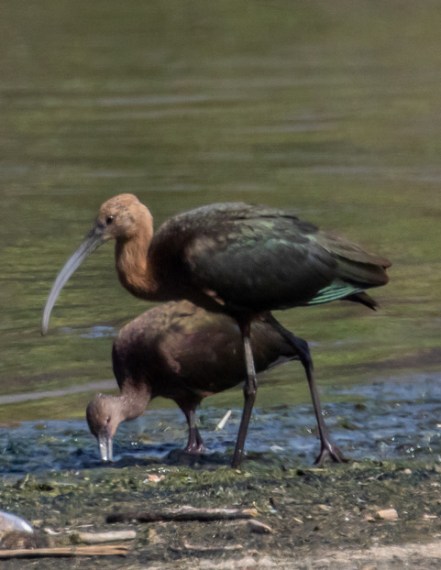
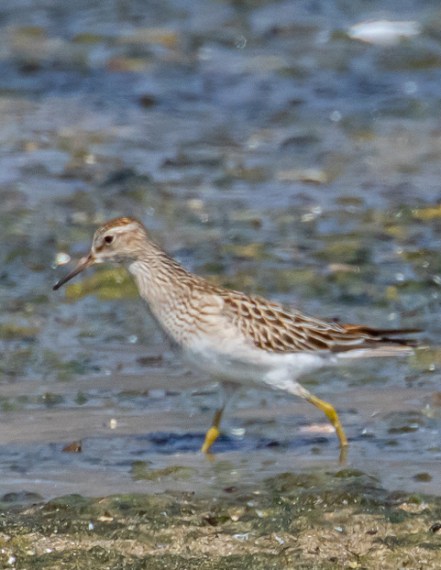
The three birds above—Pectoral Sandpiper, White-faced Ibis and Red Knot—are good examples of this situation, as is the Horned Grebe farther up. Chris Tosdevin who lives not very far from the lagoon is able to drop by there more often that me. (Weekday driving can take me 3 hours each way, whereas on Sunday morning it’s 35-40 minutes. That’s L.A. driving for you.) Thus he was able to photograph these four birds earlier in the week, but by Sunday morning, they had flown the coup (so to speak). These four species are all on my lagoon list from prior visits. But not for today. Alas.
Our Western Snowy Plovers keep accumulating. This time they were within their private roped-in enclosure, undisturbed and resting in their little hollows in the sand, except when a mother and her two small daughters who all thought it a good idea to hop over the fence and run at the birds to get them excited, got them excited. They (the plovers) are reliably here late-June to late-April, and breed elsewhere in May and June. We had 20 last month and 25 today. October averages in the mid-20’s.
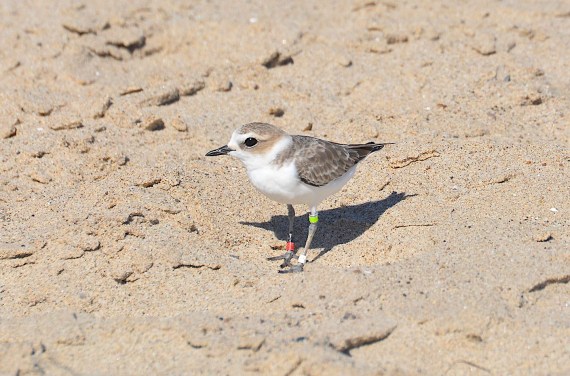

But enough of that. Here’s a few more birds we did see.
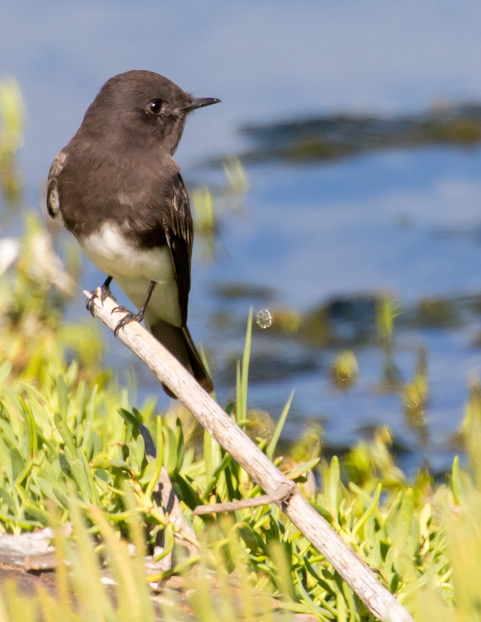

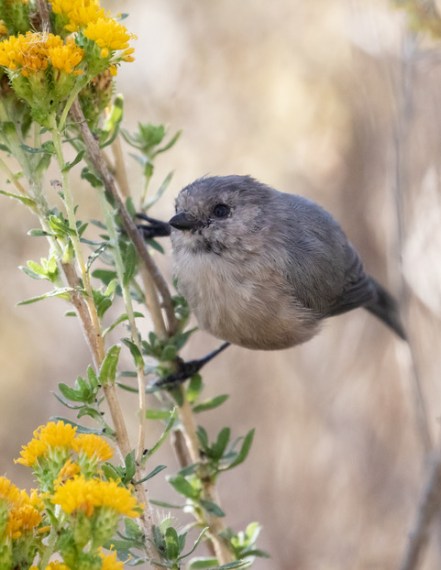
Two tyrant flycatchers: Black Phoebe (L) & Cassin’s Kingbird (R) (Chris Tosdevin 9-25-22)
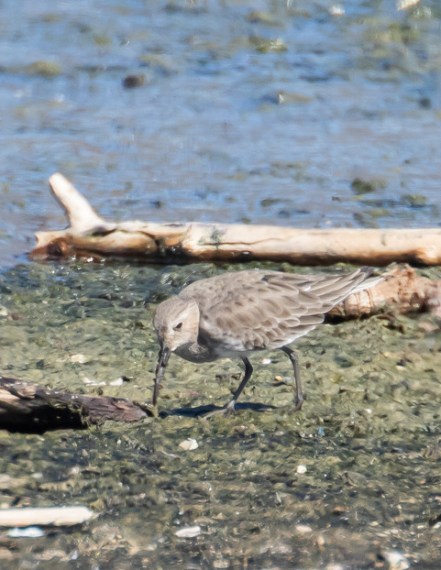
(C. Tosdevin 9-25-22)


Birds new for the season: Ruddy Duck, Anna’s Hummingbird, Sora, Dunlin, Ring-billed Gull, Red-shouldered Hawk, Belted Kingfisher, Peregrine Falcon, Cassin’s Kingbird, Say’s Phoebe, European Starling, Spotted Towhee.
Malibu Lagoon on eBird as of 9-27-22: 6276 lists, 315 species
Many thanks to photographers: Lillian Johnson, Ray Juncosa, Larry Loeher, Grace Murayama, Chris Tosdevin

Upcoming SMBAS scheduled field trips: Huntington Beach Central Park, Sat. Oct. 15 8:30 am, Malibu Lagoon, Sun Oct. 23 8:30 am; Ballona Fresh Water Marsh, Sat. Nov 12 8 am. These and any other trip we announce for the foreseeable future will be dependent upon the expected status of the Covid pandemic at trip time. Any trip announced may be canceled shortly before trip date if it seems necessary. By now any other comments should be superfluous.
The next SMBAS program: “Evolution of Feather Color in the Tanagers” with Allison Shultz. Hybrid Zoom Evening Meeting, Tuesday, 1 November 2022, 7:30 p.m. We will continue to Zoom our programs for the foreseeable future.
The SMBAS 10 a.m. Parent’s & Kids Birdwalk is currently under discussion concerning its resumption.
Links: Unusual birds at Malibu Lagoon
9/23/02 Aerial photo of Malibu Lagoon
More recent aerial photo
Prior checklists:
2021: Jan-July, July-Dec 2022: Jan-June
2020: Jan-July, July-Dec 2019: Jan-June, July-Dec
2018: Jan-June, July-Dec 2017: Jan-June, July-Dec
2016: Jan-June, July-Dec 2015: Jan-May, July-Dec
2014: Jan-July, July-Dec 2013: Jan-June, July-Dec
2012: Jan-June, July-Dec 2011: Jan-June, July-Dec
2010: Jan-June, July-Dec 2009: Jan-June, July-Dec
The 10-year comparison summaries created during the Lagoon Reconfiguration Project period, remain available—despite numerous complaints—on our Lagoon Project Bird Census Page. Very briefly summarized, the results unexpectedly indicate that avian species diversification and numbers improved slightly during the restoration period June’12-June’14.
Many thanks to Lillian Johnson, Chris Tosdevin and others for their contributions to this month’s checklist.
The list below now includes a column on the left side with numbers 1-9, keyed to the nine categories of birds at the bottom. The species are re-sequenced to agree with the California Bird Records Committee Official California Checklist, updated 15 Jan 2022. I generally do this sequence update at the start of each year.
[Chuck Almdale]
| Malibu Census 2022 | 4/24 | 5/22 | 6/26 | 7/24 | 8/28 | 9/25 | |
| Temperature | 72-75 | 61-66 | 65-70 | 70-73 | 72-79 | 72-79 | |
| Tide Lo/Hi Height | H+4.50 | L-0.32 | H+3.33 | H+3.35 | H+4.49 | H+5.01 | |
| Tide Time | 0442 | 1029 | 0943 | 0909 | 1102 | 0949 | |
| 1 | (Black) Brant | 6 | |||||
| 1 | Canada Goose | 3 | |||||
| 1 | Gadwall | 26 | 25 | 15 | 25 | 22 | 26 |
| 1 | American Wigeon | 1 | 2 | ||||
| 1 | Mallard | 14 | 15 | 35 | 80 | 65 | 28 |
| 1 | Green-winged Teal | 2 | |||||
| 1 | Surf Scoter | 3 | |||||
| 1 | Ruddy Duck | 3 | |||||
| 2 | Pied-billed Grebe | 1 | 1 | 2 | 4 | 6 | |
| 2 | Eared Grebe | 1 | |||||
| 7 | Feral Pigeon | 4 | 6 | 8 | 17 | 10 | 6 |
| 7 | Band-tailed Pigeon | 1 | |||||
| 7 | Mourning Dove | 4 | 2 | 2 | 5 | ||
| 8 | Anna’s Hummingbird | 1 | 1 | ||||
| 8 | Allen’s Hummingbird | 3 | 1 | 2 | 3 | 3 | |
| 2 | Sora | 1 | |||||
| 2 | American Coot | 1 | 4 | 4 | 8 | 12 | 47 |
| 5 | Black-bellied Plover | 2 | 1 | 17 | 79 | 67 | |
| 5 | Killdeer | 2 | 3 | 3 | 6 | 5 | 7 |
| 5 | Semipalmated Plover | 15 | 1 | 15 | 3 | ||
| 5 | Snowy Plover | 13 | 20 | 25 | |||
| 5 | Whimbrel | 2 | 3 | 88 | 37 | 15 | |
| 5 | Long-billed Curlew | 1 | |||||
| 5 | Marbled Godwit | 2 | 1 | 6 | 21 | ||
| 5 | Ruddy Turnstone | 3 | 4 | 3 | |||
| 5 | Black Turnstone | 2 | |||||
| 5 | Sanderling | 2 | 25 | 14 | |||
| 5 | Dunlin | 1 | 1 | ||||
| 5 | Least Sandpiper | 50 | 8 | 10 | 23 | ||
| 5 | Western Sandpiper | 30 | 1 | 25 | 8 | ||
| 5 | Short-billed Dowitcher | 2 | |||||
| 5 | Long-billed Dowitcher | 1 | |||||
| 5 | Spotted Sandpiper | 6 | 1 | 1 | 1 | ||
| 5 | Willet | 2 | 7 | 48 | 73 | ||
| 5 | Red-necked Phalarope | 1 | 1 | 2 | |||
| 6 | Heermann’s Gull | 15 | 4 | 27 | 5 | 2 | 9 |
| 6 | Ring-billed Gull | 65 | 2 | ||||
| 6 | Western Gull | 57 | 95 | 55 | 145 | 53 | 72 |
| 6 | California Gull | 35 | 33 | 3 | 3 | 21 | 57 |
| 6 | Glaucous-winged Gull | 6 | 1 | ||||
| 6 | Caspian Tern | 12 | 15 | 22 | 18 | ||
| 6 | Forster’s Tern | 1 | |||||
| 6 | Royal Tern | 18 | 3 | 3 | 25 | 6 | 1 |
| 6 | Elegant Tern | 220 | 24 | 475 | 255 | ||
| 6 | Black Skimmer | 3 | |||||
| 2 | Brandt’s Cormorant | 1 | 50 | ||||
| 2 | Pelagic Cormorant | 1 | 2 | 2 | 1 | ||
| 2 | Double-crested Cormorant | 26 | 22 | 46 | 62 | 68 | 56 |
| 2 | Brown Pelican | 68 | 65 | 126 | 85 | 112 | 64 |
| 3 | Great Blue Heron | 1 | 2 | 3 | 5 | 2 | 3 |
| 3 | Great Egret | 3 | 2 | 4 | 3 | 3 | 1 |
| 3 | Snowy Egret | 1 | 1 | 2 | 12 | 14 | 9 |
| 3 | Reddish Egret | 1 | |||||
| 3 | Black-crowned Night-Heron | 4 | 8 | 2 | |||
| 4 | Yellow-crowned Night-Heron | 1 | |||||
| 4 | Turkey Vulture | 3 | 4 | 4 | 1 | ||
| 4 | Osprey | 1 | 1 | ||||
| 4 | Red-shouldered Hawk | 1 | |||||
| 8 | Belted Kingfisher | 1 | 1 | ||||
| 4 | Peregrine Falcon | 1 | |||||
| 9 | Cassin’s Kingbird | 3 | |||||
| 9 | Black Phoebe | 2 | 5 | 4 | 5 | 5 | |
| 9 | Say’s Phoebe | 1 | |||||
| 9 | California Scrub-Jay | 1 | 1 | 3 | 2 | 2 | |
| 9 | American Crow | 4 | 4 | 5 | 1 | 17 | 3 |
| 9 | Common Raven | 2 | |||||
| 9 | Oak Titmouse | 2 | |||||
| 9 | Violet-green Swallow | 1 | |||||
| 9 | No. Rough-winged Swallow | 4 | 8 | 1 | 4 | ||
| 9 | Barn Swallow | 8 | 15 | 20 | 30 | 28 | |
| 9 | Cliff Swallow | 8 | 4 | 3 | 1 | ||
| 9 | Bushtit | 10 | 8 | 10 | 15 | 8 | |
| 9 | Wrentit | 2 | 1 | 1 | |||
| 9 | House Wren | 2 | 1 | 1 | 1 | 2 | |
| 9 | Bewick’s Wren | 1 | 1 | ||||
| 9 | Northern Mockingbird | 1 | 1 | 3 | 1 | ||
| 9 | European Starling | 2 | 1 | 8 | |||
| 9 | House Finch | 6 | 12 | 10 | 12 | 8 | 4 |
| 9 | Lesser Goldfinch | 2 | 1 | 3 | 6 | ||
| 9 | White-crowned Sparrow | 2 | |||||
| 9 | Song Sparrow | 7 | 10 | 4 | 2 | 6 | 3 |
| 9 | California Towhee | 2 | 2 | 1 | 1 | ||
| 9 | Spotted Towhee | 1 | |||||
| 9 | Red-winged Blackbird | 1 | 6 | 25 | |||
| 9 | Brown-headed Cowbird | 2 | 1 | ||||
| 9 | Great-tailed Grackle | 2 | 1 | 6 | 6 | 4 | |
| 9 | Orange-crowned Warbler | 1 | 2 | ||||
| 9 | Common Yellowthroat | 2 | 4 | 5 | |||
| Totals by Type | Apr | May | Jun | Jul | Aug | Sep | |
| 1 | Waterfowl | 49 | 48 | 50 | 105 | 87 | 57 |
| 2 | Water Birds – Other | 99 | 143 | 177 | 159 | 197 | 174 |
| 3 | Herons, Egrets & Ibis | 5 | 5 | 13 | 29 | 22 | 13 |
| 4 | Quail & Raptors | 3 | 4 | 5 | 1 | 1 | 2 |
| 5 | Shorebirds | 114 | 6 | 6 | 146 | 281 | 263 |
| 6 | Gulls & Terns | 428 | 174 | 110 | 673 | 340 | 141 |
| 7 | Doves | 8 | 6 | 11 | 19 | 15 | 6 |
| 8 | Other Non-Passerines | 4 | 2 | 2 | 3 | 3 | 2 |
| 9 | Passerines | 64 | 64 | 63 | 87 | 127 | 56 |
| Totals Birds | 774 | 452 | 437 | 1222 | 1073 | 714 | |
| Total Species | Apr | May | Jun | Jul | Aug | Sep | |
| 1 | Waterfowl | 6 | 4 | 2 | 2 | 2 | 3 |
| 2 | Water Birds – Other | 7 | 5 | 4 | 5 | 5 | 5 |
| 3 | Herons, Egrets & Ibis | 3 | 3 | 4 | 5 | 5 | 3 |
| 4 | Quail & Raptors | 1 | 1 | 2 | 1 | 1 | 2 |
| 5 | Shorebirds | 11 | 4 | 2 | 11 | 16 | 14 |
| 6 | Gulls & Terns | 8 | 6 | 5 | 8 | 6 | 5 |
| 7 | Doves | 2 | 1 | 3 | 2 | 2 | 1 |
| 8 | Other Non-Passerines | 2 | 2 | 1 | 1 | 1 | 2 |
| 9 | Passerines | 17 | 13 | 12 | 16 | 18 | 17 |
| Totals Species – 88 | 57 | 39 | 35 | 51 | 56 | 52 |
How to keep your hummingbird feeder pest-free | National Audubon Society
[Posted by Chuck Almdale]

A Ruby-throat at the feeding trough. That yellow thing is a bee/oriole guard.
Photo: Bill Gordon/Great Backyard Bird Count
Anyone who’s ever hung a hummingbird feeder in their yard knows that other creatures like it too. Include in that assortment of interlopers: bees, ants and other insects; bears; orioles, chickadees and other birds. And squirrels. Not too many people complain about the orioles, but bears and bees can be a different matter.
Here’s a few hints from the Audubon Society, your source for all things birdwise for the past 120 years.
Bears: Take any and all feeders down, clean them up and store them inside until the bears stop coming by. Clean up your yard, especially any smelly garbage: omnivorous bears eat almost anything, including canned food. When you think it’s safe, put the feeders out again; if they return, put them inside. Repeat as necessary.
Insects: Bees and ants are the main problems. Bees are beneficial insects and fun to have around, but some (mostly honeybees) do sting and some people have potentially lethal reactions to bee venom. (The solitary bees in our yard sometimes smother our springtime blooming native plants yet they’ve never been aggressive towards me. Wasps, hornets & honeybees will and have attacked me.)
- First, second and third, Clean, clean, clean: Keep the outside of the feeder free from accumulating sugar water. If the feeder bounces around in the wind the nectar will slosh and dribble out; figure out some other way or place to hang it.
- Bee guards (round plastic mesh thingies), if kept clean, keep the bees out. They can also keep orioles out.
- Attachable ant moats (or ant guards) can be purchased and added. Some feeders come with them built in. They purportedly drown ants trying to climb down onto them. (After reading exciting stories about army ants in Africa crossing streams and canals and devouring entire herds of cattle, and seeing ant swarms in the Amazon rainforest crossing small rivulets on bridges built of their own bodies, I have to wonder about the efficacy of such a moat. But there they are if you want one.)
Squirrels: How would I know, and the NAS article doesn’t mention them either. As far as I can see, they can figure, jump and crawl their way past any defense you can concoct. The true rulers of the world. If you think I exaggerate, read this (and watch the video).
Other Birds: Oh, let them come. They’re fun too.
If you don’t take my word for all this, check out the NAS article upon which this is based.
There are three (or more!) very interesting articles on hummingbirds at the bottom of the NAS article:
The Origins of Hummingbirds are Still a Major Mystery
How to Make Hummingbird Nectar
Hummingbird Gorgets: Jewels of the Sky
Are you interested? – Malibu Lagoon Children and Parents Walk 10:00 a.m., 4th Sunday every month
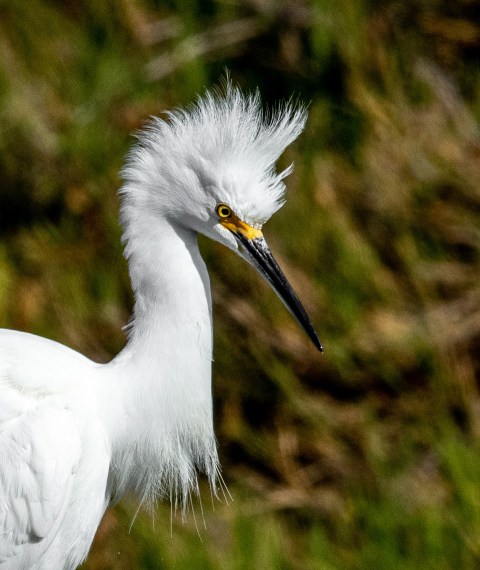
Showy Snowy Egret (R. Juncosa 11-25-18)
February 2020 was the last time we ran our parents & kids walk.
Because of Covid-19, of course. We’re ready to run them again, just as before, but we want to know if there’s any interest. This is a solicitation for responses from our members and other potential attendees. Open to all, no charge. The trips aren’t just for the kids. They’re a chance for parents of young children to get out into the sunshine and fresh air, have some fun looking at the birds and know that their kids won’t be knocking over any lamps.
Here’s the traditional announcement for these walks. Please let us know if you’re interested. You can reply to this blog, and your comments will post, or you can email me.
Children and Parents Walk 10:00 a.m., 4th Sunday of every month.
One hour session, meeting at the metal-shaded viewing area between parking lot and channel. We start at 10:00 for a shorter walk and to allow time for families to get it together on a sleepy Sunday morning. Our leaders are experienced with kids so please bring them to the beach! We have an ample supply of binoculars that children can use without striking terror into their parents. We want to see families enjoying nature. (If you have a Scout Troop or other group of more than seven people, you must call Jean (310-472-7209) to make sure we have enough binoculars and docents.)
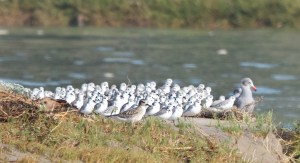
Sanderling flock on end of beach spit (R. Juncosa 11-25-18)
Map to Meeting Place
Directions: Malibu Lagoon is at the intersection of Pacific Coast Highway and Cross Creek Road, west of Malibu Pier and the bridge. Look around for people wearing binoculars.
Parking: Parking machine recently installed in the lagoon lot: 1 hr $3; 2 hrs $6; 3 hrs $9, all day $12 ($11 seniors); credit cards accepted. Annual passes accepted. You may also park (read the signs carefully) either along PCH west of Cross Creek Road, on Cross Creek Road, or on Civic Center Way north (inland) of the shopping center. Lagoon parking in shopping center lots is not permitted.
[Written & posted by Chuck Almdale]



 SANTA MONICA BAY AUDUBON SOCIETY BLOG