Free email delivery
Please sign up for email delivery in the subscription area to the right.
No salesman will call, at least not from us. Maybe from someone else.
An Introduction to Digiscoping | MassAudubon
[Posted by Chuck Almdale]
This is short so I just copied the whole thing. Link to original.
As nearly everyone has a visiphone in their pocket these days, give it a shot.
An Introduction to Digiscoping
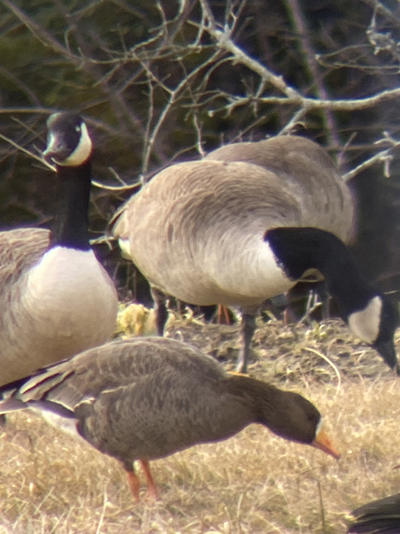
Digiscoping is a great and popular way to capture a fleeting nature moment without a fancy camera or a lens the size of your arm! It’s a technique widely used by birders to capture a rare bird before it flies away.
3 Tips to Help You Catch that Bird
With a little practice, you can achieve some awesome photos—all you need is a smartphone camera and binoculars (or a spotting scope).
Find the Moon
With your camera function turned on, use the screen of your smart phone to find the eyepiece of the optic. From further away you will see a bright spot in the eyepiece which will look almost like the moon. When you find this “moon,” slowly move your phone closer to the optic until the image becomes clear and fills your screen.
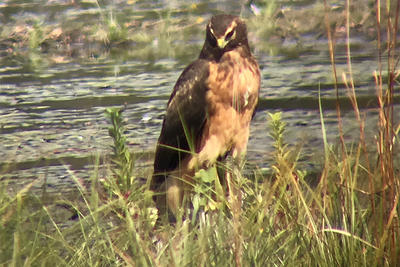
Zoom Out
Be sure to have your phone’s camera zoomed-out all the way to 1x zoom. If you’re using a spotting scope, keep the spotting scope on the lowest power before focusing and then attempting to digiscope. Once the image is stable and clear, you can zoom-in with your phone’s camera. Zooming in with the spotting scope can also give you better magnification, but it’s much more difficult to steady.
Keep Still
The most difficult part about digiscoping is keeping your hands and the optics as still as possible. If using binoculars, find a tree or something to steady yourself upon. A spotting scope is perfect for this because it is already on a tripod. You can also make digiscoping a lot easy with a mounted attachment that holds your phone to the optic. This reduces the need to hold your phone, which makes digiscoping a lot easier!
Practice, Practice, Practice
Give digiscoping a try. Then try it again, and again, and again. Getting it right takes a lot of practice—particularly with binoculars—but it can be a lot of fun to see your improvement!
Once you get the hang of it, you can document those great nature moments that happen in just the blink of an eye. Plus, digiscoping can be extra helpful when you don’t know what a plant or animal is and would like to ask someone for help.
Mosquitoes in L.A. County | LAist
[Posted by Chuck Almdale]
As mosquitoes are flying insects, and many birds (not enough!) catch and eat flying insects, I figure it’s valid to post this here. Plus hot news on fun viruses like West Nile, Dengue, Zika, Yellow fever and Chikungunya which your 2nd-favorite flying friends are bringing with them, to you. Keep an eye on your ankles. Encourage flycatchers to live near your house. Black Phoebes love to nest under your eaves or on your porch light.

(Coutesy of Don Loarie / Creative commons via Flickr)
More Mojitos, Less Mosquitoes: How To Rid Your Home Of The Pesky Biters
LAist | Caitlin Hernández | 12 Aug 12 2022 | 5 min read
From the article:
In Southern California, mosquitoes have it made. Our continuous warmer temperatures have practically created a year-round mosquito season, which gives them more of an opportunity to grow, lay eggs, and spread diseases like West Nile virus. But as we hit the peak of summer weather, mosquito activity is rising.

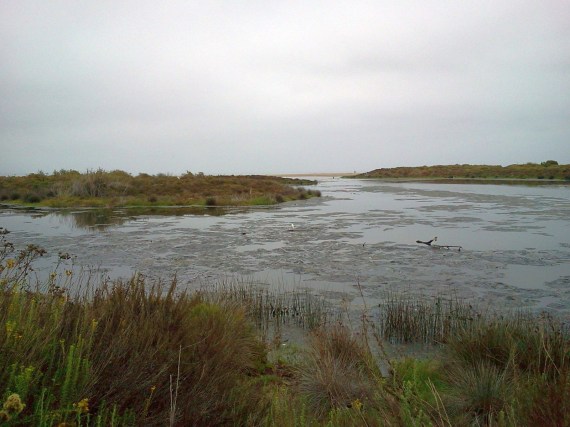
Birds special, birds returning: Malibu Lagoon, 24 July 2022
[By Chuck Almdale]
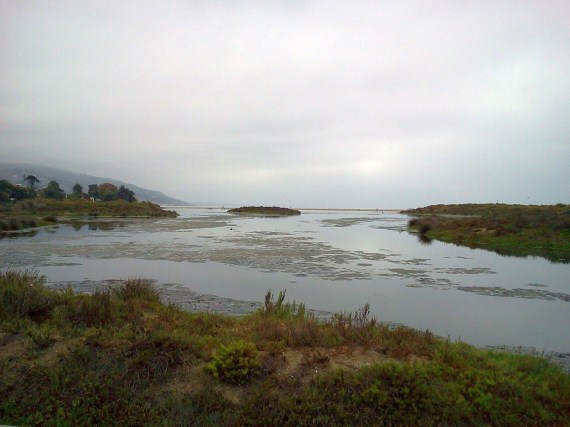
We don’t have “July Gloom” because it doesn’t rhyme, so it’s always “June Gloom” whether it’s March or June or October. For November through February it’s “winter low clouds.” So if the sky looks gray and cloudy in our photos, it’s still “June Gloom.” Remember that. There will be a test.
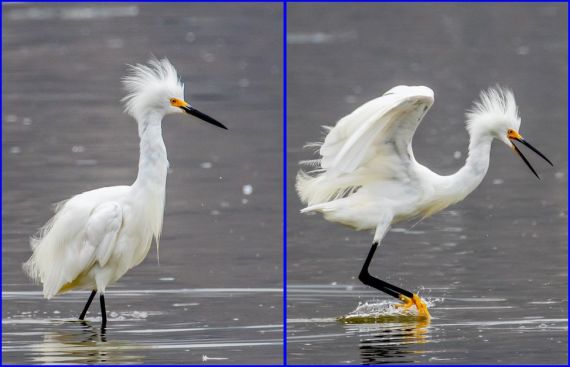
The clouds kept temperatures quite pleasant: 70-73°F. I suppose those on the sand, lying, trying to get a nice “healthy glow” as we used to say before our skin cracked and and flaked and fell off, leaving us scarred and saggy — they would prefer that the sun shown in the summer as it is contractually obligated to do, but those of us who know better…well, we know better. They’ll be grateful in 40 years.

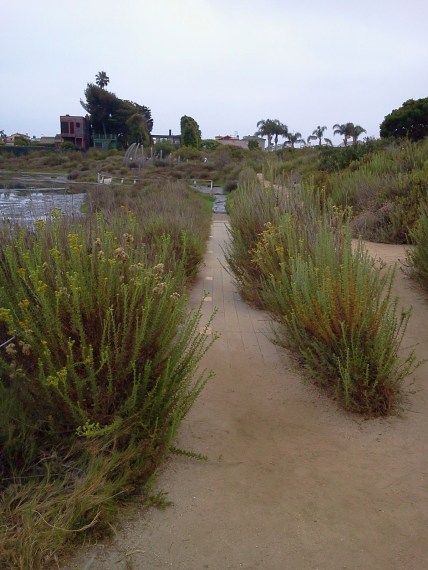
Speaking of things to remember, there is that weird-looking curving sidewalk that is sometimes under water and has numbers along it. It was installed about a decade ago during the 2012-13 reconfiguration of the lagoon. It’s called the “Winter Ramp-Summer Clock.” There’s been a page on our blog [we also have permanent pages, not merely blog postings] for only nine years, devoted entirely to it and detailing the construction process, so it’s understandable that you might have missed it.
It was specifically designed to be “sometimes under water” as it measures the water level in the lagoon. (It’s really tough to measure water level without something being under water at least part of the time.) I don’t know if this piece of civic architecture satisfies a great public need other than giving people something to complain about. “What idiot designed this thing? It’s under water!” I cannot say how many times I’ve heard this. No one notices the colored tile plaques marking water level. That’s partially because the paving and plaques gets covered with slimy muck (aka algae) when the water is high.
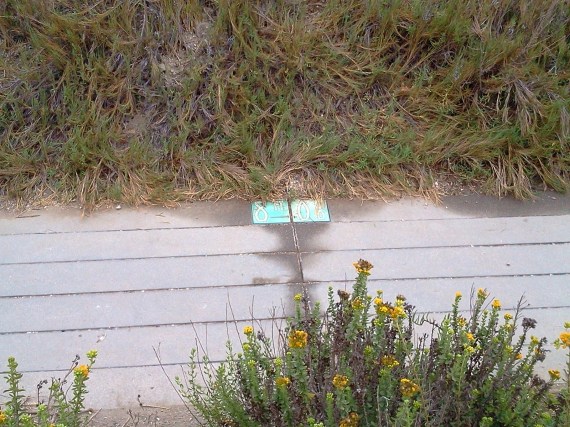
The numbers then become covered with muck, and the muck is ugly and slippery and then no one in their right mind walks down the summer clock sidewalk because sometimes it’s also underwater! So, for what’s it’s worth, that’s what it’s called and that’s what it does. This will not be on the test because although I know it has a name, I can never remember what it is. Despite all the foregoing, I still think it’s kind of cool.
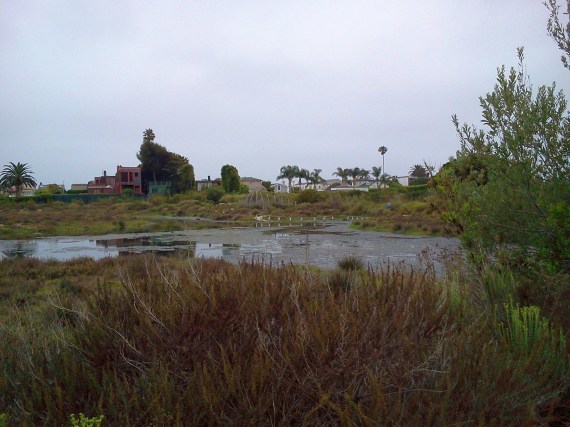
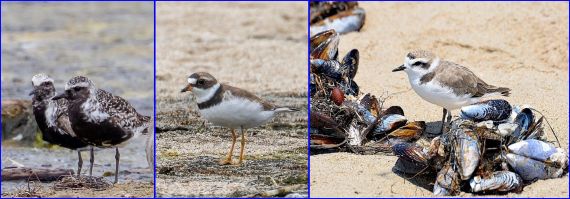
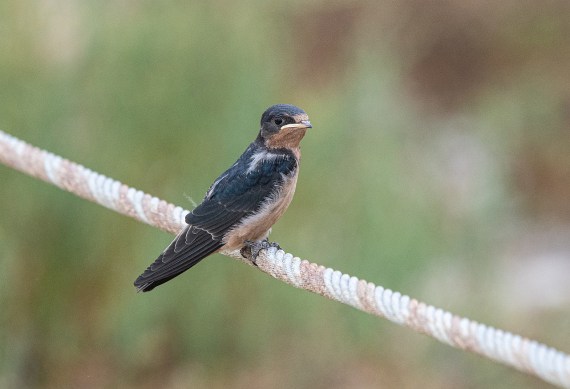
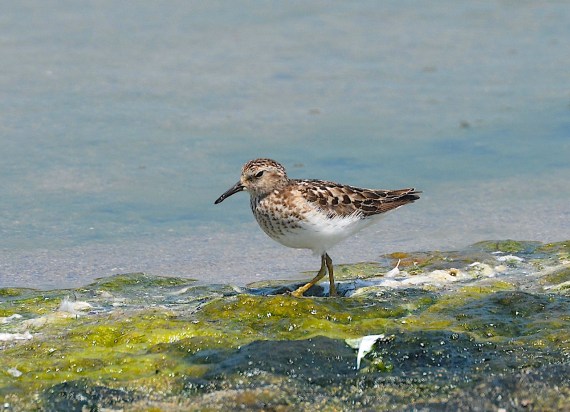
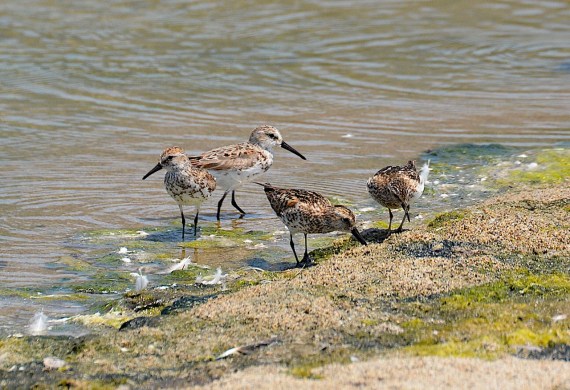
(Left+Center: C. Tosdevin 7/24/22, Right: L. Loeher 7/29/22)
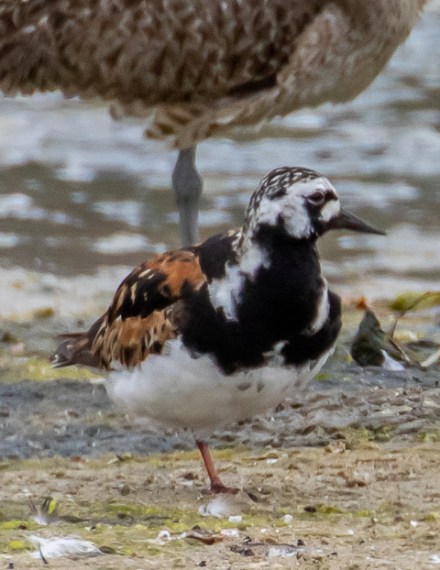
That aside, we had a few good birds today. (Of course, all these birds always think they’re good.) Species numbers jumped from our typical low month for the year – June’s 35 species – to a respectable 51 in July (see chart at bottom). Birds were returning from the north: Semipalmated Plover, Marbled Godwit, Ruddy Turnstone, Long-billed Dowitcher, Willet, Glaucous-winged Gull, Forster’s Tern.
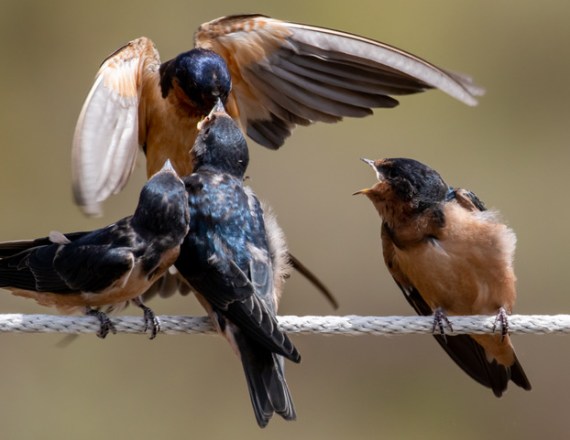
Plus a few local passerines were out and about after springtime’s busy breeding season ended: Oak Titmouse, Red-winged Blackbird, Common Yellowthroat. Barn Swallows, if they’re here, are always flying around and sitting in highly visible places. The Yellowthroats breed at the lagoon (I believe – I’ve never seen their nest, and I’d be shocked it I did – but they’re nearly always here) but we’ve missed them for the past few months.
There were also a few especially good birds. Such as the Reddish Egret.
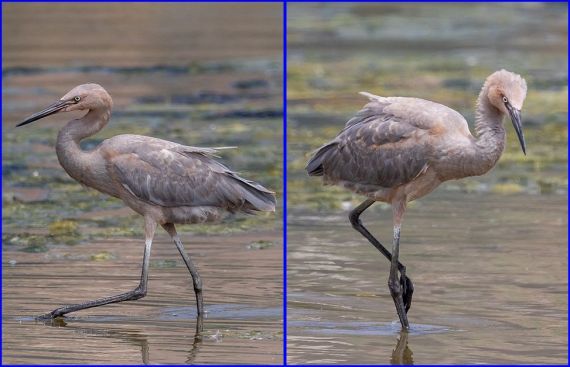
It’s not that the the Reddish Egret (Egretta rufescens) is terrifically rare in SoCal. They’ve been around for over three decades. The first one I ever saw was in Del Mar (San Diego County) in 1986, jumping around in San Dieguito Creek. If you’re used to the slow and sedate feeding style of most herons/egrets, they’re not like that at all; they jump and dance and chase fish around in the shallow water. They’re a lot of fun to watch. The only heron/egret that’s more fun to watch is the Black Heron (Egretta ardesiaca) of sub-Saharan Africa and Madagascar, which can be easily mistaken for a black umbrella some fool left standing up in the pond. (Notice that genus Egretta has both egret and heron members).
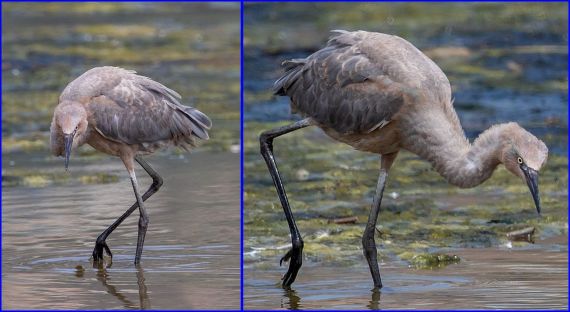
But there aren’t many Reddish Egrets around and Malibu Lagoon is not at all a reliable place to look for them. I’ve birded at Malibu Lagoon since 1979 and this was the first I’ve seen here. And it was a treat. eBird records the first Reddish Egret at Malibu Lagoon on 1 May 2014, and maybe 95 sightings since then, but most of those sightings are of the same few birds, probably under half a dozen (if anyone knows how many different Reddish Egrets have been at the lagoon, let me know). Birders tend to flock to see this bird, especially if they want to see it in L.A. County. Out of the 313 (or 314, but who’s counting) species on eBird records at the lagoon, the Reddish Egret was #293 in order of date.

The Reddish Egret was still there five days later, when Grace and Larry took these photos. As I said, they jump and run around and wave their wings. They do get more reddish than this bird, but mostly on the neck.
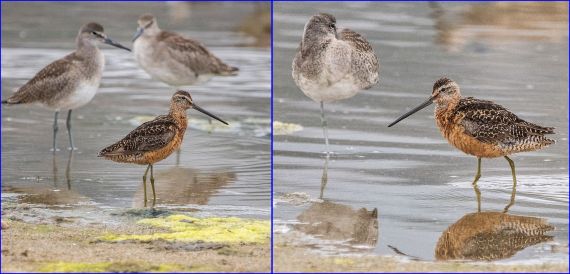
The other relatively good bird was the Long-billed Dowitcher. Now, we get them every year at the lagoon, but never in large numbers and not for very long, and this one was in especially colorful plumage, thus nice to see. We could even figure out that it was a Long-billed rather than a Short-billed Dowitcher, which can be far from simple except for birders better than me. [It’s not a “dowager,” as on Downton Abbey. The name used to be dowitchee, doewitch or dowitch, corruptions of Deutsher (German) or Duitsch (Dutch). In England it is (or used to be) called the Red-breasted Snipe. With that long straight bill, they look a lot like snipe.]
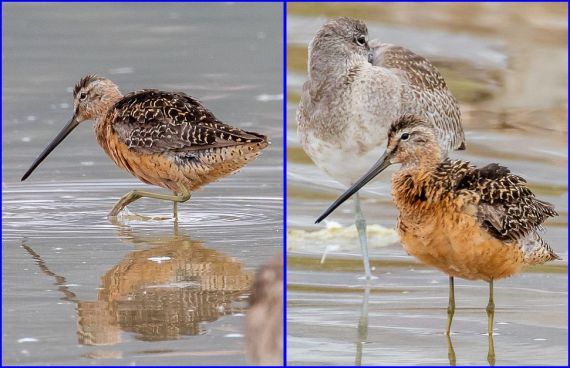
According to Jon Dunn & Kimball Garrett’s Birds of Southern California: Status and Distribution (1981), along the SoCal coast:
Long-billed presence: Common to abundant late Aug to late Apr; fairly common late Apr to early May & late Jul to late Aug; uncommon early-to-late July; casual or rare individuals early May to early July.
Short-billed presence: Common to abundant mid-to-late Apr & mid-July to mid-Sept; fairly common mid-Mar to mid-Apr, early-to-mid May, late June to mid-July, and mid-to-late Sept; uncommon Oct thru mid-Mar & mid-Mar thru June. They also winter along the coast at a few large marshes such as San Diego Bay and Seal Beach NWS.
For our trips at Malibu Lagoon for 301 trip dates, the sightings are almost even, but the Long-billed outnumber the Short-billed:
Long-billed: 34 visits, 208 birds.
Short-billed: 29 visits, 120 birds.
Here’s a “cheat-sheet” of dowitcher characteristics. Download/print here.
Pretend that you didn’t already know which species it is, and see if you can use it to figure out.

Check the bill-tip on the right-hand bird below.
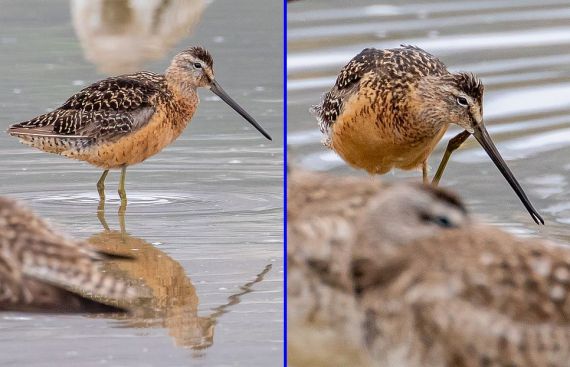
That’s how they grab invertebrates when they shove their bill into the sand or mud. Controllable flexi-tip.
Our last “special bird” was the juvenile Yellow-crowned Night-Heron. It had been reported earlier in the week and we were on the lookout for it all morning, with two adults and six juveniles constantly shifting positions to repeatedly comb through. Finally, lurking on the shore by the Adamson House fence, disappearing and reappearing as it walked between and through the bushes overhanging the water we found it. Chris and Lu went over to see it close-up, instead of from 200 yards away, and Chris got a photo.
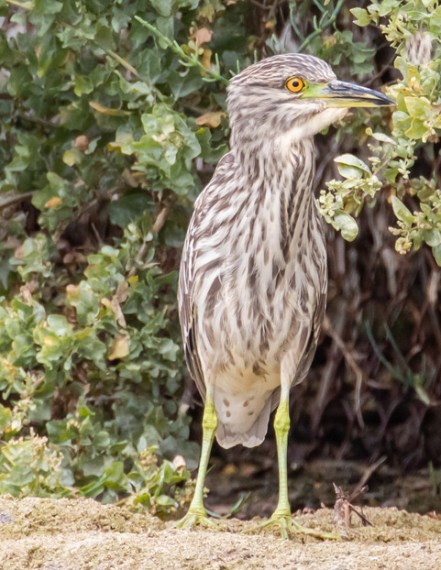
No, it’s definitely not a Black-crowned, but it sure looked like one much farther away, when you could only see the top of the bill and a direct frontal view made the bill look short and we could not see the back. (Reasons, not excuses! Reasons!) The breast-streaks did look a little too reddish and wide. So it goes, as famous birder Kurt Vonnegut once wrote.
The Snowy Plovers are definitely back, hanging around the southeastern corner of the lagoon. I saw five hunkered down in little hollows in the sand; Chris Tosdevin saw thirteen, and Grace & Larry saw sixteen five days later.
By the way, if you see a large, older man drawing on a pad of paper in the meeting area or at the nearby picnic tables, his name is Real. If you’re polite he might show you some of his artwork. His style reminds me of the multidirectional point-of-view (that’s my term for it) work of the First Americans of the Pacific Northwest and the Inuit, blended with the somewhat similar style but far more colorful work of the Australian Aboriginal artists. (I like those artistic traditions, so I’m predisposed to like Real’s work.) He’s very good. Perhaps a local Malibu gallery might be interested in showing it. (Hint, hint.)
Malibu Lagoon on eBird as of 8-04-22: 5981 lists, 313 species.
Link: https://ebird.org/hotspot/L597658
A question for those of you who use eBird: Is there some way to get sighting dates for a particular species at a particular Hot Spot – say, Reddish Egret at Malibu Lagoon? I can’t figure out how to do it. Their line graphs are useless as far as I’m concerned.
Birds new for the season: Semipalmated Plover, Marbled Godwit, Ruddy Turnstone, Long-billed Dowitcher, Willet, Glaucous-winged Gull, Forster’s Tern, Reddish Egret, Oak Titmouse, Red-winged Blackbird, Common Yellowthroat.
Malibu Lagoon on eBird as of 6-27-22: 5873 lists, 313 species
Many thanks to photographers: Lillian Johnson, Ray Juncosa, Grace Murayama, Chris Tosdevin
Upcoming SMBAS scheduled field trips: Our next trip will be Malibu Lagoon on August 28. This, and any other trip we announce for the foreseeable future will be dependent upon the expected status of the Covid pandemic at trip time. Any trip announced may be canceled shortly before trip date if it seems necessary. By now any other comments should be superfluous.
The next SMBAS program: Zoom Evening Meeting, Tuesday, 4 October 2022, 7:30 p.m. We will continue to Zoom our programs for a while.
The SMBAS 10 a.m. Parent’s & Kids Birdwalk is currently under discussion concerning resumption.
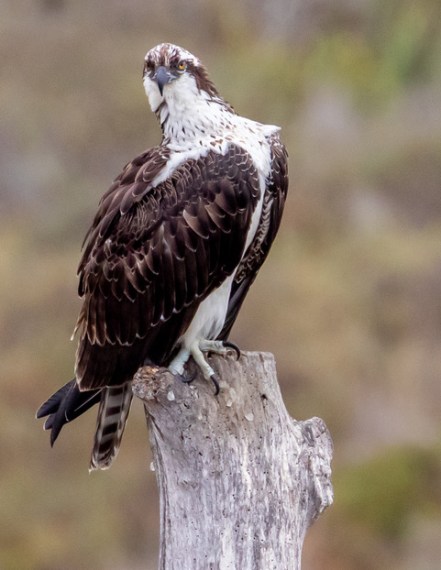
Links: Unusual birds at Malibu Lagoon
9/23/02 Aerial photo of Malibu Lagoon
More recent aerial photo
Prior checklists:
2021: Jan-July, July-Dec
2020: Jan-July, July-Dec 2019: Jan-June, July-Dec
2018: Jan-June, July-Dec 2017: Jan-June, July-Dec
2016: Jan-June, July-Dec 2015: Jan-May, July-Dec
2014: Jan-July, July-Dec 2013: Jan-June, July-Dec
2012: Jan-June, July-Dec 2011: Jan-June, July-Dec
2010: Jan-June, July-Dec 2009: Jan-June, July-Dec
The 10-year comparison summaries created during the Lagoon Reconfiguration Project period, remain available—despite numerous complaints—on our Lagoon Project Bird Census Page. Very briefly summarized, the results unexpectedly indicate that avian species diversification and numbers improved slightly during the restoration period June’12-June’14.
Many thanks to Lillian Johnson, Chris Lord, Chris Tosdevin and others for their contributions to this month’s checklist.
The list below now includes a column on the left side with numbers 1-9, keyed to the nine categories of birds at the bottom. The species are re-sequenced to agree with the California Bird Records Committee Official California Checklist, updated 15 Jan 2022. I generally do this sequence update at the start of each year.
[Chuck Almdale]
| Malibu Census 2022 | 2/27 | 3/27 | 4/24 | 5/22 | 6/26 | 7/24 | |
| Temperature | 61-70 | 57-65 | 72-75 | 61-66 | 65-70 | 70-73 | |
| Tide Lo/Hi Height | H+5.76 | H+5.00 | H+4.50 | L-0.32 | H+3.33 | H+3.35 | |
| Tide Time | 0621 | 0615 | 0442 | 1029 | 0943 | 0909 | |
| 1 | (Black) Brant | 6 | |||||
| 1 | Canada Goose | 2 | 6 | 3 | |||
| 1 | Egyptian Goose | 1 | |||||
| 1 | Cinnamon Teal | 2 | |||||
| 1 | Gadwall | 8 | 47 | 26 | 25 | 15 | 25 |
| 1 | American Wigeon | 6 | 1 | 2 | |||
| 1 | Mallard | 12 | 30 | 14 | 15 | 35 | 80 |
| 1 | Green-winged Teal | 12 | 15 | 2 | |||
| 1 | Surf Scoter | 15 | 3 | ||||
| 1 | Bufflehead | 5 | |||||
| 1 | Common Goldeneye | 2 | |||||
| 1 | Red-breasted Merganser | 6 | 5 | ||||
| 1 | Ruddy Duck | 4 | 1 | ||||
| 2 | Pied-billed Grebe | 3 | 3 | 1 | 1 | 2 | |
| 2 | Eared Grebe | 1 | 1 | ||||
| 2 | Western Grebe | 12 | 16 | ||||
| 7 | Feral Pigeon | 10 | 8 | 4 | 6 | 8 | 17 |
| 7 | Band-tailed Pigeon | 3 | 1 | ||||
| 7 | Mourning Dove | 4 | 2 | 4 | 2 | 2 | |
| 8 | Anna’s Hummingbird | 2 | 1 | 1 | |||
| 8 | Allen’s Hummingbird | 3 | 3 | 3 | 1 | 2 | 3 |
| 2 | American Coot | 73 | 65 | 1 | 4 | 4 | 8 |
| 5 | Black-bellied Plover | 25 | 28 | 2 | 1 | 17 | |
| 5 | Killdeer | 10 | 4 | 2 | 3 | 3 | 6 |
| 5 | Semipalmated Plover | 15 | 1 | ||||
| 5 | Snowy Plover | 15 | 10 | 13 | |||
| 5 | Whimbrel | 2 | 8 | 2 | 3 | 88 | |
| 5 | Marbled Godwit | 1 | 2 | 1 | |||
| 5 | Ruddy Turnstone | 5 | 3 | ||||
| 5 | Sanderling | 45 | 2 | ||||
| 5 | Dunlin | 1 | |||||
| 5 | Least Sandpiper | 20 | 10 | 50 | 8 | ||
| 5 | Western Sandpiper | 11 | 35 | 30 | 1 | ||
| 5 | Long-billed Dowitcher | 1 | |||||
| 5 | Spotted Sandpiper | 6 | 1 | ||||
| 5 | Willet | 8 | 6 | 2 | 7 | ||
| 5 | Red-necked Phalarope | 1 | |||||
| 6 | Heermann’s Gull | 1 | 8 | 15 | 4 | 27 | 5 |
| 6 | Ring-billed Gull | 175 | 16 | 65 | |||
| 6 | Western Gull | 88 | 95 | 57 | 95 | 55 | 145 |
| 6 | California Gull | 510 | 185 | 35 | 33 | 3 | 3 |
| 6 | Herring Gull | 1 | 2 | ||||
| 6 | Glaucous-winged Gull | 5 | 8 | 6 | 1 | ||
| 6 | Caspian Tern | 1 | 8 | 12 | 15 | 22 | 18 |
| 6 | Forster’s Tern | 1 | |||||
| 6 | Royal Tern | 2 | 35 | 18 | 3 | 3 | 25 |
| 6 | Elegant Tern | 6 | 220 | 24 | 475 | ||
| 2 | Red-throated Loon | 2 | |||||
| 2 | Pacific Loon | 2 | |||||
| 2 | Common Loon | 1 | |||||
| 2 | Brandt’s Cormorant | 1 | 5 | 1 | 50 | ||
| 2 | Pelagic Cormorant | 3 | 1 | 1 | 2 | 2 | |
| 2 | Double-crested Cormorant | 51 | 33 | 26 | 22 | 46 | 62 |
| 2 | Brown Pelican | 15 | 23 | 68 | 65 | 126 | 85 |
| 3 | Great Blue Heron | 2 | 1 | 1 | 2 | 3 | 5 |
| 3 | Great Egret | 5 | 3 | 2 | 4 | 3 | |
| 3 | Snowy Egret | 3 | 4 | 1 | 1 | 2 | 12 |
| 3 | Reddish Egret | 1 | |||||
| 3 | Black-crowned Night-Heron | 4 | 8 | ||||
| 4 | Turkey Vulture | 1 | 5 | 3 | 4 | 4 | |
| 4 | Osprey | 1 | 1 | 1 | 1 | ||
| 4 | Cooper’s Hawk | 1 | |||||
| 4 | Red-shouldered Hawk | 1 | |||||
| 4 | Red-tailed Hawk | 1 | |||||
| 8 | Belted Kingfisher | 1 | 1 | 1 | |||
| 9 | Black Phoebe | 3 | 3 | 2 | 5 | 4 | |
| 9 | Say’s Phoebe | 1 | |||||
| 9 | California Scrub-Jay | 3 | 2 | 1 | 1 | 3 | |
| 9 | American Crow | 20 | 6 | 4 | 4 | 5 | 1 |
| 9 | Common Raven | 2 | |||||
| 9 | Oak Titmouse | 2 | |||||
| 9 | No. Rough-winged Swallow | 2 | 4 | 8 | 1 | ||
| 9 | Barn Swallow | 4 | 8 | 15 | 20 | 30 | |
| 9 | Cliff Swallow | 8 | 4 | 3 | |||
| 9 | Bushtit | 4 | 4 | 10 | 8 | 10 | |
| 9 | Wrentit | 2 | 2 | 1 | |||
| 9 | Blue-gray Gnatcatcher | 2 | |||||
| 9 | House Wren | 2 | 1 | 1 | |||
| 9 | Northern Mockingbird | 1 | 1 | 1 | 3 | ||
| 9 | European Starling | 30 | 3 | 2 | 1 | ||
| 9 | House Finch | 5 | 15 | 6 | 12 | 10 | 12 |
| 9 | Lesser Goldfinch | 2 | 2 | 1 | |||
| 9 | Dark-eyed Junco | 3 | |||||
| 9 | White-crowned Sparrow | 25 | 20 | 2 | |||
| 9 | Song Sparrow | 6 | 10 | 7 | 10 | 4 | 2 |
| 9 | California Towhee | 2 | 2 | 2 | 2 | 1 | |
| 9 | Red-winged Blackbird | 2 | 1 | 6 | |||
| 9 | Brown-headed Cowbird | 2 | 1 | ||||
| 9 | Great-tailed Grackle | 3 | 5 | 2 | 1 | 6 | 6 |
| 9 | Common Yellowthroat | 1 | 1 | 2 | |||
| 9 | Yellow-rumped Warbler | 6 | 1 | ||||
| Totals by Type | Feb | Mar | Apr | May | Jun | Jul | |
| 1 | Waterfowl | 52 | 127 | 49 | 48 | 50 | 105 |
| 2 | Water Birds – Other | 164 | 146 | 99 | 143 | 177 | 159 |
| 3 | Herons, Egrets & Ibis | 5 | 10 | 5 | 5 | 13 | 29 |
| 4 | Quail & Raptors | 5 | 6 | 3 | 4 | 5 | 1 |
| 5 | Shorebirds | 97 | 146 | 114 | 6 | 6 | 146 |
| 6 | Gulls & Terns | 783 | 363 | 428 | 174 | 110 | 673 |
| 7 | Doves | 17 | 10 | 8 | 6 | 11 | 19 |
| 8 | Other Non-Passerines | 6 | 5 | 4 | 2 | 2 | 3 |
| 9 | Passerines | 118 | 81 | 64 | 64 | 63 | 87 |
| Totals Birds | 1247 | 894 | 774 | 452 | 437 | 1222 | |
| Total Species | Feb | Mar | Apr | May | Jun | Jul | |
| 1 | Waterfowl | 9 | 9 | 6 | 4 | 2 | 2 |
| 2 | Water Birds – Other | 11 | 7 | 7 | 5 | 4 | 5 |
| 3 | Herons, Egrets & Ibis | 2 | 3 | 3 | 3 | 4 | 5 |
| 4 | Quail & Raptors | 5 | 2 | 1 | 1 | 2 | 1 |
| 5 | Shorebirds | 9 | 8 | 11 | 4 | 2 | 11 |
| 6 | Gulls & Terns | 8 | 9 | 8 | 6 | 5 | 8 |
| 7 | Doves | 3 | 2 | 2 | 1 | 3 | 2 |
| 8 | Other Non-Passerines | 3 | 3 | 2 | 2 | 1 | 1 |
| 9 | Passerines | 17 | 16 | 17 | 13 | 12 | 16 |
| Totals Species – 91 | 67 | 59 | 57 | 39 | 35 | 51 |
Birds & Dinosaurs – Joined at the Hip | Yale News
[Posted by Chuck Almdale, suggested by Edna Alvarez]
More evidence that those friendly feathered animals living around, above, even below us, are the direct descendants of those toothy cold-blooded killers who used to rule the world (not counting bacteria).
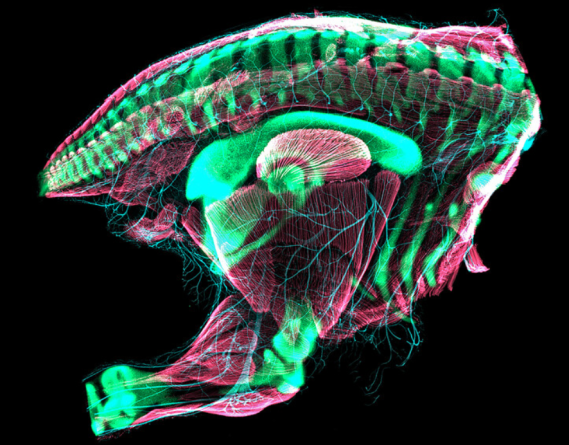
Birds & Dinosaurs — Joined at the Hip
Yale News | Jim Shelton | July 27, 2022 | 5 minute read
From the article:
All baby birds have a moment prior to hatching when their hip bone is a tiny replica of a dinosaur’s pelvis. That’s one of the findings in a new, Yale-led study in the journal Nature that explores the evolutionary underpinnings of the avian hip bone. It is also a modern-day nod to the dramatic transformation that led from dinosaurs to birds over tens of millions of years.
Link to list of publications by co-author and lab director Bhart-Anjan S. Bhullar
Sample title: The early origin of a birdlike inner ear and the evolution of dinosaurian movement and vocalization. Science 372(6542): 601-609. Hanson M*, Hoffman EA, Norell MA, Bhullar B-AS. (2021).
Link to the paper: The developing bird pelvis passes through ancestral dinosaurian conditions
Abstract:
Living birds (Aves) have bodies substantially modified from the ancestral reptilian condition. The avian pelvis in particular experienced major changes during the transition from early archosaurs to living birds. This stepwise transformation is well documented by an excellent fossil record; however, the ontogenetic alterations that underly it are less well understood. We used embryological imaging techniques to examine the morphogenesis of avian pelvic tissues in three dimensions, allowing direct comparison with the fossil record. Many ancestral dinosaurian features (for example, a forward-facing pubis, short ilium and pubic ‘boot’) are transiently present in the early morphogenesis of birds and arrive at their typical ‘avian’ form after transitioning through a prenatal developmental sequence that mirrors the phylogenetic sequence of character acquisition. We demonstrate quantitatively that avian pelvic ontogeny parallels the non-avian dinosaur-to-bird transition and provide evidence for phenotypic covariance within the pelvis that is conserved across Archosauria. The presence of ancestral states in avian embryos may stem from this conserved covariant relationship. In sum, our data provide evidence that the avian pelvis, whose early development has been little studied, evolved through terminal addition—a mechanism whereby new apomorphic states are added to the end of a developmental sequence, resulting in expression of ancestral character states earlier in that sequence. The phenotypic integration we detected suggests a previously unrecognized mechanism for terminal addition and hints that retention of ancestral states in development is common during evolutionary transitions.
Three more articles on this paper: Xeniasday, Wiley Analytical Science, Hartford Courant.
Where Song Began | The Bowerbird Collective
[Posted by Chuck Almdale]
This is an interesting and unusual item and it looks legitimate, so I’m posting this upcoming concert in the Los Angeles west side area. The two videos (links at bottom) are nice to listen to and a good introduction to their work. The performers are on a tour around the western U.S. and Canada, and the venue where they are performing — Monk Space — is a real place.
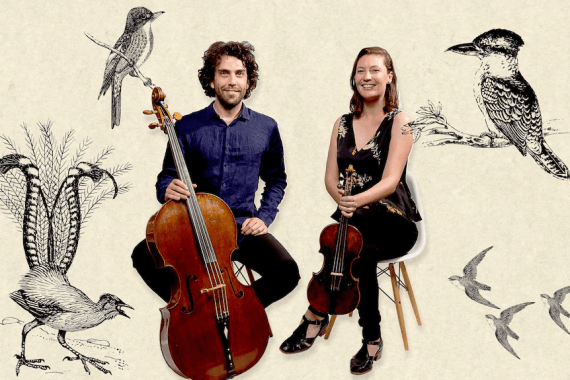
Where Song Began – Los Angeles
Monk Space, 4414 W 2nd St, Los Angeles, CA 90004
Saturday, 6th of August, 3:00pm
Adults $25, Students $15, U18 $5
Tickets: www.bowerbirdcollective.us/la
Facebook event
Description
‘Where Song Began’ is a musical celebration of songbirds, a cinematic concert experience not to be missed.
Join two of Australia’s most adventurous musicians, Simone Slattery (violin, vocals, PhD, Churchill Fellow) and Anthony Albrecht (cello, The Juilliard School), for an event described as “Spectacular” by Limelight Magazine.
Performed more than 80 times in sold out halls and accessible for all ages, this work encourages the audience to contemplate the avian origins of song. The program includes music spanning 300 years, from Johann Heinrich Schmelzer and J.S. Bach to Arvo Pärt and new compositions, enhanced by a film of evocative visual projections and an immersive soundscape.
About the performers: Simone Slattery was a 2018 Churchill Fellow, received a Ph.D. in Music Performance from the University of Adelaide and performs regularly with Australia’s finest ensembles. Anthony Albrecht is an Australian graduate of The Juilliard School’s Historical Performance program and enjoys an international career.
Performance length: 60 minutes without interval, including a Q&A. For more information about this program visit www.wheresongbegan.com and www.bowerbirdcollective.org
Tickets: Adults $25, Students $15, U18 $5 at the door and online.
Program:
Arvo Pärt – Fratres for solo violin, 1977
Sarah Hopkins – Reclaiming the Spirit, 1993
Vaughan Williams – The Lark Ascending, 1917
Chris Williams – bird, songs, seas, 2017
Ross Edwards – Ecstatic Dance No.2, 1990
Johann Heinrich Schmelzer – Cucu Sonata, 1664
J.S. Bach – Prelude from Cello Suite No.1, c.1720
David Lang – Anthochaera carunculata (Red Wattle Bird), 2017
Ngarra Burra Ferra – Yorta Yorta hymn
Presented by the Bowerbird Collective, with kind assistance from Monk Space
Spotify Album Link here .
Promotional videos here and here.
ABC (Australian Broadcasting Corp) Radio National feature interview here.



 SANTA MONICA BAY AUDUBON SOCIETY BLOG