Free email delivery
Please sign up for email delivery in the subscription area to the right.
No salesman will call, at least not from us. Maybe from someone else.
Birds of Malibu Lagoon | Zoom Program
[Posted by Chuck Almdale]
I recently gave a Zoom presentation on the Malibu Lagoon, featuring the wonderful photography of Jim Kenney, to the UCLA Retirees Association. This program was considerably scaled-down from a presentation I gave in 2015 to the SMBAS chapter. This version focused on the shorebirds and gulls, with a nod to a few common bird families at the lagoon, some data and lagoon history. The last 20 minutes is questions and answers. The UCLA people were kind enough to send me a link so now it’s preserved for posterity.
Birds of Malibu Lagoon
UCLARA | Chuck Almdale | Time 1:06
From their YouTube site:
Malibu Lagoon has long been a favorite spot for local birders. Santa Monica Bay Audubon Society has hosted a monthly field trip there for over 30 years, but many may have forgotten – or never knew – its history over the past few decades. In this introduction to the lagoon, we’ll see many of its denizens as photographed by SMBAS photographers, discuss a little bit of lagoon history, the Snowy Plover colony, and why keeping records of your “local birding patch” is a useful and fun form of citizen science.
Speaker: Chuck Almdale (misclistsKITTY@verizon.net) [take out the KITTY], a retired accountant in the film industry began watching birds 45 years ago and began censusing Malibu Lagoon birds in 1979. Since joining Santa Monica Bay Audubon Society in 1989, he has served it in various capacities including President, Vice-president, Program chair and for about 20 years, Field Trip chairman. He has led their birdwalk at Malibu Lagoon for the past 20 years. He has also edited their blog and written most of their postings since its 2009 inception. When not at the lagoon, he birds around the county, state, country and the world, and has seen slightly over half of the species of birds in the world. He finds that the vocation of accountancy is adequate preparation for the avocation of censusing birds.
Macaulay Library’s Best Bird Photos of 2022
[Posted by Chuck Almdale]
Mrs. Gould’s Sunbird, Thailand by Natthaphat Chotjuckdikul
Over fifty contributors & many categories: birds of many colors, birdscapes, in flight, rare moments, on the water, bird-a-tude, pair bonds, next generations.
From Macaulay Library’s description:
The Macaulay Library, originally the Library of Natural Sounds, began collecting and preserving animal sounds in 1929. By 2015 the library expanded to include photos of birds. Thanks to more than 100,000 eBirders and photographers, today’s Macaulay Library is filled with absolutely stunning shots of birds, some of which are on display in this article.
Science News for Students | Science News Magazine
[Posted by Chuck Almdale]
And students are age 6 to 60, right? Right!
Science News is a great magazine to which I’ve subscribed for about 30 years. They cover all topics in science from astrophysics to zoology. They describe Science News for Students as:
An award-winning, free online magazine that reports daily on research and new developments across scientific disciplines for inquiring minds of every age — from middle school on up.
I wish this had been available when I was young.
On-line, where space is not at a premium, they add:
Science News for Students (formerly Science News for Kids) publishes award-winning journalism on research across the breadth of science, health and technology fields. It aims to bring these new developments to a younger audience. Published daily, Science News for Students posts both shorter news stories and longer features, all written with a vocabulary and sentence structure aimed at readers 9 to 14 years old. The breadth of technical subjects and tone attracts many advanced readers as well. Our stories highlight ongoing research in fields ranging from astronomy to zoology. (Science News for Students does not publish original scientific results.) Stories are reported by experienced science journalists, many with PhDs in the fields on which they write.

Here’s a few examples.
A new way to make plastics could keep them from littering the seas
For inspiration on how to make plastics break down, designers turned to RNA molecules.
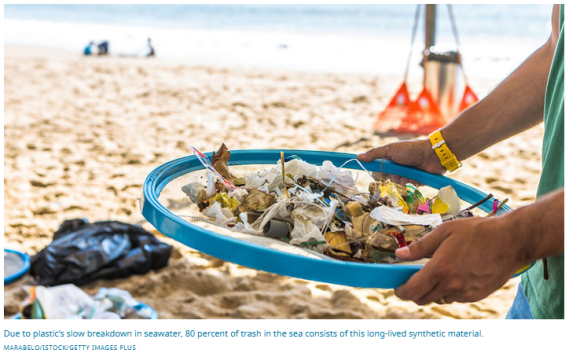
Most ocean plastics, like those shown above, would take centuries to fully degrade. That’s one reason plastics now make up 80 percent of ocean trash. But a new type of polylactide, or PLA — a popular plastic made out of corn and potato starch — may change that. Like most plastics, its building blocks are linked into a chain. Scientists in the Netherlands have just tweaked some of those links to make them water-soluble and therefore easier to break down in water. Weakening 3 percent of the links caused PLA to break down after about two years in seawater. With 15 percent weakened, that breakdown dropped to just two weeks.
Let’s learn about snot
Snot and other kinds of mucus play a crucial role in keeping us healthy

Snot gets a bad rap. It’s sticky and gross. And when you’re sick, it can stuff up your nose. But snot is actually your friend. It’s an important part of the immune system that keeps you healthy.
When you inhale, the snot in your nose traps dust, pollen and germs in the air that could irritate or infect your lungs. Tiny, hairlike structures called cilia move that mucus toward the front of the nose or the back of the throat. The mucus can then be blown into a tissue. Or, it can be swallowed and broken down by stomach acid. Swallowing snot might sound disgusting. But your nose and sinuses produce about a liter (a quarter of a gallon) of snot each day. Most of that slime slides down your throat without you even noticing.
What the mummy’s curse reveals about your brain
Here’s why it’s easy to confuse random coincidence with meaningful patterns

Two men peered through a small hole in the wall of a tomb. It was the final resting place of an ancient Egyptian king. “Can you see anything?” asked one. “Yes, wonderful things,” answered the other. Statues and golden treasure glinted in the dim light.
The two men were Howard Carter and Lord Carnarvon. For six years, Carter had been searching for a lost tomb. Carnarvon paid for the expeditions. Finally, in November 1922, the men and their workers had found what they sought. The treasure-filled room was one of four associated with the tomb of Tutankhamen. This pharaoh, or king of ancient Egypt, had died in the 1320s BC. He was just 18 or 19 years old.
The discovery captivated the world. But Lord Carnarvon did not get to enjoy it for long. He died unexpectedly the next April at the age of 56. This was six weeks after opening and entering the actual burial chamber of the tomb.
Go and explore.
May learning never cease.
Swainson’s Hawk Survey in Los Angeles County
[Posted by Chuck Almdale]
The following message is from Lance Benner lbenner@charter.net, birder and near-earth astroid-finder extraordinaire. The group Los Angeles Birders wants help spotting Swainson’s Hawks who fly over L.A. County in their northward migration from the grasslands of Argentina.
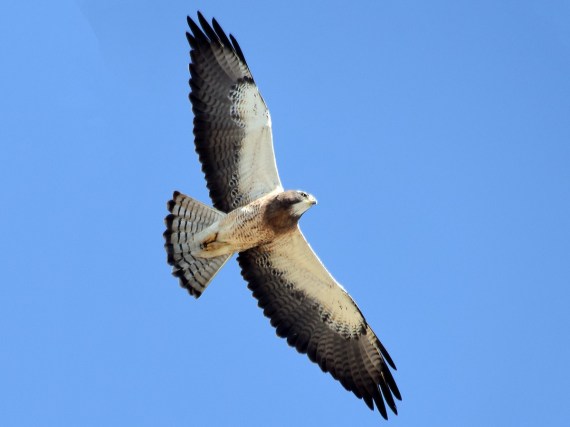
Swainson’s Light Morph adult – eBird, Steven Mlodinow, 31 May 2017, Colorado
Hi Everyone,
Los Angeles Birders are organizing a survey this spring to monitor the movement of Swainson’s Hawks through Los Angeles County. Following up on the email posted a few days earlier, we want to provide more information and to request your help.
Based on results from previous years, there appear to be two peaks in Swainson’s hawk numbers locally with large flocks totaling 50+ birds moving through between about March 11-20 and a smaller, but still substantial, peak roughly two to three weeks later. The date of the first peak fluctuates by +- a few days. The full migration extends from roughly mid February through early May.
Several reports with kettles of 10+ birds have already appeared in eBird and on the L.A. County listserve within the last few days.
There’s a lot we don’t know about Swainson’s Hawk movement through the county in the spring, so Los Angeles Birders are organizing efforts to track them more thoroughly and systematically in 2022. In previous years most of the Swainson’s hawks seen in LA County have been along the foothills between Claremont on the east and Big Tujunga Wash on the west, but where the birds go beyond Tujunga isn’t well known. There has also been significant movement through Griffith Park and the eastern San Fernando Valley and occasionally along the north slope of the San Gabriel mountains.
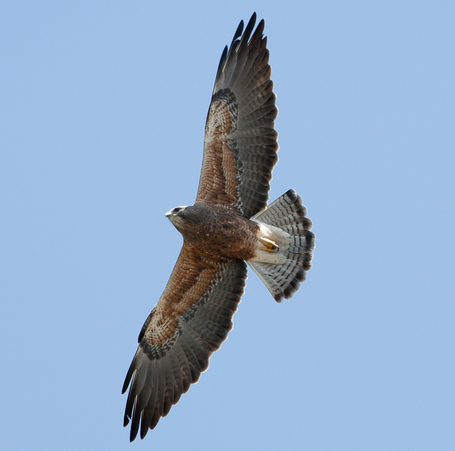
Swainson’s Dark Morph adult – eBird, Brian Sullivan, 25 Apr 2009, Fresno
The table below lists all Los Angeles County eBird reports of at least 50 Swainson’s Hawks from 2017-2021:
No. Date Time Location
80 15-Mar-17 18:00 East of Lancaster (G-8 at 100th E). desert
100 24-Feb-18 17:14 Pitzer College, Claremont. coastal slope
100 3-Mar-18 7:40 Peck Rd. Water Conservation Park. coastal slope
250 11-Mar-18 9:14 Hahamongna. coastal slope. mostly cloudy, rain previous night
200 11-Mar-18 16:00 Los Feliz/Atwater Village. coastal slope
145 11-Mar-18 16:00 Scholl Canyon, Glendale. coastal slope, partly cloudy
75 11-Mar-18 17:00 Myrtle/Greystone, Monrovia. coastal slope
100 27-Mar-18 9:00 Chilao, San Gabriel Mtns. mountains
55 23-Mar-19 7:00 Hansen Dam. coastal slope overcast
70 23-Mar-19 9:12 Altadena. coastal slope, had roosted nearby
120 8-Apr-19 9:05 Piute Ponds. desert, sunny, calm
200 15-Mar-20 6:36 Hahamongna. coastal slope,partly clear (cloudy, rainy previous days)
516 15-Mar-20 10:00 Vina Vieja Park, Pasadena. coastal slope, cloudy
75 17-Mar-20 10:42 Highland Place, Monrovia, coastal slope
80 5-Mar-21 8:45 Horsethief Canyon Park, San Dimas. coastal slope
400 13-Mar-21 9:40 Hahamongna, coastal slope
400 13-Mar-21 9:30 East Alta Loma Dr., Altadena, coastal slope, sunny, calm
100 13-Mar-21 12:12 Bygrove St., Covina. coastal slope
125 14-Mar-21 7:47 Bernard Field Station, Claremont. coastal slope, mostly cloudy
150 15-Mar-21 12:30 East Loma Alta Dr., Altadena. coastal slope, overcast, light rain
150 15-Mar-21 15:05 Horsethief Canyon Park, San Dimas. coastal slope, cloudy, drizzle
375 15-Mar-21 17:10 Altadena. coastal slope
75 15-Mar-21 17:56 Bowring Dr., Altadena. coastal slope
70 20-Mar-21 13:01 Claremont Wilderness Park. coastal slope
141 20-Mar-21 13:45 Juniper Hills. desert foothills, 10% cloud cover
Migrant flocks through the desert (Antelope Valley, and north of us from eastern Kern and the Owens Valley) tend to be later in the season (mainly late March through April) than flocks on the coastal slope (which can begin in mid-February and peak by early April). Of course we emphasize that more data are desirable.
Large flocks of Swainson’s Hawks in LA County have been reported throughout the day but not usually before about 9 am.
To understand movement of Swainson’s Hawks through this area, we request that everyone please report them to eBird and, if you see flocks of more than several birds, please post them to the L.A. County listserve promptly.
Swainson’s hawks appear to fly ~100-200 km per day (~60-120 miles), so it could take a couple of days for them to get from staging areas near Borrego Springs to, say, Pasadena. Large numbers lifting off from Borrego Springs might provide an early alert for big flights farther west-northwest on the next day or two.
In more detail, we ask your help with monitoring the hawks as follows:
1. Conduct systematic surveys on specific dates from sites that have a good chance for seeing the hawks. For these surveys, we ask observers to watch for at least one hour between 9 am and sunset.
Target dates:
March 12 Saturday
March 13 Sunday
March 17 Thursday
March 18 Friday
March 19 Saturday
March 20 Sunday
We chose March 17 and 18, even though they’re weekdays, because experienced observers will be watching from Bear divide on those mornings.
2. Please report *all* Swainson’s hawks seen as part of other, regular birding in your eBird lists.
3. If you see a flock of several dozen or more birds, PLEASE post the sighting to the L.A. County listserve as soon as possible so we can try to marshal observers to track its movement.
We are hopeful that migration monitoring at Bear Divide (which officially starts on March 17) and Gorman (see the recent listserve post by Richard Crossley) will help us understand movement through those areas.
Negative reports with zero hawks will help us understand their movements and are also welcome.
Where should one look? Previous experience suggests that the hawks preferentially move along the foothills on the coastal slope, but there are signs of substantial movement along the north slope as well (Juniper Hills, along Pine Canyon Road west of Lake Hughes, near Quail Lake, and Gorman).
Here’s a list of sites where significant numbers have been reported in LA County previously or where we think chances are good for seeing the birds, listed in order of southeast to northwest:
Wheeler Park, Claremont
California Botanic Garden, Claremont
Blaisdell Ranch Preserve, north Claremont
Claremont Wilderness Park
Horsethief Canyon Park, San Dimas
South Hills Park, Glendora (along the ridge)
Bonelli Park
Santa Fe Dam
Encanto Park
Grand Avenue Park, Monrovia (Zone-tailed hawk area)
Peck Road Water Conservation Area
Los Angeles County Arboretum
Bailey Canyon Park, Sierra Madre
Eaton Canyon, including the road up to Henninger Flat
Vina Vieja Park, Pasadena
Cobb Estate, Altadena
Loma Alta Park, Altadena
Chaney Trail Road/Sunset Ridge/Millard Canyon
Hahamongna Watershed Park
Griffith Park
Verdugo Mountains and adjacent parks on the north and south sides
Hansen Dam
Big Tujunga Wash
Veteran’s Park, Sylmar
Bear Divide
Placerita Canyon State Park
Castaic Lagoon
Pyramid Lake
Pine Canyon Road west of Lake Hughes
Quail Lake
Gorman area where the rough-legged hawk turned up in 2021
The above list of sites is by no means complete and it wouldn’t be surprising if large flocks turn up in other areas near the foothills. In general, though, there aren’t any records of large flocks moving along the coast.
Thus far in 2022, reports of 10 or more birds have occurred on the following dates:
# Date Location & observers
12 March 3 north Monrovia. Ron Cyger
30 March 4 Gorman. Richard Crossley et al.
11 March 5 Bonelli Park. Keith Condon
28 March 5 Pacific Crest Trail, Three Points. Alan Brelsford
11 March 5 Pacific Crest Trail, Three Points. Alan Brelsford
There have been recent reports of modest numbers (< 10) in Borrego Springs, a traditional staging area in previous years, and numerous reports of more than 10 birds/flock in the Imperial Valley in fields near Calipatria. So far in 2022, it appears that Swainson’s hawks are staging more near Calipatria than at Borrego Springs. There was also an intriguing report of about 50 birds settling to roost in Morongo on March 4, which raises the obvious question of where they went on March 5 (north slope..?).
Please report sightings to eBird, and in your comments, please note the weather conditions. Anecdotally, there are indications that the hawks are easier to see on days with low overcasts, which appear to keep the birds closer to the ground where they are more visible.
Kimball points out that it’s also important to track migration by turkey vultures, which have already started to move through in relatively large flocks, with kettles exceeding 20 birds seen going west along the foothills as recently as March 6. Please report those in eBird and (especially large groups) on the listserve.
Thank you,
Lance Benner
Altadena, CA
Community Science Chair,
Los Angeles Birders
lbenner@charter.net
Geese & Plovers: Malibu Lagoon, 27 February 2022
[Posted by Chuck Almdale]

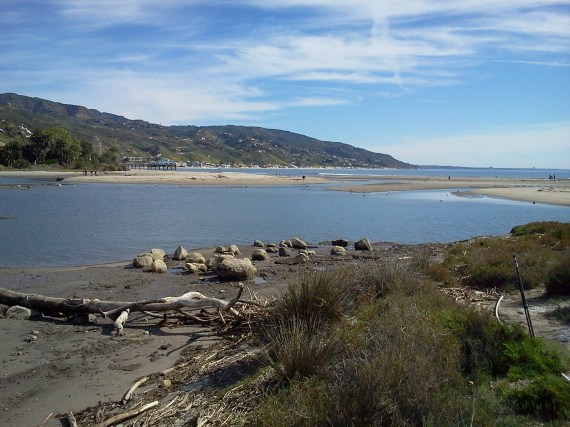
The lagoon is still open to the ocean, and with a very large tidal fluctuation today — +5.76 ft. @ 0621 dropping to -1.31 ft. @ 1345, or a total of -7.07 ft in 7 ½ hours — we had the chance to watch the rocks emerge, and gulls frequently flew back and forth from lagoon to revealed rocky reefs. This did not make counting them any easier.

The mystery bird above, is fairly common in SoCal, and more common at the lagoon that one might think. Not all of our 14 birders present saw it. But then, no one ever sees all the birds.

The ocean was extremely flat with no surfers save diehards and dawn patrol sitting, sitting, sitting on their boards. Several paddleboarders stroked their way around the pier.
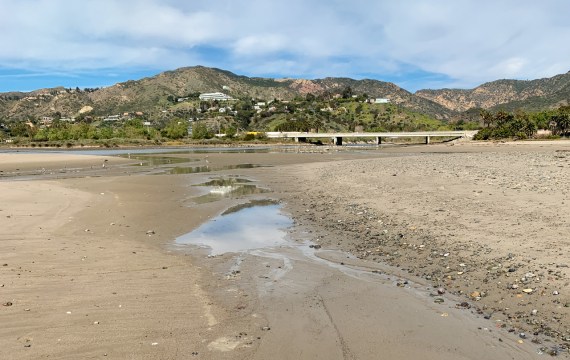
Lagoon and channels were mostly mud. Not much water left for diving ducks, yet still there were a few grebes, several dozen Coots, Ruddy Ducks, Bufflehead and Red-breasted Mergansers; all diving birds.
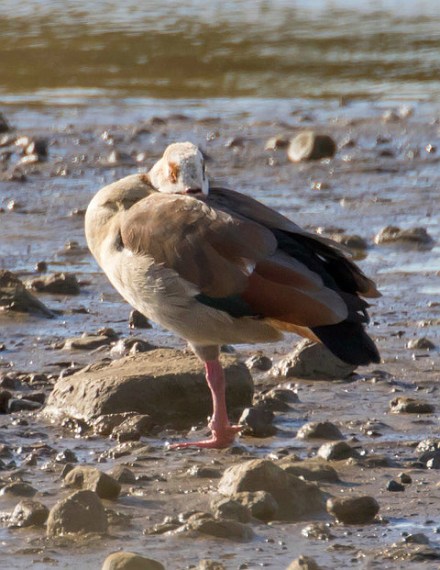
The most unusual bird was probably the first bird everyone saw: a big brown lump of an Egyptian Goose on the mud flat near our gathering point. It didn’t do much — it didn’t do anything except sleep one-footed, really — its bill well tucked under feathers. This is the first one we’ve seen at the lagoon. No, it didn’t fly over from Egypt, or even from Senegal. They’re fairly common in American waterfowl collections. I recall seeing one in the 1980s-1990s on the golf course in Oxnard near the marina, and any golf course in our area is as likely as not to have one or more hanging around the water hazards.
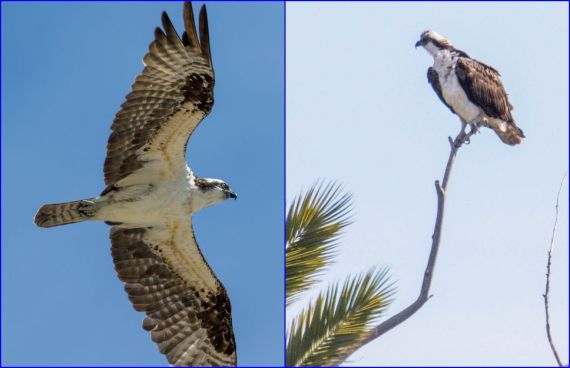
They are extremely widespread in Africa, not just Egypt, and are probably as frequently seen near lakes and ponds in Africa as are Mallards in the U.S. The first ones I ever saw were three coming in so low to land on a Ugandan lake that they nearly took my head off. St. James and Hyde Parks in London have their fair share, and the Queen probably keeps a few out behind the castle. They get around.
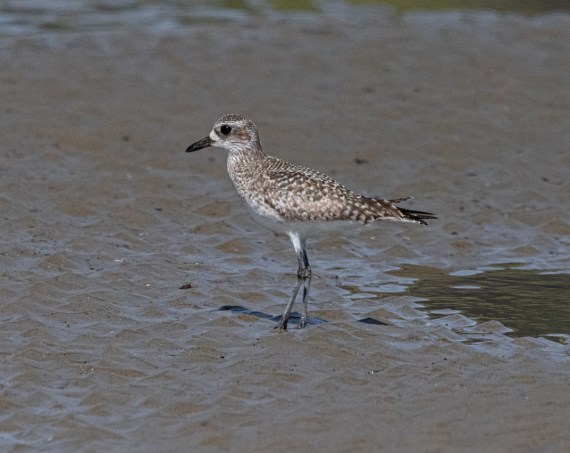
Our other unusual bird was a plover, spotted from the viewpoint near the PCH bridge, unfortunately right into the low sun brightly reflecting off the lagoon water.
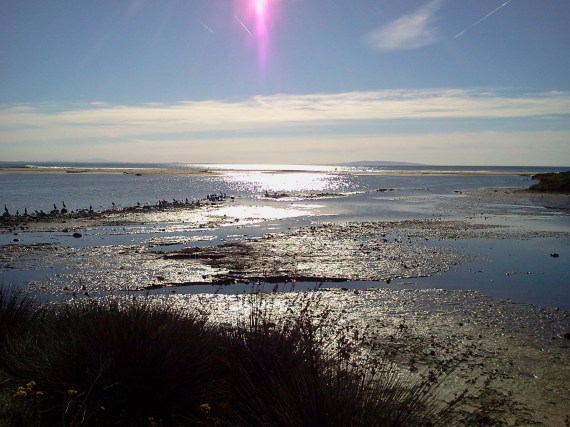
Chris Tosdevin alerted me to it: “Look at this. Do you think it might be a Mountain Plover?” We studied and studied it for quite a while. I even walked across the mud onto the nearest island to try to get an angle that wasn’t looking directly into the sun, but failed.

The plumage was very evenly pale brown (browner than in the photo above), no speckling or black & white effects as with all the other similar-sized plovers which were obviously Black-bellied Plover. The bill looked thinner to me as well, like a skinny cone, not bulbous at the tip (see the BB Plover farther above), and the legs were possibly a little brownish. All good characteristics for Mountain Plover.
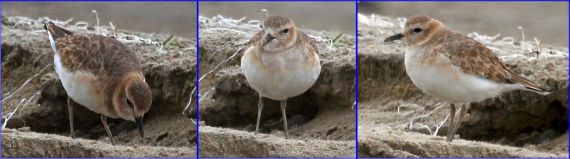
We’ve only seen Mountain Plover once before at the lagoon, so they’re possible there, although they’re a lot more common on sod farms or plowed fields in the Antelope or Imperial Valleys in the winter. They don’t really spend time in the mountains, but they breed on the high plains east of the Rockies from New Mexico to Montana, so they’re mountain-adjacent, if you wish.
Two links to photos of the October 2016 Mountain Plover: One, Two.
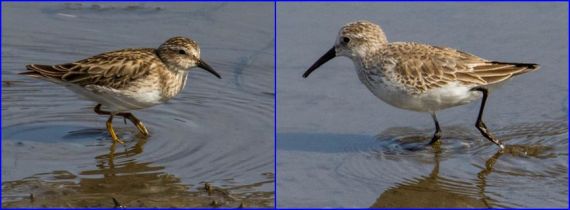
But this time, with the lousy sun-washed-out view, I didn’t want to call it a Mountain, and left it at Black-bellied Plover. A few days later Chris T. sent me his photo (see above), and after looking at it for a while, became a lot more convinced that it was a Mountain. Then Chris told me he’d gotten a message from one of the experts at eBird who saw it on the list Chris filed with them, and he expertly said, “The documentation you have provided shows a really worn Black-bellied Plover. While it does look especially plain and worn, note the gray, faintly streaked chest, extra big, lumpy body relative to the head, thicker bill.”
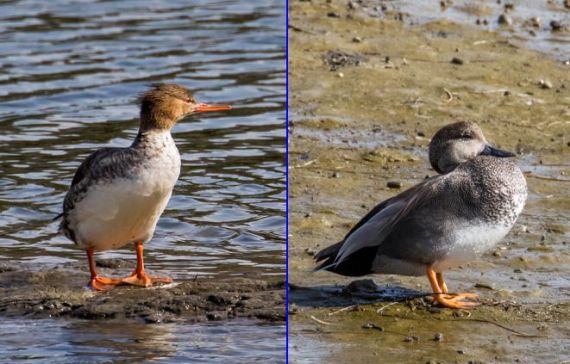
Well……OK. I’ll leave it at Black-bellied Plover, although I’d say the bill was definitely not “thicker.” Compare it yourself to our 2016 Mountain Plover, and the BB Plover above.
Other than that, we had a very good selection of birds. The Heermann’s Gulls were all gone save for one 1st-winter bird out on the low-tide exposed rocks hiding among the many California Gulls. They’ve probably gone south to the Sea of Cortez for their early-spring nesting season.

Here’s a good comparison of Brandt’s to Pelagic Cormorants in the wild. The Brandt’s is larger, thicker neck, head and bill, small beige gular pouch below chin with (in breeding season) a small blue patch just below the bill which you can almost see in the above picture if you have a vivid imagination. The Pelagic is smaller, all black, thinner neck, head and bill, proportionately longer tail, and nothing below the bill but black plumage. Neither of them cares to venture so far inland as all the way into the lagoon.

We could find only 15 Snowy Plovers, all of them among a cluster of small rocks left high on the beach, not at all close to the lagoon or on the sand near Adamson House where they’ve been for the past few months. They were very well-hidden and difficult to spot, as they look just like little rocks themselves. Survival: thy name is camouflage!

Malibu Lagoon on eBird: 3/04/22 – 5651 lists, 312 species
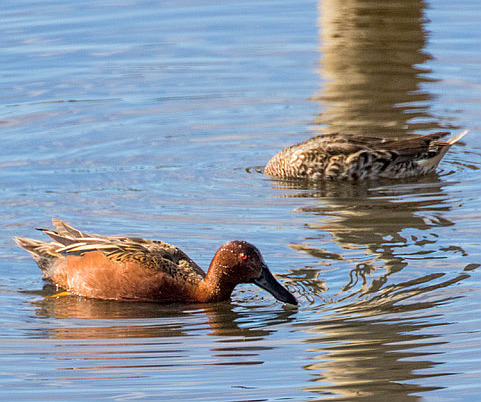
Birds new for the season: Egyptian Goose, Cinnamon Teal, Eared Grebe, Band-tailed Pigeon, Caspian Tern, Say’s Phoebe, Red-winged Blackbird.

Many thanks to photographers: Lillian Johnson, Ray Juncosa & Chris Tosdevin.
Upcoming SMBAS scheduled field trips: It looks we will have the Malibu Lagoon latter-half-of-March trip open to the public, after being on pandemic hiatus for two solid years. Limit 25 people by reservation only, vaccine card required, bring your own equipment. No 10am Children & Parents walk. Watch the blog for announcement. If this goes well, we might have some other trips before summer steamrolls us all flat.

The next SMBAS program: Sketches of Spain, with Luke Tiller, Zoom Evening Meeting, Tuesday, 5 April 2022, 7:30 p.m.
The SMBAS 10 a.m. Parent’s & Kids Birdwalk remains canceled until further notice due to the near-impossibility of maintained proper masked social distancing with parents and small children.
Links: Unusual birds at Malibu Lagoon
9/23/02 Aerial photo of Malibu Lagoon
More recent aerial photo

(C. Tosdevin 2-27-22)
Prior checklists:
2021: Jan-July, July-Dec
2020: Jan-July, July-Dec 2019: Jan-June, July-Dec
2018: Jan-June, July-Dec 2017: Jan-June, July-Dec
2016: Jan-June, July-Dec 2015: Jan-May, July-Dec
2014: Jan-July, July-Dec 2013: Jan-June, July-Dec
2012: Jan-June, July-Dec 2011: Jan-June, July-Dec
2010: Jan-June, July-Dec 2009: Jan-June, July-Dec
The 10-year comparison summaries created during the Lagoon Reconfiguration Project period, remain available—despite numerous complaints—on our Lagoon Project Bird Census Page. Very briefly summarized, the results unexpectedly indicate that avian species diversification and numbers improved slightly during the restoration period June’12-June’14.
Many thanks to Femi Faminu, Lillian Johnson, Chris Lord, Chris Tosdevin and others for their contributions to this month’s checklist.
The appearance of the list below has changed slightly. I’ve added a column on the left side with numbers 1-9, keyed to the nine categories of birds at the bottom. The species are re-sequenced to agree to the California Bird Records Committee Official California Checklist, updated 15 Jan 2022. I generally do this at the start of each year.
[Chuck Almdale]

| Malibu Census 2021-22 | 9/26 | 10/24 | 11/28 | 12/26 | 1/23 | 2/20 | |
| Temperature | 63-70 | 54-63 | 57-70 | 54-62 | 61-73 | 61-70 | |
| Tide Lo/Hi Height | L+2.52 | H+5.23 | L+2.35 | L+2.58 | L+2.04 | H+5.76 | |
| Tide Time | 0556 | 1105 | 1104 | 0900 | 0645 | 0621 | |
| 1 | Canada Goose | 10 | 4 | 2 | 2 | ||
| 1 | Egyptian Goose | 1 | |||||
| 1 | Cinnamon Teal | 2 | |||||
| 1 | Northern Shoveler | 2 | |||||
| 1 | Gadwall | 4 | 2 | 20 | 29 | 8 | |
| 1 | American Wigeon | 7 | 4 | 2 | 10 | 4 | |
| 1 | Mallard | 18 | 3 | 2 | 12 | 20 | 12 |
| 1 | Northern Pintail | 2 | 1 | 1 | |||
| 1 | Green-winged Teal | 1 | 5 | 5 | 15 | 11 | 12 |
| 1 | Surf Scoter | 10 | |||||
| 1 | Bufflehead | 1 | 10 | 2 | 5 | ||
| 1 | Hooded Merganser | 13 | |||||
| 1 | Red-breasted Merganser | 17 | 15 | 9 | 6 | ||
| 1 | Ruddy Duck | 1 | 5 | 8 | 13 | 4 | |
| 2 | Pied-billed Grebe | 3 | 5 | 3 | 5 | 3 | 3 |
| 2 | Horned Grebe | 1 | |||||
| 2 | Eared Grebe | 1 | 1 | 1 | |||
| 2 | Western Grebe | 12 | 30 | 12 | |||
| 7 | Feral Pigeon | 8 | 6 | 52 | 3 | 20 | 10 |
| 7 | Band-tailed Pigeon | 3 | |||||
| 7 | Eurasian Collared-Dove | 1 | |||||
| 7 | Mourning Dove | 5 | 1 | 1 | 4 | ||
| 8 | Anna’s Hummingbird | 1 | 2 | 2 | 2 | ||
| 8 | Allen’s Hummingbird | 1 | 3 | 1 | 4 | 3 | 3 |
| 2 | American Coot | 130 | 240 | 245 | 360 | 49 | 73 |
| 5 | Black-bellied Plover | 103 | 87 | 166 | 104 | 58 | 25 |
| 5 | Killdeer | 10 | 23 | 20 | 10 | 2 | 10 |
| 5 | Semipalmated Plover | 3 | 2 | ||||
| 5 | Snowy Plover | 34 | 34 | 40 | 34 | 15 | |
| 5 | Whimbrel | 8 | 4 | 12 | 9 | 8 | 2 |
| 5 | Long-billed Curlew | 1 | |||||
| 5 | Marbled Godwit | 30 | 34 | 9 | 71 | 32 | 1 |
| 5 | Ruddy Turnstone | 3 | 6 | 1 | 6 | 5 | |
| 5 | Sanderling | 20 | 104 | 22 | 22 | 1 | |
| 5 | Dunlin | 2 | |||||
| 5 | Least Sandpiper | 12 | 9 | 3 | 35 | 12 | 20 |
| 5 | Western Sandpiper | 2 | 2 | 1 | 1 | 11 | |
| 5 | Long-billed Dowitcher | 1 | |||||
| 5 | Spotted Sandpiper | 1 | |||||
| 5 | Willet | 14 | 25 | 34 | 13 | 15 | 8 |
| 6 | Bonaparte’s Gull | 2 | 1 | ||||
| 6 | Heermann’s Gull | 1 | 2 | 53 | 26 | 45 | 1 |
| 6 | Ring-billed Gull | 1 | 2 | 28 | 170 | 40 | 175 |
| 6 | Western Gull | 10 | 63 | 92 | 85 | 95 | 88 |
| 6 | California Gull | 9 | 515 | 370 | 925 | 510 | |
| 6 | Herring Gull | 1 | 2 | 1 | |||
| 6 | Glaucous-winged Gull | 1 | 2 | 5 | 5 | ||
| 6 | Caspian Tern | 1 | |||||
| 6 | Royal Tern | 13 | 2 | 5 | 2 | ||
| 2 | Red-throated Loon | 1 | 1 | 2 | |||
| 2 | Pacific Loon | 1 | 2 | ||||
| 2 | Common Loon | 2 | 1 | ||||
| 2 | Black-vented Shearwater | 1000 | |||||
| 2 | Brandt’s Cormorant | 2 | 10 | 1 | 6 | 1 | |
| 2 | Pelagic Cormorant | 2 | 1 | 4 | 1 | 12 | 3 |
| 2 | Double-crested Cormorant | 35 | 67 | 52 | 39 | 45 | 51 |
| 2 | Brown Pelican | 11 | 21 | 99 | 44 | 110 | 15 |
| 3 | Great Blue Heron | 3 | 3 | 3 | 4 | 4 | 2 |
| 3 | Great Egret | 1 | 3 | 1 | 7 | 2 | |
| 3 | Snowy Egret | 14 | 11 | 4 | 24 | 6 | 3 |
| 3 | Green Heron | 2 | 1 | ||||
| 3 | Black-crowned Night-Heron | 3 | 1 | 1 | 5 | ||
| 4 | Turkey Vulture | 1 | 1 | ||||
| 4 | Osprey | 2 | 1 | 1 | 1 | 1 | |
| 4 | Cooper’s Hawk | 1 | 2 | 1 | 1 | ||
| 4 | Red-shouldered Hawk | 1 | 1 | 1 | |||
| 4 | Red-tailed Hawk | 1 | 1 | 1 | 1 | ||
| 8 | Belted Kingfisher | 1 | 1 | ||||
| 8 | Downy Woodpecker | 1 | |||||
| 8 | Nuttall’s Woodpecker | 1 | |||||
| 8 | Hairy Woodpecker | 1 | |||||
| 4 | Merlin | 1 | 1 | ||||
| 4 | Peregrine Falcon | 1 | |||||
| 9 | Black Phoebe | 5 | 5 | 4 | 4 | 4 | 3 |
| 9 | Say’s Phoebe | 1 | 1 | 1 | |||
| 9 | California Scrub-Jay | 1 | 2 | 2 | 3 | ||
| 9 | American Crow | 4 | 6 | 1 | 7 | 4 | 20 |
| 9 | Common Raven | 1 | |||||
| 9 | Oak Titmouse | 1 | |||||
| 9 | Tree Swallow | 2 | |||||
| 9 | Barn Swallow | 3 | 2 | ||||
| 9 | Bushtit | 48 | 12 | 4 | |||
| 9 | Wrentit | 1 | |||||
| 9 | Ruby-crowned Kinglet | 1 | 1 | ||||
| 9 | Blue-gray Gnatcatcher | 4 | 4 | 1 | 2 | ||
| 9 | House Wren | 1 | 2 | 1 | |||
| 9 | Marsh Wren | 2 | |||||
| 9 | Bewick’s Wren | 1 | 4 | ||||
| 9 | Northern Mockingbird | 2 | 1 | 1 | |||
| 9 | European Starling | 40 | 31 | 9 | 15 | 30 | |
| 9 | Hermit Thrush | 1 | 1 | ||||
| 9 | American Pipit | 1 | |||||
| 9 | House Finch | 7 | 4 | 18 | 8 | 8 | 5 |
| 9 | Lesser Goldfinch | 1 | 2 | 2 | 4 | 2 | |
| 9 | Dark-eyed Junco | 2 | 4 | 3 | |||
| 9 | White-crowned Sparrow | 5 | 15 | 17 | 35 | 25 | |
| 9 | Savannah Sparrow | 1 | |||||
| 9 | Song Sparrow | 5 | 4 | 7 | 8 | 6 | 6 |
| 9 | California Towhee | 2 | 2 | 4 | 2 | 2 | |
| 9 | Western Meadowlark | 1 | 1 | ||||
| 9 | Red-winged Blackbird | 2 | |||||
| 9 | Great-tailed Grackle | 1 | 4 | 3 | 7 | 1 | 3 |
| 9 | Orange-crowned Warbler | 1 | 2 | 1 | |||
| 9 | Common Yellowthroat | 5 | 4 | 5 | 6 | 3 | 1 |
| 9 | Yellow-rumped Warbler | 6 | 19 | 20 | 10 | 6 | |
| Totals by Type | Sep | Oct | Nov | Dec | Jan | Feb | |
| 1 | Waterfowl | 27 | 23 | 49 | 113 | 88 | 52 |
| 2 | Water Birds – Other | 181 | 349 | 414 | 452 | 1259 | 164 |
| 3 | Herons, Egrets & Ibis | 21 | 18 | 8 | 38 | 18 | 5 |
| 4 | Quail & Raptors | 4 | 0 | 3 | 6 | 5 | 5 |
| 5 | Shorebirds | 242 | 332 | 307 | 299 | 135 | 97 |
| 6 | Gulls & Terns | 25 | 79 | 689 | 655 | 1118 | 783 |
| 7 | Doves | 8 | 11 | 53 | 4 | 21 | 17 |
| 8 | Other Non-Passerines | 1 | 3 | 3 | 8 | 6 | 6 |
| 9 | Passerines | 75 | 56 | 163 | 107 | 117 | 118 |
| Totals Birds | 584 | 871 | 1689 | 1682 | 2767 | 1247 | |
| Total Species | Sep | Oct | Nov | Dec | Jan | Feb | |
| 1 | Waterfowl | 4 | 6 | 9 | 10 | 9 | 9 |
| 2 | Water Birds – Other | 5 | 8 | 7 | 8 | 11 | 11 |
| 3 | Herons, Egrets & Ibis | 4 | 4 | 3 | 5 | 5 | 2 |
| 4 | Quail & Raptors | 3 | 0 | 3 | 5 | 5 | 5 |
| 5 | Shorebirds | 14 | 12 | 9 | 9 | 9 | 9 |
| 6 | Gulls & Terns | 4 | 6 | 5 | 6 | 8 | 8 |
| 7 | Doves | 1 | 2 | 2 | 2 | 2 | 3 |
| 8 | Other Non-Passerines | 1 | 1 | 3 | 4 | 3 | 3 |
| 9 | Passerines | 13 | 19 | 16 | 20 | 20 | 17 |
| Totals Species – 105 | 49 | 58 | 57 | 69 | 72 | 67 |



 SANTA MONICA BAY AUDUBON SOCIETY BLOG