Free email delivery
Please sign up for email delivery in the subscription area to the right.
No salesman will call, at least not from us. Maybe from someone else.
A creepy face from the depths | BBC Discover
[Posted by Chuck Almdale]
Just go take a look. It really is weird. A good example of Pareidolia.
Article by Stuart Blackman at BBC Discover, 21 Jan 2026.
Article contains links to other interesting articles.
Birding the Southern Oceans and Antarctica, with Alvaro Jaramillo: Zoom Evening Meeting Reminder, Tuesday, 3 February, 7:30 p.m.
You are all invited to the next ZOOM meeting
of Santa Monica Bay Audubon Society
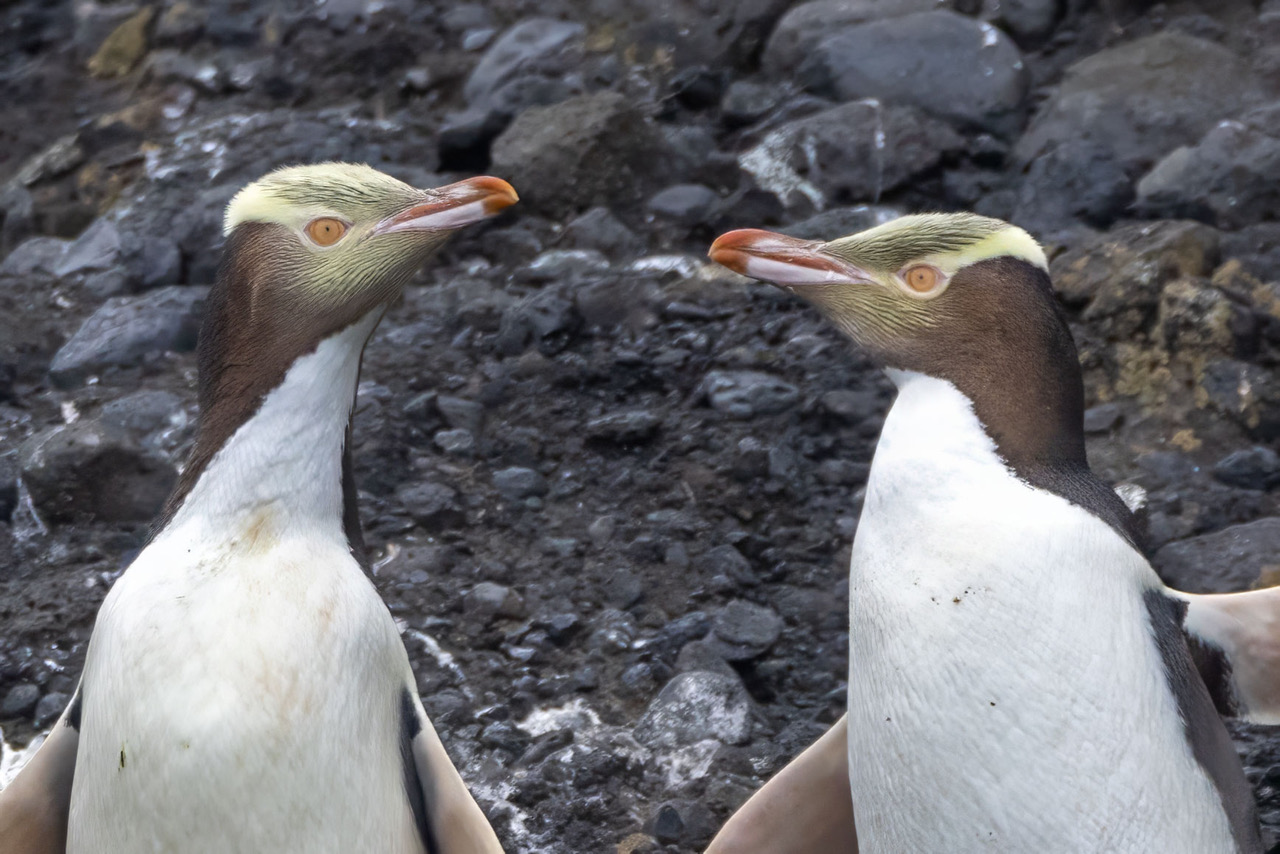
Birding the Southern Oceans and Antactica, with Alvaro Jaramillo.
Zoom Evening Meeting, Tuesday, 3 February, 7:30 p.m.
Zoom waiting room opens 7:15 p.m.
There is no greater wilderness than the Southern Ocean! If you take the globe and look at it from the south pole, there is a huge amount of water there encircling Antarctica, between it and the southern points of the continents and major islands. Seabirds, whales, fish, seals, move through these waters, some like the Wandering Albatross unimpeded by land. The albatross may circle the globe at these latitudes many times in their life. There are islands with hundreds of thousand of penguins, millions of prions (a small seabird) and astounding numbers of fur seals, elephant seals and whales. It is just spellbinding, and these areas are too far away for large cities to have sprung up, at the most some of these islands have a small town or perhaps no one at all on them. The distance you have to travel to get there, the lack of “civilization” and the incredible numbers of birds and other animals is what makes the Southern Ocean so enticing for the naturalist.
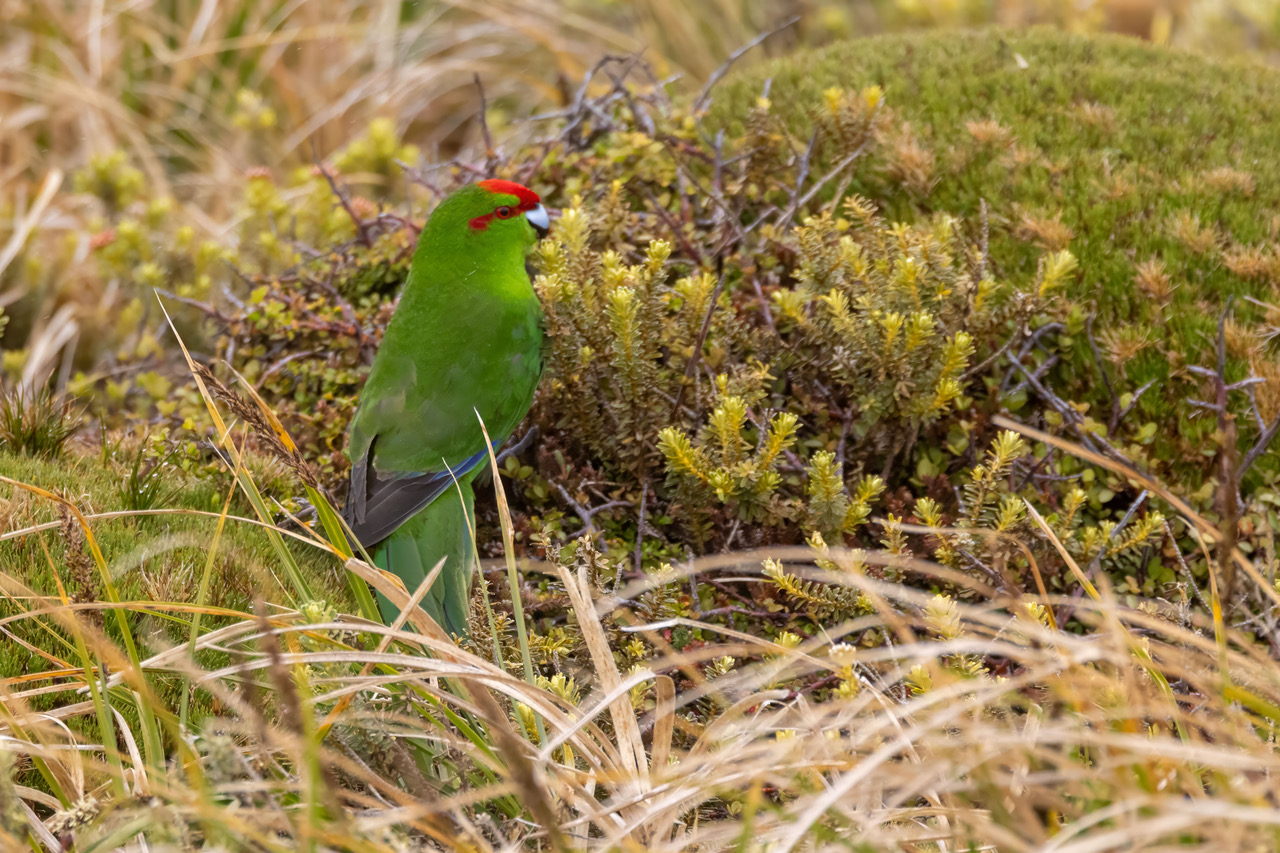
I will talk about some of the wonderful birds and wildlife of the subantarctic islands of New Zealand, as well as South America. Places like South Georgia, the Chatham Islands, Macquarie and of course the Antarctic Peninsula. Some of the places and wildlife you see here are life changing, and hopefully I can convey the wonder and beauty that the far south has for you to see.
|
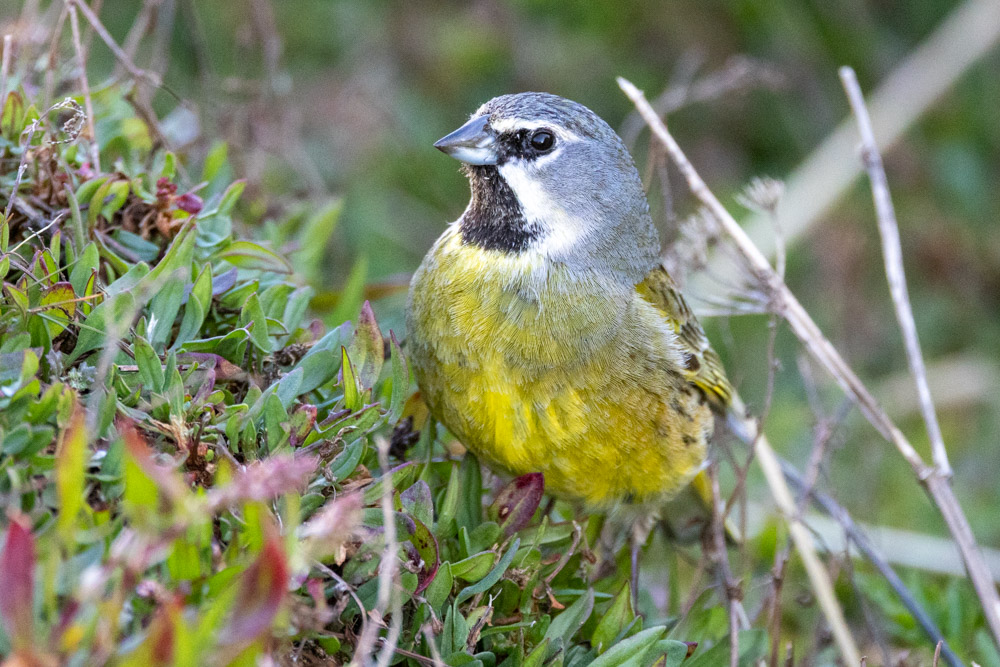
Alvaro Jaramillo, owner of international birding tour company Alvaro’s Adventures, was born in Chile but began birding in Toronto, where he lived as a youth. He was trained in ecology and evolution with a particular interest in bird behavior. Research forays and backpacking trips introduced Alvaro to the riches of the Neotropics, where he has traveled extensively. He is the author of the Birds of Chile, an authoritative yet portable field guide to Chile’s birds. For some time, Alvaro wrote the Identify Yourself column in Bird Watcher’s Digest. He is author of a major New World sparrow chapter for the Handbook of Birds of the World (now Birds of the World), and the new ABA Field Guide to Birds of California. He was granted the Eisenmann Medal by the Linnaean Society of New York, which is awarded occasionally for excellence in ornithology and encouragement of the amateur. He organizes and leads international birding tours, as well as a full schedule of pelagic trips in central California. Alvaro lives with his family in Half Moon Bay, California.
(If the button above doesn’t work for you, see detailed zoom invitation below.)
Meeting ID: 836 5359 5676
Passcode: 944498
One tap mobile
+16694449171,,83653595676#,,,,*944498# US
+16699009128,,83653595676#,,,,*944498# US (San Jose)
Joining Instructions
https://us02web.zoom.us/meetings/83653595676/invitations?signature=hM6nDDbjYBHtrCnNWsJ_YPvj_-cYvCItHxl-xBDt3o4
Why Dam Removal Matters for California’s Wildlife | CalTrout
[Posted by Chuck Almdale]
This is a message from your friends and neighbors at California Trout who wish to reach out to our readers.

Why Dam Removal Matters for California’s Wildlife
Author: Judi Uthus, Public Engagement Specialist, California Trout
juthus@caltrout.org
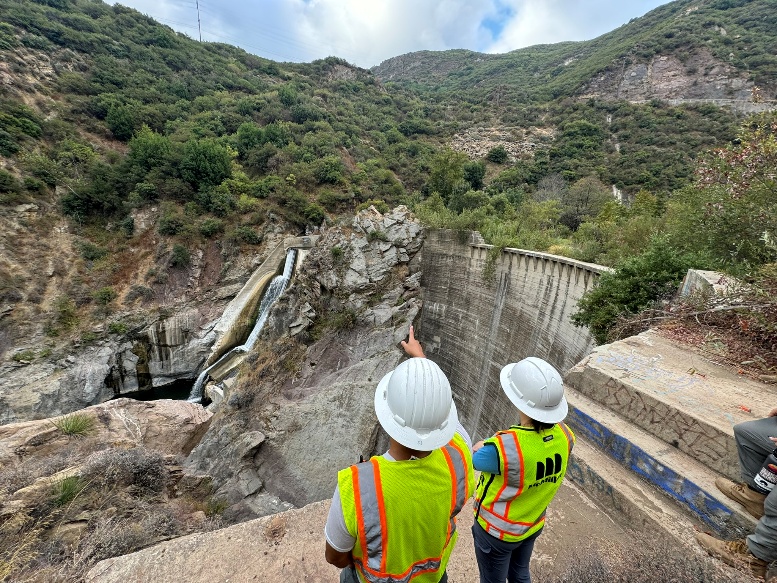
a little south of the highway tunnel.
Photo courtesy of Moffatt & Nichol Engineering.
California has thousands of public and private dams, ranging from small earthen structures to massive reservoirs rising hundreds of feet high. Built largely during the early 20th century, these dams were once considered engineering feats providing electricity, water storage, and flood control. Today, however, many have exceeded their intended lifespans and are part of a rapidly aging infrastructure. Research from the UC Davis Center for Watershed Sciences shows that dams also come with significant environmental costs–degrading watershed ecosystems, harming wildlife populations, and even posing risks to public safety. As a result, the ecological and economic benefits of removing outdated dams outweigh the costs of keeping them in place.
Nowhere is this more evident than with the sharp decline of anadromous salmon and steelhead populations. For decades, dams and other barriers have fragmented aquatic migration corridors, preventing fish from reaching the spawning grounds they depend on for survival. Southern California steelhead were once abundant in local rivers and served as a keystone species across the Santa Monica Mountains, holding deep cultural significance for local tribes. Although federally listed as endangered since 1997, their numbers have continued to fall, prompting California Department of Fish & Wildlife to add the species to its own endangered list in 2024 for additional protection. Restoring free‑flowing waterways is now considered essential to ensuring the survival and recovery of this iconic species.
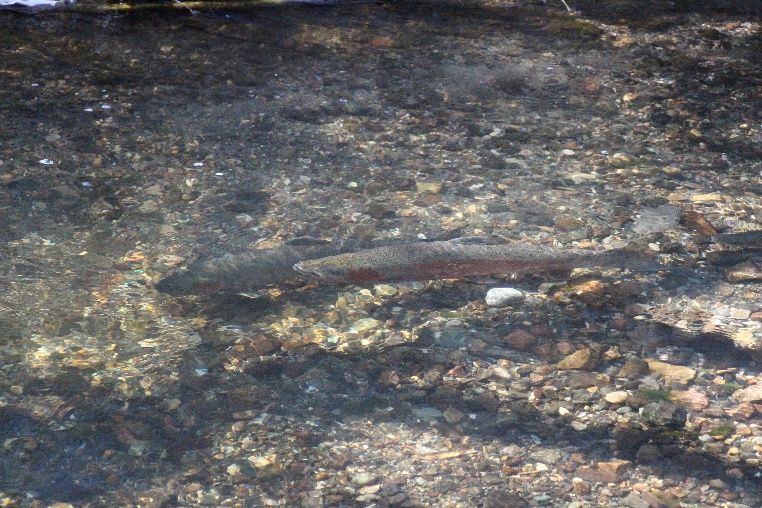
Photo credit: Mark H. Capelli
California Trout, Southern Steelhead page link.
Rainbow Trout Oncorhynchus mykiss is a species of trout native to cold-water tributaries of the Pacific Ocean, found from the mouth of the Amur River in Siberia to Rio Baluarte in the Mexican states of Sinaloa and Durango.
Coastal Rainbow Trout Oncorhynchus mykiss irideus ranges from the Aleutian Islands in Alaska south to Southern California.
Southern California Steelhead is an anadromous (born in fresh water, migrates to sea, returns to freshwater to spawn) form of Coastal Rainbow Trout.
Scientific Name: Oncorhynchus: “hooked snout.” mykiss: Kamchatkan name for rainbow trout. irideus: “rainbow-colored” or “iridescent.”
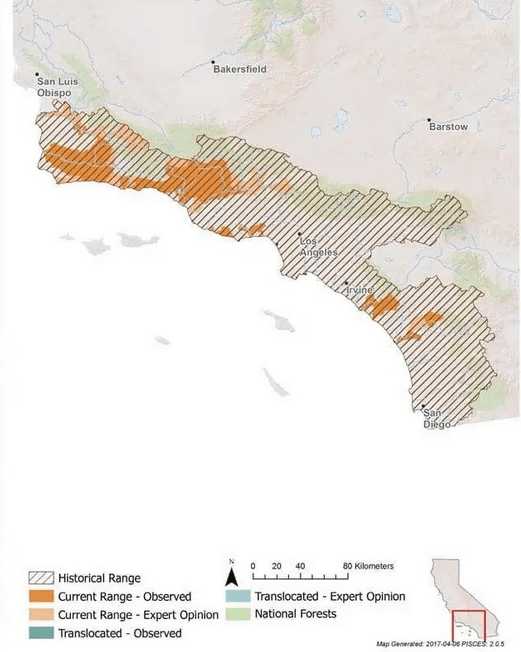
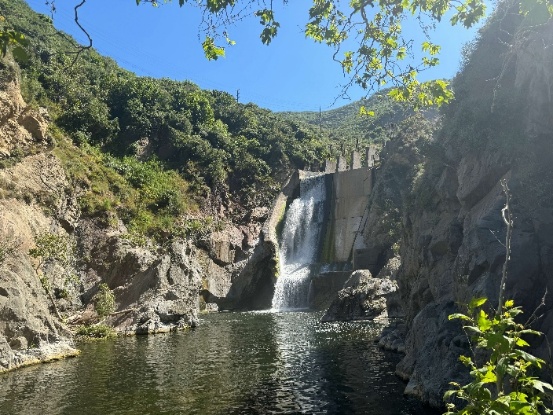
Photo credit: R.J. Van Sant, State Parks.
The Malibu Creek Ecosystem Restoration Project
One local dam impacting the Santa Monica Mountains is in the process of removal. Located three miles upstream from the Pacific Ocean in Malibu Creek State Park, is the 100-year-old Rindge Dam. Built in 1924 – 26 by Malibu’s Rindge family, the dam filled up with sediment by 1947 and abandoned in 1967. For over a century, the 100-foot-tall concrete wall has been an insurmountable barrier for local wildlife, particularly, for southern steelhead that cannot get upstream to their ancestral breeding grounds. Rindge Dam has also prevented 800,000 cubic yards of natural sediment from flowing downstream to replenish Santa Monica Bay beaches.
After two decades of study by the U.S. Army Corps of Engineers, the Malibu Creek Ecosystem Restoration Project (MCERP) has entered into the pre‑construction, engineering, and design phase. California State Parks (State Parks) is leading a team of consultants, stakeholders, and Tribal partners to determine how best to remove the dam, manage the trapped sediment, and address eight additional upstream barriers to fully reconnect the 18‑mile waterway.
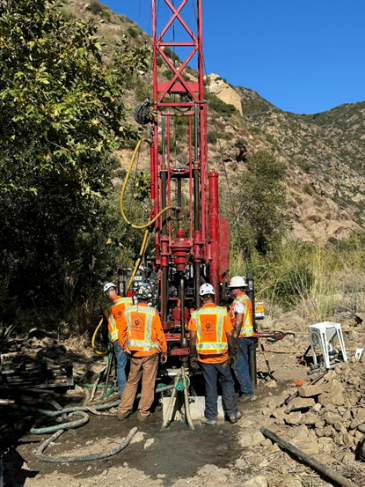
Photo: Moffatt & Nichol Engineering
“The removal of the dam will not only support habitat restoration and species recovery but also creates opportunities to reuse the sediment trapped behind the dam to nourish local beaches. This is sediment that would have naturally made its way to the coast if the dam had not blocked it. Additionally, by repurposing the material and avoiding landfill disposal, we anticipate significant cost savings for the project,” said R.J. Van Sant, project lead for State Parks.
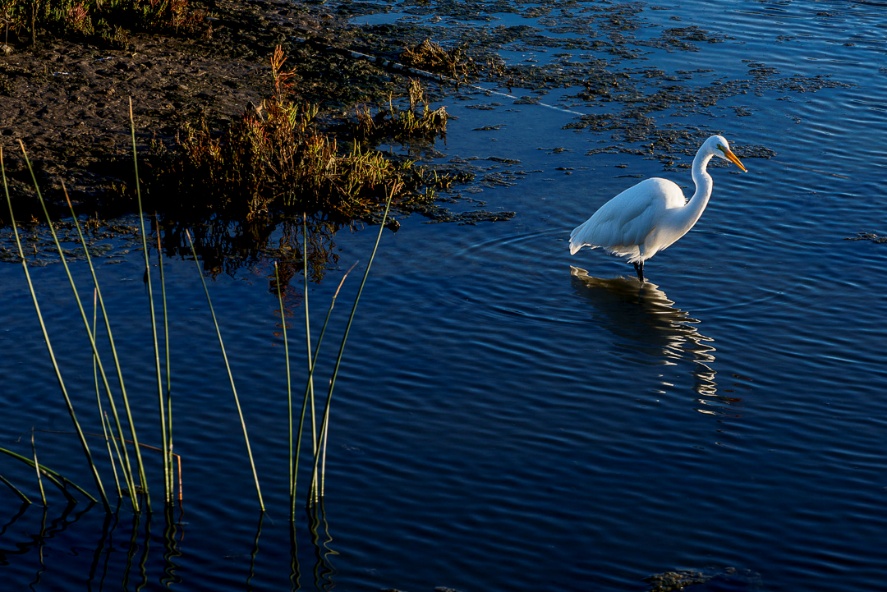
Slated for completion in 2035, the MCERP will restore a key watershed and wildlife corridor of the Santa Monica Mountains. This restoration effort is expected to help not only southern California steelhead return to their native waters, but also benefit the populations of western snowy plovers, California least terns and least Bell’s vireo among many other species in this remarkably biodiverse watershed that is largely under public ownership.
Community Science Program
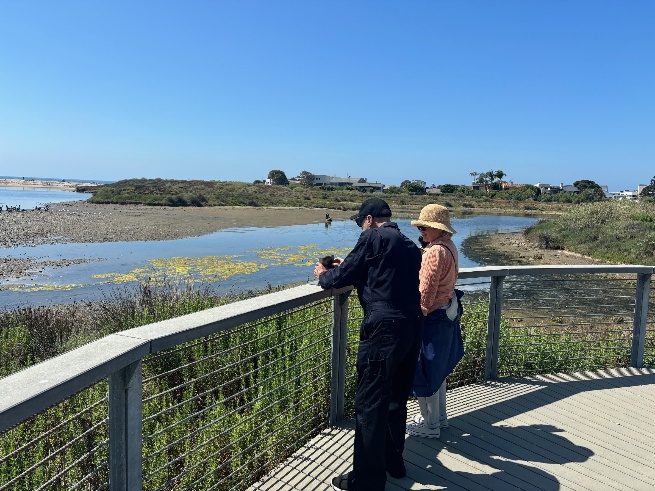
Viewpoint adjacent to PCH bridge over Malibu Creek
Photo credit: Russell Marlow, Caltrout
With a landscape-scale restoration project taking place within urban Los Angeles, the MCERP provides exciting opportunities for public outreach and education on protecting urban rural environments. CalTrout is leading a public engagement effort that includes both online and in-person engagement, including a Community Science Program. Along Malibu Creek are seven photo monitoring sites where the public can help capture the changing physical conditions during the watershed’s transformation. This documentation will help establish a robust database throughout the restoration process and continuing stewardship of the watershed.
A photo monitoring site is at Malibu Lagoon State Beach. The lagoon’s critical habitat will be shaped by the reconnection of a more natural supply of sediment from the upper watershed. The monitoring site located on the boardwalk overlooking the lagoon captures the shifting open and closed conditions of the lagoon, changes in habitat shapes, and the more dynamic natural processes as a normal creek flow becomes reestablished.
How do we know dam removal is worth the investment? With the removal of four dams along the Klamath River in 2024, the monitoring results just after one year show thousands of Chinook salmon pushing deep into newly reopened habitat—some reaching more than 360 river miles from the ocean into their Upper Klamath Basin breeding ground for the first time in over a century.
To learn more about the Malibu Creek Restoration Project and the Community Science Program, visit restoremalibucreek.org.
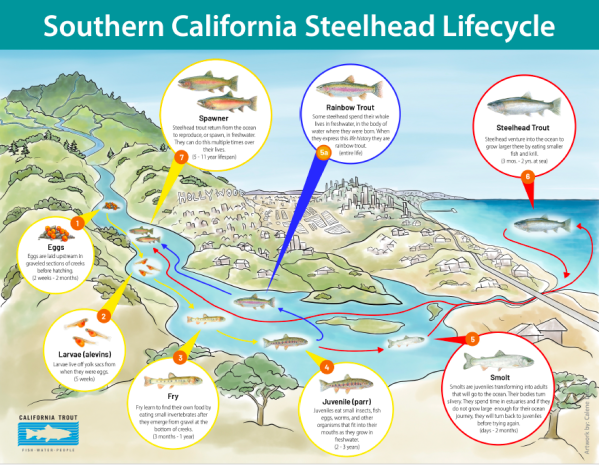
Illustration Caption:
Southern California rivers are naturally dynamic environments. Over eons, southern California Steelhead evolved an incredible ability to take advantage of the shifting habitat present in these rivers. Southern steelhead are anadromous fish – a fish that is born in fresh water, matures in the ocean, and returns to fresh water to spawn. Unlike Salmon, Steelhead spawn more than once in their lifetime. Their survival depends on a web of interconnected aquatic ecosystems. Because of this, they are the best indicator of watershed health. The interplay of habitat type, habitat condition, and the connectivity between habitats over time is paramount in their development and survival in the coastal watersheds of Southern California.
Do insects have feelings and consciousness? | Discover Magazine
[Posted by Chuck Almdale]
From the article [Link] by Avery Hurt, 3 Feb 2023:
Science isn’t sure if insects have feelings, but you might want to think twice before stomping a roach or squishing a bee. A growing body of research is making some surprising discoveries about insects. Honeybees have emotional ups and downs. Bumblebees play with toys. Cockroaches have personalities,recognize their relatives and team up to make decisions. Fruit flies experience something very like what we might call fear.
I found this article by googling it, and I think the link will continue to work. The article contains links to other interesting articles.
The original Science article by Frans B.M. De Waal & Kristin Andrews is here, but only the abstract is free to the non-subscriber.
Cool Times at Malibu Lagoon, 25 Jan. 2026

[By Chuck Almdale; photos by Ray Juncosa]
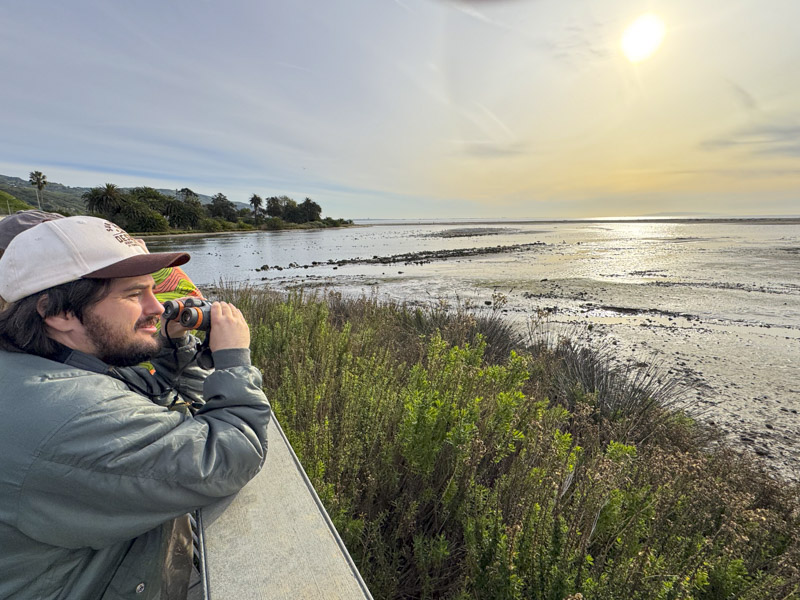
I could not make it to today’s lagoon walk. Chris & Ruth Tosdevin kindly agreed to lead the trip and sent me a trip list, while Ray sent me some photos. It looked like a lovely day.
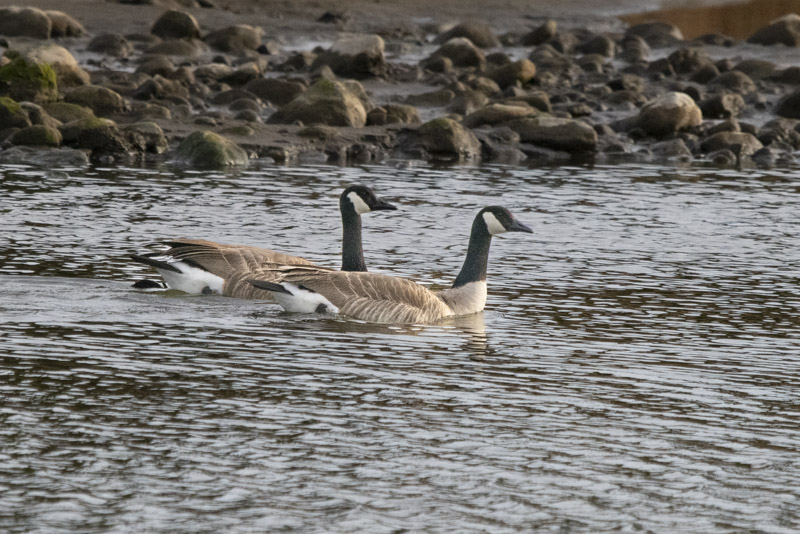
Canada Geese have nested on the brushy sand islands in the lagoon since 2019, sometimes one pair, sometimes two, although they were a bit hard to find in 2022.
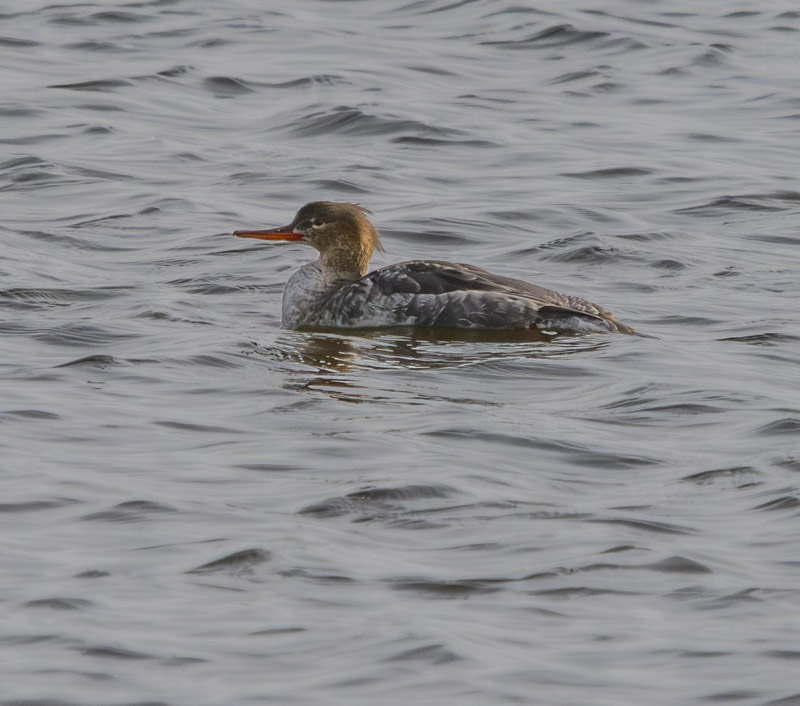
Red-breasted Mergansers show up every winter, nearly always in single digits. The most we’ve ever had was 25 on 11-23-14, 12-28-24, and 11-27-22. Most look like this bird below as juveniles look much like the adult females. About 1 in 10 look like adult males with a real red breast and dark green head.
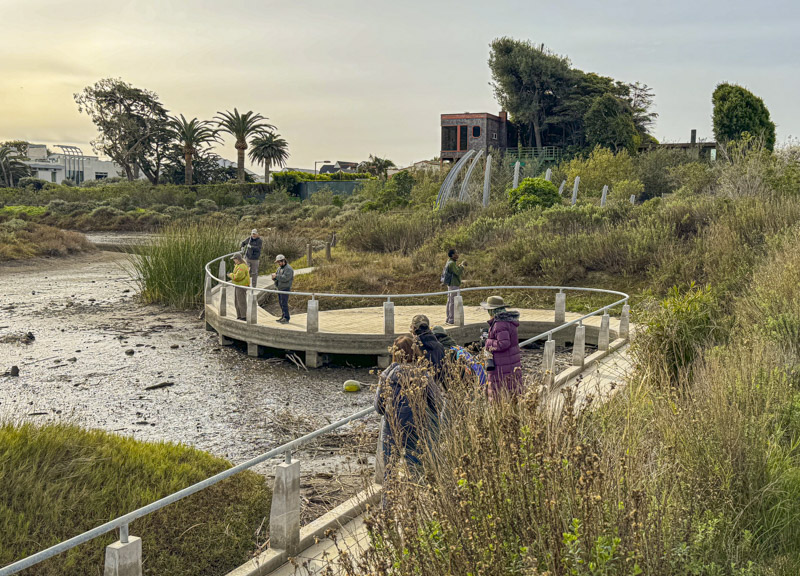
Low tide (+1.31 ft) at 8:46 am. In the winter when the outlet to the sea is open, much of the channels consists of mud.
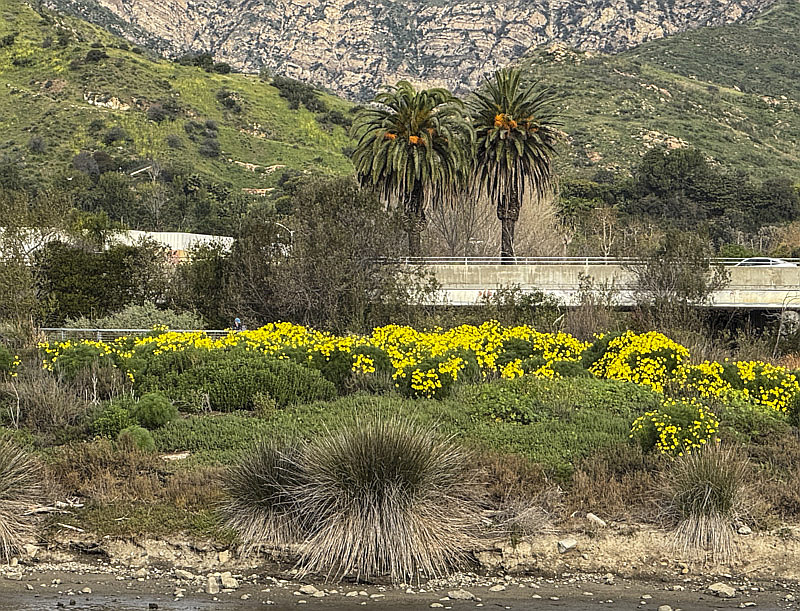
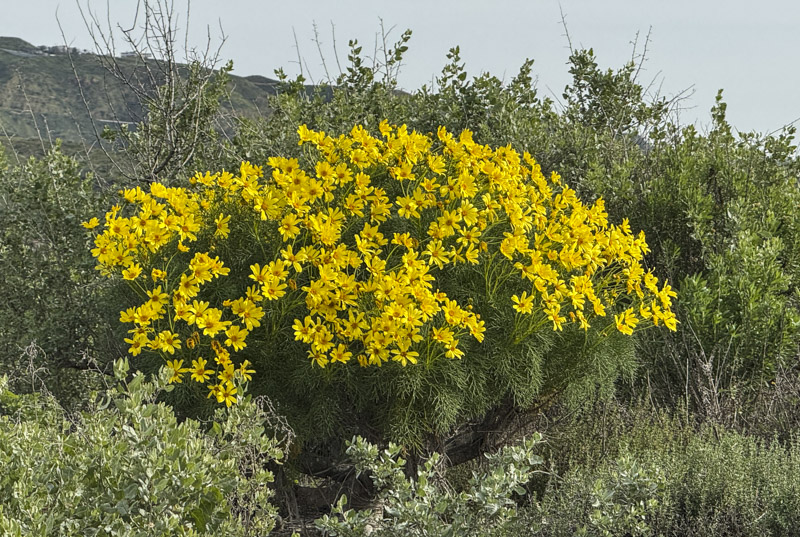
From the the 3rd lookout point near the beach, one can see a large patch of Giant Coreopsis blooming on Boot-heel Island. Pacific Coast Hwy. bridge is behind, then two fruiting palm trees and the coastal range in the distance. Sometimes the fruit from the various palm species introduced to SoCal is unbelievably delicious, if you like squishy fruit. Some people don’t.
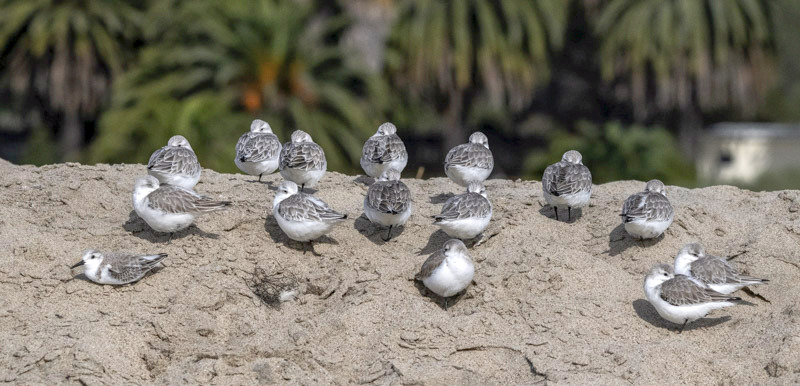
Down on Surfrider’s Beach, many of the shorebirds were resting. ZZZzzzzz. Only one of these Sanderlings on the high tide berm seems alert.
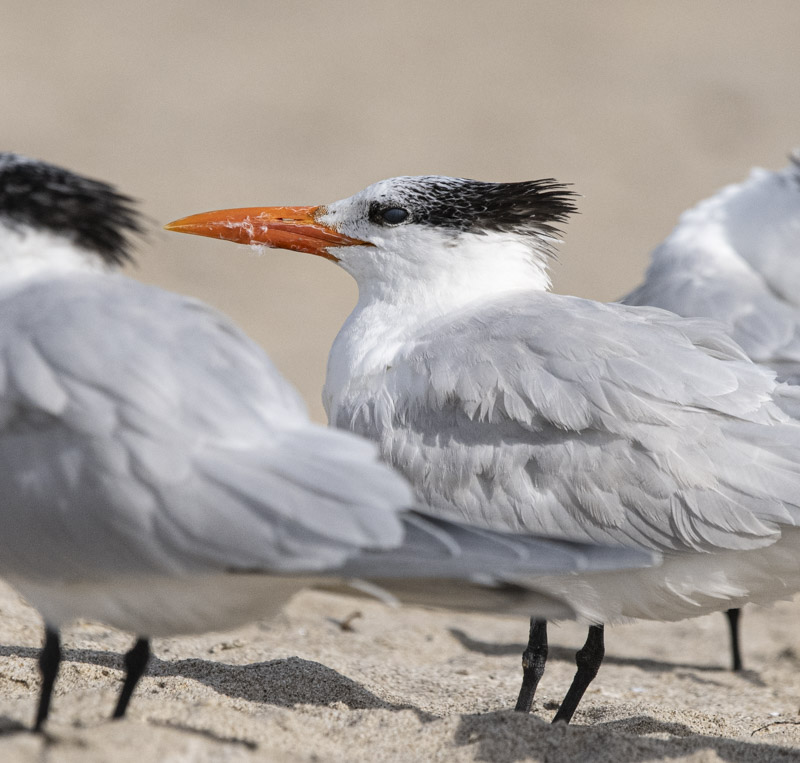
This Royal Tern’s bill-edge seems to have fluff attached, and it’s wing coverts appear chaffed. Is this part of the molting process, or is it just being overly-diligent when preening, or was it attacking another bird? Avian mysteries abound.
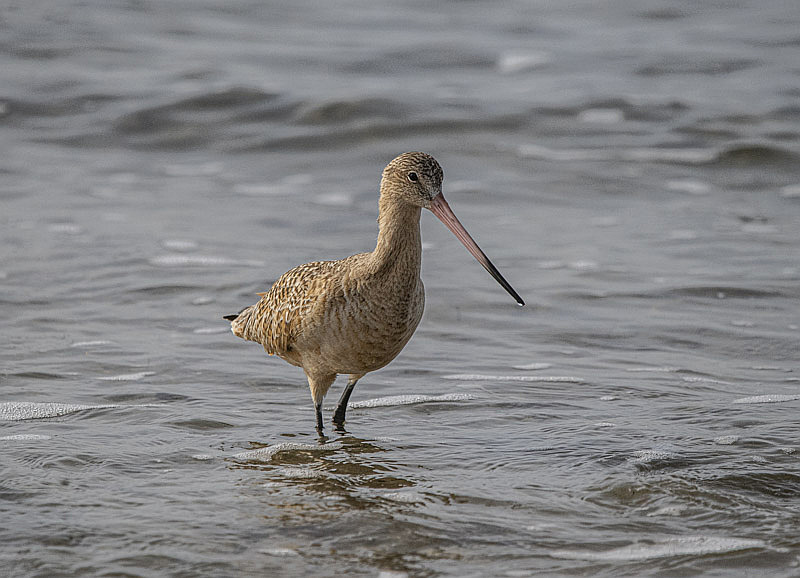
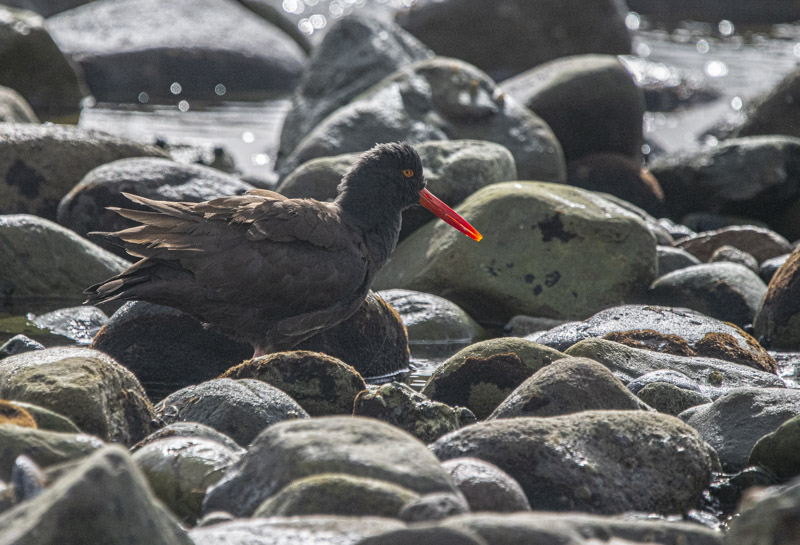
Black Oystercatchers have shown up three out of the last four months, most likely because these rocks become exposed only during low tides and our walks have coincided with low tide. I once saw a Black Oystercatcher on a sandy beach, not rocks, near Ballona Creek (never at Malibu Lagoon), making that one for the record books.
The group got lucky and spotted a Hutton’s Vireo. According to eBird they’ve been previously spotted at the lagoon nine times, the first time by Katheryn and David Barton on 9-23-84; this was the first time on our monthly field trips. This west coast bird is not abundant anywhere, but they’re far more common in oak woodlands such as in Malibu Creek State Park, a few miles inland, than they are down at the beach.
Another uncommon bird, sighted for the second time in four months on our field trip, but only the 10th time in 46 years, is the Black-throated Gray Warbler. Again, far more common in woodlands. The first one I ever saw was in Yosemite, north of Tuolumne Meadows and deep in the conifer forest, in the summer. Definitely not at the beach.
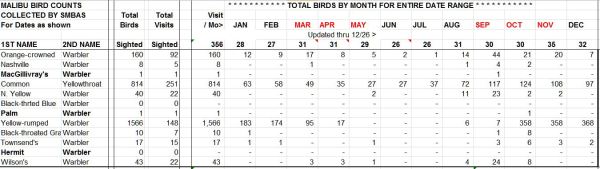
In the above chart we have 2,660 American Wood Warblers in 564 sightings, completely dominated by two species: Yellow-rumped Warbler, which winters at the lagoon, claims 59% of individual warblers and 26% of sightings; Common Yellowthroat has 31% of individuals, but is more frequently sighted (45%). The Yellowthroat breeds at the lagoon, so it’s actual presence should be at or close to 100%, but it’s a fairly skulky bird, usually hidden in reeds or thick brush, and many of our ‘sightings’ are actually ‘heard-only birds.’ If they’re not singing (wichity-wichity-wichity) it’s hard to know they’re there. You can see their relative seasonality and abundance in the numbers above.
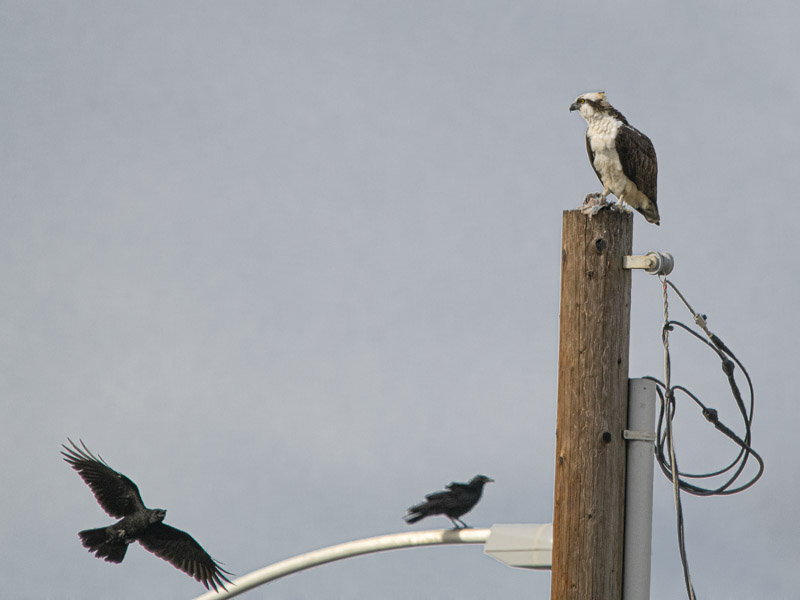
The Ospreys lost their favorite roosting and dining pole last summer when it was taken down during construction of a new house in the back row at Malibu Colony. They still use a particular water-edge cypress tree, but they have also begun using one of the poles near the Pacific Coast Highway bridge. Less convenient and definitely noisier, in my estimation.
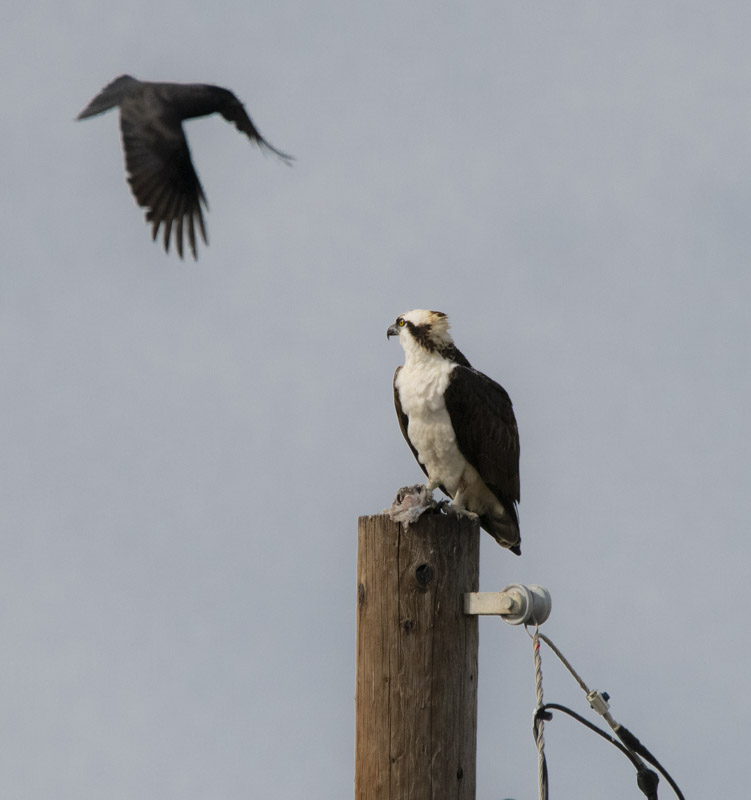
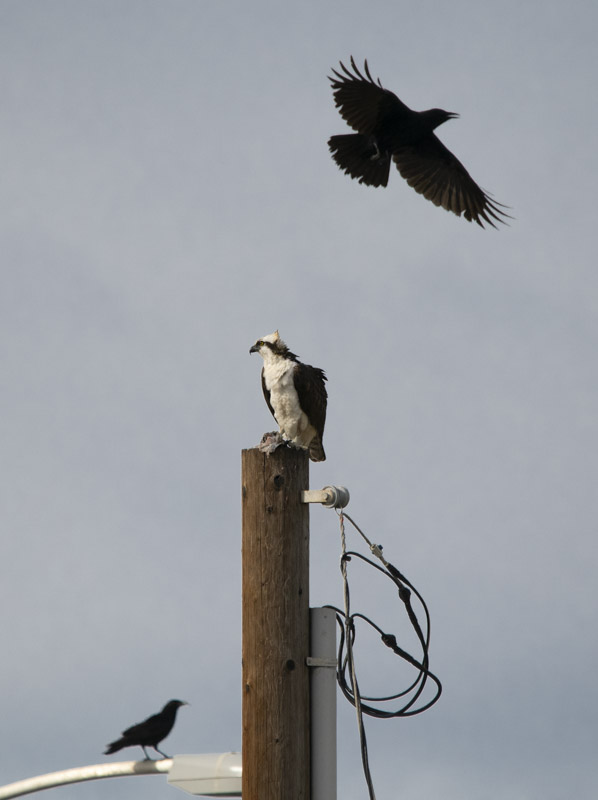
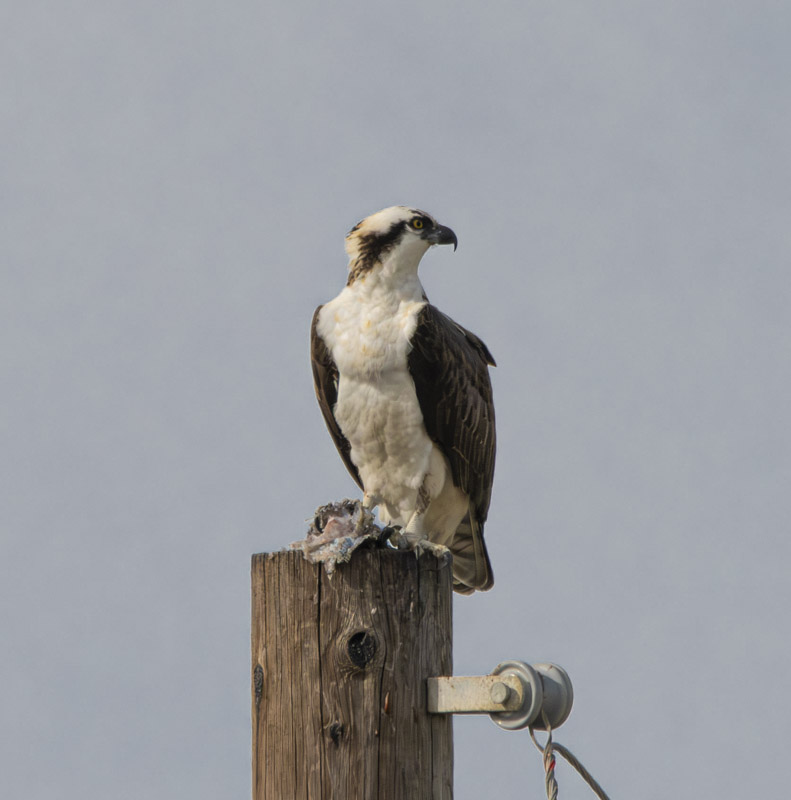
Malibu Lagoon on eBird as of 1-27-26: 9140 lists, 2957 eBirders, 322 species
Most recent new species seen: Nelson’s Sparrow, 11/29/24 by Femi Faminu (SMBAS member). When the newest species added to the list was seen on a date prior to the most recently seen new species, there is no way I can find to easily determine what that bird is. Another minor nit to pick about eBird.
Birds new for the season: Nanday Parakeet, Hutton’s Vireo, Black-throated Gray Warbler. “New for the season” means it has been three or more months since last recorded on our trips.
Many, many thanks to photographer Ray Juncosa.
Upcoming SMBAS scheduled field trips; no reservations or Covid card necessary unless specifically mentioned:
- Madrona Marsh, Sat. Feb 14, time to be arranged, check blog
- Malibu Lagoon, Sun. Feb. 22, 8:30 (adults) & 10 am (parents & kids)
- Sepulveda Basin, Sat. Mar 10, 8:00
- These and any other trips we announce for the foreseeable future will depend upon expected status of the Covid/flu/etc. pandemic, not to mention landslides, fires, local flooding and atmospheric rivers at trip time. Any trip announced may be canceled shortly before trip date if it seems necessary. By now any other comments should be superfluous.
- Link to Programs & Field Trip schedule.
The next SMBAS Zoom program: Tuesday, February 3, 7:30pm; Birding the Southern Oceans and Antarctica, with Alvaro Jaramillo..
The SMBAS 10 a.m. Parent’s & Kids Birdwalk has again resumed, with ten guests on 25 Jan 2026. Reservations not necessary for families, but for groups (scouts, etc.), please call Jean (213-522-0062).
Links: Unusual birds at Malibu Lagoon
9/23/02 Aerial photo of Malibu Lagoon
Aerial ‘film’ flying north over lagoon
More recent aerial photo
Prior checklists:
2025: Jan-June, July-Dec
2023: Jan-June, July-Dec 2024: Jan-June, July-Dec
2021: Jan-July, July-Dec 2022: Jan-June, July-Dec
2020: Jan-July, July-Dec 2019: Jan-June, July-Dec
2018: Jan-June, July-Dec 2017: Jan-June, July-Dec
2016: Jan-June, July-Dec 2015: Jan-May, July-Dec
2014: Jan-July, July-Dec 2013: Jan-June, July-Dec
2012: Jan-June, July-Dec2011: Jan-June, July-Dec
2010: Jan-June, July-Dec 2009: Jan-June, July-Dec
The 10-year comparison summaries created during the Lagoon Reconfiguration Project period, remain available—despite numerous complaints—on our Lagoon Project Bird Census Page. Very briefly summarized, the results unexpectedly indicate that avian species diversification and numbers improved slightly during the restoration period June’12-June’14.
Many thanks to Marie Barnidge-McIntyre, Femi Faminu, Lu Plauzoles, Chris & Ruth Tosdevin and others for contributions made to this month’s census counts.
The species list below was re-sequenced as of 12/31/25 to agree with the eBird sequence. If part of the right side of the chart below is hidden, there’s a slider button inconveniently located at the bottom end of the list. The numbers 1-9 left of the species names are keyed to the nine categories of birds at the bottom. Updated lagoon bird check lists can be downloaded here.
[Chuck Almdale]
| Malibu Census 2025-26 | 8/24 | 9/28 | 10/26 | 11/23 | 12/28 | 1/25 | |
| Temperature | 68-75 | 65-69 | 58-65 | 59-65 | 60-69 | 47-55 | |
| Tide Lo/Hi Height | H+4.74 | H+4.54 | H+5.02 | H+5.46 | L+1.35 | L+1.31 | |
| Tide Time | 1102 | 1244 | 1125 | 0939 | 1047 | 0846 | |
| 1 | Brant (Black) | 1 | 1 | 1 | |||
| 1 | Canada Goose | 12 | 14 | 3 | |||
| 1 | Northern Shoveler | 4 | |||||
| 1 | Gadwall | 19 | 6 | 14 | 20 | 34 | |
| 1 | American Wigeon | 15 | 4 | ||||
| 1 | Mallard | 14 | 7 | 26 | 1 | 12 | 5 |
| 1 | Green-winged Teal | 5 | 11 | ||||
| 1 | Ring-necked Duck | 1 | |||||
| 1 | Surf Scoter | 10 | 2 | 22 | 4 | 3 | |
| 1 | Bufflehead | 4 | 4 | ||||
| 1 | Red-breasted Merganser | 2 | 5 | 6 | |||
| 1 | Ruddy Duck | 1 | 5 | 11 | |||
| 2 | Feral Pigeon | 4 | 6 | 5 | |||
| 2 | Mourning Dove | 2 | 3 | 1 | 1 | ||
| 2 | Anna’s Hummingbird | 1 | 1 | 2 | 3 | ||
| 2 | Allen’s Hummingbird | 4 | 4 | 5 | 4 | 3 | 3 |
| 3 | Sora | 1 | 1 | ||||
| 3 | American Coot | 4 | 31 | 4 | 25 | 25 | 50 |
| 4 | Black Oystercatcher | 1 | 1 | 3 | |||
| 4 | Black-bellied Plover | 49 | 55 | 88 | 64 | 62 | 34 |
| 4 | Killdeer | 9 | 1 | 8 | 10 | 4 | 4 |
| 4 | Semipalmated Plover | 1 | |||||
| 4 | Snowy Plover | 17 | 35 | 40 | 40 | 7 | 17 |
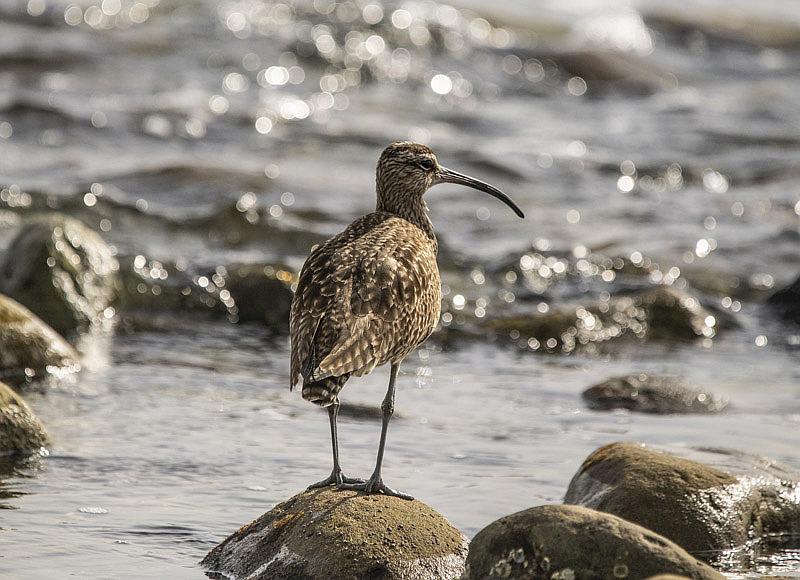
| 4 | Hudsonian Whimbrel | 12 | 3 | 14 | 8 | 4 | 3 |
| 4 | Marbled Godwit | 21 | 8 | 10 | 3 | ||
| 4 | Spotted Sandpiper | 1 | |||||
| 4 | Willet | 10 | 14 | 20 | 7 | 7 | |
| 4 | Ruddy Turnstone | 1 | 3 | 6 | 4 | 3 | 2 |
| 4 | Sanderling | 1 | 13 | 23 | 14 | 35 | |
| 4 | Dunlin | 2 | 1 | ||||
| 4 | Least Sandpiper | 4 | 6 | 12 | 6 | 10 | 20 |
| 4 | Western Sandpiper | 14 | 1 | 2 | |||
| 5 | Sabine’s Gull | 1 | |||||
| 5 | Bonaparte’s Gull | 1 | |||||
| 5 | Heermann’s Gull | 10 | 38 | 2 | 49 | 10 | |
| 5 | Short-billed Gull | 1 | |||||
| 5 | Ring-billed Gull | 4 | 1 | 7 | 6 | 5 | 17 |
| 5 | Western Gull | 115 | 61 | 35 | 55 | 85 | 45 |
| 5 | American Herring Gull | 1 | 1 | ||||
| 5 | California Gull | 4 | 10 | 116 | 410 | 650 | 275 |
| 5 | Caspian Tern | 2 | |||||
| 5 | Forster’s Tern | 1 | |||||
| 5 | Elegant Tern | 70 | 4 | 2 | 3 | ||
| 5 | Royal Tern | 135 | 12 | 2 | 22 | 25 | 12 |
| 6 | Pied-billed Grebe | 4 | 6 | 2 | 3 | 6 | 2 |
| 6 | Horned Grebe | 1 | |||||
| 6 | Eared Grebe | 1 | 6 | 3 | 1 | ||
| 6 | Western Grebe | 30 | 8 | 10 | 45 | ||
| 6 | Clark’s Grebe | 2 | |||||
| 6 | Red-throated Loon | 2 | 2 | ||||
| 6 | Pacific Loon | 1 | |||||
| 6 | Brandt’s Cormorant | 1 | 5 | 2 | 1 | 35 | |
| 6 | Pelagic Cormorant | 2 | 1 | 3 | 2 | 3 | |
| 6 | Double-crested Cormorant | 74 | 49 | 28 | 38 | 17 | 28 |
| 6 | White-faced Ibis | 1 | |||||
| 6 | Yellow-crowned Night-Heron | 1 | |||||
| 6 | Black-crowned Night-Heron | 1 | 2 | 1 | |||
| 6 | Snowy Egret | 10 | 5 | 34 | 30 | 11 | 3 |
| 6 | Green Heron | 2 | 1 | 2 | 1 | ||
| 6 | Great Egret | 2 | 3 | 4 | 2 | 1 | 1 |
| 6 | Great Blue Heron | 5 | 4 | 6 | 4 | 5 | 5 |
| 6 | Brown Pelican | 32 | 45 | 138 | 13 | 3 | 13 |
| 7 | Turkey Vulture | 1 | 2 | 2 | |||
| 7 | Osprey | 1 | 1 | 1 | 1 | 2 | |
| 7 | Cooper’s Hawk | 1 | |||||
| 7 | Red-shouldered Hawk | 1 | 2 | 1 | |||
| 7 | Red-tailed Hawk | 1 | 1 | 1 | 2 | 1 | |
| 8 | Belted Kingfisher | 1 | 1 | 2 | 1 | 1 | |
| 8 | Nuttall’s Woodpecker | 1 | 1 | ||||
| 8 | Nanday Parakeet | 20 | 9 | 2 | |||
| 9 | Black Phoebe | 2 | 4 | 2 | 3 | 1 | 3 |
| 9 | Say’s Phoebe | 1 | |||||
| 9 | Hutton’s Vireo | 1 | |||||
| 9 | California Scrub-Jay | 1 | 1 | 2 | 1 | ||
| 9 | American Crow | 8 | 6 | 10 | 7 | 6 | 11 |
| 9 | Common Raven | 1 | |||||
| 9 | Oak Titmouse | 2 | 2 | 1 | 1 | ||
| 9 | No. Rough-winged Swallow | 2 | |||||
| 9 | Barn Swallow | 40 | 4 | ||||
| 9 | Bushtit | 20 | 9 | 35 | 4 | 19 | 20 |
| 9 | Wrentit | 1 | 2 | 2 | 4 | 1 | 2 |
| 9 | Swinhoe’s White-eye | 1 | 1 | ||||
| 9 | Blue-gray Gnatcatcher | 2 | |||||
| 9 | Northern House Wren | 1 | 2 | 1 | 1 | 1 | |
| 9 | Marsh Wren | 1 | 1 | ||||
| 9 | Bewick’s Wren | 2 | |||||
| 9 | European Starling | 35 | 2 | 6 | 30 | 1 | |
| 9 | Northern Mockingbird | 1 | 1 | ||||
| 9 | Western Bluebird | 2 | 1 | ||||
| 9 | Hermit Thrush | 2 | |||||
| 9 | Scaly-breasted Munia | 7 | |||||
| 9 | House Finch | 12 | 3 | 2 | 5 | 15 | 7 |
| 9 | Lesser Goldfinch | 2 | 2 | 7 | |||
| 9 | American Goldfinch | 4 | |||||
| 9 | Dark-eyed Junco | 6 | 2 | 3 | 1 | ||
| 9 | White-crowned Sparrow | 2 | 10 | 12 | 18 | 6 | |
| 9 | Savannah Sparrow | 1 | 1 | ||||
| 9 | Song Sparrow | 6 | 5 | 4 | 4 | 3 | 5 |
| 9 | California Towhee | 2 | 1 | 2 | 2 | 3 | |
| 9 | Western Meadowlark | 2 | |||||
| 9 | Great-tailed Grackle | 23 | 6 | 16 | 3 | 10 | |
| 9 | Orange-crowned Warbler | 1 | 2 | 1 | 2 | 1 | 1 |
| 9 | Common Yellowthroat | 4 | 7 | 6 | 2 | 1 | 1 |
| 9 | Yellow-rumped Warbler | 2 | 25 | 10 | 8 | 6 | |
| 9 | Black-throated Gray Warbler | 1 | 1 | ||||
| Totals Birds by Type | Aug | Sep | Oct | Nov | Dec | Jan | |
| 1 | Waterfowl & Quail | 33 | 25 | 28 | 61 | 95 | 67 |
| 2 | Doves, Swifts & Hummers | 11 | 14 | 8 | 7 | 9 | 3 |
| 3 | Rails & Coots | 4 | 32 | 4 | 26 | 25 | 50 |
| 4 | Shorebirds | 93 | 130 | 219 | 185 | 123 | 128 |
| 5 | Gulls & Terns | 341 | 127 | 164 | 547 | 777 | 349 |
| 6 | Grebe, Loon, Heron, Pelican | 135 | 117 | 259 | 111 | 59 | 134 |
| 7 | Hawks & Falcons | 2 | 5 | 2 | 3 | 5 | 5 |
| 8 | Kingfisher, Peckers & Parrots | 1 | 21 | 10 | 3 | 1 | 3 |
| 9 | Passerines | 141 | 82 | 122 | 122 | 91 | 86 |
| Totals Birds | 761 | 553 | 816 | 1065 | 1185 | 825 | |
| Total Species by Group | Aug | Sep | Oct | Nov | Dec | Jan | |
| 1 | Waterfowl & Quail | 2 | 5 | 2 | 8 | 11 | 8 |
| 2 | Doves, Swifts & Hummers | 4 | 4 | 3 | 2 | 3 | 1 |
| 3 | Rails & Coots | 1 | 2 | 1 | 2 | 1 | 1 |
| 4 | Shorebirds | 7 | 10 | 12 | 10 | 11 | 10 |
| 5 | Gulls & Terns | 8 | 7 | 6 | 8 | 7 | 4 |
| 6 | Grebe, Loon, Heron, Pelican | 12 | 10 | 12 | 14 | 11 | 9 |
| 7 | Hawks & Falcons | 2 | 4 | 2 | 3 | 3 | 3 |
| 8 | Kingfisher, Peckers & Parrots | 1 | 2 | 2 | 2 | 1 | 2 |
| 9 | Passerines | 16 | 20 | 21 | 22 | 21 | 17 |
| Totals Species – 105 | 53 | 64 | 61 | 71 | 69 | 55 |



 SANTA MONICA BAY AUDUBON SOCIETY BLOG