Free email delivery
Please sign up for email delivery in the subscription area to the right.
No salesman will call, at least not from us. Maybe from someone else.
[Posted by Chuck Almdale]
The 2021 Audubon Photography Awards: Winners and Honorable Mentions
Thousands of people entered photographs and—for the first time— videos in this year’s contest. The finest images showed birdlife at its most tranquil, clever, and powerful. The top thirteen award-winning photographs from amateurs and professionals.
[Special bonus: On the NAS webpage is a link to a free copy of Audubon bird guide app of 800 North American birds.]
Additional bonus link:
The 2020 Audubon Photography Awards: Top 100
Take a scroll through this year’s spectacular, artistic, and playful avian images, while reading the story behind each.
Additional additional bonus link:
12 Fascinating Bird Behaviors From the 2019 Audubon Photography Awards
Every year our competition attracts entries capturing rare and unusual moments in the avian world. Check out this year’s highlights.
Links to more photography articles are at the bottoms of the Audubon pages. These photos and their stories are addictive: free time is advisable.
Can birds taste sugar? | The Atlantic
[Posted by Chuck Almdale]
…and what does it taste like?
The Atlantic | Ed Yong | 8 July 2021
Long ago, songbirds executed an evolutionary power move, rejiggering a sensor for savory tastes to react to sweetness.

From the article:
Australia’s unique forests are the birthplace of birdsong. The plants there are drenched in sunlight and can readily mass-produce sugars through photosynthesis. But with few nutrients in the soil, they struggle to convert those sugars into leaves, seeds, and other tissues. They end up with excess, which they simply give away. Flowers overflow with nectar. Eucalyptus trees exude a sweet substance called manna from their bark. Even insects that suck plant sap are forced to excrete surplus sugars, in the form of liquids known as honeydew or lerp. As the biologist Tim Low once wrote, Australia has “forests that exude energy.”
This article contains links to other Atlantic articles on birds and nature, including:
The Birdsong That Took Over North America
Since 2000, a strange new type of song in white-throated sparrows has spread across the continent at stunning speed.
The Wild Experiment That Showed Evolution in Real Time
…they showed that one mutation became more common over time because it creates a physical trait that makes its owners better suited to their environment. It’s the essence of evolution, measured comprehensively.
And those articles contain links to other interesting articles, and……..
The Floating Roost Trial: A novel solution to losses in migratory shorebird habitat | Permanent Link
If you missed our program about the floating roosts in the Yellow Sea, Birdlife Australia has a permanent video, also produced and presented by Chris Purnell. Time: 42 minutes.
Want to donate to this project? Contribute directly to Birdlife Australia. In the “Comments” section tell them it’s for the “Floating Roost Project.”
“Getbol, Korean Tidal Flats” inscribed on UNESCO World Heritage List
EAAFlyway.net | 26 July 2021
Cool photos, short new report video
On 26th July, 2021, the 44th Session of the World Heritage Committee endorsed the inscription of the Republic of Korea’s tidal flats on the UNESCO World Natural Heritage List, marking an enormous step forward to secure the critical habitats of the Yellow Sea for millions of migratory waterbirds that depend on this area as a vital stopover on their migratory journeys from as far away as Australia and New Zealand to breeding grounds in Arctic Russia and Alaska.
Chris Purnell created a shorter video on the project. Time: 14 minutes.
About above video:
Chris Purnell (BirdLife Australia) presents “Trialing Floating Artificial Shorebird habitat: a response to losses in the upper intertidal zone”as part of Session 4: Foraging and roosting held online on Nov. 3, 2020 at the 1st East Asian-Australasian Flyway Shorebird Science Meeting.
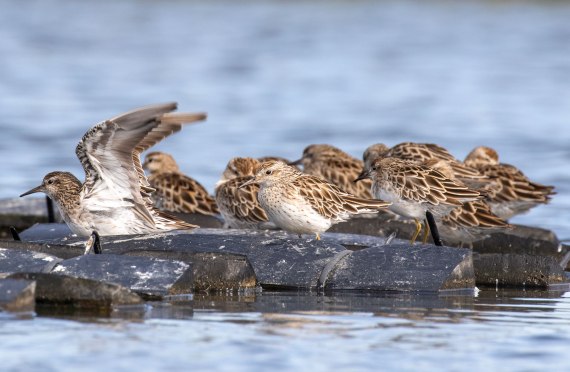
Articles in the news
Artificial roosts for migratory birds journeying from the Arctic prove popular in Korea, but not in Australia
ABC Newcastle | Ben Millington | 1 Jul 2020
Repurposed Oyster Farm Bags Offer New Real Estate for Migratory Birds
Scientific American | Priyanka Runwal | 4 Mar 2020
South Korea’s artificial floating roosts: a lifeline for migratory shorebirds
BirdLife International | Ding-Li Yong | 15 Oct 2019
Contact information for Chris Purnell
Floating Roost Trial – Contact Page
Geum Estuary Project – Information & Videos
The Floating Roost Trial: a novel solution to losses in migratory shorebird habitat.
Appropriate high tide roosts (resting areas) are necessary to help migratory shorebirds maintain a positive energy balance while making journeys of over 10,000 km to and from breeding grounds. However in many areas of the Yellow Sea coast these areas are the first to be affected by development and disturbance. Our surveys of one critical staging area identified that 6 of the 7 natural roosts were only available to birds on 44% of high tides. During these periods it is estimated that over ten thousand birds may be without appropriate local roosting opportunities.
In response to this issue the project promoted established responses to artificial roost construction, however due to the urgency of the requirement and recent changes to legislation forbidding construction on intertidal areas, we were forced to think outside the box. BirdLife looked to an unlikely partner, the oyster farmers of Australia. Floating oyster farm infrastructure is utilized by shorebirds in the east coast of Australia. We developed the Floating Roost Trial by optimizing commercially available materials as roost sites in highly modified coastlines. Two years later we have some positive results from phase 1 and are looking forward to phase 2.

With a background in field ecology, Chris Purnell now manages BirdLife Australia’s Wetland Birds Program, overseeing and implementing a portfolio of works focusing on conservation outcomes for the unique birds of Australia’s diverse wetland types – from coastal sites to arid ephemeral wetlands. Chris’ current project focus includes the effective use and delivery of environmental water, species recovery of Australian Painted-snipe and Australasian Bittern and shorebird conservation management in Indigenous Protected Areas and the Republic of Korea.

Platforms, adapted from oyster farming, staked out at low tide; come high tide they’ll be afloat.
Remembering Don White
[Posted by Chuck Almdale]
It was with surprise and sadness that we learned of birder Don White’s death.

I’m not certain that he was ever a member of Santa Monica Bay Audubon Society. He came to many of our evening meetings, sat in the back where his stature wouldn’t block anyone’s view, made wry comments and cracked jokes, smiling all the while. I was always amazed that he rode his bicycle over from Culver City, a risky venture in Los Angeles, especially in the dark.
He first joined us on field trips about a decade ago – it was one of our long December drives to Carrizo Plain. He arrived early in the north San Fernando Valley for our 7:15am departure, an astonishing feat considering the 20-mile bicycle ride from Culver City over the Santa Monica Mtns. through the Sepulveda pass. There were people driving cars who couldn’t get there on time. He rode with us throughout the 12-hour drive & bird trip and was a pleasure to be with. His bird-locating and identifying skills were excellent. Back home, well after dark, off he went on his bike back to Culver City, 20 miles to the south.
He was a welcome rider with us on numerous other long SMBAS birding trips over the years.
I’d occasionally hear from him. In August 2015, replying to a “bird quiz” I wrote in which all the mystery photos were of Great-tailed Grackle, he commented:
Lovely and elegant creatures! No wonder we’re all so addicted to birding.
I’d say both are immature Great-tailed Grackles. 2 different birds. The upper may be an adult female though if not a juvenile. The lower looks more certainly to be a juvenile.
If I guess right, I bequeath all the fame and fortune to you.
Thanks, Don White
Don thanked me for a glancing blog-reference I made to a member of the ornithological staff at Miskatonic University of eastern Massachusetts, an institution to which I supposed he may have some attachment. “I knew there was some reason I liked you,” he wrote.
To help celebrate the annual Bird LA Day in April, Don led the birdwalk in Griffith Park’s Fern Dell over a period of years.
In February, 2020, sparked by my blog on the origin of the name “Osprey,” he added:
Thanks for the post.
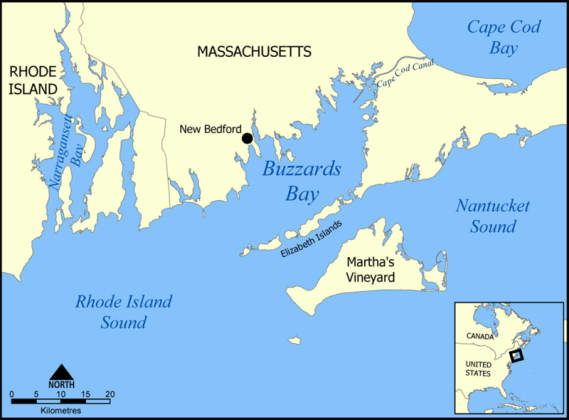
To add to your Osprey lore – where I hail from in SE Mass/RI is near the shores of Buzzards Bay. Most people assume the name has something to do with vultures. There are both Black and Turkey Vultures there, though neither in great numbers. But actually it’s because the English settlers in colonial times referred to the Ospreys, which were very common along the bay shores in the good old days, as buzzards.
So there’s your 25-cents story.
All the best,
Don White
I’d been around Buzzards Bay many times and was happy to learn this.
Covid-19 hit. Field trips and evening meetings snapped shut. Things were just beginning to reopen when we read on LACoBirds, this June 27 posting by Alex Coffey:
It is with heavy but full hearts that we share with the birding community the shocking and unexpected passing of Los Angeles birder Don White. Don was a beacon of joy and levity in our small pocket of LA. Always first to the front of the boat on pelagics, and first to respond with a wry quip and an eternal grin, he was unmistakable in a crowd due to both his jokes and his height. Though most had to look up at Don, he never looked down on anyone. Unpretentious, kind and genuine, his well-meaning nature was compounded by his unflappable BS detector and ability to never take himself too seriously. Don was a regular on many local field trips with LA and Pasadena Audubon Societies in his local stomping grounds along Ballona Creek, Kenneth Hahn SRA and beyond. He was not shy. You probably met and knew him, and likely shared a laugh.
An expert hiker/backpacker, last weekend Don was the victim of a tragic, heat-related accident in record temperature highs at Anza Borrego, helping prepare for the annual bighorn sheep count. Ever a committed citizen scientist and nature lover, Don participated in countless hawkwatches, nature surveys at Tejon Ranch and Bear Divide, as well as years of regional Christmas Bird Count efforts, with notable, perennial contributions to a staggering number of count circles: Los Angeles, Palos Verdes, Lancaster, Malibu, Santa Clarita, Grass Mountain, Tejon Ranch, Tehachapi, Bear Valley Springs, San Jacinto and surely others.
Loving husband and father, Don was an avid cyclist, reliably seen wandering the Greater LA area with bike companion and lifelong friend Doug Chamorro. He was a ravenous reader who spontaneously spouted Emily Dickinson poems. He loved food, coffee, and about 50% of Trader Joe’s snack offerings. He could always tell you where to find the best Ecuadorian breakfast, or the only place to get Ethiopian coffee at 2am. The world is quite a bit dimmer this week with his light now gone. He was a gifted storyteller with many yarns spun and adventures endured. One regret we have is that we didn’t get to hear them all. Ann Brooks and Bhaskar Krishnamachari are planning an online tribute forum to which Don’s family and all of us would have access – an opportunity for birders and friends to collect memories of Don and share all the stories we missed. We will follow-up in the near future with those details.
Don was outlandishly good company, truly one of a kind. Never being one for ceremony or service himself, if you wish to make a contribution in honor of Don, here are some organizations he supported: Friends of California Condors, Tejon Ranch Conservancy, LA Audubon, Pasadena Audubon, LABirders.org. Many birders loved him as a dear friend, present company included.
So long, Don (Ovibose), and thanks for all the birds.
Love,
All Your Friends
A memorial page created by Ann Brooks, Bhaskar Krishnamachari and Alex Coffey is now up and running at https://www.forevermissed.com/don-white/about
Additional memories and photos are welcome.

Don White died on June 16, 2021, while caching water for the upcoming Bighorn Sheep count, in which he had taken part for many years. He and a companion had hiked several miles up a boulder-strewn route in Borrego Palm Canyon, located in Anza-Borrego Desert State Park. The temperature was 116°.
The following is a partial, sequentially-dated list of articles and reports about Don and the circumstances surrounding his death. There are additional reports which either repeat word-for-word prior reports, or add no new information.
1 Hiker Dead, Another Critical from Heat on Palm Canyon Trail in Borrego Springs
Times of San Diego | 6/20/21
Donald White of Culver City ID’d As Man Overcome in Excessive Heat at Anza-Borrego Park
Times of San Diego | 6/24/21
Man who died counting bighorn sheep in Borrego heat ID’d
SD Union-Tribune | 6/24/21
Annual California Bighorn Sheep Count Canceled Canceled after Death
NBC-LA 7/4/21:
Volunteer, an experienced hiker, dies in heat at bighorn sheep count in Anza-Borrego
Los Angeles Times 7/4/21
June Gloom at Malibu Lagoon, 20 June 2021
[Posted by Chuck Almdale]
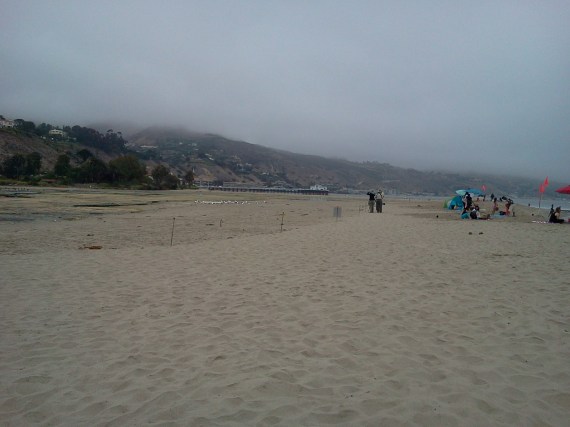
Twasn’t brillig. No toves, slithy or otherwise. (Lillian Johnson 6-20-21)
The lagoon outlet remains closed and the lagoon water level is the same level as in May—7.0 ft on the tidal sidewalk. Even more algae floats on the surface. It was thick enough for ducklings to walk upon easily. Adults had a tougher time and looked like people struggling through thick snow.
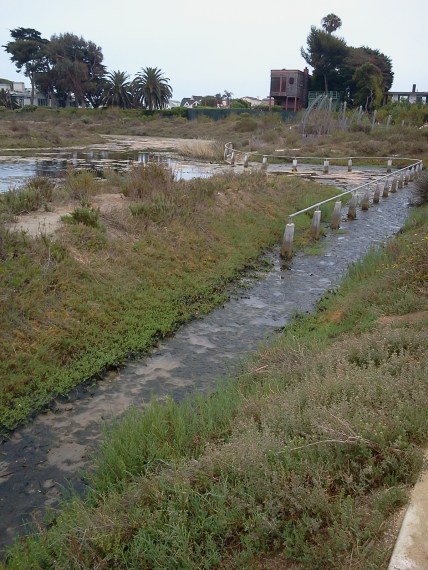
(L. Johnson 6-20-21)
June gloom has fallen upon us, thick in the morning, barely beginning to burn off by 11 am. After the scorching days of early June, temperatures of 63°-69° are very welcome. Tide was falling from the +4.89 ft. high at 6:27 am. Rocks began to show, but no shorebirds, gulls or terns wished to use them. Twenty-six shorebirds snoozed at the edge of the lagoon: 13 Black-bellied Plovers, 4 Killdeer, 9 Whimbrel. Later two Ruddy Turnstones came from the west and landed on the large offshore rocks. They are probably returning migrants as their plumage looked less than perfect, but they were difficult to see in the foggy gray gloom.


Ducks: Gadwall possibly eclipse male (L) and Mallard female (R.)
(both photos Adrian Douglas 6-20-21)
Mallard and Gadwall females and eclipse males can be hard to differentiate. Useful characteristics: Gadwall has steeper forehead profile, white patch in secondaries may show, bill slightly shorter. Mallard has sloping forehead, shows mostly white in tail, may show purple speculum in wing secondaries.

About two-thirds of the 116 ducks were ducklings ranging in size from fluffy puffball to large juvenile.
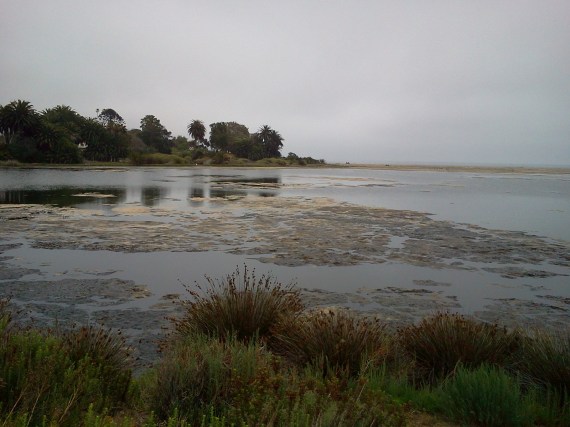
Adamson House, lagoon & algae from viewpoint near PCH bridge.
(L. Johnson 6-20-21)
Most of the Canada Geese swam to the southwestern sand island, rested around the “Osprey pole” and worked on their plumage.

Canada Geese, adults and juveniles (R. Juncosa 6-20-21)

An ultra-rare blue-winged Canada Goose? Plastic? Tag? Spy camera? (A. Douglas 6-20-21)
We spotted one goose with a baby-blue patch in the left wing. A piece of plastic? Some sort of tag? He kept turning around, and around, sorting through his feathers, and as the patch was only on the left side, it took a while to get a good look at it and work out what it was.

Blue-winged Canada Goose? (A. Douglas 6-21-20)
It’s the feather rachis growing out! I count six. That they would grow out without any sign of vanes or barbs I did not know, nor did I know they were baby blue.

There was a total of 348 birds in 34 species. June nearly always has the lowest counts of the year, followed by May and July, but that seemed pretty low, even for June. So I checked.
Average June birds for prior 10-year period: 510, ranging 863-258.
Average June species for prior 10-year period: 40, ranging 48-33.
Lowest all-time bird count any month: 5/25/80 – 113 birds & 12 species, including 104 gulls.
Lowest all-time species count any month: 6/20/81 – 8 species and 177 birds, including 80 gulls and 60 ducks.
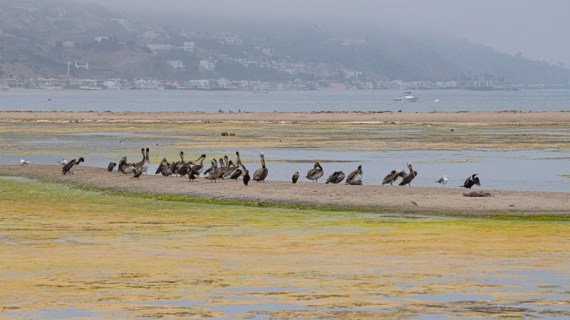
Brown Pelicans, Double-crested Cormorants and a few others on a sand island.
(R. Juncosa 6-20-21)
There were a moderate number of swallows cruising the lagoon and beach – mostly Barn Swallows but a few Cliff Swallows as well.
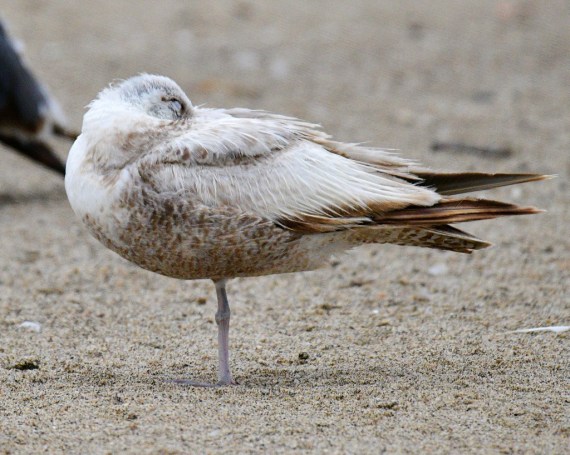
We had three very worn gulls, their scapulars and coverts reduced to little more than bare rachises (there’s that word again). The bird pictured above had crown feathers so worn down that you could see the dark skin underneath. We determined that they were Ring-billed Gulls.

Great-tailed Grackles were making themselves well-known, with sky-pointing displays and frequent loud gurgles, bugles, burbles and boinks. This may be late nesting or re-nesting. June is not too early for re-nesting, as the Eurasian Collared-Dove pair in our back yard finished their first nesting in early May and began again in late May.


Great-tailed Grackles, male & female (both photos (R. Juncosa 6-20-21)
Birds new for the season: Mourning Dove, Ruddy Turnstone.
Many thanks to photographers: Adrian Douglas, Lillian Johnson & Ray Juncosa
The next SMBAS scheduled field trips: Maybe in September. We’ll see.
The next SMBAS program: The Floating Roost Trial: a novel solution to losses in migratory shorebird habitat, with Chris Purnell of Birdlife Australia. Zoom Evening Meeting, Tuesday, 6 July, 7:30 p.m.
The SMBAS 10 a.m. Parent’s & Kids Birdwalk remains canceled until further notice due to the near-impossibility of maintained proper masked social distancing with parents and small children.

(R. Juncosa 6-20-21)
Links: Unusual birds at Malibu Lagoon
9/23/02 Aerial photo of Malibu Lagoon
Prior checklists:
2020: Jan-July, July-Dec 2019: Jan-June, July-Dec
2018: Jan-June, July-Dec 2017: Jan-June, July-Dec
2016: Jan-June, July-Dec 2015: Jan-May, July-Dec
2014: Jan-July, July-Dec 2013: Jan-June, July-Dec
2012: Jan-June, July -Dec 2011: Jan-June, July-Dec
2010: Jan-June, July-Dec 2009: Jan-June, July-Dec.
The 10-year comparison summaries created during the Lagoon Reconfiguration Project period, despite numerous complaints, remain available on our Lagoon Project Bird Census Page. Very briefly summarized, the results unexpectedly indicate that avian species diversification and numbers improved slightly during the restoration period June’12-June’14.
Many thanks to Adrian Douglas, Lillian Johnson & Ray Juncosa and others for their contributions to this month’s checklist.
[Chuck Almdale]
| Malibu Census 2021 | 1/22 | 2/22 | 3/22 | 4/25 | 5/22 | 6/20 |
| Temperature | 60-61 | 65-74 | 60-61 | 58-63 | 59-68 | 63-69 |
| Tide Lo/Hi Height | L+0.86 | L-0.13 | L+0.86 | H+4.83 | L+1.57 | H+4.89 |
| Tide Time | 1223 | 1314 | 1223 | 0843 | 0736 | 0627 |
| (Black) Brant | 1 | |||||
| Canada Goose | 8 | 8 | 6 | 8 | 6 | 10 |
| Cinnamon Teal | 4 | 7 | ||||
| Northern Shoveler | 8 | |||||
| Gadwall | 8 | 12 | 16 | 25 | 18 | 65 |
| American Wigeon | 8 | 12 | 8 | |||
| Mallard | 8 | 10 | 16 | 18 | 22 | 40 |
| Northern Pintail | 2 | 2 | ||||
| Green-winged Teal | 6 | 11 | 25 | |||
| Surf Scoter | 15 | 2 | ||||
| Bufflehead | 6 | 4 | ||||
| Red-breasted Merganser | 1 | 12 | 12 | 3 | 1 | |
| Ruddy Duck | 6 | 25 | ||||
| Pied-billed Grebe | 2 | 6 | 6 | 1 | 1 | |
| Eared Grebe | 1 | 2 | ||||
| Western Grebe | 4 | 11 | 4 | |||
| Feral Pigeon | 3 | 4 | 6 | 9 | 15 | 9 |
| Mourning Dove | 1 | 6 | 2 | |||
| Anna’s Hummingbird | 2 | 3 | 1 | 1 | 1 | |
| Allen’s Hummingbird | 2 | 2 | 4 | 2 | 1 | |
| American Coot | 110 | 210 | 235 | 75 | 6 | 9 |
| Black Oystercatcher | 2 | 4 | 4 | |||
| Black-bellied Plover | 25 | 25 | 31 | 22 | 5 | 13 |
| Snowy Plover | 21 | 27 | 23 | |||
| Semipalmated Plover | 1 | 29 | ||||
| Killdeer | 20 | 4 | 7 | 1 | 6 | 4 |
| Whimbrel | 8 | 3 | 6 | 3 | 19 | 9 |
| Marbled Godwit | 10 | 11 | 10 | |||
| Ruddy Turnstone | 1 | 5 | 2 | |||
| Sanderling | 8 | 50 | 160 | |||
| Dunlin | 1 | |||||
| Least Sandpiper | 6 | 4 | 8 | 1 | ||
| Western Sandpiper | 1 | 4 | 20 | |||
| Spotted Sandpiper | 1 | 1 | ||||
| Willet | 12 | 11 | 6 | 2 | 1 | |
| Heermann’s Gull | 16 | 2 | 42 | 28 | 280 | |
| Ring-billed Gull | 15 | 38 | 12 | 6 | ||
| Western Gull | 30 | 80 | 65 | 40 | 35 | 45 |
| California Gull | 50 | 235 | 130 | 35 | 10 | 4 |
| Herring Gull | 1 | |||||
| Glaucous-winged Gull | 3 | 1 | 1 | 1 | 1 | |
| Caspian Tern | 4 | 20 | 13 | 3 | ||
| Royal Tern | 5 | 6 | 24 | 6 | 2 | |
| Elegant Tern | 395 | 107 | 1 | |||
| Pacific Loon | 1 | |||||
| Brandt’s Cormorant | 5 | |||||
| Double-crested Cormorant | 85 | 52 | 25 | 12 | 26 | 26 |
| Pelagic Cormorant | 1 | 1 | ||||
| Brown Pelican | 162 | 12 | 27 | 105 | 235 | 27 |
| Great Blue Heron | 1 | 3 | 3 | 2 | ||
| Great Egret | 2 | 2 | 2 | 1 | 1 | 4 |
| Snowy Egret | 10 | 9 | 3 | 2 | 1 | 6 |
| Green Heron | 1 | |||||
| Black-crowned Night-Heron | 1 | |||||
| Turkey Vulture | 1 | 1 | 1 | |||
| Osprey | 1 | 2 | 2 | 1 | ||
| Cooper’s Hawk | 1 | |||||
| Red-shouldered Hawk | 2 | |||||
| Belted Kingfisher | 1 | |||||
| Nuttall’s Woodpecker | 1 | |||||
| Peregrine Falcon | 1 | |||||
| Black Phoebe | 1 | 2 | 2 | 8 | 6 | |
| Say’s Phoebe | 1 | |||||
| Western Kingbird | 1 | |||||
| California Scrub-Jay | 1 | 2 | ||||
| American Crow | 6 | 2 | 5 | 4 | 4 | 3 |
| Common Raven | 1 | |||||
| Violet-green Swallow | 2 | |||||
| Rough-winged Swallow | 6 | 2 | 3 | |||
| Cliff Swallow | 8 | 4 | ||||
| Barn Swallow | 10 | 25 | 30 | 18 | ||
| Oak Titmouse | 2 | |||||
| Bushtit | 30 | 8 | 20 | 1 | 8 | 4 |
| Western Bluebird | 2 | |||||
| Northern Mockingbird | 2 | 4 | 5 | 2 | ||
| European Starling | 10 | 75 | 5 | 8 | ||
| House Finch | 4 | 4 | 10 | 6 | 6 | 6 |
| Lesser Goldfinch | 6 | 4 | 16 | 2 | ||
| Spotted Towhee | 1 | |||||
| California Towhee | 1 | 4 | 3 | |||
| Song Sparrow | 3 | 4 | 7 | 7 | 8 | 4 |
| White-crowned Sparrow | 4 | 5 | 6 | 2 | ||
| Hooded Oriole | 1 | 1 | ||||
| Red-winged Blackbird | 2 | 2 | 4 | |||
| Brown-headed Cowbird | 2 | 1 | 1 | |||
| Great-tailed Grackle | 1 | 8 | 6 | 6 | 8 | |
| Common Yellowthroat | 1 | 3 | 4 | |||
| Yellow Warbler | 2 | |||||
| Yellow-rumped Warbler | 6 | 14 | 15 | 1 | ||
| Totals by Type | Jan | Feb | Mar | Apr | May | Jun |
| Waterfowl | 53 | 115 | 100 | 55 | 46 | 116 |
| Water Birds – Other | 359 | 292 | 306 | 198 | 268 | 62 |
| Herons, Egrets & Ibis | 13 | 15 | 5 | 3 | 6 | 12 |
| Quail & Raptors | 3 | 0 | 3 | 3 | 4 | 0 |
| Shorebirds | 114 | 141 | 264 | 80 | 31 | 28 |
| Gulls & Terns | 119 | 362 | 279 | 531 | 446 | 55 |
| Doves | 3 | 5 | 12 | 9 | 15 | 11 |
| Other Non-Passerines | 2 | 4 | 5 | 5 | 3 | 2 |
| Passerines | 72 | 46 | 198 | 78 | 99 | 62 |
| Totals Birds | 738 | 980 | 1172 | 962 | 918 | 348 |
| Total Species | Jan | Feb | Mar | Apr | May | Jun |
| Waterfowl | 9 | 11 | 9 | 5 | 3 | 4 |
| Water Birds – Other | 4 | 9 | 6 | 6 | 4 | 3 |
| Herons, Egrets & Ibis | 3 | 4 | 2 | 2 | 4 | 3 |
| Quail & Raptors | 3 | 0 | 2 | 2 | 3 | 0 |
| Shorebirds | 11 | 11 | 11 | 9 | 4 | 4 |
| Gulls & Terns | 6 | 6 | 8 | 8 | 6 | 5 |
| Doves | 1 | 2 | 2 | 1 | 1 | 2 |
| Other Non-Passerines | 2 | 2 | 2 | 2 | 2 | 2 |
| Passerines | 11 | 11 | 20 | 17 | 17 | 11 |
| Totals Species – 89 | 50 | 56 | 62 | 52 | 44 | 34 |



 SANTA MONICA BAY AUDUBON SOCIETY BLOG