Gulled* again at Malibu Lagoon, 24 Dec. 2023
[Chuck Almdale]
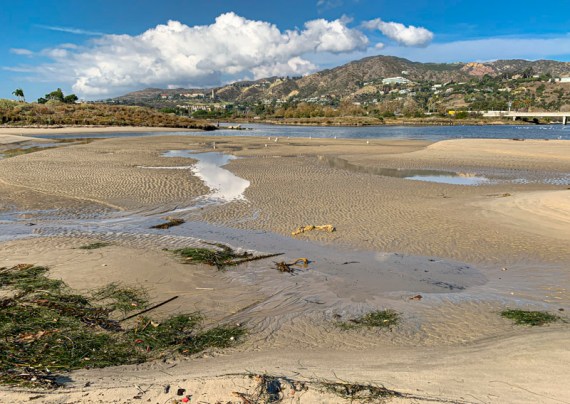
As we noted a few days earlier, there was a Lesser Black-backed Gull (a European-West Asian species) reported from Malibu Lagoon on Dec. 17 & 20, and of course we hoped it will still be there. I arrived about quarter-to-eight planning to do a preliminary search, but the lagoon was incredibly full of water from the +6.53 ft. high tide about six minutes earlier, so of course all the birds except for ducks and coots were gathered on what little beach remained, all the way across the lagoon and directly towards the sun. We’d have to wait until we got to the beach to search for it, but with such a high tide it would be several hours before there was a beach. Meanwhile the lagoon past the PCH bridge had a passel of Bufflehead and Ruddy Ducks and the lagoon was full (well…not really full) of coots and various ducks, including Northern Shovelers. Back at the gathering place, I briefed the birders on the LBB Gull, showed them the picture in the NGS field guide and put them on alert. As the tide dropped we slowly made our way to the beach.
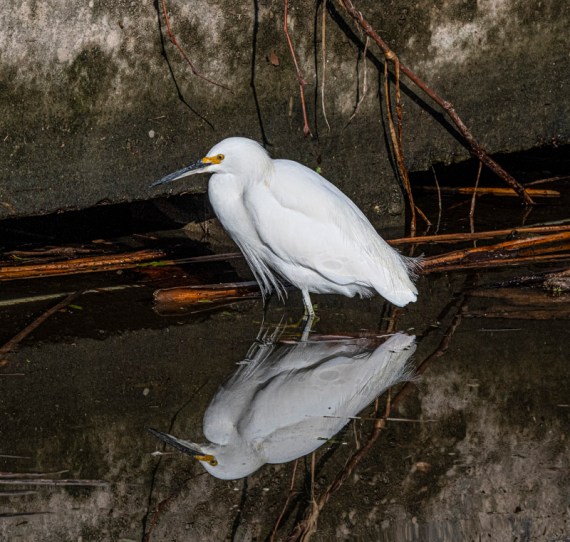
The egrets were forced to stay in what shallows there were. Some were near the winter tidal clock sidewalk.

One Snowy Egret on his way to the water…

Stepping over that stick…

A little lift from his right hind toe on the stick…

Finally in the water. Bring on the fish.
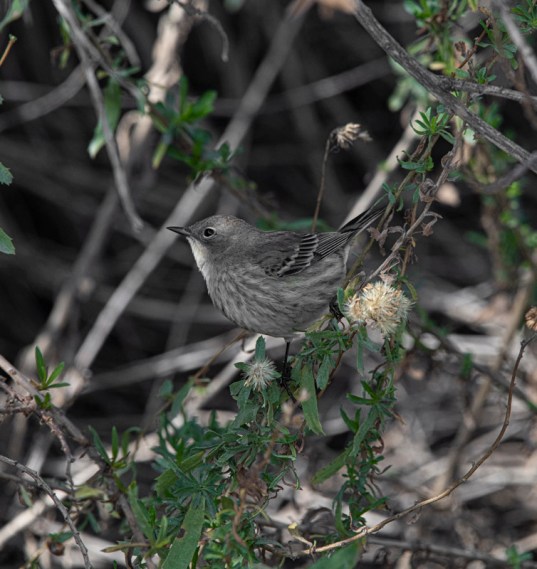
Of all the birds in the trees and brush – 3 woodpeckers (3 species) and 119 passerines (17 species) – the only one photographed was probably the plainest Yellow-rumped Warbler in existence. The two Wrentits posing on a chainlink fence got away before the cameras arrived.
By the time we reached the lagoon entrance, the water level had dropped considerably.

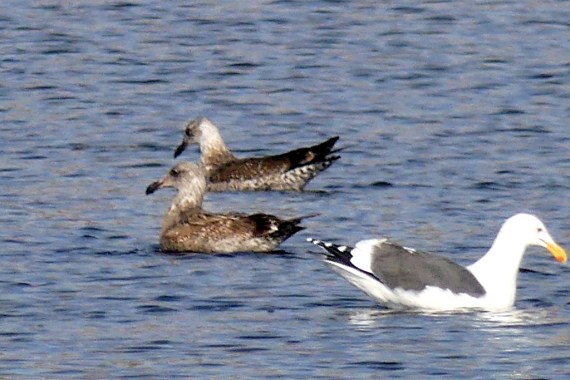
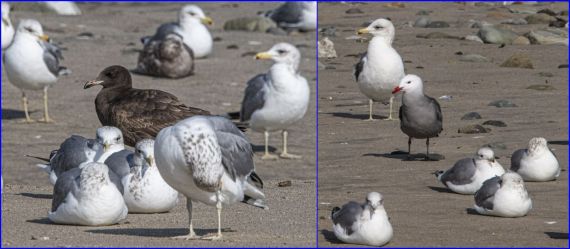
We began searching through the gulls. As usual this time of year most of them were California Gull, but there were typical numbers of Western, Ring-billed and Heermann’s. Sometimes it’s hard to tell these birds apart even though they differ significantly in size. Ring-billed (17 ½”) often look the same size as California (21″), which in turn often looks the same size as Western (25″), but Ring-billed always look smaller than Western. Go Figure. in the photo below, a Ring-billed is between a couple of California and a Western.

After a couple of false alerts, after which we decided we were doing something wrong, three birders – Chris, Femi and Marie – independently spotted the bird about the same time, among the other species at the other side of one of the lagoon’s sand islands revealed by the dropping tide.

It then wandered off into the water, farther away.

The slenderness of the bill shows up well in the photo below.
I found it a difficult bird – first to locate, then to differentiate. A number of other 1st-winter gulls also had “smudginess” around the eye. The bill was all black and more slender with less of a gonydeal bump on the lower mandible. The upper neck and nape were a bit brighter. The wing primaries were all black. It also seemed to have a bolder black-&-white pattern on the undertail coverts, almost a herringbone. The black bills of all the other 1st-winter birds were thicker with a more pronounced gonydeal bump and varying amounts of pinkishness around the base of the bill.
Heermann’s Gulls were present as well.
We even had three Bonaparte’s Gulls (yes, named after a naturalist nephew of that Bonaparte who had moved to Philadelphia after his uncle’s disastrous defeat at Waterloo). It’s hard to believe but this gull used to appear in the hundreds at the lagoon. My record high was over 40 years ago, about 1600 birds on 3 Mar. 1980. Next highest was 1095 on 12 Dec. 1982. Between 1 Dec. 1979 and 8 Jan. 1983 I had 12 counts in the hundreds. But since 27 Aug. 2000, out of 265 census visits, they have been present only 68 times, totaling a mere 198 birds, averaging 3 birds per appearance. In only four of those 68 appearances did they number into double digits; The highest count was 26 birds on 27 May 2007.

According to Birds of the World the world population of Bonaparte’s Gull is not globally threatened. Estimated world population 85,000–175,000 pairs, but that may be conservative. No declines noticed in Florida, New Jersey, Niagara (winter), northern California, Alaska, Quebec or Ontario. So the drop in the wintering and migrant population at Malibu Lagoon may not be representative of anywhere else, not even SoCal. Maybe it’s the smell of sun tan lotion in the water and air that drove them away.
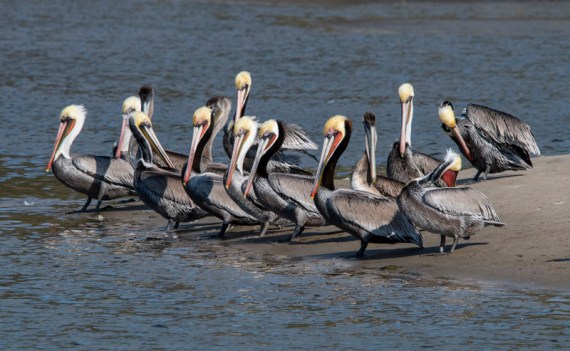
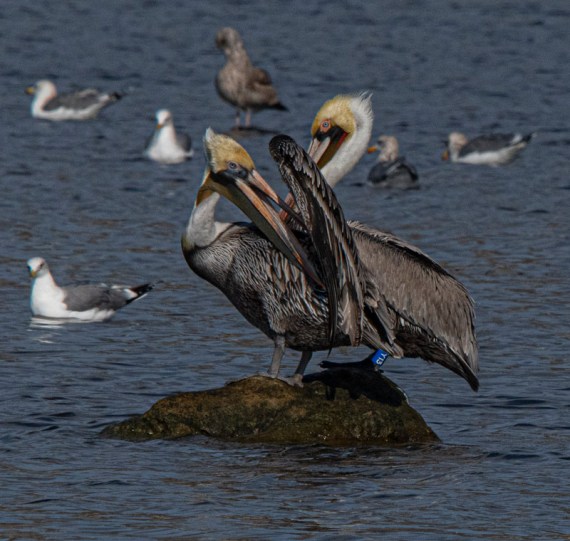
Brown Pelicans, some of whom nest on Anacapa Island not far away, have made a marvelous recovery since DDT was banned. They are at the lagoon 100% of the time.
By now the egrets had moved all around the lagoon.

We hadn’t seen the Osprey all morning, but on the way back found him on his phone pole at the corner of Malibu Colony, looking very quizzical. But if you’re not a fish, a crow or another Osprey, he’s really not all that interested in you.

Malibu Lagoon on eBird as of 12-29-23: 7333 lists, 320 species
Most recent species added: Red-breasted Nuthatch (31 October 2023, Kyle Te Poel).
Birds new for the season: Canada Goose, Horned Grebe, Eared Grebe, Black Oystercatcher, Bonaparte’s Gull, Lesser Black-backed Gull, Black-crowned Night-Heron, Red-shouldered Hawk, Downy Woodpecker, Nuttall’s Woodpecker, Hairy Woodpecker, California Scrub-Jay, Common Raven, Dark-eyed Junco.
Many, many thanks to photographers Femi Faminu, Ray Juncosa
Upcoming SMBAS scheduled field trips; no reservations or covid card necessary unless specifically mentioned:
- Antelope Valley Raptor Search, Sat. Jan 13, meet at 7:00 am. Reservations. May be canceled.
- Malibu Lagoon, Sun. Jan 28, 8:30 (adults) & 10 am (parents & kids)
- Madrona Marsh Sat Feb 10, 8 am.
- These and any other trips we announce for the foreseeable future will depend upon expected status of the Covid/flu/etc. pandemic at trip time. Any trip announced may be canceled shortly before trip date if it seems necessary. By now any other comments should be superfluous.
- Link to Programs & Field Trip schedule.
The next SMBAS Zoom program: “Aeroacoustics Lab at UCR” with Dr. Chris J. Clark, Evening Meeting, Tuesday, Feb 6, 2023, 7:30 p.m.
The SMBAS 10 a.m. Parent’s & Kids Birdwalk restarted April 23. Reservations for groups (scouts, etc.) necessary; not necessary for families.
Links: Unusual birds at Malibu Lagoon
9/23/02 Aerial photo of Malibu Lagoon
More recent aerial photo
Prior checklists:
2023: Jan-June
2021: Jan-July, July-Dec 2022: Jan-June, July-Dec
2020: Jan-July, July-Dec 2019: Jan-June, July-Dec
2018: Jan-June, July-Dec 2017: Jan-June, July-Dec
2016: Jan-June, July-Dec 2015: Jan-May, July-Dec
2014: Jan-July, July-Dec 2013: Jan-June, July-Dec
2012: Jan-June, July-Dec 2011: Jan-June, July-Dec
2010: Jan-June, July-Dec 2009: Jan-June, July-Dec
The 10-year comparison summaries created during the Lagoon Reconfiguration Project period, remain available—despite numerous complaints—on our Lagoon Project Bird Census Page. Very briefly summarized, the results unexpectedly indicate that avian species diversification and numbers improved slightly during the restoration period June’12-June’14.
Many thanks to Femi Faminu, Ray Juncosa, Chris Lord, Marie Nosurname and others for their contributions to this month’s checklist.
The species lists below is irregularly re-sequenced to agree with the California Bird Records Committee Official California Checklist. If part of the chart’s right side is hidden, there’s a slider button inconveniently located at the bottom of the list.
The numbers 1-9 left of the species names are keyed to the nine categories of birds at the bottom.
[Chuck Almdale]
| Malibu Census 2023 | 7/23 | 8/27 | 9/24 | 10/22 | 11/26 | 12/24 | |
| Temperature | 66-70 | 69-73 | 56-74 | 62-70 | 62-68 | 53-64 | |
| Tide Lo/Hi Height | L+0.81 | H+3.68 | H+3.77 | L+3.34 | H+6.53 | H+6.20 | |
| Tide Time | 0730 | 0832 | 0739 | 1029 | 0740 | 0644 | |
| 1 | Canada Goose | 4 | 21 | ||||
| 1 | Cinnamon Teal | 3 | 1 | ||||
| 1 | Northern Shoveler | 1 | 13 | ||||
| 1 | Gadwall | 90 | 45 | 40 | 23 | 30 | 27 |
| 1 | American Wigeon | 5 | 14 | ||||
| 1 | Mallard | 77 | 20 | 12 | 9 | 8 | |
| 1 | Green-winged Teal | 1 | 31 | 8 | |||
| 1 | Lesser Scaup | 1 | |||||
| 1 | Surf Scoter | 15 | 8 | 3 | |||
| 1 | Bufflehead | 5 | 18 | ||||
| 1 | Red-breasted Merganser | 20 | 5 | ||||
| 1 | Ruddy Duck | 12 | 22 | 37 | |||
| 2 | Pied-billed Grebe | 2 | 1 | 4 | 6 | 2 | |
| 2 | Horned Grebe | 1 | |||||
| 2 | Eared Grebe | 1 | |||||
| 2 | Western Grebe | 28 | 13 | 18 | |||
| 7 | Feral Pigeon | 3 | 4 | 3 | 4 | 4 | |
| 7 | Mourning Dove | 2 | 2 | 5 | 1 | ||
| 8 | Anna’s Hummingbird | 1 | 2 | 2 | 2 | ||
| 8 | Allen’s Hummingbird | 4 | 1 | 4 | 1 | 3 | |
| 2 | Sora | 1 | |||||
| 2 | American Coot | 6 | 49 | 157 | 230 | 280 | |
| 5 | Black Oystercatcher | 1 | |||||
| 5 | Black-bellied Plover | 6 | 39 | 82 | 79 | 7 | 52 |
| 5 | Killdeer | 8 | 13 | 6 | 1 | 5 | 20 |
| 5 | Semipalmated Plover | 1 | 7 | 3 | |||
| 5 | Snowy Plover | 7 | 13 | 22 | 18 | 1 | |
| 5 | Whimbrel | 32 | 38 | 32 | 23 | 4 | 8 |
| 5 | Long-billed Curlew | 4 | 3 | ||||
| 5 | Marbled Godwit | 1 | 48 | 45 | 5 | 11 | |
| 5 | Short-billed Dowitcher | 1 | 2 | ||||
| 5 | Wilson’s Phalarope | 1 | |||||
| 5 | Red-necked Phalarope | 2 | |||||
| 5 | Spotted Sandpiper | 3 | 3 | ||||
| 5 | Willet | 5 | 9 | 29 | 56 | 12 | 22 |
| 5 | Ruddy Turnstone | 2 | 4 | 10 | 1 | 10 | |
| 5 | Sanderling | 2 | 32 | 27 | 69 | 10 | |
| 5 | Least Sandpiper | 4 | 8 | 18 | 6 | 35 | 28 |
| 5 | Western Sandpiper | 6 | 3 | 15 | |||
| 6 | Bonaparte’s Gull | 3 | |||||
| 6 | Heermann’s Gull | 89 | 90 | 51 | 55 | 71 | 22 |
| 6 | Ring-billed Gull | 1 | 4 | 42 | 34 | ||
| 6 | Western Gull | 150 | 85 | 65 | 45 | 68 | 64 |
| 6 | Herring Gull | 1 | 1 | 1 | |||
| 7 | Lesser Black-backed Gull | 1 | |||||
| 6 | California Gull | 2 | 3 | 7 | 7 | 220 | 425 |
| 6 | Glaucous-winged Gull | 1 | 5 | ||||
| 6 | Caspian Tern | 1 | |||||
| 6 | Forster’s Tern | 1 | |||||
| 6 | Elegant Tern | 2 | 40 | 24 | 2 | 1 | |
| 6 | Royal Tern | 10 | 4 | 5 | 12 | 7 | |
| 2 | Pacific Loon | 1 | |||||
| 2 | Common Loon | 1 | |||||
| 2 | Black-vented Shearwater | 20 | 28 | ||||
| 2 | Brandt’s Cormorant | 1 | |||||
| 2 | Pelagic Cormorant | 1 | 2 | 5 | |||
| 2 | Double-crested Cormorant | 42 | 23 | 30 | 48 | 37 | 47 |
| 2 | Brown Pelican | 174 | 56 | 27 | 12 | 26 | 72 |
| 3 | Black-crowned Night-Heron | 2 | 5 | 2 | 1 | ||
| 3 | Snowy Egret | 4 | 8 | 5 | 2 | 20 | 18 |
| 3 | Green Heron | 1 | 3 | 1 | |||
| 3 | Great Egret | 3 | 5 | 6 | 4 | 2 | |
| 3 | Great Blue Heron | 4 | 5 | 3 | 2 | 4 | 2 |
| 4 | Turkey Vulture | 1 | 2 | 2 | |||
| 4 | Osprey | 1 | 1 | 1 | 2 | 1 | |
| 4 | Cooper’s Hawk | 1 | |||||
| 4 | Red-shouldered Hawk | 1 | 1 | ||||
| 4 | Red-tailed Hawk | 1 | 1 | 2 | |||
| 8 | Belted Kingfisher | 2 | 1 | 1 | |||
| 8 | Downy Woodpecker | 1 | |||||
| 8 | Nuttall’s Woodpecker | 1 | 1 | ||||
| 8 | Hairy Woodpecker | 1 | |||||
| 8 | Northern Flicker | 1 | |||||
| 4 | American Kestrel | 1 | |||||
| 4 | Peregrine Falcon | 1 | |||||
| 8 | Nanday Parakeet | 2 | |||||
| 9 | Black Phoebe | 6 | 2 | 4 | 4 | 2 | 4 |
| 9 | Say’s Phoebe | 1 | |||||
| 9 | California Scrub-Jay | 1 | 2 | 1 | |||
| 9 | American Crow | 20 | 9 | 6 | 44 | 3 | 5 |
| 9 | Common Raven | 2 | 1 | 2 | 1 | ||
| 9 | Oak Titmouse | 3 | 1 | 1 | |||
| 9 | No. Rough-winged Swallow | 2 | |||||
| 9 | Barn Swallow | 12 | 35 | 4 | |||
| 9 | Bushtit | 22 | 8 | 22 | 50 | ||
| 9 | Wrentit | 1 | 4 | 1 | 4 | 3 | |
| 9 | Ruby-crowned Kinglet | 1 | |||||
| 9 | Blue-gray Gnatcatcher | 2 | |||||
| 9 | House Wren | 2 | 2 | 3 | 2 | ||
| 9 | Marsh Wren | 1 | |||||
| 9 | Bewick’s Wren | 1 | 1 | ||||
| 9 | European Starling | 15 | 12 | 22 | 28 | ||
| 9 | Northern Mockingbird | 1 | |||||
| 9 | House Finch | 15 | 5 | 6 | 5 | 6 | 9 |
| 9 | Lesser Goldfinch | 2 | |||||
| 9 | Dark-eyed Junco | 1 | 2 | ||||
| 9 | White-crowned Sparrow | 10 | 20 | 27 | |||
| 9 | Savannah Sparrow | 1 | |||||
| 9 | Song Sparrow | 5 | 4 | 5 | 5 | 6 | 7 |
| 9 | California Towhee | 3 | 3 | 1 | 2 | 1 | |
| 9 | Hooded Oriole | 1 | |||||
| 9 | Red-winged Blackbird | 6 | 7 | 15 | 16 | ||
| 9 | Brown-headed Cowbird | 1 | |||||
| 9 | Great-tailed Grackle | 1 | 1 | 20 | 1 | ||
| 9 | Orange-crowned Warbler | 1 | 2 | ||||
| 9 | Common Yellowthroat | 2 | 4 | 8 | 5 | ||
| 9 | Yellow Warbler | 1 | |||||
| 9 | Yellow-rumped Warbler (Aud) | 5 | 12 | 6 | |||
| 9 | Townsend’s Warbler | 1 | |||||
| 9 | Wilson’s Warbler | 1 | |||||
| 9 | Western Tanager | 1 | |||||
| 9 | Black-headed Grosbeak | 1 | |||||
| 0 | Totals by Type | Jul | Aug | Sep | Oct | Nov | Dec |
| 1 | Waterfowl | 171 | 65 | 53 | 51 | 134 | 155 |
| 2 | Water Birds – Other | 216 | 87 | 129 | 280 | 314 | 426 |
| 3 | Herons, Egrets & Ibis | 13 | 24 | 13 | 11 | 28 | 23 |
| 4 | Quail & Raptors | 1 | 2 | 4 | 4 | 5 | 4 |
| 5 | Shorebirds | 70 | 145 | 299 | 265 | 139 | 162 |
| 6 | Gulls & Terns | 244 | 230 | 152 | 118 | 416 | 562 |
| 7 | Doves | 2 | 5 | 9 | 4 | 4 | 4 |
| 8 | Other Non-Passerines | 5 | 0 | 6 | 10 | 1 | 9 |
| 9 | Passerines | 96 | 59 | 82 | 154 | 146 | 119 |
| Totals Birds | 818 | 617 | 747 | 897 | 1187 | 1464 | |
| Total Species | Jul | Aug | Sep | Oct | Nov | Dec | |
| 1 | Waterfowl | 3 | 2 | 3 | 4 | 10 | 11 |
| 2 | Water Birds – Other | 2 | 4 | 7 | 8 | 7 | 8 |
| 3 | Herons, Egrets & Ibis | 4 | 5 | 4 | 4 | 3 | 4 |
| 4 | Quail & Raptors | 1 | 2 | 4 | 3 | 3 | 3 |
| 5 | Shorebirds | 9 | 15 | 14 | 9 | 9 | 9 |
| 6 | Gulls & Terns | 5 | 7 | 6 | 6 | 8 | 9 |
| 7 | Doves | 1 | 2 | 2 | 2 | 1 | 1 |
| 8 | Other Non-Passerines | 2 | 0 | 4 | 5 | 1 | 6 |
| 9 | Passerines | 14 | 9 | 23 | 17 | 18 | 17 |
| Totals Species – 112 | 41 | 46 | 67 | 58 | 60 | 68 |
*Gulled pun intended
Discover more from SANTA MONICA BAY AUDUBON SOCIETY BLOG
Subscribe to get the latest posts sent to your email.



 SANTA MONICA BAY AUDUBON SOCIETY BLOG