Free email delivery
Please sign up for email delivery in the subscription area to the right.
No salesman will call, at least not from us. Maybe from someone else.
Update Franklin Canyon Access
Thank you Harvey V. for updating mean the very recent opening of the Mulholland Drive entrance to Franklin Canyon! Much easier access for those who may be coming from Hollywood or the San Fernando Valley!
https://mrca.ca.gov/parks/park-listing/franklin-canyon-park/.
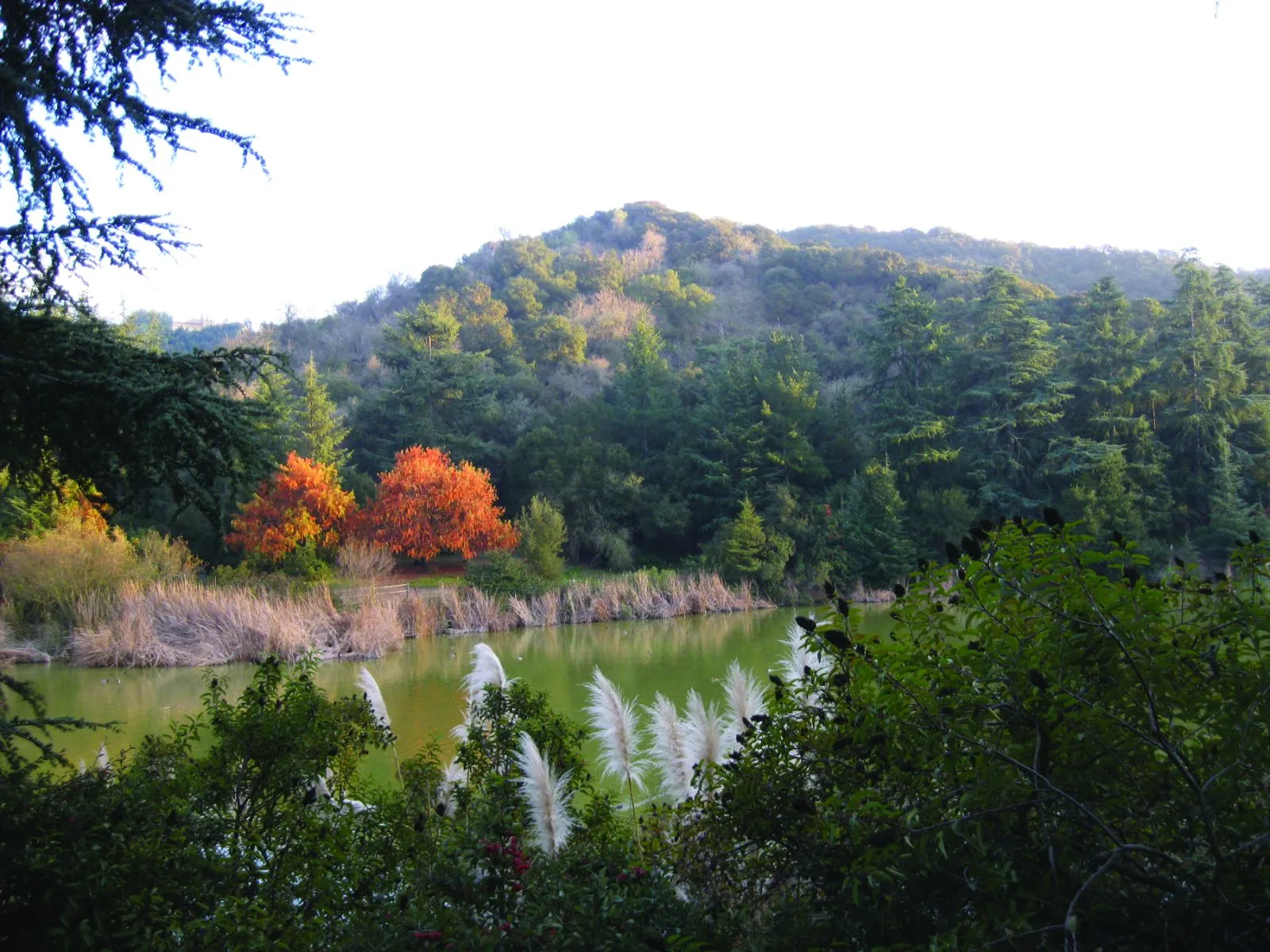
[By Lu Plauzoles, posted by Chuck Almdale]
We plan to meet at 8:30AM at the parking lot below the Sooky Goldman Nature Center. (restrooms there) I believe most navigation systems will recognize that site.
I will try to scout the area two days before the walk to ascertain the correct route and post any changes on the blog. However, expect to be taking N. Beverly Drive north past the Beverly Hills Hotel from Sunset Blvd. Left at the fork (tri-light) with Coldwater Canyon and then the very narrow Franklin Canyon Drive.
The north entrance from Mulholland Drive and the Tree People site IS STILL CLOSED because of road damage from rainstorms four years ago.
From Santa Monica, please allow 35-40 minutes travel due to early-morning traffic.
Please exercise extreme caution in respecting stop signs on the park road. Intersections are camera-controlled and since this is National Park Service land, photo-enforcement is serious and enforceable. (Like, $300-worth!) Do not expect cellphone reception in this narrow canyon.
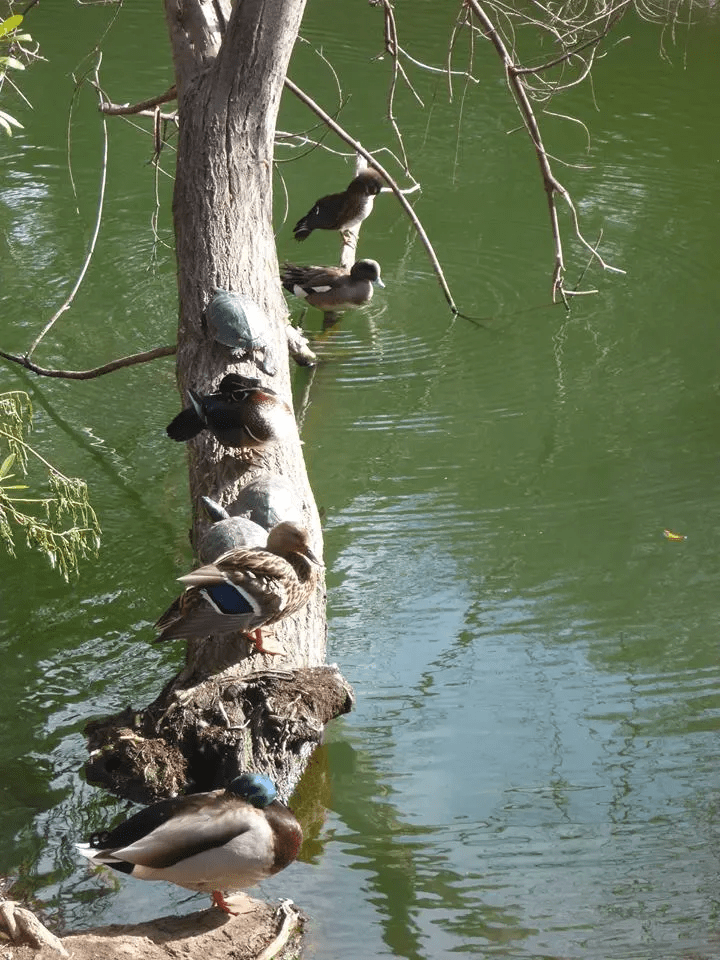
We expect to walk down the length of the canyon and come back to the parking structure via the same route. Total approximately 1.75 miles walking. Approximately 2 hours with good looks at lingering warblers and wrens in classic southern California riparian/chaparral habitat, as well as the occasional waterfowl in the reservoir. Let’s see if the Common rAvens still own the real estate. The prize bird if we can spot one is the Hutton’s Vireo!
Call me or better, text me for details and questions: 310.779.0966
Lu Plauzoles
Link to Google Map:
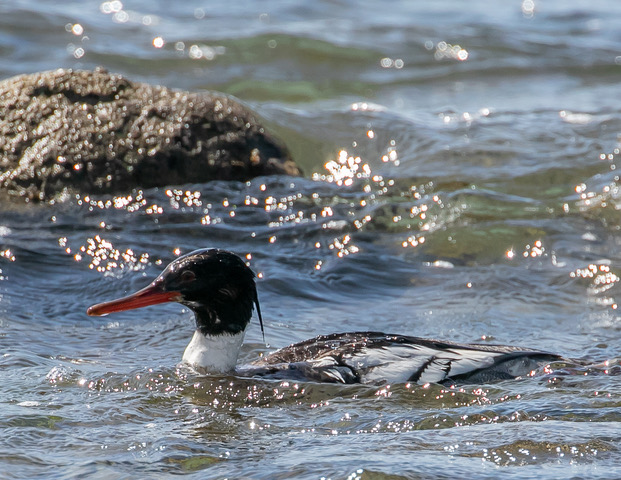
(Chris Tosdevin 4/26/26)
[By Chuck Almdale; photos by Ray Juncosa, Emily Roth & Chris Tosdevin]
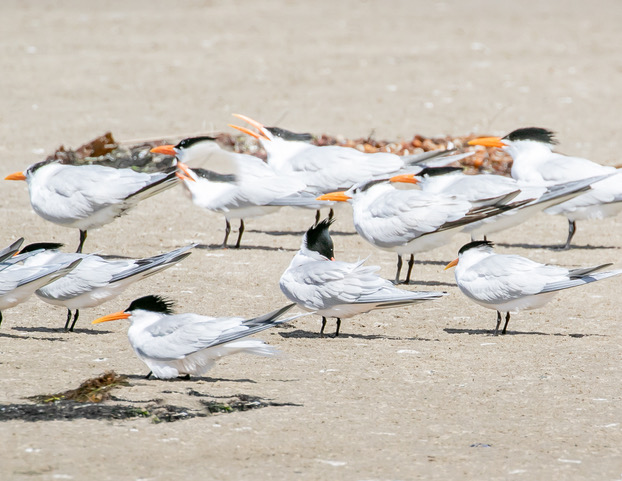
Most of our shorebirds have flown to points north. But the Elegant Terns have returned in force from the Sea of Cortez. An preliminary count shortly after I arrived at 8:15 am yielded about 150 terns and as many gulls. By the time I left three hours later, the gulls remained the same but the terns had exploded to almost 800 birds.
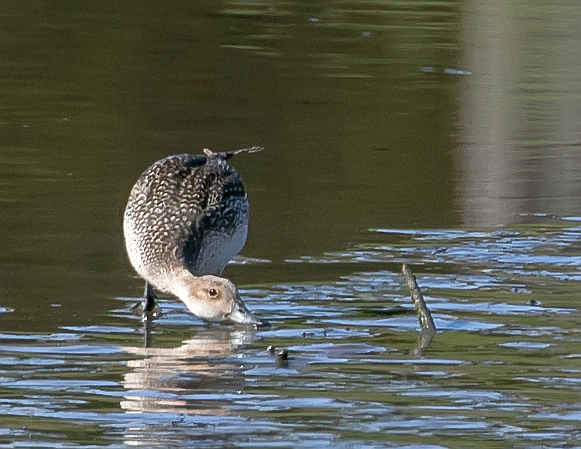
The tide was dropping from a high of +4.32 ft. at 6:24am to the low of +0.00 ft. at 1:06pm, so there was lots of damp mud and damp sand everywhere. In one of the slowly draining channels was a single female Pintail, probably the same lone female we saw last month in the same channel at the very same spot. We don’t get many Pintail: before last month the last Pintail was a single bird in October 2022. In fact we’ve had double-digit Pintail only three times: twice (12 and 10) in 1979, and 10 in January 2012. The wildlife refuges north of Sacramento during the winter have a lot more than Malibu Lagoon ever will.
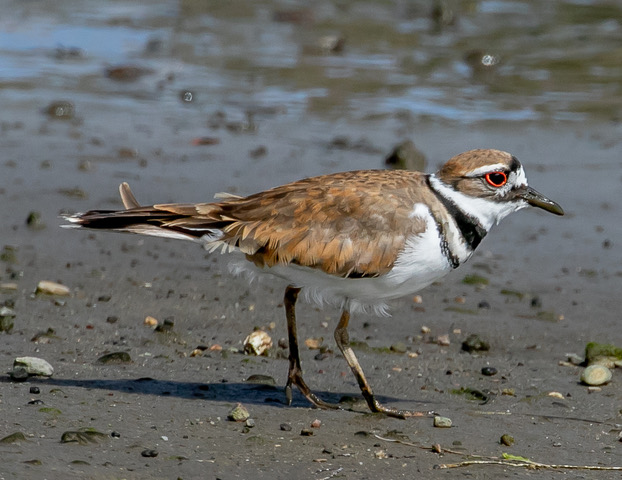
A handful of Killdeer were out and about. They have nested in the sandy soil surrounding the lagoon since at least the 1990s when I recorded a nest with eggs for the L.A. County Breeding Bird Atlas. So of course we’d like to see one for the new California Bird Atlas. But we didn’t.
People often ask about the odd name, Killdeer. These birds have nothing against deer. It’s one of those onomatopoetic names, as the call it makes when alarmed or in flight sounded to so some ears – not mine in particular – as “kill-deer” or “kill-dee” or at least it did back in the 1730s. It has also been called the noisy plover or chattering plover.
Brown Pelicans have an extended nesting season. West Anacapa Island and Santa Barbara Island are reportedly their only breeding location in the U.S.; most breed in Mexico. They have an “extended breeding season running from January to October. This is a bit misleading though, as most begin nesting in March or April, they incubate their 2-3 eggs for 4 weeks, the young begin to fly 5 weeks later, and they become independent of their parents not long thereafter. So each individual pair spend about 9 weeks nesting, but when they begin nesting is quite spread out. Malibu Lagoon is located 41 miles from both their SoCal breeding locations, and it is popular with them year-round. They are at the lagoon on all our trips in numbers ranging from a handful to 1500 birds. The last time they weren’t here was in July 2005; before that you have to go back to October 1983, when they were still having problems with DDT weakening their egg shells.
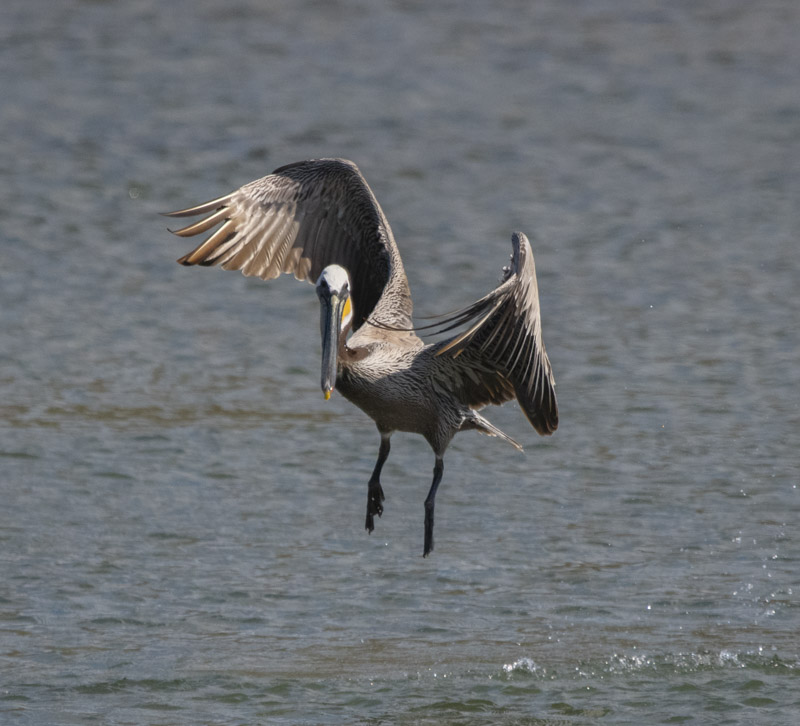
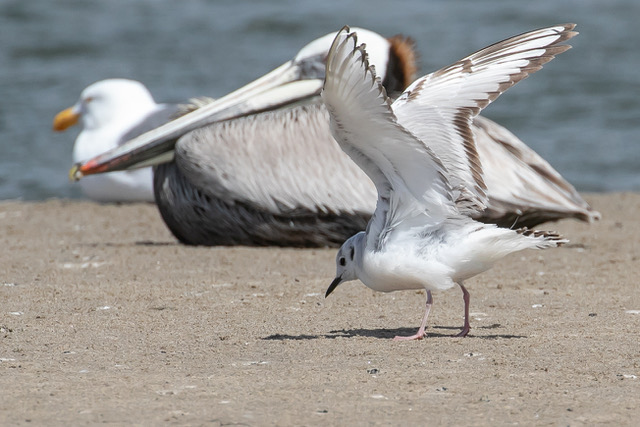
Below: from on of the largest to one of the smallest: Brown Pelican with wingspan up to 6.5 ft, length up to 5 ft. and weight to 11 pounds. Bonaparte’s Gull with wingspan up to 33″, length up to 15″ and weight up to 9 ounces.
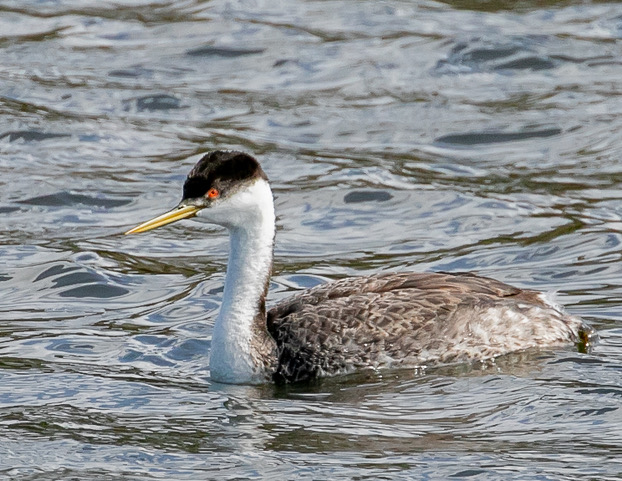
Western Grebes are still with us. There may still be a few with us in May, but I wouldn’t bet on it. Their presents peaks October to March. We had two Clark’s Grebes twice this winter, which is almost a record as in the winter of 2017-18 we had five. We’ve never had more than two at a time. In SoCal they prefer the fresh water of our reservoirs.
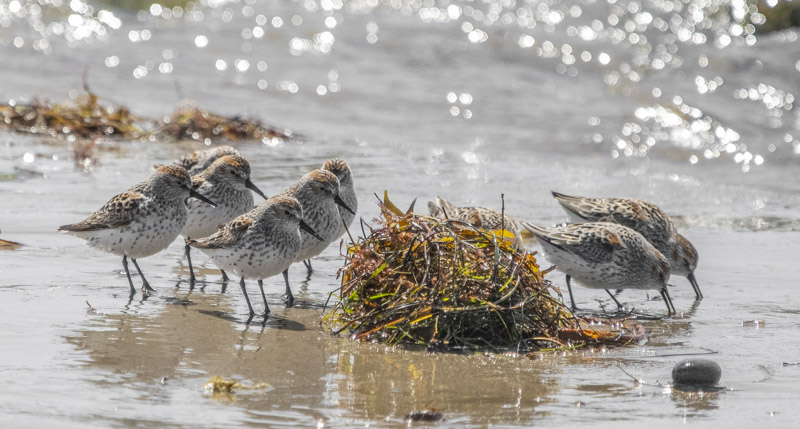
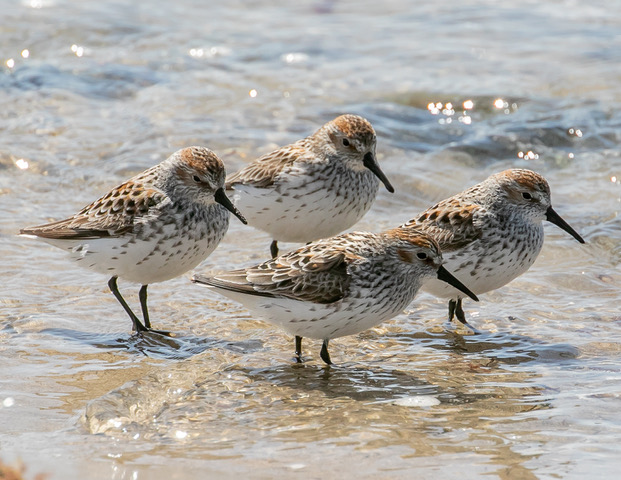
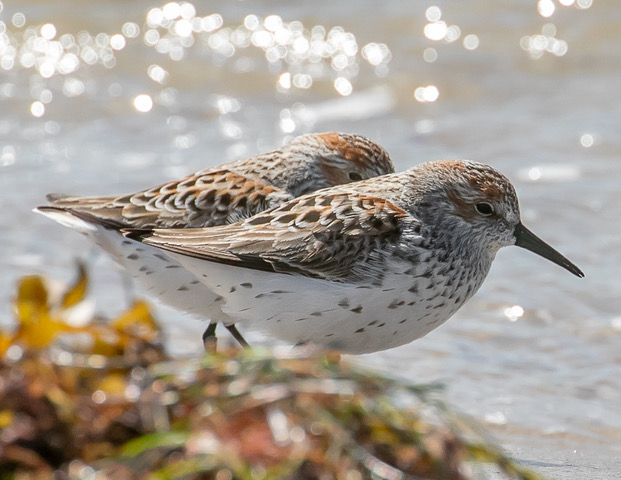
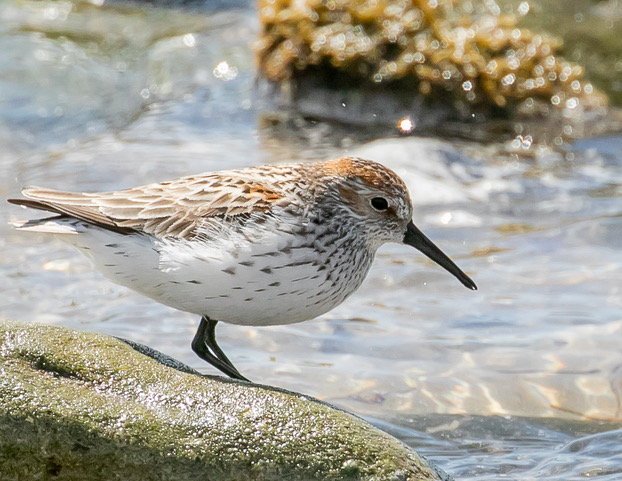
Western Sandpipers
Western Sandpiper presence at the lagoon is erratic. They’re mostly gone by late October and begin returning in March, disappearing again for May-June, returning again in July. The highest numbers are usually in March and April. In fact they can be seen in any month, but there might be only one or two of them. This visit started with one bird, which grew to nine, and just before I left another twenty flew in. Here’s a good look at Western Sandpipers in alternate (breeding) plumage, although some of them might develop a few more black spots or rusty tinges.
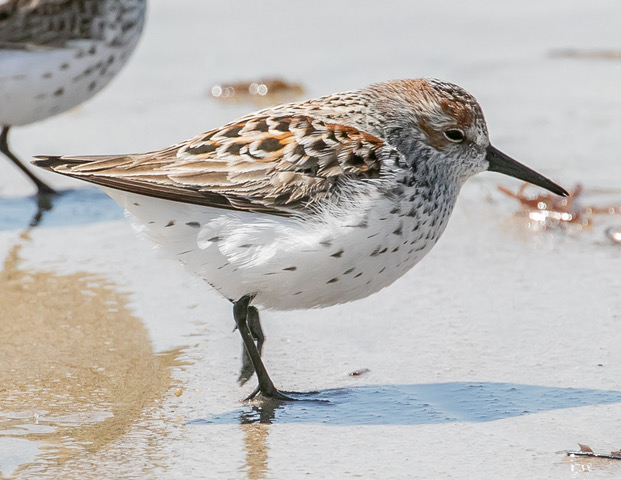
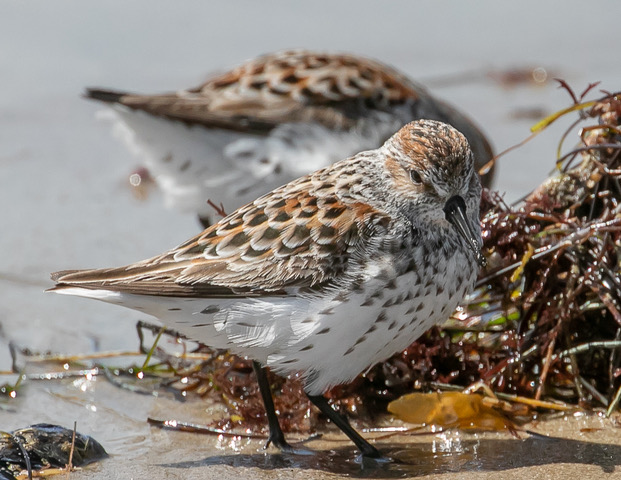
Beach walking can be hazardous for several reasons.
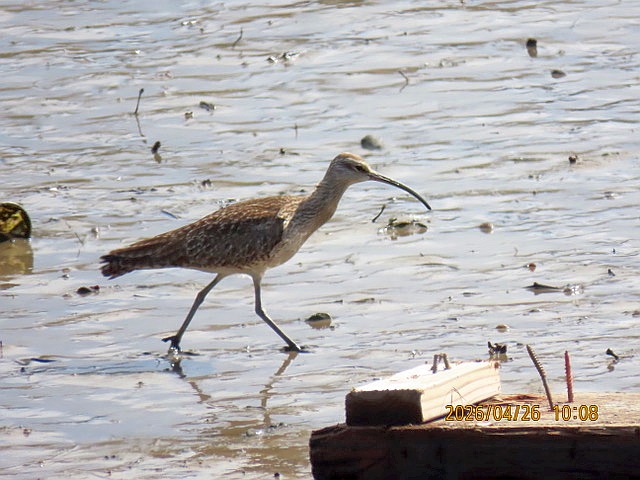
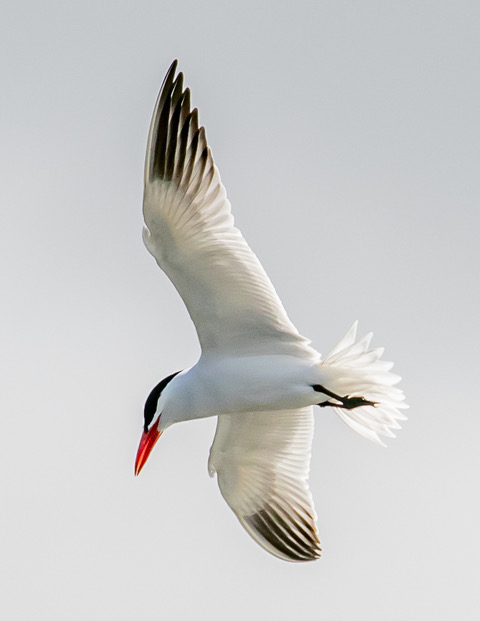
A few of our 800 terns.
Malibu Lagoon on eBird as of 4-29-26: 9372 lists, 3056 eBirders, 322 species
Most recent new species seen: Nelson’s Sparrow, 11/29/24 by Femi Faminu (SMBAS member).
Birds new for the season: Semipalmated Plover, Osprey, Nuttall’s Woodpecker, Peregrine Falcon, Hutton’s Vireo, Tree Swallow, Barn wallow, Cliff Swallow, Hooded Oriole. “New for the season” means it has been three or more months since last recorded on our trips..
Many, many thanks to photographers Ray Juncosa, Emily Roth, and Chris Tosdevin.
Upcoming SMBAS scheduled field trips; no reservations or Covid card necessary unless specifically mentioned:
- Black Rock & Morongo Canyon, Sat-Sun May 2-3.
- Franklin Canyon Sat. May 9 8 am Lu Plauzoles
- Malibu Lagoon, Sun. May 24, 8:30 am (adults) & 10 am (parents & kids)
- Malibu Creek State Park, Sat. June 13, 8 am
- These and any other trips we announce for the foreseeable future will depend upon expected status of the Covid/flu/etc. pandemic, not to mention landslides, fires, local flooding and atmospheric rivers at trip time. Any trip announced may be canceled shortly before trip date if it seems necessary. By now any other comments should be superfluous.
- Link to Programs & Field Trip schedule.
The next SMBAS Zoom program: Tuesday, May 5, 7:30pm; Evolution in Urban Dark-eyed Juncos, with Dr. Pamela Yeh & members of the Yeh Lab at UCLA.
The SMBAS 10 a.m. Parent’s & Kids Birdwalk has again resumed. Reservations not necessary for families, but for groups (scouts, etc.), please call Jean (213-522-0062).
Links: Unusual birds at Malibu Lagoon
9/23/02 Aerial photo of Malibu Lagoon
Aerial ‘film’ flying north over lagoon
More recent aerial photo
Prior checklists:
2025: Jan-June, July-Dec
2023: Jan-June, July-Dec 2024: Jan-June, July-Dec
2021: Jan-July, July-Dec 2022: Jan-June, July-Dec
2020: Jan-July, July-Dec 2019: Jan-June, July-Dec
2018: Jan-June, July-Dec 2017: Jan-June, July-Dec
2016: Jan-June, July-Dec 2015: Jan-May, July-Dec
2014: Jan-July, July-Dec 2013: Jan-June, July-Dec
2012: Jan-June, July-Dec 2011: Jan-June, July-Dec
2010: Jan-June, July-Dec 2009: Jan-June, July-Dec
The 10-year comparison summaries created during the Lagoon Reconfiguration Project period, remain available—despite numerous complaints—on our Lagoon Project Bird Census Page. Very briefly summarized, the results unexpectedly indicate that avian species diversification and numbers improved slightly during the restoration period June’12-June’14.
Many thanks to Femi Faminu, Chris Lord, Armando Martinez, Emily Roth, Chris Tosdevin and others for contributions made to this month’s census counts.
The species list below was re-sequenced as of 12/31/25 to agree with the eBird sequence. If part of the right side of the chart below is hidden, there’s a slider button inconveniently located at the bottom end of the list. The numbers 1-9 left of the species names are keyed to the nine categories of birds at the bottom. Updated lagoon bird check lists can be downloaded here.
[Chuck Almdale]
| Malibu Census 2025-26 | 11/23 | 12/28 | 1/25 | 2/22 | 3/22 | 4/26 | |
| Temperature | 59-65 | 60-69 | 47-55 | 49-63 | 65-76 | 55-64 | |
| Tide Lo/Hi Height | H+5.46 | L+1.35 | L+1.31 | L+0.65 | L-0.31 | H+4.32 | |
| Tide Time | 0939 | 1047 | 0846 | 0655 | 0640 | 0624 | |
| 1 | Brant (Black) | 1 | 1 | 1 | 1 | 1 | 1 |
| 1 | Canada Goose | 12 | 14 | 3 | 4 | 5 | 4 |
| 1 | Cinnamon Teal | 2 | |||||
| 1 | Northern Shoveler | 4 | 2 | ||||
| 1 | Gadwall | 14 | 20 | 34 | 35 | 15 | 25 |
| 1 | American Wigeon | 15 | 4 | 4 | 6 | ||
| 1 | Mallard | 1 | 12 | 5 | 7 | 14 | 8 |
| 1 | Northern Pintail | 1 | 1 | ||||
| 1 | Green-winged Teal | 5 | 11 | 8 | |||
| 1 | Surf Scoter | 22 | 4 | 3 | 6 | ||
| 1 | Bufflehead | 4 | 4 | ||||
| 1 | Red-breasted Merganser | 2 | 5 | 6 | 7 | 4 | 3 |
| 1 | Ruddy Duck | 5 | 11 | ||||
| 2 | Feral Pigeon | 5 | 4 | 2 | 8 | ||
| 2 | Mourning Dove | 1 | 3 | 1 | |||
| 2 | Anna’s Hummingbird | 3 | 1 | 1 | |||
| 2 | Allen’s Hummingbird | 4 | 3 | 3 | 3 | 5 | 2 |
| 3 | Sora | 1 | |||||
| 3 | American Coot | 25 | 25 | 50 | 55 | 4 | |
| 4 | Black Oystercatcher | 1 | 3 | ||||
| 4 | Black-bellied Plover | 64 | 62 | 34 | 20 | 6 | 3 |
| 4 | Killdeer | 10 | 4 | 4 | 6 | 5 | 6 |
| 4 | Semipalmated Plover | 6 | |||||
| 4 | Snowy Plover | 40 | 7 | 17 | 4 | 1 | |
| 4 | Hudsonian Whimbrel | 8 | 4 | 3 | 4 | 6 | 6 |
| 4 | Marbled Godwit | 8 | 10 | 3 | 4 | 1 | |
| 4 | Long-billed Dowitcher | 1 | |||||
| 4 | Spotted Sandpiper | 1 | |||||
| 4 | Willet | 20 | 7 | 7 | 3 | 4 | |
| 4 | Ruddy Turnstone | 4 | 3 | 2 | 3 | ||
| 4 | Sanderling | 23 | 14 | 35 | 10 | ||
| 4 | Least Sandpiper | 6 | 10 | 20 | 20 | 8 | 3 |
| 4 | Western Sandpiper | 2 | 13 | 29 | |||
| 5 | Bonaparte’s Gull | 1 | 3 | 1 | |||
| 5 | Heermann’s Gull | 49 | 10 | 22 | 75 | ||
| 5 | Short-billed Gull | 1 | |||||
| 5 | Ring-billed Gull | 6 | 5 | 17 | 4 | 3 | |
| 5 | Western Gull | 55 | 85 | 45 | 41 | 61 | 40 |
| 5 | American Herring Gull | 1 | 1 | 1 | 1 | ||
| 5 | California Gull | 410 | 650 | 275 | 140 | 95 | 110 |
| 5 | Glaucous-winged Gull | 1 | |||||
| 5 | Caspian Tern | 3 | 11 | ||||
| 5 | Elegant Tern | 3 | 24 | 750 | |||
| 5 | Royal Tern | 22 | 25 | 12 | 28 | 34 | 18 |
| 6 | Pied-billed Grebe | 3 | 6 | 2 | 2 | 3 | 1 |
| 6 | Horned Grebe | 1 | |||||
| 6 | Eared Grebe | 3 | 1 | ||||
| 6 | Western Grebe | 8 | 10 | 45 | 4 | 24 | 4 |
| 6 | Clark’s Grebe | 2 | 2 | ||||
| 6 | Red-throated Loon | 2 | 2 | ||||
| 6 | Pacific Loon | 1 | 1 | 45 | |||
| 6 | Brandt’s Cormorant | 2 | 1 | 35 | 5 | 3 | |
| 6 | Pelagic Cormorant | 2 | 3 | 1 | 3 | 2 | |
| 6 | Double-crested Cormorant | 38 | 17 | 28 | 15 | 18 | 26 |
| 6 | Snowy Egret | 30 | 11 | 3 | 3 | 1 | 2 |
| 6 | Green Heron | 1 | 2 | ||||
| 6 | Great Egret | 2 | 1 | 1 | 1 | 2 | 2 |
| 6 | Great Blue Heron | 4 | 5 | 5 | 3 | 3 | 3 |
| 6 | Brown Pelican | 13 | 3 | 13 | 10 | 30 | 395 |
| 7 | Turkey Vulture | 1 | 2 | 2 | 2 | 3 | 4 |
| 7 | Osprey | 1 | 1 | 2 | 1 | ||
| 7 | Sharp-shinned Hawk | 1 | |||||
| 7 | Red-shouldered Hawk | 1 | 2 | ||||
| 7 | Red-tailed Hawk | 2 | 1 | 2 | 1 | ||
| 8 | Belted Kingfisher | 2 | 1 | 1 | 1 | 1 | |
| 8 | Downy Woodpecker | 1 | |||||
| 8 | Nuttall’s Woodpecker | 1 | 1 | ||||
| 7 | Peregrine Falcon | 1 | |||||
| 8 | Nanday Parakeet | 2 | |||||
| 9 | Black Phoebe | 3 | 1 | 3 | 3 | 2 | 2 |
| 9 | Say’s Phoebe | 1 | 1 | ||||
| 9 | Cassin’s Kingbird | 1 | 3 | ||||
| 9 | Hutton’s Vireo | 1 | 1 | ||||
| 9 | California Scrub-Jay | 1 | |||||
| 9 | American Crow | 7 | 6 | 11 | 10 | 6 | 2 |
| 9 | Common Raven | 1 | 2 | 1 | |||
| 9 | Oak Titmouse | 1 | 1 | 1 | 1 | ||
| 9 | Tree Swallow | 3 | |||||
| 9 | No. Rough-winged Swallow | 25 | 5 | ||||
| 9 | Barn Swallow | 8 | |||||
| 9 | Cliff Swallow | 25 | |||||
| 9 | Bushtit | 4 | 19 | 20 | 5 | 8 | 1 |
| 9 | Wrentit | 4 | 1 | 2 | 2 | 1 | 1 |
| 9 | Swinhoe’s White-eye | 2 | 2 | ||||
| 9 | Ruby-crowned Kinglet | 1 | |||||
| 9 | Blue-gray Gnatcatcher | 2 | 1 | ||||
| 9 | Northern House Wren | 1 | 1 | 1 | 1 | 1 | |
| 9 | Bewick’s Wren | 1 | |||||
| 9 | European Starling | 30 | 1 | 10 | 13 | ||
| 9 | Northern Mockingbird | 1 | 1 | ||||
| 9 | Western Bluebird | 1 | |||||
| 9 | Hermit Thrush | 2 | |||||
| 9 | American Robin | 1 | |||||
| 9 | Scaly-breasted Munia | 7 | |||||
| 9 | House Finch | 5 | 15 | 7 | 10 | 12 | 10 |
| 9 | Lesser Goldfinch | 2 | 2 | 7 | 2 | 6 | |
| 9 | American Goldfinch | 4 | |||||
| 9 | Dark-eyed Junco | 3 | 1 | 1 | 2 | ||
| 9 | White-crowned Sparrow | 12 | 18 | 6 | 5 | 10 | |
| 9 | Savannah Sparrow | 1 | |||||
| 9 | Song Sparrow | 4 | 3 | 5 | 7 | 6 | 6 |
| 9 | California Towhee | 2 | 2 | 3 | 2 | 3 | 1 |
| 9 | Western Meadowlark | 2 | |||||
| 9 | Hooded Oriole | 2 | |||||
| 9 | Great-tailed Grackle | 16 | 3 | 10 | 3 | 5 | |
| 9 | Orange-crowned Warbler | 2 | 1 | 1 | 1 | 1 | |
| 9 | Common Yellowthroat | 2 | 1 | 1 | 2 | 1 | |
| 9 | Yellow-rumped Warbler | 10 | 8 | 6 | 6 | 4 | |
| 9 | Black-throated Gray Warbler | 1 | |||||
| Totals Birds by Type | Nov | Dec | Jan | Feb | Mar | Apr | |
| 1 | Waterfowl & Quail | 61 | 95 | 67 | 74 | 48 | 42 |
| 2 | Doves, Swifts & Hummers | 7 | 9 | 3 | 8 | 11 | 11 |
| 3 | Rails & Coots | 26 | 25 | 50 | 55 | 4 | 0 |
| 4 | Shorebirds | 185 | 123 | 128 | 74 | 44 | 54 |
| 5 | Gulls & Terns | 547 | 777 | 349 | 214 | 247 | 1005 |
| 6 | Grebe, Loon, Heron, Pelican | 111 | 59 | 134 | 47 | 134 | 435 |
| 7 | Hawks & Falcons | 3 | 5 | 5 | 7 | 4 | 6 |
| 8 | Kingfish, Peckers & Parrots | 3 | 1 | 3 | 2 | 0 | 2 |
| 9 | Passerines | 122 | 91 | 86 | 77 | 116 | 70 |
| Totals Birds | 1065 | 1185 | 825 | 558 | 608 | 1625 | |
| Total Species by Group | Nov | Dec | Jan | Feb | Mar | Apr | |
| 1 | Waterfowl & Quail | 8 | 11 | 8 | 9 | 8 | 6 |
| 2 | Doves, Swifts & Hummers | 2 | 3 | 1 | 3 | 4 | 3 |
| 3 | Rails & Coots | 2 | 1 | 1 | 1 | 1 | 0 |
| 4 | Shorebirds | 10 | 11 | 10 | 9 | 8 | 7 |
| 5 | Gulls & Terns | 8 | 7 | 4 | 5 | 10 | 7 |
| 6 | Grebe, Loon, Heron, Pelican | 14 | 11 | 9 | 11 | 11 | 8 |
| 7 | Hawks & Falcons | 3 | 3 | 3 | 4 | 2 | 3 |
| 8 | Kingfish, Peckers & Parrots | 2 | 1 | 2 | 2 | 0 | 2 |
| 9 | Passerines | 22 | 21 | 17 | 22 | 23 | 16 |
| Totals Species | 71 | 69 | 55 | 66 | 67 | 52 |
You are all invited to the next ZOOM meeting
of Santa Monica Bay Audubon Society

Evolution in Urban Dark-eyed Juncos, with Dr. Pamela Yeh and her graduate students Mars Walters, Sierra Glassman, Prasheetha Karthikeyan, & Joey Di Liberto
Zoom Evening Meeting, Tuesday, 6 May, 7:30 p.m.
Zoom waiting room opens 7:15 p.m.
|
Then give it about 30 seconds for “Zoom Workplace” to show up
(If the button above doesn’t work for you,
see detailed zoom invitation below)
The Yeh Lab is excited to be giving a talk on evolution in urban dark-eyed juncos (Junco hyemalis). Dr. Pamela Yeh, Associate Professor at UCLA, will start by discussing some of the history of the lab’s work on the juncos and providing an overview of the work being done in her lab. PhD student Mars Walters will talk about a long-term behavioral shift in UCLA’s dark-eyed juncos induced by the COVID-19 lockdown. PhD student Sierra Glassman will talk about her in-progress research on urban genomic evolution of juncos across California. MS student Prasheetha Karthikeyan will discuss her ongoing research on the flocking behavior of urban dark eyed juncos on the UCLA campus during their nonbreeding season. Lastly, another PhD student, Joey Di Liberto, will present new research on how female juncos adjust the volume of their eggs across their nests as well as over the breeding season; and what this means for how birds manage reproductive investment in changing conditions.
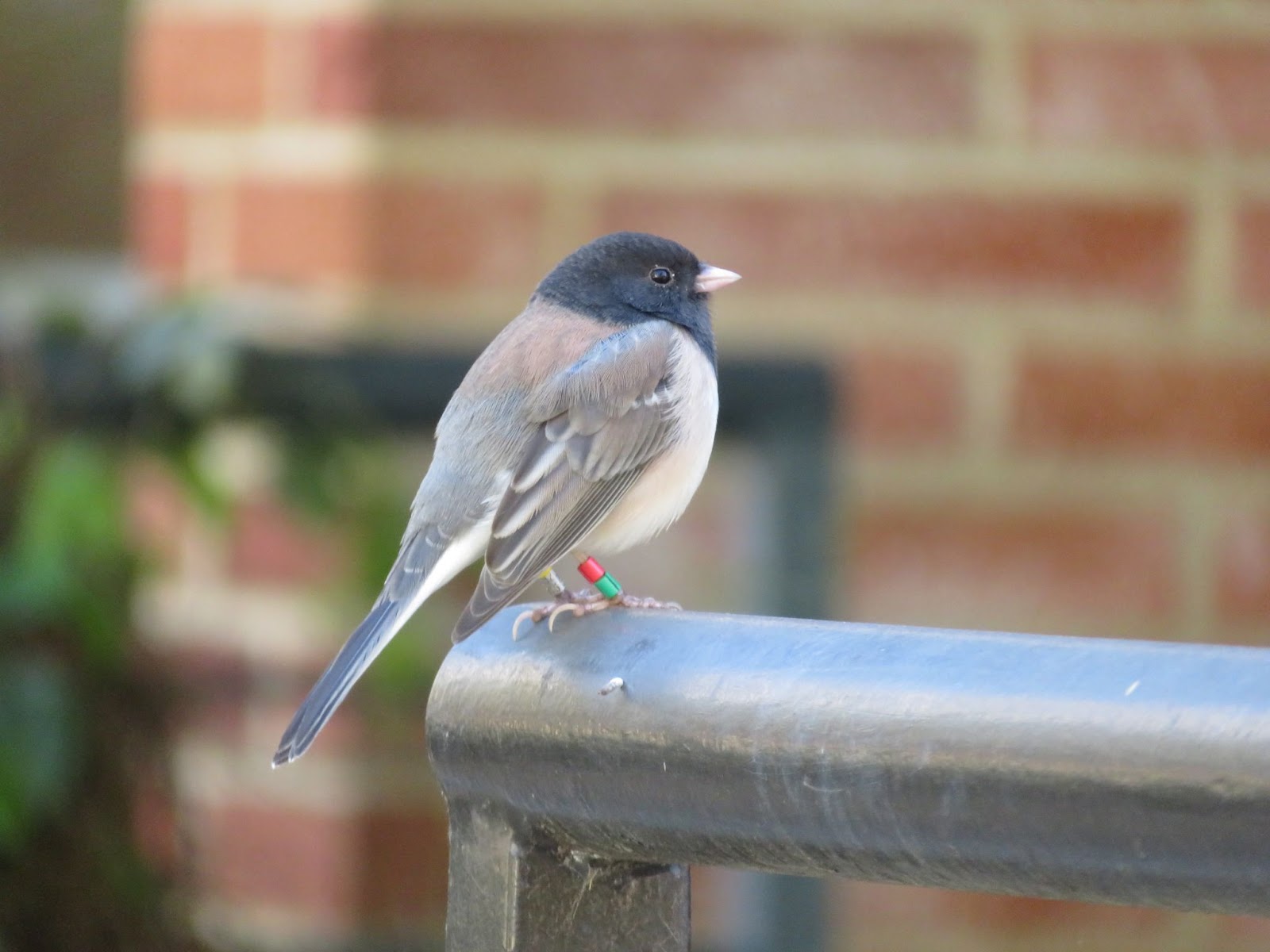

Dr. Pamela Yeh is an Associate Professor in the Department of Ecology and Evolutionary Biology at UCLA. She studies how human activities affect the evolution of species, focusing on the evolution of birds in urban environments and the evolution of drug resistant bacteria in urban and agricultural areas. She is also interested in the role biology plays in public health, and how biological data and insights can both inform public health research as well as public health policy.She received her PhD in Evolutionary Biology from UC San Diego and has conducted post-doctoral work in the Center for Genomics Research and the Systems Biology Department, both at Harvard University. She has been at UCLA since 2013. Dr. Yeh is also an External Faculty at Santa Fe Institute.
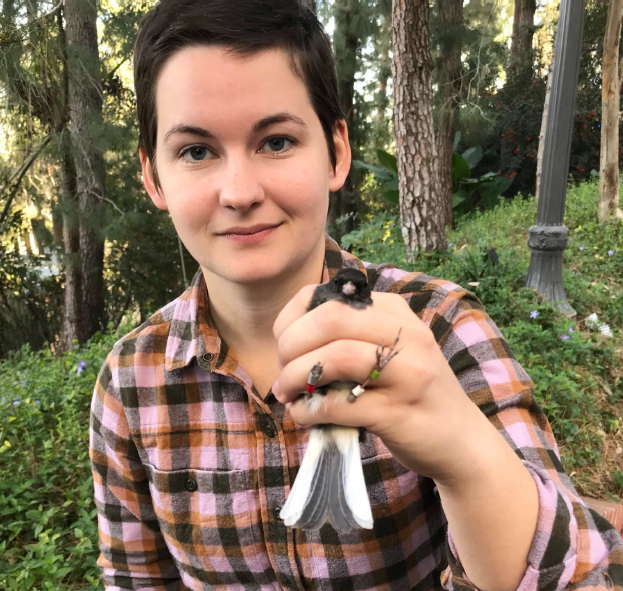
Mars Walters is a Ph.D. student in the Yeh Lab at UCLA. They are studying the evolutionary mechanisms shaping urban phenotypes in the dark-eyed junco, from behavior to genomics. They earned an MS in from the Yeh Lab in 2022 and a BS from the University of Georgia in 2013. Mars has worked as a field ornithologist and researcher for USGS, the Audubon Society, and the Smithsonian Institute in diverse ecosystems across the United States.

Sierra Glassman is a National Science Foundation Graduate Research Fellow and a second-year PhD student in the UCLA Ecology & Evolutionary Biology program in Dr. Pamela Yeh’s Lab. She is interested in birds’ responses to human-induced environmental change. She researches the morphology, behavior and genomics of urban adaptation in Dark-eyed Juncos. She graduated from UC Berkeley with a BA in Integrative Biology in 2024, where she researched the vocal and foraging behavior of Anna’s Hummingbirds. She also has worked as an assistant for the UC Berkeley Schell Lab, where she aided urban mammal cognition and biodiversity research.
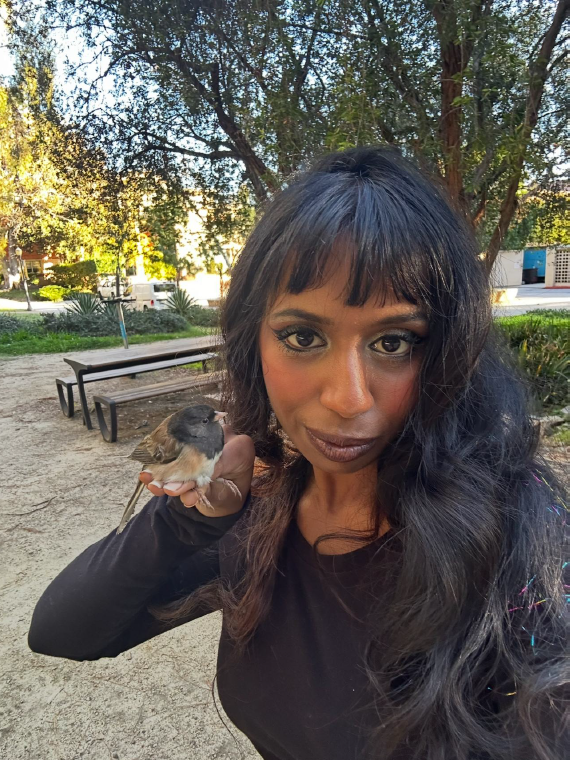
Prasheetha Karthikeyan is a first year M.S. student in the Yeh Lab, studying the social and antipredator behavior of dark-eyed juncos. She earned her B.S. in Environmental Science from UCLA, where she discovered a passion for urban ecology and joined the Yeh Lab initially as an undergraduate research assistant During this time, she also worked in positions focused on conserving Threatened and Endangered Species, with an emphasis on wildlife impacted by urbanization.
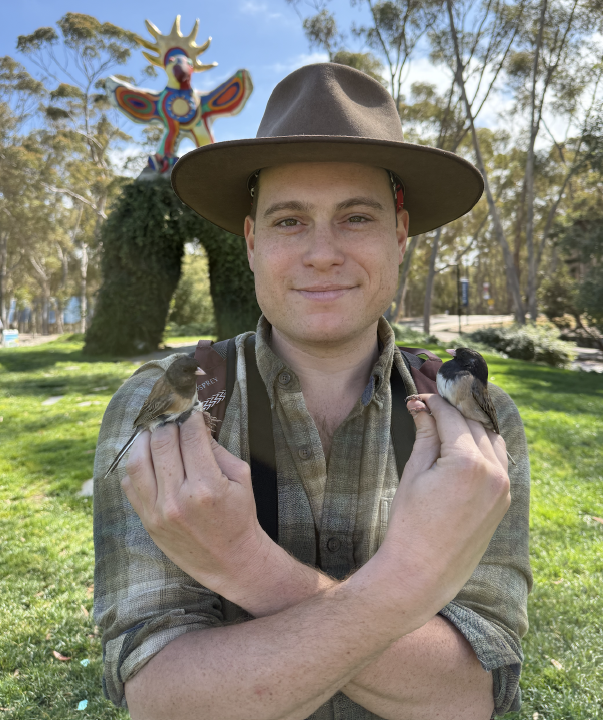
Joey Di Liberto is a graduate student in the Yeh Lab at UCLA. Using the model system of Dark-eyed Juncos across the state of California, he is examining how animals may be adapting to urban pressures across individuals, populations, and subspecies levels. Prior to beginning work at UCLA, Joey obtained his BS from UC San Diego, and his MS at the College of William and Mary and throughout has worked to study behavioral ecology and conservation in a variety of avian species.

Meeting ID: 872 0865 2193
Passcode: 260045
One tap mobile
+16699009128,,87208652193#,,,,*260045# US (San Jose)
+16694449171,,87208652193#,,,,*260045# US
Join by SIP
87208652193@zoomcrc.com
Find your local number: https://us02web.zoom.us/u/kbxn0jWx6K
Join instructions
https://us02web.zoom.us/meetings/87208652193/invitations?signature=woC4vnK_Pbh8NsneHkMT9292jBf02bYXoGF1go0UxBM
[Posted by Chuck Almdale]
If you’re interested in this trip, we suggest you get your motel reservation (or Joshua Tree National Park campsite) as soon as possible. Rooms do fill up this time of year.
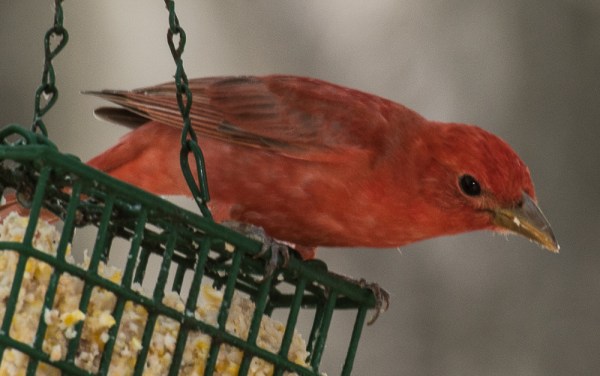
(D. Erwin 5/3/15 Morongo Valley)
The leaders will be staying Saturday night at the Super 8 – Wyndham in Yucca Valley (57096 29 Palms Highway, Yucca Valley, California 92284-2932; reserve 800-454-3213)
Nearby Yucca Valley has several motels and Joshua Tree National Monument has several campgrounds. Campsites at Mission Creek Preserve, several miles south of Morongo Valley, must be reserved at least a week in advance. (60550 Mission Creek Road, Desert Hot Springs, CA. 760-369-7105)
Joshua Tree National Park Camping
Black Rock Campground: LINK 877-444-6777, www.recreation.gov
— We bird at Black Rock on Sat. afternoon; 16 miles from Morongo Valley Reserve.
Indian Cove Campground: LINK 877-444-6777, www.recreation.gov
— Between Joshua Tree town and 29 Palms; 29 miles from Morongo Valley Reserve.
Our long-term go-to restaurant (La Casita) closed and we haven’t yet figured out where to eat dinner Saturday night. Someplace that serves beer (desert birding can be hot work!). Call Jean if you have a recommendation.
Map of motels in Yucca Valley, the nearest town to Morongo Valley: [prices are from this Google map. They may be wildly inaccurate but also may reflect typical price difference between motels.] From west to east: Field Station Joshua Tree ($160), Sands Motel ($?), Desert Sky Motel & RV Campground ($?), America’s Best Value Inn ($60), Yucca Valley Joshua Tree ($131), Super 8 Wyndham ($71), Desert View Motel ($). Map also shows motels for Desert Hot Springs, Joshua Tree, 29 Palms.
Big Morongo Canyon Preserve is one of the finest birding spots in southern California. It is best-known as a springtime migrant trap, frequently catching rare eastern migrants, hummers and orioles at the feeders, but also has regular local specialties such as Vermilion Flycatcher, Brown-crested Flycatcher, Summer Tanager and Yellow-breasted Chat. On a busy day, the trees and bushes are filled with migrating birds, especially warblers. Many local desert species are also seen such as Gambel’s Quail, Costa’s Hummingbird and Verdin. Reserve hours are 7:30 a.m.-sunset.

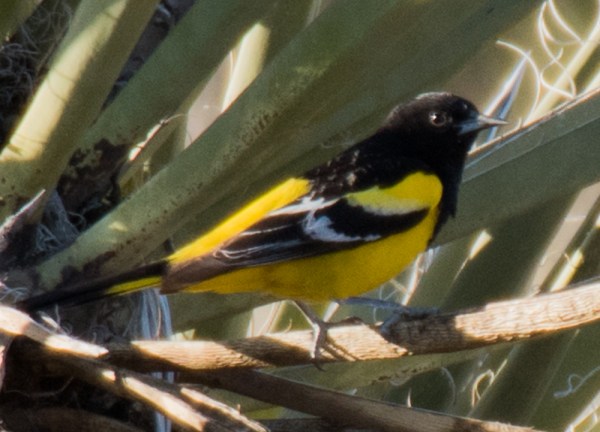
Saturday, 3pm – Black Rock Campground near Yucca Valley: For those staying overnight Saturday, we meet at the Campground Visitor Center and bird in and near the campground, looking for Gambel’s Quail, White-winged Dove, Roadrunner, Ladder-backed Woodpecker, Pinyon Jay, Verdin, Scott’s Oriole and whatever else is around. If you’re late, just drive around until you spot some birders. The campground is nearly always fully occupied Saturday night. Know how to get there as local signs are not well marked. Allow at least 2.5 hours – better yet, three hours, for the 140-mile trip from Santa Monica.
Google Map to Black Rock Campground
Brief Directions: I-10 or I-10/I-60/I-10 for about 2 hours to Exit 117, Hwy 62 North. [Do NOT go south to Palm Springs on Hwy 111.] North on #62 (Twenty-Nine Palms Hwy) about 30 minutes through small Yucca Valley business area to intersection with Old Woman Springs Rd (#247) to left / Joshua Lane to right, and turn RIGHT (south) onto Joshua Lane. Follow signs about 5 miles to Black Rock Campground (unit of Joshua Tree Nat. Park). Meet at campground HQ. If you’re late, drive around the campground and South Park Rd. (to NW past the ranger buildings – see map closeup) until you find us.
Leader: Jean Garrett (213-522-0062) Please call Jean if you are going. It helps to know whom to expect.
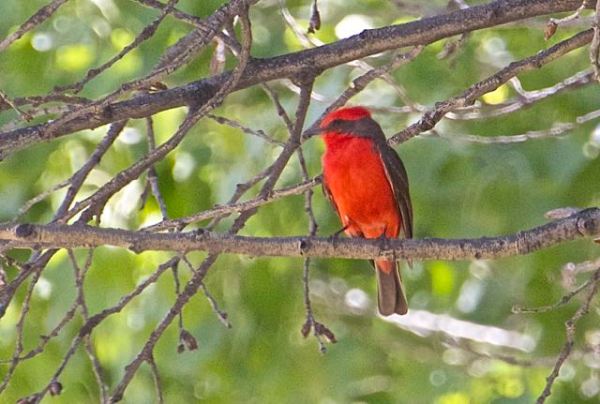
Sunday, 8:00 am – Big Morongo Canyon Preserve: The gate opens at 7:30 am but we officially start at 8am in the Preserve’s parking lot. If you arrive early – such as at dawn – birding at Covington Park just south of the Preserve is excellent. Some neighbors put out feeders and water, especially the corner house across from Covington Park and the house just past that (walking south & away from the park), so a short stroll is a good idea. After the preserve opens, we’ll walk around the large reserve until we’re too hot, tired, thirsty, hungry or all of the above to continue, then have lunch. Allow a minimum of 2 1/4 hours for the 125-mile trip from Santa Monica. Special birds of the area are Brown-crested Flycatcher, Vermilion Flycatcher and Summer Tanager, plus Yellow-breasted Chat, MacGillivray’s Warbler and most of the local desert birds, plus whatever migrant passerines happen to be arriving or stayed overnight. It can be very birdy, but it’s the luck of the draw and the local winds.
Google Map to Morongo Reserve
Brief Directions: I-10 or I-10/I-60/I-10 for about 2 hours to Exit 117, Hwy 62 North. [Do NOT go south to Palm Springs on Hwy 111.] North on #62 (Twenty-Nine Palms Hwy) about 11.5 miles into Morongo Valley and passing partway through small Morongo Valley town. Angle right onto Park Ave. Turn left on Vale St., passing Covington Park on your right, then bear right through several turns until you reach Covington Dr., the entrance to the preserve. If the preserve is not yet open (7:30am), retrace your path back to Covington Park where the birding is great. [Chuck Almdale]
Leaders: Jean Garrett (213)-522-0062
Family Guide: Can get quite hot; not for younger children. 1-2 miles of boardwalk, cinder and hard dirt paths. Dress in layers & hat. Bring water. Lunch near the cars.
[Chuck Almdale]
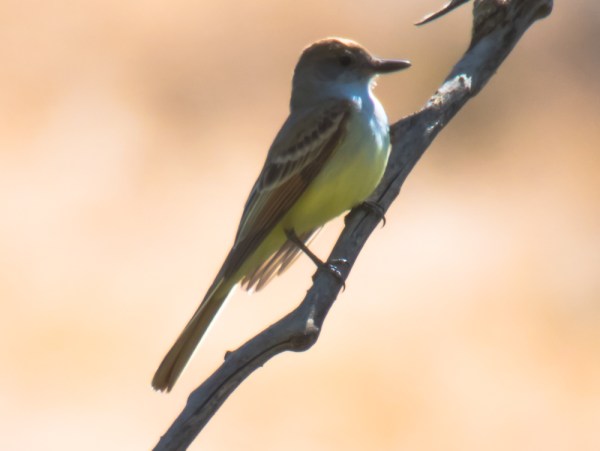
(D. Erwin 5/3/15 Morongo)



 SANTA MONICA BAY AUDUBON SOCIETY BLOG