Free email delivery
Please sign up for email delivery in the subscription area to the right.
No salesman will call, at least not from us. Maybe from someone else.
Malibu Lagoon Loses Water
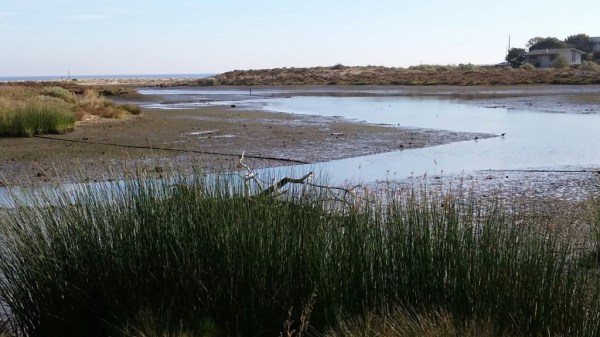
Malibu Lagoon drained, view from north (G Murayama 12-02-17)
Water runs downhill. No news there. Water comes down Malibu Creek and gathers in the lagoon. When the water gets high enough, it breaks through the beach. The water was very high on our last field trip (11/26/17), and we expected to see it break through the beach soon.
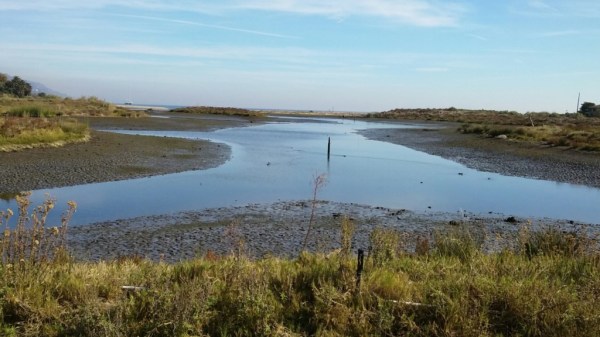
Most of the channel water drained away (G Murayama 12-02-17)
Still it’s surprising to see it happen so quickly. Once it started, it kept going.

Channel near the “Bird Hide” is drained (G Murayama 12-02-17)
Grace Murayama and Larry Loeher, on one of their frequent jaunts to census Snowy Plovers at Malibu Lagoon and Zuma Beach, took these photos a few days ago (12/2/17). Apparently, a high tide washed over the beach, raising the lagoon level. Water began flowing back into the ocean, and as the tide dropped, velocity of the outflow increased, carving a deep trench through the beach.
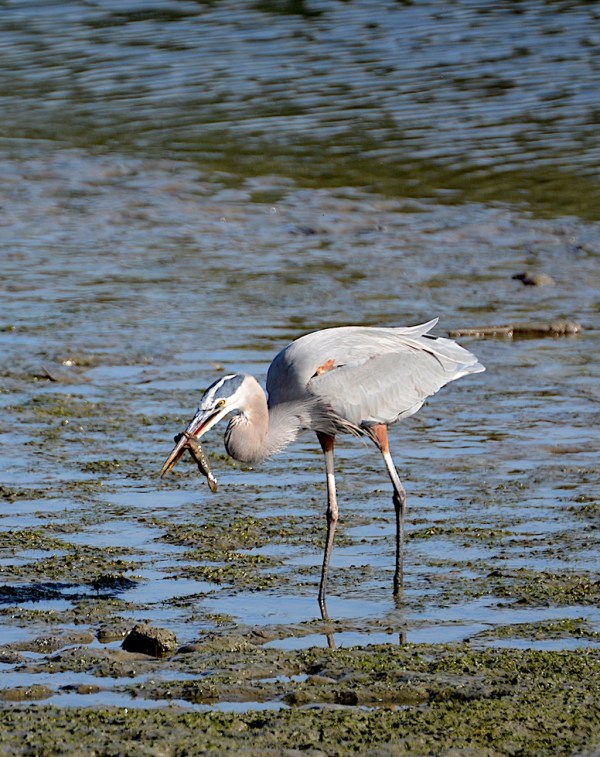
Great Blue Heron finds a hapless fish (G Murayama 12-02-17)
This was a boon to the fish eaters, like the Great Blue Heron above. The lagoon is full of “Jumping” Mullet, but this fish looks more like a Sculpin. Grace reported that fish were churning in the outflow.
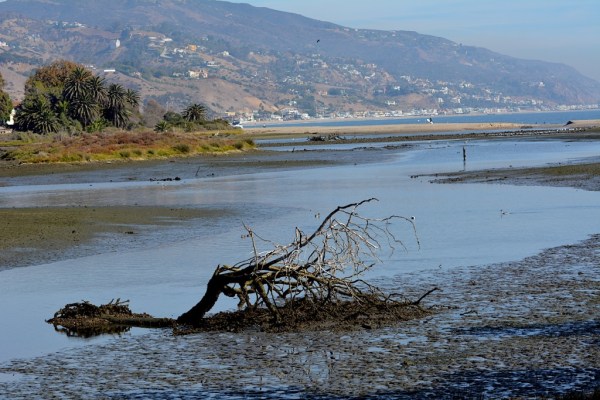
Beach breach in the distance (G Murayama 12-02-17)
The islands got much larger and the previously buried snag was now almost high and dry.

Most of the beach is wet. Gulls like the mud. (L. Loeher 12-02-17)
The beach got a lot wider and the gulls had a lot more mud to stand on. While the mud is wet, predators like Coyotes may be reluctant to walk on it.

Looking towards the northwest; Pepperdine University on the Hill
(G Murayama 12-02-17)
Most of the brush edging the lagoon and growing on the sand was unchanged. When the ground is relatively open and flat, Western Meadowlarks can find something to interest them. Even dried pieces of kelp wrack.
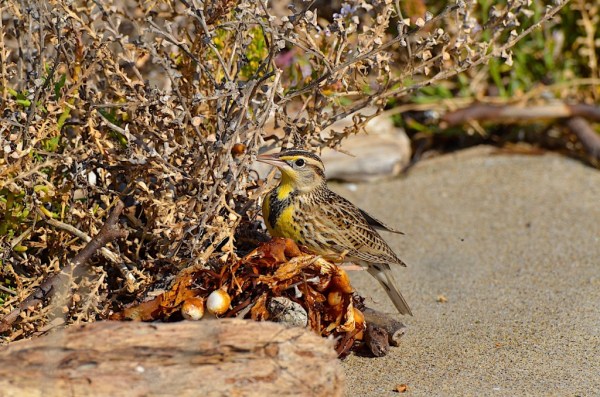
A Western Meadowlark explores the brushy beach (L. Loeher 12-02-17)
The water is faster and deeper than it looks, and the banks are higher and less solid than one might wish. This fellow almost fell in.
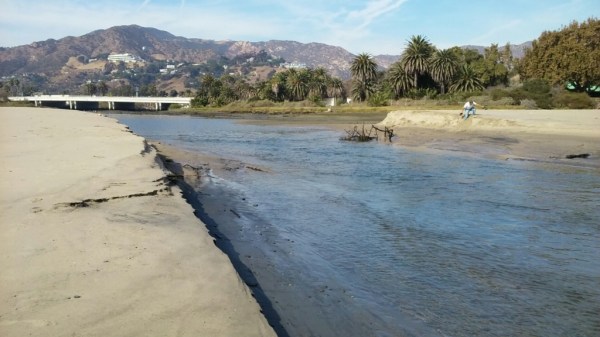
Looking north the breach banks are steeper and higher than they seem.
(G Murayama 12-02-17)
Looking south towards the ocean, you can see the breach emptying onto the rocks exposed at low tide.

Surfrider beach breaches near Adamson House (L. Loeher 12-02-17)
Everyone like seaweed wrack. Snowy Plovers, Western Meadowlarks, Marbled Godwits. If you can’t find food in it, you can just lie down on it.
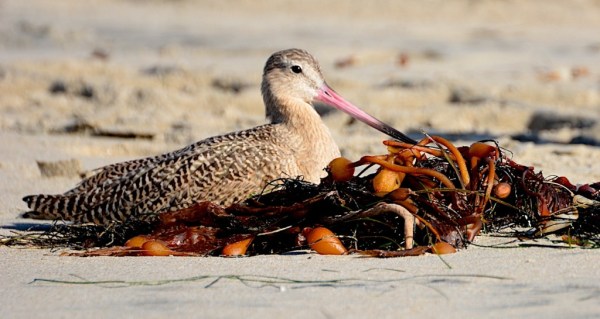
Marbled Godwit is wracked out (G Murayama 12-02-17)
It doesn’t look like the lifeguards will be able to drive past the breach for some time.

Lagoon flowing through the beach breach (L. Loeher 12-02-17)
The Heermann’s Gulls seemed quite happy to rest on the exposed rocks.
Many thanks to Larry Loeher and Grace Murayama for their photos. [Chuck Almdale]
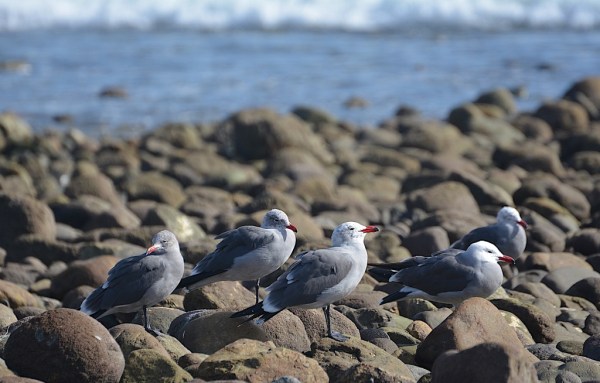
Heermann’s Gull group. Not all gulls are white. (G Murayama 12-02-17)
Correction to last night’s talk, RE: Snowy Plovers
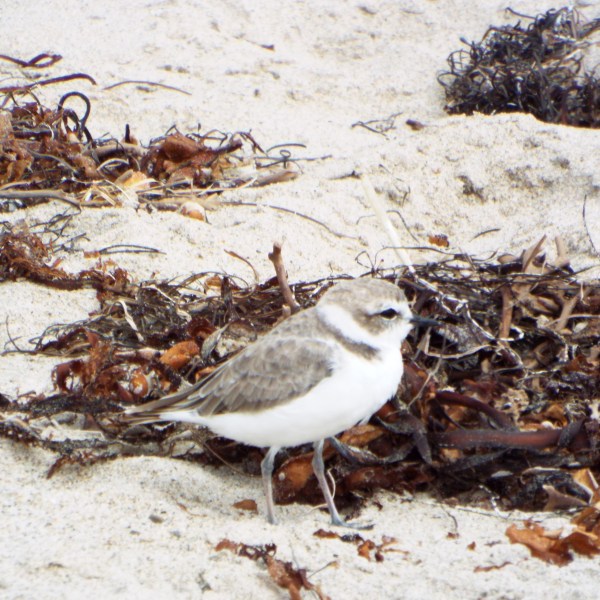 Apologies to the audience. I mis-spoke in saying Snowy Plover chicks were “altricial”. In fact, they are “precocial” in the terminology of most biologists. For details, see https://web.stanford.edu/group/stanfordbirds/text/essays/Precocial_and_Altricial.html
This is to say that Snowy Plover chicks are born required to, and able, to find food on their own, and not dependent on feeding by their parent.
Even though I said chicks were required to find their own food, I quoted the opposite term. I apologize for the confusion.
LucienP
The Birds-of-Paradise Project | Cornell / National Geographic
An overview of the Birds-of-Paradise Project, gratis of the Cornell Lab of Ornithology and National Geographic. Witness diverse strategies of evolution at work and experience one of nature’s extraordinary wonders – up close.
There are currently seventy-two short films in the entire Birds-of-Paradise Project playlist, ranging from 26 seconds to 8:29. In the upcoming weeks, we will present some of our favorites.
A film from the Cornell Lab of Ornithology. If no film or link appears in this email, go to the blog to view it by clicking on the blog title above. If the film stops & starts in an annoying manner, press pause (lower left double bars ||) to let it buffer and get ahead of you. [Chuck Almdale]
When predators attack, daddy longlegs deliberately release their limbs to escape. They can drop up to three and still get by just fine.
This is another installment of the PBS Deep Look series. If no film or link appears in this email, go to the blog to view it by clicking on the blog title above. If the film stops & starts in an annoying manner, press pause (lower left double bars ||) to let it buffer and get ahead of you. [Chuck Almdale]
Migrants still arriving – Malibu Lagoon, 26 November, 2017
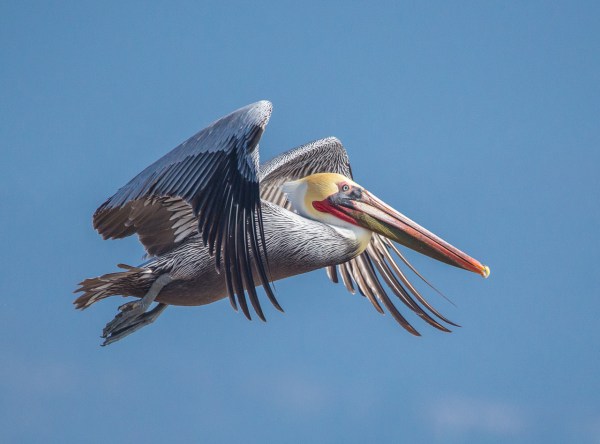
Brown Pelican adult (R. Juncosa 11-26-17)
Approximately thirty-five birders showed up, maybe a few more. I’ve never gotten in the habit of counting birders, just the birds, but while at the lookout point near the PCH bridge I suddenly noticed there seemed to be an unusually large of people. Too bad more birds weren’t present. Ducks seemed unusually under-represented. We had Gadwall, Mallard, American Wigeon, Red-breasted Merganser and Ruddy Duck with a grand total of fourteen ducks. A typical November would also include: Shoveler, Green-winged Teal, Surf Scoter and Bufflehead, with another 3-5 species possible, and about eighty total ducks. One hopes they’re still somewhere up north, enjoying a warm fall.
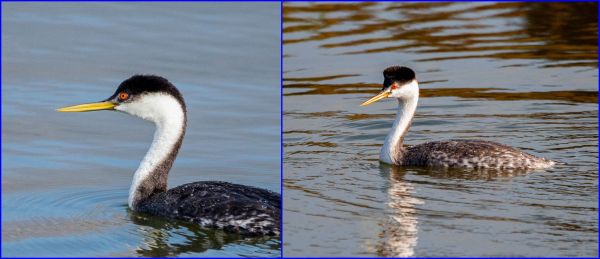
Grebes_ Western and Clark’s (R. Juncosa 11-26-17)
The above grebes are typical for this time of year. The Western on left will probably look like this until next spring, with dark plumage surrounding it’s red eye. The area around the eye may become a lighter gray as a few more feathers fall out, but it never becomes white. The Clark’s on right shows no black below the eye except for a thin line leading from eye to bill, with white above and below it. It may (or may not) lose some more black feathers around the eye, making the eye stand out even more.
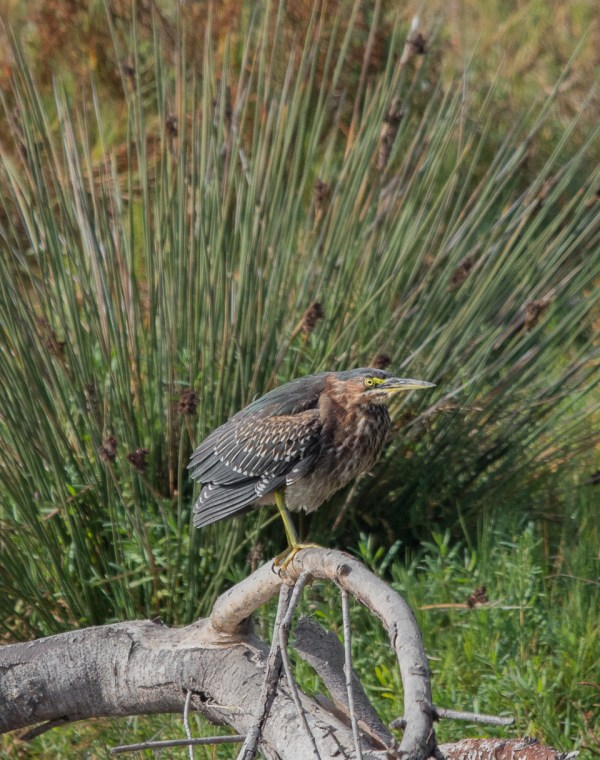
Green Heron takes a break (R. Juncosa 11-26-17)
We debated a bit about two cormorants standing on the offshore rocks. Both were wet, which can obscure plumage colors. They weren’t Double-crested Cormorants who are happy in the lagoon. Lighting was difficult on this gray and foggy morning, and we strained to see if either bird had the beige chin of a Brandt’s Cormorant. One seemed smaller or slimmer than the other, then again, as it shifted position, it seemed exactly the same. The other seemed to have a tiny patch of beige on the chin, then again, with a minor shift in position. this would vanish. Ray Juncosa snapped a fuzzy photo of the seemingly smaller one as it flew towards the rock. I finally concluded both were Brandt’s with optical illusions obfuscating observation. This species and the Pelagic Cormorant are fairly common on these rocks and swimming nearshore, but they rarely rest within the lagoon.
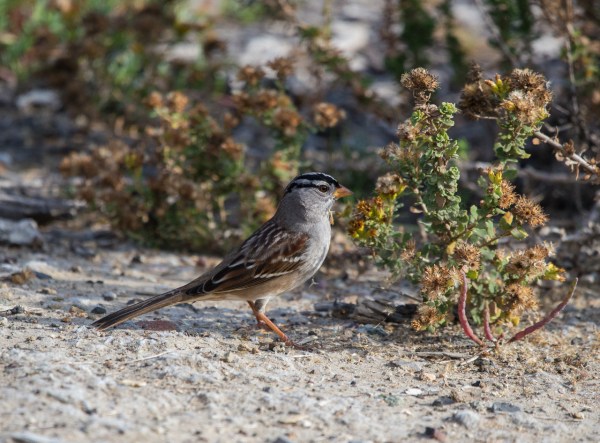
Adult White-crowned Sparrow, common SoCal wintering bird (R. Juncosa 11-26-17)
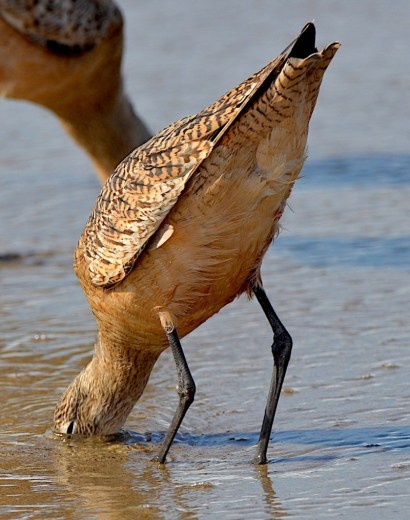
Marbled Godwit, head immersed
(L. Loeher, Zuma Beach 11-24-17)
The larger sandpipers – Whimbrel, Willet and Marbled Godwit were as numerous as last month. Most were resting but some were busy foraging. Larry Loeher’s photo from Zuma shows just how involved this can be.
Five Cattle Egrets showed up, resting on the lagoon-edge sand near the cormorants and Brown Pelicans. Unlike other egrets and herons, this species favors open fields over marshes, lagoons and ponds. According to Cornell Lab of Ornithology, this African species first appeared in 1870 in Suriname on the north coast of South America, then spread throughout the Caribbean, Central and South America, and finally into North America. They evolved in Africa, making a living by following the herds of antelope and other grazers, eating insects kicked up by their hooves. In the New World, cattle served the same purpose as far as the egrets were concerned. To a Cattle Egret, lots of cattle equals lots of food. You can see them by the tens of thousands in the Imperial Valley, poking around in the grassy fields, but as Los Angeles County has few cattle munching away, Cattle Egrets can be hard to find. Horses may substitute at times as insect-rousers, but aren’t as reliable. Out of 252 lagoon trips, we’ve seen them 26 times (10%), with a total of 64 birds. As one might expect, when they finished resting and began foraging for food, they headed for the brushy-grassy area, not the mud flats.
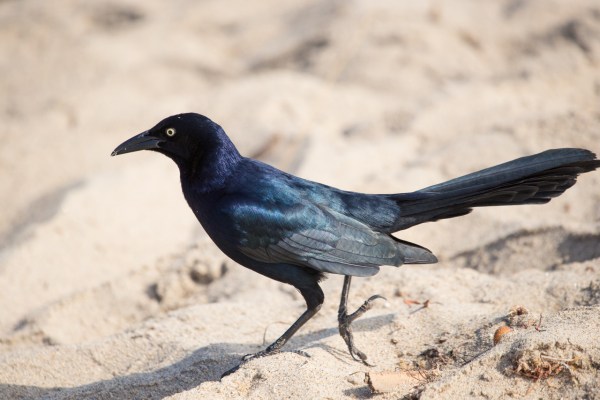
Male Great-tailed Grackle (R. Juncosa 11-26-17)
The local Great-tailed Grackles was evident – twelve birds in all. Most likely they breed over in Legacy Park near the shopping center, where (when it’s wet) there are lots of reeds. Several people wondered what the brown birds were. These brown females are 3″ smaller than the 18″ glossy black males, and they can fool you into thinking they’re a different species. Some birders are surprised to see these grackles wandering around on the beach, but they forage on the sand and lagoon-edge quite often, or at least they are much easier to see when they’re on the barren sand than when buried in the brushes or singing in the trees. In case you’re wondering, all grackles are in the Family Icteriidae, better known for its jet-black blackbirds, yellow meadowlarks and orange-and-black orioles.
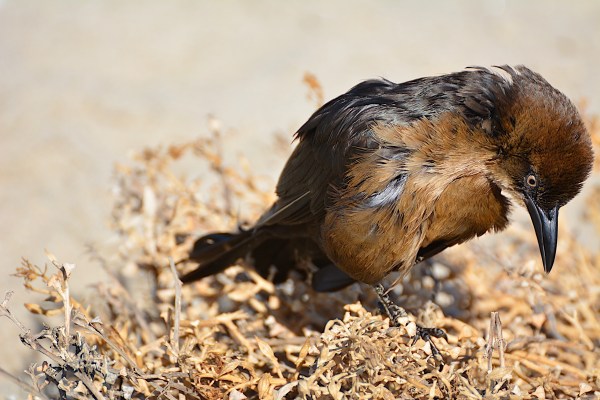
Great-tailed Grackle female with a rusty breast (G. Murayama 11-24-17)
Thirty-one Snowy Plovers were moderately busy. No banded birds were seen. High tide, their favorite time to forage for invertebrates in the wrack, had been at 9:46 am. A few were active. Most were resting in their tiny dimples in the sand, but every now and then they’d get up and run off to another dimple, for reasons known only to themselves.
Speaking of Royals (British) here’s a nice photo from Grace Murayama of a very royal-looking Royal (Tern), royally robed for winter.
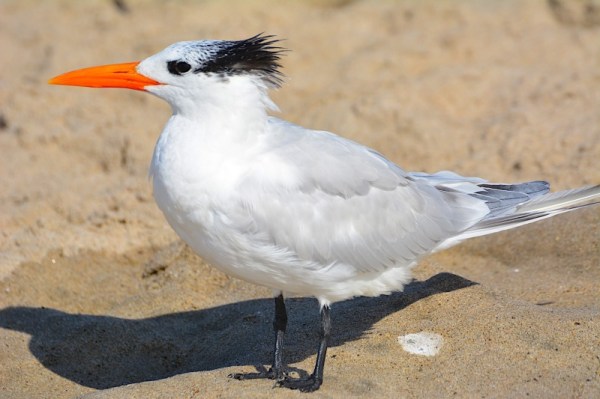
Royal Tern, royally aloof (G. Murayama, Zuma Beach 11-24-17)
Birds new for the season were: Red-breasted Merganser, Ruddy Duck, Cattle Egret, House Wren, Blue-Gray Gnatcatcher, Ruby-crowned Kinglet.
Many thanks to our photographers: Ray Juncosa, Larry Loeher, and Grace Murayama.
Our next four scheduled field trips: Ballona Creek & Freshwater Marsh, 8 am, 9 December; Butterbredt Christmas Count, 8:30 am, 16 December; Malibu Lagoon 8:30 & 10 am, 24 December; Santa Monica portion of Los Angeles Christmas Count, 6:45 am, 2 January.
Our next program: The Western Snowy Plover: Natural History and Recovery, with Lu Plauzoles – Evening Meeting: Tuesday, Dec. 5, 7:30 p.m., Joslyn Park, 633 Kensington Road – Five blocks south of Pico Blvd., two blocks west of Lincoln Blvd. – in Santa Monica. This location is for December only.
NOTE: Our 10 a.m. Parent’s & Kids Birdwalk meets at the shaded viewpoint just south of the parking area. Watch for Willie the Weasel. He’ll be watching for you and your big floppy feet.
Links: Unusual birds at Malibu Lagoon
9/23/02 Aerial photo of Malibu Lagoon
Prior checklists:
2017: Jan-June
2016: Jan-June, July-Dec 2015: Jan-May, July-Dec
2014: Jan-July, July-Dec 2013: Jan-June, July-Dec
2012: Jan-June, July -Dec 2011: Jan-June, July-Dec
2010: Jan-June, July-Dec 2009: Jan-June, July-Dec.
The 10-year comparison summaries created during the project period, despite numerous complaints, remain available on our Lagoon Project Bird Census Page. Very briefly summarized, the results unexpectedly indicate that avian species diversification and numbers improved slightly during the period Jun’12-June’14.
Many thanks to Lillian Johnson, Chris Lord and others for their contributions to the checklist below. [Chuck Almdale]
| Malibu Census 2017 | 6/25 | 7/23 | 8/27 | 9/24 | 10/22 | 11/26 |
| Temperature | 68-81 | 70-75 | 63-68 | 68-75 | 72-82 | 56-63 |
| Tide Lo/Hi Height | H+4.18 | H+4.39 | L+1.83 | L+1.86 | H+5.38 | L+2.94 |
| Tide Time | 1147 | 1039 | 0730 | 0559 | 1050 | 0946 |
| Canada Goose | 1 | |||||
| Gadwall | 18 | 15 | 1 | 1 | ||
| American Wigeon | 1 | 3 | ||||
| Mallard | 35 | 30 | 7 | 27 | 15 | 2 |
| Northern Pintail | 1 | |||||
| Red-breasted Merganser | 4 | |||||
| Ruddy Duck | 4 | |||||
| Pied-billed Grebe | 2 | 1 | 3 | 5 | 8 | |
| Eared Grebe | 1 | |||||
| Western Grebe | 2 | 9 | 15 | |||
| Clark’s Grebe | 2 | 2 | ||||
| Rock Pigeon | 15 | 17 | 3 | 5 | 6 | 10 |
| Mourning Dove | 2 | 4 | 1 | 2 | 2 | 2 |
| Vaux’s Swift | 40 | |||||
| Anna’s Hummingbird | 1 | |||||
| Allen’s Hummingbird | 4 | 6 | 1 | 6 | 2 | 1 |
| American Coot | 4 | 6 | 20 | 62 | 140 | 60 |
| American Avocet | 1 | |||||
| Black-bellied Plover | 5 | 27 | 39 | 89 | 135 | 115 |
| Snowy Plover | 5 | 9 | 16 | 34 | 25 | 31 |
| Semipalmated Plover | 2 | 1 | ||||
| Killdeer | 8 | 4 | 2 | 8 | 10 | 4 |
| Whimbrel | 27 | 2 | 54 | 45 | 36 | |
| Long-billed Curlew | 1 | |||||
| Marbled Godwit | 8 | 8 | 45 | 80 | 135 | |
| Ruddy Turnstone | 2 | 4 | 7 | 6 | 11 | |
| Black Turnstone | 1 | |||||
| Sanderling | 7 | 10 | 13 | |||
| Baird’s Sandpiper | 3 | |||||
| Least Sandpiper | 4 | 3 | 10 | |||
| Western Sandpiper | 1 | 2 | 1 | |||
| Long-billed Dowitcher | 1 | |||||
| Spotted Sandpiper | 4 | |||||
| Willet | 2 | 3 | 6 | 55 | 120 | 85 |
| Greater Yellowlegs | 1 | |||||
| Heermann’s Gull | 24 | 19 | 7 | 11 | 64 | 5 |
| Mew Gull | 1 | |||||
| Ring-billed Gull | 1 | 4 | 25 | |||
| Western Gull | 103 | 52 | 52 | 96 | 145 | 105 |
| California Gull | 3 | 2 | 1 | 98 | 385 | |
| Least Tern | 20 | 30 | 23 | |||
| Caspian Tern | 12 | 12 | 7 | 1 | ||
| Royal Tern | 2 | 2 | 6 | 52 | 47 | 4 |
| Elegant Tern | 3 | 90 | 32 | 4 | ||
| Brandt’s Cormorant | 1 | 2 | ||||
| Double-crested Cormorant | 11 | 22 | 18 | 36 | 45 | 32 |
| Pelagic Cormorant | 1 | 1 | ||||
| American White Pelican | 2 | |||||
| Brown Pelican | 68 | 35 | 14 | 17 | 17 | 45 |
| Great Blue Heron | 5 | 6 | 3 | 5 | 4 | 8 |
| Great Egret | 3 | 5 | 5 | 3 | 8 | 1 |
| Snowy Egret | 9 | 12 | 11 | 10 | 4 | 8 |
| Cattle Egret | 5 | |||||
| Green Heron | 3 | 2 | 2 | |||
| Black-crowned Night-Heron | 1 | 1 | 2 | 1 | 1 | |
| Osprey | 1 | 1 | 1 | |||
| Belted Kingfisher | 1 | |||||
| Peregrine Falcon | 1 | |||||
| Black Phoebe | 5 | 5 | 3 | 5 | 6 | 3 |
| Say’s Phoebe | 1 | 2 | 2 | 4 | ||
| Cassin’s Kingbird | 1 | 1 | ||||
| Western Kingbird | 1 | 1 | ||||
| American Crow | 7 | 2 | 6 | 6 | 5 | 5 |
| Rough-winged Swallow | 2 | |||||
| Cliff Swallow | 15 | |||||
| Barn Swallow | 9 | 12 | 6 | |||
| Oak Titmouse | 1 | 1 | ||||
| Bushtit | 1 | 15 | 48 | |||
| House Wren | 1 | 1 | ||||
| Marsh Wren | 2 | 3 | ||||
| Bewick’s Wren | 3 | 2 | 4 | |||
| Blue-gray Gnatcatcher | 15 | |||||
| Ruby-crowned Kinglet | 4 | |||||
| Northern Mockingbird | 4 | 2 | 2 | 2 | 1 | |
| European Starling | 7 | 6 | 25 | 8 | ||
| American Pipit | 4 | |||||
| House Finch | 10 | 10 | 2 | 8 | 16 | 40 |
| Lesser Goldfinch | 2 | 1 | ||||
| California Towhee | 3 | 1 | ||||
| Brewer’s Sparrow | 1 | |||||
| Savannah Sparrow | 8 | |||||
| Song Sparrow | 6 | 6 | 2 | 3 | 4 | 2 |
| White-crowned Sparrow | 20 | 45 | ||||
| Golden-crowned Sparrow | 1 | |||||
| Dark-eyed Junco | 1 | |||||
| Western Meadowlark | 1 | 1 | 3 | 3 | ||
| Hooded Oriole | 1 | 1 | ||||
| Bullock’s Oriole | 2 | |||||
| Red-winged Blackbird | 30 | |||||
| Brewer’s Blackbird | 12 | 1 | ||||
| Great-tailed Grackle | 4 | 15 | 2 | 3 | 6 | 12 |
| Orange-crowned Warbler | 1 | 5 | 2 | 1 | ||
| Nashville Warbler | 1 | |||||
| Common Yellowthroat | 1 | 2 | 2 | 8 | 5 | 9 |
| Yellow Warbler | 2 | |||||
| Yellow-rumped(Aud) Warbler | 12 | 3 | ||||
| Wilson’s Warbler | 1 | |||||
| Totals by Type | Jun | Jul | Aug | Sep | Oct | Nov |
| Waterfowl | 53 | 45 | 7 | 27 | 19 | 14 |
| Water Birds – Other | 83 | 65 | 56 | 118 | 223 | 164 |
| Herons, Egrets & Ibis | 18 | 24 | 19 | 23 | 19 | 25 |
| Quail & Raptors | 0 | 2 | 1 | 1 | 0 | 0 |
| Shorebirds | 22 | 82 | 80 | 314 | 434 | 441 |
| Gulls & Terns | 167 | 207 | 128 | 161 | 363 | 524 |
| Doves | 17 | 21 | 4 | 7 | 8 | 12 |
| Other Non-Passerines | 4 | 6 | 1 | 47 | 3 | 1 |
| Passerines | 104 | 57 | 48 | 86 | 115 | 211 |
| Totals Birds | 468 | 509 | 344 | 784 | 1184 | 1392 |
| Total Species | Jun | Jul | Aug | Sep | Oct | Nov |
| Waterfowl | 2 | 2 | 1 | 1 | 5 | 5 |
| Water Birds – Other | 3 | 4 | 6 | 4 | 10 | 7 |
| Herons, Egrets & Ibis | 4 | 4 | 3 | 5 | 5 | 6 |
| Quail & Raptors | 0 | 2 | 1 | 1 | 0 | 0 |
| Shorebirds | 6 | 9 | 9 | 14 | 9 | 10 |
| Gulls & Terns | 7 | 7 | 7 | 5 | 7 | 5 |
| Doves | 2 | 2 | 2 | 2 | 2 | 2 |
| Other Non-Passerines | 1 | 1 | 1 | 3 | 2 | 1 |
| Passerines | 14 | 11 | 15 | 24 | 19 | 19 |
| Totals Species – 97 | 39 | 42 | 45 | 59 | 59 | 55 |
z



 SANTA MONICA BAY AUDUBON SOCIETY BLOG