Free email delivery
Please sign up for email delivery in the subscription area to the right.
No salesman will call, at least not from us. Maybe from someone else.
The recording of this program is now available

|
Gifts of the Crow, with Dr. John Marzluff.
Crows are mischievous, playful, social, passionate, and eloquent, with brains huge for their body size. They mate for life and associate with relatives and neighbors for years. And they know us. They live in our gardens, parks, and cities, they recognize our peculiarities, they avoid those who scold or threaten, they approach those who care for and feed them. They give us gifts. Humans and corvids have culturally co-evolved and we share the seven traits of language, delinquency, frolic, passion, wrath, risk-taking, and awareness.
With his extraordinary research on the intelligence and startling abilities of corvids—crows, ravens, and jays—scientist John Marzluff tells amazing stories of these brilliant birds and offer us an in-depth look at these complex creatures and our shared behaviors.
Dr. John Marzluff is a Professor of Wildlife Science at the University of Washington School of Environmental and Forest Studies. He earned his B.Sc. in Wildlife Biology, at the University of Montana, his M.Sc. Biology and his Ph.D. in Zoology, both at Northern Arizona University, Flagstaff. He did Postdoctoral Studies at the University of Vermont.
Among his published materials he has written a book entitled Gifts of the Crow: How Perception, Emotion, and Thought Allow Smart Birds to Behave Like Humans. He is, in his own words, “an enthusiastic teacher who thrives on the intellectual challenge of keeping a step ahead of highly motivated students.”
Dr. John’s Other Offers
International Collegiate Ornithological Network – Facebook
Crow Scientist: The real-world science app for kids — at your App store
Avian Conservation Lab Website
Three of a Kind?: Malibu Lagoon, 26 March 2023
[By Chuck Almdale]
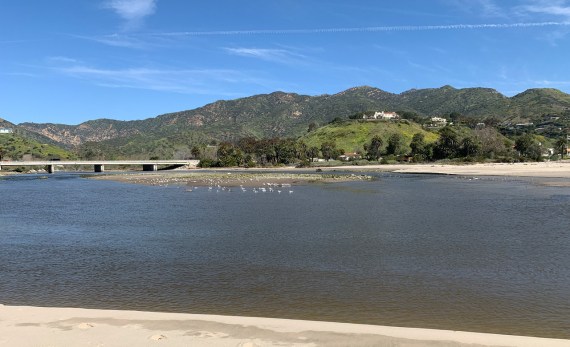
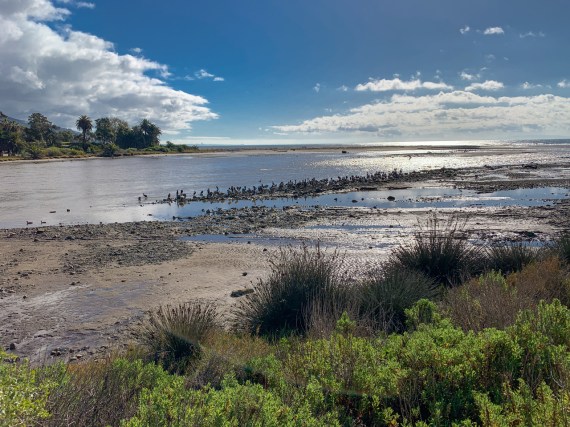
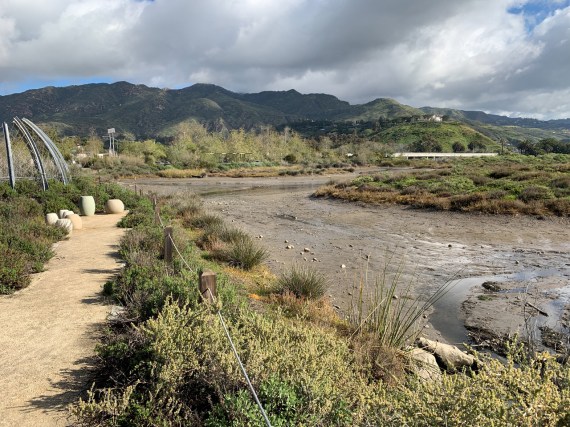
Malibu Lagoon, PCH bridge, Tunney house, Adamson house, Santa Monica Mtns. A small white cross in the far distance above right end of bridge marks Serra Retreat. (Ray Juncosa 3/26/23)
We’ve had a cool wet March, with 9.3″ of rain at our house, more than we’ve had over some recent full years. Today was dry and sunny, but still cool (57-60°F) for March. That, combined with poor waves meant few surfers and sand-sitters toiling on their tans. Low tide often means lots of shorebirds around the lagoon but not today, as most of the six shorebird species we saw were among the rocks or on the damp sandy beach.
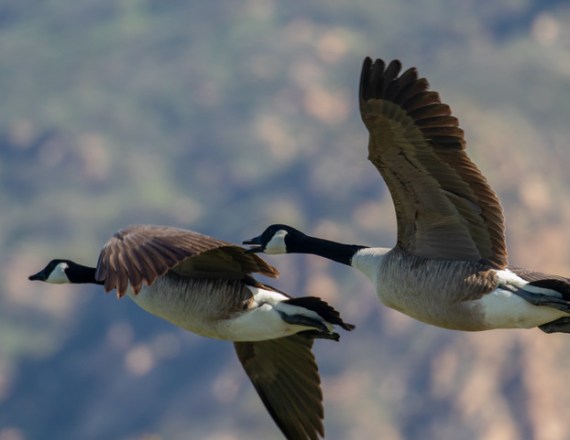
Canada Geese, perhaps heading north, honking as they go
(Chris Tosdevin 3/26/23)
Peering into the sun from the viewpoint near the Pacific Coast Hwy (PCH) bridge, we spotted among the Coots a duck not often seen at the lagoon.

Male Redhead (Ray Juncosa 3/26/23)
Redheads are regular in small numbers in SoCal, but mostly on freshwater, such as the various reservoirs in the San Gabriel Valley, and less often on brackish water like Malibu Lagoon. Perhaps the very low tide meant that all the water in the lagoon was fresh creek water and more to their liking.

Three Redheads, three Coots (Ray Juncosa 3/26/23)
Out of 309 visits from 10/21/79 to 3/26/23, we’ve had Redheads only 12 times with a total of 29 individuals. The record shows:
11/17/79 -2, 10/19/80 – 4, 11/2/80 – 1, 12/20/80 – 2, 1/3/81 – 3, 1/18/81 – 1,
2/14/82 – 6, 9/25/05 – 1, 11/24/13 – 4, 1/26/14 – 1, 11/24/19 – 1, 3/26/23 – 3.
When I see close clusters of a few uncommon birds such as the 5 sightings 10/19/80-1/18/81, I tend to think they’re likely the same birds staying for a while.

Male Redhead and the weird female (Chris Tosdevin 3/26/23)
But if you look at the two female Redheads, they don’t quite look the same. In the photo below, the left bird looks about like you’d expect for a female Redhead, but the right bird has a lot of white at the base of the bill, a bit of streak behind the eye, the head seems browner and the head shape is a bit different. The bill and body are basically the same.
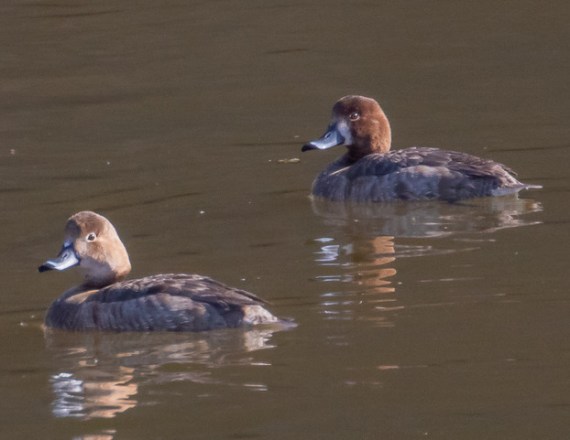
Both female Redheads (Chris Tosdevin 3/26/23)
This drove a few of us quite crazy for quite a while (and probably the rest of the group who had to put us with our interminable dawdling). We kicked around Lesser Scaup, Ring-neck, perhaps a hybrid. Nothing quite seemed to fit. Even the two sides of the weird female’s head differed slightly, as the amount of white at the base of the bill and in the line behind the eye were different.

Weird female Redhead, R & L sides of head. (Chris Tosdevin 3/26/23)
But the three birds stayed very close to one another, unusual behavior if one of them was a different species. We finally decided to move on and study the photos when we got home. Chris Tosdevin reported that he was advised by Someone More Knowledgeable Than We (perhaps at eBird) that: “the 3rd duck with the extensive white patch around the beak is also ‘likely’ a redhead. Her bill coloration and head shape match the male’s. The pale throat can wrap around the base of the bill in varying amounts.“
“These are the birds that try men’s souls,” as famously beleaguered birder Thomas Paine once observed, and he should know. He didn’t even have a field guide or telescope to help out. He had to shoot them.

The lagoon (and Santa Catalina Is., I believe) from near the PCH bridge. (Ray Juncosa 3/26/23)
Well, of course that wasn’t all we had. The next photo proves that Osprey really do catch sizable fish in the lagoon, even in really low water like this.

Osprey with a yellow-tailed fish, properly transported head forward.
(Chris Tosdevin 3/26/23)
By far the most common fish in the lagoon the size of the above pictured fish is the Striped (aka Jumping and at least 8 other names) Mullet. I could not find any pictures anywhere showing this widespread and variable species having a yellow tail, and it certainly was not a Tuna, so I sent it off to local ichthyologist Rosi Dagit. After conferring with her colleague Camm Swift, they decided that although it wasn’t the greatest view possible of a fish it indeed was a Striped Mullet. As Smith put it: “The mullet often have a yellowish tail and this one is not that yellow. Too robust for a large topsmelt or a trout/steelhead.” There you have it.

Some of the 25 Whimbrels. (Chris Tosdevin 3/26/23)
And of course we had terns, in increasing size order, as we again approach nesting season.
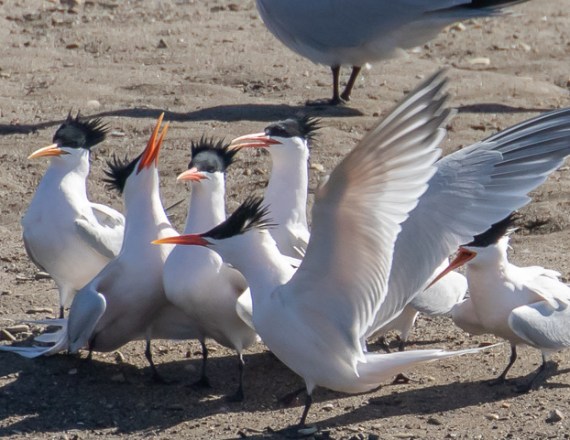
Elegant Terns 17″ long. (Chris Tosdevin 3/26/23)
At morning’s start there were no Elegant Terns at all. By the time we left there were a very noisy ninety of them.

Royal Terns 20″ long. (Chris Tosdevin 3/26/23)
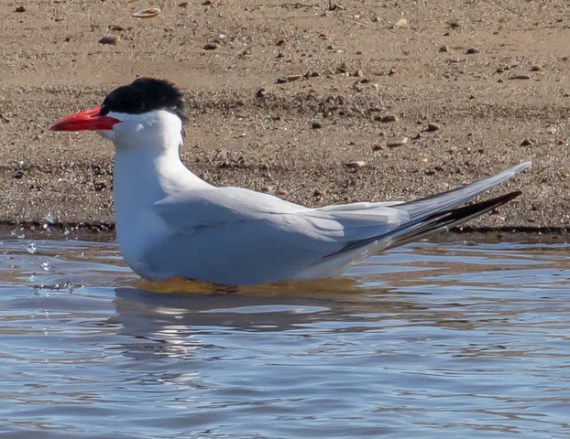
Caspian Tern 21″ long. (Chris Tosdevin 3/26/23)
Passerines were far from absent: 20 species albeit only 99 birds. Most were regular attendees.
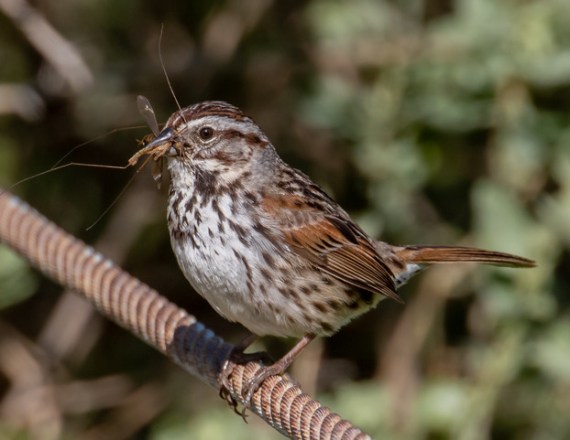
Song Sparrow & a very leggy insect. (Chris Tosdevin, 3/26/23)
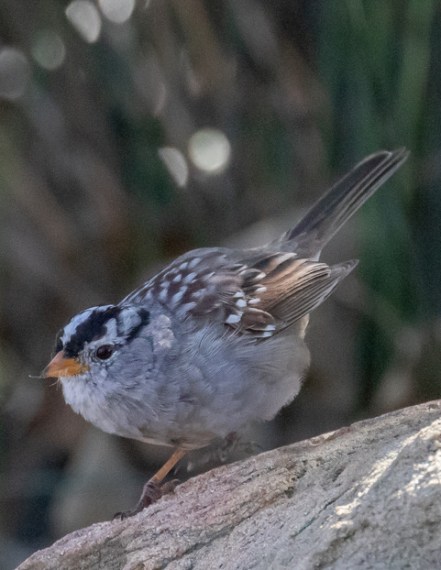
White-crowned Sparrow keeps a low profile. (Chris Tosdevin, 3/26/23)
This may be the last of the White-crowned Sparrows at the lagoon until next fall.

A very glossy male Great-tailed Grackle. (Ray Juncosa 3/26/23)
Our last bird of the day dropped in while we were tailgating in the parking lot. A small, speedy and very coordinated flock shot into a sycamore tree above us in a manner typical of Cedar Waxwings, which they turned out to be. These birds are so infrequent at the lagoon they make the Redheads almost look common: 7 visits from 10/21/79 to 3/26/23, totalling 125 birds. I won’t bother you with the dates.

One of a dozen very elegant Cedar Waxwings. (Chris Tosdevin 3/26/23)
Birds new for the Season: Redhead, White-throated Swift, Caspian Tern, Elegant Tern, Pacific Loon, Common Loon, Osprey, Barn Swallow, Cedar Waxwing, Bewick’s Wren, Great-tailed Grackle.

Malibu Lagoon south channel, the red roofs of Pepperdine University in the far distance left. (Ray Juncosa 3/26/23)
Malibu Lagoon on eBird as of 4-17-23: 6785 lists, 318 species
Many thanks to photographers: Ray Juncosa, Chris Tosdevin
Upcoming SMBAS scheduled field trips:
- Malibu Lagoon, Sun Apr 23, 8:30 am No reservations or Covid card required for this trip.
- Morongo Valley & Black Rock Campground Sat. May 6, 3pm; Sun 7:30am. If you want to stay overnight Sat. May 6, you’ll need to reserve a Yucca Valley motel room or Black Rock campsite.
- Malibu Lagoon, Sun May 28, 8:30 am No reservations or Covid card required for this trip.
- These and any other trips we announce for the foreseeable future will depend upon expected status of the Covid/flu/etc. pandemic at trip time. Any trip announced may be canceled shortly before trip date if it seems necessary. By now any other comments should be superfluous.
- Link to Programs & Field Trip schedule.
The next SMBAS Zoom program: Alvaro Jaramillo. Tuesday, 2 May 2023, 7:30 p.m.
The SMBAS 10 a.m. Parent’s & Kids Birdwalk restarts this April 23. Reservations for groups (scouts, etc.) necessary, but not for families.

(Chris Tosdevin 3/26/23)
Links: Unusual birds at Malibu Lagoon
9/23/02 Aerial photo of Malibu Lagoon
More recent aerial photo
Prior checklists:
2021: Jan-July, July-Dec 2022: Jan-June, July-Dec
2020: Jan-July, July-Dec 2019: Jan-June, July-Dec
2018: Jan-June, July-Dec 2017: Jan-June, July-Dec
2016: Jan-June, July-Dec 2015: Jan-May, July-Dec
2014: Jan-July, July-Dec 2013: Jan-June, July-Dec
2012: Jan-June, July-Dec 2011: Jan-June, July-Dec
2010: Jan-June, July-Dec 2009: Jan-June, July-Dec
The 10-year comparison summaries created during the Lagoon Reconfiguration Project period, remain available—despite numerous complaints—on our Lagoon Project Bird Census Page. Very briefly summarized, the results unexpectedly indicate that avian species diversification and numbers improved slightly during the restoration period June’12-June’14.
Many thanks to Chris & Ruth Tosdevin, Ray Juncosa and others for their contributions to this month’s checklist.
The species lists below is irregularly re-sequenced to agree with the California Bird Records Committee Official California Checklist, which was updated 4 Feb 2023. If part of the chart’s right side is hidden, there’s a slider button at the bottom.
[Chuck Almdale]
| Malibu Census 2022-23 | 10/23 | 11/27 | 12/25 | 1/22 | 2/26 | 3/26 | |
| Temperature | 61-73 | 54-62 | 65-72 | 49-57 | 53-55 | 57-60 | |
| Tide Lo/Hi Height | H+5.33 | H+6.04 | H+6.59 | H+6.81 | L+0.81 | L+0.28 | |
| Tide Time | 0839 | 1045 | 0950 | 0858 | 0911 | 0800 | |
| 1 | Canada Goose | 4 | 2 | 6 | |||
| 1 | Cinnamon Teal | 1 | |||||
| 1 | Northern Shoveler | 7 | |||||
| 1 | Gadwall | 18 | 8 | 16 | 26 | 58 | 42 |
| 1 | American Wigeon | 14 | 8 | 4 | |||
| 1 | Mallard | 12 | 16 | 6 | 20 | 32 | 12 |
| 1 | Northern Pintail | 1 | |||||
| 1 | Green-winged Teal | 2 | 6 | 38 | 15 | 26 | 5 |
| 1 | Redhead | 3 | |||||
| 1 | Lesser Scaup | 1 | |||||
| 1 | Surf Scoter | 12 | 3 | 1 | 6 | 22 | |
| 1 | Bufflehead | 11 | 11 | 10 | 5 | ||
| 1 | Common Goldeneye | 2 | |||||
| 1 | Hooded Merganser | 5 | 1 | ||||
| 1 | Red-breasted Merganser | 25 | 7 | 6 | 3 | 2 | |
| 1 | Ruddy Duck | 35 | 32 | 42 | 8 | ||
| 2 | Pied-billed Grebe | 8 | 4 | 5 | 2 | 1 | 1 |
| 2 | Horned Grebe | 1 | |||||
| 2 | Eared Grebe | 2 | 8 | 5 | |||
| 2 | Western Grebe | 2 | 4 | 1 | 8 | 40 | 80 |
| 7 | Feral Pigeon | 15 | 4 | 6 | 16 | 5 | 6 |
| 7 | Mourning Dove | 4 | 2 | 2 | 1 | ||
| 8 | White-throated Swift | 5 | |||||
| 8 | Anna’s Hummingbird | 1 | 2 | 1 | |||
| 8 | Allen’s Hummingbird | 2 | 2 | 3 | 3 | ||
| 2 | Sora | 1 | |||||
| 2 | American Coot | 145 | 85 | 130 | 38 | 73 | 37 |
| 5 | Black-bellied Plover | 64 | 83 | 51 | 43 | 62 | 3 |
| 5 | Killdeer | 2 | 31 | 11 | 4 | 12 | 5 |
| 5 | Semipalmated Plover | 2 | |||||
| 5 | Snowy Plover | 39 | 18 | 16 | 16 | ||
| 5 | Whimbrel | 5 | 35 | 9 | 7 | 2 | 25 |
| 5 | Marbled Godwit | 6 | 38 | 23 | 18 | 17 | 2 |
| 5 | Ruddy Turnstone | 4 | 4 | 2 | 6 | 3 | |
| 5 | Sanderling | 33 | 45 | 27 | 35 | 32 | 2 |
| 5 | Least Sandpiper | 15 | 62 | 19 | 22 | 27 | |
| 5 | Western Sandpiper | 4 | 8 | 4 | |||
| 5 | Willet | 9 | 43 | 15 | 15 | 9 | 7 |
| 6 | Heermann’s Gull | 8 | 16 | 85 | 27 | 3 | 3 |
| 6 | Short-billed Gull | 1 | 1 | ||||
| 6 | Ring-billed Gull | 22 | 28 | 55 | 36 | 40 | 46 |
| 6 | Western Gull | 64 | 105 | 68 | 49 | 38 | 26 |
| 6 | California Gull | 155 | 390 | 450 | 1330 | 237 | 95 |
| 6 | Herring Gull | 2 | 1 | 2 | |||
| 6 | Glaucous-winged Gull | 3 | 7 | 4 | |||
| 6 | Caspian Tern | 2 | |||||
| 6 | Forster’s Tern | 1 | |||||
| 6 | Royal Tern | 12 | 3 | 2 | 14 | 13 | |
| 6 | Elegant Tern | 15 | 90 | ||||
| 6 | Black Skimmer | 3 | |||||
| 2 | Red-throated Loon | 1 | 1 | ||||
| 2 | Pacific Loon | 1 | |||||
| 2 | Common Loon | 1 | 2 | ||||
| 2 | Black-vented Shearwater | 100 | |||||
| 2 | Brandt’s Cormorant | 1 | |||||
| 2 | Pelagic Cormorant | 1 | 4 | 1 | 6 | 1 | 2 |
| 2 | Double-crested Cormorant | 51 | 45 | 62 | 36 | 67 | 26 |
| 2 | American White Pelican | 1 | |||||
| 2 | Brown Pelican | 65 | 220 | 158 | 343 | 159 | 62 |
| 3 | Great Blue Heron | 3 | 3 | 5 | 2 | 2 | |
| 3 | Great Egret | 2 | 5 | 3 | 2 | 2 | 2 |
| 3 | Snowy Egret | 9 | 31 | 35 | 16 | 6 | 2 |
| 3 | Green Heron | 1 | |||||
| 3 | Black-crowned Night-Heron | 1 | 1 | ||||
| 3 | White-faced Ibis | 1 | |||||
| 4 | Turkey Vulture | 1 | 1 | 1 | 1 | 5 | 5 |
| 4 | Osprey | 1 | |||||
| 4 | Cooper’s Hawk | 1 | |||||
| 4 | Red-tailed Hawk | 3 | 1 | 2 | |||
| 8 | Belted Kingfisher | 2 | 1 | ||||
| 8 | Nuttall’s Woodpecker | 1 | |||||
| 4 | American Kestrel | 1 | |||||
| 4 | Merlin | 1 | |||||
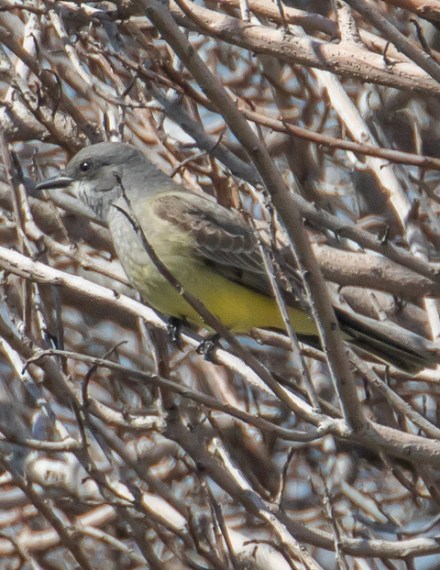
| 9 | Cassin’s Kingbird | 1 | 1 | 1 | 1 | ||
| 9 | Black Phoebe | 3 | 3 | 2 | 3 | 3 | 2 |
| 9 | Say’s Phoebe | 1 | |||||
| 9 | California Scrub-Jay | 1 | 1 | 1 | 1 | ||
| 9 | American Crow | 8 | 12 | 3 | 11 | 27 | 6 |
| 9 | Common Raven | 2 | 1 | 2 | |||
| 9 | Oak Titmouse | 2 | |||||
| 9 | Northern Rough-winged Swallow | 2 | 6 | ||||
| 9 | Barn Swallow | 14 | |||||
| 9 | Cliff Swallow | 24 | 3 | ||||
| 9 | Bushtit | 10 | 2 | 15 | 14 | 3 | 3 |
| 9 | Wrentit | 2 | 1 | ||||
| 9 | Ruby-crowned Kinglet | 2 | 1 | 2 | 1 | ||
| 9 | Cedar Waxwing | 12 | |||||
| 9 | Blue-gray Gnatcatcher | 2 | 1 | ||||
| 9 | House Wren | 1 | 2 | 1 | |||
| 9 | Marsh Wren | 1 | 1 | ||||
| 9 | Bewick’s Wren | 2 | 1 | ||||
| 9 | European Starling | 6 | 9 | ||||
| 9 | Hermit Thrush | 3 | 1 | ||||
| 9 | House Finch | 15 | 18 | 16 | 9 | 6 | 5 |
| 9 | Lesser Goldfinch | 1 | 6 | 4 | 10 | 5 | |
| 9 | White-crowned Sparrow | 12 | 40 | 16 | 12 | 25 | 12 |
| 9 | Song Sparrow | 3 | 6 | 4 | 5 | 5 | |
| 9 | California Towhee | 3 | 6 | 1 | 3 | 3 | 1 |
| 9 | Spotted Towhee | 1 | |||||
| 9 | Red-winged Blackbird | 4 | 3 | 8 | 12 | 2 | |
| 9 | Great-tailed Grackle | 5 | 1 | 6 | |||
| 9 | Orange-crowned Warbler | 1 | 1 | 3 | |||
| 9 | Common Yellowthroat | 3 | 2 | 1 | 2 | 4 | 3 |
| 9 | Yellow-rumped Warbler (Audubon’s) | 4 | 16 | 15 | 6 | 2 | 7 |
| 9 | Townsend’s Warbler | 1 | |||||
| Totals by Type | Oct | Nov | Dec | Jan | Feb | Mar | |
| 1 | Waterfowl | 68 | 125 | 136 | 85 | 152 | 92 |
| 2 | Water Birds – Other | 275 | 471 | 363 | 434 | 343 | 212 |
| 3 | Herons, Egrets & Ibis | 15 | 40 | 44 | 20 | 9 | 6 |
| 4 | Quail & Raptors | 1 | 1 | 6 | 1 | 7 | 8 |
| 5 | Shorebirds | 183 | 367 | 161 | 166 | 180 | 44 |
| 6 | Gulls & Terns | 277 | 546 | 658 | 1453 | 341 | 277 |
| 7 | Doves | 19 | 6 | 6 | 16 | 7 | 7 |
| 8 | Other Non-Passerines | 0 | 5 | 2 | 5 | 3 | 8 |
| 9 | Passerines | 76 | 129 | 84 | 96 | 128 | 99 |
| Totals Birds | 914 | 1690 | 1460 | 2276 | 1170 | 753 | |
| Total Species | Oct | Nov | Dec | Jan | Feb | Mar | |
| 1 | Waterfowl | 5 | 9 | 9 | 9 | 11 | 7 |
| 2 | Water Birds – Other | 8 | 9 | 8 | 7 | 8 | 9 |
| 3 | Herons, Egrets & Ibis | 4 | 4 | 4 | 3 | 3 | 3 |
| 4 | Quail & Raptors | 1 | 1 | 4 | 1 | 3 | 3 |
| 5 | Shorebirds | 11 | 10 | 9 | 9 | 9 | 6 |
| 6 | Gulls & Terns | 7 | 7 | 4 | 7 | 9 | 8 |
| 7 | Doves | 2 | 2 | 1 | 1 | 2 | 2 |
| 8 | Other Non-Passerines | 0 | 3 | 1 | 4 | 1 | 2 |
| 9 | Passerines | 16 | 20 | 15 | 20 | 18 | 20 |
| Totals Species – 105 | 54 | 65 | 55 | 61 | 64 | 60 |
Bald Eagles in the Snow — Renesting? | Facebook
[Posted by Chuck Almdale]
About the time I posted the first blog on Jackie & Shadow Bald Eagle — the two Bald Eagles nesting in a tree at Big Bear Lake — they abandoned their nest with two unhatched overdue eggs in it. Too cold, too much snow.
Now, 19 days later, it looks like they’re trying again, or at least going through the motions. Today, Thursday, 2023-03-23, at about 17:30, with the nest full of snow, one of the eagles appeared with talons full of little sticks, arranged them a bit, then the other eagle appeared with more little sticks and arranging continued. This is all on top of a nest full of snow. Tune in on the nonstop action!
In case you’re wondering, this is open to everyone and you don’t need to join Facebook to watch it.
Link to Live Eagle-Cam at Big Bear.
https://www.youtube.com/live/B4-L2nfGcuE?feature=share
It still looks and sounds mighty cold.
A Few Odd Birds: Malibu Lagoon, 26 February 2023
[By Chuck Almdale]

After eight months in a row of high tides, it was nice to see it low. Sand, mud, pools, puddles, rocks, tide pools, peeps running around, actual beach upon which one can walk. High tides can be exciting with the beach disappearing before your eyes, water rushing in and out the channel, all the birds bunched up on what few square feet of sand remain, the perpetual wondering if all the Malibu Colony houses will make it through “this one” — but everything gets old after a while. Low tide renews the beach, or at least one’s view of it.
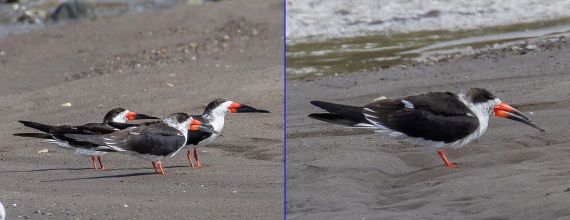
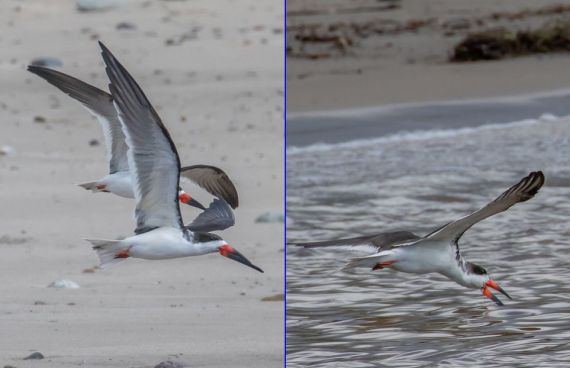
Our first surprise of the day were the Black Skimmers sitting with the pelicans and cormorants. We don’t get a lot of Black Skimmers. Every now and then a few drop in: 227 birds in 26 sightings, or 12% of visits out of the past ten years. They need an expanse of calm water in order to catch fish by skimming the surface and snapping whatever they bump into. Malibu Lagoon is a bit small for them and the ocean has far too many waves; they much prefer Upper Newport Bay in the winter, or Bolsa Chica and San Diego Bay where they breed. When they sleep on the sand with their heads and enormous bills lolling to the side, they look dead. If you see this, don’t panic.
There was another surprise in the lagoon-edge line of Brown Pelicans and Double-crested Cormorants.

White Pelicans are even more uncommon. I was certain we’d seen one at the lagoon within the past year or two, but it must have been on a non-census day, as the last one I recorded were two birds on 22 Oct. 2017. Like the skimmers, they prefer calm waters where they can work as a team herding fish into a team. It’s tough to work as a team when there’s only one of you. I don’t know if this bird caught anything. When they’re swimming or resting on the sand their plumage is completely white, but when the get up and fly and all those black feathers appear, it’s a bit of a surprise if you’re not expecting it.


There were ducks, of course; eleven species in fact. Green-winged Teals are expected this time of year, and this is the fifth month in a row for them. I like Ray’s photo above as it show why it’s a “Green-winged” Teal. It’s hard to capture this in a photo as the green speculum is usually hidden when wings are folded. On the Northern Shoveler, like this male below, the baby-blue forewing patch is also hard to see, except in flight. Look closely.

You may be shocked to hear we also had gulls; 324 gulls in 9 species, 73% of them California Gulls. Out of the 5 February months during 2018-2022, three had almost the same total gulls in the mid-300s, while two had more than double that. So it goes, as Kurt Vonnegut wrote more than once.

The Herring and Glaucous-winged Gulls are regular winter visitors in low numbers at the lagoon. [Their relative size above is a photographic illusion. The right-hand Glaucous-winged is actually an inch longer than the Herring.] The both have pale gray backs. The Herring wingtips are black with white mirrors while the Glaucous-winged wingtips are pale gray, about the same shade as the mantle. Herring has a lot of speckling on the neck and a light eye; Glaucous-winged has little speckling and a dark eye. Both have pink legs, a large yellow bill with a prominent gonydeal bump and red gonys spot on lower bill. Most of the Glaucous-winged gulls we get at the lagoon are 1st-year birds, I don’t know how the Herrings that show up there fall out on age.
We also had a few of their cousins, the Royal Terns. These three below show that they can be the same age at the same time of year and still look different.
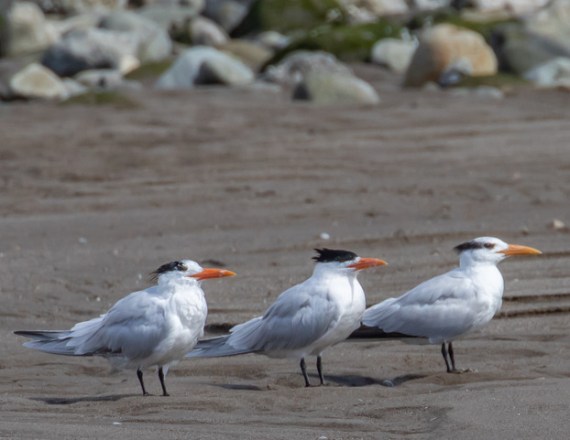
(Chris Todevin 2/26/23)
Our last unusual bird of the day was the Short-billed Gull, which we used to call the Mew Gull after the sound of its call. For centuries it was considered to be the same species as the Common Gull of Europe. In 2021 it was split off and for reasons unknown to me it was named “Short-bill” rather than the perfectly good “Mew.” I suspect that many British Isles people still call their “Common” Gull the “Mew” as that ancient name dates back to Old English. But people would become confused with their unofficial Mew and our official Mew being different species. The British maintain their sense of history and are reluctant to toss out willy-nilly perfectly good names on the basis of a frivolous fad or implausible plaint. They can still call their bird the Mew and everyone there knows what they referring to.

Whatever we call it, it still has a mewing call and a distinctive thin, short bill. This distinctiveness doesn’t stop birders from thinking the occasional skinny-billed Ring-billed Gull is really a Mew. [I know a few such people, myself included.] We don’t get many Mews … er, Short-bills … at the lagoon. They seem to really like sewage outfalls, so I suppose their absence is a Good Thing for Malibu. Ventura, up the coast, has a water treatment facility by their harbor. Behind a chain-link fence near the road they had several large round structures filled with charcoal or some filtration material, and a central arm would slowly rotate dribbling water down onto the charcoal. The Mew Gulls loved those arms with a deep and abiding passion and would sit on them by the hundreds for hours, going slowly around in a circle. If you wanted to see a Mew Gull for some obscure reason, it was an utterly reliable location. Then the facility covered over the top of these structures, preventing gull access (and birder viewing), and another prime birding spot bit the dust. The best local spot I know of now for them is on Dockweiler Beach in front of the Hyperion water treatment facility south of Marina del Rey. Coincidence? I think not.
The swallows are returning. (Don’t tell the people at San Juan Capistrano this, lest they become apoplectic with rage or envy. They think swallows return on March 25 every year, no matter what.) The SJC swallows are Cliff Swallows, like these below. They build nests of mouthfuls of mud, globbed (a technical term) onto a wall or underside of a bridge and the like, one glob at a time. The resulting cup of mud globs holds the chicks. They used to nest in great numbers on the outside of the stone walls of the San Juan Capistrano Mission church. But the people who run the church did some … ahem … improvements … a few years back and the swallows didn’t like the results and for the most part stopped nesting there. I don’t know the swallow situation at the church these days. Maybe they forgave the church Fathers and nest there again. Maybe not.

About 20-30 years ago we had a big El Nino winter and so much water came down Malibu Creek carrying logs and rocks and whatnot that the Pacific Coast Highway bridge was dangerously damaged. The highway crews re-built most of it, but whatever process they used to make the walls of the supports was very swallow-unfriendly. Too smooth perhaps. The nests used to be abundant there; now there are few-to-none during nesting season. What Cliff Swallows we still have nesting in Malibu now use the Civic Center and shopping center walls. Think about that next time you built a bridge in Cliff Swallow Country (like the entire central valley of California), road engineers, OK? Leave the walls a little rough for the nest’s mud to adhere. Bugs bite people, especially movie people (everyone knows that!); swallows eat bugs; win-win (except for the biting bugs, who lose).
(Chris Todevin 2/26/23)
Birds new for the Season: Cinnamon Teal, Northern Shoveler, Mourning Dove, Short-billed Gull, Black Skimmer, Brandt’s Cormorant, American White Pelican, White-faced Ibis, Cooper’s Hawk, Say’s Phoebe, Northern Rough-winged Swallow, Cliff Swallow.
Malibu Lagoon on eBird as of 2-28-23: 6681 lists, 318 species
Many thanks to photographers: Ray Juncosa, Chris Tosdevin

(Chris Todevin 2/26/23)
Upcoming SMBAS scheduled field trips:
- Malibu Lagoon, Sun Mar. 26, 8:30 am
- Sycamore Canyon Sat. Apr. 8, 8 am
- Malibu Lagoon, Sun Apr 23, 8:30 am No reservations or Covid card required for this trip.
- Morongo Valley & Black Rock Campground Sat. May 6, 3pm; Sun 7:30am am. If you want to stay overnight Sat. May 6, you’ll need to reserve a Yucca Valley motel room or Black Rock campsite.
- These and any other trips we announce for the foreseeable future will depend upon expected status of the Covid/flu/etc. pandemic at trip time. Any trip announced may be canceled shortly before trip date if it seems necessary. By now any other comments should be superfluous.
- Link to Programs & Field Trip schedule.
The next SMBAS Zoom program: Corvids, with Dr. John Marzluff. Tuesday, 4 April 2023, 7:30 p.m.
The SMBAS 10 a.m. Parent’s & Kids Birdwalk will restart in April. Reservations for groups necessary, but not for families.

Links: Unusual birds at Malibu Lagoon
9/23/02 Aerial photo of Malibu Lagoon
More recent aerial photo
Prior checklists:
2021: Jan-July, July-Dec 2022: Jan-June, July-Dec
2020: Jan-July, July-Dec 2019: Jan-June, July-Dec
2018: Jan-June, July-Dec 2017: Jan-June, July-Dec
2016: Jan-June, July-Dec 2015: Jan-May, July-Dec
2014: Jan-July, July-Dec 2013: Jan-June, July-Dec
2012: Jan-June, July-Dec 2011: Jan-June, July-Dec
2010: Jan-June, July-Dec 2009: Jan-June, July-Dec
The 10-year comparison summaries created during the Lagoon Reconfiguration Project period, remain available—despite numerous complaints—on our Lagoon Project Bird Census Page. Very briefly summarized, the results unexpectedly indicate that avian species diversification and numbers improved slightly during the restoration period June’12-June’14.
Many thanks to Chris & Ruth Tosdevin, Ray Juncosa, Chris Lord and others for their contributions to this month’s checklist.
The species lists below is irregularly re-sequenced to agree with the California Bird Records Committee Official California Checklist, which was updated 4 Feb 2023. If part of the chart’s right side is hidden, there’s a slider button at the bottom.
[Chuck Almdale]
| Malibu Census 2022-23 | 9/25 | 10/23 | 11/27 | 12/25 | 1/22 | 2/26 | |
| Temperature | 72-79 | 61-73 | 54-62 | 65-72 | 49-57 | 53-55 | |
| Tide Lo/Hi Height | H+5.01 | H+5.33 | H+6.04 | H+6.59 | H+6.81 | L+0.81 | |
| Tide Time | 0949 | 0839 | 1045 | 0950 | 0858 | 0911 | |
| 1 | Canada Goose | 4 | 2 | ||||
| 1 | Cinnamon Teal | 1 | |||||
| 1 | Northern Shoveler | 7 | |||||
| 1 | Gadwall | 26 | 18 | 8 | 16 | 26 | 58 |
| 1 | American Wigeon | 14 | 8 | 4 | |||
| 1 | Mallard | 28 | 12 | 16 | 6 | 20 | 32 |
| 1 | Northern Pintail | 1 | |||||
| 1 | Green-winged Teal | 2 | 6 | 38 | 15 | 26 | |
| 1 | Lesser Scaup | 1 | |||||
| 1 | Surf Scoter | 12 | 3 | 1 | 6 | ||
| 1 | Bufflehead | 11 | 11 | 10 | 5 | ||
| 1 | Common Goldeneye | 2 | |||||
| 1 | Hooded Merganser | 5 | 1 | ||||
| 1 | Red-breasted Merganser | 25 | 7 | 6 | 3 | ||
| 1 | Ruddy Duck | 3 | 35 | 32 | 42 | 8 | |
| 2 | Pied-billed Grebe | 6 | 8 | 4 | 5 | 2 | 1 |
| 2 | Horned Grebe | 1 | |||||
| 2 | Eared Grebe | 2 | 8 | 5 | |||
| 2 | Western Grebe | 2 | 4 | 1 | 8 | 40 | |
| 7 | Feral Pigeon | 6 | 15 | 4 | 6 | 16 | 5 |
| 7 | Mourning Dove | 4 | 2 | 2 | |||
| 8 | Anna’s Hummingbird | 1 | 1 | 2 | 1 | ||
| 8 | Allen’s Hummingbird | 2 | 2 | 3 | |||
| 2 | Sora | 1 | 1 | ||||
| 2 | American Coot | 47 | 145 | 85 | 130 | 38 | 73 |
| 5 | Black-bellied Plover | 67 | 64 | 83 | 51 | 43 | 62 |
| 5 | Killdeer | 7 | 2 | 31 | 11 | 4 | 12 |
| 5 | Semipalmated Plover | 3 | 2 | ||||
| 5 | Snowy Plover | 25 | 39 | 18 | 16 | 16 | |
| 5 | Whimbrel | 15 | 5 | 35 | 9 | 7 | 2 |
| 5 | Marbled Godwit | 21 | 6 | 38 | 23 | 18 | 17 |
| 5 | Ruddy Turnstone | 3 | 4 | 4 | 2 | 6 | 3 |
| 5 | Sanderling | 14 | 33 | 45 | 27 | 35 | 32 |
| 5 | Dunlin | 1 | |||||
| 5 | Least Sandpiper | 23 | 15 | 62 | 19 | 22 | 27 |
| 5 | Western Sandpiper | 8 | 4 | 8 | 4 | ||
| 5 | Spotted Sandpiper | 1 | |||||
| 5 | Willet | 73 | 9 | 43 | 15 | 15 | 9 |
| 5 | Red-necked Phalarope | 2 | |||||
| 6 | Heermann’s Gull | 9 | 8 | 16 | 85 | 27 | 3 |
| 6 | Short-billed Gull | 1 | 1 | ||||
| 6 | Ring-billed Gull | 2 | 22 | 28 | 55 | 36 | 40 |
| 6 | Western Gull | 72 | 64 | 105 | 68 | 49 | 38 |
| 6 | California Gull | 57 | 155 | 390 | 450 | 1330 | 237 |
| 6 | Herring Gull | 2 | 1 | ||||
| 6 | Glaucous-winged Gull | 3 | 7 | 4 | |||
| 6 | Forster’s Tern | 1 | |||||
| 6 | Royal Tern | 1 | 12 | 3 | 2 | 14 | |
| 6 | Elegant Tern | 15 | |||||
| 6 | Black Skimmer | 3 | |||||
| 2 | Red-throated Loon | 1 | |||||
| 2 | Common Loon | 1 | |||||
| 2 | Black-vented Shearwater | 100 | |||||
| 2 | Brandt’s Cormorant | 1 | |||||
| 2 | Pelagic Cormorant | 1 | 4 | 1 | 6 | 1 | |
| 2 | Double-crested Cormorant | 56 | 51 | 45 | 62 | 36 | 67 |
| 2 | American White Pelican | 1 | |||||
| 2 | Brown Pelican | 64 | 65 | 220 | 158 | 343 | 159 |
| 3 | Great Blue Heron | 3 | 3 | 3 | 5 | 2 | |
| 3 | Great Egret | 1 | 2 | 5 | 3 | 2 | 2 |
| 3 | Snowy Egret | 9 | 9 | 31 | 35 | 16 | 6 |
| 3 | Green Heron | 1 | |||||
| 3 | Black-crowned Night-Heron | 1 | 1 | ||||
| 3 | White-faced Ibis | 1 | |||||
| 4 | Turkey Vulture | 1 | 1 | 1 | 1 | 5 | |
| 4 | Cooper’s Hawk | 1 | |||||
| 4 | Red-shouldered Hawk | 1 | |||||
| 4 | Red-tailed Hawk | 3 | 1 | ||||
| 8 | Belted Kingfisher | 1 | 2 | 1 | |||
| 8 | Nuttall’s Woodpecker | 1 | |||||
| 4 | American Kestrel | 1 | |||||
| 4 | Merlin | 1 | |||||
| 4 | Peregrine Falcon | 1 | |||||
| 9 | Cassin’s Kingbird | 3 | 1 | 1 | 1 | ||
| 9 | Black Phoebe | 5 | 3 | 3 | 2 | 3 | 3 |
| 9 | Say’s Phoebe | 1 | 1 | ||||
| 9 | California Scrub-Jay | 2 | 1 | 1 | 1 | 1 | |
| 9 | American Crow | 3 | 8 | 12 | 3 | 11 | 27 |
| 9 | Common Raven | 2 | 1 | ||||
| 9 | Oak Titmouse | 2 | |||||
| 9 | Northern Rough-winged Swallow | 2 | |||||
| 9 | Cliff Swallow | 24 | |||||
| 9 | Bushtit | 8 | 10 | 2 | 15 | 14 | 3 |
| 9 | Wrentit | 1 | 2 | 1 | |||
| 9 | Ruby-crowned Kinglet | 2 | 1 | 2 | 1 | ||
| 9 | Blue-gray Gnatcatcher | 2 | 1 | ||||
| 9 | House Wren | 2 | 1 | 2 | 1 | ||
| 9 | Marsh Wren | 1 | 1 | ||||
| 9 | Bewick’s Wren | 1 | 2 | ||||
| 9 | Northern Mockingbird | 1 | |||||
| 9 | European Starling | 8 | 6 | 9 | |||
| 9 | Hermit Thrush | 3 | 1 | ||||
| 9 | House Finch | 4 | 15 | 18 | 16 | 9 | 6 |
| 9 | Lesser Goldfinch | 6 | 1 | 6 | 4 | 10 | |
| 9 | White-crowned Sparrow | 12 | 40 | 16 | 12 | 25 | |
| 9 | Song Sparrow | 3 | 3 | 6 | 4 | 5 | |
| 9 | California Towhee | 3 | 6 | 1 | 3 | 3 | |
| 9 | Spotted Towhee | 1 | 1 | ||||
| 9 | Red-winged Blackbird | 4 | 3 | 8 | 12 | ||
| 9 | Great-tailed Grackle | 5 | 1 | ||||
| 9 | Orange-crowned Warbler | 2 | 1 | 1 | |||
| 9 | Common Yellowthroat | 5 | 3 | 2 | 1 | 2 | 4 |
| 9 | Yellow-rumped Warbler (Audubon’s) | 4 | 16 | 15 | 6 | 2 | |
| 9 | Townsend’s Warbler | 1 | |||||
| Totals by Type | Sep | Oct | Nov | Dec | Jan | Feb | |
| 1 | Waterfowl | 57 | 68 | 125 | 136 | 85 | 152 |
| 2 | Water Birds – Other | 174 | 275 | 471 | 363 | 434 | 343 |
| 3 | Herons, Egrets & Ibis | 13 | 15 | 40 | 44 | 20 | 9 |
| 4 | Quail & Raptors | 2 | 1 | 1 | 6 | 1 | 7 |
| 5 | Shorebirds | 263 | 183 | 367 | 161 | 166 | 180 |
| 6 | Gulls & Terns | 141 | 277 | 546 | 658 | 1453 | 341 |
| 7 | Doves | 6 | 19 | 6 | 6 | 16 | 7 |
| 8 | Other Non-Passerines | 2 | 0 | 5 | 2 | 5 | 3 |
| 9 | Passerines | 56 | 76 | 129 | 84 | 96 | 128 |
| Totals Birds | 714 | 914 | 1690 | 1460 | 2276 | 1170 | |
| Total Species | Sep | Oct | Nov | Dec | Jan | Feb | |
| 1 | Waterfowl | 3 | 5 | 9 | 9 | 9 | 11 |
| 2 | Water Birds – Other | 5 | 8 | 9 | 8 | 7 | 8 |
| 3 | Herons, Egrets & Ibis | 3 | 4 | 4 | 4 | 3 | 3 |
| 4 | Quail & Raptors | 2 | 1 | 1 | 4 | 1 | 3 |
| 5 | Shorebirds | 14 | 11 | 10 | 9 | 9 | 9 |
| 6 | Gulls & Terns | 5 | 7 | 7 | 4 | 7 | 9 |
| 7 | Doves | 1 | 2 | 2 | 1 | 1 | 2 |
| 8 | Other Non-Passerines | 2 | 0 | 3 | 1 | 4 | 1 |
| 9 | Passerines | 17 | 16 | 20 | 15 | 20 | 18 |
| Totals Species – 104 | 52 | 54 | 65 | 55 | 61 | 64 |
[Posted by Chuck Almdale]
I recently read somewhere that every human being on earth has plastic in their body. Among its known effects are changes to our endocrine systems: testosterone, estrogen, oxytocin, melatonin, corticotropin. And there’s all those “unknown unknowns.” As with DDT, seabirds (Brown Pelicans in that case) may be the ‘canary in the coal mine’ yet again. We’re not talking about plastic toys, vegetable bags, and the fenders off your electric plastic car, but microplastics, particles small enough to float around your bloodstream and collect in your organs, clogging and dissolving into ever-smaller particles. Might this be affecting our minds and behavior?
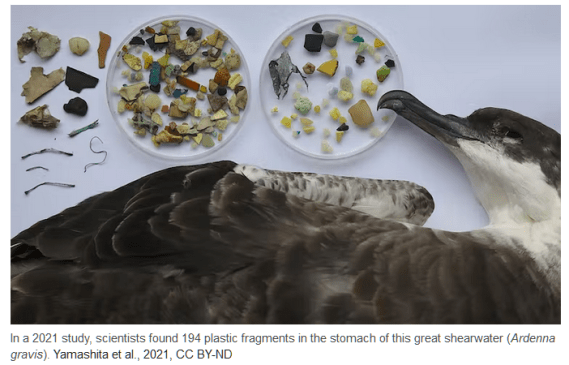
Seabirds that swallow ocean plastic waste have scarring in their stomachs – scientists have named this disease ‘plasticosis’
The Conversation | Matthew Savoca, Stanford University | 21 March 2023
From the Article:
Numerous laboratory studies, some dating back a decade, have demonstrated chronic effects on invertebrates, mammals, birds and fish from ingesting plastic. They include changes in behavior, loss of body weight and condition, reduced feeding rates, decreased ability to produce offspring, chemical imbalances in organisms’ bodies and changes in gene expression, to name a few.
The article contains a 4-minute YouTube from Monterey Bay Aquarium.



 SANTA MONICA BAY AUDUBON SOCIETY BLOG