Loons and other birds: Malibu Lagoon: 26 July 2026

I wouldn’t want to wake up with this staring at me.
[By Chuck Almdale; photos by Femi Faminu, Ray Juncosa, Chris Tosdevin & Kathleen Waldron]
I could tell the surf was up as soon as I turned onto PCH from Malibu Canyon Road. Not because I could see it, but by the cars filling both sides of the road near the entrance to the lagoon. Only late-arriving surfers pay the parking fee, which can run high if you stay long.
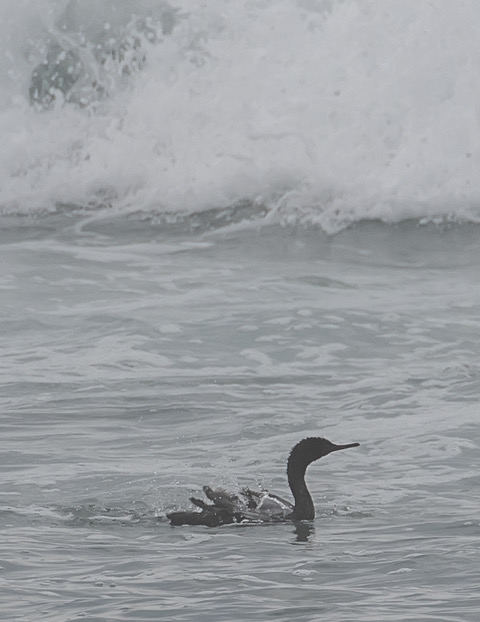
(Chris Tosdevin 7/26/26)
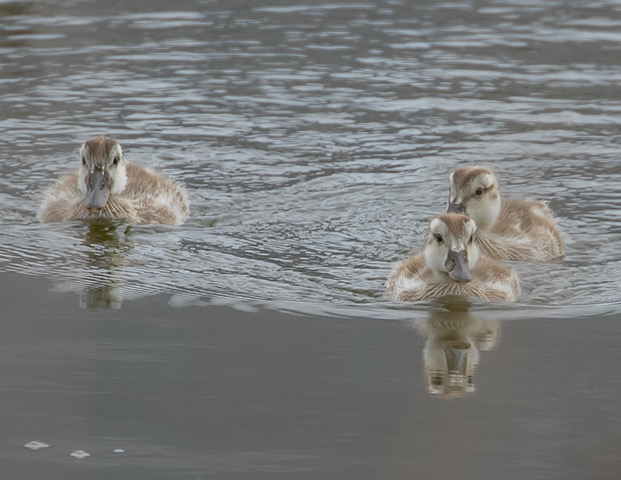
One question we get this time of year is how do we sort out the ducklings, as both Mallards and Gadwall breed at the lagoon. “Figure out who the mother is. She’s usually nearby.” Seriously. I can’t tell them apart until they start looking like adults. Google AI has offered me a lot of advice lately on getting my new computer working, so I inquired, and discovered these useful tips.
“In flight, the Gadwall’s neck is slightly thinner and the wings slightly more slender than a Mallard’s.
“The Mallard duckling has tiny webbed feet.”
Good to know.
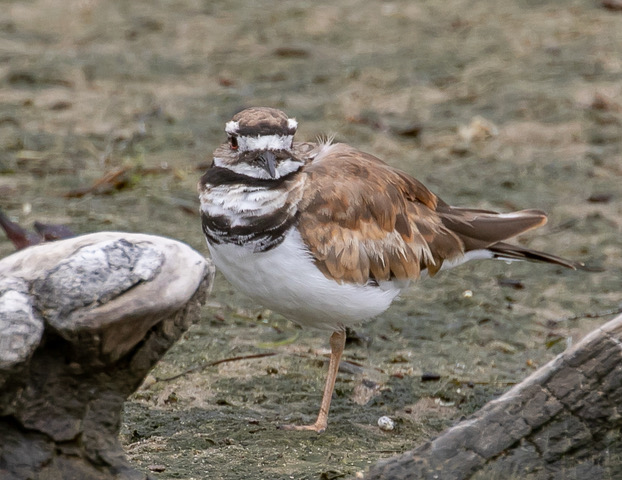
The Killdeer below is definitely molting, or perhaps beaten up. It may have been born a few months ago. When their breast rings first come in, they’re very messy.
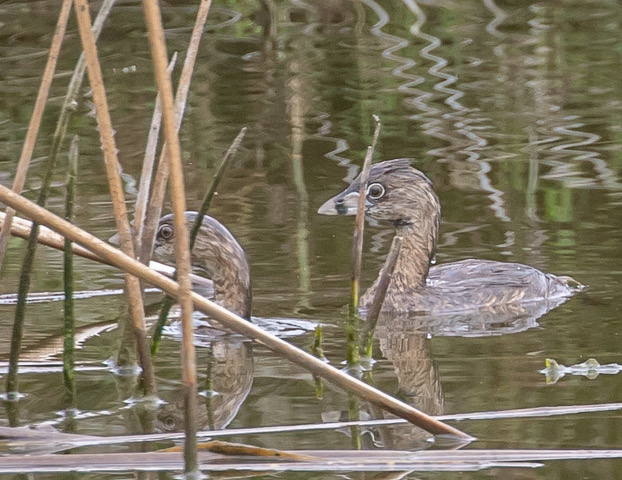
Pied-billed Grebes dive for their food. They are excellent swimmers and divers, partially because their legs are far back on their body. The downside of this structure is that they must avoid walking on land, which they do by nesting on the water among reeds from which they build their floating nests. A pair nested last year in the northern lagoon channel reed bed. If there was a pair there this year, their nest was very well hidden.
The Barn Swallows had a very good year, and the air was filled with them chasing flying insects. There’s a small dead tree near the PCH bridge upon which they love to rest. Easy on – easy off. There are at least eleven pictured below.

The most surprising bird of the trip was a Common Loon in breeding plumage, swimming in the lagoon and diving for fish. It then disappeared for a while, and those arriving late couldn’t find it. Like the grebes, loon’s legs are well back on their bodies and they cannot walk on land, so we figured it must have flown away.
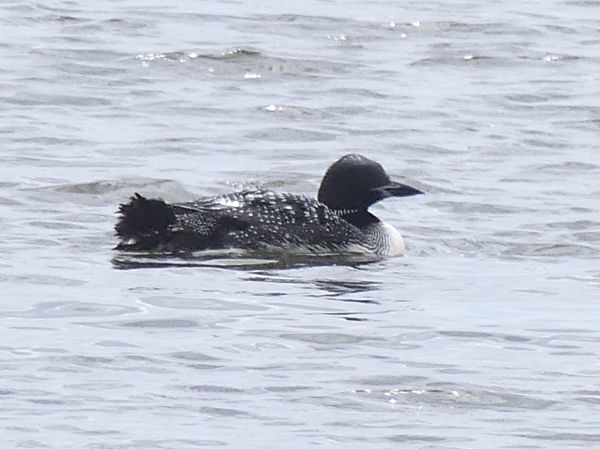
Later we relocated the loon on the eastern end of the southeast island in the channel. It was sitting on the ground. Whenever I see a grebe or loon on the ground I figure there’s a good chance that it’s sick or wounded, as they really don’t like being on land due to their inability to walk. But this loon had appeared active and healthy earlier. Another mystery.
Loons in general are rarely in breeding plumage in Southern California. In late spring, just as they’re leaving for their northern nesting waters, we may see a few that have already molted into their alternate (breeding) plumage. Malibu Lagoon is not a major stopover spot for them, but we can sometimes see skeins of them in the distance passing over the sea.
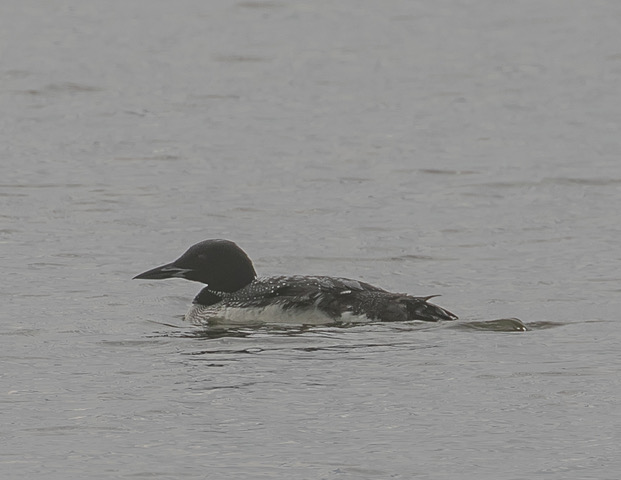
Below is a screen shot of loonish history at the lagoon. None of the three species are particularly common, and the Common Loon is not the most commonly seen. The Red-throated and Pacific Loons are not here at all in June – August. The Common Loon has previously appeared once in June, and this appearance was the first for July. We hold our trips at month’s end, and by the end of August, they’re a bit more common.

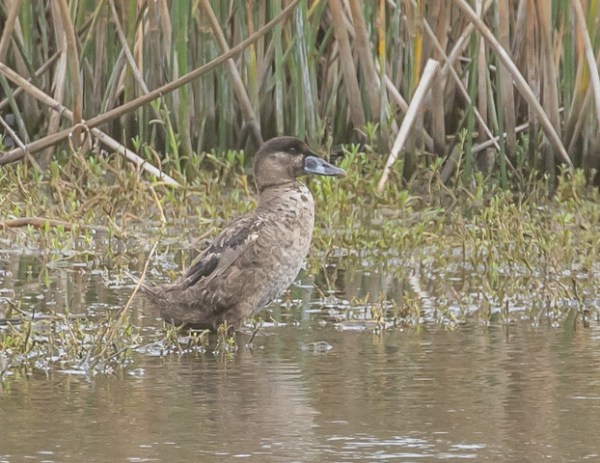
Another uncommon bird was the young Surf Scoter which was resting among a few dabbling ducks on the western island in the channels. Scoters are ocean birds and rarely come into the lagoon. Again, we wondered if it might be ill.
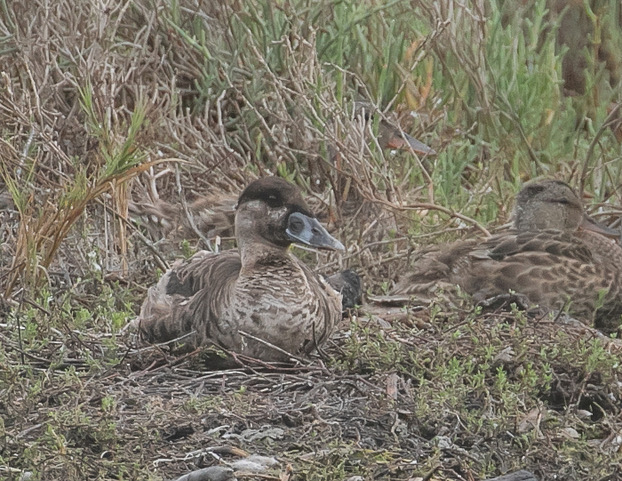
Later it stood up, walked around and showed us the pale belly of youth.
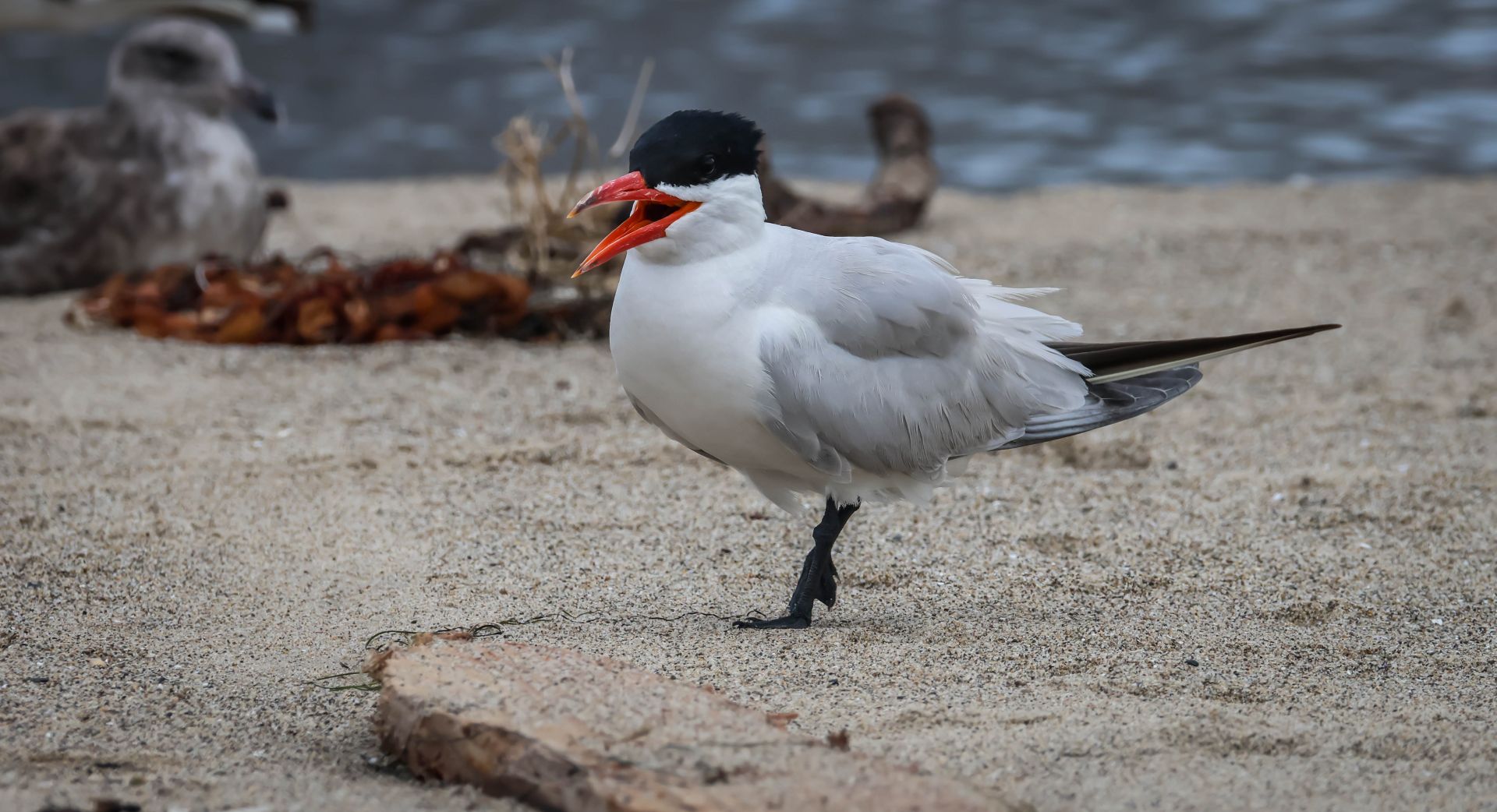
Caspian Terns, named for that well-known Sea, are usually the easiest tern to identify on our beach. They’re the largest, usually have the most black on their crowns, and their blood red bills usually have a dark tip.
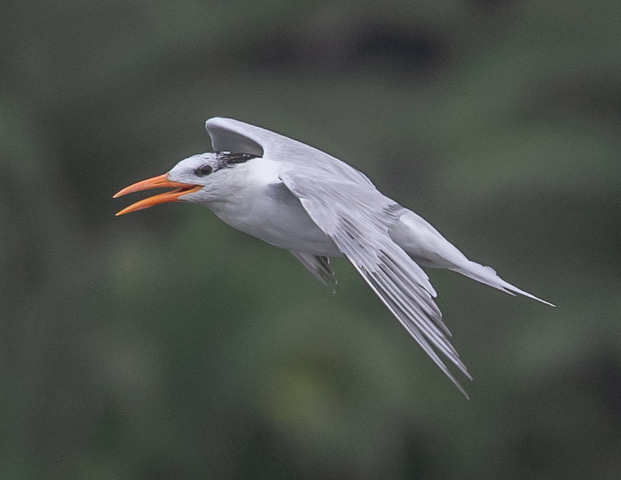
The slimmer bill of the Royal Terns ranges from dull yellow to bright orange, and their crowns don’t remain all-black for long. They tend to be slightly shorter than the Caspian and look a bit less bulky.
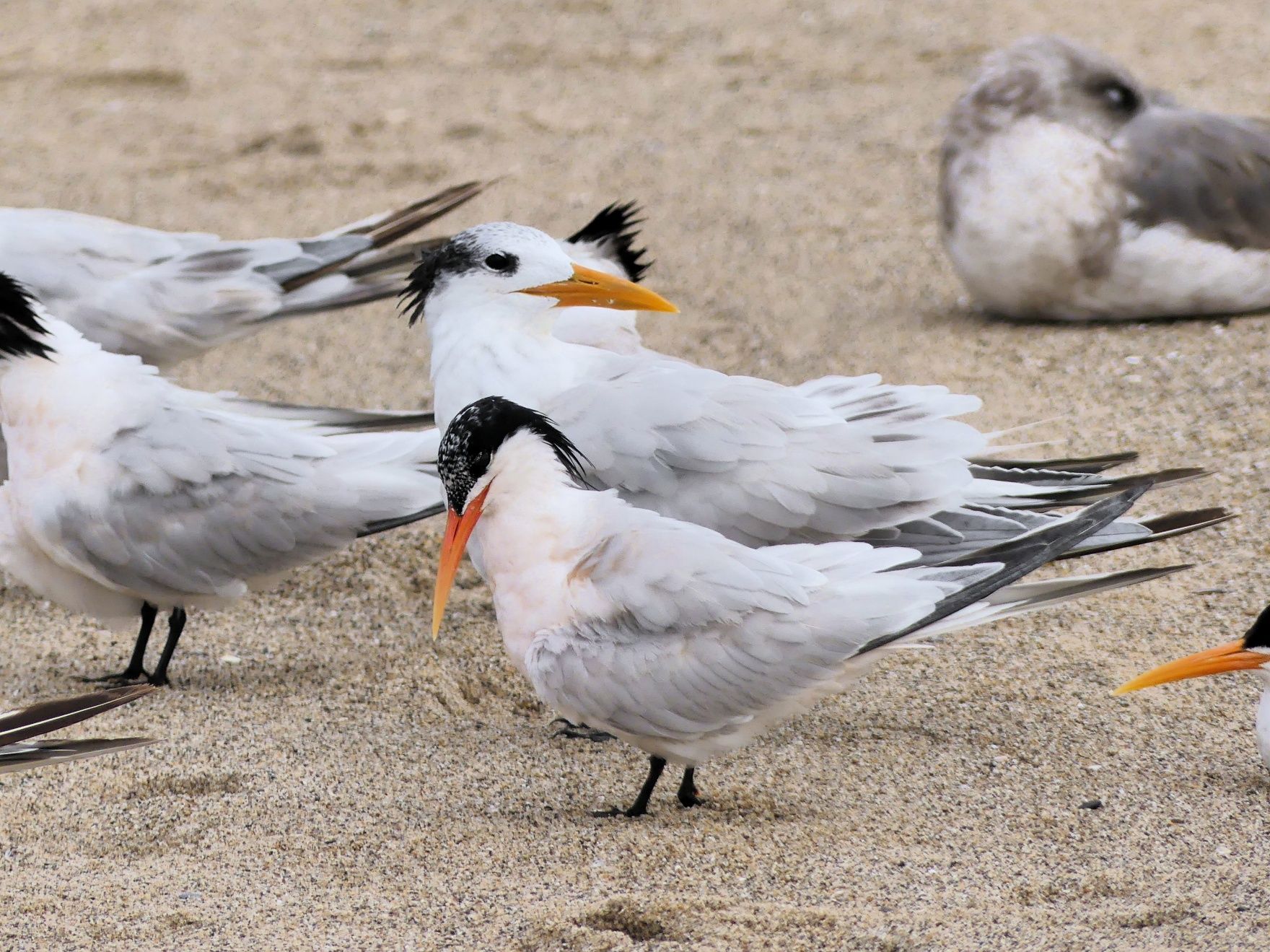
The Elegant Tern at 17″ is shorter and smaller than the 20-21″ Royal. Their caps remain darker than does the Royal’s, and the dark eye is nearly always “embedded” in the dark cap, whereas – when not in breeding plumage – the Royal’s eye is usually slightly separated from the cap. The bill color of both species range have the same range of dull yellow to bright orange, but the Royal’s bill is stouter and straighter than the Elegant’s bill. In breeding season the Elegant’s breast often has a slight rosy glow.
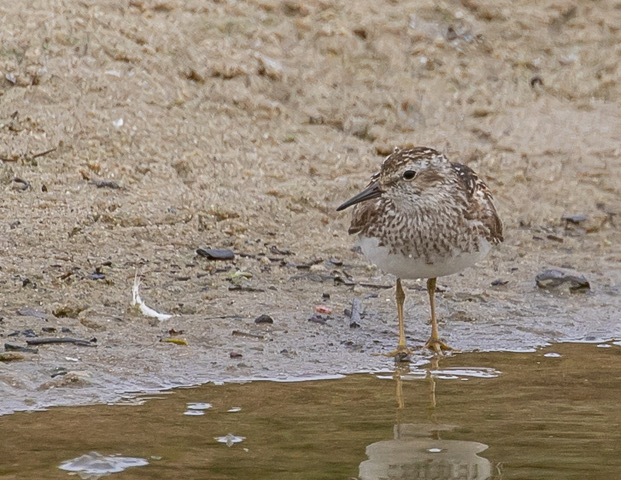
This Least Sandpiper seemed exceptionally stripe-breasted.
Egrets and herons have a variety of feeding and fish-luring maneuvers, such as this Great Egret’s water-wiggling. But I think the Black Heron (Egretta ardesiaca) of Southern Africa has them all beat. It pretends to be a short shady umbrella bush growing in the water, and the small fish in the overheated pond come to cool themselves around it’s shaded legs.

Chris Todevin is a whiz not only finding the smallest butterfly in the world (or at least North America), but then photographing it. Come to the lagoon and see if you can find them yourself. Tip: look for dust or leaf particles bouncing in the breeze; some of them are butterflies.
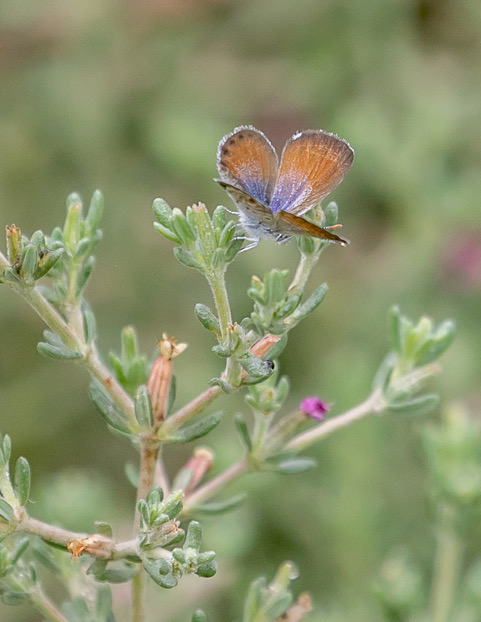
(Chris Tosdevin 7/26/26)
When it’s not breeding season, Heerman’s Gull is nearly always at the lagoon, giving proof that not all gulls are mostly white.

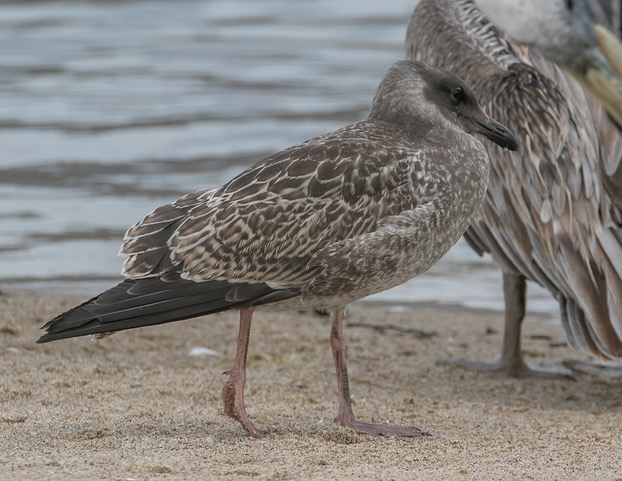
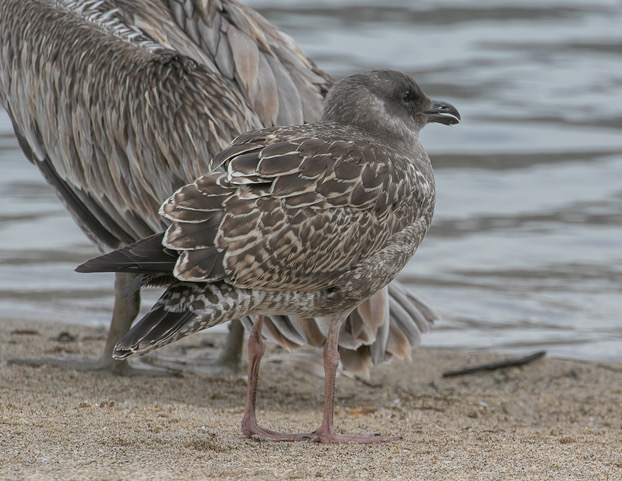
We were mystified for a while by this bird’s face with a dark “mask,” and ID’d it three ways. According to Chris Dean, gull maven at eBird, this mask effect is not uncommon among juvenile Western Gulls.
And finally, a brief story…

Overheard on Malibu Beach
Cormie: It was this big. I had it, I swear, but it got away!
Pete: Yeah, right. I wasn’t born yesterday!
Malibu Lagoon on eBird as of 7-28-26: 9538 lists, 3122 eBirders, 323 species
Most recent new species seen: Canyon Wren, 06/11/26 by Judith Olsen (no photo).
Birds new for the season: Black-chinned Hummingbird, Snowy Plover, Spotted Sandpiper, Ruddy Turnstone, Least Sandpiper, Common Loon, Western Bluebird, Lesser Goldfinch, Spotted Towhee. “New for the season” means it has been three or more months since last recorded on our trips.
Many, many thanks to photographers Femi Faminu, Ray Juncosa, Chris Tosdevin and Kathleen Waldron.
Upcoming SMBAS scheduled field trips; no reservations or Covid card necessary unless specifically mentioned:
- Malibu Lagoon, Sun. Aug 23, 8:30 am (adults) & 10 am (parents & kids)
- Malibu Lagoon, Sun. Sep 27, 8:30 am (adults) & 10 am (parents & kids)
- T.B.A., likely on Sat. Oct. 10, 8 or 8:30 am
- Malibu Lagoon, Sun. Oct 25, 8:30 am (adults) & 10 am (parents & kids)
- These and any other trips we announce for the foreseeable future will depend upon expected status of the Covid/flu/etc. pandemic, not to mention landslides, fires, local flooding and atmospheric rivers at trip time. Any trip announced may be canceled shortly before trip date if it seems necessary. By now any other comments should be superfluous.
- Link to Programs & Field Trip schedule.
The next SMBAS Zoom program: Tuesday, October 6, 7:30pm; TBA
The SMBAS 10 a.m. Parent’s & Kids Birdwalk has again resumed. Reservations not necessary for families, but for groups (scouts, etc.), please call Jean (213-522-0062).
Links: Unusual birds at Malibu Lagoon
9/23/02 Aerial photo of Malibu Lagoon
Aerial ‘film’ flying north over lagoon
More recent aerial photo
Prior checklists:
2025: Jan-June, July-Dec 2026: Jan-June
2023: Jan-June, July-Dec 2024: Jan-June, July-Dec
2021: Jan-July, July-Dec 2022: Jan-June, July-Dec
2020: Jan-July, July-Dec 2019: Jan-June, July-Dec
2018: Jan-June, July-Dec 2017: Jan-June, July-Dec
2016: Jan-June, July-Dec 2015: Jan-May, July-Dec
2014: Jan-July, July-Dec 2013: Jan-June, July-Dec
2012: Jan-June, July-Dec 2011: Jan-June, July-Dec
2010: Jan-June, July-Dec 2009: Jan-June, July-Dec
The 10-year comparison summaries created during the 2012-13 Lagoon Reconfiguration Project period, remain available—despite numerous complaints—on our Lagoon Project Bird Census Page. Very briefly summarized, the results unexpectedly indicate that avian species diversification and numbers improved slightly during the restoration period June’12-June’14. We also have a newly-refurbished slide show of the reconfiguration from just before it started until the recent 13-year celebration.
Many thanks to Marie Barnidge-McIntyre, Femi Faminu, Julie Rush, Chris Tosdevin and others for contributions made to this month’s census counts.
The species list below was re-sequenced as of 12/31/25 to agree with the eBird sequence. If part of the right side of the chart below is hidden, there’s a slider button inconveniently located at the bottom end of the list. The numbers 1-9 left of the species names are keyed to the nine categories of birds at the bottom. Updated lagoon bird check lists can be downloaded here.
[Chuck Almdale]
| Malibu Census 2026 | 2/22 | 3/22 | 4/26 | 5/24 | 6/28 | 7/26 | |
| Temperature | 49-63 | 65-76 | 55-64 | 60-63 | 61-66 | 72-76 | |
| Tide Lo/Hi Height | L+0.65 | L-0.31 | H+4.32 | L+0.42 | H+3.35 | H+3.49 | |
| Tide Time | 0655 | 0640 | 0624 | 1126 | 1034 | 0949 | |
| 1 | Brant (Black) | 1 | 1 | 1 | 2 | ||
| 1 | Cackling Goose | 1 | |||||
| 1 | Canada Goose | 4 | 5 | 4 | |||
| 1 | Cinnamon Teal | 2 | |||||
| 1 | Northern Shoveler | 2 | |||||
| 1 | Gadwall | 35 | 15 | 25 | 18 | 10 | 11 |
| 1 | American Wigeon | 4 | 6 | ||||
| 1 | Mallard | 7 | 14 | 8 | 12 | 15 | 35 |
| 1 | Northern Pintail | 1 | 1 | ||||
| 1 | Green-winged Teal | 8 | |||||
| 1 | Surf Scoter | 6 | 1 | 1 | |||
| 1 | Red-breasted Merganser | 7 | 4 | 3 | 1 | ||
| 2 | Feral Pigeon | 4 | 2 | 8 | 10 | 2 | |
| 2 | Mourning Dove | 3 | 1 | 3 | 2 | 3 | |
| 2 | Black-chinned Hummingbird | 1 | |||||
| 2 | Anna’s Hummingbird | 1 | 1 | 2 | 1 | 3 | |
| 2 | Allen’s Hummingbird | 3 | 5 | 2 | 6 | 3 | 6 |
| 3 | American Coot | 55 | 4 | 3 | 2 | ||
| 4 | Black-bellied Plover | 20 | 6 | 3 | 3 | 2 | 35 |
| 4 | Killdeer | 6 | 5 | 6 | 3 | 3 | 2 |
| 4 | Semipalmated Plover | 6 | |||||
| 4 | Snowy Plover | 4 | 1 | 17 | |||
| 4 | Hudsonian Whimbrel | 4 | 6 | 6 | 7 | 11 | |
| 4 | Long-billed Curlew | 1 | |||||
| 4 | Marbled Godwit | 4 | 1 | ||||
| 4 | Long-billed Dowitcher | 1 | |||||
| 4 | Spotted Sandpiper | 1 | |||||
| 4 | Willet | 3 | 4 | 9 | 1 | ||
| 4 | Ruddy Turnstone | 3 | 1 | ||||
| 4 | Sanderling | 10 | |||||
| 4 | Least Sandpiper | 20 | 8 | 3 | 2 | ||
| 4 | Western Sandpiper | 13 | 29 | ||||
| 5 | Bonaparte’s Gull | 3 | 1 | ||||
| 5 | Heermann’s Gull | 22 | 75 | 2 | 18 | 9 | |
| 5 | Ring-billed Gull | 4 | 3 | ||||
| 5 | Western Gull | 41 | 61 | 40 | 22 | 29 | 68 |
| 5 | American Herring Gull | 1 | 1 | 1 | |||
| 5 | California Gull | 140 | 95 | 110 | 6 | 1 | |
| 5 | Glaucous-winged Gull | 1 | |||||
| 5 | Caspian Tern | 3 | 11 | 3 | 5 | 1 | |
| 5 | Elegant Tern | 24 | 750 | 185 | 3 | 12 | |
| 5 | Royal Tern | 28 | 34 | 18 | 3 | 3 | 9 |
| 6 | Pied-billed Grebe | 2 | 3 | 1 | 6 | 3 | 4 |
| 6 | Western Grebe | 4 | 24 | 4 | 35 | 1 | |
| 6 | Clark’s Grebe | 2 | |||||
| 6 | Pacific Loon | 1 | 45 | 1 | |||
| 6 | Common Loon | 1 | |||||
| 6 | Brandt’s Cormorant | 5 | 3 | 4 | 2 | ||
| 6 | Pelagic Cormorant | 1 | 3 | 2 | 1 | 2 | 1 |
| 6 | Double-crested Cormorant | 15 | 18 | 26 | 25 | 10 | 30 |
| 6 | Black-crowned Night-Heron | 3 | |||||
| 6 | Snowy Egret | 3 | 1 | 2 | 3 | 2 | 8 |
| 6 | Green Heron | 2 | 1 | ||||
| 6 | Great Egret | 1 | 2 | 2 | 1 | 2 | |
| 6 | Great Blue Heron | 3 | 3 | 3 | 1 | 3 | 2 |
| 6 | Brown Pelican | 10 | 30 | 395 | 28 | 64 | 15 |
| 7 | Turkey Vulture | 2 | 3 | 4 | 10 | 2 | 2 |
| 7 | Osprey | 1 | |||||
| 7 | Sharp-shinned Hawk | 1 | |||||
| 7 | Red-shouldered Hawk | 2 | |||||
| 7 | Red-tailed Hawk | 2 | 1 | 1 | 1 | ||
| 8 | Belted Kingfisher | 1 | 1 | ||||
| 8 | Downy Woodpecker | 1 | |||||
| 8 | Nuttall’s Woodpecker | 1 | |||||
| 7 | Peregrine Falcon | 1 | 1 | ||||
| 9 | Western Flycatcher | 1 | |||||
| 9 | Black Phoebe | 3 | 2 | 2 | 4 | 2 | 1 |
| 9 | Say’s Phoebe | 1 | |||||
| 9 | Cassin’s Kingbird | 1 | 3 | 1 | |||
| 9 | Hutton’s Vireo | 1 | |||||
| 9 | California Scrub-Jay | 2 | 1 | 1 | |||
| 9 | American Crow | 10 | 6 | 2 | 8 | 8 | 4 |
| 9 | Common Raven | 1 | 2 | 1 | 1 | 1 | |
| 9 | Oak Titmouse | 1 | 1 | 1 | 3 | 2 | |
| 9 | Tree Swallow | 3 | |||||
| 9 | Violet-green Swallow | 2 | |||||
| 9 | No. Rough-winged Swallow | 25 | 5 | 3 | 2 | ||
| 9 | Barn Swallow | 8 | 12 | 15 | 35 | ||
| 9 | Cliff Swallow | 25 | 20 | 3 | 5 | ||
| 9 | Bushtit | 5 | 8 | 1 | 10 | 25 | 8 |
| 9 | Wrentit | 2 | 1 | 1 | 2 | 2 | |
| 9 | Swinhoe’s White-eye | 2 | 2 | ||||
| 9 | Ruby-crowned Kinglet | 1 | |||||
| 9 | Blue-gray Gnatcatcher | 1 | |||||
| 9 | Northern House Wren | 1 | 1 | ||||
| 9 | Bewick’s Wren | 1 | |||||
| 9 | European Starling | 10 | 13 | 2 | 6 | 5 | |
| 9 | Northern Mockingbird | 1 | |||||
| 9 | Western Bluebird | 3 | |||||
| 9 | American Robin | 1 | 1 | ||||
| 9 | House Finch | 10 | 12 | 10 | 9 | 7 | 22 |
| 9 | Lesser Goldfinch | 2 | 6 | 2 | |||
| 9 | Dark-eyed Junco | 1 | 2 | 1 | |||
| 9 | White-crowned Sparrow | 5 | 10 | ||||
| 9 | Song Sparrow | 7 | 6 | 6 | 4 | 4 | 3 |
| 9 | California Towhee | 2 | 3 | 1 | 2 | 2 | 1 |
| 9 | Spotted Towhee | 1 | |||||
| 9 | Hooded Oriole | 2 | 4 | 1 | |||
| 9 | Red-winged Blackbird | 2 | 5 | ||||
| 9 | Great-tailed Grackle | 3 | 5 | 4 | 8 | ||
| 9 | Orange-crowned Warbler | 1 | 1 | 1 | 1 | 1 | |
| 9 | Common Yellowthroat | 2 | 1 | ||||
| 9 | Yellow-rumped Warbler | 6 | 4 | ||||
| 9 | Black-headed Grosbeak | 1 | |||||
| Totals Birds by Type | Feb | Mar | Apr | May | Jun | Jul | |
| 1 | Waterfowl & Quail | 74 | 48 | 42 | 35 | 25 | 47 |
| 2 | Doves, Swifts & Hummers | 8 | 11 | 11 | 21 | 6 | 15 |
| 3 | Rails & Coots | 55 | 4 | 0 | 0 | 3 | 2 |
| 4 | Shorebirds | 74 | 44 | 54 | 6 | 22 | 70 |
| 5 | Gulls & Terns | 214 | 247 | 1005 | 221 | 60 | 99 |
| 6 | Grebe, Loon, Heron, Pelican | 47 | 134 | 435 | 105 | 91 | 63 |
| 7 | Hawks & Falcons | 7 | 4 | 6 | 11 | 3 | 3 |
| 8 | Kingfish, Peckers & Parrots | 2 | 0 | 2 | 0 | 0 | 0 |
| 9 | Passerines | 77 | 116 | 70 | 92 | 96 | 100 |
| Totals Birds | 558 | 608 | 1625 | 491 | 306 | 399 | |
| Total Species by Group | Feb | Mar | Apr | May | Jun | Jul | |
| 1 | Waterfowl & Quail | 9 | 8 | 6 | 6 | 2 | 3 |
| 2 | Doves, Swifts & Hummers | 3 | 4 | 3 | 4 | 3 | 5 |
| 3 | Rails & Coots | 1 | 1 | 0 | 0 | 1 | 1 |
| 4 | Shorebirds | 9 | 8 | 7 | 2 | 5 | 8 |
| 5 | Gulls & Terns | 5 | 10 | 7 | 6 | 7 | 5 |
| 6 | Grebe, Loon, Heron, Pelican | 11 | 11 | 8 | 10 | 10 | 8 |
| 7 | Hawks & Falcons | 4 | 2 | 3 | 2 | 2 | 2 |
| 8 | Kingfish, Peckers & Parrots | 2 | 0 | 2 | 0 | 0 | 0 |
| 9 | Passerines | 22 | 23 | 16 | 21 | 19 | 17 |
| Totals Species | 66 | 67 | 52 | 51 | 49 | 49 |
Discover more from SANTA MONICA BAY AUDUBON SOCIETY BLOG
Subscribe to get the latest posts sent to your email.



 SANTA MONICA BAY AUDUBON SOCIETY BLOG