Free email delivery
Please sign up for email delivery in the subscription area to the right.
No salesman will call, at least not from us. Maybe from someone else.
A Windblown Malibu Lagoon, Jan. 30, 2025
[Text by Chuck Almdale; photos by Lillian Johnson. Trip list at the end.]
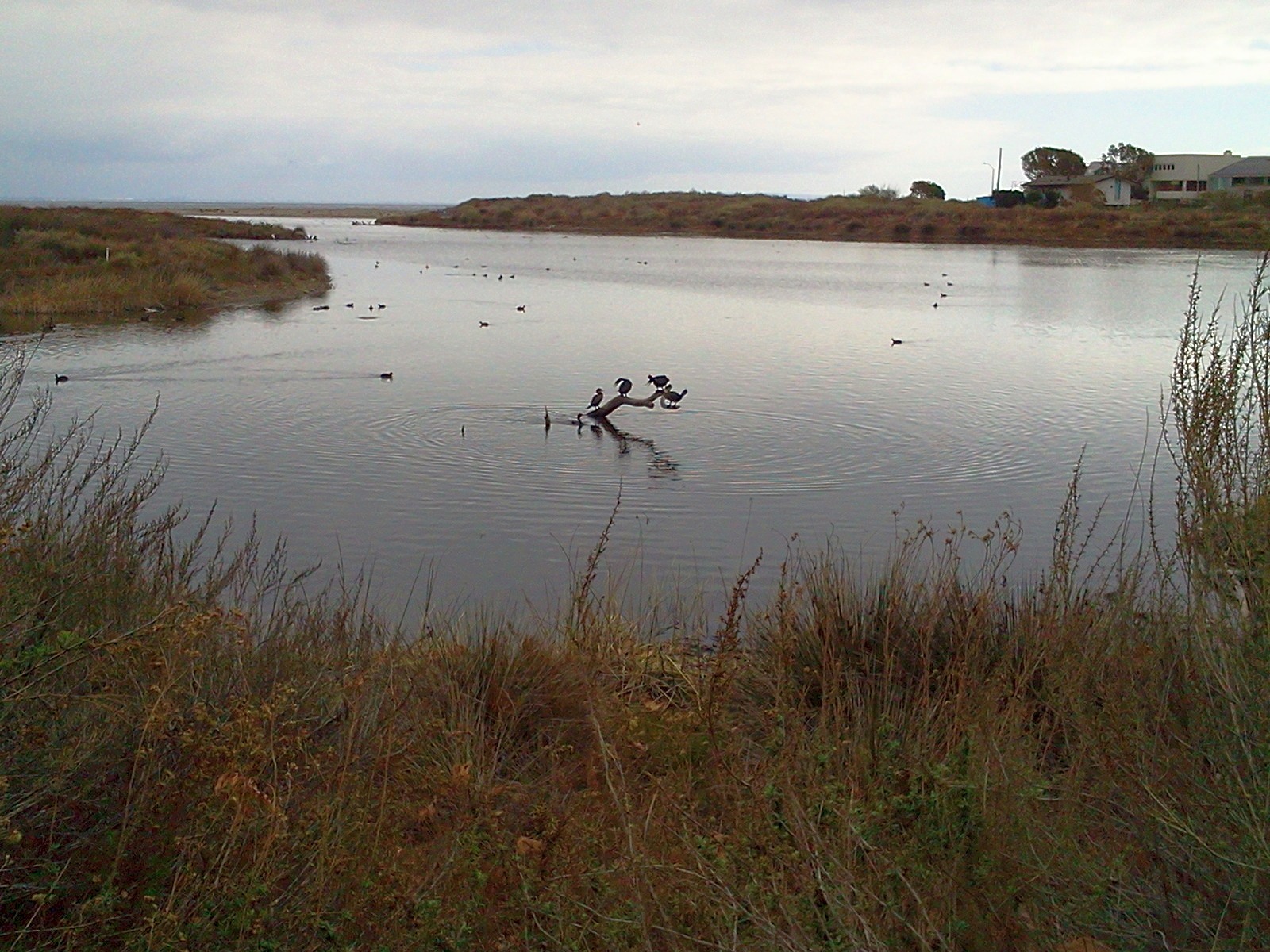
As you’ve probably noticed, it’s been quite difficult of late to reach the lagoon, so we canceled the 26 Jan. trip. Heavy rain at our house Sunday morning convinced me to skip a personal visit and crawl back into bed. But by Thursday Jan. 30 Las Virgenes Rd. was open all the way from the #101 to Malibu and the Golden Bear Senior parking passes ($20!) were finally in stock at Malibu Creek State Park, so we stopped at the park to get our pass and continued to the lagoon. The only problem driving was excessive traffic. We found that PCH was officially closed with a barrier across the west end of the Malibu Creek bridge right next to the lagoon parking entrance. Lagoon parking was open and there was even an attendant in the booth. His was the only car in the parking lot.
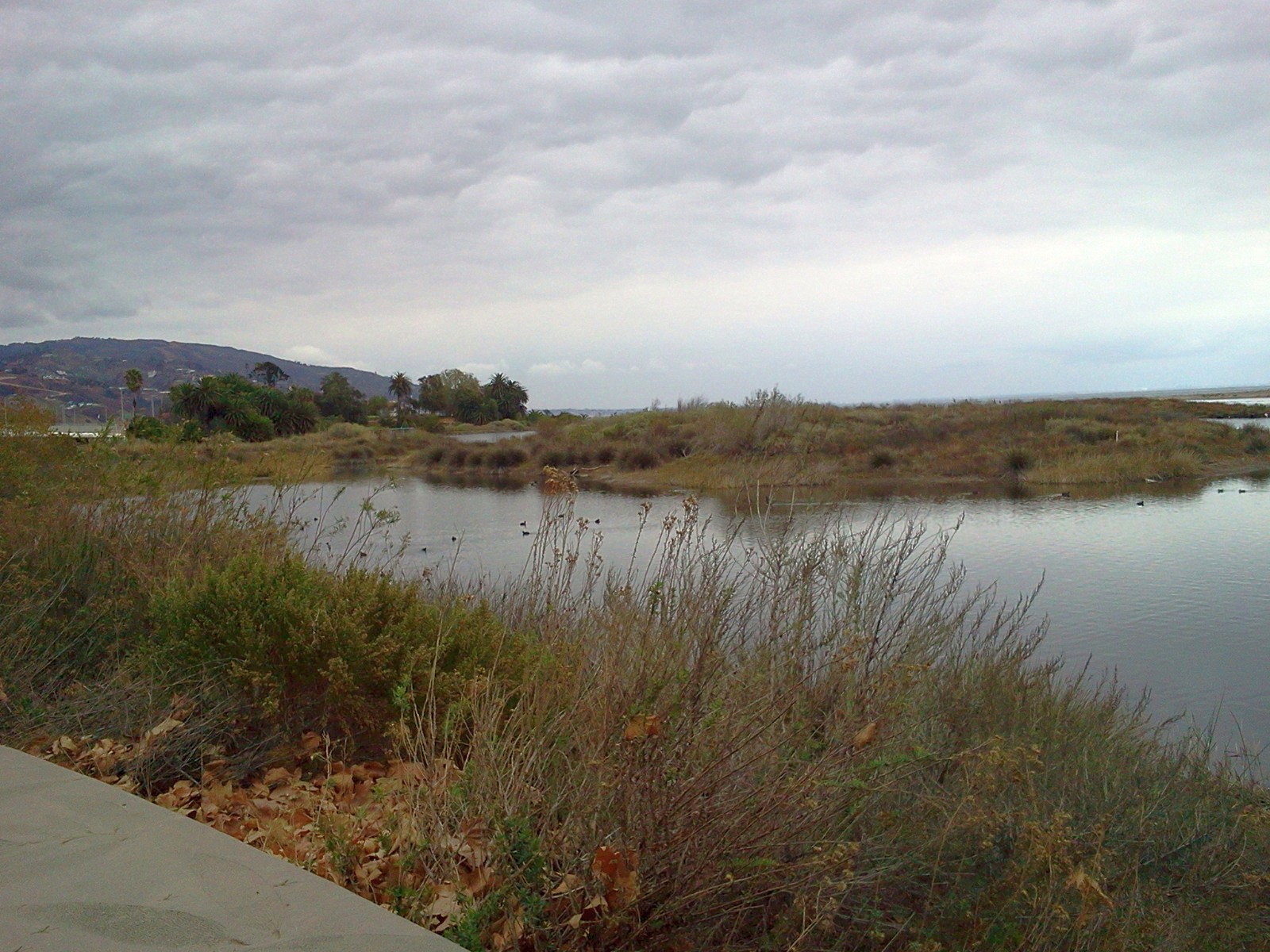
We soon discovered that the birds enjoyed the absence of humans. More sparrows than ever bounced along the paths and one Bewick’s Wren didn’t even feel it necessary to retreat into the bushes as I passed. The lagoon was covered with American Coots – 797 of them, a close count – which was nearly a new record, not quite up to the 870 recorded on Oct. 27 2019. I sometimes wonder if anyone else ever counts coots, as they’re not high on most birder’s lists of most-wanted birds. On the salt lakes of the Bolivian altiplano you’ll discover that coots are a very desirable bird.
The lagoon and surrounding vegetation were, as far as I could tell, untouched by fire. Neither was the surrounding Malibu Village, although some of the western edges of the residential area were burned in the Franklin fire of mid-December.
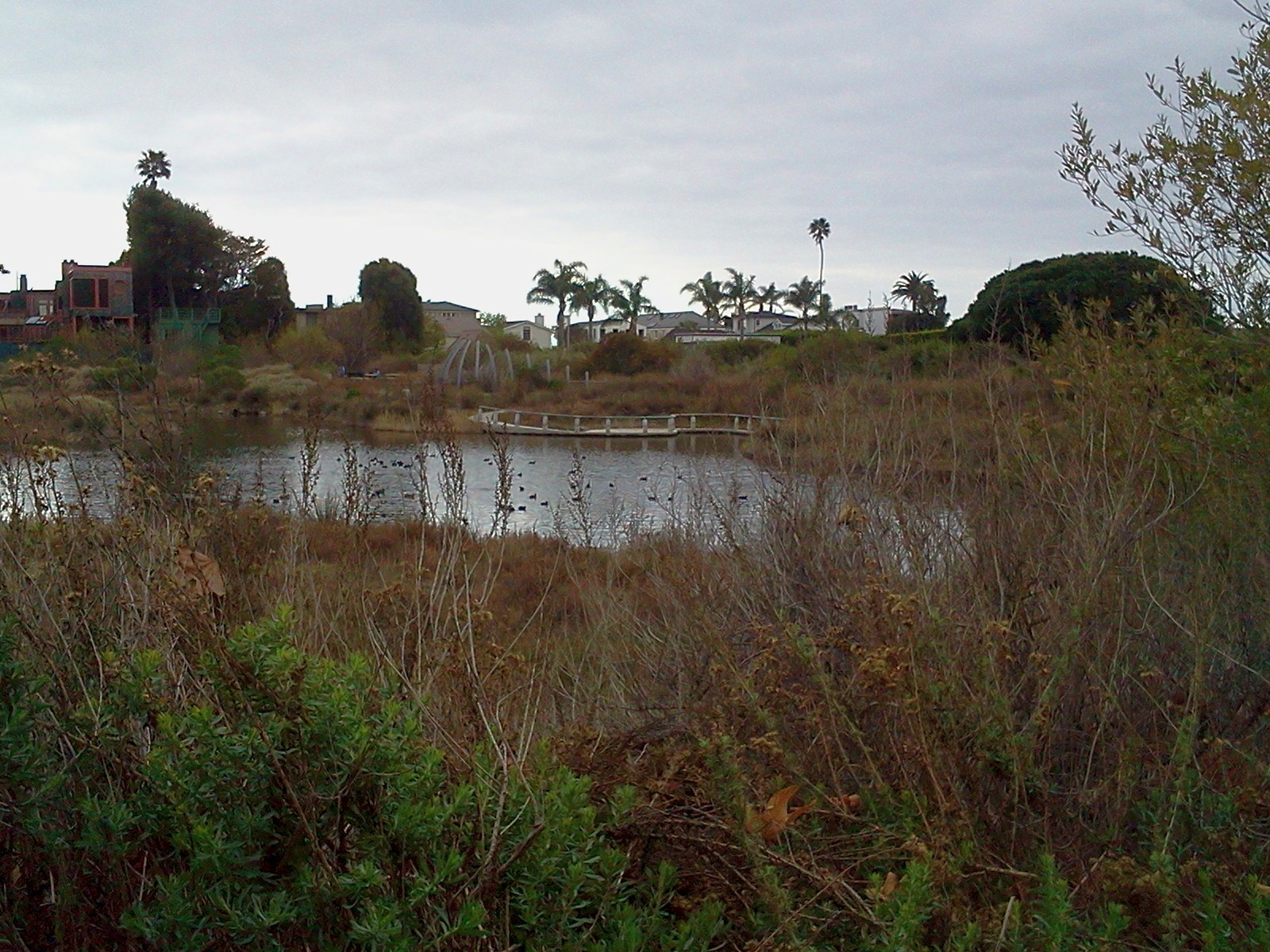
You can tell that lagoon level in the photo above is not particularly high because you can see the tidal clock sidewalk.
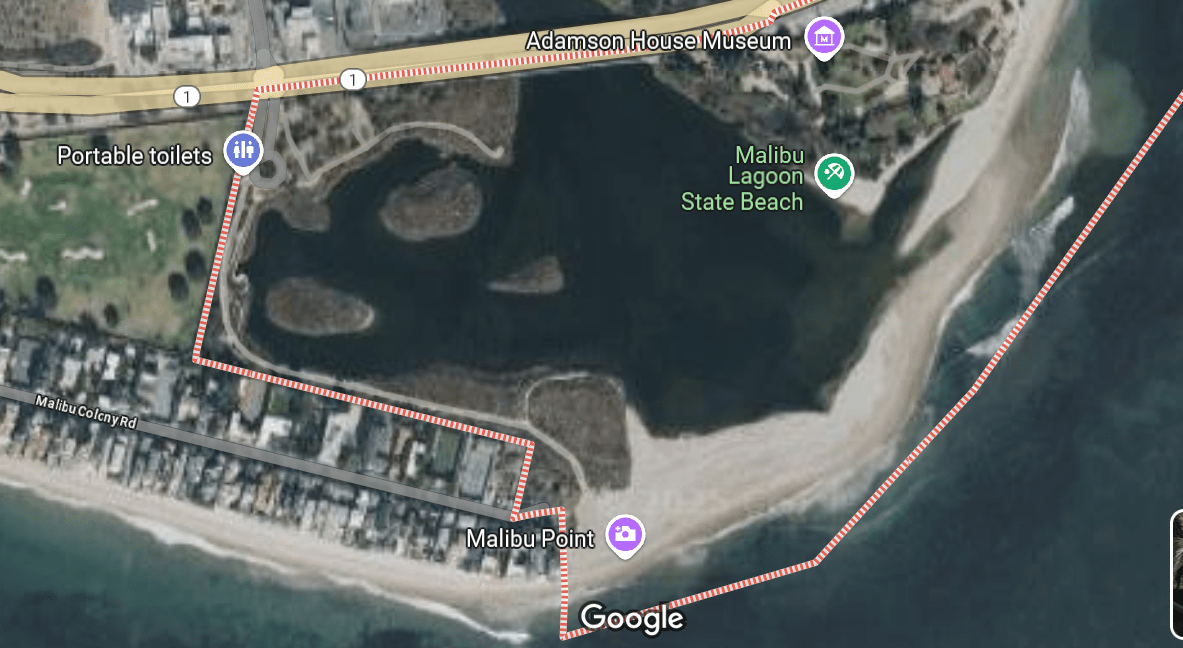
What was noticeable was that a hard wind had blown. Many of the taller bushes were leaning westward with their multiple stems pushed together. Some trees looked a bit bare of leaves. One tree on park land near the eastern end of Malibu Colony was completely gone. I didn’t clamber through the bushes to see if anything remained of the trunk. The house at the east end of the colony was wrapped in tarps and undergoing repairs (reasons unknown to us). A colony roof adjacent to the beach path was prickly with bent, upturned and missing shingles. These were thick shingles and bending them would take a very stiff wind.
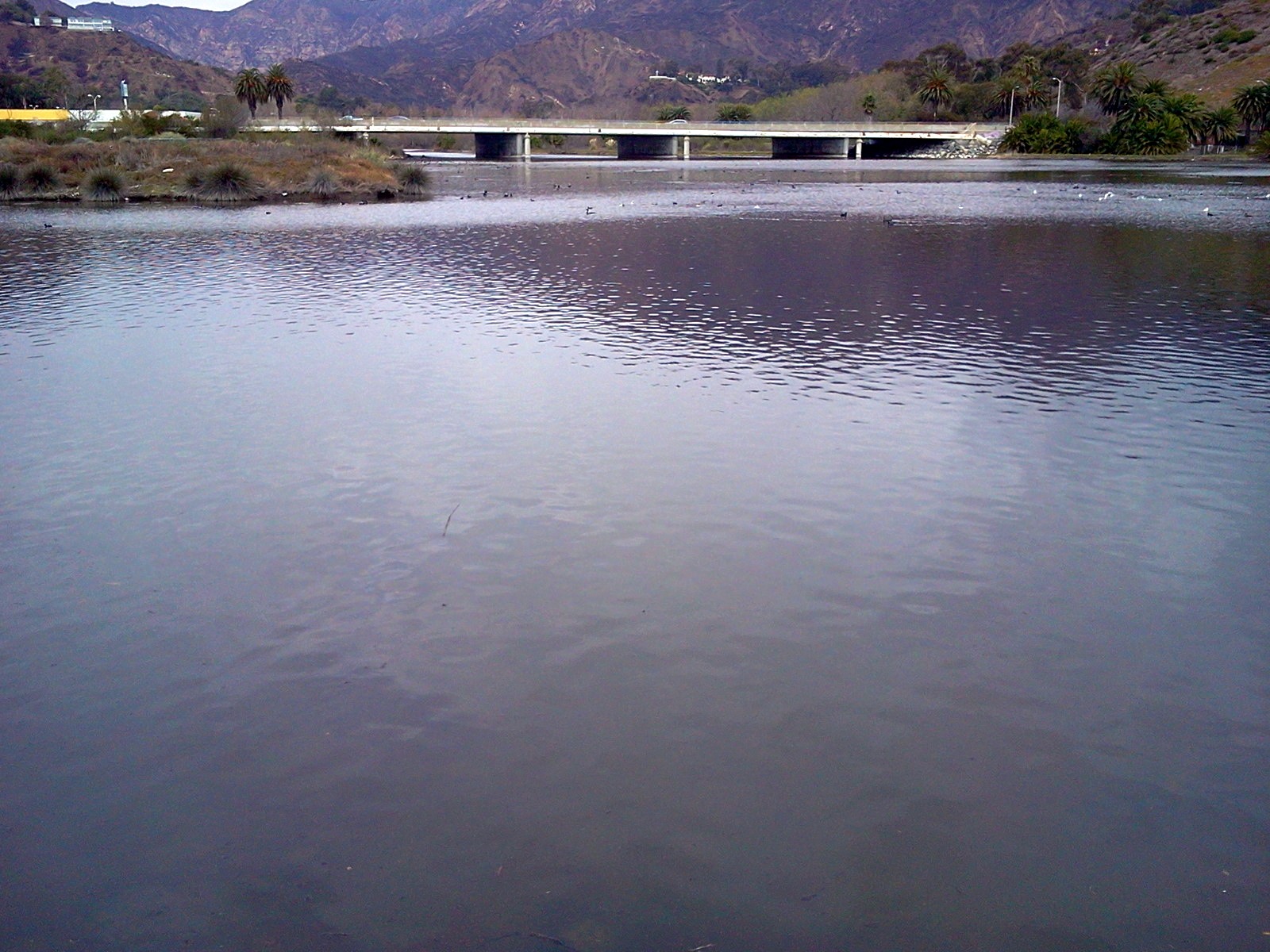
The tide had been fairly high, 6.14 ft. at 9:13am, dropping to -1.20 ft at 4:23pm. We got there at a dropping mid-tide, around 12:15. By the time we got to the beach, the usually submerged rocks were partially exposed.
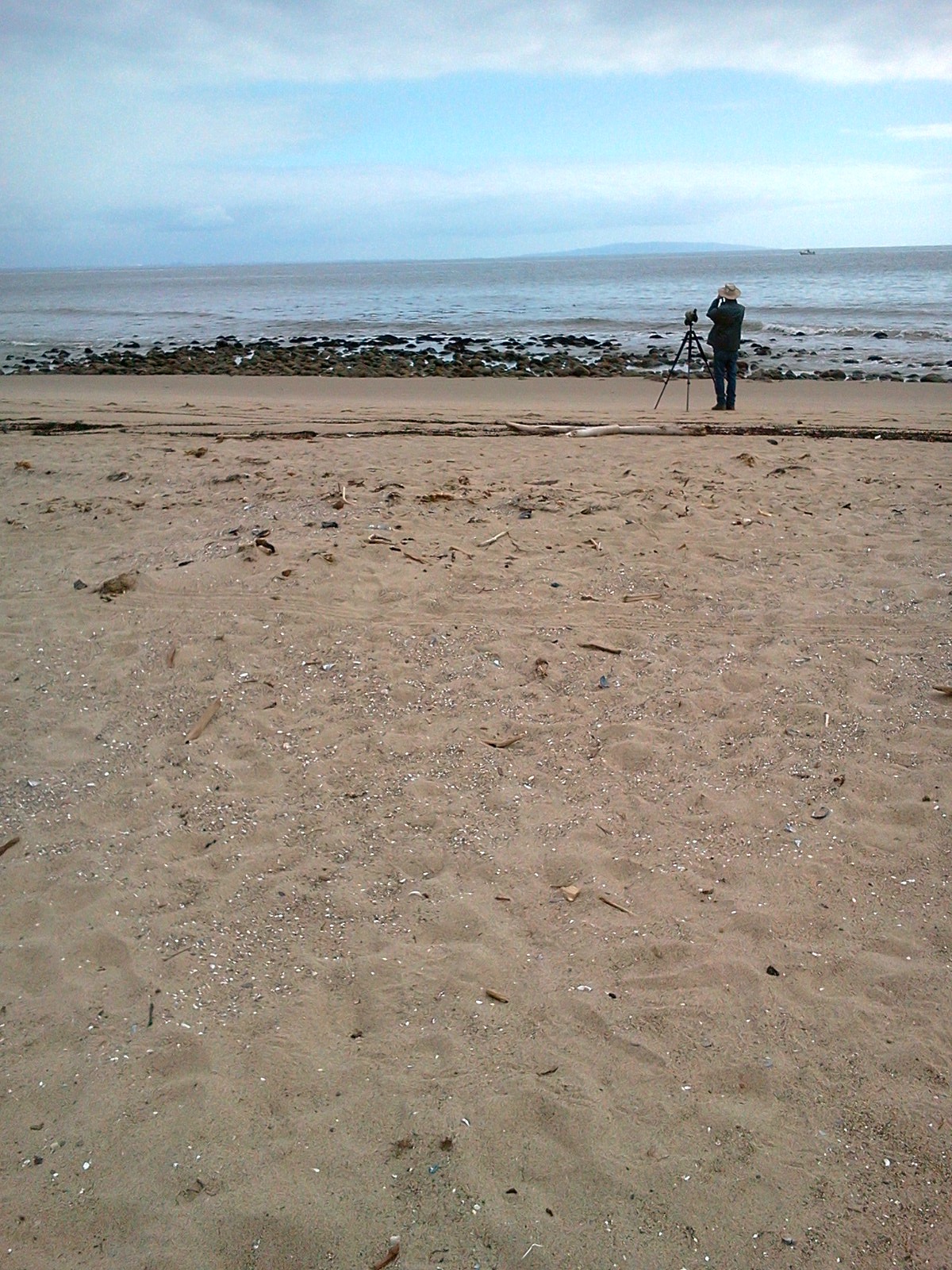
Most of the shorebirds were poking about in the exposed rocks. I was surprised to see two Western Snowy Plovers with them, as they usually prefer getting their insects from the high-tide wrack on the beach. I was also somewhat surprised to not find a Black Oystercatcher among them. A single Herring Gull was again on the beach, 3rd month in a row. So far the bird looks exactly the same month-to-month, and I’m reasonably certain it actually is the same individual, spending the winter with us.
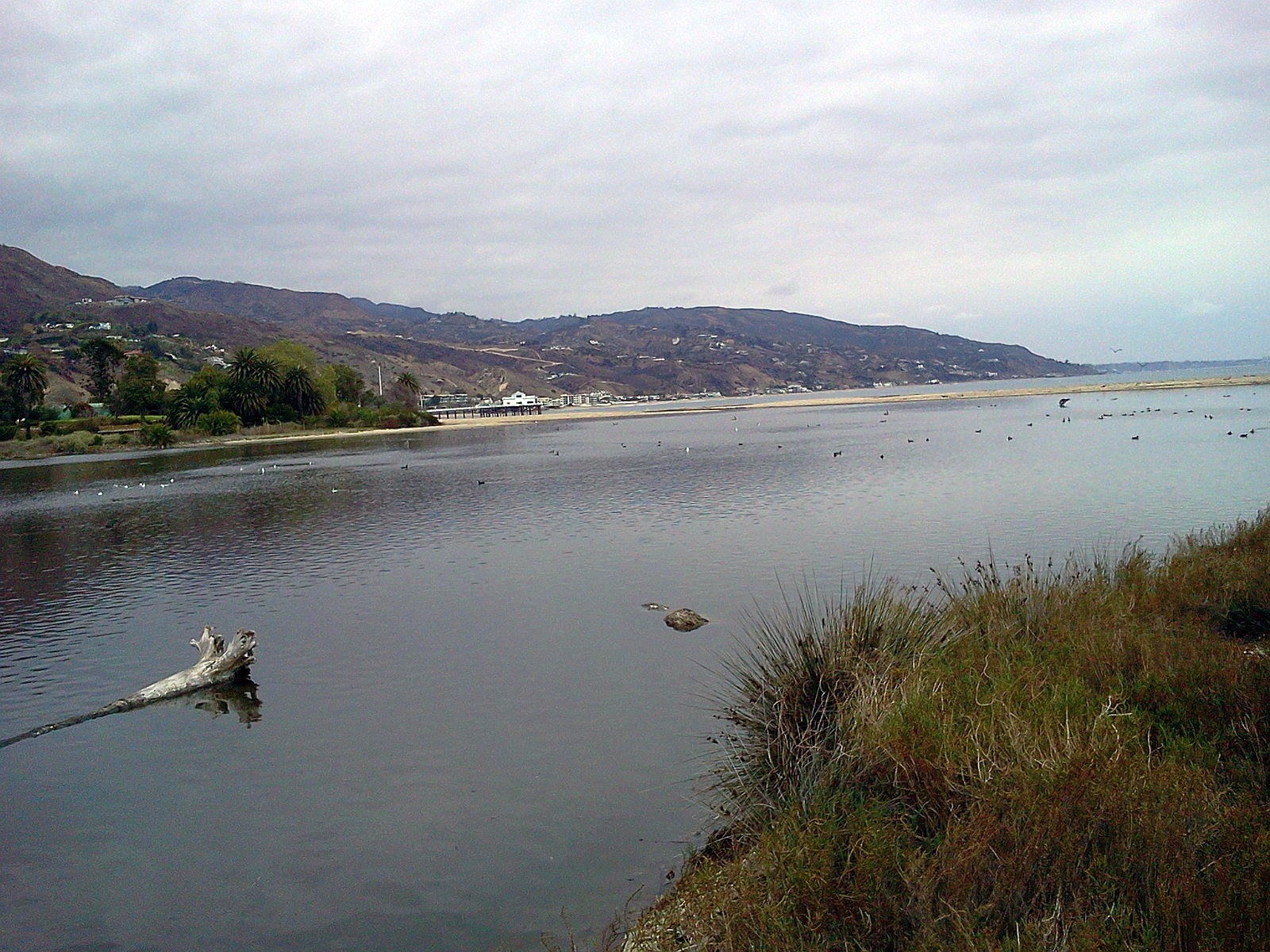
It was quite amazing just how much driftwood had covered the beach. In the photo below, you can see the lagoon opening to the sea with Malibu pier directly behind it. Although the opening usually appears along the southern stretch in the fall with the first rains, it always moves eastward over the following months.
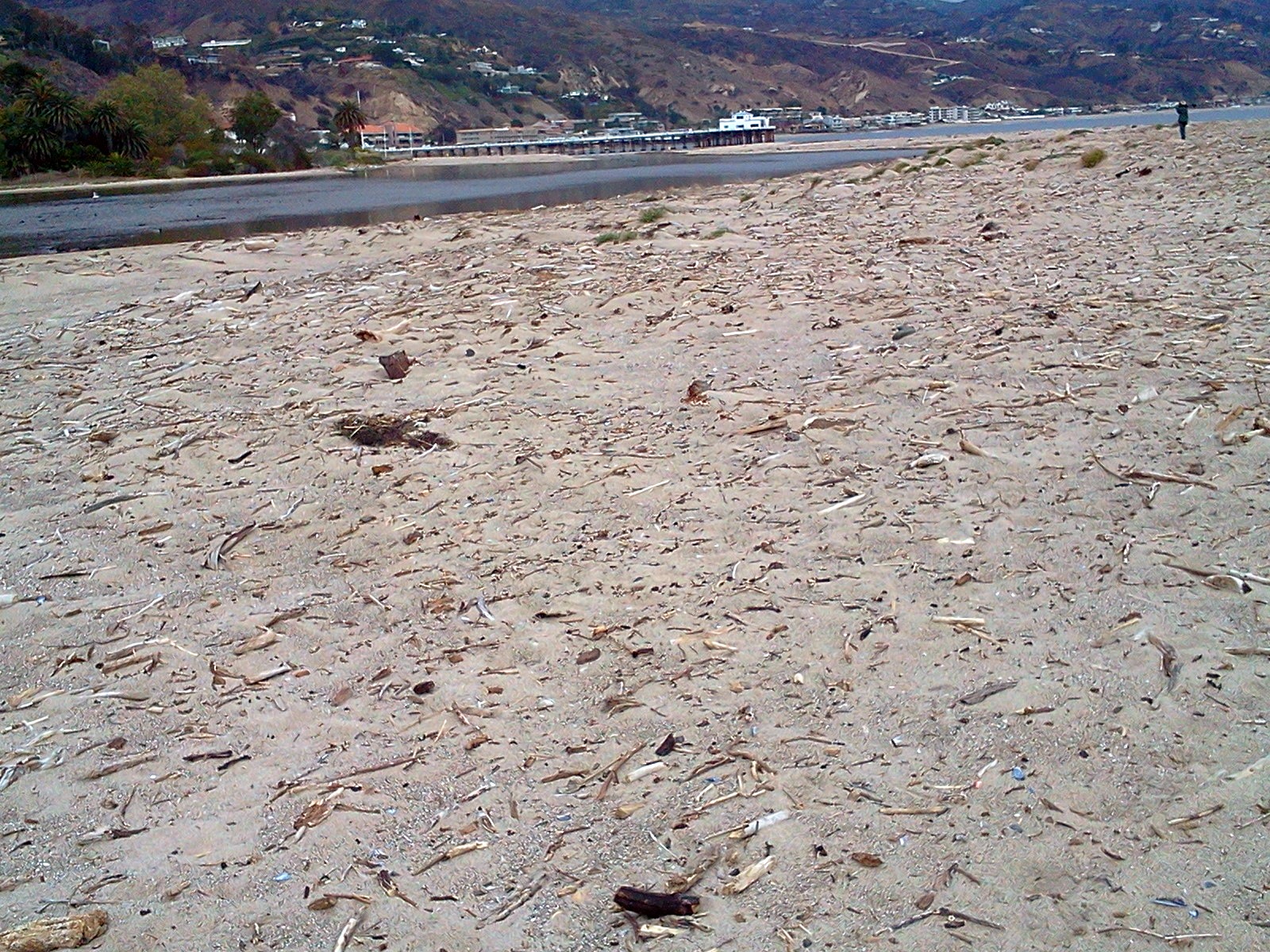
The large permanently exposed offshore rocks are in front of this house. Cormorants like to sit on these rocks when waves aren’t crashing over them. 90% of all cormorants at the lagoon are Double-crested, but these rocks are the best place to look for Brandt’s and Pelagic Cormorants when they’re around. On this particular day there were 7 Brandt’s and 1 Double-crested perched there. One of the Brandt’s was molting into breeding plumage with little white “whisker”-streaks on the side of its neck. The rest of the Double-crested were scattered around the lagoon.
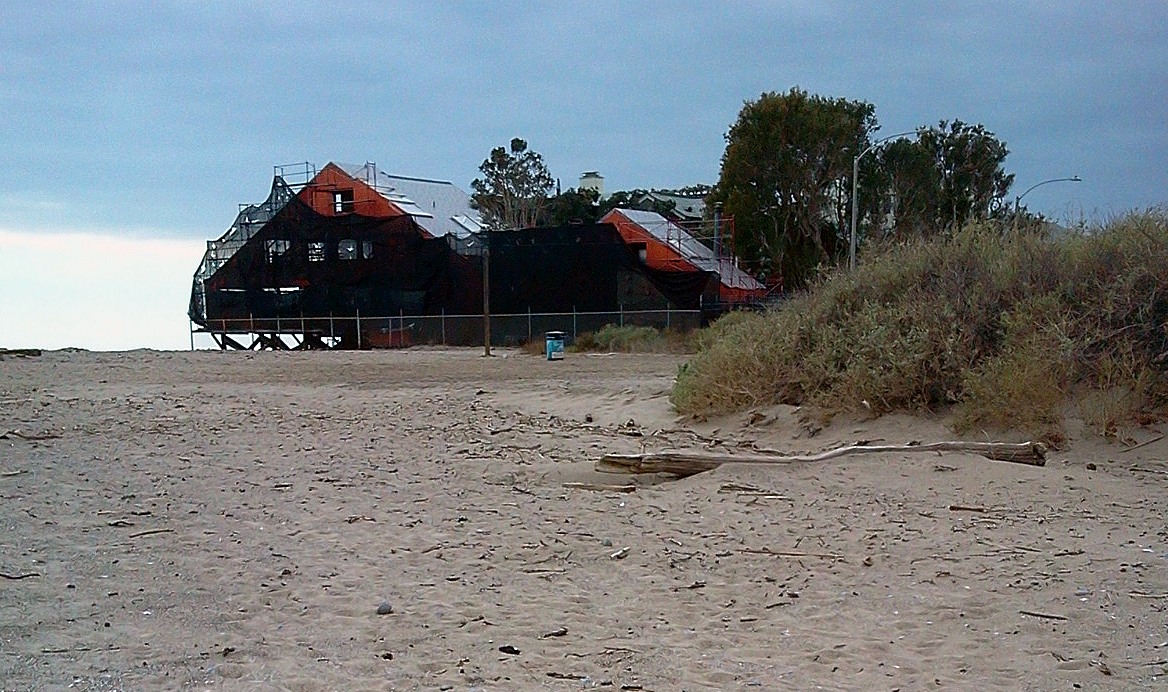
The day was cool – starting at 57°F at noon and rising all the way to 59° by 2 PM – and there were no particularly unusual birds around, but it was quiet and peaceful unlike the surrounding city, still reeling from the fires.
Malibu Lagoon on eBird as of of 2-01-25: 8423 lists, 2661 eBirders, 320 species.
Most recent species added: Nelson’s Sparrow, 11/29/24 by Femi Faminu (SMBAS member).
Birds new for the season: Northern Shoveler, Lesser Scaup, Pacific Loon, California Scrub-Jay.. “New for the season” means it has been three or more months since last recorded on our trips.
Many, many thanks to photographer: Lillian Johnson.
Upcoming SMBAS scheduled field trips; no reservations or Covid card necessary unless specifically mentioned:
- Madrona Marsh Sat Feb 8, 8:30 am.
- Malibu Lagoon, Sun. Feb 23, 8:30 (adults) & 10 am (parents & kids)
- Sepulveda Basin, Sat. Mar 15, 8 am.
- Malibu Lagoon, Sun. Mar 23, 8:30 (adults) & 10 am (parents & kids)
- These and any other trips we announce for the foreseeable future will depend upon expected status of the Covid/flu/etc. pandemic at trip time. Any trip announced may be canceled shortly before trip date if it seems necessary. By now any other comments should be superfluous.
- Link to Programs & Field Trip schedule.
The next SMBAS Zoom program: Colombia: Home of rare and fancy birds, with John Sterling, Evening Meeting, Tuesday, February 4, 2025, 7:30 p.m.
The SMBAS 10 a.m. Parent’s & Kids Birdwalk is again running. Reservations not necessary for families, but for groups (scouts, etc.), call Jean (213-522-0062).
Links: Unusual birds at Malibu Lagoon
9/23/02 Aerial photo of Malibu Lagoon
More recent aerial photo
Prior checklists:
2023: Jan-June, July-Dec 2024: Jan-June, July-Dec
2021: Jan-July, July-Dec 2022: Jan-June, July-Dec
2020: Jan-July, July-Dec 2019: Jan-June, July-Dec
2018: Jan-June, July-Dec 2017: Jan-June, July-Dec
2016: Jan-June, July-Dec 2015: Jan-May, July-Dec
2014: Jan-July, July-Dec 2013: Jan-June, July-Dec
2012: Jan-June, July-Dec 2011: Jan-June, July-Dec
2010: Jan-June, July-Dec 2009: Jan-June, July-Dec
The 10-year comparison summaries created during the Lagoon Reconfiguration Project period, remain available—despite numerous complaints—on our Lagoon Project Bird Census Page. Very briefly summarized, the results unexpectedly indicate that avian species diversification and numbers improved slightly during the restoration period June’12-June’14.
Many thanks to Lillian Johnson for contributions made to this month’s census counts.
The species lists below was re-sequenced as of 12/31/24 to agree with the California Bird Records Committee Official California Checklist. If part of the right side of the chart below is hidden, there’s a slider button inconveniently located at the bottom end of the list. The numbers 1-9 left of the species names are keyed to the nine categories of birds at the bottom. Updated lagoon bird check lists can be downloaded here.
[Chuck Almdale]
| Malibu Census 2024-25 | 8/25 | 9/22 | 10/27 | 11/24 | 12/22 | 1/30 | |
| Temperature | 64-78 | 67-75 | 64-68 | 54-59 | 56-62 | 57-59 | |
| Tide Lo/Hi Height | L+2.00 | L+2.09 | H+4.75 | L+2.06 | L+2.47 | H+5.49 | |
| Tide Time | 0735 | 0611 | 0742 | 1139 | 0939 | 0634 | |
| 1 | Northern Shoveler | 6 | |||||
| 1 | Gadwall | 12 | 30 | 38 | 26 | 32 | 89 |
| 1 | American Wigeon | 1 | 13 | 12 | 35 | ||
| 1 | Mallard | 2 | 8 | 28 | 10 | 20 | 22 |
| 1 | Green-winged Teal | 4 | 1 | 10 | 5 | ||
| 1 | Ring-necked Duck | 4 | 3 | ||||
| 1 | Lesser Scaup | 2 | |||||
| 1 | Surf Scoter | 2 | |||||
| 1 | Bufflehead | 9 | 10 | 23 | |||
| 1 | Hooded Merganser | 1 | |||||
| 1 | Red-breasted Merganser | 10 | 13 | 12 | |||
| 1 | Ruddy Duck | 28 | 22 | 35 | 37 | ||
| 2 | Pied-billed Grebe | 1 | 5 | 10 | 8 | 5 | 4 |
| 2 | Eared Grebe | 4 | 1 | 1 | |||
| 2 | Western Grebe | 28 | 1 | 34 | |||
| 7 | Feral Pigeon | 9 | 1 | 4 | 4 | 6 | |
| 7 | Mourning Dove | 3 | 1 | 1 | |||
| 8 | Anna’s Hummingbird | 2 | 2 | 1 | |||
| 8 | Allen’s Hummingbird | 3 | 4 | 2 | 1 | 3 | 1 |
| 2 | Sora | 2 | |||||
| 2 | American Coot | 2 | 72 | 340 | 560 | 705 | 797 |
| 5 | Black Oystercatcher | 2 | 2 | ||||
| 5 | Black-bellied Plover | 70 | 67 | 136 | 75 | 50 | 30 |
| 5 | Killdeer | 4 | 12 | 20 | 1 | 30 | 2 |
| 5 | Semipalmated Plover | 13 | 3 | ||||
| 5 | Snowy Plover | 22 | 42 | 18 | 34 | 27 | 2 |
| 5 | Whimbrel | 2 | 2 | 7 | 15 | 4 | 8 |
| 5 | Long-billed Curlew | 1 | |||||
| 5 | Marbled Godwit | 12 | 25 | 3 | |||
| 5 | Ruddy Turnstone | 1 | 3 | 4 | 6 | 4 | 2 |
| 5 | Sanderling | 2 | 1 | 5 | 200 | 100 | 22 |
| 5 | Least Sandpiper | 23 | 3 | 4 | 8 | 27 | 7 |
| 5 | Western Sandpiper | 13 | 2 | ||||
| 5 | Spotted Sandpiper | 1 | 1 | 1 | |||
| 5 | Willet | 5 | 5 | 3 | 51 | 20 | 15 |
| 5 | Greater Yellowlegs | 1 | 1 | ||||
| 6 | Heermann’s Gull | 5 | 24 | 79 | 29 | 2 | 7 |
| 6 | Ring-billed Gull | 2 | 2 | 12 | 15 | 19 | 12 |
| 6 | Western Gull | 113 | 55 | 27 | 65 | 35 | 90 |
| 6 | California Gull | 23 | 75 | 440 | 525 | 60 | 575 |
| 6 | American Herring Gull | 1 | 1 | 1 | |||
| 6 | Glaucous-winged Gull | 1 | |||||
| 6 | Caspian Tern | 4 | 1 | ||||
| 6 | Forster’s Tern | 2 | |||||
| 6 | Royal Tern | 5 | 5 | 6 | 2 | ||
| 6 | Elegant Tern | 10 | |||||
| 2 | Pacific Loon | 1 | |||||
| 2 | Common Loon | 2 | |||||
| 2 | Brandt’s Cormorant | 2 | 5 | 7 | |||
| 2 | Pelagic Cormorant | 1 | 2 | 2 | |||
| 2 | Double-crested Cormorant | 37 | 54 | 51 | 44 | 23 | 55 |
| 2 | Brown Pelican | 27 | 24 | 30 | 260 | 35 | 23 |
| 3 | Snowy Egret | 3 | 4 | 10 | 5 | 5 | 5 |
| 3 | Black-crowned Night-Heron | 1 | 1 | 1 | 1 | 2 | |
| 3 | Green Heron | 1 | 2 | 1 | 1 | ||
| 3 | Great Egret | 3 | 2 | 3 | 3 | 1 | 1 |
| 3 | Great Blue Heron | 4 | 2 | 5 | 4 | 4 | 1 |
| 3 | White-faced Ibis | 3 | |||||
| 4 | Turkey Vulture | 1 | 7 | 1 | |||
| 4 | Osprey | 1 | 1 | 1 | |||
| 4 | Red-shouldered Hawk | 1 | |||||
| 4 | Red-tailed Hawk | 2 | 1 | 1 | |||
| 8 | Belted Kingfisher | 1 | 1 | 1 | 1 | 1 | |
| 8 | Nuttall’s Woodpecker | 1 | |||||
| 8 | Hairy Woodpecker | 1 | |||||
| 4 | American Kestrel | 1 | |||||
| 8 | Nanday Parakeet | 25 | 4 | ||||
| 9 | Ash-throated Flycatcher | 1 | |||||
| 9 | Cassin’s Kingbird | 1 | 1 | ||||
| 9 | Western Kingbird | 8 | |||||
| 9 | Black Phoebe | 3 | 2 | 4 | 6 | 1 | 1 |
| 9 | Say’s Phoebe | 1 | 1 | 1 | |||
| 9 | Loggerhead Shrike | 1 | |||||
| 9 | California Scrub-Jay | 2 | 1 | ||||
| 9 | American Crow | 4 | 8 | 6 | 22 | 8 | 9 |
| 9 | Common Raven | 4 | 1 | ||||
| 9 | Oak Titmouse | 1 | |||||
| 9 | Tree Swallow | 1 | 12 | ||||
| 9 | No. Rough-winged Swallow | 2 | |||||
| 9 | Barn Swallow | 20 | 1 | 1 | |||
| 9 | Cliff Swallow | 4 | |||||
| 9 | Bushtit | 5 | 20 | 30 | 12 | 50 | 4 |
| 9 | Wrentit | 4 | 1 | 2 | 1 | ||
| 9 | Ruby-crowned Kinglet | 1 | 1 | 3 | 1 | ||
| 9 | Blue-gray Gnatcatcher | 1 | 4 | 1 | |||
| 9 | Bewick’s Wren | 2 | 2 | 2 | 1 | 1 | |
| 9 | Northern House Wren | 2 | 3 | 6 | 1 | ||
| 9 | Marsh Wren | 2 | 1 | ||||
| 9 | Northern Mockingbird | 1 | 1 | 1 | 1 | ||
| 9 | European Starling | 1 | 10 | 12 | 7 | ||
| 9 | Western Bluebird | 5 | |||||
| 9 | Hermit Thrush | 1 | |||||
| 9 | House Finch | 5 | 4 | 8 | 4 | 6 | 8 |
| 9 | Lesser Goldfinch | 3 | 6 | 2 | |||
| 9 | Lark Sparrow | 1 | |||||
| 9 | Dark-eyed Junco | 1 | 2 | 1 | 2 | ||
| 9 | White-crowned Sparrow | 16 | 15 | 20 | 8 | ||
| 9 | Savannah Sparrow | 1 | |||||
| 9 | Song Sparrow | 10 | 10 | 5 | 8 | 6 | 12 |
| 9 | California Towhee | 1 | 3 | 2 | 2 | ||
| 9 | Spotted Towhee | 1 | |||||
| 9 | Western Meadowlark | 15 | 1 | ||||
| 9 | Hooded Oriole | 1 | |||||
| 9 | Red-winged Blackbird | 11 | 1 | 2 | |||
| 9 | Brown-headed Cowbird | 18 | |||||
| 9 | Great-tailed Grackle | 1 | 4 | 15 | 22 | ||
| 9 | Orange-crowned Warbler | 1 | 2 | 1 | 2 | 1 | |
| 9 | Common Yellowthroat | 1 | 5 | 7 | 8 | 6 | 2 |
| 9 | Yellow Warbler | 1 | |||||
| 9 | Yellow-rumped Warbler | 15 | 15 | 14 | 6 | ||
| 9 | Townsend’s Warbler | 2 | |||||
| Totals Birds by Type | Aug | Sep | Oct | Nov | Dec | Dec | |
| 1 | Waterfowl | 14 | 43 | 112 | 93 | 157 | 196 |
| 2 | Water Birds – Other | 68 | 155 | 469 | 882 | 769 | 922 |
| 3 | Herons, Egrets & Ibis | 12 | 14 | 20 | 14 | 12 | 7 |
| 4 | Quail & Raptors | 1 | 10 | 3 | 2 | 2 | 0 |
| 5 | Shorebirds | 157 | 142 | 197 | 404 | 290 | 92 |
| 6 | Gulls & Terns | 165 | 162 | 564 | 635 | 119 | 685 |
| 7 | Doves | 12 | 2 | 5 | 4 | 0 | 6 |
| 8 | Other Non-Passerines | 7 | 31 | 5 | 3 | 8 | 1 |
| 9 | Passerines | 92 | 119 | 136 | 142 | 150 | 57 |
| Totals Birds | 528 | 678 | 1511 | 2179 | 1507 | 1966 | |
| Total Species by Group | Aug | Sep | Oct | Nov | Dec | Dec | |
| 1 | Waterfowl | 2 | 4 | 6 | 8 | 8 | 8 |
| 2 | Water Birds – Other | 5 | 4 | 9 | 8 | 5 | 8 |
| 3 | Herons, Egrets & Ibis | 5 | 6 | 5 | 5 | 4 | 3 |
| 4 | Quail & Raptors | 1 | 3 | 3 | 2 | 2 | 0 |
| 5 | Shorebirds | 12 | 12 | 8 | 10 | 11 | 10 |
| 6 | Gulls & Terns | 9 | 6 | 5 | 5 | 6 | 5 |
| 7 | Doves | 2 | 2 | 2 | 1 | 0 | 1 |
| 8 | Other Non-Passerines | 4 | 4 | 3 | 3 | 3 | 1 |
| 9 | Passerines | 22 | 27 | 24 | 24 | 17 | 14 |
| Totals Species – 111 | 62 | 68 | 65 | 66 | 56 | 50 |
Sepulveda Basin Fires – Take Action Now
[Posted by Chuck Almdale]
Our neighboring Audubon Chapter, San Fernando Valley Audubon Society (SFVAS), is circulating a letter to it’s membership, friends and fellow birders including Santa Monica Bay Audubon Society. Many of us have enjoyed the year-round birding opportunities offered by the Sepulveda Basin, and concur with their view as stated below. We encourage you to sign on.
Over the past several years, the SFVAS community has faced an ongoing threat to our safety due to the numerous, almost daily fires in the Sepulveda Basin, which are alarmingly close to many of our homes and are often in precious wildlife habitat. Despite sounding the alert early last summer, there have been hundreds of fires in the basin since then. Approximately 50% of the Sepulveda Basin Wildlife Reserve has been burned. It is time for action!

Contact Mayor Bass and express your demand
that this situation not be ignored.
Text of a sample email follows which may be copied and pasted
into an email and modified as you see fit.
It should be emailed to : elliott.layne@lacity.org
cc: info@sfvaudubon.org,info@encinopoa.com
Email to: elliott.layne@lacity.org
cc: info@sfvaudubon.org, info@encinopoa.com
Dear Mayor Bass,
Over the past several years, our community has faced an ongoing threat to our safety due to the numerous, almost daily fires in the Sepulveda Basin, which are alarmingly close to many of our homes and are often in precious wildlife habitat. Since the summer of 2024, over 218 fires have occurred in this area.
Even though many of these fires have involved small amounts of trash and have been quickly contained by firefighters, they are far from harmless. Ordinary household items can explode or release toxic substances when heated, as happened in June 2024 when 11 LA City firefighters were injured. As evidenced by the Palisades and Eaton fires, we are painfully aware that a small fire can, in an instant, become a massive destructive and deadly fire.
These incidents pose a serious and escalating risk to the safety of nearby residents, park users and the environment. On Wednesday, January 8, Encino residents woke to find smoke filling their homes from a fire in the Basin. On January 5 a group of birdwatchers in the Basin was terrified by a fire deliberately set within a few feet of them. At least 50% of the designated wildlife reserve areas have been incinerated since mid-2024 including nesting sites of the endangered Least Bell’s Vireo. These are just examples of a growing and unacceptable pattern. We are frustrated and disheartened by the City’s continued inaction.
The majority of these fires have originated in or as a result of homeless encampments, which, despite being illegal, are allowed to persist. The City’s current policy of “Hands Off the Homeless” is putting adjacent neighborhoods, our park and its habitat, and our entire community at grave risk. Unless immediate action is taken, we fear it’s only a matter of time before a catastrophic wildfire spreads from this wild-urban interface area to devastate entire communities..
We are demanding the following actions without delay:
1. Strict enforcement of no camping laws in the Sepulveda Basin. This includes the removal of all encampments, with zero tolerance for trespassing, enforced by City Park Rangers or LAPD. Because encampments can be very well hidden, consideration should be given to using forward-looking infrared (FLIER) thermal cameras to locate and facilitate removal of encampments. The LAFD has this technology in their arsenal.
2. Immediate enforcement of no overnight parking in the entire Balboa/Sepulveda Dam/Woodley Park area by the City Department of Transportation (DOT).
3. Increased Park Ranger patrols within the Basin to ensure public safety and enforcement of existing laws, with assistance from LAPD as warranted.
4. Regular vegetative management by the appropriate City or other agency in accordance with best conservation practices with an emphasis on fire prevention and discouraging encampments.
In the wake of the worst fire devastation in the City’s history, the safety of our community must be the City’s top priority. Mayor Bass, we urge you to take swift, decisive action to protect the lives and homes of those who live here. We refuse to continue to live in fear and we know these demands can be met with immediate and effective action to ensure the safety of our neighborhoods and our park.
Sincerely,
[Your Name]
[Your Address]
Link to SFVAS posting:
https://mailchi.mp/98ad683b99ec/sepulveda-basin-fires-take-action-now?e=2cc2c6c758
Malibu Lagoon trip change: Sunday, 26 Jan. 2025
[Posted by Chuck Almdale]
The trip is officially canceled. However…..
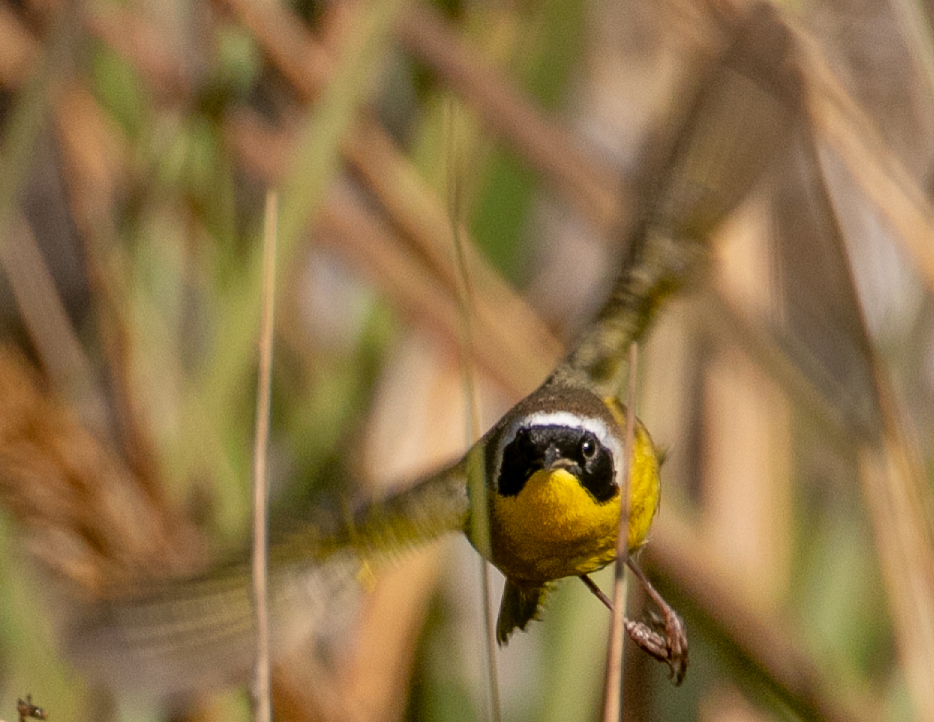
The park is open now and will likely be open this Sunday. The problem, constantly in flux, is getting there.
1. Las Virgenes Rd (Malibu Canyon Rd.) is currently open from Fwy 101 to Civic Center Way in downtown Malibu.
2. Pacific Coast Hwy (PCH) north of Malibu is open to Oxnard.
3. PCH south of Malibu is mostly closed except (possibly) to local residents, from (approximately) Carbon Canyon Rd. (east of Malibu Pier) to Temescal Canyon Rd. in Pacific Palisades.
4. Mulholland Hwy from the 405 Fwy to Las Virgenes appears to be open. However, this is a slow twisty route, so taking 101 Fwy west to Las Virgenes should be faster.
I’ll be unofficially at the lagoon at 8:30 am on Sunday, if Las Virgenes Rd. is still open. You’re welcome to join me for some unofficial non-SMBAS birding should you decide to take the drive.
Weather: Cool. Temp: 45>53°F, Wind: NE 7>10 mph, Clouds: 72%, rain chance: 48%
Tide: Big Drop: High: +5.49 ft.@ 6:34am; Low: -0.78 ft.@ 2:16pm
According to Genasys Project map there are 8 traffic checkpoints along this stretch.
https://protect.genasys.com/search?z=11.806408391395804&latlon=34.06525477163643%2C-118.59029658653168
Below: The Genasys map as of Weds. 4 pm 22 Jan.
“A” in a circle = Traffic Control Point.

[Written & posted by Chuck Almdale]
Bette Davis Park & Glendale Narrows Riverwalk, 18 Jan. 2025
[Chuck Almdale; photos by Chris Tosdevin, Ray Juncosa, Ann Flower and Marquette Mutchler]
It was a cool morning, somewhat gray, with temperature at 49°F, rising to 59° by about 11 am. The breeze was light and occasional, and the air was clear and didn’t smell like smoke or burnt rubble, unlike other parts of Los Angeles. Species variety was not tremendous (47 species plus “peeps”) but there was always something worth looking at.
We had no photographers present, so the photos in this posting are from previous postings, most by Chris Tosdevin at our prior Bette Davis & Riverwalk field trip on 13 Jan. 2024.
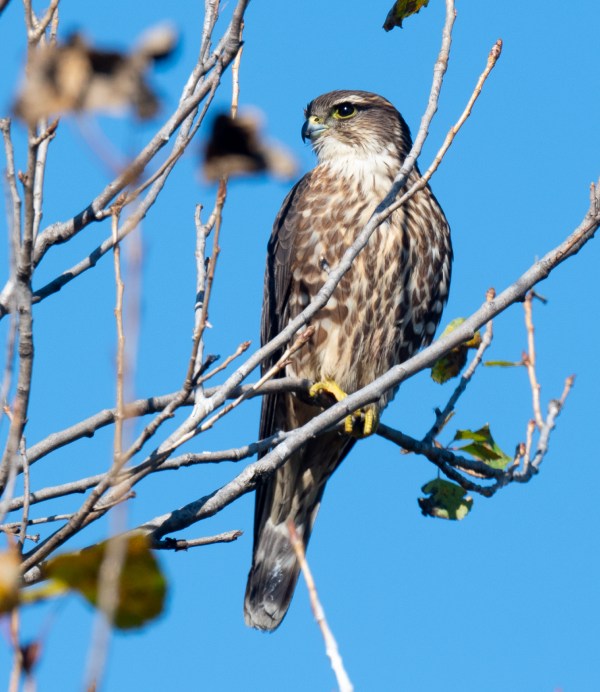
Nearly the first bird of the morning – after we sorted out a flock of Red-winged and Brewer’s Blackbirds mixed with Starlings – was a Merlin perched at the top of a tall sycamore near Rancho Drive, eating something small. After that it began calling with a series of high chirps, and for those with good hearing, he received a reply from off to the east.
Several times we heard or saw (or both) Lilac-crowned Amazons (formerly Lilac-crowned Parrots in genus Amazona). Last year they were investigating potential nest-holes, but today they were mostly flying around and loudly calling, as parrots nearly always do. They share with the rest of the Amazona genus the behavior of flying with rapid shallow wingbeats, unlike the other parrots in our area, so it’s easy to ID them as Amazonas, which leaves you with the remaining problem of seeing what colors are or aren’t on their head and body in order to nail down the species.

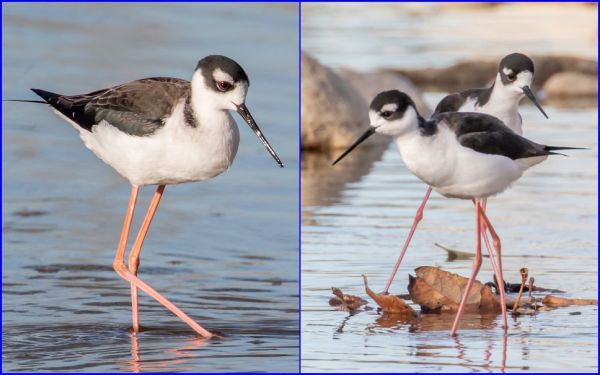
This portion of the L.A. River channel does not have a cement bottom and a lot of birds appreciate the dirt bottom; the channel islands are well rooted, making it much birdier than most other sections of the river channel which are entirely cement. Black-necked Stilts are quite reliable here and are scattered up and down the channel, although about 75% were downstream of the long brushy sand island at the Glendale Narrows Riverwalk section which goes under the #5 freeway.

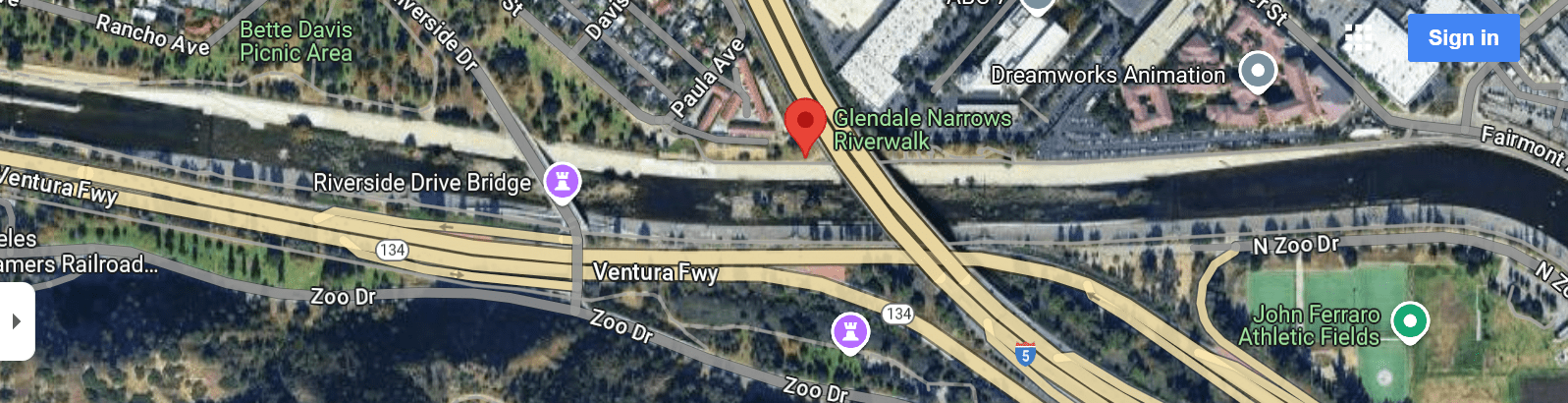
Using the satellite photo below, we walked along the upper (north) riverbank from the east end of a narrow strip of mid-channel concrete to the east end of the long thin island that passes under the #5 freeway. Birds in the channel tended to stay close to these two long islands, and the east (downstream) ends of these islands were particularly good for birds. The two yellowlegs species were at the east end of the island running under Riverside Drive while some of the ducks (Cinnamon Teal, Bufflehead and Ring-necked Duck) were only at the east end of the island under the #5 freeway. The three Wilson’s Snipe were near the west end of the Riverside Drive island, poking about in the floating vegetation.
The freeways provide a constant background of traffic, a rushing roar with few discernible individual sounds, just a rushing “wall of sound” such as Phil Spector used for the records he produced. Imagine that you’re birding next to a major waterfall – Niagara or Iguazú for example – and the sound just becomes part of the background. You can still hear plenty of birds. One tree with a lot of holes had become an apartment house for House Sparrows who were all busily chirping away. The blackbirds and starlings were constantly whistling and croaking, ravens and crows croaked [could the crow be the origin of the word ‘croaked’?, or vice-versa?], the Amazons constantly call as they fly, and the ducks in the river whistled and quacked. The birds were quite vocal.

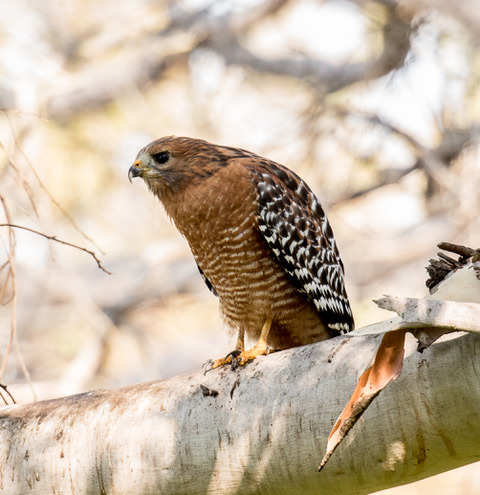
We studied a hawk perched in a river treetop for quite a while as I let (or perhaps forced) the group, using my NGS field guide (6th Ed.) to narrow it down to a juvenile Red-shouldered Hawk. It had a lot of reddish color over it’s head, neck and shoulders, and the white feather-tips that provide the scaling effect on the back had not yet fully grown in, so it looked only somewhat like the pictures in the field guide.
We walked down to the eastern tip of the island under the #5 freeway, largely to see if any Neotropic Cormorants might be there, which there weren’t. A few hundred yards more would bring us to a large flock of “peeps” and several hundred Black-necked Stilts, but it was getting late and some of us were tired. So “peeps, spuh” they remained.

We could actually see a hint, a tinge, of the neck-ring, a near-impossible feat in the field.
This is a good birding spot for a place surrounded by city and “freeway-close.” I suspect that in the spring it functions as a small oasis for passerines, and the L.A. River channel provides a migration route for waterbirds in both fall and spring.
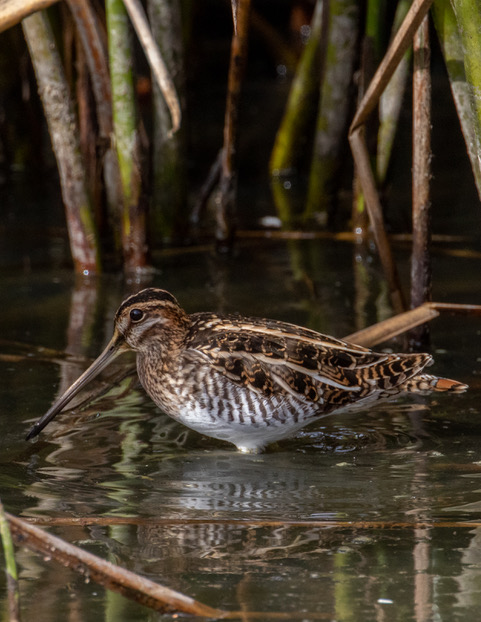
Very distinctive back stripes and long thick straight bill.
eBird – when you bother to enter the sightings and email them to yourself – cranks out a nice little report. I wonder if you can do one with multiple years? Does anyone know?
Bette Davis Picnic Area, Los Angeles, California, US
Jan 18, 2025 8:00 AM – 11:30 AM
Protocol: Traveling; 1.5 miles
Checklist Comments: Bird walk of Santa Monica Bay Audubon Society. Temp 49 to 59°F. First gray, then sunny, little breeze. Birded parkland and along LA River from W end of park to middle of Glendale Narrows (S end of long brushy island) & adjacent park.
47 species (+1 other taxa)
Canada Goose 2
Egyptian Goose 4 Fly-by in river channel.
Blue-winged Teal 3
Cinnamon Teal 3 S. end of Riverwalk brushy island.
American Wigeon 200
Mallard 30
Green-winged Teal (American) 2
Ring-necked Duck 1 S. end of Riverwalk brushy island.
Bufflehead 6 S. end of Riverwalk brushy island.
Rock Pigeon (Feral Pigeon) 30
Eurasian Collared-Dove 20
Mourning Dove 6
White-throated Swift 10
Anna’s Hummingbird 2
American Coot 70
Black-necked Stilt 400 Huge flock by Glendale Riverwalk S of long brushy island, about 100 elsewhere.
Killdeer 4
Wilson’s Snipe 3 Fairly close to each other among river channel plants mid-Bette Davis park
Spotted Sandpiper 5
Lesser Yellowlegs 1 Both Yellowlegs species near N end of Glendale Riverwalk, always close together.
Greater Yellowlegs 1
peep sp. 100 With huge flock of Black-necked Stilts, too far away to identify.
Western Gull 1
Pied-billed Grebe 6
Double-crested Cormorant 7 No Neotropic Corm. which are occasionally reported from here.
Black-crowned Night Heron 16 Eleven in one tree on trail to Riverwalk.
Snowy Egret 1
Great Egret 1
Great Blue Heron 6
Turkey Vulture 2
Red-shouldered Hawk 1
Acorn Woodpecker 8
Nuttall’s Woodpecker 1
Merlin 2 1 seen calling at treetop in Bette Davis Park, 2nd bird heard replying but not seen.
Lilac-crowned Amazon 3 Not searching for nest holes as they were last year.
Black Phoebe 10
Say’s Phoebe 1 Exceptionally yellowish-ochre breast/belly
American Crow 6
Common Raven 4 One had a large hook at tip of upper bill.
Ruby-crowned Kinglet 8
European Starling 40
House Sparrow 10
Song Sparrow 3 Heard only
California Towhee 1 Heard only
Red-winged Blackbird 80 Several large mixed flocks with Brewer’s B.
Brewer’s Blackbird 40
Common Yellowthroat 5
Yellow-rumped Warbler (Audubon’s) 40
Two Oddities
[Chuck Almdale]
If you’ve never heard of Bill Oddie…well…you’re either new to birding or have led a very sheltered, protected life. If you’ve ever played the video game Gone Birding, he’s the short, chubby, hairy weird one who is always dropping things and banging into/tripping over other things. However, as he’s also a Brit and many American birders are utterly unaware of the Brits’ contributions to birding, you might have missed his name. But no longer! Now you’ve heard it and we can now move on.
Move on to his books, that is, of which he has written many, mostly about birds and birders and birding. He’s avid, a real birdo and twitcher. I currently have two of his books at hand. A third book – which among other things contained a narration about that bird tour leader in India who wandered away from his elephant, was attacked by a tiger and the tour participants had to carry on for the rest of the tour without him – went missing somewhere, probably to a sticky-fingered birder friend. Look for it. Good story, that, plus other good stories. Onward.

Bill Oddie’s Little Black Bird Book
Published in 1980, this book contains all the information you need to survive in the cutthroat, back-stabbing, prevaricating and otherwise dirty rotten scoundrelish world of birding…British Birding anyway. American birders are far kinder, helpful, less likely to steal your car, bins or brimmed hat or send you down the wrong canyon or waaaay across the marsh, probably due to the fact that our school teachers aren’t allowed – let alone encouraged – to beat us with bamboo canes.
Among the book’s many features is a Glossary of Twitching Terms, such as:
Twitcher: Someone who races around the countryside chasing ticks and uses all the weird words below. There are various stories concerning the origin of “twitcher” and they all refer to uncontrollable spasmodic bodily twitching, from either the cold or excitement at the prospect of having a megatick.
Tick: The little check mark you put next to the name of a bird on a list which you’ve just seen, and by extension the bird itself.
Megatick: A very good tick; a rare bird.
Lifer: A bird you’ve never before seen. It can be a world, country, state, county, city, backyard or any other geographical area lifer.
Countable: Unless you’re a Kiwi, the bird better not be dead. Introduced birds can be present for decades before they’re considered countable. Need to know what’s countable in California? Go here: https://www.californiabirds.org/checklist.asp.
To Have a Bird: “Get over here right now. I have a megatick.” Birdos are possessive of bird sightings.
Flog: To really work over an area, beat the bushes looking for a bird, usually a particular bird.
Dip (out): Failure to see the desired bird. Particularly annoying when you’ve flogged the bush for hours for a megatick.
Gripped Off: Someone else saw the megatick you dipped on, probably easily and just before you arrived. Perhaps they then intentionally drove it off.
Duff Gen: Bad information (sometimes intentionally bad) about a location or identification.
String: As in “stringing me along,” i.e. intentional deceit. A report can be “stringy.” Report too many megaticks and grip off too many birders with duff gen, and you’ll become known as a stringer; unreliable.
Cock-up: Completely blowing an identification.
Birdwatcher: Bill doesn’t say this, but “birdwatcher” is what non-birders call birders. Birders call themselves birders. Birdwatchers tend to say things like: “What an admirable dickey-bird that is, twittering his little heart out” when a birder might say “Whoa, megatick,” or “Trashbird, move on.”
Bill includes tips on clothing and equipment. Besides the mandatory bins and scope, anoraks, hats and wellies are basic British birding gear, preferably sufficiently filthy to connote your seriousness. Never use the hood of your anorak (which need not be an actual anorak) for anything other than stowing your lunch. The hat can be almost anything but must be covered with badges and never removed from your head.
Both this and the next book are filled with delightful and informative ink drawings both large and small.
There are plenty of tips on other matters of import, such as how to mislead others or otherwise obscure your ignorance. For example:
Sound honest and modest while implying you know more than you do: “Couldn’t see the bill (or legs, etc.)” implies that you know it is an Important Field Mark but just couldn’t make it out. Saying “It had the jizz [the completely misspelled acronym for General Impression of Size and Shape] of a Least Sandpiper” implies that it wasn’t actually a Least when in fact you know very well it was a Least Sandpiper.
Covering your Cock-Up with the Two-bird Theory: They tell you: “I looked for the Red-throated Stint exactly where you said, but all I saw was a Western Sandpiper,” thereby implying that you made a mistake. You reply, “Yes, of course, there was a Western there too in an intermediate plumage, but the stint was a few yards farther off west. Unmistakably different. I guess you missed it.”
The Aberrant Bird: You admit that perhaps it was a Western Sandpiper after all, but it was an aberrant one. That you even know this word is usually sufficient to get off the hook.
There is much much more on field guide books, birding etiquette, finding birds, listening to birds, calling birds, songs for birders on the march and wonderful birding locations. You may have birded at the reeking Lancaster sewage farm or on the beach under the flight path at LAX (and if you haven’t you don’t know what you’re missing) and seen great birds but can you imagine the wondrous birds you’d see if you could combine both spots into one? The Brits do this daily by going to the odiferous Perry Oaks poop farm in Middlesex located under the Heathrow Airport main flight path.
And if someone comes up to you on the beach or in a bar and says, “So you’re a bird watcher, eh? I’m a bit of a bird-watcher myself, know what I mean?, know what I mean?” [Nudge nudge, wink wink, knowing look], you’ll know exactly what to say. But if you don’t read this book, you won’t.

The Bid Bird Race
Bill Oddie & David Tomlinson
Forward by Roger Tory Peterson [yes, that Roger Tory Peterson]
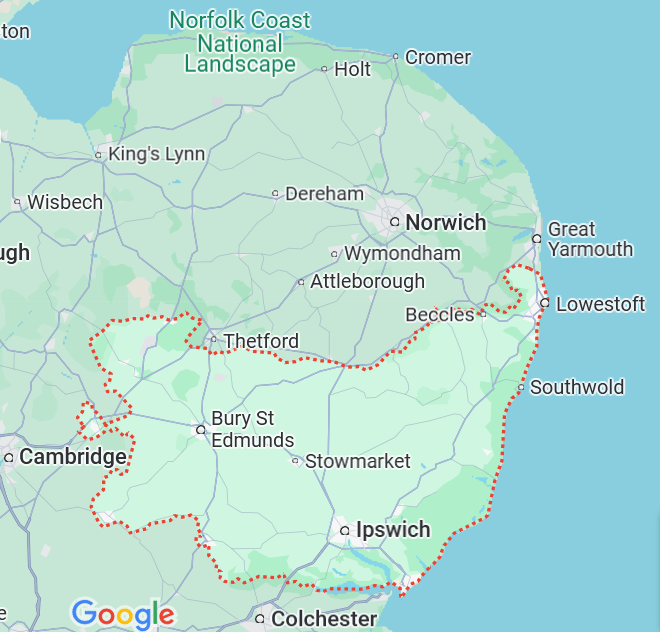
Published in 1983, being the account of the fourth Country Life Record Birdwatch, held on 14 May 1983, as narrated blow by blow and bird by bird by the leaders of both teams. With Land Rovers and Range Rovers, Saabs, helicopters, armies of scouts, awash in sponsor’s money and loaned equipment, Bill and David lead their teams (respectively Flora & Fauna and Country Life) around the East Anglian countryside of Norfolk and Suffolk counties.
If you’ve ever done a big day, or raced around either with or against a friend trying to outwit and outsee the other, you’ll have a vague idea of what’s going on here. But as the Brits invented (as far as I’m concerned) the hobby/sport/science/exercise/amusement of birding, it seems inevitable that they’d be the weirdest and the best at it.
“Superbly fit, their reflexes honed to a knife-edge of paranoia, the eight birders conquer hunger, thirst, exhaustion and duff information to reach the finishing line on the Suffolk coast.”
It’s quite a ride.
The region covered is roughly that between Norfolk in the north, Ipswitch in the southeast and a tad east of Cambridge in the southwest. Fine birding country.



 SANTA MONICA BAY AUDUBON SOCIETY BLOG