A Windblown Malibu Lagoon, Jan. 30, 2025
[Text by Chuck Almdale; photos by Lillian Johnson. Trip list at the end.]
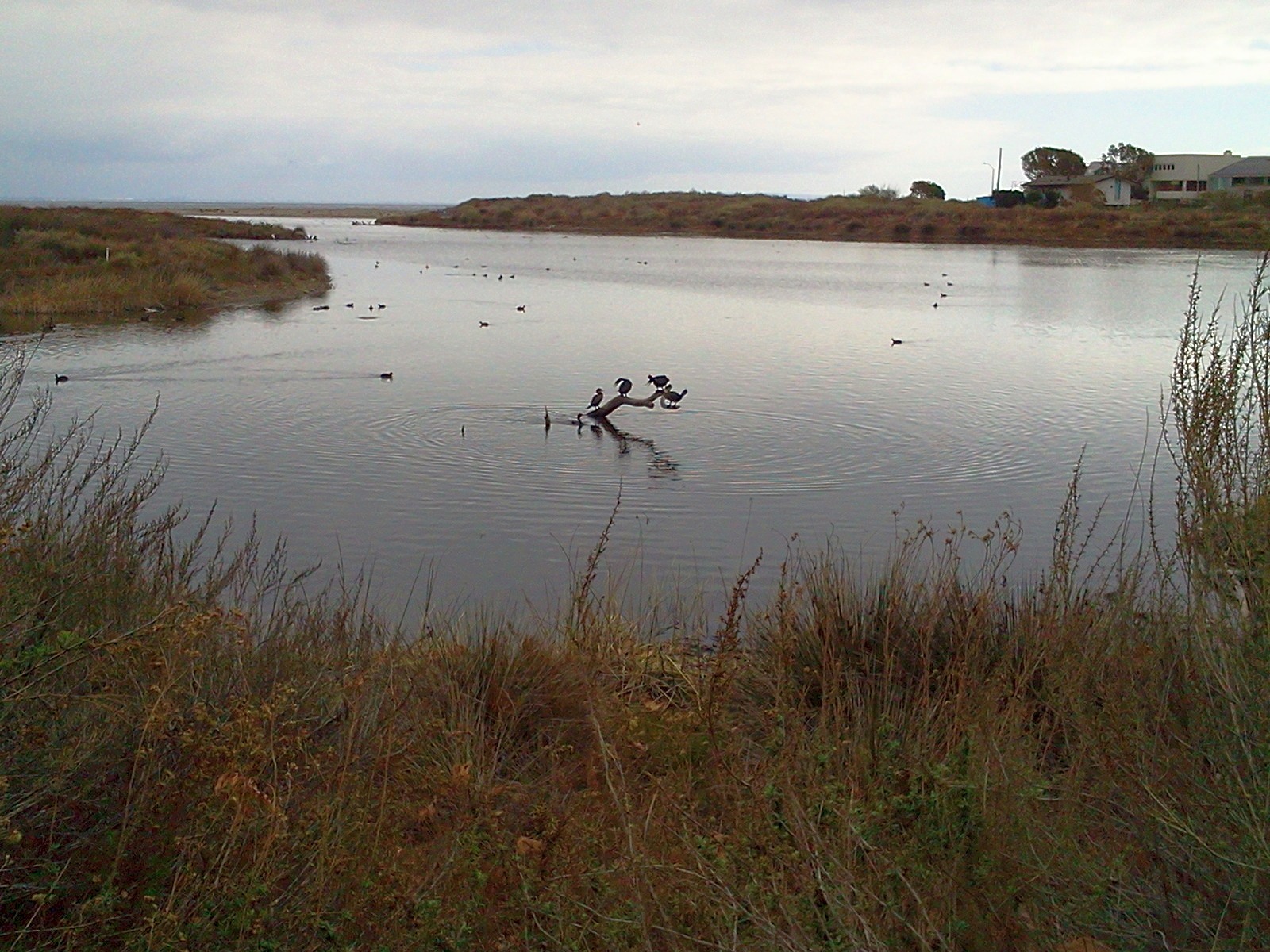
As you’ve probably noticed, it’s been quite difficult of late to reach the lagoon, so we canceled the 26 Jan. trip. Heavy rain at our house Sunday morning convinced me to skip a personal visit and crawl back into bed. But by Thursday Jan. 30 Las Virgenes Rd. was open all the way from the #101 to Malibu and the Golden Bear Senior parking passes ($20!) were finally in stock at Malibu Creek State Park, so we stopped at the park to get our pass and continued to the lagoon. The only problem driving was excessive traffic. We found that PCH was officially closed with a barrier across the west end of the Malibu Creek bridge right next to the lagoon parking entrance. Lagoon parking was open and there was even an attendant in the booth. His was the only car in the parking lot.
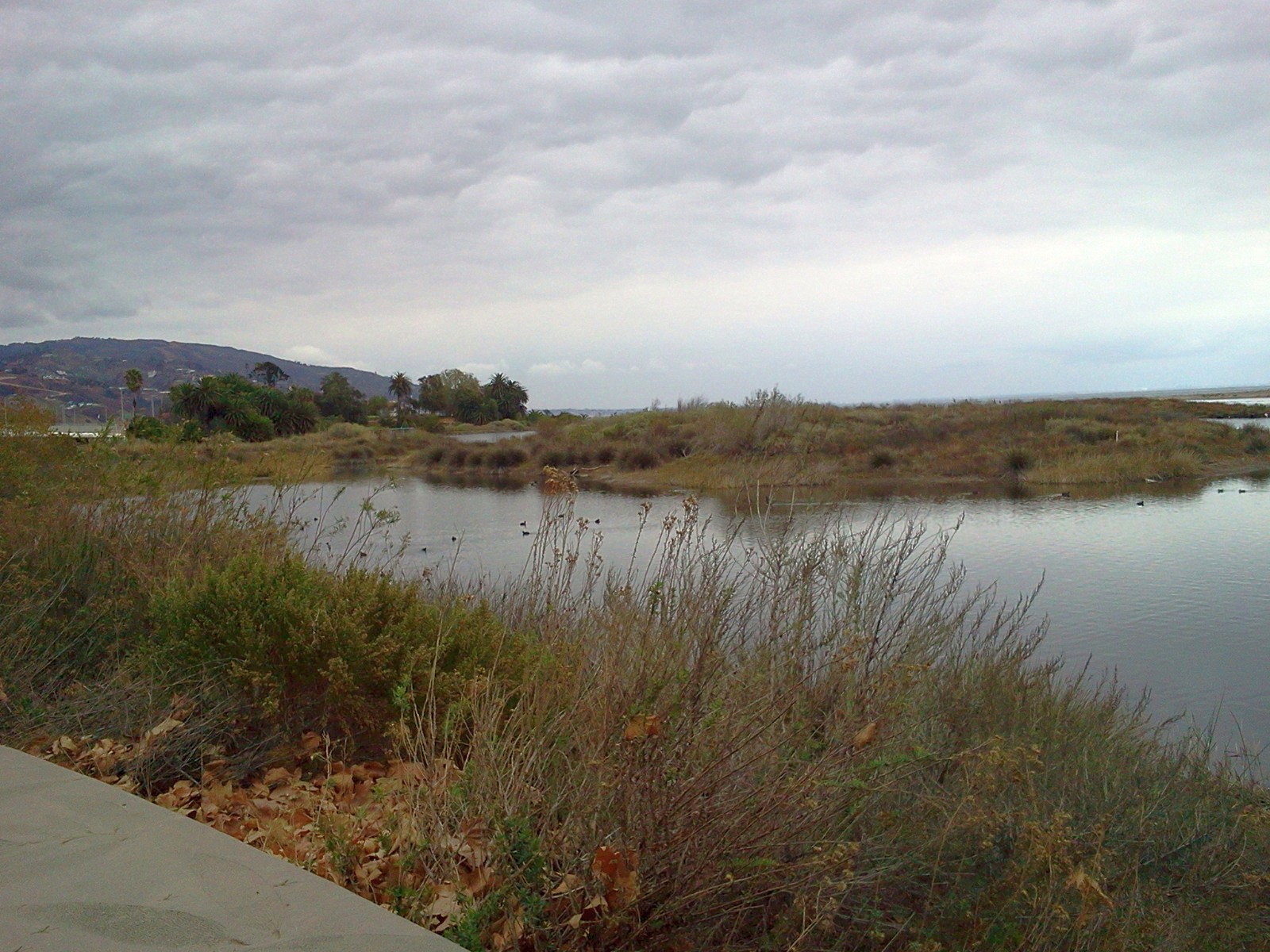
We soon discovered that the birds enjoyed the absence of humans. More sparrows than ever bounced along the paths and one Bewick’s Wren didn’t even feel it necessary to retreat into the bushes as I passed. The lagoon was covered with American Coots – 797 of them, a close count – which was nearly a new record, not quite up to the 870 recorded on Oct. 27 2019. I sometimes wonder if anyone else ever counts coots, as they’re not high on most birder’s lists of most-wanted birds. On the salt lakes of the Bolivian altiplano you’ll discover that coots are a very desirable bird.
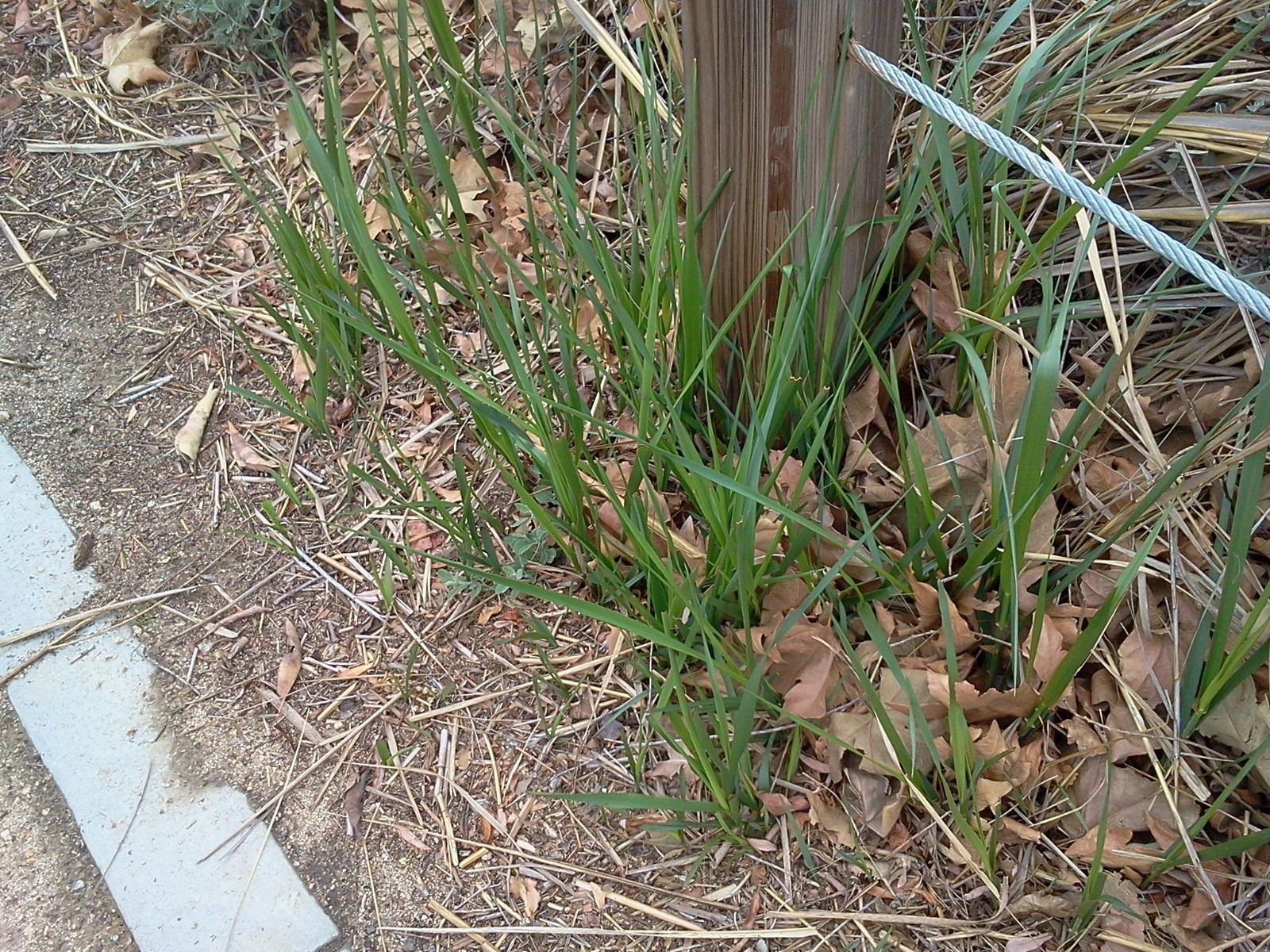
The lagoon and surrounding vegetation were, as far as I could tell, untouched by fire. Neither was the surrounding Malibu Village, although some of the western edges of the residential area were burned in the Franklin fire of mid-December.
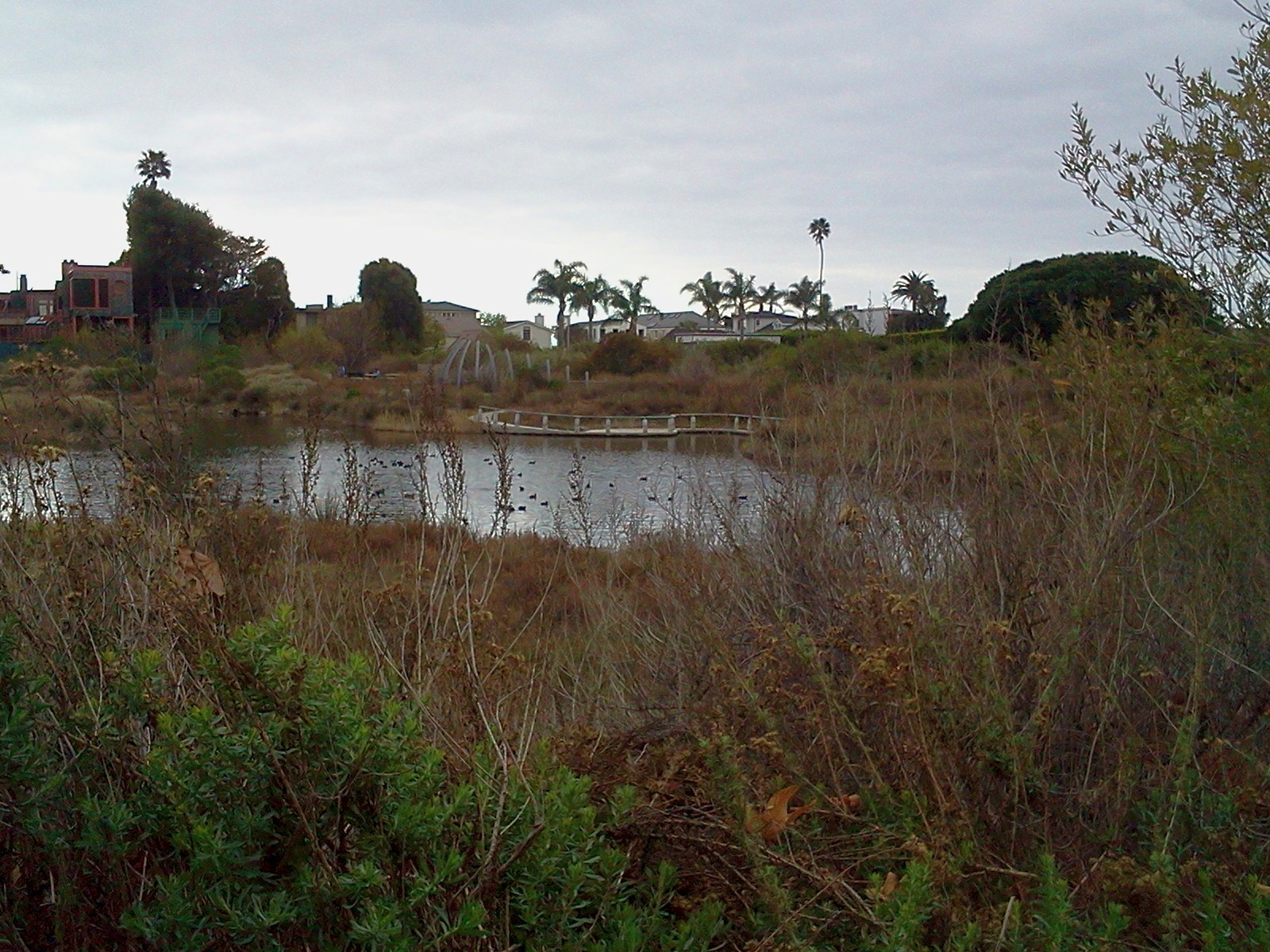
You can tell that lagoon level in the photo above is not particularly high because you can see the tidal clock sidewalk.
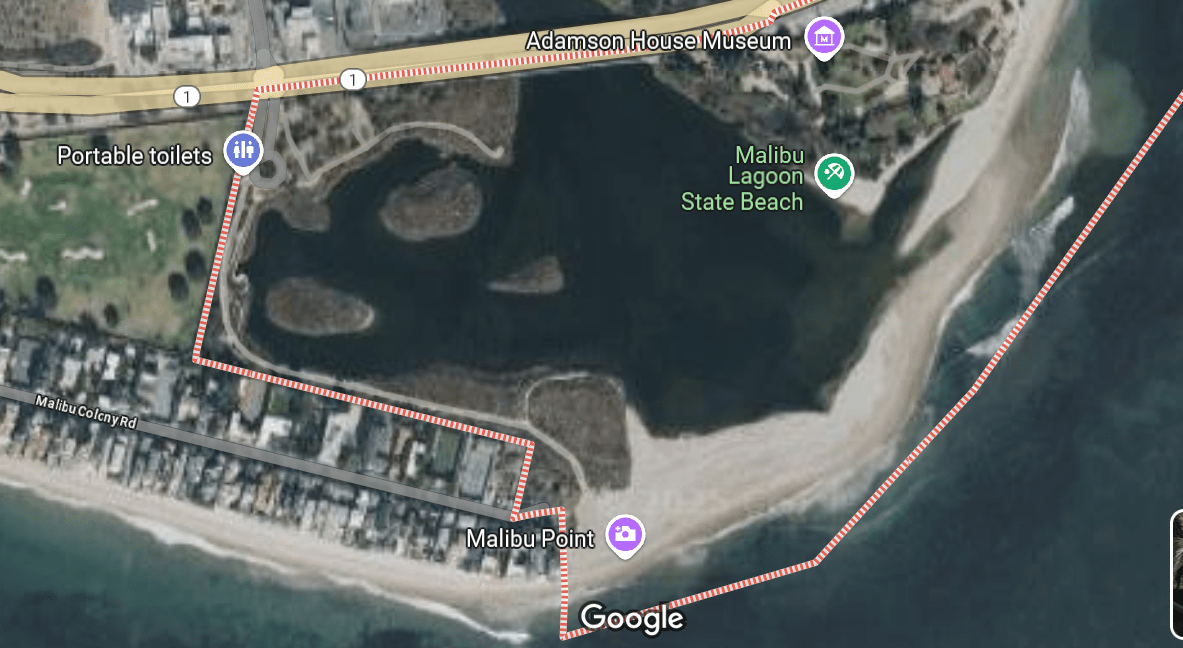
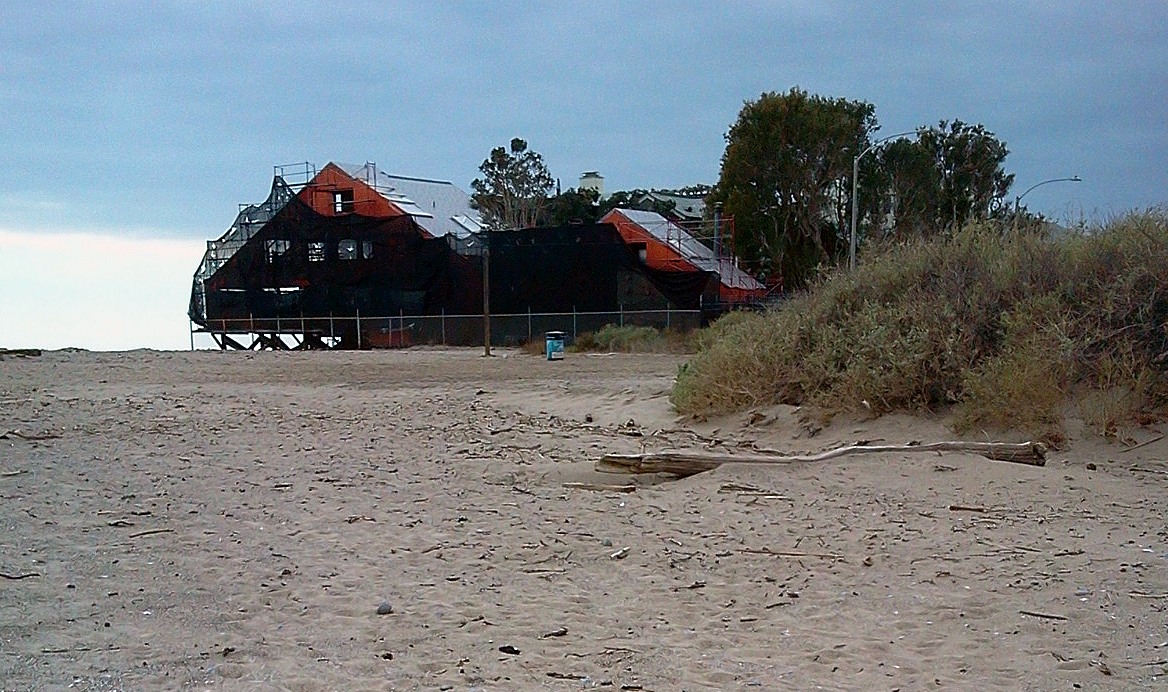
What was noticeable was that a hard wind had blown. Many of the taller bushes were leaning westward with their multiple stems pushed together. Some trees looked a bit bare of leaves. One tree on park land near the eastern end of Malibu Colony was completely gone. I didn’t clamber through the bushes to see if anything remained of the trunk. The house at the east end of the colony was wrapped in tarps and undergoing repairs (reasons unknown to us). A colony roof adjacent to the beach path was prickly with bent, upturned and missing shingles. These were thick shingles and bending them would take a very stiff wind.
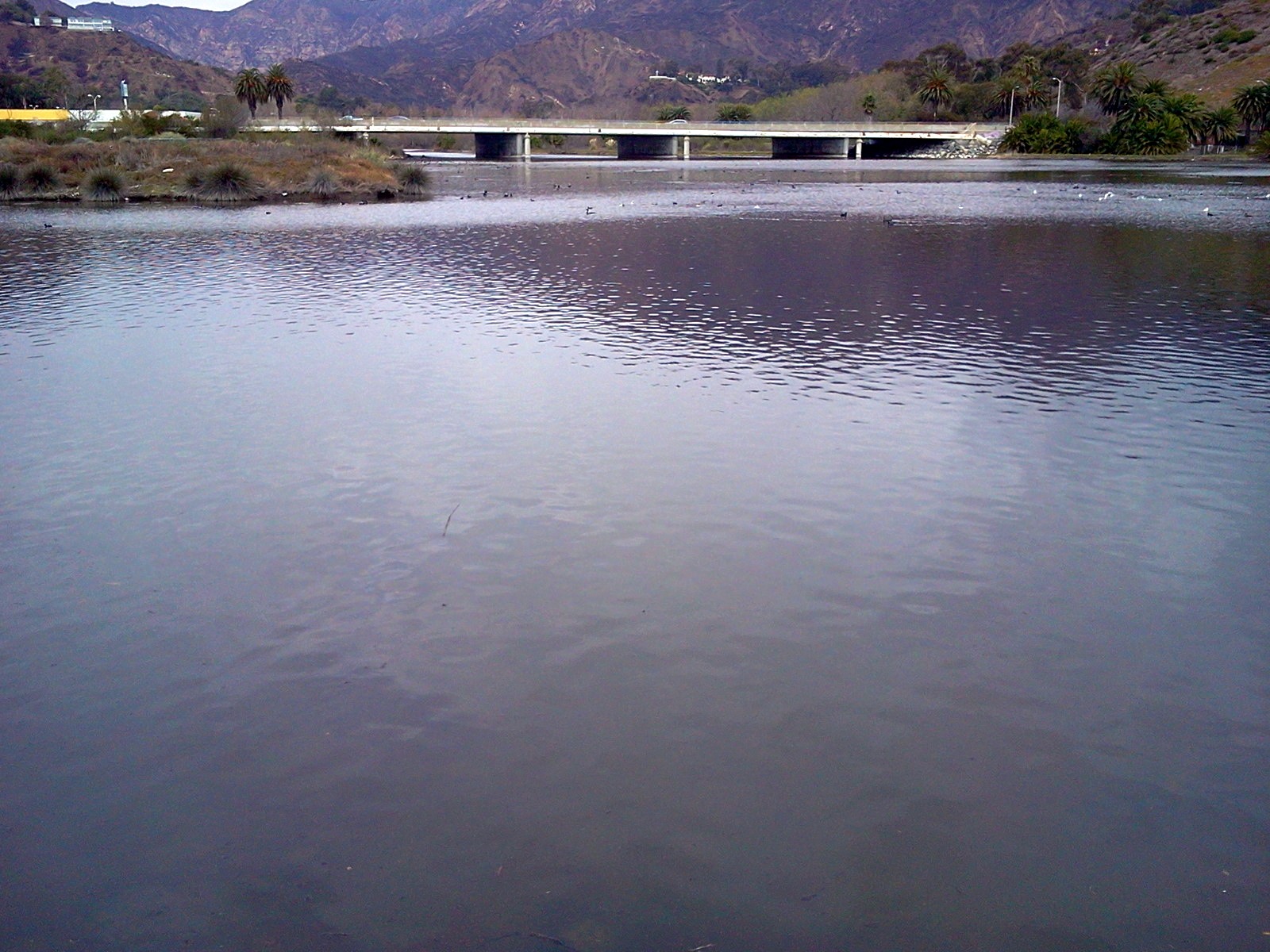
The tide had been fairly high, 6.14 ft. at 9:13am, dropping to -1.20 ft at 4:23pm. We got there at a dropping mid-tide, around 12:15. By the time we got to the beach, the usually submerged rocks were partially exposed.
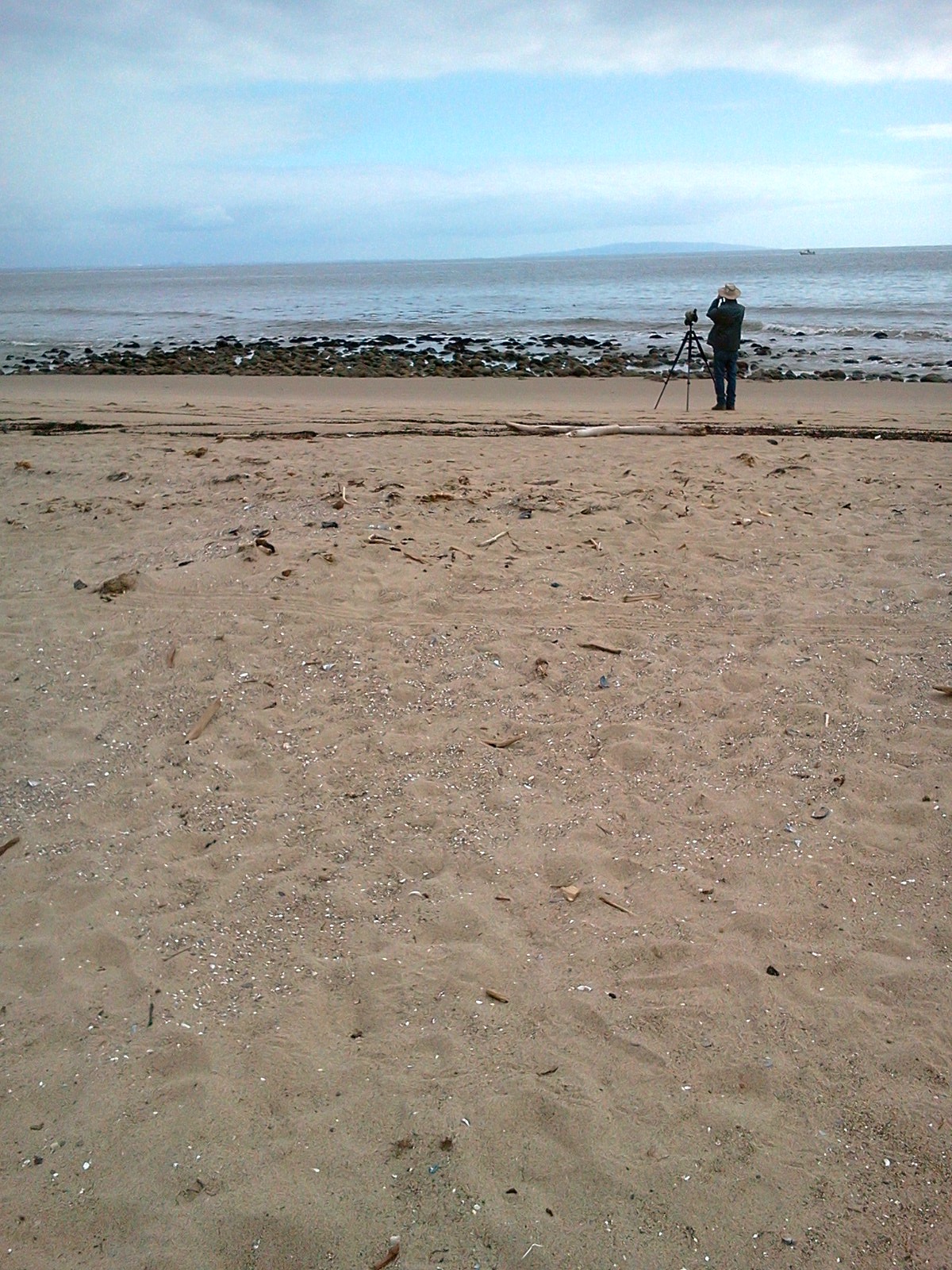
Most of the shorebirds were poking about in the exposed rocks. I was surprised to see two Western Snowy Plovers with them, as they usually prefer getting their insects from the high-tide wrack on the beach. I was also somewhat surprised to not find a Black Oystercatcher among them. A single Herring Gull was again on the beach, 3rd month in a row. So far the bird looks exactly the same month-to-month, and I’m reasonably certain it actually is the same individual, spending the winter with us.
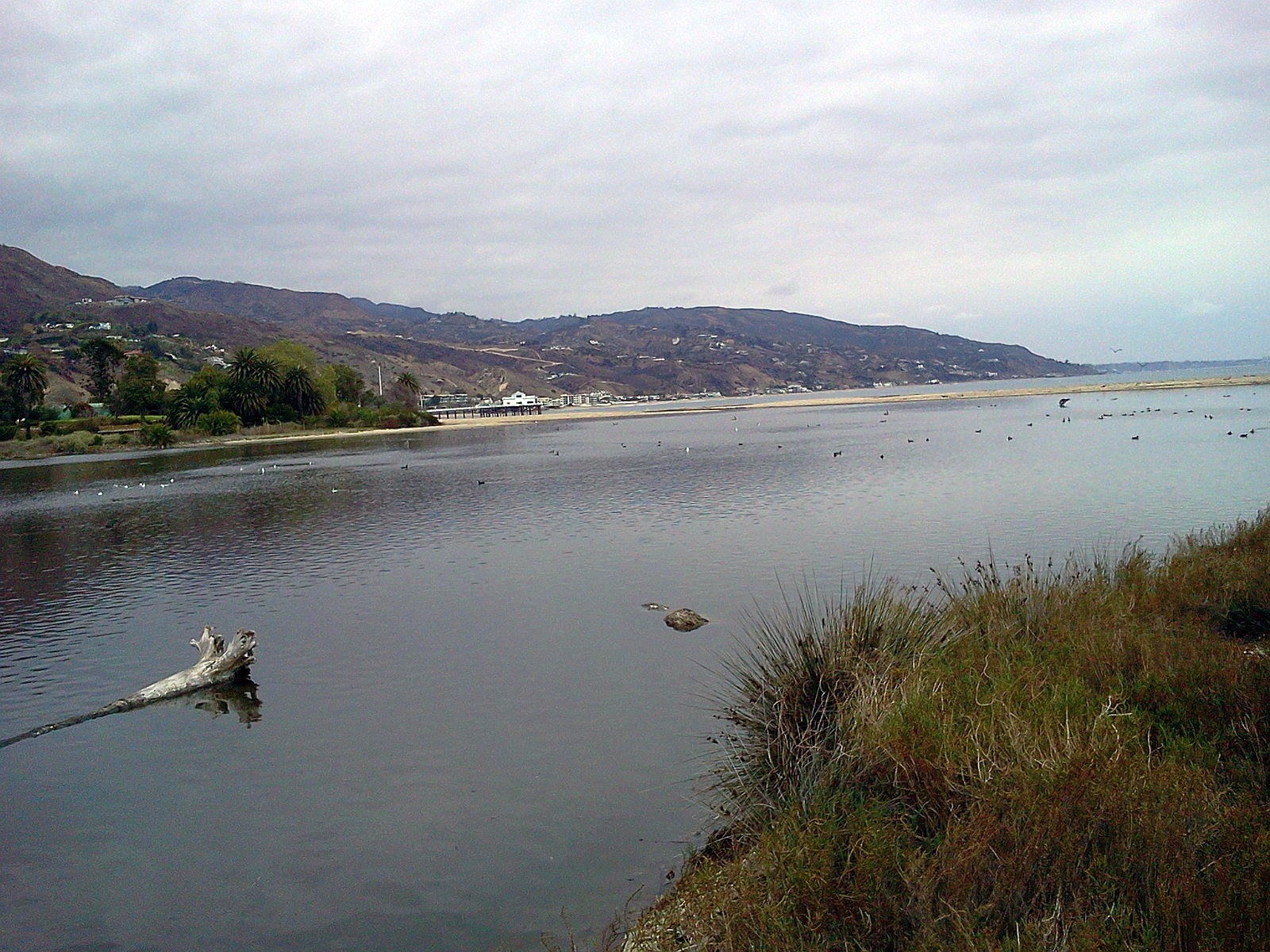
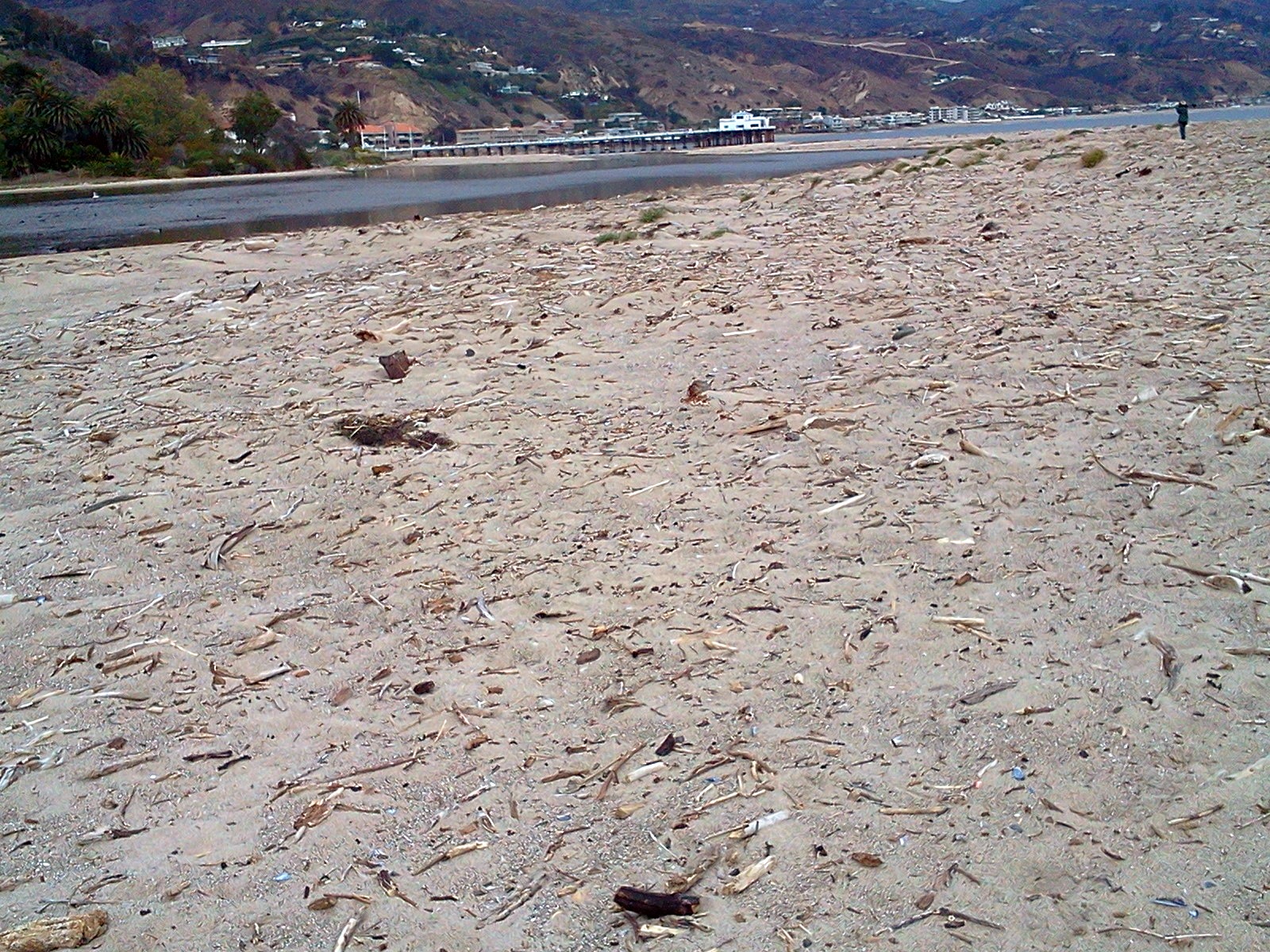
It was quite amazing just how much driftwood had covered the beach. In the photo below, you can see the lagoon opening to the sea with Malibu pier directly behind it. Although the opening usually appears along the southern stretch in the fall with the first rains, it always moves eastward over the following months.
The large permanently exposed offshore rocks are in front of this house. Cormorants like to sit on these rocks when waves aren’t crashing over them. 90% of all cormorants at the lagoon are Double-crested, but these rocks are the best place to look for Brandt’s and Pelagic Cormorants when they’re around. On this particular day there were 7 Brandt’s and 1 Double-crested perched there. One of the Brandt’s was molting into breeding plumage with little white “whisker”-streaks on the side of its neck. The rest of the Double-crested were scattered around the lagoon.
The day was cool – starting at 57°F at noon and rising all the way to 59° by 2 PM – and there were no particularly unusual birds around, but it was quiet and peaceful unlike the surrounding city, still reeling from the fires.
Malibu Lagoon on eBird as of of 2-01-25: 8423 lists, 2661 eBirders, 320 species.
Most recent species added: Nelson’s Sparrow, 11/29/24 by Femi Faminu (SMBAS member).
Birds new for the season: Northern Shoveler, Lesser Scaup, Pacific Loon, California Scrub-Jay.. “New for the season” means it has been three or more months since last recorded on our trips.
Many, many thanks to photographer: Lillian Johnson.
Upcoming SMBAS scheduled field trips; no reservations or Covid card necessary unless specifically mentioned:
- Madrona Marsh Sat Feb 8, 8:30 am.
- Malibu Lagoon, Sun. Feb 23, 8:30 (adults) & 10 am (parents & kids)
- Sepulveda Basin, Sat. Mar 15, 8 am.
- Malibu Lagoon, Sun. Mar 23, 8:30 (adults) & 10 am (parents & kids)
- These and any other trips we announce for the foreseeable future will depend upon expected status of the Covid/flu/etc. pandemic at trip time. Any trip announced may be canceled shortly before trip date if it seems necessary. By now any other comments should be superfluous.
- Link to Programs & Field Trip schedule.
The next SMBAS Zoom program: Colombia: Home of rare and fancy birds, with John Sterling, Evening Meeting, Tuesday, February 4, 2025, 7:30 p.m.
The SMBAS 10 a.m. Parent’s & Kids Birdwalk is again running. Reservations not necessary for families, but for groups (scouts, etc.), call Jean (213-522-0062).
Links: Unusual birds at Malibu Lagoon
9/23/02 Aerial photo of Malibu Lagoon
More recent aerial photo
Prior checklists:
2023: Jan-June, July-Dec 2024: Jan-June, July-Dec
2021: Jan-July, July-Dec 2022: Jan-June, July-Dec
2020: Jan-July, July-Dec 2019: Jan-June, July-Dec
2018: Jan-June, July-Dec 2017: Jan-June, July-Dec
2016: Jan-June, July-Dec 2015: Jan-May, July-Dec
2014: Jan-July, July-Dec 2013: Jan-June, July-Dec
2012: Jan-June, July-Dec 2011: Jan-June, July-Dec
2010: Jan-June, July-Dec 2009: Jan-June, July-Dec
The 10-year comparison summaries created during the Lagoon Reconfiguration Project period, remain available—despite numerous complaints—on our Lagoon Project Bird Census Page. Very briefly summarized, the results unexpectedly indicate that avian species diversification and numbers improved slightly during the restoration period June’12-June’14.
Many thanks to Lillian Johnson for contributions made to this month’s census counts.
The species lists below was re-sequenced as of 12/31/24 to agree with the California Bird Records Committee Official California Checklist. If part of the right side of the chart below is hidden, there’s a slider button inconveniently located at the bottom end of the list. The numbers 1-9 left of the species names are keyed to the nine categories of birds at the bottom. Updated lagoon bird check lists can be downloaded here.
[Chuck Almdale]
| Malibu Census 2024-25 | 8/25 | 9/22 | 10/27 | 11/24 | 12/22 | 1/30 | |
| Temperature | 64-78 | 67-75 | 64-68 | 54-59 | 56-62 | 57-59 | |
| Tide Lo/Hi Height | L+2.00 | L+2.09 | H+4.75 | L+2.06 | L+2.47 | H+5.49 | |
| Tide Time | 0735 | 0611 | 0742 | 1139 | 0939 | 0634 | |
| 1 | Northern Shoveler | 6 | |||||
| 1 | Gadwall | 12 | 30 | 38 | 26 | 32 | 89 |
| 1 | American Wigeon | 1 | 13 | 12 | 35 | ||
| 1 | Mallard | 2 | 8 | 28 | 10 | 20 | 22 |
| 1 | Green-winged Teal | 4 | 1 | 10 | 5 | ||
| 1 | Ring-necked Duck | 4 | 3 | ||||
| 1 | Lesser Scaup | 2 | |||||
| 1 | Surf Scoter | 2 | |||||
| 1 | Bufflehead | 9 | 10 | 23 | |||
| 1 | Hooded Merganser | 1 | |||||
| 1 | Red-breasted Merganser | 10 | 13 | 12 | |||
| 1 | Ruddy Duck | 28 | 22 | 35 | 37 | ||
| 2 | Pied-billed Grebe | 1 | 5 | 10 | 8 | 5 | 4 |
| 2 | Eared Grebe | 4 | 1 | 1 | |||
| 2 | Western Grebe | 28 | 1 | 34 | |||
| 7 | Feral Pigeon | 9 | 1 | 4 | 4 | 6 | |
| 7 | Mourning Dove | 3 | 1 | 1 | |||
| 8 | Anna’s Hummingbird | 2 | 2 | 1 | |||
| 8 | Allen’s Hummingbird | 3 | 4 | 2 | 1 | 3 | 1 |
| 2 | Sora | 2 | |||||
| 2 | American Coot | 2 | 72 | 340 | 560 | 705 | 797 |
| 5 | Black Oystercatcher | 2 | 2 | ||||
| 5 | Black-bellied Plover | 70 | 67 | 136 | 75 | 50 | 30 |
| 5 | Killdeer | 4 | 12 | 20 | 1 | 30 | 2 |
| 5 | Semipalmated Plover | 13 | 3 | ||||
| 5 | Snowy Plover | 22 | 42 | 18 | 34 | 27 | 2 |
| 5 | Whimbrel | 2 | 2 | 7 | 15 | 4 | 8 |
| 5 | Long-billed Curlew | 1 | |||||
| 5 | Marbled Godwit | 12 | 25 | 3 | |||
| 5 | Ruddy Turnstone | 1 | 3 | 4 | 6 | 4 | 2 |
| 5 | Sanderling | 2 | 1 | 5 | 200 | 100 | 22 |
| 5 | Least Sandpiper | 23 | 3 | 4 | 8 | 27 | 7 |
| 5 | Western Sandpiper | 13 | 2 | ||||
| 5 | Spotted Sandpiper | 1 | 1 | 1 | |||
| 5 | Willet | 5 | 5 | 3 | 51 | 20 | 15 |
| 5 | Greater Yellowlegs | 1 | 1 | ||||
| 6 | Heermann’s Gull | 5 | 24 | 79 | 29 | 2 | 7 |
| 6 | Ring-billed Gull | 2 | 2 | 12 | 15 | 19 | 12 |
| 6 | Western Gull | 113 | 55 | 27 | 65 | 35 | 90 |
| 6 | California Gull | 23 | 75 | 440 | 525 | 60 | 575 |
| 6 | American Herring Gull | 1 | 1 | 1 | |||
| 6 | Glaucous-winged Gull | 1 | |||||
| 6 | Caspian Tern | 4 | 1 | ||||
| 6 | Forster’s Tern | 2 | |||||
| 6 | Royal Tern | 5 | 5 | 6 | 2 | ||
| 6 | Elegant Tern | 10 | |||||
| 2 | Pacific Loon | 1 | |||||
| 2 | Common Loon | 2 | |||||
| 2 | Brandt’s Cormorant | 2 | 5 | 7 | |||
| 2 | Pelagic Cormorant | 1 | 2 | 2 | |||
| 2 | Double-crested Cormorant | 37 | 54 | 51 | 44 | 23 | 55 |
| 2 | Brown Pelican | 27 | 24 | 30 | 260 | 35 | 23 |
| 3 | Snowy Egret | 3 | 4 | 10 | 5 | 5 | 5 |
| 3 | Black-crowned Night-Heron | 1 | 1 | 1 | 1 | 2 | |
| 3 | Green Heron | 1 | 2 | 1 | 1 | ||
| 3 | Great Egret | 3 | 2 | 3 | 3 | 1 | 1 |
| 3 | Great Blue Heron | 4 | 2 | 5 | 4 | 4 | 1 |
| 3 | White-faced Ibis | 3 | |||||
| 4 | Turkey Vulture | 1 | 7 | 1 | |||
| 4 | Osprey | 1 | 1 | 1 | |||
| 4 | Red-shouldered Hawk | 1 | |||||
| 4 | Red-tailed Hawk | 2 | 1 | 1 | |||
| 8 | Belted Kingfisher | 1 | 1 | 1 | 1 | 1 | |
| 8 | Nuttall’s Woodpecker | 1 | |||||
| 8 | Hairy Woodpecker | 1 | |||||
| 4 | American Kestrel | 1 | |||||
| 8 | Nanday Parakeet | 25 | 4 | ||||
| 9 | Ash-throated Flycatcher | 1 | |||||
| 9 | Cassin’s Kingbird | 1 | 1 | ||||
| 9 | Western Kingbird | 8 | |||||
| 9 | Black Phoebe | 3 | 2 | 4 | 6 | 1 | 1 |
| 9 | Say’s Phoebe | 1 | 1 | 1 | |||
| 9 | Loggerhead Shrike | 1 | |||||
| 9 | California Scrub-Jay | 2 | 1 | ||||
| 9 | American Crow | 4 | 8 | 6 | 22 | 8 | 9 |
| 9 | Common Raven | 4 | 1 | ||||
| 9 | Oak Titmouse | 1 | |||||
| 9 | Tree Swallow | 1 | 12 | ||||
| 9 | No. Rough-winged Swallow | 2 | |||||
| 9 | Barn Swallow | 20 | 1 | 1 | |||
| 9 | Cliff Swallow | 4 | |||||
| 9 | Bushtit | 5 | 20 | 30 | 12 | 50 | 4 |
| 9 | Wrentit | 4 | 1 | 2 | 1 | ||
| 9 | Ruby-crowned Kinglet | 1 | 1 | 3 | 1 | ||
| 9 | Blue-gray Gnatcatcher | 1 | 4 | 1 | |||
| 9 | Bewick’s Wren | 2 | 2 | 2 | 1 | 1 | |
| 9 | Northern House Wren | 2 | 3 | 6 | 1 | ||
| 9 | Marsh Wren | 2 | 1 | ||||
| 9 | Northern Mockingbird | 1 | 1 | 1 | 1 | ||
| 9 | European Starling | 1 | 10 | 12 | 7 | ||
| 9 | Western Bluebird | 5 | |||||
| 9 | Hermit Thrush | 1 | |||||
| 9 | House Finch | 5 | 4 | 8 | 4 | 6 | 8 |
| 9 | Lesser Goldfinch | 3 | 6 | 2 | |||
| 9 | Lark Sparrow | 1 | |||||
| 9 | Dark-eyed Junco | 1 | 2 | 1 | 2 | ||
| 9 | White-crowned Sparrow | 16 | 15 | 20 | 8 | ||
| 9 | Savannah Sparrow | 1 | |||||
| 9 | Song Sparrow | 10 | 10 | 5 | 8 | 6 | 12 |
| 9 | California Towhee | 1 | 3 | 2 | 2 | ||
| 9 | Spotted Towhee | 1 | |||||
| 9 | Western Meadowlark | 15 | 1 | ||||
| 9 | Hooded Oriole | 1 | |||||
| 9 | Red-winged Blackbird | 11 | 1 | 2 | |||
| 9 | Brown-headed Cowbird | 18 | |||||
| 9 | Great-tailed Grackle | 1 | 4 | 15 | 22 | ||
| 9 | Orange-crowned Warbler | 1 | 2 | 1 | 2 | 1 | |
| 9 | Common Yellowthroat | 1 | 5 | 7 | 8 | 6 | 2 |
| 9 | Yellow Warbler | 1 | |||||
| 9 | Yellow-rumped Warbler | 15 | 15 | 14 | 6 | ||
| 9 | Townsend’s Warbler | 2 | |||||
| Totals Birds by Type | Aug | Sep | Oct | Nov | Dec | Dec | |
| 1 | Waterfowl | 14 | 43 | 112 | 93 | 157 | 196 |
| 2 | Water Birds – Other | 68 | 155 | 469 | 882 | 769 | 922 |
| 3 | Herons, Egrets & Ibis | 12 | 14 | 20 | 14 | 12 | 7 |
| 4 | Quail & Raptors | 1 | 10 | 3 | 2 | 2 | 0 |
| 5 | Shorebirds | 157 | 142 | 197 | 404 | 290 | 92 |
| 6 | Gulls & Terns | 165 | 162 | 564 | 635 | 119 | 685 |
| 7 | Doves | 12 | 2 | 5 | 4 | 0 | 6 |
| 8 | Other Non-Passerines | 7 | 31 | 5 | 3 | 8 | 1 |
| 9 | Passerines | 92 | 119 | 136 | 142 | 150 | 57 |
| Totals Birds | 528 | 678 | 1511 | 2179 | 1507 | 1966 | |
| Total Species by Group | Aug | Sep | Oct | Nov | Dec | Dec | |
| 1 | Waterfowl | 2 | 4 | 6 | 8 | 8 | 8 |
| 2 | Water Birds – Other | 5 | 4 | 9 | 8 | 5 | 8 |
| 3 | Herons, Egrets & Ibis | 5 | 6 | 5 | 5 | 4 | 3 |
| 4 | Quail & Raptors | 1 | 3 | 3 | 2 | 2 | 0 |
| 5 | Shorebirds | 12 | 12 | 8 | 10 | 11 | 10 |
| 6 | Gulls & Terns | 9 | 6 | 5 | 5 | 6 | 5 |
| 7 | Doves | 2 | 2 | 2 | 1 | 0 | 1 |
| 8 | Other Non-Passerines | 4 | 4 | 3 | 3 | 3 | 1 |
| 9 | Passerines | 22 | 27 | 24 | 24 | 17 | 14 |
| Totals Species – 111 | 62 | 68 | 65 | 66 | 56 | 50 |
Discover more from SANTA MONICA BAY AUDUBON SOCIETY BLOG
Subscribe to get the latest posts sent to your email.



