Free email delivery
Please sign up for email delivery in the subscription area to the right.
No salesman will call, at least not from us. Maybe from someone else.
Black-vented Shearwaters at Malibu Lagoon, 23 January 2022
[Posted by Chuck Almdale]

The lagoon was still open to the ocean, the tide was at a typical waning-quarter-of-the-moon intermediate level with no great fluctuation, and water flowed neither in nor out.

From the first viewpoint near the Pacific Coast Highway bridge we could see, far out over the ocean, a steady stream of seabirds flowing by from east to west. [The coast at Malibu faces south, not west.] They could be nothing other than shearwaters.
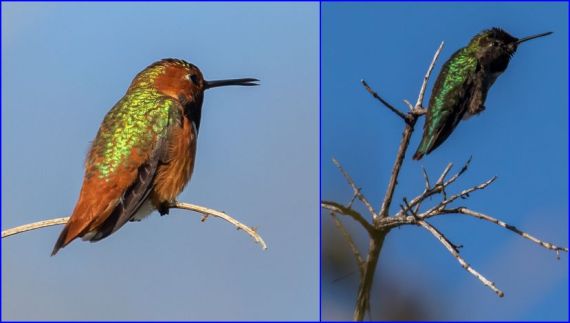
In profile the bright structural colors of their gorgets don’t show
At this distance, they were little more than tiny dots in the telescope. But shearwaters fly in a very distinguishable manner, described by their name – Shearwater. They fly very low, often barely skimming the surface of the water. Usually they’re actually in the troughs between waves, barrelling along what to them looks like a long narrow valley, often out-of-sight of land-based birders. Every so often they rise up, only to quickly drop out of sight.

The green in their wings is usually hidden when wings are folded
When there is a bit of wind, as there was this morning, they don’t need to flap much to stay aloft. The differential of wind speed at the surface, and 10-30 feet above the surface, plus the updrafts created by the wind bouncing off the wave peaks, create enough speed and uplift for them to cruise – to shear – the water.
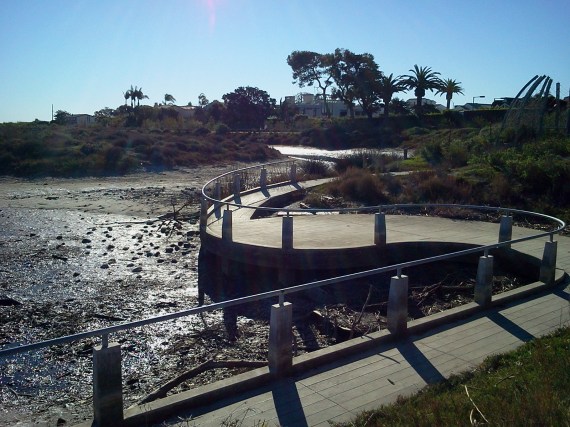
They must have steam cleaned the slime off
There’s little else that flies that way – albatross are famous for it, but I’ve never seen an albatross off Malibu, and besides they’re huge compared to shearwaters and usually fly in a forward moving spiral called dynamic soaring.

Ten species of shearwater and petrel show up off our SoCal coast; as usual, some are a lot more frequent than others. I’ve seen only half of them, and all but one of those five were seen only from boats out around the Channel Islands. They generally stay well offshore, except for a few areas like Monterey Bay which has a deep water canyon.
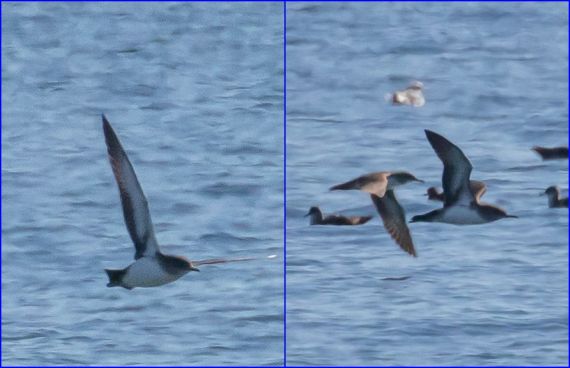
The sole species I’ve recognizably seen from land is the relatively small Black-vented Shearwater. They nest on islands off the west coast of Baja California, and are often seen from SoCal shores, especially in the winter, when large numbers of them get up and move around.
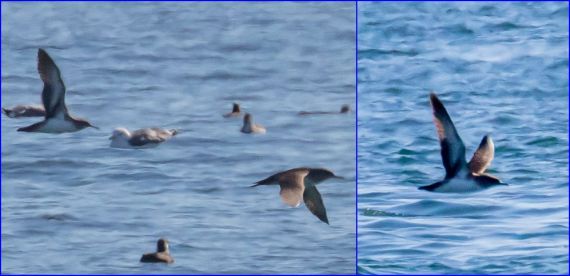
When we see a large mass of similarly-sized shearwaters, Black-vented is almost certainly the species. But we had to get down to the beach to get as close as possible for a better look. Meanwhile there were plenty of other birds around, although the coots had mostly disappeared. They’d ranged from 130 to 360 in number for the past four months, but there were only 49 of them today. The lagoon looked almost bare.


Guess who was in the other guy’s photo
Despite the relative barrenness of the lagoon, we had a lot of species and a lot of birds: 72 species and 2,767 birds. That second number contains a very large estimate of 1,000 Black-vented Shearwater. None of them were actually in the lagoon – no self-respecting shearwater would be caught dead that far inland, except when breeding – but there could easily have been three times that amount. I counted 925 California Gulls and there were a lot more shearwaters that that. Most of the gulls, cormorants and pelicans were standing on the exposed offshore rocks, but the gulls particularly moved around a lot.

Today was a good raptor day: Osprey, Cooper’s, Red-shouldered & Red-tailed Hawks, and a Merlin. The Merlin rocketed through, as falcons often do, so…no photo.


There was a Harbor Seal sleeping on the rock next door
There were a lot of cormorants today, probably because of all the fish. All three species. Twelve Pelagic Cormorants was a lot – we’ve averaged two per appearance over the past 40-odd years.
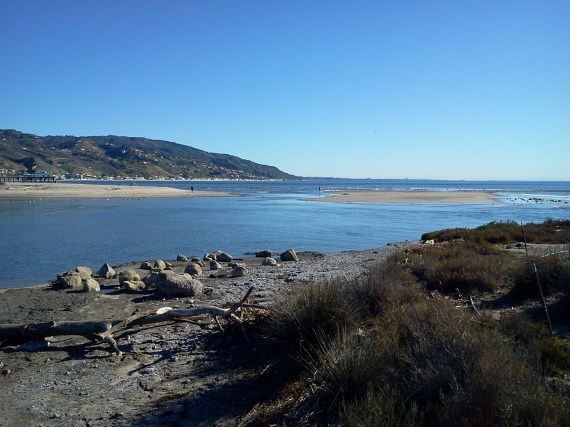
As always, the lagoon outlet moves eastward over time. Occasionally it doubles itself, as seen here. The eastern edge of the outlet will continue to erode and the western edge – or in this case, edges – will continue to fill in, so the outlet seems to move. Eventually the whole thing fills in and usually stays closed for 4-6 months during the summer. It may come up against the riprap rocks edging Adamson House, if we get more rain and stays open long enough. If no more rain the outlet usually fills in as more sand arrives.

Scrub-Jays are always around, but we don’t always see them

It was the Pelagic Cormorants that alerted me to the fact that the school of fish that attracted all the birds had moved right up next to the beach. Three Pelagics popped out of the front of a cresting wave almost simultaneously, each with a big fish sticking out of their bill. The other birds on the water also spotted this event and quickly moved in, either to steal someone’s fish or find their own. This activity brought the shearwaters close enough to photograph. They had been slowly moving closer over the past half-hour or so, but were still at least several hundred yards away, too far for decent photos. But we got lucky, and Chris Tosdevin snapped a sequence of (mostly) the same bird flying left, wheeling, then flying right.

They’re certainly not focused on any particular bird
We couldn’t find any Snowy Plovers. They were most likely on the far side of the wide outlet(s), just over the edge of the beach berm where we couldn’t seen them without trooping all the way around via the PCH bridge. By that time no one felt up to it.
Malibu Lagoon on eBird: 1/25/22 – 5569 lists, 312 species
Birds new for the season: Surf Scoter, Western Grebe, Eurasian Collared-Dove, Royal Tern, Pacific Loon, Common Loon, Black-vented Shearwater, Belted Kingfisher, Merlin, Common Raven, Tree Swallow, Oak Titmouse.

Many thanks to photographers: Lillian Johnson, Ray Juncosa & Chris Tosdevin.
The next three SMBAS scheduled field trips?: Excellent question. We’ll have to get back to you on that. (read: haven’t the foggiest)
The next SMBAS program: Important Birds of Ancient Lake Cahuilla and the Salton Sea, with Kurt Leuschner, Zoom Evening Meeting, Tuesday, 1 February 2022, 7:30 p.m.
The SMBAS 10 a.m. Parent’s & Kids Birdwalk remains canceled until further notice due to the near-impossibility of maintained proper masked social distancing with parents and small children.

That’s “Mr. Claws,” to you.
Links: Unusual birds at Malibu Lagoon
9/23/02 Aerial photo of Malibu Lagoon
More recent aerial photo
Prior checklists:
2021: Jan-July, July-Dec
2020: Jan-July, July-Dec 2019: Jan-June, July-Dec
2018: Jan-June, July-Dec 2017: Jan-June, July-Dec
2016: Jan-June, July-Dec 2015: Jan-May, July-Dec
2014: Jan-July, July-Dec 2013: Jan-June, July-Dec
2012: Jan-June, July-Dec 2011: Jan-June, July-Dec
2010: Jan-June, July-Dec 2009: Jan-June, July-Dec.
The 10-year comparison summaries created during the Lagoon Reconfiguration Project period, remain available—despite numerous complaints—on our Lagoon Project Bird Census Page. Very briefly summarized, the results unexpectedly indicate that avian species diversification and numbers improved slightly during the restoration period June’12-June’14.
Many thanks to Adrian Douglas, Esme Douglas, Femi Faminu, Lillian Johnson, Chris Lord and others for their contributions to this month’s checklist.
The appearance of the list below has changed slightly. I’ve added a column on the left side with numbers 1-9, keyed to the nine categories of birds at the bottom. The species are re-sequenced to agree to the California Bird Records Committee Official California Checklist, updated 15 Jan 2022. I generally do this at the start of each year.
[Chuck Almdale]
| Malibu Census 2021-22 | 8/22 | 9/26 | 10/24 | 11/28 | 12/26 | 1/23 | |
| Temperature | 68-73 | 63-70 | 54-63 | 57-70 | 54-62 | 61-73 | |
| Tide Lo/Hi Height | H+4.55 | L+2.52 | H+5.23 | L+2.35 | L+2.58 | L+2.04 | |
| Tide Time | 1034 | 0556 | 1105 | 1104 | 0900 | 0645 | |
| 1 | Canada Goose | 10 | 4 | 2 | |||
| 1 | Northern Shoveler | 2 | |||||
| 1 | Gadwall | 12 | 4 | 2 | 20 | 29 | |
| 1 | American Wigeon | 7 | 4 | 2 | 10 | 4 | |
| 1 | Mallard | 9 | 18 | 3 | 2 | 12 | 20 |
| 1 | Northern Pintail | 2 | 1 | 1 | |||
| 1 | Green-winged Teal | 1 | 5 | 5 | 15 | 11 | |
| 1 | Surf Scoter | 10 | |||||
| 1 | Bufflehead | 1 | 10 | 2 | |||
| 1 | Hooded Merganser | 13 | |||||
| 1 | Red-breasted Merganser | 1 | 17 | 15 | 9 | ||
| 1 | Ruddy Duck | 2 | 1 | 5 | 8 | 13 | |
| 2 | Pied-billed Grebe | 1 | 3 | 5 | 3 | 5 | 3 |
| 2 | Horned Grebe | 1 | |||||
| 2 | Eared Grebe | 1 | 1 | ||||
| 2 | Western Grebe | 12 | 30 | ||||
| 7 | Feral Pigeon | 6 | 8 | 6 | 52 | 3 | 20 |
| 7 | Eurasian Collared-Dove | 1 | |||||
| 7 | Mourning Dove | 3 | 5 | 1 | 1 | ||
| 8 | Anna’s Hummingbird | 1 | 1 | 2 | 2 | ||
| 8 | Allen’s Hummingbird | 3 | 1 | 3 | 1 | 4 | 3 |
| 2 | American Coot | 2 | 130 | 240 | 245 | 360 | 49 |
| 5 | Black-bellied Plover | 90 | 103 | 87 | 166 | 104 | 58 |
| 5 | Snowy Plover | 29 | 34 | 34 | 40 | 34 | |
| 5 | Semipalmated Plover | 4 | 3 | 2 | |||
| 5 | Killdeer | 20 | 10 | 23 | 20 | 10 | 2 |
| 5 | Whimbrel | 17 | 8 | 4 | 12 | 9 | 8 |
| 5 | Long-billed Curlew | 1 | |||||
| 5 | Marbled Godwit | 4 | 30 | 34 | 9 | 71 | 32 |
| 5 | Ruddy Turnstone | 8 | 3 | 6 | 1 | 6 | |
| 5 | Red-necked Stint | 1 | |||||
| 5 | Sanderling | 12 | 20 | 104 | 22 | 22 | 1 |
| 5 | Dunlin | 2 | 2 | ||||
| 5 | Baird’s Sandpiper | 5 | |||||
| 5 | Least Sandpiper | 35 | 12 | 9 | 3 | 35 | 12 |
| 5 | Western Sandpiper | 65 | 2 | 2 | 1 | 1 | |
| 5 | Short-billed Dowitcher | 3 | |||||
| 5 | Long-billed Dowitcher | 1 | |||||
| 5 | Spotted Sandpiper | 2 | 1 | ||||
| 5 | Willet | 40 | 14 | 25 | 34 | 13 | 15 |
| 5 | Red-necked Phalarope | 4 | |||||
| 6 | Bonaparte’s Gull | 2 | 1 | ||||
| 6 | Heermann’s Gull | 1 | 1 | 2 | 53 | 26 | 45 |
| 6 | Ring-billed Gull | 1 | 2 | 28 | 170 | 40 | |
| 6 | Western Gull | 55 | 10 | 63 | 92 | 85 | 95 |
| 6 | California Gull | 4 | 9 | 515 | 370 | 925 | |
| 6 | Herring Gull | 1 | 2 | ||||
| 6 | Glaucous-winged Gull | 1 | 1 | 2 | 5 | ||
| 6 | Least Tern | 1 | |||||
| 6 | Caspian Tern | 2 | |||||
| 6 | Royal Tern | 13 | 2 | 5 | |||
| 6 | Elegant Tern | 1 | |||||
| 2 | Red-throated Loon | 1 | 1 | ||||
| 2 | Pacific Loon | 1 | |||||
| 2 | Common Loon | 2 | |||||
| 2 | Black-vented Shearwater | 1000 | |||||
| 2 | Brandt’s Cormorant | 2 | 10 | 1 | 6 | ||
| 2 | Double-crested Cormorant | 27 | 35 | 67 | 52 | 39 | 45 |
| 2 | Pelagic Cormorant | 1 | 2 | 1 | 4 | 1 | 12 |
| 2 | Brown Pelican | 30 | 11 | 21 | 99 | 44 | 110 |
| 3 | Great Blue Heron | 4 | 3 | 3 | 3 | 4 | 4 |
| 3 | Great Egret | 4 | 1 | 3 | 1 | 7 | 2 |
| 3 | Snowy Egret | 24 | 14 | 11 | 4 | 24 | 6 |
| 3 | Green Heron | 2 | 1 | ||||
| 3 | Black-crowned Night-Heron | 3 | 3 | 1 | 1 | 5 | |
| 4 | Turkey Vulture | 1 | |||||
| 4 | Osprey | 2 | 1 | 1 | 1 | ||
| 4 | Cooper’s Hawk | 1 | 1 | 2 | 1 | ||
| 4 | Red-shouldered Hawk | 1 | 1 | 1 | |||
| 4 | Red-tailed Hawk | 1 | 1 | 1 | |||
| 8 | Belted Kingfisher | 1 | 1 | ||||
| 8 | Nuttall’s Woodpecker | 1 | |||||
| 8 | Downy Woodpecker | 1 | |||||
| 8 | Hairy Woodpecker | 1 | |||||
| 4 | Merlin | 1 | 1 | ||||
| 4 | Peregrine Falcon | 1 | |||||
| 9 | Black Phoebe | 4 | 5 | 5 | 4 | 4 | 4 |
| 9 | Say’s Phoebe | 1 | 1 | ||||
| 9 | California Scrub-Jay | 1 | 1 | 2 | 2 | ||
| 9 | American Crow | 4 | 4 | 6 | 1 | 7 | 4 |
| 9 | Common Raven | 1 | |||||
| 9 | Tree Swallow | 2 | |||||
| 9 | No. Rough-winged Swallow | 2 | |||||
| 9 | Cliff Swallow | 4 | |||||
| 9 | Barn Swallow | 25 | 3 | 2 | |||
| 9 | Oak Titmouse | 2 | 1 | ||||
| 9 | Bushtit | 20 | 48 | 12 | |||
| 9 | House Wren | 1 | 2 | 1 | |||
| 9 | Marsh Wren | 2 | |||||
| 9 | Bewick’s Wren | 1 | 4 | ||||
| 9 | Blue-gray Gnatcatcher | 4 | 4 | 1 | |||
| 9 | Ruby-crowned Kinglet | 1 | 1 | ||||
| 9 | Wrentit | 1 | 1 | ||||
| 9 | Hermit Thrush | 1 | 1 | ||||
| 9 | Northern Mockingbird | 1 | 2 | 1 | 1 | ||
| 9 | European Starling | 30 | 40 | 31 | 9 | 15 | |
| 9 | American Pipit | 1 | |||||
| 9 | House Finch | 18 | 7 | 4 | 18 | 8 | 8 |
| 9 | Lesser Goldfinch | 2 | 1 | 2 | 2 | 4 | |
| 9 | Dark-eyed Junco | 2 | 4 | ||||
| 9 | White-crowned Sparrow | 5 | 15 | 17 | 35 | ||
| 9 | Savannah Sparrow | 1 | |||||
| 9 | Song Sparrow | 3 | 5 | 4 | 7 | 8 | 6 |
| 9 | California Towhee | 1 | 2 | 2 | 4 | 2 | |
| 9 | Spotted Towhee | 1 | |||||
| 9 | Western Meadowlark | 1 | 1 | ||||
| 9 | Great-tailed Grackle | 5 | 1 | 4 | 3 | 7 | 1 |
| 9 | Orange-crowned Warbler | 1 | 2 | 1 | |||
| 9 | Common Yellowthroat | 2 | 5 | 4 | 5 | 6 | 3 |
| 9 | Yellow-rumped Warbler | 6 | 19 | 20 | 10 | ||
| Totals by Type | Aug | Sep | Oct | Nov | Dec | Jan | |
| 1 | Waterfowl | 24 | 27 | 23 | 49 | 113 | 88 |
| 2 | Water Birds – Other | 61 | 181 | 349 | 414 | 452 | 1259 |
| 3 | Herons, Egrets & Ibis | 35 | 21 | 18 | 8 | 38 | 18 |
| 4 | Quail & Raptors | 2 | 4 | 0 | 3 | 6 | 5 |
| 5 | Shorebirds | 341 | 242 | 332 | 307 | 299 | 135 |
| 6 | Gulls & Terns | 65 | 25 | 79 | 689 | 655 | 1118 |
| 7 | Doves | 9 | 8 | 11 | 53 | 4 | 21 |
| 8 | Other Non-Passerines | 5 | 1 | 3 | 3 | 8 | 6 |
| 9 | Passerines | 126 | 75 | 56 | 163 | 107 | 117 |
| Totals Birds | 668 | 584 | 871 | 1689 | 1682 | 2767 | |
| Total Species | Aug | Sep | Oct | Nov | Dec | Jan | |
| 1 | Waterfowl | 4 | 4 | 6 | 9 | 10 | 9 |
| 2 | Water Birds – Other | 5 | 5 | 8 | 7 | 8 | 11 |
| 3 | Herons, Egrets & Ibis | 4 | 4 | 4 | 3 | 5 | 5 |
| 4 | Quail & Raptors | 2 | 3 | 0 | 3 | 5 | 5 |
| 5 | Shorebirds | 17 | 14 | 12 | 9 | 9 | 9 |
| 6 | Gulls & Terns | 7 | 4 | 6 | 5 | 6 | 8 |
| 7 | Doves | 2 | 1 | 2 | 2 | 2 | 2 |
| 8 | Other Non-Passerines | 3 | 1 | 1 | 3 | 4 | 3 |
| 9 | Passerines | 18 | 13 | 19 | 16 | 20 | 20 |
| Totals Species – 110 | 62 | 49 | 58 | 57 | 69 | 72 |
More Monarchs | Los Angeles Times
[Posted by Chuck Almdale]

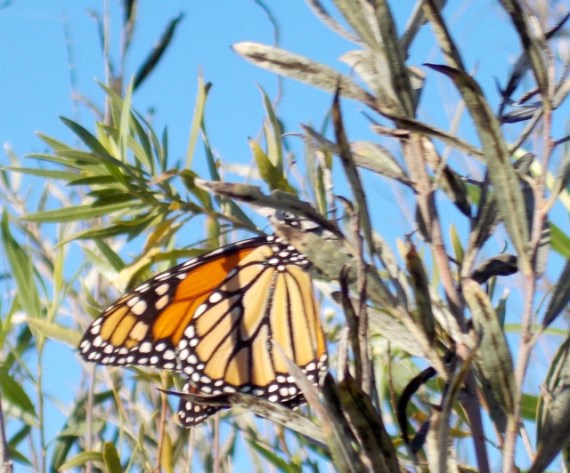
The L.A. Times seems to publish something on Monarch Butterflies every 3-4 months in their Saturday Section, and they’re always worthwhile reading. This one is largely about the annual census as seen from the eyes of one counter, with some additional comments from scientists.
To Glimpse a Butterfly or here
A day in the life of an L.A. Monarch counter, as he looks for the elusive endangered insects.
Los Angeles Times | Jeanette Marantos | 15 Jan 2022 | 8 minute read
It also has useful advice for you, the home butterfly & bird aficionado:
- Plant Native Milkweed: Tropical milkweed supports parasites that affect the butterflies; native milkweed doesn’t.
- Use Milkweed Plants Without Pesticides: I hope you aren’t shocked, shocked! to learn that pesticides on the plant surface or in the plant tissue have adverse effects on caterpillar and butterfly, such as: a) killing them, b) dead.
- Browse Native Plant Nurseries: Where better to buy native plants?
- Plant Nectar Producing Flowers: Only the caterpillars eat milkweed; adult butterflies (the ones with wings, fluttering around) feed on many other flowers, but not on milkweed.
- Do Not Raise Monarchs: For some reason, they’re often diseased and will spread their disease to wild monarchs.
Link to Western Monarch Count website – They don’t have the Nov-Dec 2021 data posted yet (coming soon), but you might want to sign up for the 2022 counts, or just learn more.
Early results from Nov-Dec 2021 seem to indicate that the population rebounded from the horribly awful 2020 census counts. According to BayNature.org.
“We’re well over 100,000 butterflies at this point,” said Emma Pelton, the Xerces Society’s senior endangered species conservation biologist and western monarch lead.
Data from over 200 monitoring sites show significantly greater numbers than last year. For example, more than 10,000 monarchs were counted at overwintering sites in Pacific Grove, Pismo Beach, and Big Sur. Last year, those three sites had less than 300 butterflies total. Similar trends are being reported from sites in Santa Cruz, Ventura, and Los Angeles. “We definitely haven’t seen an increase of this magnitude before,” Pelton said. The final numbers from the count overall are expected to be reported sometime in January.
Though this rebound gives cause for hope for the struggling monarch population, it does beg the question: How did it happen?
“That’s the question of the day,” Pelton said. “I would love to know.”

Wanted: Proofreader
[Posted by Chuck Almdale, submitted by Ellen Vahan]
Submit application to editor.
Update: This was a joke. Look at the picture.
Red-necked Stint 2021: Oregon on 9-Aug, SoCal on 22-Aug
[Posted by Chuck Almdale]
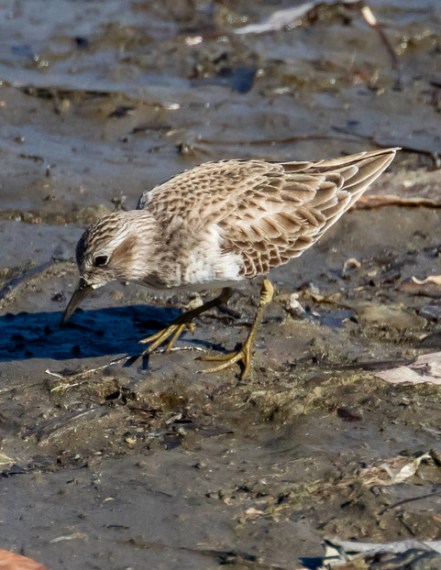
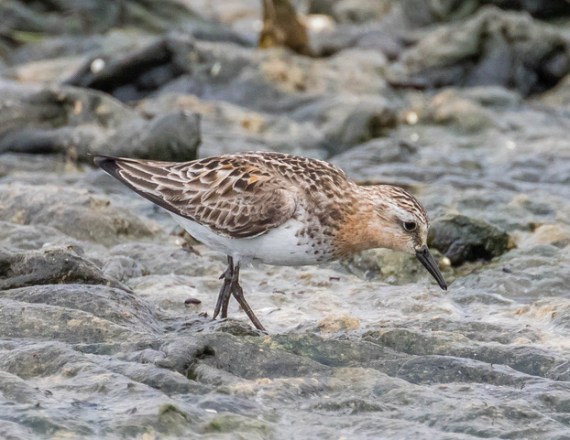
One or more Red-necked Stints appeared on the west coast this fall. We have five photos of the single Oregon bird, taken 9-Aug-2021 at DeLaura Beach Access, Clatsop, OR, and twelve of the Malibu Lagoon, Malibu CA, taken on 22-Aug and 25-Aug, 2021. We don’t know if these are of the same bird, but they are a selection of those taken at both locations on three days.
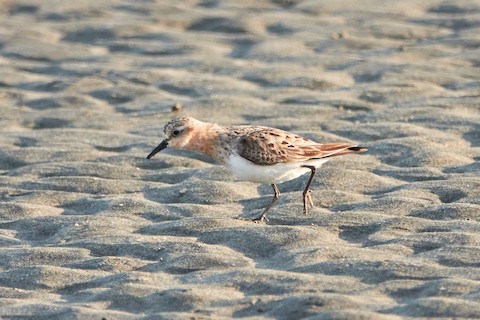

Compare to the Malibu Lagoon bird 22-Aug-2021.

Back to the 9-Aug-2021 Oregon bird.
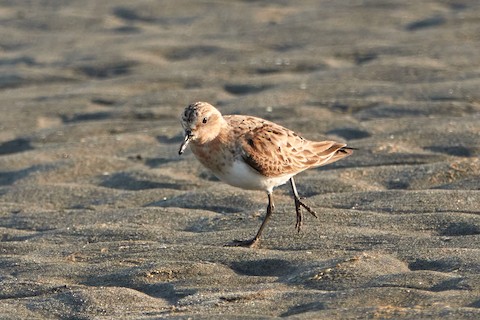
Compare to the Malibu Lagoon bird 22-Aug-2021.
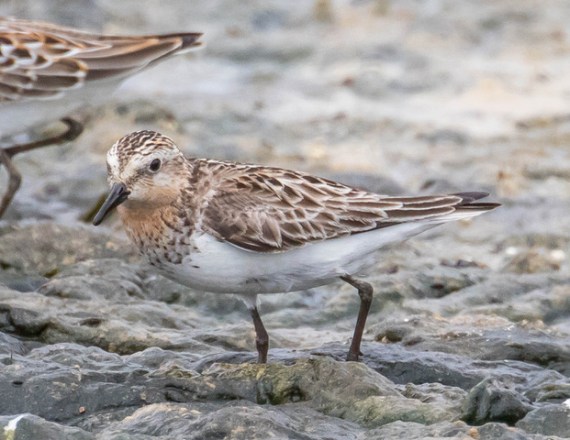
Two more photos of the Oregon bird 9-Aug-2021.

The following photos of the Red-necked Stint are all of the single Southern California bird, taken 13 days later, on 22 Aug 2021. This was reportedly the 4th historical sighting of Red-necked Stint in Los Angeles County.

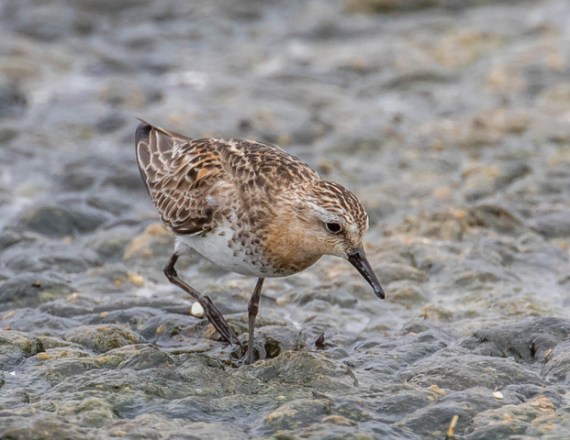
Red-necked Stint, approaching. Malibu Lagoon (Photo: Chris Tosdevin, 8-22-21, time: 10:01:11)
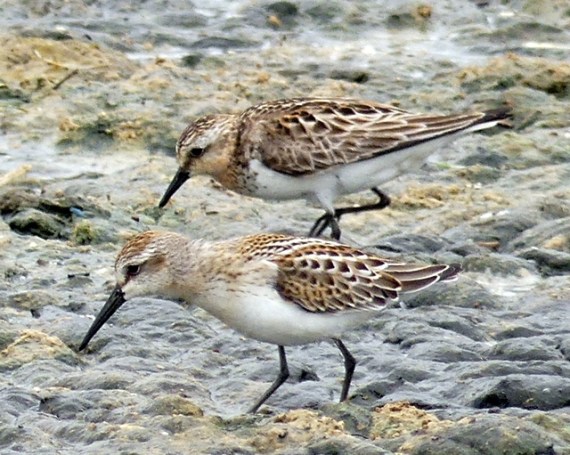
The following photos of the same Red-necked Stint were taken three days later, on 25-Aug-2021, at the same location, Malibu Lagoon, Los Angeles County, CA.

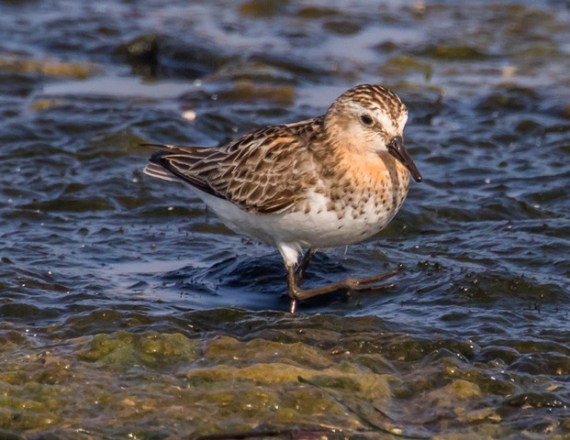


There you go. We report, you decide. I don’t know enough about plumage changes in shorebirds in general and Red-necked Stints in particular to make an informed judgement as to whether this is the same bird. Photography and lighting have a lot to do with how a bird can look. The first three Oregon photos appear to be taken in “golden light” of early morning or late afternoon, enhancing reddish colors. Same thing for many of the Malibu Lagoon photos.
Additional photos of the Oregon bird are here:
https://ebird.org/media/catalog?taxonCode=rensti&sort=rating_rank_desc&mediaType=p®ionCode=US-OR-007
Additional photos of the Malibu Lagoon bird are here:
https://smbasblog.com/2021/08/24/red-necked-stint-at-malibu-lagoon-8-22-21/
and
https://ebird.org/media/catalog?taxonCode=rensti&yr=YCUSTOM&mr=M8TO11&mediaType=p&sort=obs_date_asc&ey=2021&hotspot=Malibu%20Lagoon,%20Los%20Angeles,%20US-CA&hotspotCode=L597658&by=2021
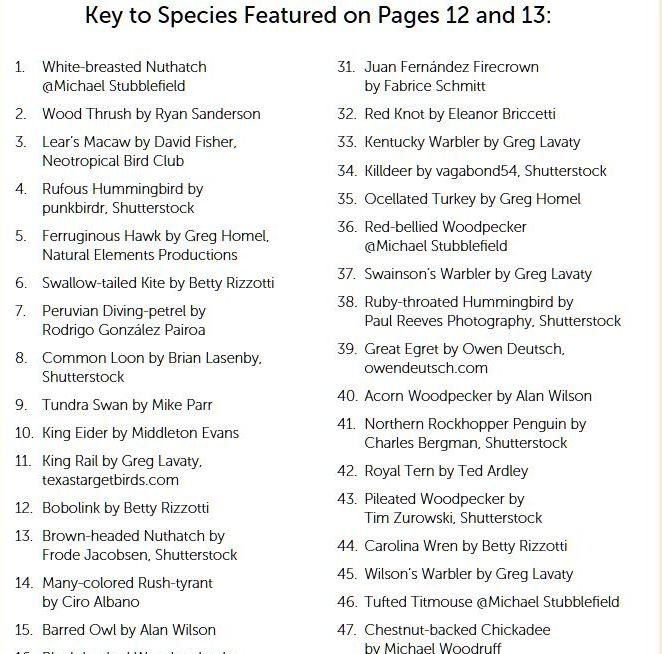
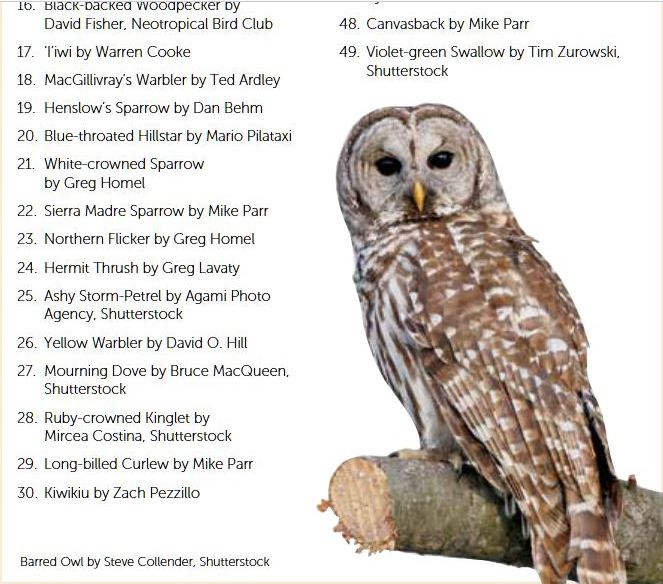
49 Bird Bird Quiz | ABC
[Posted by Chuck Almdale]
I snipped the following from the 2020 Annual Report of American Bird Conservancy. They send me this every year because I send them money every year. It’s a worthy organization, deserving of your support, which in turn supports bird and bird habitat projects throughout the Americas, frequently through partnering with local organizations such as Fundación Jocotoco of Ecuador. Bird conservation projects received 69% of their expenditures in 2020, Education and Outreach another 4%, and they blew only 3% on fundraising. Charity Navigator gives them four stars, their highest rating. I think giving you this information is fair exchange for my borrowing their bird quiz, which I promise to return.
All 49 species are birds of the Americas, but I’ll give you an almost useless hint and tell you that over 10% of them are not found in the wild within the 50 U.S. states or Canada. Answers follow the two pages of birds. Reproduction by ‘snip’ is imperfect, but I think the photos are sufficiently clear for identification.
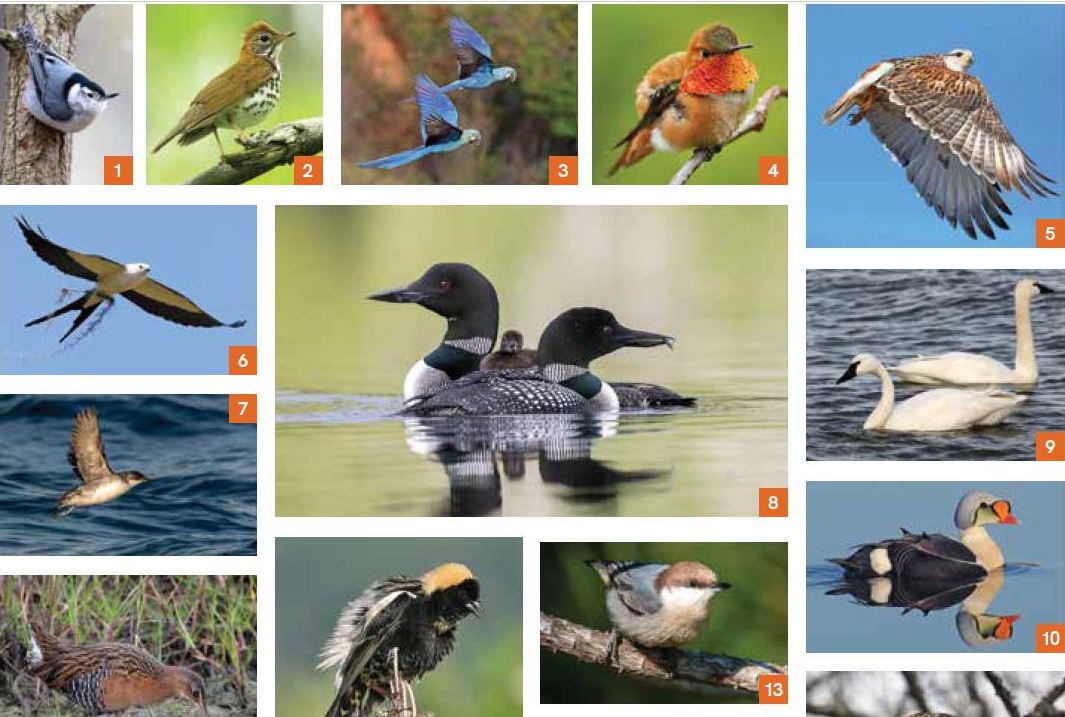
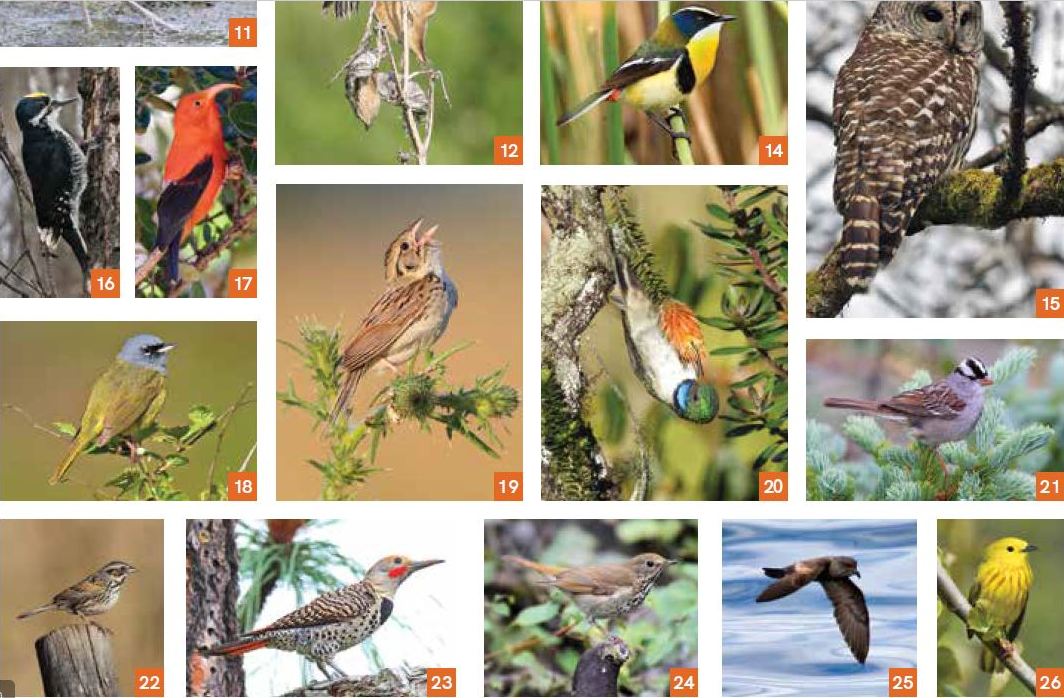
Link to ABC’s Bird of the Week: https://abcbirds.org/birds/bird-of-the-week/
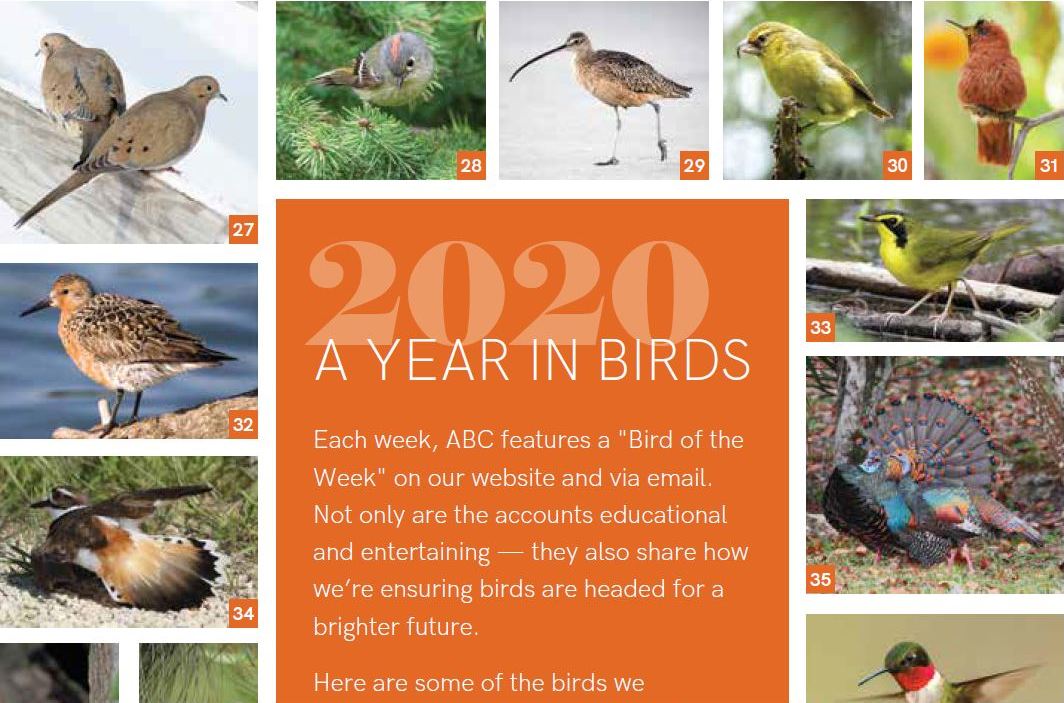
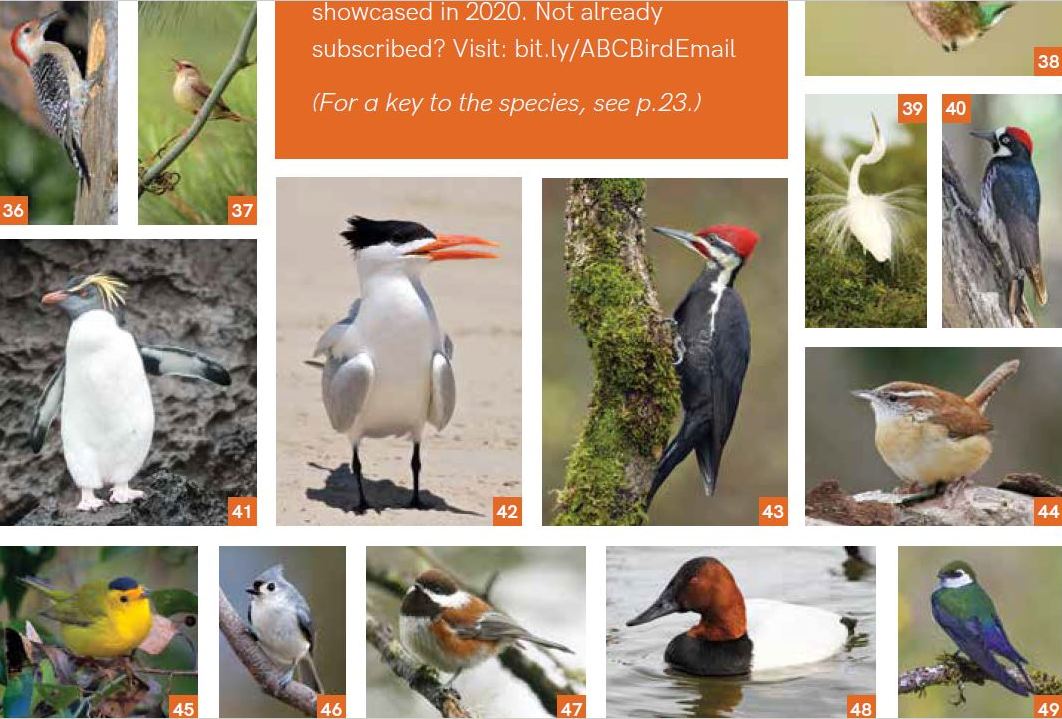
No peeking!



 SANTA MONICA BAY AUDUBON SOCIETY BLOG