Free email delivery
Please sign up for email delivery in the subscription area to the right.
No salesman will call, at least not from us. Maybe from someone else.
Red-necked Stint at Malibu Lagoon 8-22-21
[Posted by Chuck Almdale]
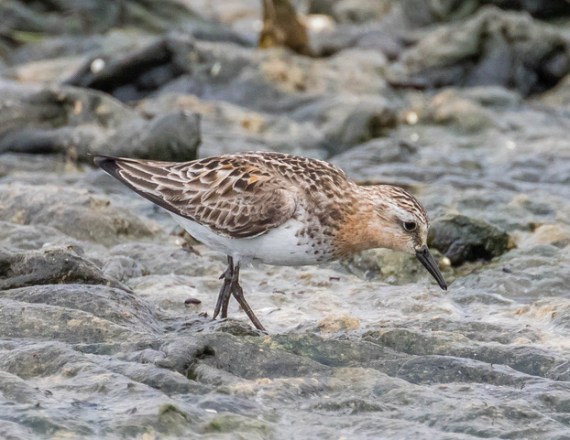
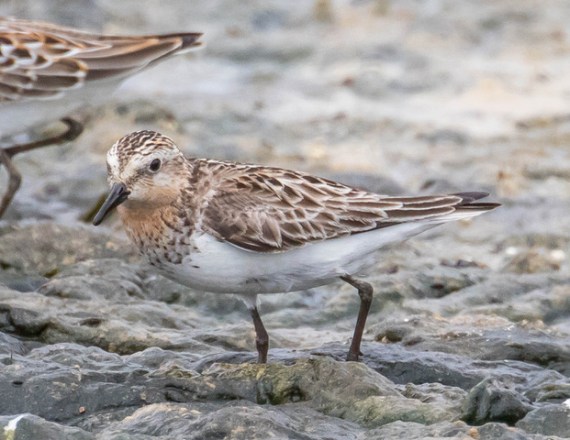
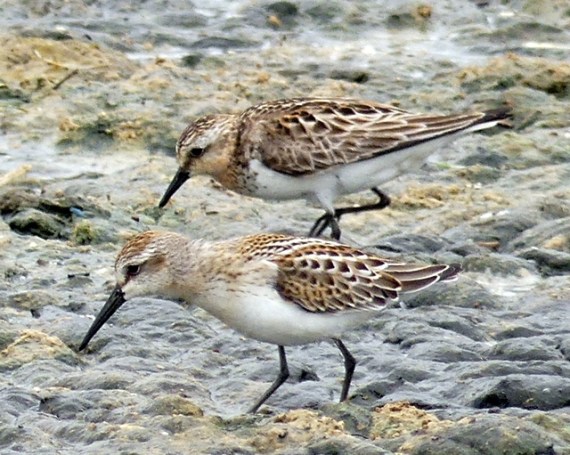
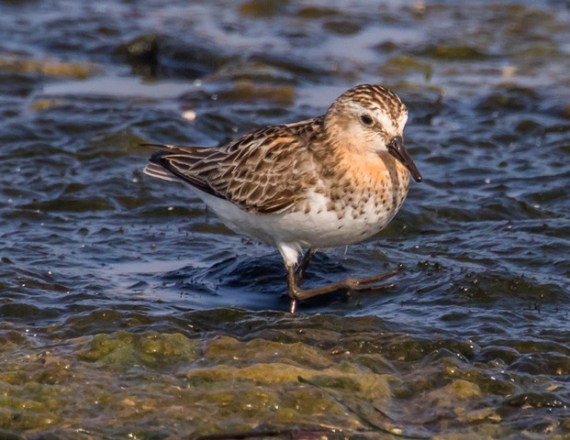
The first eleven photos of the Red-necked Stint, taken by two photographers (Femi Feminu & Chris Tosdevin), are all of the same bird at two location at Malibu Lagoon, over a period of about 130 minutes, if the camera’s internal clocks are correct. The bird was first seen in the northwest section of the lagoon (channels area) between the westernmost sand island and the peninsula/island closest to the parking lot. It flew from there, but was rediscovered about 40 minutes later in the at the far southeast corner of Malibu Lagoon (see map at bottom), walking on the thick coat of algae.
Other shorebirds present within 25 yards and walking on the algae, sand and mud, but not shown here were: Black-bellied Plover, Killdeer, Semipalmated Plover, Snowy Plover, Ruddy Turnstone, Sanderling, Dunlin, Baird’s Sandpiper, Least Sandpiper, Western Sandpiper, Short-billed Dowitcher, Red-necked Phalarope. Larger shorebirds, gulls, terns, egrets and herons were farther away.
Chris Tosdevin later posted the sighting and photos to eBird, sent his photos to Kimball Garrett at the L.A. County Museum of Natural History. Garrett confirmed the sighting as a Red-necked Stint, and Tosdevin reported the sighting to LACoBirds hot line.
This is reportedly the 4th sighting of Red-necked Stint in Los Angeles County.
Th stint was most recently reported to LACoBirds at 12:40 25 Aug 2021, so it’s been there at least 4 days.
There will be another posting of the day’s trip, including a description of our finding & re-finding the stint, in a few days.
Three more photos were added to this posting on 25 Aug 2021, marked as “added.” Photos are displayed in order of time taken.
An additional eleven photos, taken by Chris Tosdevin on 25 Aug 2021, are at the bottom but above the map.
The first two photos (added) were taken at the first location, from the pavilion south of the parking lot.

(Photo: Femi Faminu, 8-22-21, time: 08:58) This photo was added to this blog on 8-25-21.
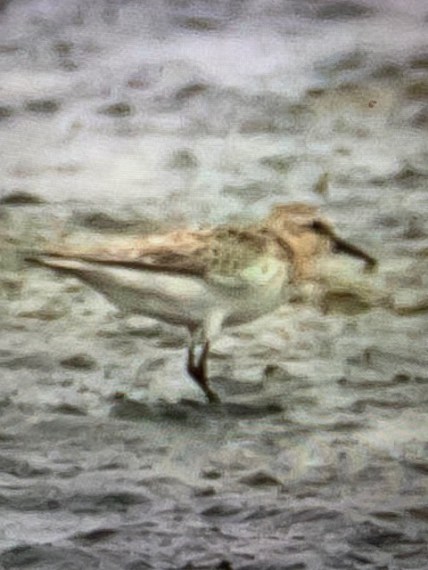
This photo was added to this blog on 8-25-21.

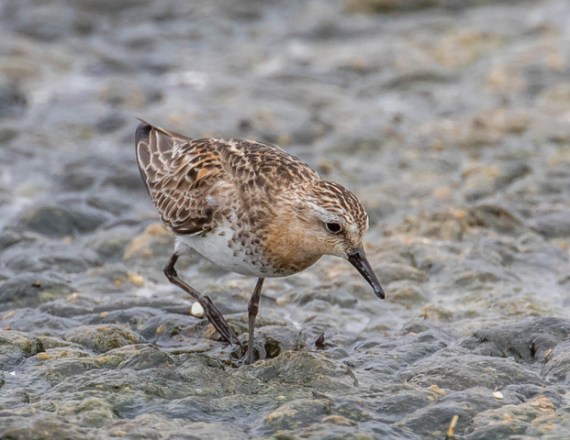
Red-necked Stint, approaching. Malibu Lagoon (Photo: Chris Tosdevin, 8-22-21, time: 10:01:11)






Mountain Lion freeway crossing
[Posted by Chuck Almdale]
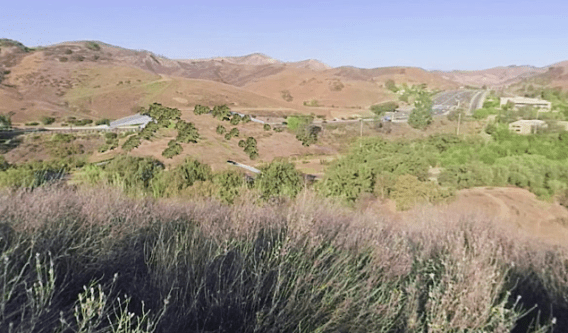
SaveLAcougars.org, working in conjunction with the National Wildlife Federation, wants to put the world largest wildlife corridor crossing over the 101 freeway at Liberty Canyon. They want your help.
If you’ve been reading the local news, you already know that one of the biggest problems our local mountain lions have is to find one another without getting killed crossing one of our many major roads and freeways. Studies have been done and it was determined that the best spot to put a wildlife corridor crossing was at Liberty Canyon.
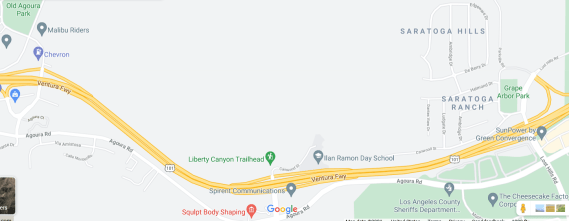
Obviously, all sorts of local animals will be able to use the corridor. Not just cougars. Western Fence Lizards for instance. And possums.
They already have a lot of support. As of right now, Saturday 21 August, 2021, 3,989 donors have contributed over $52 million dollars, or 61.2% of their goal of $85 million dollars. Some of these supporters are listed on their site: The Annenberg Foundation, State of California Wildlife Conservation Board, Coastal Conservancy, The John Logan Foundation, Santa Monica Mountains Conservancy, The Carolyn J. Davis Charitable Trust, Mary Jo and Hank Greenberg Animal Welfare Foundation, Wanda & Bud Waugh, California Dept. of Fish & Wildlife, Leonardo DiCaprio Foundation, M. Piuze Foundation and 3,978 other helpful people and organizations.
Make that 3,979 others. I refreshed the page and it went up one.
Follow this link to their website, watch this cool (animated) video of the wildlife corridor construction over the 101 freeway, and then you can choose how to leave them some money.
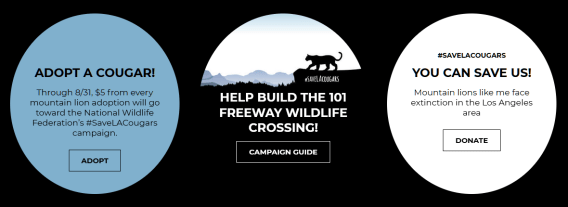
As the label says below, $5 from every mountain adoption will go towards the National Wildlife Federation’s #SaveLAcougars campaign. If you want to give in that way, go the the SaveLAcougars website, find the Adopt a Cougar! blue button, and click ADOPT, which then takes you to the NWF website.
Or, click the white button and give directly to SaveLAcougars.com
Refreshed it again. Make that 3,981 others.
Something is killing gray whales | Los Angeles Times
[Posted by Chuck Almdale]
I don’t know if this is a new Los Angeles Times project, but they’re posting some excellent reports, such as this one, on their online website. Great writing plus beautiful graphics, photography and videography. Altogether, a work of art! However, people seem to have a difficult time first finding out about them and then finding them.
Something is killing gray whales. Is it a sign of oceans in peril?
Los Angeles Times | Susanne Rust, Carolyn Cole, Jennifer Lu & Rahul Mukherjee | 5 August 2021
SAN IGNACIO, Mexico — For thousands of years, the gray whales of the eastern Pacific have undertaken one of the longest annual migrations of any mammal — starting in the cold waters of the Arctic, then down past the densely populated coasts and beaches of California before finally finding refuge in the warm, shallow estuaries of Mexico’s Baja California Peninsula. Only to turn around and head back north a few weeks later.
San Ignacio Lagoon, west coast of Baja California.

Starting in December 2018, this magnificent migration took a fatal turn.
The bodies of California gray whales began washing up along the protected inlets of Baja, where gray whales come every spring to nurse their young and mate. The first to die was a young male, beached along the shore of Isla Arena, in Guerrero Negro Lagoon. Two days later, the decomposing body of a young female was found sloshing in waves along a beach in Ojo de Liebre Lagoon, just a few miles south of the first.
Then, on Jan. 4, 2019, three more young whales were found dead, all of them severely decomposed, in the same lagoon. Much more….
Susanne Rust has three other articles on California Gray Whales, all posted 5 August 2021, listed on her L.A. Times page.
[posted by Chuck Almdale]
The LA Times tells a good story about our dunes. Watch closely and some of the lovely artwork will move. I hope the LAT website lets you in. It deserves sharing.
California beach dunes once teemed with plants and birds
Los Angeles Times | Rosanna Xia, Paul Duginski & Sean Greene | 2 Aug 2020
California beach dunes once teemed with plants and birds
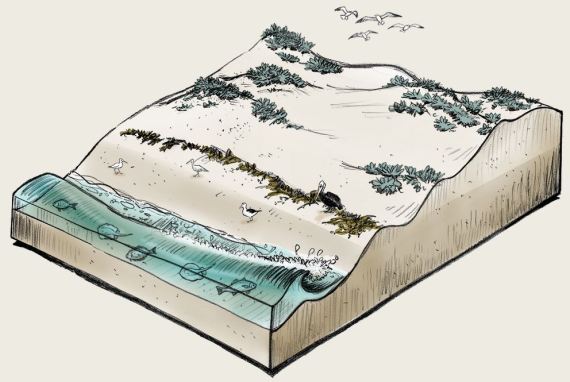
But their habitats were flattened to make room for us.

Can this forgotten ecosystem thrive again? Scientists are trying to find out.
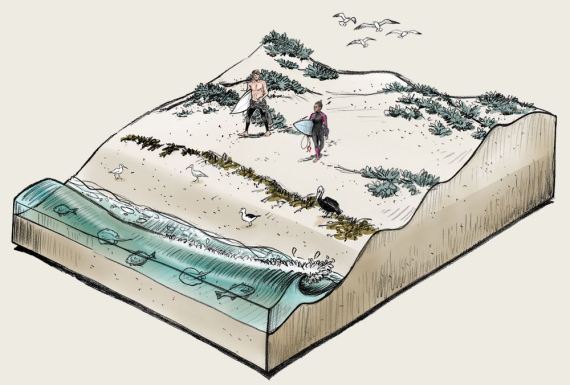
Along a postcard stretch of Southern California, beneath the geologic grandeur of Point Dume, Sara Cuadra cradled a rake and prodded what seemed like just a patch of white sand.
To the untrained eye, this was just another pretty spot in Malibu — a popular site for film shoots and Instagrams, body surfing and long walks by the sea. But here among the bluffs of Westward Beach, where the shoreline has quietly eroded with each passing year, Cuadra has spent weeks tending, square foot by square foot, a forgotten ecosystem that has long since been destroyed.
“That should do it,” she said, patting the sand with satisfaction. “I think we can start seeding.”
And much much more….
A welcome gloom at Malibu Lagoon, 25 July 2021
[Posted by Chuck Almdale]
As usual for summer months the Malibu Lagoon outlet is closed and the water level is high, still about 7 ft. above sea level. The surface algae is thick and the smallest ducklings can gallop over it. Surf shapes were really nice, waves festooned with surfers and the slim portion of beach outside the Snowy Plover exclosure was jammed gill-to-gill with families, beachlayers and surfwatchers. Some of our birding group, upon seeing the dense crowd, decided to skip a last look at the lagoon’s south shore and head home, probably to a beer and sandwich (always a recommended choice of refreshment).
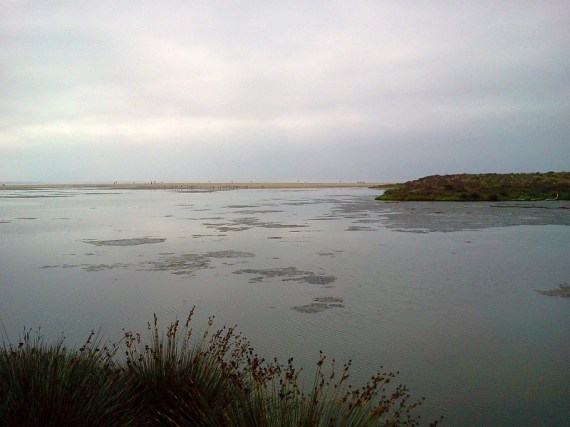
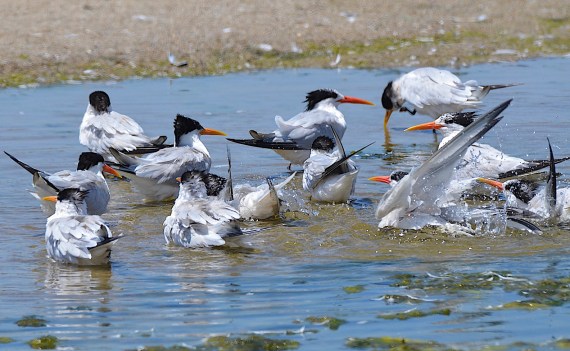
June gloom stretches into July, welcome when nearby valley temperatures head towards and past 100°F. At 8:30 am it was 66°F, then 74°F at 11 am, when we left. Very pleasant. Again, as usual, birding begins to pick up after the low diversity of June. Today we had 819 birds in 40 species; in June it was 348 and 34, respectively. The resting flock of Elegant Terns accounted for half of the increase.
Should you ever want to see what eBird has to report on Malibu Lagoon, go here: https://ebird.org/hotspot/L597658
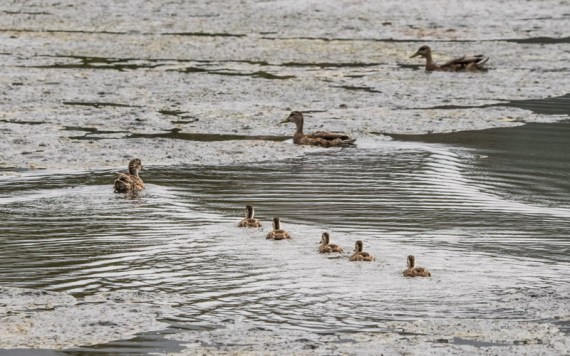
Duck numbers (Mallard and Gadwall) dropped about 20%. Immature ducklings account for about 80% of the ducks, so most of the drop was probably youngsters. The ducks certainly spread their breeding period out, as there are nearly full size and well-plumaged ducklings, as well as small and exceedingly buoyant puffballs. The Canada Geese were gone.
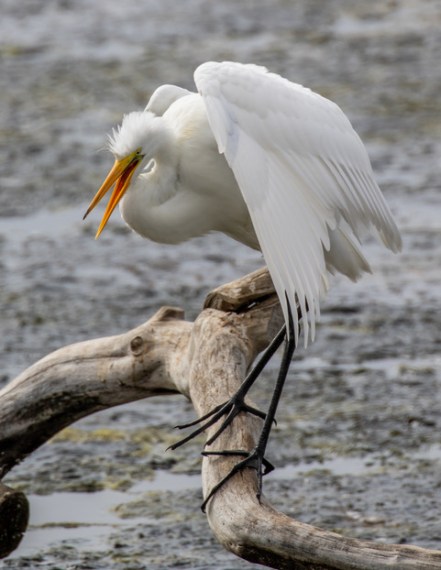
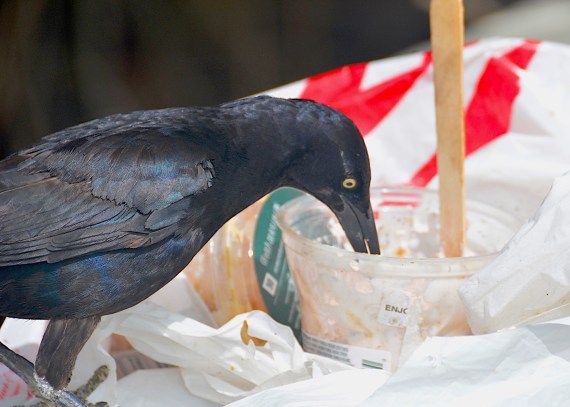
The Great-tailed Grackles are still quite noisy and busy. One got into the snack portion of lagoon-resident Sergio’s possession-pile. Others preened, sky-pointed, gurgled and boinked from pole-top and tree.
Shorebirds are returning. June’s paltry four species are now nine and numbers jumped from 28 to 138. Most of the increase were Whimbrels and Black-bellied (Grey, for you Brits) Plovers, some still with black bellies.
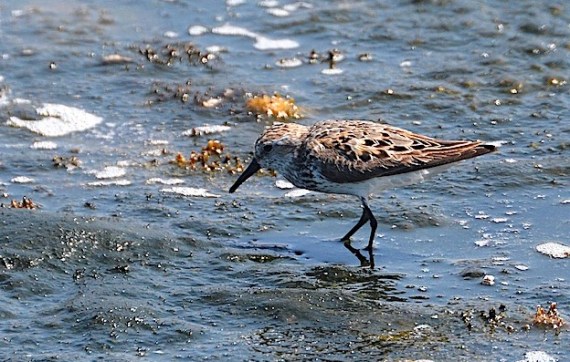
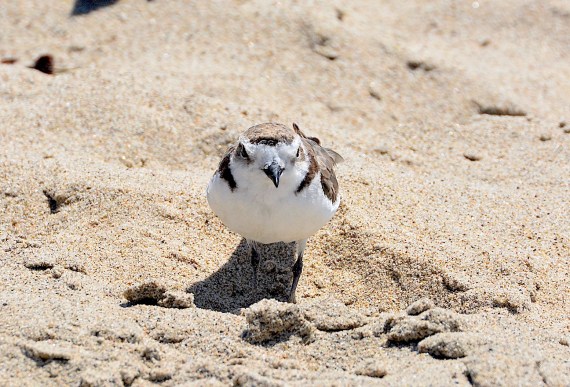
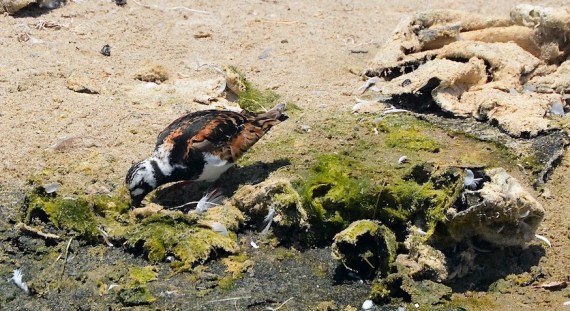
But there were also Least and Western Sandpipers in small numbers, a crowd of three Red-necked Phalaropes in the algae-free portion of the lagoon, two stunning Ruddy Turnstones, and nine Western Snowy Plovers pockmarked the beach.
And all those noisy Elegant Terns, with a few Royal Terns mixed in just to keep them honest.
Perhaps most unusual were all the Black-crowned Night-Herons (not to mention 38 other herons/egrets). Eight juveniles were scattered around the lagoon edge, standing on logs, lurking in the pickleweed.
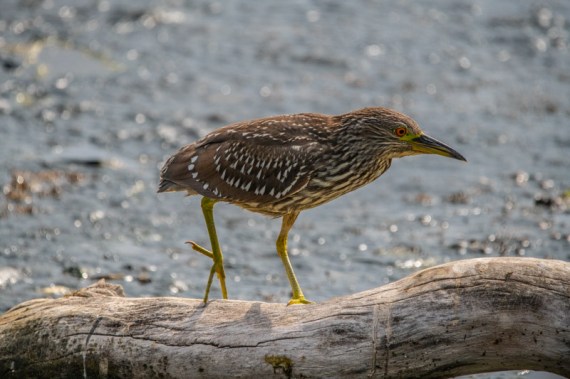
As their name implies, you might expect night-herons to be out at night. Otherwise why call them “night”-herons? Daytime feeding is the default for herons, so we don’t call them “day”-herons. However, by the time the newly-fledged juvenile night-herons get to Malibu Lagoon, they’re on their own. Mom and dad no longer feed them, so they must hunt for themselves and do it when they can. They’re less efficient than adults, they have to spend more time doing it and they do get hungry. So daytime feeding is common among juveniles.
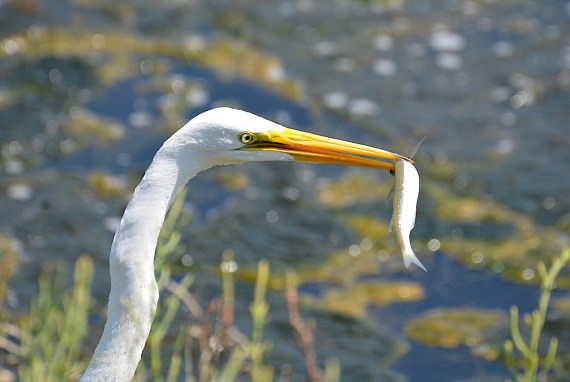
Adult night-herons tend to day-roost in dense trees, reeds or bushes during the day. We used to find a dozen or so of them in the row of eucalypts behind the market across PCH, well-hidden high in the foliage.
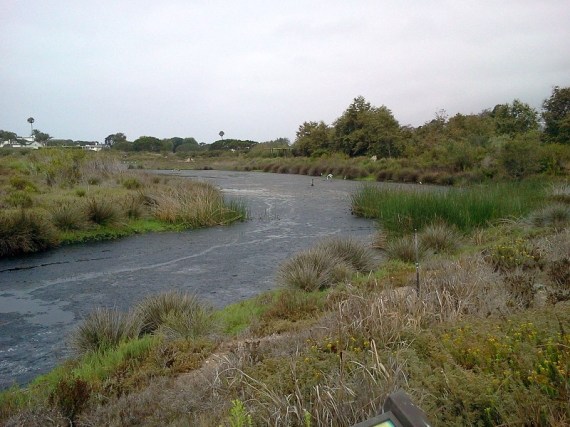
Night-herons comprise the subfamily Nycticoracinae in the heron family of Ardeidae, with eight species spread over three tribes. Black-crowned is the most widespread species, found on all continents except Australia and Antarctica, and some islands. The similar Yellow-crowned breeds from the U.S. eastern seaboard and Baja California down both coasts to south of the equator in Brazil and Ecuador. In recent decades they have extended their coastal breeding range northward in California.
Yellow-crowned Night Herons have expanded their breeding range and multiple pairs now nest in a restricted area at the nearby Point Mugu Naval Air Station in Ventura County, which is now the northern end of their West Coast breeding range. First successful nesting of this species in California was in 2006 at Imperial Beach, San Diego County. Despite its recent range expansion, it remains a rarity in most of California. Six subspecies are recognized. This [Santa Barbara county bird, photo on linked page] is N. v. bancrofti characterized by pale coloration, narrower dorsal streaks and having a thicker bill than the nominate East Coast race. Distribution of N. v. bancrofti is weird with two widely spaced populations, one centered in NW Mexico and the other in the Bahamas and West Indies.
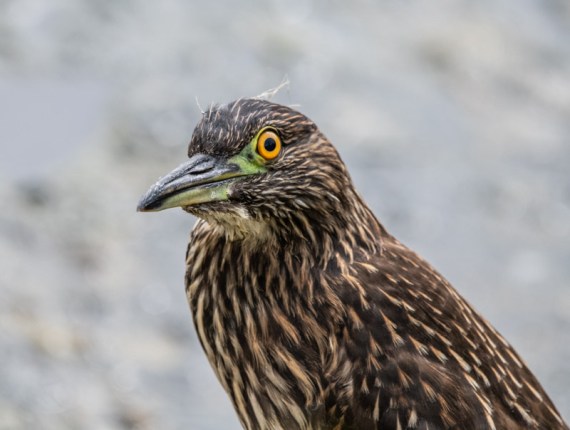
A few of us thought one of our birds might be a Yellow-crowned, due to some coloration on the face or neck or lores (fleshy area between the eyes and bill). But all the birds had the Black-crowned two-toned bill and large pale teardrop-spots on the back. Juvenile Yellow-crowned have a dark bill, grayish face and smaller spots on the back. I’m sure a Yellow-crowned will eventually show up on one of our walks. We did have a hybrid Yellow/Black-crowned juvenile about a decade ago.
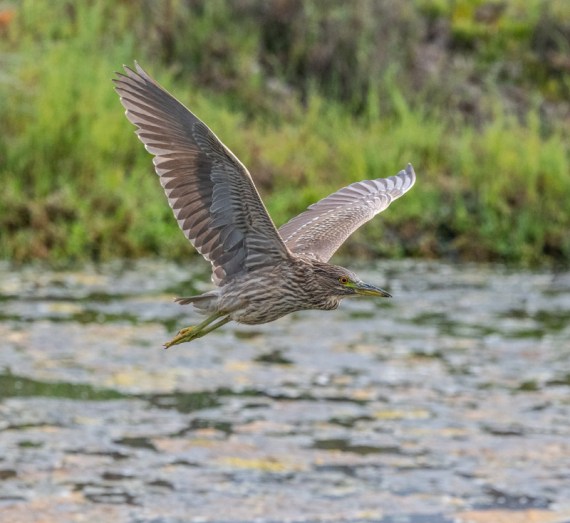
The other six night-herons are scattered around the world: Rufous Night-Heron in Australasia; White-backed in sub-Saharan Africa; White-eared is restricted to a tiny area in southern China; Japanese in Japan, China and Philippines; Malayan in Malaysia, China, Philippines and Indonesia. Boat-billed Heron, in its own Tribe of Cochleariini, has an enormous bill and is found from southern Mexico to southern Brazil.
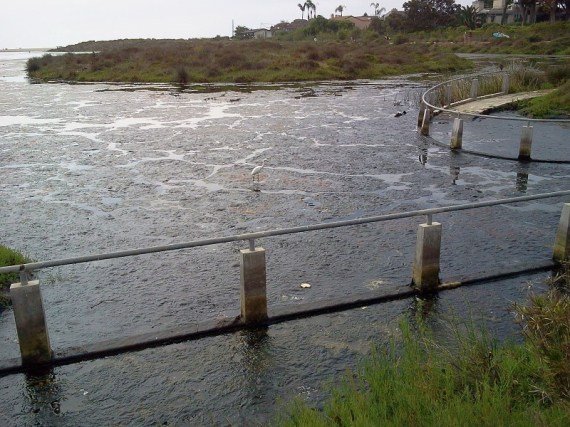
All the Night-herons have, for herons, large eyes, the better to see you with in the dark, my dear. They could be called crepuscular-herons, as they prefer feeding at dusk and dawn, but they will feed at night, so Night-herons it is.
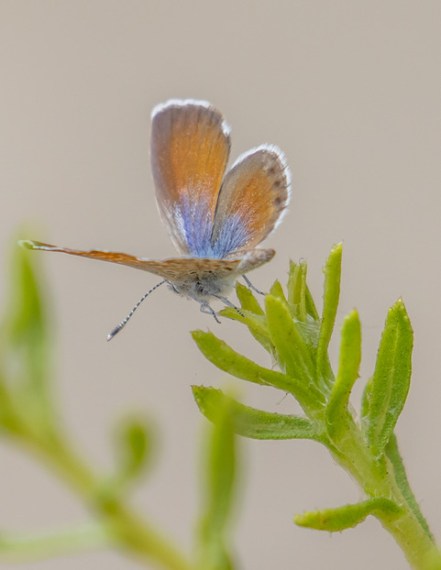
Earlier in the day Chris Tosdevin and I watched a Cooper’s Hawk flush and fly across the lagoon. It shot into a large eucalypt (I believe) at the east end of Malibu Colony, and an adult Black-crowned Night-Heron immediately shot out the other side. I checked this tree before leaving the beach and sure enough, about 20 ft. above a patch of whitewashed leaves, I found the night-heron peering down at me from behind a clump of foliage.
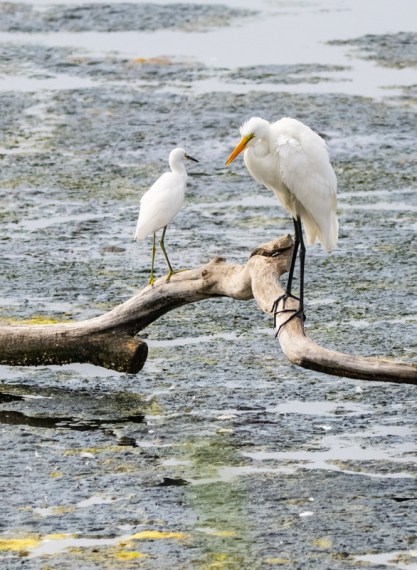
(R. Juncosa 7-25-21)
Birds new for the season: Snowy Plover, Semipalmated Plover, Least Sandpiper, Western Sandpiper, Red-necked Phalarope, Black-crowned Night-Heron, Cooper’s Hawk, California Scrub-Jay.
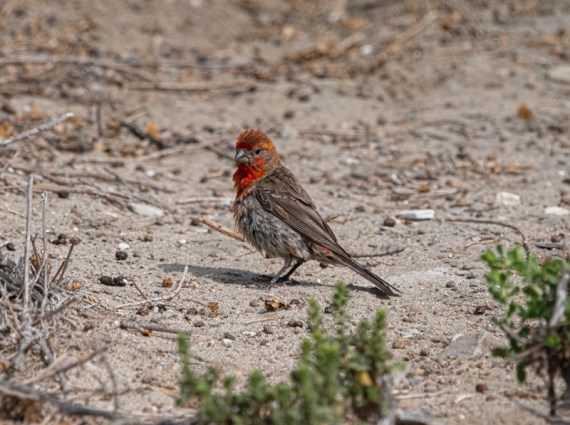
Many thanks to photographers: Lillian Johnson, Ray Juncosa, Larry Loeher, Grace Murayama & Chris Tosdevin
The next SMBAS scheduled field trips: Maybe in September. We’ll see.
The next SMBAS program: Most likely a Zoom Evening Meeting, Tuesday, 5 October, 7:30 p.m.
The SMBAS 10 a.m. Parent’s & Kids Birdwalk remains canceled until further notice due to the near-impossibility of maintained proper masked social distancing with parents and small children.
Links: Unusual birds at Malibu Lagoon
9/23/02 Aerial photo of Malibu Lagoon
Prior checklists:
2021: Jan-July
2020: Jan-July, July-Dec 2019: Jan-June, July-Dec
2018: Jan-June, July-Dec 2017: Jan-June, July-Dec
2016: Jan-June, July-Dec 2015: Jan-May, July-Dec
2014: Jan-July, July-Dec 2013: Jan-June, July-Dec
2012: Jan-June, July -Dec 2011: Jan-June, July-Dec
2010: Jan-June, July-Dec 2009: Jan-June, July-Dec.
The 10-year comparison summaries created during the Lagoon Reconfiguration Project period, remain available—despite numerous complaints—on our Lagoon Project Bird Census Page. Very briefly summarized, the results unexpectedly indicate that avian species diversification and numbers improved slightly during the restoration period June’12-June’14.
Many thanks to Adrian Douglas, Lillian Johnson, Ray Juncosa, Chris Tosdevin and others for their contributions to this month’s checklist.
[Chuck Almdale]
| Malibu Census 2021 | 2/22 | 3/22 | 4/25 | 5/22 | 6/20 | 7/25 |
| Temperature | 65-74 | 60-61 | 58-63 | 59-68 | 63-69 | 66-74 |
| Tide Lo/Hi Height | L-0.13 | L+0.86 | H+4.83 | L+1.57 | H+4.89 | H+4.20 |
| Tide Time | 1314 | 1223 | 0843 | 0736 | 0627 | 1148 |
| (Black) Brant | 1 | |||||
| Canada Goose | 8 | 6 | 8 | 6 | 10 | |
| Cinnamon Teal | 4 | 7 | ||||
| Northern Shoveler | 8 | |||||
| Gadwall | 12 | 16 | 25 | 18 | 65 | 48 |
| American Wigeon | 12 | 8 | ||||
| Mallard | 10 | 16 | 18 | 22 | 40 | 37 |
| Northern Pintail | 2 | |||||
| Green-winged Teal | 11 | 25 | ||||
| Surf Scoter | 15 | 2 | ||||
| Bufflehead | 4 | |||||
| Red-breasted Merganser | 12 | 12 | 3 | 1 | 1 | |
| Ruddy Duck | 25 | |||||
| Pied-billed Grebe | 6 | 6 | 1 | 1 | 2 | |
| Eared Grebe | 1 | 2 | ||||
| Western Grebe | 4 | 11 | 4 | |||
| Feral Pigeon | 4 | 6 | 9 | 15 | 9 | 15 |
| Mourning Dove | 1 | 6 | 2 | 4 | ||
| Anna’s Hummingbird | 2 | 3 | 1 | 1 | 1 | 1 |
| Allen’s Hummingbird | 2 | 2 | 4 | 2 | 1 | |
| American Coot | 210 | 235 | 75 | 6 | 9 | 8 |
| Black Oystercatcher | 4 | 4 | ||||
| Black-bellied Plover | 25 | 31 | 22 | 5 | 13 | 43 |
| Snowy Plover | 27 | 23 | 9 | |||
| Semipalmated Plover | 29 | 1 | ||||
| Killdeer | 4 | 7 | 1 | 6 | 4 | 9 |
| Whimbrel | 3 | 6 | 3 | 19 | 9 | 51 |
| Marbled Godwit | 11 | 10 | ||||
| Ruddy Turnstone | 5 | 2 | 2 | |||
| Sanderling | 50 | 160 | ||||
| Dunlin | 1 | |||||
| Least Sandpiper | 4 | 8 | 1 | 8 | ||
| Western Sandpiper | 1 | 4 | 20 | 12 | ||
| Spotted Sandpiper | 1 | 1 | ||||
| Willet | 11 | 6 | 2 | 1 | ||
| Red-necked Phalarope | 3 | |||||
| Heermann’s Gull | 2 | 42 | 28 | 280 | 2 | |
| Ring-billed Gull | 38 | 12 | 6 | |||
| Western Gull | 80 | 65 | 40 | 35 | 45 | 52 |
| California Gull | 235 | 130 | 35 | 10 | 4 | 1 |
| Herring Gull | 1 | |||||
| Glaucous-winged Gull | 1 | 1 | 1 | 1 | ||
| Caspian Tern | 4 | 20 | 13 | 3 | ||
| Royal Tern | 6 | 24 | 6 | 2 | 5 | |
| Elegant Tern | 395 | 107 | 1 | 240 | ||
| Pacific Loon | 1 | |||||
| Brandt’s Cormorant | 5 | |||||
| Double-crested Cormorant | 52 | 25 | 12 | 26 | 26 | 52 |
| Pelagic Cormorant | 1 | 1 | ||||
| Brown Pelican | 12 | 27 | 105 | 235 | 27 | 58 |
| Great Blue Heron | 3 | 3 | 2 | 5 | ||
| Great Egret | 2 | 2 | 1 | 1 | 4 | 11 |
| Snowy Egret | 9 | 3 | 2 | 1 | 6 | 22 |
| Green Heron | 1 | |||||
| Black-crowned Night-Heron | 1 | 9 | ||||
| Turkey Vulture | 1 | 1 | ||||
| Osprey | 2 | 2 | 1 | |||
| Cooper’s Hawk | 1 | |||||
| Red-shouldered Hawk | 2 | |||||
| Peregrine Falcon | 1 | |||||
| Black Phoebe | 2 | 2 | 8 | 6 | 3 | |
| Western Kingbird | 1 | |||||
| California Scrub-Jay | 1 | 2 | 1 | |||
| American Crow | 2 | 5 | 4 | 4 | 3 | 4 |
| Common Raven | 1 | |||||
| Violet-green Swallow | 2 | |||||
| Rough-winged Swallow | 6 | 2 | 3 | |||
| Cliff Swallow | 8 | 4 | ||||
| Barn Swallow | 10 | 25 | 30 | 18 | 40 | |
| Oak Titmouse | 2 | 1 | ||||
| Bushtit | 8 | 20 | 1 | 8 | 4 | 1 |
| Western Bluebird | 2 | |||||
| Northern Mockingbird | 2 | 4 | 5 | 2 | 1 | |
| European Starling | 75 | 5 | 8 | |||
| House Finch | 4 | 10 | 6 | 6 | 6 | 6 |
| Lesser Goldfinch | 4 | 16 | 2 | |||
| Spotted Towhee | 1 | |||||
| California Towhee | 1 | 4 | 3 | |||
| Song Sparrow | 4 | 7 | 7 | 8 | 4 | 5 |
| White-crowned Sparrow | 5 | 6 | 2 | |||
| Hooded Oriole | 1 | 1 | ||||
| Red-winged Blackbird | 2 | 2 | 4 | 25 | ||
| Brown-headed Cowbird | 2 | 1 | 1 | |||
| Great-tailed Grackle | 1 | 8 | 6 | 6 | 8 | 20 |
| Common Yellowthroat | 3 | 4 | ||||
| Yellow Warbler | 2 | |||||
| Yellow-rumped Warbler | 14 | 15 | 1 | |||
| Totals by Type | Feb | Mar | Apr | May | Jun | Jul |
| Waterfowl | 115 | 100 | 55 | 46 | 116 | 86 |
| Water Birds – Other | 292 | 306 | 198 | 268 | 62 | 120 |
| Herons, Egrets & Ibis | 15 | 5 | 3 | 6 | 12 | 47 |
| Quail & Raptors | 0 | 3 | 3 | 4 | 0 | 1 |
| Shorebirds | 141 | 264 | 80 | 31 | 28 | 138 |
| Gulls & Terns | 362 | 279 | 531 | 446 | 55 | 300 |
| Doves | 5 | 12 | 9 | 15 | 11 | 19 |
| Other Non-Passerines | 4 | 5 | 5 | 3 | 2 | 1 |
| Passerines | 46 | 198 | 78 | 99 | 62 | 107 |
| Totals Birds | 980 | 1172 | 962 | 918 | 348 | 819 |
| Total Species | Feb | Mar | Apr | May | Jun | Jul |
| Waterfowl | 11 | 9 | 5 | 3 | 4 | 3 |
| Water Birds – Other | 9 | 6 | 6 | 4 | 3 | 4 |
| Herons, Egrets & Ibis | 4 | 2 | 2 | 4 | 3 | 4 |
| Quail & Raptors | 0 | 2 | 2 | 3 | 0 | 1 |
| Shorebirds | 11 | 11 | 9 | 4 | 4 | 9 |
| Gulls & Terns | 6 | 8 | 8 | 6 | 5 | 5 |
| Doves | 2 | 2 | 1 | 1 | 2 | 2 |
| Other Non-Passerines | 2 | 2 | 2 | 2 | 2 | 1 |
| Passerines | 11 | 20 | 17 | 17 | 11 | 11 |
| Totals Species – 87 | 56 | 62 | 52 | 44 | 34 | 40 |



 SANTA MONICA BAY AUDUBON SOCIETY BLOG