Phylum Chordata, Class Mammalia | Taxonomy 7
[By Chuck Almdale]
We now have only the mammal class to describe, but there’s a lot of ground to cover. As further illustration of how the clade system adds much more detail (lineage branches and nodes of division), we’ll repeat what we did in Taxonomy 6 and start at the top with Domain and use the subscript numbers to keep track of the steps. The subscript will again be on “Clade” which we’ll apply to every rank whether it already has a Linnaean rank or not, just to be uniform. Linnaean ranks (kingdom, phylum, class, order…superclass…suborder, etc.) are clades in concept, and were so long before the term “clade” was invented. But, as mentioned previously, with the discovery of molecular clocks and DNA analysis, the ability to discover the points of separation between lineages took a quantum leap forward.
The mammalian line follows the line for the previously presented chordate classes – amphibians, reptiles, snakes, crocodiles and birds through Clade20 Amniota (or Class Reptilia) below. At Clade21 Synapsida the line towards the mammals diverges from that towards lizards, snakes, turtles, crocodiles and birds.
Clade1 Domain Eukaryota, Clade2 Kingdom Animalia, Clade3 Subkingdom Eumetazoa, Clade4 ParaHoxozoa (Planulozoa), Clade5 Infrakingdom Bilateria, Clade6 Superphylum Deuterostomia, Clade7 Phylum Chordata, Clade8 Olfactores, Clade9 Subphyla Craniata (Vertebrata), Clade10 Infraphylum Gnathostomata, Clade11 Superclass Osteichthyes, Clade12 Sarcopterygii, Clade13 Rhipidistia, Clade14 Tetrapodomorpha, Clade15 Eotetrapodiformes, Clade16 Elpistostegalia, Clade17 Stegocephali, Clade18 Superclass Tetrapoda, Clade19 Reptiliomorpha (or Pan-Amniota), Clade20 Amniota (or Class Reptilia), Clade21 Synapsida, Clade22 Eupelycosauria (or Metopopora), Clade23 Sphenacodontia, Clade24 Sphenacodontoidea, Clade25 Therapsida, Clade26 Theriodontia, Clade27 Eutheriodontia, Clade28 Cynodontia, Clade29 Epicynodontia, Clade30 Eucynodontia, Clade31 Probainognathia, Clade32 Prozostrodontia, Clade33 Mammaliamorpha, Clade34 Mammaliaformes, and
Clade35 Class Mammalia – Mammals: Translation “of the breast.” Mammals uniquely possess: milk-producing mammary glands for feeding young, a neocortex region of the brain, fur or hair, and three middle ear bones. Their ancestors first appeared in the Carboniferous Period over 300 million years ago. There are approximately 6,400 extant described species, divided into 27 orders, give or take a few depending (as always) on who is counting. Below the level of Class Mammalia the taxonomic systems multiply incompatibly. Rather than become utterly confusing, I’ll stick with the mildly confusing and use a fairly simple system. The important Linnaean ranks and a few important clades are in blue, including all 27 orders. Important divergences get a comment, e.g. “The line towards Monotremes diverges from other mammals, then diversifies into two families.“
There is a list of all twenty-seven mammalian orders with totals for family, genera and species following the illustrated indented sequence below.
You probably skimmed the above (and mildly annoying) list. Here’s the same thing, indented. It takes up more space, but is much easier to read. It also leaves room for very short notes.
Clade1 Domain Eukaryota
Clade2 Kingdom Animalia
Clade3 Subkingdom Eumetazoa
Clade4 ParaHoxozoa (Planulozoa)
Clade5 Infrakingdom Bilateria
Clade6 Superphylum Deuterostomia
Clade7 Phylum Chordata
Clade8 Olfactores
Clade9 Subphyla Craniata (Vertebrata)
Clade10 Infraphylum Gnathostomata
Clade11 Superclass Osteichthyes
Clade12 Sarcopterygii – [Link] Lobe-finned fish
Clade13 Rhipidistia
Clade14 Tetrapodomorpha
Clade15 Eotetrapodiformes
Clade16 Elpistostegalia
Clade17 Stegocephali
Clade18 Superclass Tetrapoda – [Link] Amphibian divergence
Clade19 Reptiliomorpha (or Pan-Amniota)
Clade20 Amniota (or Class Reptilia) – Last common ancestor reptiles & mammals
Clade21 Synapsida – [Link] The line to mammals line diverges from the reptilian line
Clade22 Eupelycosauria (or Metopopora)
Clade23 Sphenacodontia
Clade24 Sphenacodontoidea
Clade25 Therapsida
Clade26 Theriodontia
Clade27 Eutheriodontia
Clade28 Cynodontia
Clade29 Epicynodontia
Clade30 Eucynodontia
Clade31 Probainognathia
Clade32 Prozostrodontia
Clade33 Mammaliamorpha
Clade34 Mammaliaformes
Clade35 Class Mammalia – [Link] Mammals
Moving the line back to the left, we start with Clade35 Class Mammalia – Mammals.
Clade35 Class Mammalia – Mammals
The line towards Monotremes diverges from other mammals, then diversifies into two families.
Clade36 Order Monotremata – [Link] Translation “single-opening;” two families of egg-laying, live-bearing, milk-producing, furry monotremes.
Clade37 Family Tachyglossidae: [Link] four species of Echidna.
Clade37 Family Ornithorhynchidae: [Link] one species of Duck-billed Platypus.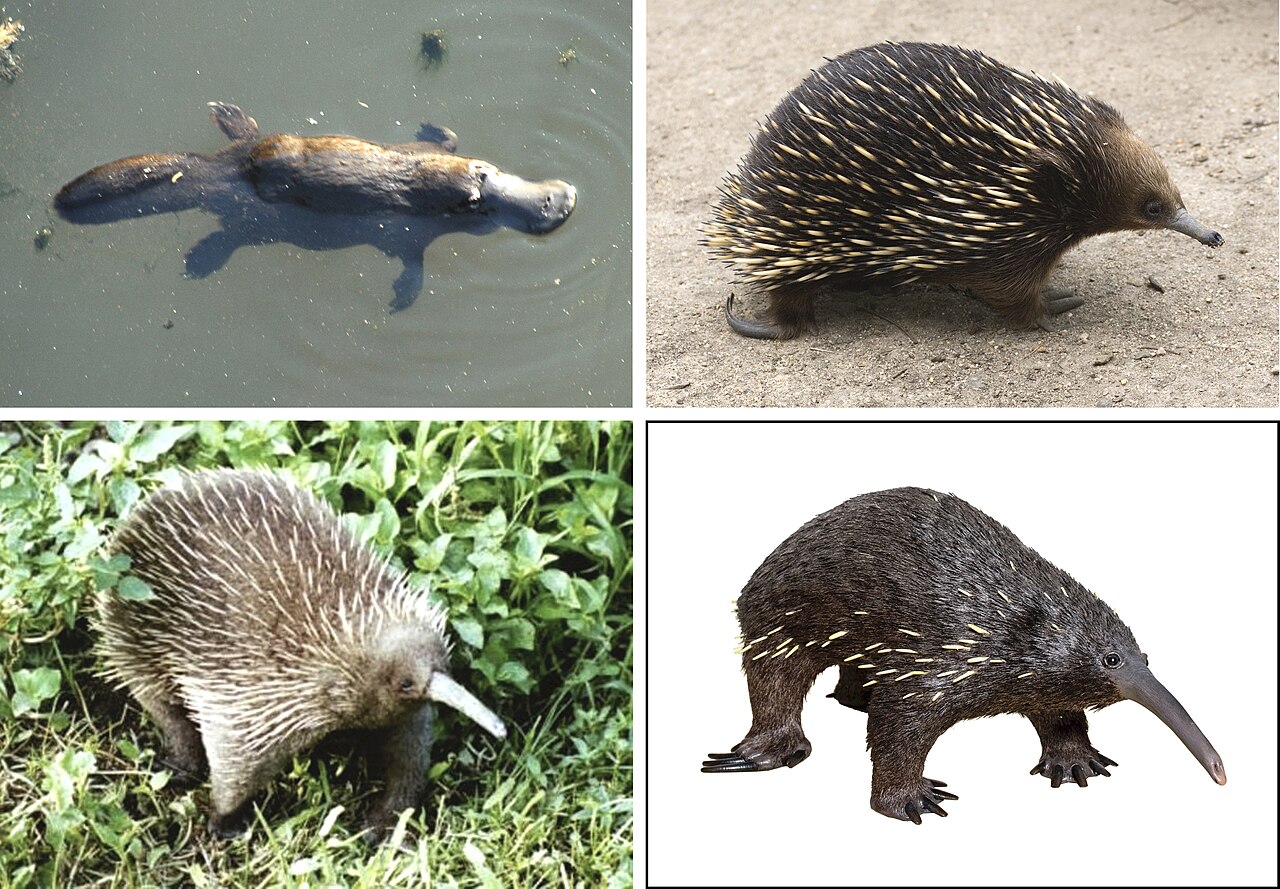 Monotremes, clockwise from upper left: Platypus, Short-beaked Echidna, Eastern Long-beaked Echidna (replica, New Guinea), Western Long-beaked Echidna. Wikipedia: Monotreme
Clades(36-42) Crown group and branches to extinct taxa. Clade36 is sister taxon to Monotremata.
Clade43 Subclass Theria – [Link] Last common ancestor marsupials and placentals.
The lines into sister taxa Metatheria (Marsupials) and Eutheria (Placentals) diverge; Marsupials diversify into seven orders.
Clade44 Metatheria (Marsupialiformes) – All Marsupials. Sister taxon to Eutheria (Placental Mammals).
Clade45 Infraclass Marsupialia – [Link] Pouched animals. The young are born in a relatively undeveloped state, then nurtured within a pouch on their mother’s abdomen; primarily in Australasia. There are seven orders of Marsupials in three groups.
Clade46 Order Didelphimorphia – [Link] Opossums. Translation “two-womb-form;” 1 family, 126 species in the Americas, 1 species north of Mexico.  Female Virginia Opossum (Didelphis virginiana) with nine young, the only U.S. and Canadian marsupial species. Photo: Specialjake. Wikipedia: Opossum
Clade46 Order Paucituberculata – [Link] Shrew Opossums. Translation “few bumps (on teeth)”; 1 family, 7 species in South America. 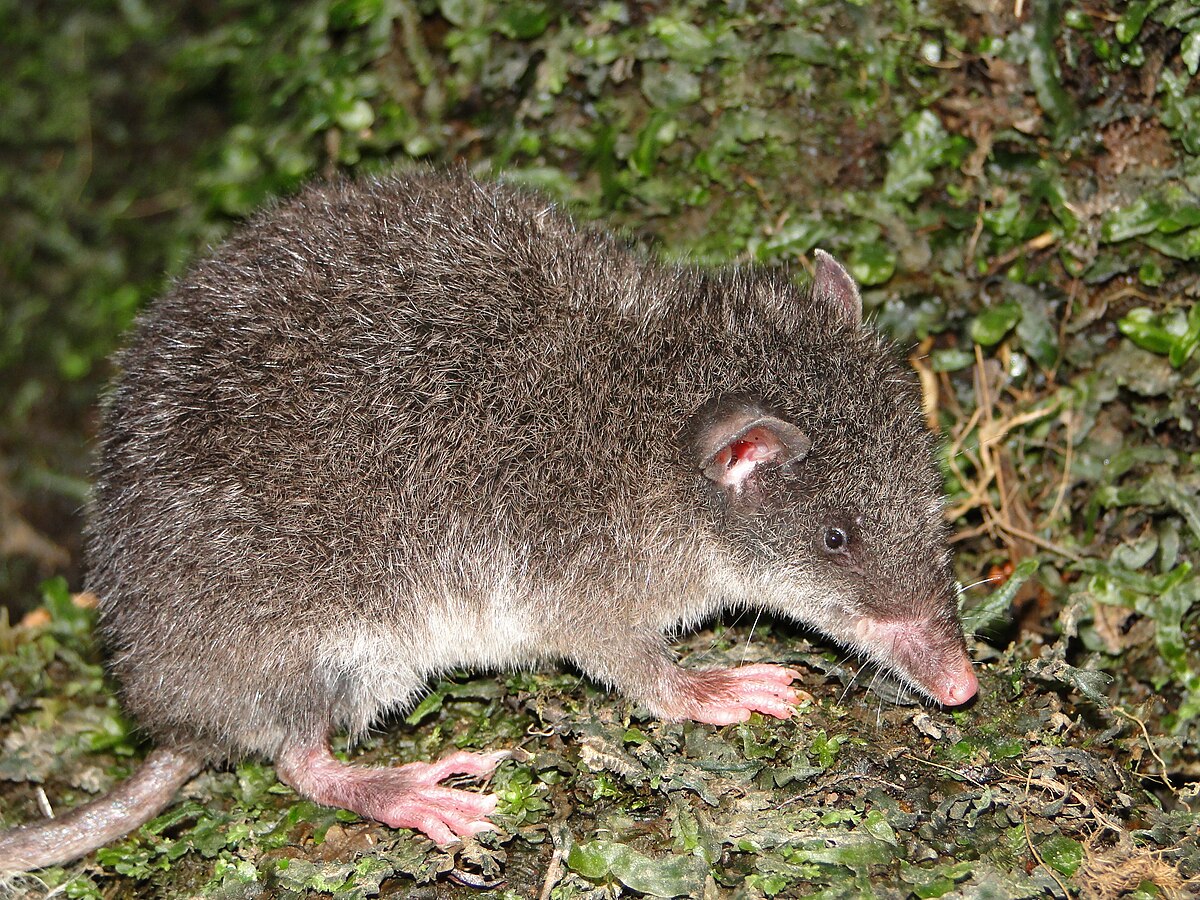 Eastern Caenolestid (Caenolestes sangay), South America.
Photo: Jbritomolina. Wikipedia: Paucituberculata
Clade46 Superorder Australidelphia (or Agreodontia) Originating in Gondwana, 5 orders, 266 species mostly in Australasia.
Clade47 Order Microbiotheria – [Link] Little Monkey of the Mountain. Translation “small wild animal;” 2 species in SW South America, extinct species in Australia & South America.  Monito Del Monte or Colocolo Opossum (Dromiciops gliroides).
Photo: José Luis Bartheld. Wikipedia: Microbiotheria
Clade47 Order Diprotodontia – [Link] Kangaroos, Wallabies, Possums, Koalas, Wombats. Translation “two forward teeth;” mostly carnivorous (or insectivorous); 11 families, 151 species in Australia and New Guinea. 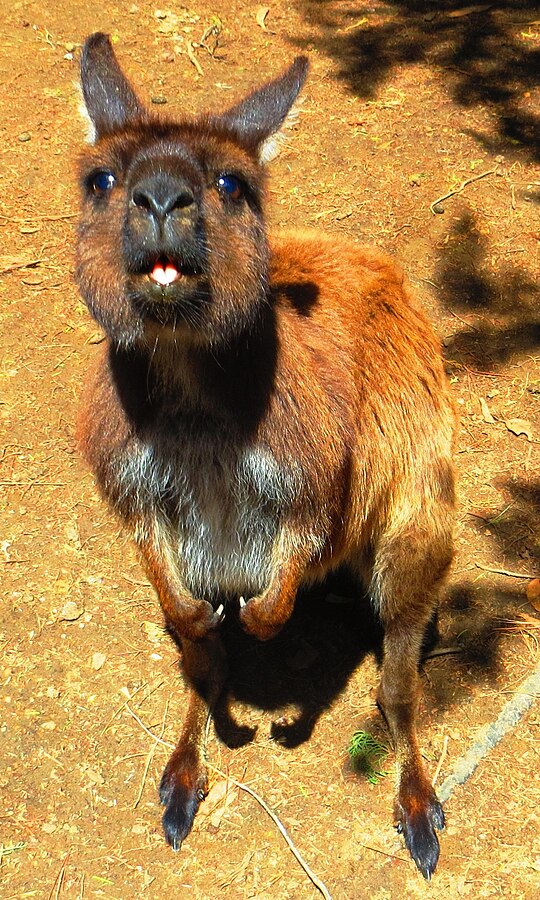 Kangaroo Island Kangaroo (Macropus fuliginosus fuliginosus) displaying his or her two forward teeth, Kangaroo Island, South Australia.
Photo: DiverDave. Wikipedia: Diprotodontia
Clade47 Grandorder Agreodontia
Clade48 Order Dasyuromorphia – [Link] Numbat, Quoll, Marsupial Mice, Tasmanian Devil. Translation “hairy tail;” mostly carnivorous (or insectivorous); 3 families, 88 species in Australia and New Guinea.  Numbat (Myrmecobius fasciatus), Dryandra Woodland, Western Australia.
Photo: JJ Harrison. Wikipedia: Dasyuromorphia
Clade48 Order Notoryctemorphia – [Link] Marsupial Moles. Translation “southern-digger-form;” specialized to forage through loose sand; 1 family, 2 species in Australian interior.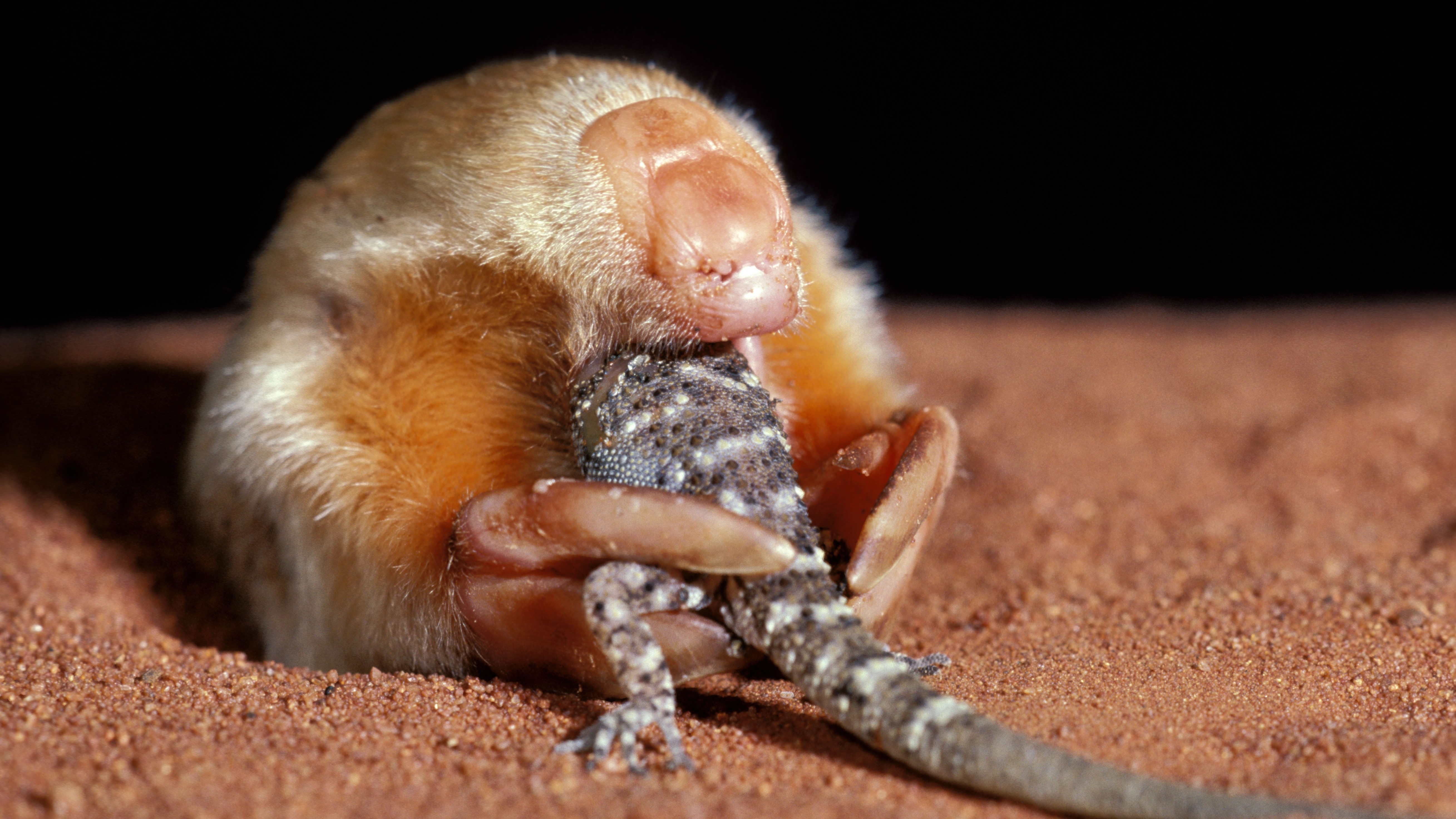 Northern Marsupial Mole (Notoryctes caurinus) eating a gecko in the Tanami Desert, Northern Territory, Australia. Source: Australian Geographic.
Photo: Auscape Int’l Pty Ltd via Alamy. Wikipedia: Notoryctidae
Clade48 Order Peramelemorphia – [Link] Bandicoots and Bilbies. Translation “pouched badger;” 3 families, 23 species in Australian interior. Greater Bilby (Macrotis lagotis), Australia.
Photo: Kevin503. Wikipedia: Peramelemorphia
Following are the remaining mammals, nineteen orders of placentals.
Clade44 Eutheria – [Link] Placental Mammals. Sister taxon to Infraclass Marsupialia. Translation “true beasts;” all placental mammals, numerous differences in skeletal and tooth structure. There are eleven clades (as of 12 Aug 2024) between Clade Eutheria and Infraclass Placentalia which branch off only to extinct species. We’ll omit listing them (I could not find their names, if any) and go directly to Infraclass Placentalia which contains all extant placental mammals.
Clade56 Infraclass Placentalia – [Link] All extant placental mammals. Two groups: Atlantogenata and Boreoeutheria.
Clade57 Atlantogenata: [Link] Two radiations: Xenarthra (So. American) & Afrotheria (African).
Clade58 Superorder Xenarthra – [Link] So. American placentals. Two orders: Cingulata and Pilosa.
Clade59 Order Cingulata – [Link] Armadillos. Translation “belted;” 2 families, 22 species. Glyptodont (Glyptodon asper),(Vienna Museum), lived throughout the New World until c. 10,000 BCE; Nine-banded Armadillo (Dasypus novemcinctus), lives throughout the New World.
Photo: Hunadam, Tomfriedel. Wikipedia: Cingulata
Clade59 Order Pilosa – [Link] Anteaters and sloths. Translation “hairy;” 4 families, 17 species. Giant anteater (Myrmecophaga tridactyla) Mato Grosso, Brazil.
Photo: Nortondefeis. Wikipedia: Pilosa
Clade58 Superorder Afrotheria – [Link] African origin placentals. Sister taxon to Xenarthra. Two groups: Paenungulata and Afroinsectiphilia.
Clade59 Grandorder Paenungulata: [Link] Two groups: Hyracoidea and Tethytheria.
Clade60 Order Hyracoidea – [Link] Hyraxes. Translation “Greek for shrew-mouse;” 1 family, 6 species. Young Hyrax on Mount Kenya, widespread in Africa.
Photo: Josski at Dutch Wikipedia. Wikipedia: Hyrax
Clade60 Mirorder Tethytheria – [Link] Sister taxon to: Hyracoidea. Two groups: Sirenia and Proboscidia.
Clade61 Order Sirenia – [Link] Sea Cow & Dugong. Translation “of the Sirens (Greek mythical creatures);” 2 families, 4 species. Dugong near Marsa Alam, Egypt. Range E. Africa to West Pacific.
Photo: Thomas Breuer. Wikipedia: Sirenia
Clade61 Order Proboscidea – [Link] Elephants. Translation “nose, esp. if long;” 1 family, 3 species.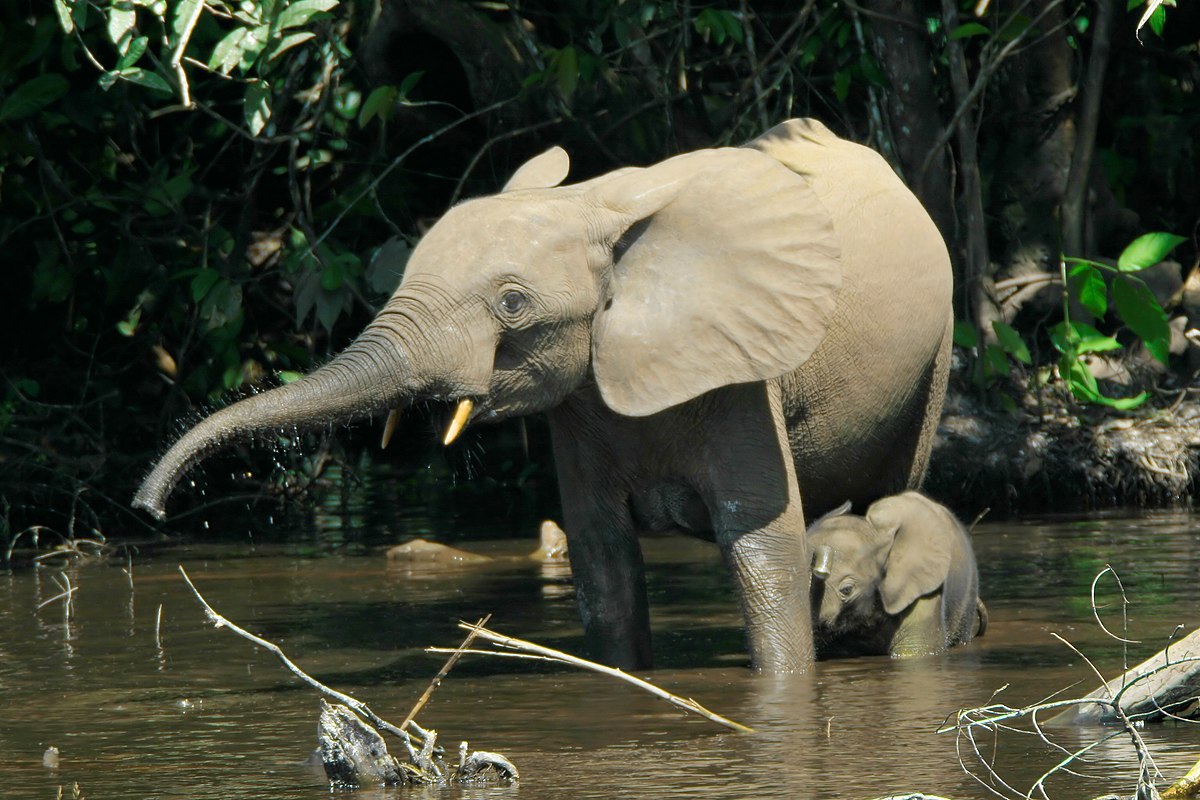 Forest elephants (Loxodonta cyclotis), Nouabalé-Ndoki National Park, Congo. Photo: Thomas Breuer. Wikipedia: Proboscidea
Clade59 Grandorder Afroinsectiphilia: [Link] Sister taxon to: Paenungulata. Two groups: Tubulidentata and Afroinsectivora.
Clade60 Order Tubulidentata – [Link] Aardvark. Translation “tube-tooth;” 1 family, 6 species. Aardvark (Orycteropus afer), sub-Saharan Africa.
Photo: Kelly Abram. Wikipedia: Aardvark
Clade60 Mirorder Afroinsectivora: [Link] Sister taxon to Tubulidentata. Two orders: Macroscelidea and Afrosoricida.
Clade61 Order Macroscelidea – [Link] Elephant shrews. Translation “long-leg;” 1 family, 20 species. Black and rufous elephant shrew (Rhynchocyon petersi), non-Saharan Africa.
Photo: Joey Makalintal. Wikipedia: Elephant Shrew
Clade61 Order Afrosoricida – [Link] Shrews & Tenrecs. Translation “African shrew-like;” 3 families, 55 species. Lesser Hedgehog Tenrec (Echinops telfairi), Central Africa & Madagascar.
Photo: Wilfried Berns. Wikipedia: Afrosoricida
Clade57 Magorder Boreoeutheria – [Link] Most males have a scrotum. Sister taxon to Atlantogenata. Two groups: Euarchontoglires and Laurasiatheria.
Clade58 Superorder Euarchontoglires: [Link] Two groups: Glires and Euarchonta.
Clade59 Grandorder Glires: [Link] Two groups: Rodentia and Lagomorpha.
Clade60 Order Rodentia – [Link] Rodents. Translation “gnawer;” continuously growing incisors; 35 families, 2,680 species. Capybara (Hydrochoerus hydrochaeris) with Cattle Tyrant (Machetornis rixosa), both feeding; largest rodent in the world, up to 4.5 ft. & 150 lbs. South America. Photo: Fidel León Darder. Wikipedia: Rodent
Clade60 Order Lagomorpha – [Link] Rabbits & Picas. Translation “hare-shape;” 3 families, 111 species. Large-eared Pika (Ochotona macrotis) in Ladakh.
Photo: Karunakar Rayker. Wikipedia: Lagomorpha
Clade59 Grandorder Euarchonta: [Link] Sister taxon to Glires. Two groups: Scandentia and Primatomorpha.
Clade60 Order Scandentia – [Link] Treeshrews. Translation “climber;” 2 families, 23 species.  Pygmy Treeshrew (Tupaia minor), native to SE Asia.
Photo: Paul J. Morris. Wikipedia: Treeshrew
Clade60 Mirorder Primatomorpha: [Link] Sister taxon to Scandentia. Two orders: Dermoptera and Primata.
Clade61 Order Dermoptera – [Link] Colugos. Translation “skin-wing;” 2 families, 2 species.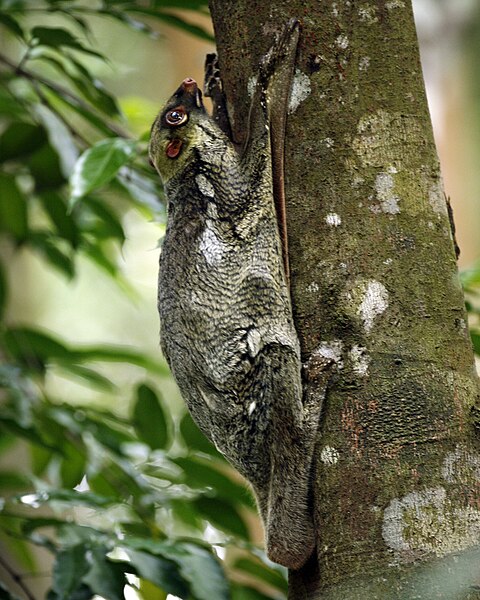 Sunda Flying Lemur (Galeopterus variegatus). Colugos (which are not lemurs and cannot fly) are arboreal gliding mammals found in SE Asia.
Photo: Lip Kee Yap. Wikipedia: Colugo
Clade61 Order Primata – [Link] Sister taxon to Dermoptera. Lemurs, Tarsiers, Simians. Translation “first, prime;” 19 families, 517 species.  Female Pygmy Slow Loris (Nycticebus pygmaeus) of SE Asia, clinging to a human arm. Photo: Lionel Mauritson. Wikipedia: Primate
Clade58 Superorder Laurasiatheria: [Link] Sister taxon to Euarchontoglires. Two groups: Eulipotyphla and Scrotifera.
Clade59 Order Eulipotyphla – [Link] Hedgehogs, moles, true shrews, soledons. Translation “truly fat and blind;” 5 families, 584 species.
 Young European hedgehog (Erinaceus europaeus).
Photo: Michael Gäbler. Wikipedia: Eulipotyphla
Clade59 Scrotifera: [Link] Sister taxon to: Eulipotyphla.Two groups: Chiroptera and Ferungulata.
Clade60 Order Chiroptera – [Link] Bats. Translation “hand-wing;” 21 families, 1466 species.
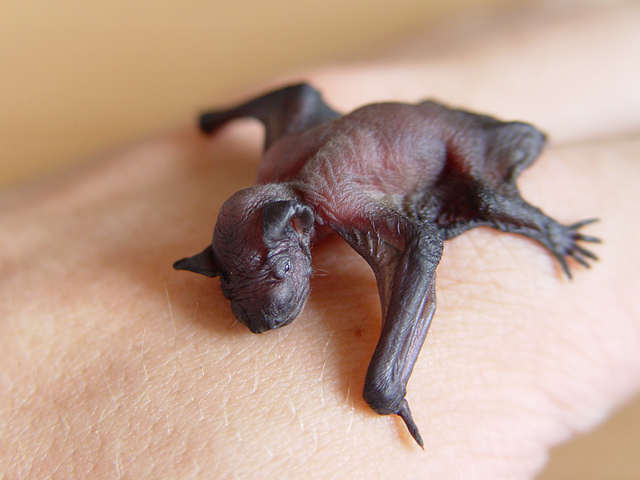 Newborn foundling Common Pipistrelle (Pipistrellus pipistrellus), 3 cm., on the back of a hand. Photo: Mnolf. Wikipedia: Bat
Clade60 Grandorder Ferungulata: [Link] Translation “wild-beasts & ungulates.” Sister taxon to: Chiroptera. Two groups: Pan-Euungulata and Ferae.
Clade61 Pan-Euungulata Sister taxon to: Ferae.
Clade62 Mirorder Euungulata: [Link] Two groups: Pan-perissodactyla and Paraxonia.
Clade63 Pan-perissodactyla Sister taxon to Paraxonia.
Clade64 Perissodactylamorpha
Clade65 Order Perissodactyla – [Link] Odd-toed ungulates. Translation “odd-toe;” includes horses, zebras, rhinoceroses, tapirs; digest cellulose in their intestines; 3 families, 18 species.
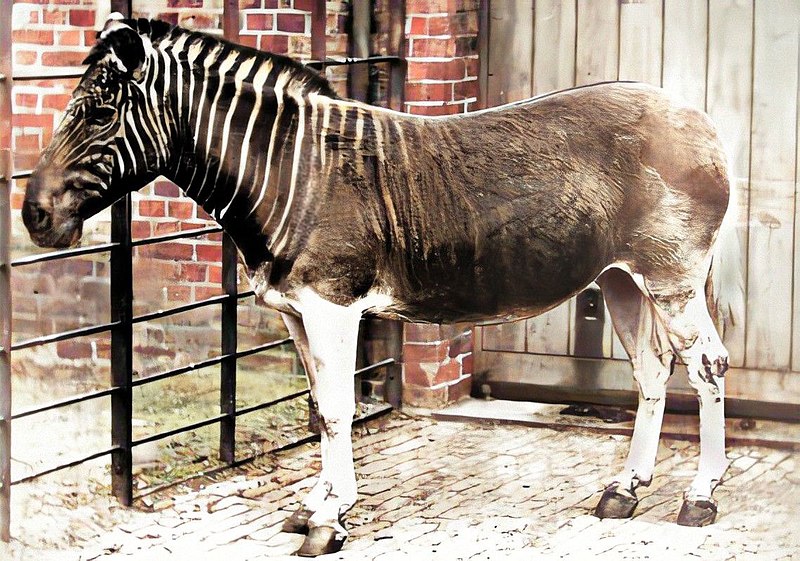 Quagga, extinct subspecies of zebra.
Photo: Frederick York (d. 1903). Wikipedia: Perissodactyl
Clade63 Paraxonia Sister taxon to: Pan-perissodactyla
Clade64 Order Artiodactyla – [Link] Even-toed ungulates. Translation “even-toe;” includes cetaceans, hippopotamuses, antelopes, deer, giraffes, camels, llamas, sheep, goats and cattle; digest cellulose in their stomachs; 23 families, 360 species.
 Artiodactyls, clockwise from upper left: Giraffe, American Bison, Dromedary Camel, Wild Boar, Orca, Red Dear. Wikipedia: Artiodactyl
Clade61 Mirorder Ferae – [Link] Sister taxon to: Pan-Euungulata. Two groups: Pan-carnivora and Pholidotamorpha.
Clade62 Pan-Carnivora Sister taxon to Pholidotamorpha.
Clade63 Carnivoramorpha (Carnivoriformes)
Clade64 Order Carnivora – [Link] Carnivores. Translation “flesh-devour;” 16 families, 310 species. 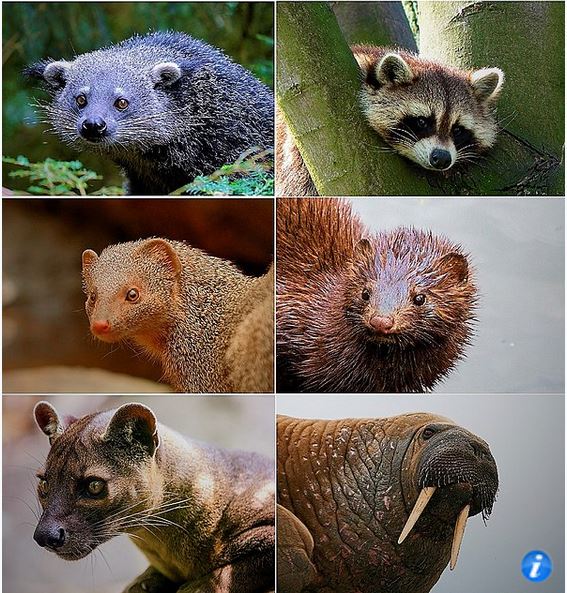 Carnivores, clockwise from upper left: Binturong (SE Asia), Raccoon, American Mink, Walrus, Fossa (Madagascar), Indian Grey Mongoose.
Wikipedia: Carnivora
Clade62 Pholidotamorpha Sister taxon to Pan-carnivora.
Clade63 Order Pholidota – [Link] Pangolins or Scaly Anteaters. Translation “horny-scale;” 1 family, 8 species. Wikipedia – Pangolin  Philippine Pangolin (Manis culionensis), curled-up mother and pup.
Photo: Shukran888. Wikipedia: Pangolin
According to a self-described “mammalogist who works on mammal taxonomy and systematics” the Mammal Diversity Database is the “best and most up-to-date source for mammal taxonomy,” as it “gets regularly updated based on reviews of taxonomic changes in the primary literature.” Although the sequence of Orders on their website was different from what I have been following, I used their data for the following chart of 27 Orders of mammals while – for the sake of internal consistency – following the sequence I had already adopted. There are plenty of clades between Infraclass Placentalia and these orders which I shall not mention. Judging by the numbers below, rodents are the most important mammals, well ahead of the second-place bats. Primates are in forth place, edged out by shrews.
Another way of looking at Class Mammalia is the round phylogenetic tree below (the common ancestor root is not identified, so it’s not a cladogram). This one shows a sample of 126 mammal species, or a whopping 1.9% of the complete 6,611 species. Still, it’s enough to build a tree as it averages almost 6 species per order. The relationships are shown, but the length of lines do not represent dates or elapsed time, as all the smallest “steps” are of equal length, something that doesn’t happen in the real world of evolution.
The major clades are colored: Marsupials (magenta), Xenarthrans (orange), afrotherians (red), laurasiatherians (green), and euarchontoglires (blue). To get you started, Ornithorhynchus is the Platypus in order Monotremata, and the Xenarthrans (below) are members of the above orders of Cingulata and Pilosa. The rest is straightforward.
Here’s a question that we’ll address in a future posting.
Find the three species of horses (Equus) at about 5 o’clock, the cats (Felis) at about 6 o’clock, and cattle (Bos) at 9 o’clock. Which, if any, of these three is most closely related to the Armadillo (Dasypus) at about 4 o’clock? And why? Answer is at the very bottom.
 Genus-level molecular phylogeny of 116 extant mammals inferred from the gene tree information of 14,509 coding DNA sequences.
Produced by OrthoMaM team, Institute of Evolutionary Sciences of Montpellier & University of Montpellier. Original paper – OrthoMaM: A database of orthologous genomic markers for placental mammal phylogenetics. Ranwez V., Delsuc F., Ranwez S., Belkhir K., Tilak M. & Douzery E. J. P. BMC Evolutionary Biology, 2007, 7 : 241.
WEBLINK: https://en.wikipedia.org/wiki/Mammal#Molecular_classification_of_placentals
The Taxonomy Series
Installments post ever other day; installments will not open until posted.
Taxonomy One: A brief survey of the history and wherefores of taxonomy: Aristotle, Linnaeus and his binomial system of nomenclature, taxonomic ranks and the discovery and application of biological clocks.
Taxonomy Two: Introduces the higher levels of current taxonomy: the three Domains and the four Kingdoms. We briefly discuss Kingdom Protista, then the seven phyla of Kingdom Fungi.
Taxonomy Three: Kingdom Plantae.
Taxonomy Four: Kingdom Animalia to Phylum Annelida.
Taxonomy Five: A discussion of Cladistics, how it works and why it is becoming ever more important.
Taxonomy Six: Phylum Chordata, stopping at Class Mammalia.
Taxonomy Seven: Class Mammalia.
Taxonomy Eight: Class Aves, beginning with a comparison of five different avian checklists of the past 50 years.
Taxonomy Nine: A cladogram and discussion of Subclass Neornithes (modern birds) of the past 110 million years, reaching down to the current forty-one orders of birds.
Taxonomy Ten: A checklist of Neornithes including all ranks and clades down to the rank of the current 251 families of birds (plus a few probable new arrivals) with totals of the current 11,017 species of birds.
Mammal question: They’re all equally related to the Armadillos. Horses, cats and cattle are descended from an unnamed common ancestor which is more closely related to the Armadillos than are any of it’s descendants. This is why checklists that don’t show relationships in a branching tree are inherently deceptive whenever one “branch” abuts another.
Now figure out – according to the same phylogenetic tree – if the cats and cattle are equally related to the horses, or if one is closer than the other.
Discover more from SANTA MONICA BAY AUDUBON SOCIETY BLOG
Subscribe to get the latest posts sent to your email.



 SANTA MONICA BAY AUDUBON SOCIETY BLOG