Free email delivery
Please sign up for email delivery in the subscription area to the right.
No salesman will call, at least not from us. Maybe from someone else.
The Sly Fox of Sandy Santa Monica
[Posted by Chuck Almdale, photography by Ray Juncosa]
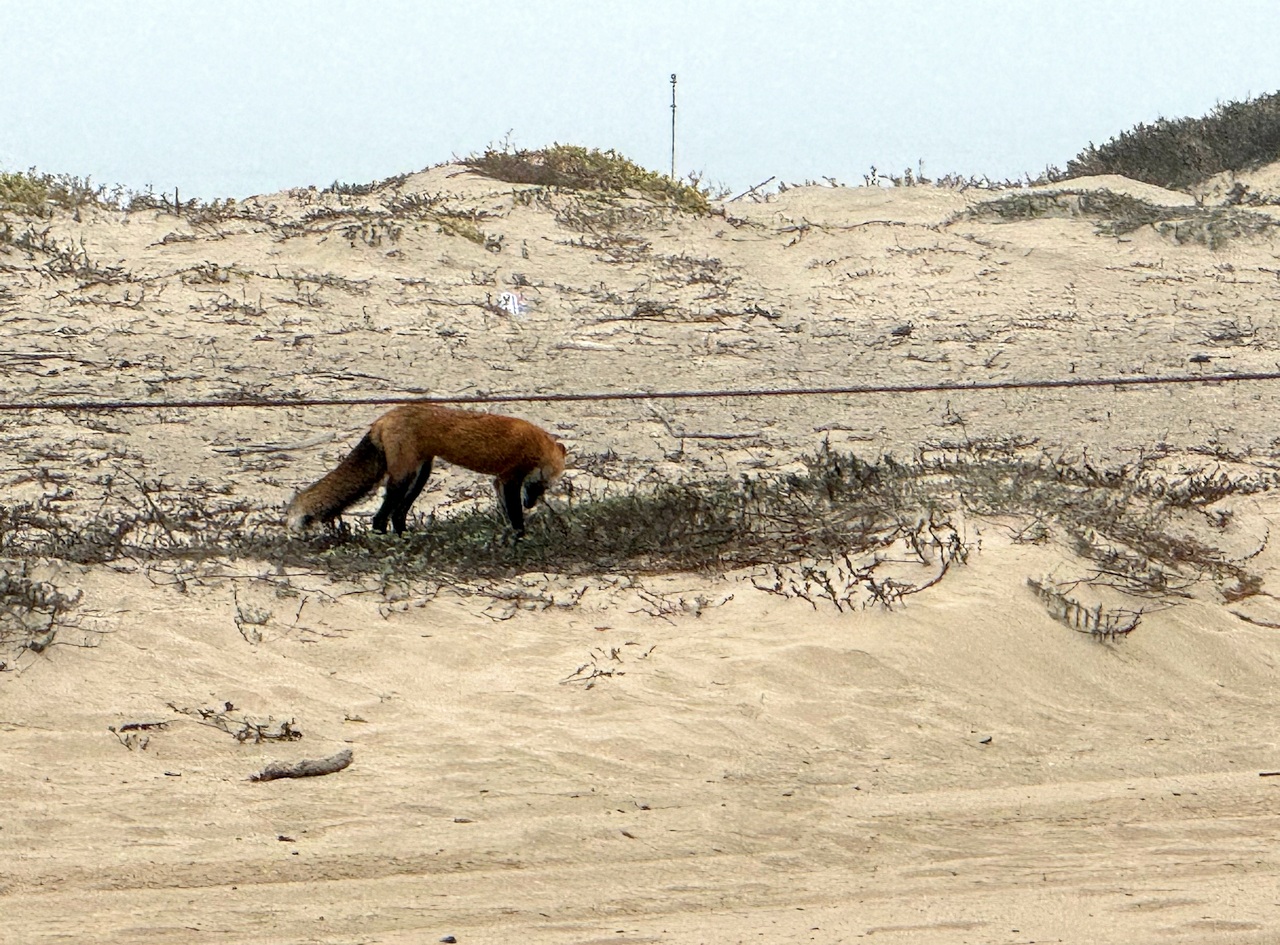
A fox prowls the dunes of Santa Monica. (Santa Monica Beach, Ray Juncosa, 10/2/24, 6:18 pm)
Unleashed dogs are a common (and illegal) presence on Santa Monica Beach, but not foxes.
According to photographer Ray Juncosa, the photo was taken on a cellphone north of Annenberg [Annenberg Community Beach House, 415 Pacific Coast Hwy] and south of the Palisades Beach Club [267 Pacific Coast Hwy, both in Santa Monica]. He writes:
My conjecture is that the wily fox is familiar with the Will Rogers creek that flows from the wooded and “wild” parts of the canyon [Santa Monica Canyon] where it would normally live. It could follow the creek under PCH and the bike path, and then out to the beach. If the past few years of drought conditions have reduced the assortment of small rodents, sadly shorebirds might be on the menu.
This area is near the Western Snowy Plover roosting area on the beach. Upon seeing the photograph, Snowy Plover warden Lucien Plauzoles commented:
Equally surprised. Coyote, common, but fox? Never seen one at lower elevations except Channel Islands and 25 years ago at Nojoqui [Nojoqui Falls County Park, Santa Barbara County north of Santa Barbara].
On the Los Angeles County mainland we have the native Gray Fox and the introduced Red Fox, as well as the San Joaquin Kit Fox, half the size of the other two. The diminutive Island Fox lives on the Channel Islands, oddly enough. The above looks red to me.
Theodore Payne Upcoming Classes & Plant Sales
[Posted by Chuck Almdale]

It’s that time of year again, when people again say “It’s that time of year again.”
It’s also the time for fall planting of drought-tolerant (not necessarily drought-loving) California native plants. Theodore Payne has a boodle of them, in pots, ready to go. Plus seed packets seeds, books, T-shirts, and the all-important howto and whatnot.
Theodore Payne Foundation for Wild Flowers and Native Plants has a fall sale coming up on October 29 – November 9.
They also have a host of classes and walks coming up in November.
Locals who already have native plants in their yards know that TP is the place to go. But if you’re new to the L.A. area, this is your heads-up. They’ve got it all at excellent prices.
Find it all HERE on their website.
Short but true story: When we took out our front lawn in 2009 and put in California native plants, changing nothing else, our water usage immediately dropped 75%.
Sandpipers & Other Goodies: Malibu Lagoon, 22 Sept. 2024
[Text by Chuck Almdale; photos by Elyse Jankowski, Lillian Johnson, Armando Martinez & Chris Tosdevin]
Don’t miss the quiz at the end which has some of the best photos.

The early arrivers to the lagoon got to see the ibis pair. I saw them fly away, but another one dropped in later. That’s migration – birds fly in, birds fly out, some stay and feed, some sleep. Our Greater Yellowlegs from last month was there, or more likely a new one. They show up only 4% of our visits but with two months in a row, they cranked it all the way up to a whopping 6.1%. Ibis are even rarer – just under 2%.

The lagoon outlet – open last month – had filled with sand. As a result the lagoon water level was quite high and didn’t fluctuate during our visit. One male Great-tailed Grackle strutted the sand. They’re 18″ long bill-tip to tail-tip, a half-inch longer than the American Crow, believe it or not. (It’s all in the tail.) The females are 3″ shorter; again, all in the tail. These birds nest somewhere in the general lagoon area, I’m not sure where. Perhaps up the creek, perhaps in the reed-bed across the lagoon by Adamson House.

Photographer Elyse Jankowski had to leave early but sent me some very nice photos. This Snowy Egret appears to have some Cattle Egret-like faint reddish highlights at the nape and lower back. I don’t know why, unless it was just a hint of mud.

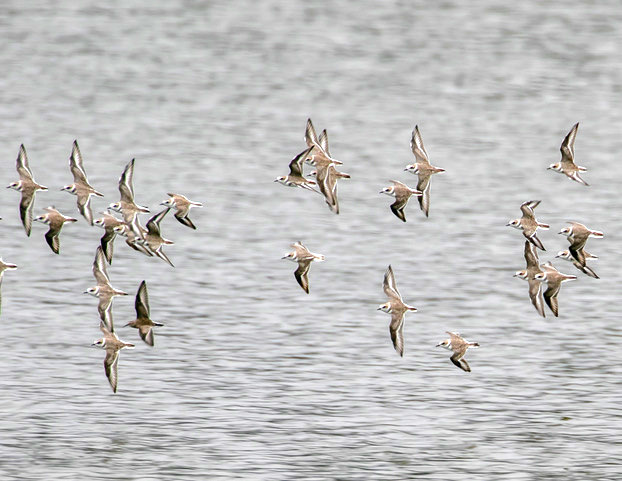
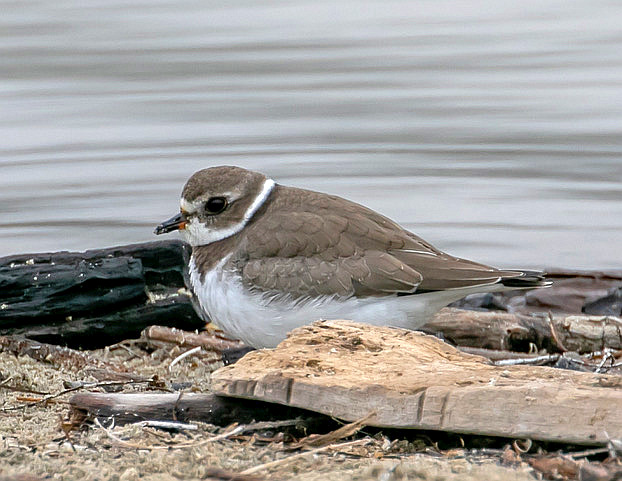
The Snowy Plovers have definitely returned! We had 42 birds, up from 22 in August and 6 in July. Two were banded, as photographed by Plover Wardens Larry Loeher and Grace Murayama three days earlier.


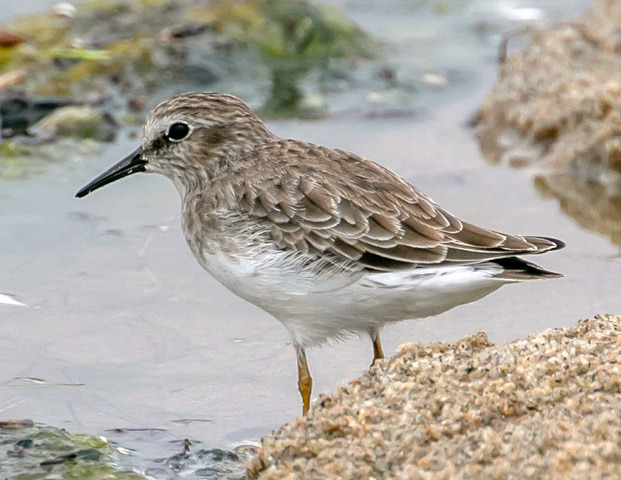
We had some tricky times with several sandpipers, Least and Western (or Semipalmated).
The Western Below has a bill a bit shorter than usual, and close observation revealed semipalmated feet (check its right foot in 1st picture, left foot in 2nd picture). So – as its migration and just about anything can show up anywhere (within reason) – the possibility of an eastern Semipalmated Sandpiper reared its delicious head. We studied and scoped and discussed. We later studied the photos, even sending one or more to iNaturalist and waiting to see what the eBird people had to say. But, alas, it was not to be.
A Short Treatise on Sandpiper Toes
Birds have two toes (Ostrich), three toes (emus, bustards, the two species of Three-toed Woodpecker & quails), or four toes (everything else). Sandpipers have four toes arranged anisodactylly: three point forward, one points to the rear. They are numbered: #1 – back toe, #2 inner front, #3 middle front, #4 outer front. In photographs its often hard or impossible to see the #1 rear toe. Birds that spend their time in or near water often have webbing between their toes. Ducks, for example. Both the Semipalmated and Western Sandpipers have semipalmated feet – the webbing between their 4th and 3rd toes is larger than between the 3rd and 2nd toes.

So the word “semipalmated” does describe the foot of Calidris pusilla, the Semipalmated Sandpiper, but it does not exclude Calidris mauri, the Western Sandpiper. And this can easily confuse the billions of people who expect descriptive animal names to a) exist, b) work, c) exclude, d) be useful, and e) not confuse. [A fool’s errand if ever there was one.] My understanding is that the Semipalmated Sandpipers were described first. When someone decided that the longer-billed and slightly-differently plumaged and shaped birds among them were actually a different species, the new birds were named “Western” as they were more numerous the farther west you went. [I wrote about this here in August 2022. Someday I hope to get all the facts, dates and name changes absolutely straight.] Just to confuse the issue, both species have variable bill lengths, with the Western a bit longer, but the westerly Semipalmated bill is a bit longer than the easterly Semipalmated bill.

But that was not the end of confusion and debate! The first bird disappeared, but we then thought we rediscovered it resting on the ground among the small pieces of driftwood.

Armando Martinez got a photo of it rising.
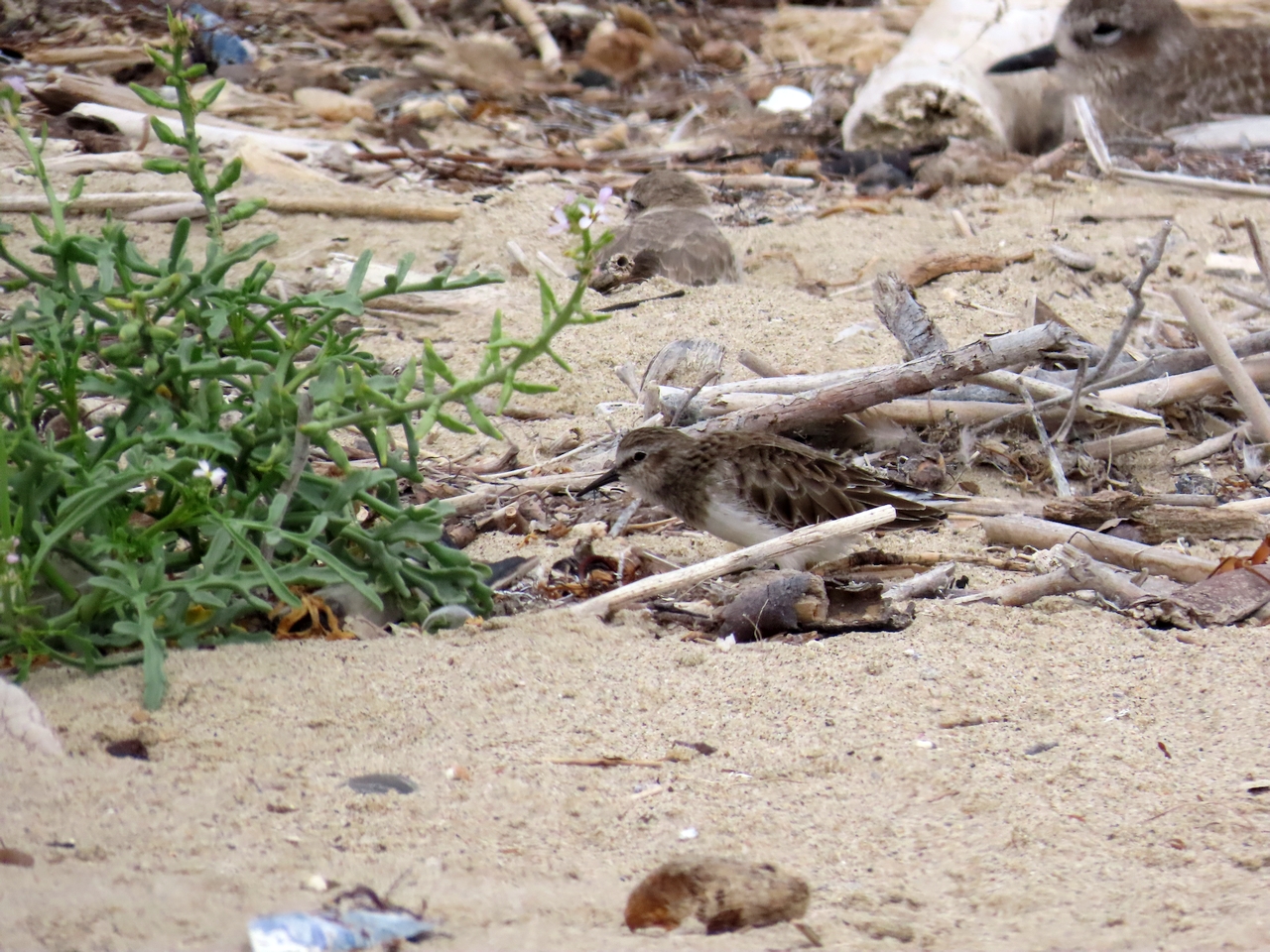
He then stretches his wings and staggers off. Not the back of the Snowy Plover and the head of the Black-bellied Plover behind him, providing some size comparison.



Flowers are still blooming, or blooming again, in late September.

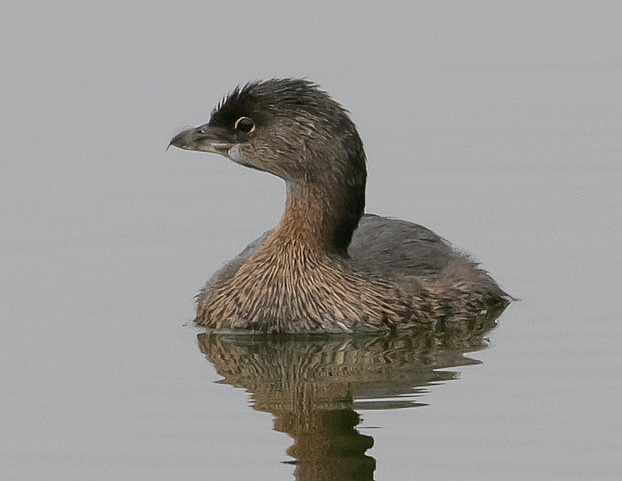
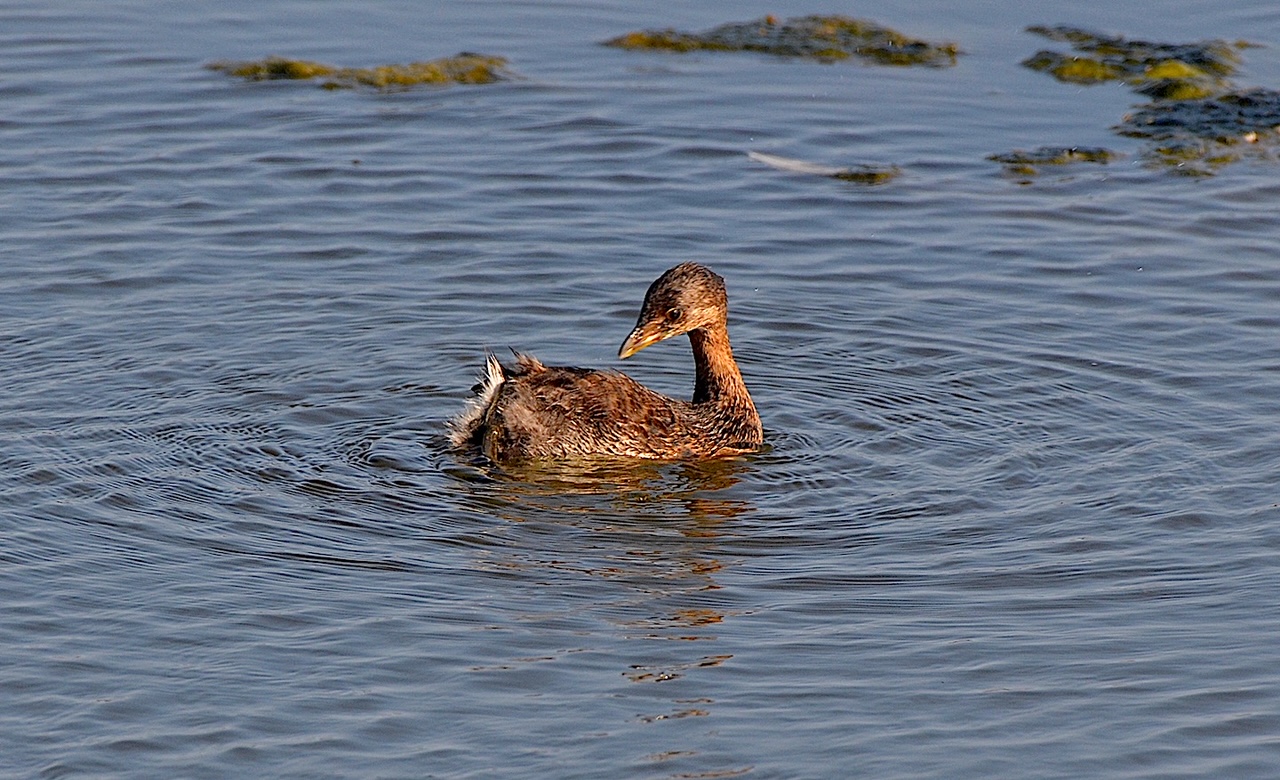
This Pied-billed Grebe’s bill is not at all pied and it seems to have a wicked-looking thorny tip.
Last but not least, but without photo, we had a Lark Sparrow Chondestes grammacus in a very messy molting plumage, flitting around between the beach plants. I was very surprised to see it, as our only prior sighting of this species at the lagoon was on April 26, 1999, well back into the “before-times.”
Quiz Time!
As these photos are all taken this September at the lagoon, many of the birds are in plumage transition.






Quiz Answers & credits
#1. Say’s Phoebe, first appearance since last November. (Chris Tosdevin 9-22-24)
#2. An exceptionally fierce-looking Wrentit (Elyse Jankowski 9-22-24)
#3. Blue-gray Gnatcatcher, increasingly common since 2015 (Chris Tosdevin 9-22-24)
#4. Savannah Sparrow, only the 4th sighting in the past 6 years. (Chris Tosdevin 9-22-24)
#5. Red-winged Blackbird: first year male, red not visible, brown bars on back. (Chris Tosdevin 9-22-24)
#6. Common Yellowthroat, male; breeds around the lagoon. (Chris Tosdevin 9-22-24)
#7. Great-tailed Grackle, male, whose tail has vanished (temporarily, we hope). (Grace Murayama 9-19-24)
#8. Ring-necked Ducks, 1 female, 3 males. Our 7th sighting at the lagoon. (Chris Tosdevin 9-22-24)
#9. American Wigeon, male, common winter visitor. (Chris Tosdevin 9-22-24)
#10. Pied-billed Grebe, a different view. (Larry Loeher 9-19-24)
#11. All-black Mallard. Not a male as no curly tail. If I’m wrong and this is not a mallard, let me know why. (Elyse Jankowski 9-22-24)
#12. Pygmy Blue Butterfly (Brephidium exilis), our lagoon specialty. (Chris Tosdevin 9-22-24)
#13. Great-blue Heron. (Chris Tosdevin 9-22-24)
#14. Whimbrel & 2 Willets. (Chris Tosdevin 9-22-24)
#15. Ruddy Turnstone, molting. (Chris Tosdevin 9-22-24)
#16. 27 Western Snowy Plovers (Chris Tosdevin 9-22-24)
#17. Semipalmated Plover (Chris Tosdevin 9-22-24)
#18. Black-bellied Plover (Elyse Jankowski 9-22-24)
#19. Greater Yellowlegs (Chris Tosdevin 9-22-24)
#20. Willet, molting. (Elyse Jankowski 9-22-24)
#21. Whimbrel (Elyse Jankowski 9-22-24)
Malibu Lagoon on eBird as of 9-27-24: 8053 lists, 2582 eBirders, 318 species.
Most recent species added: Cassin’s Vireo, 9/23/24 by Colin Drummond.
Birds new for the season: American Wigeon, Ring-necked Duck, White-faced Ibis, Red-shouldered Hawk, Red-tailed Hawk, Nuttall’s Woodpecker, Nanday Parakeet, Say’s Phoebe, California Scrub-Jay, Tree Swallow, Wrentit, Ruby-crowned Kinglet, Marsh Wren, Bewick’s Wren, Lesser Goldfinch, Lark Sparrow, Savannah Sparrow, Western Meadowlark, Red-winged Blackbird, Yellow Warbler, Townsend’s Warbler. “New for the season” means it has been three or more months since last recorded on our trips.
Many, many thanks to photographers: Elyse Jankowski, Lillian Johnson, Armando Martinez, Chris Tosdevin.
Upcoming SMBAS scheduled field trips; no reservations or Covid card necessary unless specifically mentioned:
- Huntington Central Park, Sat. Oct 12, 8 am, contact leader Liz Galton (424-832-3504)
- Malibu Lagoon, Sun. Oct 27, 8:30 (adults) & 10 am (parents & kids)
- Franklin Canyon, Weds. Nov 13, 8:30 am. Our first mid-week walk, enter at south end.
- These and any other trips we announce for the foreseeable future will depend upon expected status of the Covid/flu/etc. pandemic at trip time. Any trip announced may be canceled shortly before trip date if it seems necessary. By now any other comments should be superfluous.
- Link to Programs & Field Trip schedule.
The next SMBAS Zoom program: Professor Barney Schlinger, UCLA Dept. of Ecology & Evolutionary Biology; Manakins, Evening Meeting, Tuesday, October 8, 2024, 7:30 p.m.
The SMBAS 10 a.m. Parent’s & Kids Birdwalk is again running. Reservations not necessary for families, but for groups (scouts, etc.), call Jean (213-522-0062).
Links: Unusual birds at Malibu Lagoon
9/23/02 Aerial photo of Malibu Lagoon
More recent aerial photo
Prior checklists:
2023: Jan-June, July-Dec 2024: Jan-June
2021: Jan-July, July-Dec 2022: Jan-June, July-Dec
2020: Jan-July, July-Dec 2019: Jan-June, July-Dec
2018: Jan-June, July-Dec 2017: Jan-June, July-Dec
2016: Jan-June, July-Dec 2015: Jan-May, July-Dec
2014: Jan-July, July-Dec 2013: Jan-June, July-Dec
2012: Jan-June, July-Dec 2011: Jan-June, July-Dec
2010: Jan-June, July-Dec 2009: Jan-June, July-Dec
The 10-year comparison summaries created during the Lagoon Reconfiguration Project period, remain available—despite numerous complaints—on our Lagoon Project Bird Census Page. Very briefly summarized, the results unexpectedly indicate that avian species diversification and numbers improved slightly during the restoration period June’12-June’14.
Many thanks to Marie Barnidge-McIntyre, Femi Faminu, Elyse Jankowski, Lillian Johnson, Ruth & Chris Tosdevin & others for their contributions to this month’s checklist.
The species lists below is irregularly re-sequenced to agree with the California Bird Records Committee Official California Checklist. If part of the right side of the chart below is hidden, there’s a slider button inconveniently located at the bottom end of the list. The numbers 1-9 left of the species names are keyed to the nine categories of birds at the bottom.
[Chuck Almdale]
| Malibu Census 2024 | 4/28 | 5/26 | 6/23 | 7/28 | 8/25 | 9/22 | |
| Temperature | 62-72 | 57-64 | 62-72 | 63-72 | 64-78 | 67-75 | |
| Tide Lo/Hi Height | L-0.14 | L-0.77 | L-1.17 | L+1.81 | L+2.00 | L+2.09 | |
| Tide Time | 0738 | 0635 | 0537 | 0916 | 0735 | 0611 | |
| 1 | Brant (Black) | 2 | |||||
| 1 | Canada Goose | 6 | 8 | 9 | 4 | ||
| 1 | Northern Shoveler | 2 | |||||
| 1 | Gadwall | 20 | 22 | 35 | 27 | 12 | 30 |
| 1 | American Wigeon | 1 | |||||
| 1 | Mallard | 10 | 14 | 15 | 6 | 2 | 8 |
| 1 | Ring-necked Duck | 4 | |||||
| 1 | Surf Scoter | 4 | |||||
| 1 | Long-tailed Duck | 1 | |||||
| 1 | Red-breasted Merganser | 4 | 2 | ||||
| 2 | Pied-billed Grebe | 1 | 1 | 1 | 1 | 5 | |
| 2 | Western Grebe | 9 | 1 | ||||
| 7 | Feral Pigeon | 5 | 3 | 6 | 9 | 1 | |
| 7 | Mourning Dove | 2 | 5 | 2 | 3 | 1 | |
| 8 | Anna’s Hummingbird | 2 | 2 | 1 | 2 | ||
| 8 | Allen’s Hummingbird | 1 | 5 | 1 | 2 | 3 | 4 |
| 2 | American Coot | 1 | 2 | 72 | |||
| 5 | Black-necked Stilt | 2 | |||||
| 5 | Black Oystercatcher | 4 | |||||
| 5 | Black-bellied Plover | 1 | 51 | 70 | 67 | ||
| 5 | Killdeer | 6 | 4 | 3 | 12 | 4 | 12 |
| 5 | Semipalmated Plover | 9 | 13 | 3 | |||
| 5 | Snowy Plover | 6 | 22 | 42 | |||
| 5 | Whimbrel | 4 | 2 | 52 | 2 | 2 | |
| 5 | Long-billed Curlew | 1 | 1 | ||||
| 5 | Wilson’s Phalarope | 1 | |||||
| 5 | Spotted Sandpiper | 1 | 2 | 1 | |||
| 5 | Willet | 2 | 2 | 9 | 5 | 5 | |
| 5 | Greater Yellowlegs | 1 | 1 | 1 | |||
| 5 | Ruddy Turnstone | 1 | 3 | ||||
| 5 | Sanderling | 2 | 1 | ||||
| 5 | Least Sandpiper | 2 | 23 | 3 | |||
| 5 | Western Sandpiper | 6 | 13 | 2 | |||
| 6 | Bonaparte’s Gull | 2 | 10 | ||||
| 6 | Heermann’s Gull | 6 | 65 | 42 | 5 | 24 | |
| 6 | Ring-billed Gull | 4 | 3 | 2 | 2 | ||
| 6 | Western Gull | 16 | 45 | 160 | 220 | 113 | 55 |
| 6 | California Gull | 60 | 38 | 3 | 10 | 23 | 75 |
| 6 | Glaucous-winged Gull | 1 | 1 | ||||
| 6 | Caspian Tern | 20 | 8 | 14 | 4 | 1 | |
| 6 | Forster’s Tern | 1 | 2 | ||||
| 6 | Elegant Tern | 200 | 190 | 25 | 240 | 10 | |
| 6 | Royal Tern | 60 | 2 | 5 | 5 | ||
| 2 | Red-throated Loon | 2 | |||||
| 2 | Common Loon | 1 | |||||
| 2 | Brandt’s Cormorant | 35 | |||||
| 2 | Pelagic Cormorant | 1 | 4 | 1 | |||
| 2 | Double-crested Cormorant | 26 | 120 | 24 | 28 | 37 | 54 |
| 2 | Brown Pelican | 235 | 348 | 125 | 163 | 27 | 24 |
| 3 | Black-crowned Night-Heron | 1 | 1 | 2 | 1 | 1 | 1 |
| 3 | Snowy Egret | 3 | 2 | 7 | 4 | 3 | 4 |
| 3 | Green Heron | 1 | 1 | 1 | 2 | ||
| 3 | Great Egret | 5 | 4 | 9 | 3 | 3 | 2 |
| 3 | Great Blue Heron | 4 | 3 | 3 | 4 | 2 | |
| 3 | White-faced Ibis | 3 | |||||
| 4 | Turkey Vulture | 1 | 4 | 1 | 7 | ||
| 4 | Osprey | 1 | |||||
| 4 | Red-shouldered Hawk | 1 | |||||
| 4 | Red-tailed Hawk | 2 | |||||
| 8 | Belted Kingfisher | 1 | 1 | ||||
| 8 | Nuttall’s Woodpecker | 1 | 1 | ||||
| 8 | Hairy Woodpecker | 1 | |||||
| 8 | Nanday Parakeet | 25 | |||||
| 9 | Black Phoebe | 4 | 7 | 3 | 6 | 3 | 2 |
| 9 | Say’s Phoebe | 1 | |||||
| 9 | Ash-throated Flycatcher | 1 | |||||
| 9 | Cassin’s Kingbird | 4 | 1 | ||||
| 9 | Western Kingbird | 8 | |||||
| 9 | Warbling Vireo | 1 | |||||
| 9 | California Scrub-Jay | 1 | 2 | ||||
| 9 | American Crow | 3 | 4 | 6 | 4 | 4 | 8 |
| 9 | Common Raven | 2 | 3 | ||||
| 9 | Oak Titmouse | 1 | |||||
| 9 | Tree Swallow | 3 | 1 | ||||
| 9 | Violet-green Swallow | 2 | 8 | ||||
| 9 | No. Rough-winged Swallow | 5 | 2 | 5 | 2 | ||
| 9 | Barn Swallow | 10 | 20 | 20 | 20 | 20 | 1 |
| 9 | Cliff Swallow | 30 | 6 | 4 | |||
| 9 | Bushtit | 2 | 5 | 9 | 19 | 5 | 20 |
| 9 | Wrentit | 2 | 1 | 4 | |||
| 9 | Ruby-crowned Kinglet | 1 | |||||
| 9 | Blue-gray Gnatcatcher | 1 | 4 | ||||
| 9 | House Wren | 1 | 2 | 3 | |||
| 9 | Marsh Wren | 2 | |||||
| 9 | Bewick’s Wren | 2 | |||||
| 9 | European Starling | 1 | 10 | ||||
| 9 | Northern Mockingbird | 1 | |||||
| 9 | Scaly-breasted Munia | 1 | |||||
| 9 | House Finch | 10 | 15 | 11 | 12 | 5 | 4 |
| 9 | Lesser Goldfinch | 2 | 5 | 2 | 3 | ||
| 9 | Lark Sparrow | 1 | |||||
| 9 | Dark-eyed Junco | 2 | 1 | 2 | |||
| 9 | Savannah Sparrow | 1 | |||||
| 9 | Song Sparrow | 10 | 5 | 5 | 4 | 10 | 10 |
| 9 | California Towhee | 1 | 4 | 4 | 1 | 1 | |
| 9 | Spotted Towhee | 1 | |||||
| 9 | Western Meadowlark | 15 | |||||
| 9 | Hooded Oriole | 1 | 1 | 1 | |||
| 9 | Red-winged Blackbird | 11 | 11 | ||||
| 9 | Brown-headed Cowbird | 18 | |||||
| 9 | Great-tailed Grackle | 2 | 3 | 3 | 1 | ||
| 9 | Orange-crowned Warbler | 1 | 1 | 1 | 2 | ||
| 9 | Common Yellowthroat | 1 | 1 | 5 | |||
| 9 | Yellow Warbler | 1 | |||||
| 9 | Townsend’s Warbler | 2 | |||||
| Totals by Type | Apr | May | Jun | Jul | Aug | Sep | |
| 1 | Waterfowl | 45 | 50 | 59 | 37 | 14 | 43 |
| 2 | Water Birds – Other | 263 | 516 | 155 | 192 | 68 | 155 |
| 3 | Herons, Egrets & Ibis | 13 | 7 | 22 | 12 | 12 | 14 |
| 4 | Quail & Raptors | 1 | 1 | 0 | 4 | 1 | 10 |
| 5 | Shorebirds | 29 | 6 | 9 | 139 | 157 | 142 |
| 6 | Gulls & Terns | 362 | 302 | 254 | 527 | 165 | 162 |
| 7 | Doves | 0 | 7 | 8 | 8 | 12 | 2 |
| 8 | Other Non-Passerines | 3 | 8 | 2 | 2 | 7 | 31 |
| 9 | Passerines | 57 | 118 | 92 | 70 | 92 | 119 |
| Totals Birds | 773 | 1015 | 601 | 991 | 528 | 678 | |
| Total Species | Apr | May | Jun | Jul | Aug | Sep | |
| 1 | Waterfowl | 6 | 6 | 3 | 3 | 2 | 4 |
| 2 | Water Birds – Other | 3 | 8 | 5 | 3 | 5 | 4 |
| 3 | Herons, Egrets & Ibis | 4 | 3 | 5 | 5 | 5 | 6 |
| 4 | Quail & Raptors | 1 | 1 | 0 | 1 | 1 | 3 |
| 5 | Shorebirds | 8 | 2 | 5 | 8 | 12 | 12 |
| 6 | Gulls & Terns | 7 | 8 | 5 | 6 | 9 | 6 |
| 7 | Doves | 0 | 2 | 2 | 2 | 2 | 2 |
| 8 | Other Non-Passerines | 2 | 3 | 2 | 1 | 4 | 4 |
| 9 | Passerines | 14 | 19 | 17 | 9 | 22 | 27 |
| Totals Species | 45 | 52 | 44 | 38 | 62 | 68 |
Coastal Cleanup Day Reminder – Sat. Sept. 21 – 9am to noon – Malibu Lagoon
Saturday, Sept. 21, 2024: Annual International Coastal Cleanup Day, from 9:00 A.M. to Noon at the Malibu Lagoon. Help us clear the trash around the lagoon! Last year, more than 7,000 volunteers in the Los Angeles area removed over 16,000 lbs. of trash and 400 lbs. of recycling from 97 miles of beach, river, underwater, and trail cleanup sites! Ninety percent of all floating marine debris is plastic. As we know, bright colored plastics or small micro-plastics can be confused for food. A 2012 study by the Convention on Biological Diversity found that 663 marine species have been impacted by plastic litter through ingestion or entanglement. It is important that we clean the lagoon area before the first rains come and carry everything out to the ocean.

Chris deals with weighty matters (L.Johnson 9/20/14)
Registration begins at 8:30 a.m. We encourage you to get waivers and registration forms on-line at https://healthebay.org/coastalcleanupday/. Scroll down to “Register Now” button and click it, then scroll down to “Join a Cleanup Site” button and click it, then scroll down to Malibu Lagoon State Beach, click the number of people coming, then click the “Join a Cleanup” button, then fill out the registration form, then click the “Next” or “Save” button and finish the process.
Liability waivers (different form from registration) will be available at the site for you to sign.
Our chapter concentrates its efforts at Malibu Lagoon, but you can call 1-800-HEALBAY for information and other places to volunteer. Parking passes will available at the lagoon on this day. If possible, bring your own gloves, bucket for trash, and sunscreen. Don’t worry if you forget such stuff because from 9:00 a.m. until noon, volunteers will be given supplies and instructions on how to carry out a beach cleanup.
Family Guide: Suitable for everyone but toddlers. Small children, already built conveniently close to the ground, are great at picking up those tiny pieces of plastic.
Information Contact: Jean Garrett (213-522-0062)
[Directions] Malibu Lagoon is at the intersection of Pacific Coast Highway and Cross Creek Road in Malibu. Parking in the official lagoon lot is normally $3/hour (should be free today) or by annual pass. You may also park either along PCH north of Cross Creek Road or on Cross Creek Road itself but be careful – some parts of PCH are off-limits (read the signs carefully.) Lagoon parking in the shopping center lot is not permitted.
Hey! Look guys! You can see the bottom! (J Kenney)
Avian Checklist of 41 Orders & 251 Families | Taxonomy 10
[By Chuck Almdale]
Introduction
My research could uncover no single source for the most up-to-date taxonomic information on birds (or anything else); even if they were such a thing, there is such wide disagreement among those working on the avian phylogenetic sequence that it could be biased and a source more for dissension than agreement. One such source may exist that everyone in the world agrees is completely accurate and completely up-to-date, but if there is, it’s a very well-kept secret.
Therefore, the following taxonomic sequence draws from multiple sources, most notably Birds of the World (BOW) website – Orders & Families, Distribution and Taxonomy of Birds of the World (Sibley & Monroe, 1990), several papers especially “The Origin and Diversification of Birds” (Brusatte, O’Conner & Jarvis, 2014) [Link to Article] and numerous Wikipedia pages, especially Passerine and Passerea and the separate pages for their nearly innumerable subdivisions. [Wikipedia is remarkably unbiased, and their articles frequently offer multiple taxonomic sequences where disagreement exists.] Research continues; refinements and rearrangements will continue to appear as research is completed; gradually a unified picture is developing. The following sequence is as accurate as I could make it at this time. What follows are some guidelines as to what is in the sequence and a few choices I made for the sake of presentation.
All 41 orders and 251 families are numbered according to the BOW Orders & Families as of mid-June 2024, which may well have changed by the time this gets posted. I expect some major changes to this sequence to occur within the coming year as the International Ornithological Union (IOU) Working Group Avian Checklist Committees [Link] complete their work, or at least post some updates. Following this, eBird/Birds of the World will undoubtedly update their sequences, as they regularly do at least yearly as the Clements List is updated. It may come to pass within the next few years that the Clements and IOU checklists are brought more into alignment, particularly in regards to the higher levels of taxonomy (from Class down to Family).
When Sibley & Monroe published their book in 1990, their table of contents utilized many additional taxonomic ranks that possessed useful suffixes (in brackets below) for uniformity in their nineteen taxonomic ranks:
Class: Super-, Class, Sub-, Infra- (-es), Parv- (-ae)
Order: Super- (-imorphae), Order (-iformes), Sub- (-i), Infra- (-ides), Parv- (-ida)
Family: Super- (-oidea), Family (-idae), Sub- (-inae), Tribe (-ini), Subtribe (-ina)
Genus: Genus, subgenus
Species: species, subspecies
These ranks are still used in many books, papers and websites and I retained them whenever possible. But a lot of taxonomic research, particularly in the development of evolutionary clocks, has occurred in the 34 years since that book was published.
Clades
The use of clades and clade terminology has grown enormously over the past few decades. Many of the previous terms have been adopted into the clade structure, especially Order, Family, Genus and Species, but also many of the subdivisions listed above. The clade structure, which works far better in cladogram diagrams than in writing, emerged out of the growing body of information concerning divergences in evolutionary lineages and the development and availability of “evolutionary clocks.” When an evolutionary line divides, a “node” with two branches is created at that point which can be dated by means of the evolutionary clock. The terms Order, Suborder, etc. worked well for creating a hierarchy of ranks, but the number of nodes of division and clade ranks have already vastly outrun this restricted terminology, and the number of ranks can only continue to grow. Every time a species evolves into two subspecies than evolve farther apart into two species, a node is created and should be given a name. From the level of Class Aves down to Passer domesticus domesticus, there are at least seventeen named Linnaean-style ranks. Now, as we saw in Taxonomy 6, Clade63 Subclass Neornithes is only the beginning of extant modern birds. The cladogram in Taxonomy 9 added another 10 ranks to get to Order Passeriformes, and Sibley & Monroe add eight more ranks to arrive at Passer domesticus domesticus. That’s a total of 81 ranks, so far. Once the sequence to P.d.domesticus is fully mapped – and ranks are continually inserted all along the sequence – there could be well over a hundred ranks. I sure Linnaeus, who thought 10,000 species would cover the lot of living things, never conceived of such complexity even in his most fevered dreams of discovery and classification. People are already working on developing taxonomic modifications or replacement systems.
Although there are still nodes where there are more than two branches (daughter lineages), it is widely viewed that such polytomies are an artifact of insufficient information. When an evolutionary lineage branches, the process involves a single species branching into two species only, not three or more. As researchers produce finer-grained results, it is expected that all such polytomies will be replaced with a series of paired branches.
A good system of upper-level nomenclature could utilize a combination of names and numbers. If we kept only Class, Order, Family, Genus, Species we could use have Class 1, class 2, etc.; Order 1, order 2, etc.; Family 1, family 2, etc.;…genus 1, genus 2, etc. Class 1 = the original level of class, Class 2 = the next step down…Class 10 = the 9th level below Class 1, and so on. They could adopt subscripts as I did in prior postings, e.g. Class1, Class2…Class63, although, frankly, typing out all those subscripts was a nuisance. There would be no limit to the number of steps which could be added as necessary when new divergences are discovered. Currently many new clades are given names, but many aren’t, and you can find many cladograms where nodes and their daughter lineages are not named. The previous names from Infraclass to Subtribe had their unique suffixes, which was a good clue as to where they fell in the sequence (Passer-imorphae, Passer-iformes, Passer-idae, Passer) but most of the new clade names, if they are even named, give no linguistic clue as to their position in the sequence. One can see the nodes on a cladogram, but not in the written descriptions. A simple – yet sufficiently descriptive – system needs to be developed. The portmanteau clade names utilizing the next two taxa to form the new taxon name is a good start (e.g. Xenacoelomorpha: Xena + coel + omorpha, combines the two daughter ranks xenoturbella and acoelomorpha).
Key to the Avian Taxonomic List Below
Totals of Orders, Families and Species
1. Most ranks have a set of numbers indicating the number of major subdivisions (Order, Family, Species).
Subclass: Neornithes 41/251/11017 means it has 41 orders, 251 families, 11,017 species.
2. Orders have two numbers for families and species:
18. Order: Gruiformes – Cranes & allies – 6/192 means that Order 18 Gruiformes has 6 families, 192 species.
3. Families show a single number for species: 123. Family:
Viduidae – Indigobirds – 20 means that family 123 Viduidae has 20 species.
4. Most intermediate steps are similarly numbered, although a few unnamed clades are not.
5. Many ranks have used (or are still using) multiple names (e.g. Superorder Caprimulgimorphae = Clade Strisores). I did not search for these alternate names, but where I encountered them, I included them in parentheses).
Bold, Italics & Indentation
Bold and italics to differentiate higher-level and lesser-known sequence steps from the more common ranks. Each lower taxonomic rank is indented 3 spaces. Equal indentation means equivalent rank (two orders, two families, etc.). Indentation is recalibrated twice (locations noted within the sequence) to avoid word-wrapping.
Colors
The forty-one orders from the Chart of Five Checklists and the prior posting’s cladogram are numbered and highlighted in blue.
The nine major clades from the prior posting’s cladogram are highlighted in red.
I included a few families (unnumbered and highlighted in blue) that I think are likely to be added within the coming year, but did not include the probable number of the species classified to them as they are counted within their current families.
Family Number
Each family (e.g. 1. Family: Rheidae – Rheas) is given the sequence number as shown on the BOW website – Orders & Families. Sometimes, primarily in Passeriformes, their sequence in this list within (and even between) groups is not in numerical order. This occurs where I have strong reason to believe that sequences other than the BOW are more up-to-date and the BOW sequence will likely soon change.
The top levels (Domain to Class) were discussed in the earlier postings in this series.
You may find it interesting to compare the following written sequence to the cladogram included in Taxonomy 9. They agree to one other, but each includes information not contained within the other. Working together, they demonstrate the different strengths each form of presentation possesses.
If you’d like an 8-page PDF document of the entire sequence, click below.
Taxonomic Sequence of Avian 41 Orders and 251 Families
Family Size

It may or may not signify anything to note that most of the 251 bird families contain few species, only a few contain many dozens or hundreds of species. I noticed this when I discovered that 37 families (15.5% of 251 families) contained only a single species. As this was roughly 1/6th of the total, I divided the families into six groups based on species totals. One sixth of families are monotypic, one-sixth have more than 80 species each. It’s interesting to speculate on this peculiar fact as you go through the entire family list. What is it in the evolutionary process that makes so many species sufficiently different from all other species to warrant their own family? Do large families signify relative evolutionary success, adaptability or greater speed of speciation? Are monotypic families evolutionarily closer to the root of their clade?
The first extant species in the list.
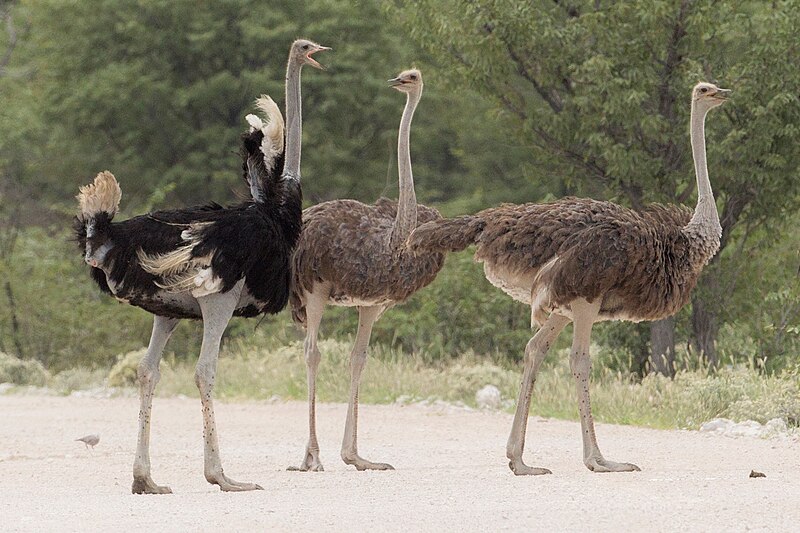
The heaviest, tallest and probably most ancient bird in the world, the Common Ostrich, Struthio camelus. Photo: Yathin S Krishnappa. Wikipedia: Ostrich
The Taxonomic Sequence of Avian Orders and Families
Domain: Eukaryota
Kingdom: Anamalia
Phylum: Chordata
Subphylum: Vertebrata
Class: Aves
Subclass: Archaeornithes – birds extinct Jurassic & early Cretaceous
Subclass: Neornithes – all living birds – 41/251/11017
Infraclass: Paleognathae – Ancient Jaw – 5/5/59
Superorder: Struthionimorphae – 1/1/2
1. Order: Struthioniformes – 1/2
1. Family: Struthionidae – Ostriches – 2
Superorder: Rheimorphae – 1/1/2
2. Order: Rheiformes – 1/2
1. Family: Rheidae – Rheas – 2
Superorder:Tinamimorphae – 1/1/46
3. Order: Tinamiformes – 1/46
1. Family: Tinamidae – Tinamous – 46
Superorder: Apterygimorphae – 2/2/9
4. Order: Apterygiformes – 1/5
1. Family: Apterygidae – Kiwis – 5
5. Order: Casuariiformes – 1/4
1. Family: Casuariidae – Cassowary & Emu – 4
Infraclass: Neognathae – 36/246/10958
Parvclass Galloanseres – 2/8/483
6. Order: Anseriformes – 3/178
1. Family: Anhimidae – Screamers – 3
2. Family: Anseranatidae – Magpie Goose – 1
3. Family: Anatidae – Ducks, Geese & Waterfowl – 174
7. Order: Galliformes – 5/305
1. Family: Megapodiidae – Megapodes – 21
2. Family: Cracidae – Guans, Chachalacas & Curassows – 57
3. Family: Numididae – Guineafowl – 8
4. Family: Odontophoridae – New World Quail – 33
5. Family: Phasianidae – Pheasants, Grouse & Allies – 186
Parvclass Neoaves – 34/238/10475
To conserve horizontal space, Parvclass Neoaves is moving 21 spaces to the left.
Parvclass Neoaves – 34/238/10475
Clade Columbea – 5/5/400
Clade Superorder: Phoenicopterimorphae – 2/2/28 (or Clade Mirandornithes)
8. Order: Phoenicopteriformes – 1/6
1. Family: Phoenicopteridae – Flamingos – 6
9. Order: Podicipediformes – 1/22
1. Family: Podicipedidae – Grebes – 22
Clade Superorder: Columbimorphae – 3/3/372
10. Order: Columbiformes – 1/353
1. Family: Columbidae – Pigeons & Doves – 353
11. Order: Mesitornithiformes – 1/3
1. Family: Mesitornithidae – Mesites – 3
12. Order: Pterocliformes – 1/16
1. Family: Pteroclidae – Sandgrouse – 16
Clade Passerea – 29/233/10075
Clade Otidae – 4/11/805
Clade Superorder: Otidimorphae – 3/3/196
13. Order: Otidiformes – 1/26
1. Family: Otididae – Bustards – 26
14. Order: Musophagiformes – 1/23
1. Family: Musophagidae – Turacos – 23
15. Order: Cuculiformes – 1/147
1. Family: Cuculidae – Cuckoos – 147
Superorder: Caprimulgimorphae – 1/8/609 (Clade Strisores)
16. Order: Caprimulgiformes – Nightbirds, Swifts, Hummers – 8/609
2. Family: Caprimulgidae – Nightjars & Allies – 97
Clade Vanescaves
3. Family: Nyctibiidae – Potoos – 7
4. Family: Steatornithidae – Oilbird – 1
Clade Letornithes
1. Family: Podargidae – Frogmouths – 16
Clade Daedalornithes
5. Family: Aegothelidae – Owlet-nightjars – 9
Clade Apodiformes
Clade Suborder Apodi
6. Family: Apodidae – Swifts – 112
7. Family: Hemiprocnidae – Treeswifts – 4
Clade Suborder Trochili
8. Family: Trochilidae – Hummingbirds – 363
Clade Gruae – 3/26/579
Clade Superorder: Opisthocomimorphae – 1/1/1
17. Order: Opisthocomiformes – 1/1
1. Family: Opisthocomidae – Hoatzin – 1
Clade Superorder: Gruimorphae 2/25/578 (or Charadriimorphae, Cursorimorphae)
18. Order: Gruiformes – Cranes & allies – 6/192
Suborder: Ralli – 3/173
1. Family: Sarothruridae – Flufftails – 15
2. Family: Rallidae – Rails, Gallinules & Coots – 155
3. Family: Heliornithidae – Finfoots – 3
Suborder: Grui – 3/19
4. Family: Aramidae – Limpkin – 1
5. Family: Psophiidae – Trumpeters – 3
6. Family: Gruidae – Cranes – 15
19. Order: Charadriiformes – Shorebirds & Gulls – 19/386
Suborder: Charadrii – 8/105
1. Family: Pluvianellidae – Magellanic Plover – 1
2. Family: Chionidae – Sheathbills – 2
3. Family: Burhinidae – Thick-knees – 10
4. Family: Pluvianidae – Egyptian Plover – 1
5. Family: Recurvirostridae – Stilts & Avocets – 9
6. Family: Ibidorhynchidae – Ibisbill – 1
7. Family: Haematopodidae – Oystercatchers – 12
8. Family: Charadriidae – Plovers & Lapwings – 69
Suborder: Scolopaci – 5/113
9. Family: Pedionomidae – Plains-wanderer – 1
10. Family: Thinocoridae – Seedsnipes – 4
11. Family: Rostratulidae – Painted-Snipes – 3
12. Family: Jacanidae – Jacanas – 8
13. Family: Scolopacidae – Sandpipers & Allies – 97
Suborder: Lari – 6/168
14. Family: Turnicidae – Buttonquail – 18
15. Family: Dromadidae – Crab-Plover – 1
16. Family: Glareolidae – Pratincoles & Coursers – 17
17. Family: Stercorariidae – Skuas & Jaegers – 7
18. Family: Alcidae – Auks, Murres & Puffins – 25
19. Family: Laridae – Gulls, Terns & Skimmers – 100
Clade Superorder Eurypygimorphae – 2/3/5 (or Phaethontimorphae)
20. Order: Eurypygiformes – 2/2
1. Family: Rhynochetidae – Kagu – 1
2. Family: Eurypygidae – Sunbittern – 1
21. Order: Phaethontiformes – 1/3
1. Family: Phaethontidae – Tropicbirds – 3
Clade Aequornithes – Core Waterbirds – 6/16/365
Clade Superorder: Gaviimorphae – 1/1/5
22. Order: Gaviiformes – 1/5
1. Family: Gaviidae – Loons – 5
Clade Feraequornithes – 5/15/360
Clade Austrodyptornithes – 2/5/164 (or Superorder Procellariimorphae)
23. Order: Sphenisciformes – 1/18
1. Family: Spheniscidae – Penguins – 18
24. Order: Procellariiformes – 4/146
1. Family: Diomedeidae – Albatrosses – 20
2. Family: Oceanitidae – Southern Storm-Petrels – 10
3. Family: Hydrobatidae – Northern Storm-Petrels – 18
4. Family: Procellariidae – Shearwaters & Petrels – 98
Clade Superorder: Pelecanimorphae – 3/10/196
25. Order: Ciconiiformes – 1/20
1. Family: Ciconiidae – Storks – 20
Clade: Pelecanes – 2/9/176
26. Order: Suliformes – 4/59
1. Family: Fregatidae – Frigatebirds – 5
2. Family: Sulidae – Boobies & Gannets – 10
3. Family: Anhingidae – Anhingas – 4
4. Family: Phalacrocoracidae – Cormorants & Shags – 40
27. Order: Pelecaniformes – 5/117
Suborder: Pelicani – 3/10
1. Family: Pelecanidae – Pelicans – 8
2. Family: Balaenicipitidae – Shoebill – 1
3. Family: Scopidae – Hamerkop – 1
Suborder: Ardei – 2/107
4. Family: Ardeidae – Herons, Egrets & Bitterns – 71
5. Family: Threskiornithidae – Ibises & Spoonbills – 36
Clade Telluraves (Core Landbirds) – 14/177/8321
Clade Infraclass Afroaves – 10/28/1254
Clade Superorder: Accipitrimorphae – 2/4/259
28. Order: Cathartiformes – 1/7
1. Family: Cathartidae – New World Vultures – 7
29. Order: Accipitriformes – 3/252
1. Family: Sagittariidae – Secretarybird – 1
2. Family: Pandionidae – Osprey – 1
3. Family: Accipitridae – Hawks, Eagles & Kites – 250
Clade Superorder: Strigimorphae – 1/2/247
30. Order: Strigiformes – 2/247
1. Family: Tytonidae – Barn-Owls – 18
2. Family: Strigidae – Owls – 229
Clade Superorder: Coriciimorphae – 7/22/748
31. Order: Coliiformes – 1/6
1. Family: Coliidae – Mousebirds – 6
Clade Cavitaves – 6/21/742
32. Order: Leptosomiformes – 1/1
1. Family: Leptosomidae – Cuckoo-roller – 1
Clade Eucavitaves – 5/20/741
33. Order: Trogoniformes – 1/46
1. Family: Trogonidae – Trogons – 46
Clade Picocoraciae – 4/19/695
34. Order: Bucerotiformes – 4/75
Suborder: Upupi – 2/11
1. Family: Upupidae – Hoopoes – 3
2. Family: Phoeniculidae – Woodhoopoes & Scimitarbills – 8
Suborder: Buceroti – 2/64
3. Family: Bucorvidae – Ground-Hornbills – 2
4. Family: Bucerotidae – Hornbills – 62
Clade Picodynastornithes – 3/15/620 (was Superorder: Coraciimorphae)
35. Order: Coraciiformes – 6/185
Clade unnamed
1. Family: Todidae – Todies – 5
2. Family: Momotidae – Motmots – 14
3. Family: Alcedinidae – Kingfishers – 117
Clade unnamed
4. Family: Meropidae – Bee-eaters – 31
5. Family: Coraciidae – Rollers – 13
6. Family: Brachypteraciidae – Ground-Rollers – 5
36. Order: Galbuliformes (sometimes suborder Galbuli in Picaformes) – 2/55
1. Family: Bucconidae – Puffbirds – 37
2. Family: Galbulidae – Jacamars – 18
37. Order: Piciformes – 7/380
Infraorder Ramphastides – 5/129
1. Family: Lybiidae – African Barbets – 41
2. Family: Megalaimidae – Asian Barbets – 35
3. Family: Capitonidae – New World Barbets – 15
4. Family: Semnornithidae – Toucan-Barbets – 2
5. Family: Ramphastidae – Toucans – 36
Infraorder: Picides – 2/251
6. Family: Indicatoridae – Honeyguides – 16
7. Family: Picidae – Woodpeckers – 235
Clade Infraclass Australaves – 4/149/7067
38. Order: Cariamiformes – 1/2
1. Family: Cariamidae – Seriemas – 2
Clade Superorder Eufalconimorphae – 148/7065
39. Order: Falconiformes – 1/65
1. Family: Falconidae – Falcons & Caracaras – 65
Clade Psittacopasseres – 147/7000 (formerly Passerimorphae)
40. Order: Psittaciformes – 4/405
Superfamily: Strigopoidea – 1/4
1. Family: Strigopidae – New Zealand Parrots – 4
Superfamily: Cacatuoidea – 1/22
2. Family: Cacatuidae – Cockatoos – 22
Superfamily: Psittacoidea – True Parrots – 2/379
3. Family: Psittaculidae – Old World Parrots – 202
4. Family: Psittacidae – New World & African Parrots – 177
41. Order: Passeriformes – 143/6595
The final extant species in the non-passerine list.
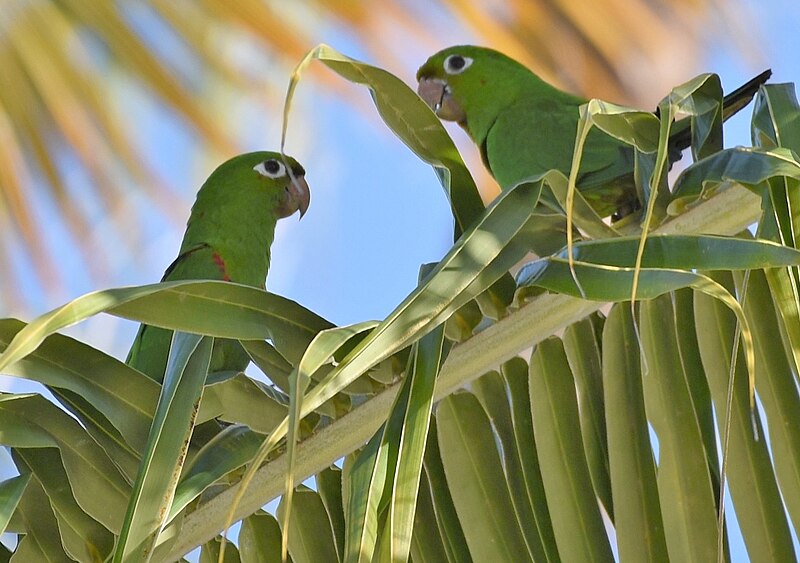
Hispaniolan Parakeet, Psittacara chloropterus.
Photo: Martingloor. Wikipedia: Hispaniolan Parakeet
To conserve horizontal space, Order Passeriformes is moving 27 spaces to the left.
The first extant species in the passerine list.

Rifleman, female, Acanthisitta chloris, of South Island, New Zealand. An insectivorous wren-like member of a four-species family basal to all passerines, endemic to New Zealand. Photo: digitaltrails. Wikipedia: Rifleman
As you go through the following list, note the 3 suborders, 4 infraorders, 5 parvorders and 10 superfamilies.
41. Order: Passeriformes – 143/6595
Suborder Acanthisitti – 1/4
1. Family: Acanthisittidae – New Zealand Wrens – 4
Suborder Tyranni – Non-oscine Passerines – 17/1386
Infraorder Eurylaimides – Old World Suboscines – 5/68
5. Family: Philepittidae – Asities – 4
3. Family: Eurylaimidae – Asian & Grauer’s Broadbills – 10
2. Family: Calyptomenidae – African & Green Broadbills – 6
4. Family: Sapayoidae – Sapayoa – 1
6. Family: Pittidae – Pittas – 47
Infraorder Tyrannides – New World Suboscines – 12/1318
Parvorder Furnariida – 7/714
8. Family: Melanopareiidae – Crescentchests – 4
9. Family: Conopophagidae – Gnateaters – 12
7. Family: Thamnophilidae – Typical Antbirds – 237
10. Family: Grallariidae – Antpittas – 70
11. Family: Rhinocryptidae – Tapaculos – 65
12. Family: Formicariidae – Antthrushes – 12
13. Family: Furnariidae – Ovenbirds & Woodcreepers – 314
Parvorder Tyrannida 5/604
14. Family: Pipridae – Manakins – 55
15. Family: Cotingidae – Cotingas – 65
16. Family: Tityridae – Tityras and Allies – 35
17. Family: Oxyruncidae – Sharpbill, Royal Flycatcher & Allies – 8
Family: Onychorhynchidae–Royal Flycatcher–Part of Oxyruncidae
18. Family: Tyrannidae – Tyrant Flycatchers – 441
Suborder Passeri – Oscine Passerines 125/5205
Basal families in Passeri clade – 11/342
20. Family: Atrichornithidae – Scrub-birds – 2
19. Family: Menuridae – Lyrebirds – 2
22. Family: Climacteridae – Australasian Treecreepers – 7
21. Family: Ptilonorhynchidae – Bowerbirds – 27
23. Family: Maluridae – Fairywrens – 32
25. Family: Dasyornithidae – Bristlebirds – 3
26. Family: Pardalotidae – Pardalotes – 4
27. Family: Acanthizidae – Thornbills & Allies – 66
24. Family: Meliphagidae – Honeyeaters – 191
28. Family: Pomatostomidae – Pseudo-Babblers – 5
29. Family: Orthonychidae – Logrunners – 3
Infraorder Corvides – 30/847 (previously parvorder Corvida)
Basal families in Corvides clade – 4/107
30. Family: Cinclosomatidae – Quail-thrushes & Jewel-babblers – 12
31. Family: Campephagidae – Cuckooshrikes – 89 (some in Orioloidea)
32. Family: Mohouidae – Whiteheads – 3
33. Family: Neosittidae – Sittellas – 3
Superfamily: Orioloidea 8/180
34. Family: Psophodidae – Whipbirds & Wedgebills – 5
35. Family: Eulacestomatidae – Ploughbill – 1
37. Family: Falcunculidae – Shrike-tits – 3
36. Family: Oreoicidae – Australo-Papuan Bellbirds – 3
38. Family: Paramythiidae – Tit Berrypecker & Crested Berrypecker – 3
39. Family: Vireonidae – Vireos, Shrike-Babblers & Erpornis – 61
40. Family: Pachycephalidae – Whistlers & Allies – 63
41. Family: Oriolidae – Old World Orioles – 41
Superfamily: Malaconotoidea – 8/154
42. Family: Machaerirhynchidae – Boatbills – 2
43. Family: Artamidae – Woodswallows, Bellmagpies & Allies – 24
44. Family: Rhagologidae – Mottled Berryhunter – 1
49. Family: Malaconotidae – Bushshrikes & Allies – 50
47. Family: Pityriasidae – Bristlehead – 1
48. Family: Aegithinidae – Ioras – 4
45. Family: Platysteiridae – Wattle-eyes & Batises – 32
46. Family: Vangidae – Vangas, Helmetshrikes & Allies – 40
Superfamily: Corvoidea – 10/406
50. Family: Rhipiduridae – Fantails – 64
51. Family: Dicruridae – Drongos – 28
54. Family: Monarchidae – Monarch Flycatchers – 100
53. Family: Ifritidae – Ifrita – 1
52. Family: Paradisaeidae – Birds-of-Paradise – 44
55. Family: Corcoracidae – White-winged Chough & Apostlebird – 2
56. Family: Melampittidae – Melampittas – 2
58. Family: Laniidae – Shrikes – 34
57. Family: Platylophidae – Crested Shrikejay – 1
59. Family: Corvidae – Crows, Jays & Magpies – 130
Infraorder Passerides – 84/4016 (previously parvorder Passerida)
Basal families in Passerides clade – 8/76
60. Family: Cnemophilidae – Satinbirds – 3
61. Family: Melanocharitidae – Berrypeckers & Longbills – 12
62. Family: Callaeidae – Wattlebirds – 5
63. Family: Notiomystidae – Stitchbird – 1
64. Family: Petroicidae – Australasian Robins – 50
67. Family: Eupetidae – Rail-babbler – 1
65. Family: Picathartidae – Rockfowl – 2
66. Family: Chaetopidae – Rockjumpers – 2
Parvorder Sylviida – 26/1363
Basal families in Sylviida clade – 9/364
68. Family: Hyliotidae – Hyliotas – 4
69. Family: Stenostiridae – Fairy Flycatchers – 9
70. Family: Paridae – Tits, Chickadees & Titmice – 63
71. Family: Remizidae – Penduline-Tits – 11
73. Family: Panuridae – Bearded Reedling – 1
72. Family: Alaudidae – Larks – 93
74. Family: Nicatoridae – Nicators – 3
75. Family: Macrosphenidae – African Warblers – 18
76. Family: Cisticolidae – Cisticolas & Allies – 162
Superfamily: Locustelloidea – 6/231
77. Family: Acrocephalidae – Reed Warblers & Allies – 60
78. Family: Locustellidae – Grassbirds & Allies – 67
79. Family: Donacobiidae – Donacobius – 1
80. Family: Bernieridae – Malagasy Warblers – 11
81. Family: Pnoepygidae – Cupwings – 4
82. Family: Hirundinidae – Swallows – 88
Superfamily: Sylvioidea 7/640
83. Family: Pycnonotidae – Bulbuls – 156
88. Family: Sylviidae – Sylviid Warblers & Allies – 32
89. Family: Paradoxornithidae – Parrotbills – 38
90. Family: Zosteropidae – White-eyes, Yuhinas & Allies – 148
91. Family: Timaliidae – Tree-Babblers, Scimitar-Babblers & Allies – 58
93. Family: Leiothrichidae – Laughingthrushes & Allies – 143
Family: Alcippeidae – Alcippe fulvettas (now in Leiothrichidae)
92. Family: Pellorneidae – Ground Babblers & Allies – 65
Superfamily: Aegithaloidea – 4/128
84. Family: Phylloscopidae – Leaf Warblers – 80
85. Family: Hyliidae – Hylias – 2
87. Family: Aegithalidae – Long-tailed Tits – 11
86. Family: Scotocercidae – Bush Warblers & Allies – 35
Family: Cettidae – Cettia bush warblers & allies (now in Scotocercidae)
Family: Erythrocercidae – Yellow flycatchers (now in Scotocercidae)
Parvorder Muscicapida – 19/856 (previously superfamily Muscicapoidea)
Superfamily: Bombycilloidea – 6/15
110. Family: Dulidae – Palmchat – 1
107. Family: Bombycillidae – Waxwings – 3
109. Family: Ptiliogonatidae – Silky-flycatchers – 4
111. Family: Hylocitreidae – Hylocitrea – 1
112. Family: Hypocoliidae – Hypocolius – 1
108. Family: Mohoidae – Hawaiian Honeyeaters – 5
Superfamily: Muscicapoidea – 8/693
100. Family: Elachuridae – Spotted Elachura – 1
101. Family: Cinclidae – Dippers – 5
106. Family: Muscicapidae – Old World Flycatchers – 345
105. Family: Turdidae – Thrushes & Allies – 175
102. Family: Buphagidae – Oxpeckers – 2
103. Family: Sturnidae – Starlings – 125
104. Family: Mimidae – Mockingbirds & Thrashers – 34
94. Family: Regulidae – Kinglets – 6
Superfamily: Certhioidea 5/148
95. Family: Tichodromidae – Wallcreeper – 1
96. Family: Sittidae – Nuthatches – 29
97. Family: Certhiidae – Treecreepers – 11
98. Family: Polioptilidae – Gnatcatchers – 21
99. Family: Troglodytidae – Wrens – 86
Parvorder Passerida – 31/1721 (previously superfamily Passeroidea)
Basal families in Passerida clade – 15/863
113. Family: Promeropidae – Sugarbirds – 2
114. Family: Modulatricidae – Dapple-throat & Allies – 3
116. Family: Nectariniidae – Sunbirds & Spiderhunters – 148
115. Family: Dicaeidae – Flowerpeckers – 53
118. Family: Chloropseidae – Leafbirds – 12
117. Family: Irenidae – Fairy-bluebirds – 3
119. Family: Peucedramidae – Olive Warbler – 1
120. Family: Urocynchramidae – Przevalski’s Pinktail – 1
121. Family: Ploceidae – Weavers & Allies – 123
123. Family: Viduidae – Indigobirds – 20
122. Family: Estrildidae – Waxbills & Allies – 138
124. Family: Prunellidae – Accentors – 12
125. Family: Passeridae – Old World Sparrows – 43
126. Family: Motacillidae – Wagtails & Pipits – 69
127. Family: Fringillidae – Finches, Euphonias & Allies – 235
Superfamily: Emberizoidea 16/858 (previously New World 9-primaried oscines)
129. Family: Rhodinocichlidae – Thrush-Tanager – 1
128. Family: Calcariidae – Longspurs & Snow Buntings – 6
130. Family: Emberizidae – Old World Buntings – 44
142. Family: Cardinalidae – Cardinals & Allies – 51
141. Family: Mitrospingidae – Mitrospingid Tanagers – 4
143. Family: Thraupidae – Tanagers & Allies – 384
131. Family: Passerellidae – New World Sparrows – 132
140. Family: Parulidae – New World Warblers – 115
138. Family: Icteriidae – Yellow-breasted Chat – 1
139. Family: Icteridae – Troupials & Allies – 106
132. Family: Calyptophilidae – Chat-Tanagers – 2
136. Family: Zeledoniidae – Wrenthrush – 1
137. Family: Teretistridae – Cuban Warblers – 2
134. Family: Nesospingidae – Puerto Rican Tanager – 1
135. Family: Spindalidae – Spindalises – 4
133. Family: Phaenicophilidae – Hispaniolan Tanagers – 4
The final extant species of the final family Phaenicophilidae (Hispaniolan Tanagers) in the Passerine list.
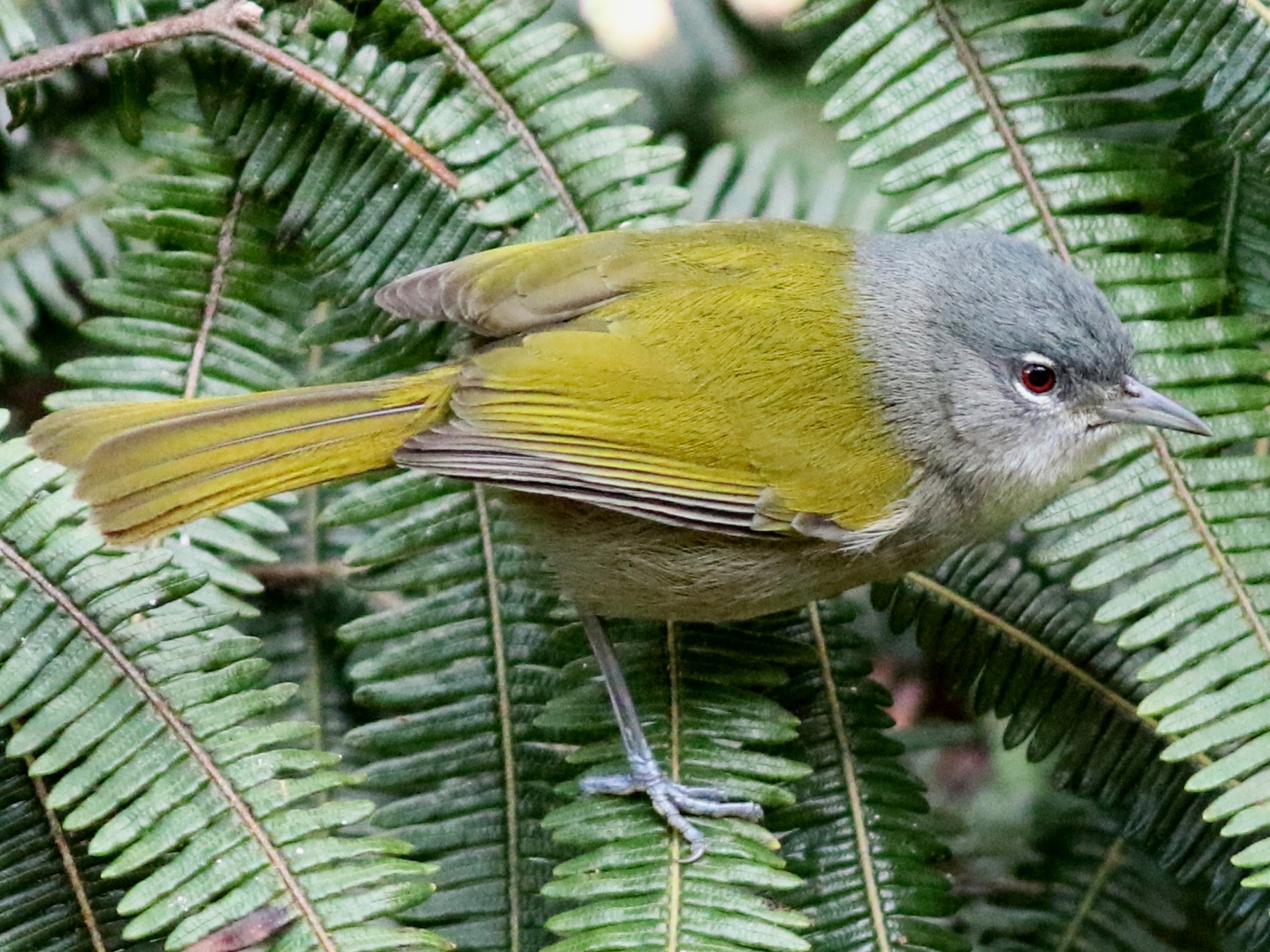
Green-tailed Warbler (or Ground-Tanager) Microligea palustris.
Photo: John C Sullivan. eBird: Green-tailed Warbler
That’s the end of it. Now all you have to do is go out and find all those Orders and Families and Genera and Species of birds.
I hope you found these ten postings as enlightening and entertaining as I did composing and presenting them. Don’t forget to check back in a year or so by which time everything will have changed utterly.
A few useful and informative links
https://avibase.bsc-eoc.org/familytree.jsp?lang=HA
https://checklist.americanornithology.org/taxa/
http://creagrus.home.montereybay.com/sylvid-new.html
https://tree.opentreeoflife.org/opentree/opentree14.9@ott1041547/Passeriformes
https://en.wikipedia.org/wiki/Passerine
https://en.wikipedia.org/wiki/Passerine#Suborder_Acanthisitti
https://en.wikipedia.org/wiki/Passerine#Taxonomic_list_of_Passeriformes_families per IOU
https://en.wikipedia.org/wiki/Strisores
http://www.j-avianres.com/en/article/doi/10.5122/cbirds.2013.0016
A review of the recent advances in the systematics of the avian superfamily Sylvioidea, Per ALSTRÖM Urban OLSSON, Fumin LEI
The Taxonomy Series
Installments post ever other day; installments will not open until posted.
Taxonomy One: A brief survey of the history and wherefores of taxonomy: Aristotle, Linnaeus and his binomial system of nomenclature, taxonomic ranks and the discovery and application of biological clocks.
Taxonomy Two: Introduces the higher levels of current taxonomy: the three Domains and the four Kingdoms. We briefly discuss Kingdom Protista, then the seven phyla of Kingdom Fungi.
Taxonomy Three: Kingdom Plantae.
Taxonomy Four: Kingdom Animalia to Phylum Annelida.
Taxonomy Five: A discussion of Cladistics, how it works and why it is becoming ever more important.
Taxonomy Six: Phylum Chordata, stopping at Class Mammalia.
Taxonomy Seven: Class Mammalia.
Taxonomy Eight: Class Aves, beginning with a comparison of five different avian checklists of the past 50 years.
Taxonomy Nine: A cladogram and discussion of Subclass Neornithes (modern birds) of the past 110 million years, reaching down to the current forty-one orders of birds.
Taxonomy Ten: A checklist of Neornithes including all ranks and clades down to the rank of the current 251 families of birds (plus a few probable new arrivals) with totals of the current 11,017 species of birds.
There will be a relatively brief look at “pecularities & problems of the checklist,” not yet written. Following that there may be some brief accounts of a few monotypic species which I think may be the most interesting birds.



 SANTA MONICA BAY AUDUBON SOCIETY BLOG